
Reviewed · TOKYO TRADITIONAL CRAFT WORKSHOPS
Craft Your Own Elegant Handmade Chopsticks from Scratch
Making chopsticks from a plain piece of hinoki cypress is the heart of this Tokyo experience. In a quiet Sasazuka workshop, a craftsperson shows you how to shape wood with traditional tools, then refine it until the pair feels right in your hand. You finish with camellia oil and take home a useful souvenir made by you.
I like two things right away: the small maximum group of six, which allows close guidance, and the chance to make a practical object rather than another decorative trinket. I also like the English support, including translation help from Amy, who explains the history and steps clearly.
The main consideration is the price, $97.98 per person, for roughly two hours. That is reasonable for a small, hands-on craft class with a custom item included, but it is not a bargain if you only want a quick souvenir. The lacquer portion is also optional, so confirm exactly what your booking includes.
Key points at a glance
- Start at Sasazuka Station: Meet at 1:00 pm, then walk about 10 minutes with your guide to Kakehashi.
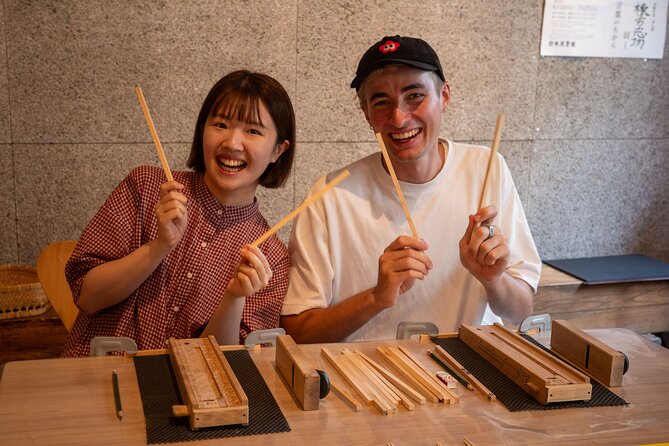
- Shape your own hinoki pair: Use craftsmen’s tools to carve, sand, and refine chopsticks for your hand size and favorite foods.
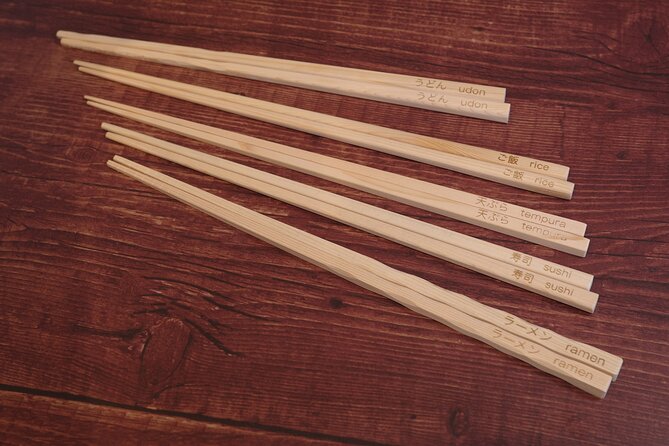
- Learn why chopsticks differ: The workshop explains why some shapes suit sushi, tempura, ramen, and other dishes.
- See a working lacquer space: The optional lacquer activity offers access to a normally restricted workshop area.
- Keep a useful handmade souvenir: Custom chopsticks are included in the price, and you can also browse finished pairs in the shop.
- Expect personal instruction: The group requires at least two participants and is capped at six.
A quiet craft class close to Shinjuku
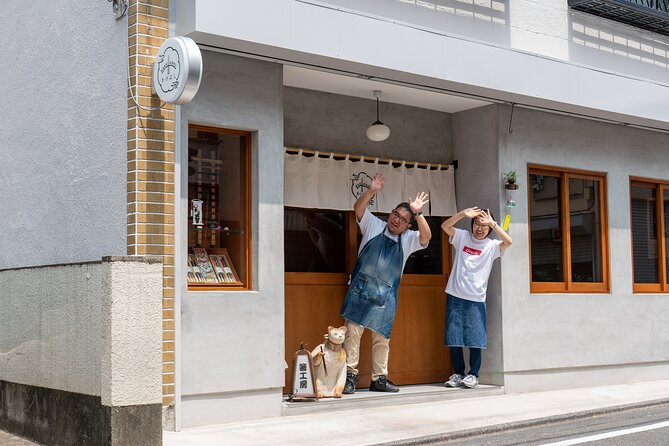
Sasazuka is a practical base for this experience. It is in Tokyo’s Shibuya area and only a short train ride from Shinjuku, yet the workshop itself is in a quieter neighborhood setting. You meet at Sasazuka Station at 1:00 pm, then walk about 10 minutes to Kakehashi with your guide.
That short walk matters. You do not need to find an unfamiliar shop on your own, and the activity begins with a small transition away from the station area. You get a sense of local Tokyo before sitting down to work.
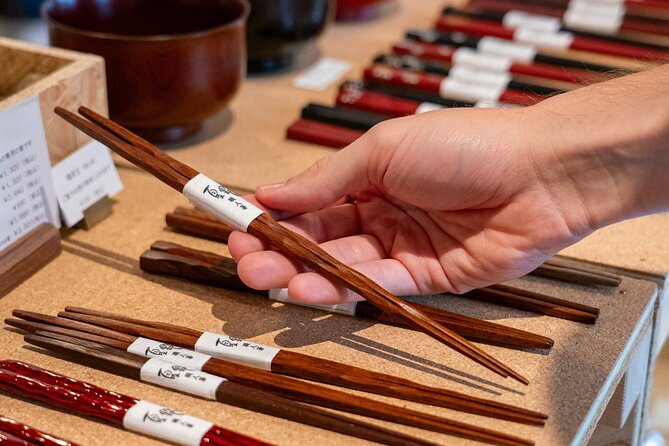
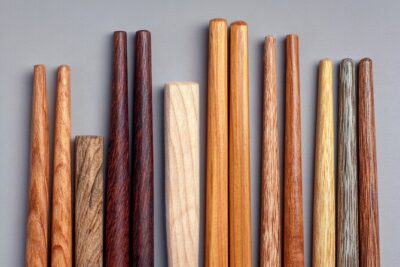
Kakehashi is both a specialty chopstick shop and a workshop. Before or after the class, you can see many finished pairs on display. This gives useful context: Japanese chopsticks are not all made for the same purpose. Different shapes and tips can suit sushi, tempura, ramen, or other foods.
I appreciate that the setting connects the class with an actual craft business. You are not simply completing a generic tourist project in a rented room. You are learning in a place where chopsticks are sold, discussed, and made.
More Tokyo craft workshops:
- Tokyo Shinjuku Chopsticks Making Class
★ 5.0 · 1,763 reviews - Chopstick Making Workshop in Ginza
★ 4.8 · 1,366 reviews - Kintsugi Experience: Art of Golden Joinery in Tokyo
★ 5.0 · 467 reviews
Starting with wood, tools, and proportion
The main class lasts about 55 minutes. You begin with hinoki wood, also called Japanese cypress. The description also refers to cypress wood, so you can expect a light, workable material prepared for shaping.
The craftsperson guides you through the basic form and shows you how to use the tools. You do not need to arrive with woodworking experience. The instruction is step by step, while still leaving room for your own choices.
That balance is important. A fully free-form project could be frustrating, especially when you are trying to make two chopsticks that work as a pair. Here, you receive direction but can still adjust the shape to your hand size and preferred style of eating.
You may want a slightly different feel for noodles than for delicate fish or small pieces of food. The workshop uses those differences to show that chopsticks are designed objects, not just two matching sticks.
You should expect to work carefully rather than quickly. The goal is not to produce a perfect factory pair in a few minutes. A handmade pair may show small signs of your decisions, and that is part of its appeal.
Sanding turns the pair into your own
After the rough shaping, you refine the chopsticks with sandpaper. This is where the project becomes more personal. You smooth edges, adjust the form, and pay attention to how the sticks feel between your fingers.
Sanding can be a quiet, almost calming part of the class. It is also the stage where patience pays off. If you remove too much wood too quickly, you cannot put it back. Listen to the craftsperson and work gradually.
This is a good activity for you if you enjoy making things with your hands but do not want a long, demanding workshop. The core process lasts less than an hour, so you get a real craft lesson without giving up an entire day of sightseeing.
The instruction is designed to support creativity without leaving you on your own. English-speaking assistance is available, and Amy has been specifically praised for helping with translation and explaining the background. That makes a difference when a tool, technique, or craft term is unfamiliar.
Camellia oil gives the chopsticks a finish
Once the shape and surface are ready, camellia oil is used to finish the chopsticks. This final step helps bring the wood together as a finished household object.
You will likely notice how much a simple finish changes the appearance of the wood. The process also reinforces the practical side of the class. You are not only making something to display in a suitcase. You are preparing chopsticks to use at home.
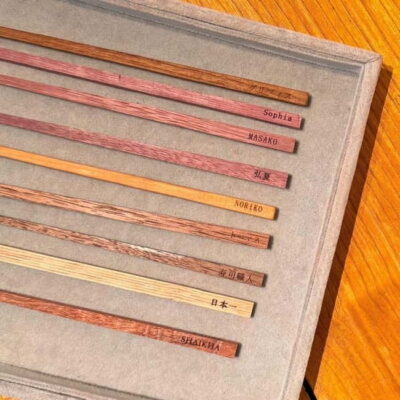
The custom aspect is modest but meaningful. You are not ordering a pair engraved with your name. Instead, your pair is shaped through your own work, adjusted for your hands, and finished by you. That creates a stronger connection to the souvenir.
The included custom chopsticks add value to the $97.98 cost. You are paying for instruction, materials, access to a small workshop, and a finished object. If you already plan to buy handmade chopsticks in Japan, the class can replace that purchase with a more personal version.
A completely different kind of day in Tokyo:
- Mt Fuji and Hakone 1-Day Bus Tour Return by Bullet Train
★ 5.0 · 26,383 reviews - 1-Day Tokyo Bus Tour
★ 5.0 · 14,250 reviews - Tokyo: teamLab Planets TOKYO Digital Art Museum Entry Ticket
★ 4.6 · 9,779 reviews - Mt Fuji & Hakone Cruise, Drum Show Bullet Train 1 Day from Tokyo
★ 4.0 · 7,413 reviews
The optional lacquer session adds a second craft
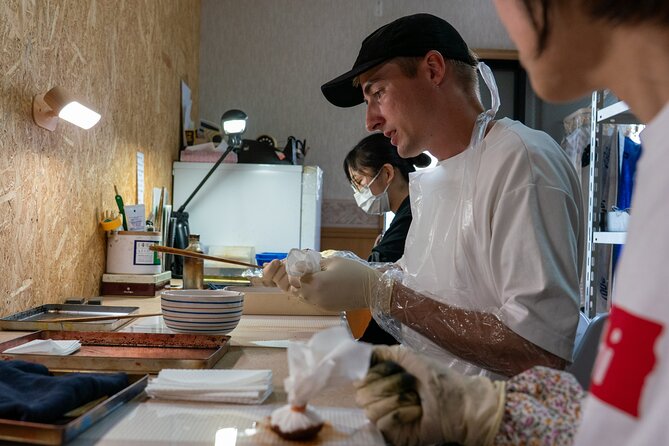
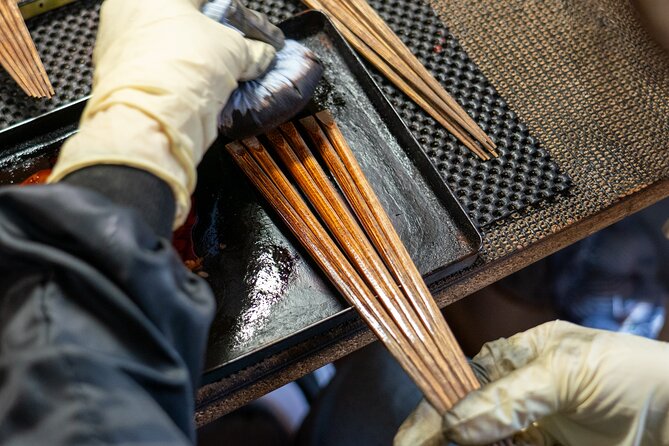
The lacquer-coating experience lasts about 25 minutes and gives you a look at another traditional Japanese craft. You can learn about lacquer materials and see a normally off-limits lacquer workshop where craftspeople work.
The experience is not limited to chopstick production. The explanations connect lacquerware with shrines, temples, and everyday life in Japan. You also learn through the senses, including the distinctive scent associated with the lacquer workshop.
This portion is a strong choice if you want more cultural background alongside the hands-on work. Lacquer is often noticed only as a glossy finish on an object. Here, you get a closer look at the process and its place in Japanese craft traditions.
There is one practical point to clarify before booking: the overview describes lacquer work as optional, while the stated itinerary includes a 25-minute lacquer-coating experience. Since the listed price and inclusion section specifically name the custom chopsticks but do not list lacquer as a separate included item, ask the operator what your reservation covers.
What the small group changes
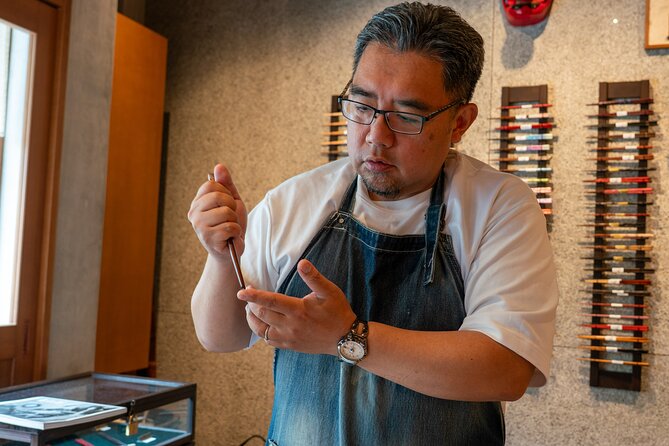
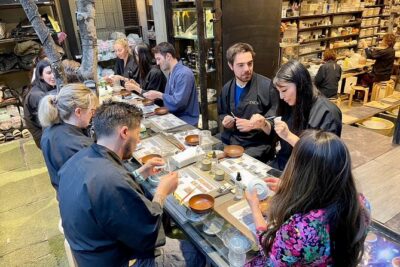
The minimum booking is two people, and the maximum is six. That is a useful size for this type of class. The craftsperson can watch how you hold the tools, answer questions, and help you correct the shape before a small mistake becomes a large one.
A six-person cap also keeps the class from feeling like a demonstration where you simply copy along at a distance. You get your own piece of wood and personal attention, while still having the shared energy of a small group.
This setup works especially well for couples, friends, and families with older children who can follow tool instructions. The available information says most participants can take part, but it does not give a specific minimum age or detailed accessibility information. If you need those details, contact the provider before paying.
The English support is another advantage. The class is rooted in Japanese terminology and traditional processes, so clear translation helps you understand more than just the physical steps. You can ask questions about chopstick forms, lacquer, and daily use without relying on gestures alone.
Price and value at $97.98
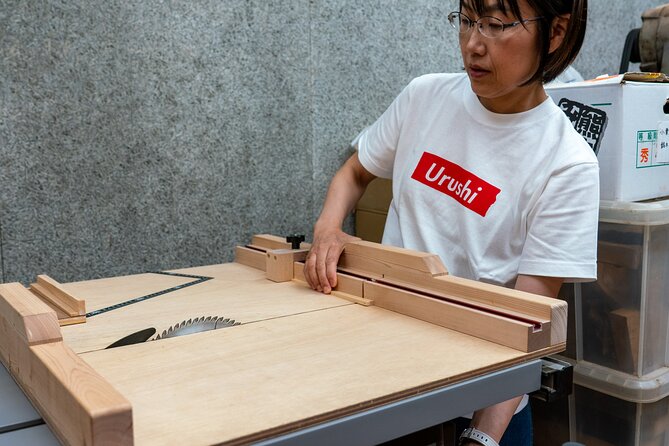
At $97.98 per person, this is not the cheapest hands-on activity in Tokyo. You should judge it as a small private-feeling craft lesson with a take-home product, not as a standard sightseeing stop.
I see the value in four parts:
- You receive instruction from a chopstick craftsperson.
- Materials and tools are provided.
- You make and keep custom chopsticks.
- You gain access to a specialty shop and, depending on your booking, the lacquer workshop.
The experience lasts about two hours, including the walk from the station, chopstick making, and lacquer portion. That makes it easy to fit into an afternoon. You can still schedule evening plans in Tokyo, though you should allow extra time for transport after the class.
The value is strongest if you care about Japanese craft, want a souvenir you will actually use, or prefer a local workshop to a large group attraction. It is weaker if you are trying to keep costs low, have little interest in making objects, or want a broad Tokyo sightseeing tour.
Meals, drinks, hotel transport, and private transportation are not included. You are responsible for getting to Sasazuka Station and handling any transport costs. A mobile ticket is provided, and confirmation is received when you book.
Booking, timing, and the small print
The experience starts at 1:00 pm at Sasazuka Station, at 1 Chome-57 Sasazuka, Shibuya, Tokyo. Arrive with enough time to find the meeting point without rushing. The guide then leads the group to the workshop.
The activity is free to cancel up to 24 hours before the start time for a full refund. Cancellations or changes made less than 24 hours before the start are not refundable or accepted. The cut-off uses Tokyo local time.
Because at least two people are required, the operator can cancel if the minimum is not met. In that case, you are offered another date or experience, or a full refund.
One detail deserves confirmation before you go. The itinerary says the tour ends at the workshop, while the meeting information says it ends back at the meeting point. The walk from the station is clear, but the return arrangement is not perfectly consistent in the supplied details. Ask the provider if you need to return to Sasazuka Station at a particular time.
Who will enjoy making chopsticks
You should consider this experience if you like practical souvenirs, traditional tools, and activities that let you slow down for an hour or two. It is a good break from Tokyo’s crowded shopping streets and major sights.
It also suits you if you want to learn why everyday Japanese objects are designed with such care. The class shows that chopsticks can vary according to food, shape, balance, and personal comfort.
Couples can make matching or contrasting pairs. Friends can compare how each person shapes the wood. A solo booking is not possible unless another participant joins, since the minimum group size is two.
This may not be ideal for you if you dislike fine handwork or expect a polished, professional result. Your chopsticks are handmade, and the point is your involvement. Small irregularities are part of the object, not a defect to hide.
You should also consider the tool work. The workshop provides guidance, but you will be carving and sanding wood. If you have concerns about handling tools, ask about the process before booking.
Is this Tokyo workshop worth booking?
I would book this class if you want a personal souvenir and a close look at Japanese craft. The small group, English support, artisan instruction, and custom hinoki chopsticks make the experience more substantial than simply buying a pair in a department store.
I would skip it if your schedule is tight, your budget is limited, or you are not interested in hands-on work. The $97.98 price is fair for the instruction and included chopsticks, but it depends on you valuing the making process as much as the finished item.
For the best fit, book it as a relaxed afternoon activity near Shinjuku, confirm whether lacquer work is included, and check the ending point before you go. If you do, you will leave with a small piece of Tokyo that carries your own fingerprints, choices, and perhaps a few charming imperfections.
FAQ
Where does the chopstick-making experience begin?
You meet at Sasazuka Station at 1:00 pm. The meeting address is 1 Chome-57 Sasazuka, Shibuya, Tokyo 151-0073, Japan.
How far is the workshop from Sasazuka Station?
The guide leads you from the station to Kakehashi, the shop and workshop, in about 10 minutes.
How long does the experience last?
The full activity takes approximately two hours. The chopstick-making portion lasts about 55 minutes, and the lacquer-coating portion is listed as 25 minutes.
What wood do I use for the chopsticks?
You make the chopsticks from hinoki wood, also known as Japanese cypress.
Do I get to take the chopsticks home?
Yes. Custom-made chopsticks are included, and you take home the pair you create.
Is an English-speaking guide available?
Yes. English-speaking support is available, including translation assistance during the class.
Is the lacquer activity included?
The information describes lacquer coating as optional, but the itinerary includes a 25-minute lacquer-coating activity. Confirm the exact inclusions with the provider when booking.
How many people can join?
At least two participants are required, and the maximum group size is six people.
Can I cancel for a full refund?
Yes, if you cancel at least 24 hours before the experience start time. Cancellations or changes made less than 24 hours before the start are not refundable.
Newly reviewed around Tokyo
- Tokyo Asakusa:Calligraphy & Make T-shirt Activity★ 5.0 · 62 reviews
- Intercity Shuttle, Tokyo to Haneda /Narita /Yokohama /Makuhari★ 5.0 · 5 reviews
- 1 Hour Travel around Tokyo with a Professional Photographer★ 5.0 · 3 reviews
- Travel Tokyo with Your Own Personal Photographer★ 5.0 · 43 reviews
- Train in Samurai Swordsmanship and Defeat the Demon in Tokyo★ 5.0 · 5 reviews
- Shuttle Van 6hr Tokyo Tour to-and-from Tokyo, Yokohama and Narita★ 5.0 · 9 reviews
- Kickboxing & Body Training with EX-Pro Fighter★ 5.0 · 4 reviews
- Traditional Japanese Knife Sharpening Class★ 5.0 · 18 reviews
Tokyo Traditional Craft Workshops, compared.
Kintsugi Experience: Art of Golden Joinery in Tokyo
Read our review →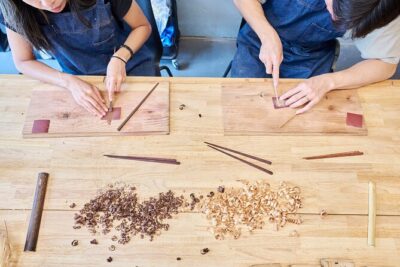
Authentic Pure Gold Kintsugi Workshop with Master Taku in Tokyo
Read our review →
Private Handmade Ring Workshop Activity in Tokyo Shibuya
Read our review →
Browse the lists this tour appears in