
Reviewed · TOKYO COOKING CLASSES
Cook Everyday Japanese Home Meals with Your Tokyo Mom
The best part of this experience is simple: you enter a real Japanese home, take off your shoes, and cook the sort of meal a family might actually eat. This is not a restaurant demonstration. You handle the ingredients, use everyday kitchen tools, and learn how food fits into daily life.
I like the small group limit of six, which gives the cooking a personal feel, and I like the menu’s flexibility. You can choose meat, fish, or vegetables for the main dish, then pick saikyo-yaki, teriyaki, or a Japanese dish you request in advance. The main consideration is location: you need to make your own way to Koganei, in western Tokyo, rather than meeting in the central sightseeing districts.
- A real home in Koganei: Cook in a lived-in Japanese house or retro-style home instead of a purpose-built tourist venue.
- Dashi comes first: Learn to make stock from seaweed and dried fish, the base of much Japanese cooking.
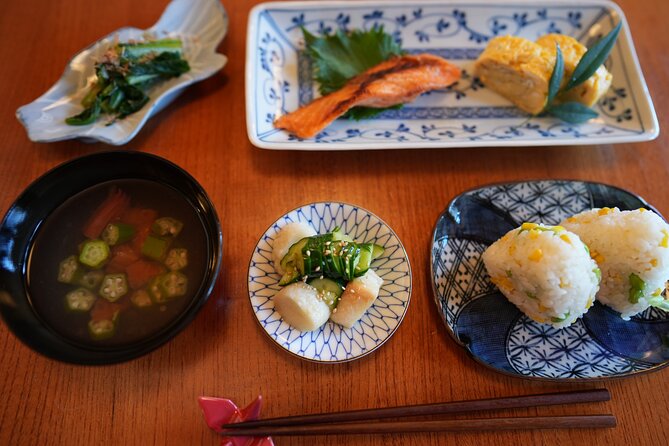
- A full home-style meal: Prepare a main dish, onigiri, tamagoyaki, seasonal vegetables, and miso soup.
- Choice at the stove: Select meat, fish, or vegetables and choose saikyo-yaki, teriyaki, or a requested dish.
- Beginner-friendly teaching: Aki-san’s calm instruction suits people who rarely cook.
- A compact class: The experience lasts about two and a half hours and accepts no more than six people.
A Quiet Tokyo Home Instead of a Cooking Studio
This cooking class takes you away from Tokyo’s dense central districts and into Nakacho, Koganei. The meeting point is at 4-chōme-15-17 Nakachō, Tokyo 184-0012, near public transportation. The activity ends at the same place, so you do not need to work out a second meeting point after lunch.
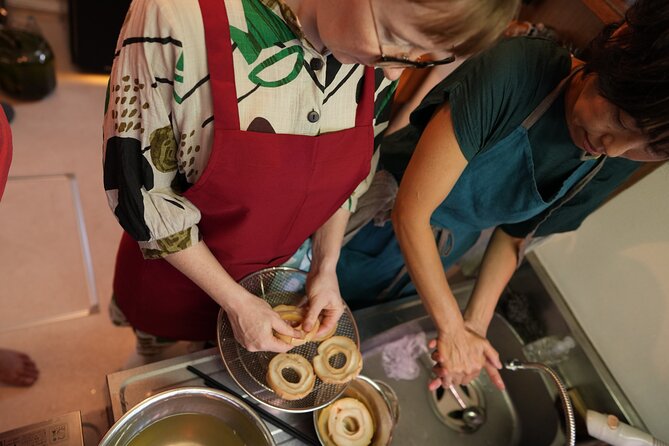
That change of setting matters. In central Tokyo, you can eat excellent food almost anywhere, but it is harder to see how a regular home works. Here, the small customs are part of the experience. You remove your shoes at the entrance, work in a household kitchen, arrange dishes on the table, and eat in the same place where you cooked.
The home may be a retro house or a cozy family home. The exact setting can vary, but the point remains the same: you are stepping into an ordinary domestic space, not a stage set built for sightseeing. Keep your expectations practical. This is a home cooking lesson with cultural exchange, not a polished culinary school with restaurant equipment.
Starting With Dashi, the Foundation of the Meal
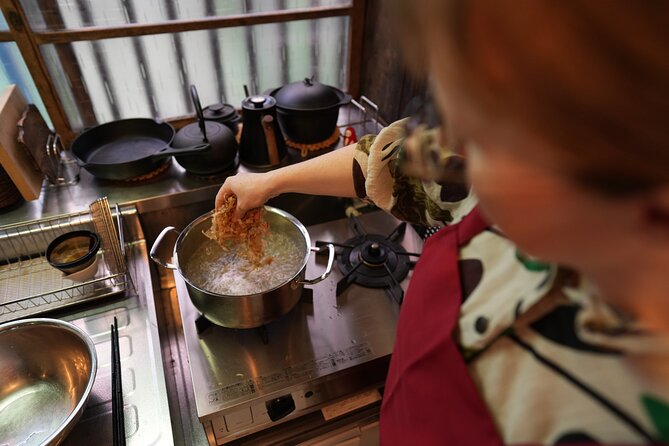
The class begins with dashi, a Japanese soup stock made with seaweed and dried fish. That is a smart starting point because dashi explains a great deal about Japanese food without requiring a long lecture. You see how a few basic ingredients can give soup, sauces, and other dishes their savory depth.
For you, the value is in learning a method you can repeat at home. Dashi is not an exotic trick reserved for chefs. It is a basic building block, and understanding it helps Japanese dishes taste more like the food you eat in Japan.
The ingredients and cooking utensils are included, as are an apron and hand towels. An English-speaking instructor is available, which makes the class easier to follow if you do not speak Japanese. Recipe and instruction materials are also provided, so you can refer back to the process after you leave.
More Tokyo cooking classes:
- Tokyo: Roll and Authentic Sushi Making Class in Asakusa
★ 4.9 · 1,957 reviews - Tokyo Shinjuku Chopsticks Making Class
★ 5.0 · 1,763 reviews - Tokyo: Sushi Making Class in a Happi Coat near a Famous Spot
★ 4.9 · 1,377 reviews
Choosing Your Main Dish
The main dish gives you the most control over the meal. You choose one cooking style and one main ingredient. Meat, fish, or vegetables are available, allowing you to shape the class around your diet or preference.
Saikyo-yaki uses a sweet, mild miso marinade before grilling. The result is known for a delicate, rich flavor. This is a good choice if you want to learn something that feels distinctly Japanese and different from the familiar soy-based dishes found in many restaurants.
Teriyaki uses a sweet and savory sauce based on soy. It is more familiar to many people, but making it in a home kitchen still teaches useful details about balance, timing, and how a glaze clings to the food.
You can also request a favorite Japanese dish. The wording is important: the dish is subject to what the instructor can make happen, so a request is not a guarantee. If you have a strong preference, send it before the class rather than waiting until you arrive.
The flexible menu works well for couples, families, and mixed groups. One person can choose fish, another can choose meat, and a vegetarian may choose vegetables, although you should communicate any dietary needs clearly before booking. The supplied information confirms the choice of main ingredient, but it does not promise a fully allergen-free or specialized menu.
Making Onigiri by Hand
Onigiri brings a hands-on task to the meal. You shape Japanese rice balls by hand and wrap them in seaweed. It is a small dish, but it gives you a direct connection to an everyday food found in home kitchens, lunch boxes, and casual meals across Japan.
Do not expect this to be a complicated technical lesson. That is part of its appeal. The focus is on handling cooked rice, forming a practical shape, and understanding how a simple food becomes portable and satisfying.
You may also find that onigiri is one of the easiest parts of the class to repeat after your trip. The lesson materials should help, and the technique does not require special equipment. The class supplies the ingredients and utensils, so you can concentrate on the method rather than shopping for unfamiliar items.
Rolling Tamagoyaki and Preparing Seasonal Vegetables
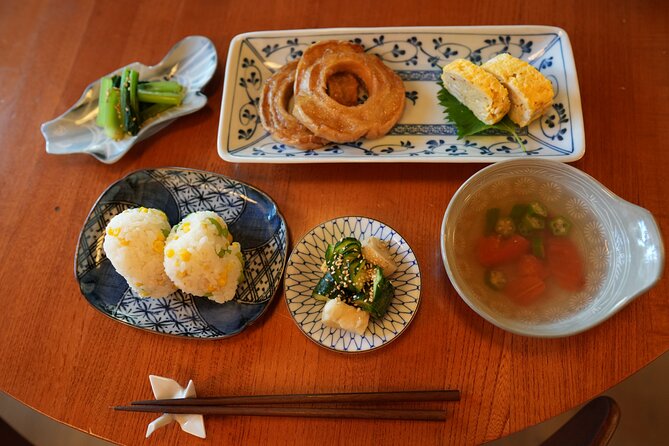
Tamagoyaki is a Japanese rolled omelet with a soft, fluffy texture. You cook the egg in layers, rolling each one into the next. It looks simple when done well, but the rolling takes a little attention, making it a useful cooking task for beginners.
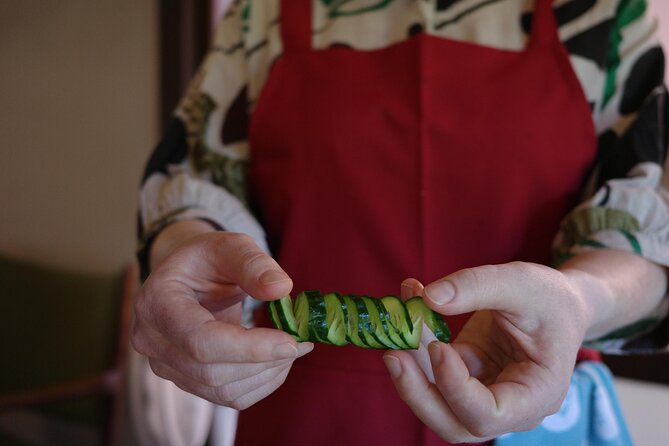
The menu also includes a seasonal vegetable dish. Seasonal cooking is one of the most meaningful parts of the meal because it shows how Japanese home food changes through the year. The exact vegetable preparation is not specified, so you should expect a dish based on what is suitable for the season rather than one fixed recipe.
This keeps the class connected to ordinary Japanese eating habits. You are not simply copying a standard menu from a restaurant. You are learning how a home meal can be built around what is available.
A completely different kind of day in Tokyo:
- Mt Fuji and Hakone 1-Day Bus Tour Return by Bullet Train
★ 5.0 · 26,383 reviews - 1-Day Tokyo Bus Tour
★ 5.0 · 14,250 reviews - Tokyo: teamLab Planets TOKYO Digital Art Museum Entry Ticket
★ 4.6 · 9,779 reviews - Mt Fuji & Hakone Cruise, Drum Show Bullet Train 1 Day from Tokyo
★ 4.0 · 7,413 reviews
Miso Soup and Arranging the Table
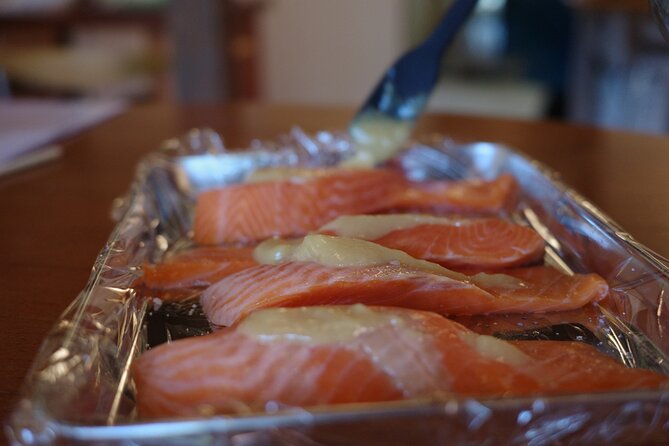
Miso soup completes the meal and brings the earlier dashi lesson back into focus. You begin with stock, then use it as the base for a familiar Japanese soup. The sequence gives you a clear sense of how separate cooking steps fit together.
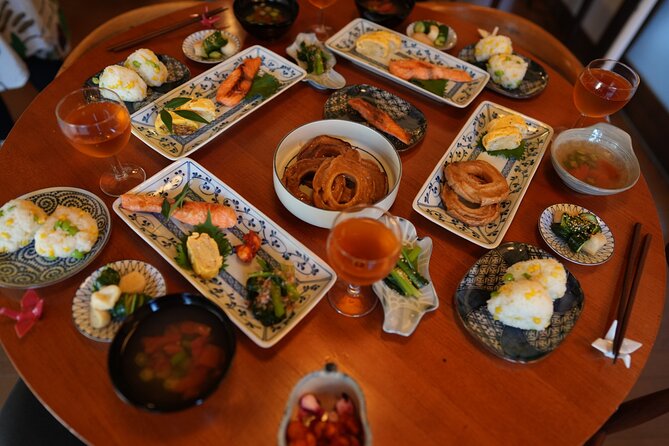
The meal also includes a small lesson in presentation. You learn about arranging dishes on the table, another detail that can be easy to miss when eating in restaurants. Japanese home cooking is not only about flavor. Placement, balance, and the relationship between rice, soup, and side dishes all matter.
This is where the experience moves beyond a recipe class. You are learning a pattern for an everyday Japanese meal: rice or rice-based food, soup, a main dish, vegetables, and a rolled egg. The food is accessible, but the customs around it add depth.
What Aki-san’s Teaching Style Means for You
Aki-san is described as kind, cheerful, careful, and patient. The teaching is aimed at beginners, including people who do not normally cook. That is useful information if you are worried about keeping up or making a mistake.
A previous class with Aki-san included homemade stock and ramen noodles made from scratch, while another session used autumn ingredients and included miso soup, rolled egg, rice balls, and sweet potatoes. Those details suggest a teaching style that favors doing the work yourself rather than watching a long demonstration.
The strongest praise centers on three things: the food tastes good, the instructions are easy to follow, and the atmosphere is friendly. You should still expect a practical lesson, not a professional kitchen course. If you already cook Japanese food often, the class may feel basic. If you are new to Japanese cooking, that simplicity is a benefit.
The English-speaking instruction also helps bridge the cultural details. You can ask about ingredients, kitchen habits, and table customs as you work. The experience is designed around exchange, so questions are part of the value.
Is Two and a Half Hours Enough?
The class lasts about two hours and thirty minutes. That is enough time for a complete meal and several different techniques, but it is not an all-day food workshop.
The menu is broad: dashi, a main dish, onigiri, tamagoyaki, seasonal vegetables, and miso soup. Because the class includes several items, some steps will necessarily be compact. You will gain a useful overview of home cooking rather than spending an hour perfecting one dish.
That format suits a sightseeing day. You can spend the morning elsewhere in Tokyo, travel to Koganei, cook and eat, then continue your plans. The class ends at the starting point, which makes the return trip straightforward.
Plan your time carefully around the journey to western Tokyo. The meeting point is near public transportation, but private transportation, parking fees, and transport costs are not included. The price covers the class itself, not getting there.
What the $99 Price Covers
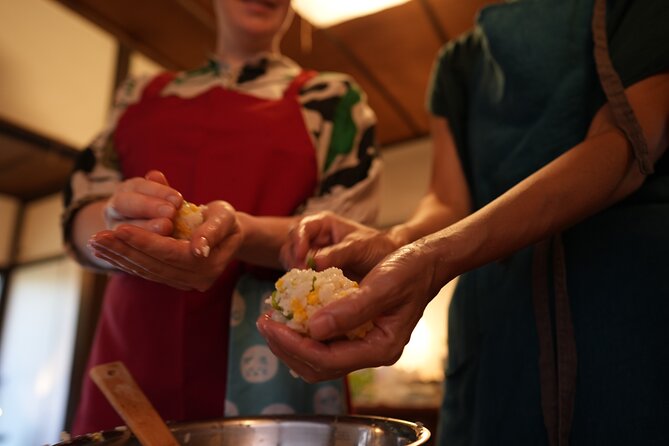
At $99 per person, this is more expensive than buying an inexpensive Japanese lunch. That comparison, however, misses what you are paying for. The fee includes the ingredients, cooking utensils, recipe and instruction materials, an apron, hand towels, and an English-speaking instructor.
You are also paying for access to a private home and a small group setting. With a maximum of six people, the class should give you more contact with the instructor than a large commercial cooking lesson. The value is strongest if you want to cook, ask questions, and learn cultural details rather than simply eat.
The price is less compelling if your main goal is a large meal or a quick food stop. You could eat more cheaply elsewhere. It makes better sense for someone who wants a personal activity and a recipe collection to take home.
Alcohol is not included. That fits the tone of the class, which focuses on cooking and everyday home food rather than a drinking session.
Who Should Book This Home Cooking Class?
I would recommend it to you if you want a slower, more personal side of Tokyo. It suits solo visitors, couples, families, and small groups who enjoy making food together. Beginners should feel comfortable, since the teaching is specifically friendly to people without much cooking experience.
It is also a good choice for anyone who wants cultural contact without signing up for a formal history lecture. The customs are built into the activity: shoes at the entrance, shared preparation, seasonal ingredients, and setting the table.
You should think twice if you need a central Tokyo location, a guaranteed specific dish, or a highly technical chef-led lesson. The class takes place in Koganei, the main dish is flexible rather than fixed, and the level is designed for everyday cooking.
For dietary restrictions, contact the provider before booking. The menu allows a choice of meat, fish, or vegetables, but the available information does not confirm arrangements for allergies, vegan diets, gluten-free cooking, or cross-contamination.
Booking and Cancellation Details
The activity accepts mobile tickets and confirmation is normally provided at booking. If you book within two days of the date, confirmation may take up to 48 hours and depends on availability.
Free cancellation is available when you cancel at least 24 hours before the start time. A cancellation made less than 24 hours ahead is not refunded, and changes within that same period are not accepted. Cut-off times use Tokyo local time, so keep that in mind if you are booking from another time zone.
The group size is capped at six. That limit is one reason to book early if your dates are fixed, especially since confirmation for late bookings is subject to availability.
Should You Book Tokyo Mom’s Kitchen?
Book this experience if you want to cook an ordinary Japanese meal in an ordinary Japanese setting. The combination of dashi, onigiri, tamagoyaki, seasonal vegetables, miso soup, and a flexible main dish gives you a useful taste of daily food rather than a single flashy specialty.
The strongest reasons to go are Aki-san’s beginner-friendly instruction, the small group, and the chance to learn household customs while you cook. The main drawbacks are the trip to Koganei, the $99 price, and the fact that a requested dish cannot be guaranteed.
For a visitor who values personal contact and practical food knowledge, the price is fair. For someone who only wants to eat Japanese food in central Tokyo, choose a restaurant instead.
FAQ
Where does the cooking experience take place?
It takes place at 4-chōme-15-17 Nakachō, Koganei, Tokyo 184-0012, Japan. The setting is a real Japanese home in a quiet Tokyo suburb, which may be a retro house or a lived-in family home.
How long does the activity last?
The experience lasts approximately two hours and thirty minutes.
What food will I prepare?
The menu includes a main dish, onigiri, tamagoyaki, a seasonal vegetable dish, and miso soup. You will also make dashi, the Japanese soup stock made from seaweed and dried fish.
Can I choose the main dish?
Yes. You can choose meat, fish, or vegetables and select saikyo-yaki, teriyaki, or a requested Japanese dish. A requested dish depends on what the instructor can prepare.
Is an English-speaking instructor available?
Yes. An English-speaking instructor is available for the activity.
Are ingredients and cooking equipment included?
Yes. The necessary ingredients and cooking utensils are included. An apron and hand towels are also provided.
How many people can join the class?
The activity has a maximum of six participants.
Can I cancel for a full refund?
Yes, if you cancel at least 24 hours before the experience start time. Cancellations made less than 24 hours ahead are not refunded, and changes during that period are not accepted.
Newly reviewed around Tokyo
- Tokyo Asakusa:Calligraphy & Make T-shirt Activity★ 5.0 · 62 reviews
- Intercity Shuttle, Tokyo to Haneda /Narita /Yokohama /Makuhari★ 5.0 · 5 reviews
- 1 Hour Travel around Tokyo with a Professional Photographer★ 5.0 · 3 reviews
- Travel Tokyo with Your Own Personal Photographer★ 5.0 · 43 reviews
- Train in Samurai Swordsmanship and Defeat the Demon in Tokyo★ 5.0 · 5 reviews
- Shuttle Van 6hr Tokyo Tour to-and-from Tokyo, Yokohama and Narita★ 5.0 · 9 reviews
- Kickboxing & Body Training with EX-Pro Fighter★ 5.0 · 4 reviews
- Traditional Japanese Knife Sharpening Class★ 5.0 · 18 reviews
Tokyo Cooking Classes, compared.

Roll and Authentic Sushi Making Class in Asakusa
Read our review →
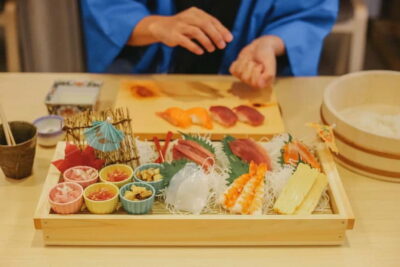
Sushi Making Class in a Happi Coat near a Famous Spot
Read our review →
Tokyo Sushi Making Class in Tsukiji with Professional Chef
Read our review →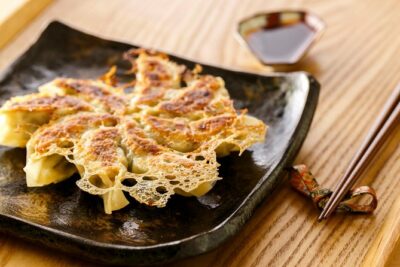
Ramen & Gyoza Cooking Class in Tokyo with Local Supermarket Visit
Read our review →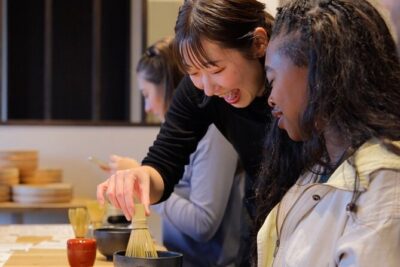
Matcha Making Class in Tokyo with Authentic Japanese Sweets Set
Read our review →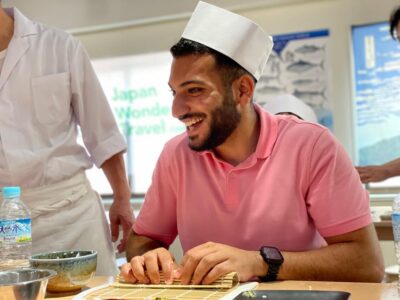
Tsukiji Fish Market Sushi Making Class with Pro Chef
Read our review →
Browse the lists this tour appears in