
Reviewed · WORKSHOPS
Tokyo: Knife Making Workshop (Sharpening, Engraving)
The best part of this Asakusa workshop is that you do not simply buy a Japanese knife, you help finish one. Under careful instruction, you sharpen the blade, attach the handle with a traditional hammer, and engrave your name in Japanese. The final knife feels personal because your hands did the work.
I like the practical lesson in sharpening, and I like the relaxed cultural introduction that explains Japanese kitchen knives alongside Japanese swords. Staff members such as Lisa, Joe, Mori, and Agata are praised for clear English and patient coaching. The main consideration is the price: at $161 per person, it is a sizeable souvenir purchase, and larger knife styles cost extra.
Key points
- You sharpen the blade yourself, with staff correcting your technique throughout the process.
- The standard knife is included, while usuba, deba, petit yanagiba, and other larger options may cost more.
- Your name goes on the handle in Japanese, and you may also try a small picture or other design.
- The 90-minute session begins with tea or soft drinks and a short lesson on knives and swords.
- You receive more than the knife, including attractive packaging, Japanese snacks, and a custom key-holder.
- The finished knife must be packed carefully, so place it in checked luggage or ask staff about shipping.
Starting with Japanese knives in Asakusa
The workshop takes place at BUB Activity Center, in the Heiwa Building at 2 Chome 6-11 in Asakusa. Look for the building and take the elevator to the fifth floor. The location is easy to reach by public transport, but the elevator detail matters because the activity center is not at street level.
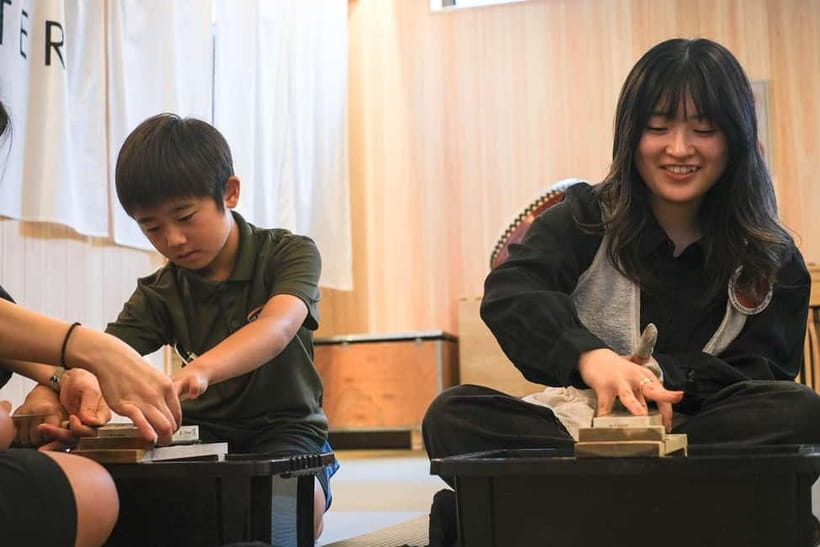
You begin by putting on a light haori, a short Japanese jacket that helps protect your clothes from stains. You also receive a badge with your name written in Japanese letters. It is a small touch, but it sets the mood quickly and gives you something to keep from the opening minutes.
The room is arranged for hands-on work rather than a formal lecture. You sit down with tea, juice, or another soft drink while a Japanese instructor explains the place of knives and swords in Japanese culture. The introduction includes the difference between Japanese katana-style swords and Western swords, along with an explanation of common kitchen knife types.
I like this beginning because it gives the sharpening lesson some context. You are not just rubbing metal against a stone without knowing what you have chosen. You first hear why blade shape matters and then select a knife that fits your interests.
More hands-on classes and workshops in Tokyo:
- Sushi Making Tokyo Roll and Authentic Japanese Sushi Class
★ 5.0 · 3,971 reviews - Tokyo: Roll and Authentic Sushi Making Class in Asakusa
★ 4.9 · 1,957 reviews - Tokyo Shinjuku Chopsticks Making Class
★ 5.0 · 1,763 reviews
Choosing the blade and paying for an upgrade
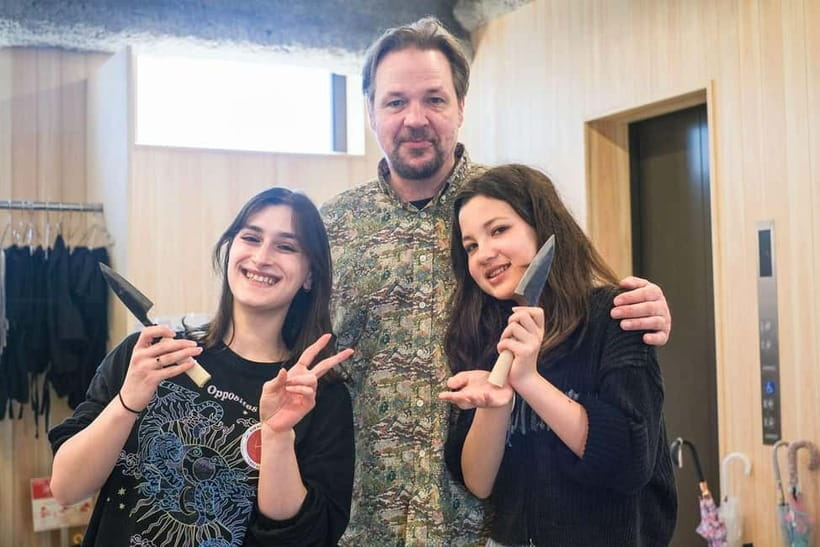
A standard, multipurpose knife is included in the $161 price. You can choose from up to five knife types, depending on the session, and some choices require a small additional payment. Bigger styles named by the provider include usuba, deba, and petit yanagiba.
This choice is one of the more useful parts of the activity. If you cook often, an all-purpose knife may make the most sense. If you are interested in Japanese kitchen tools, you may prefer one of the more specialized shapes. The staff explains the differences before you decide, so beginners are not expected to know the names in advance.
The extra charge is worth thinking about before you arrive. The advertised price is not necessarily the final price if you choose a larger or upgraded blade. Ask about the cost of your preferred knife before work begins, especially if you are watching your Tokyo budget.
The size of the knife is also part of the choice. That matters for comfort, luggage, and how you expect to use or display it at home. The included knife is the straightforward value option, while an upgrade turns the workshop into a more substantial purchase.
Sharpening takes patience, not brute force
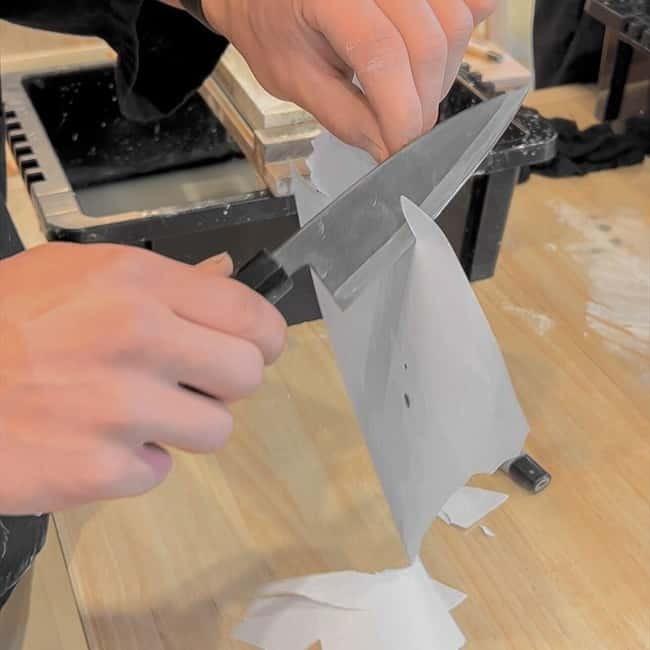
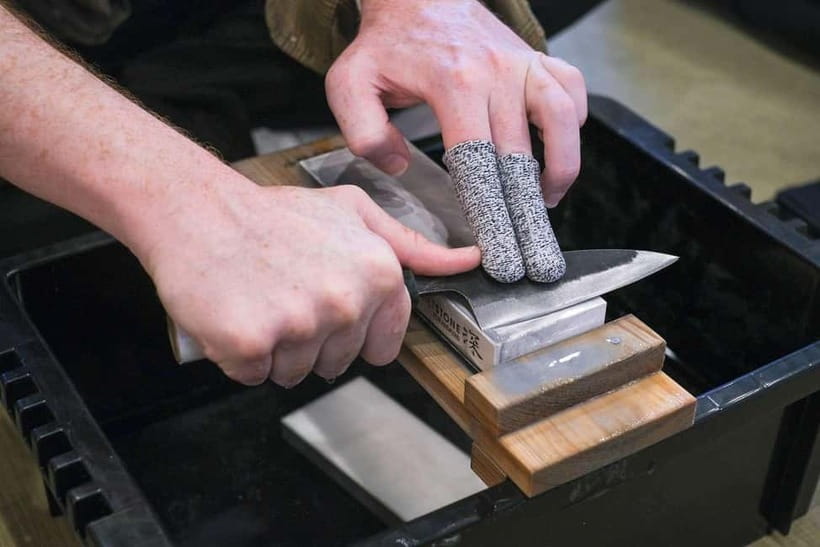
Once you have selected your blade, the main work begins. You learn to sharpen it and spend a good part of the class repeating the movement. The process calls for concentration, steady hands, and patience rather than speed.
The staff first shows you how to hold and move the knife, then watches as you try. English-speaking instructors stay close to correct your movements and offer personal advice. Lisa and Joe are among the guides who have been especially praised for helping participants through both sharpening and engraving, while Mori and Agata are noted for lively, clear instruction.
Do not expect to become a professional sharpener in 90 minutes. You will learn the basic motion and gain a better sense of what proper sharpening requires. The work can be tiring, especially if you have never used a sharpening stone, but that is also what makes the finished blade feel earned.
The class works well for beginners because mistakes are part of the lesson. Staff members politely correct your angle and technique rather than leaving you to guess. You may still wonder how perfect your edge really is, but you will leave with a useful skill and a better idea of how to care for a Japanese knife.
This is also the quietest part of the activity. After the conversation and history lesson, sharpening gives you a task that demands focus. Some people will find that satisfying. If you prefer a fast demonstration with little hands-on effort, the pace may feel slow.
Attaching the handle with a traditional hammer
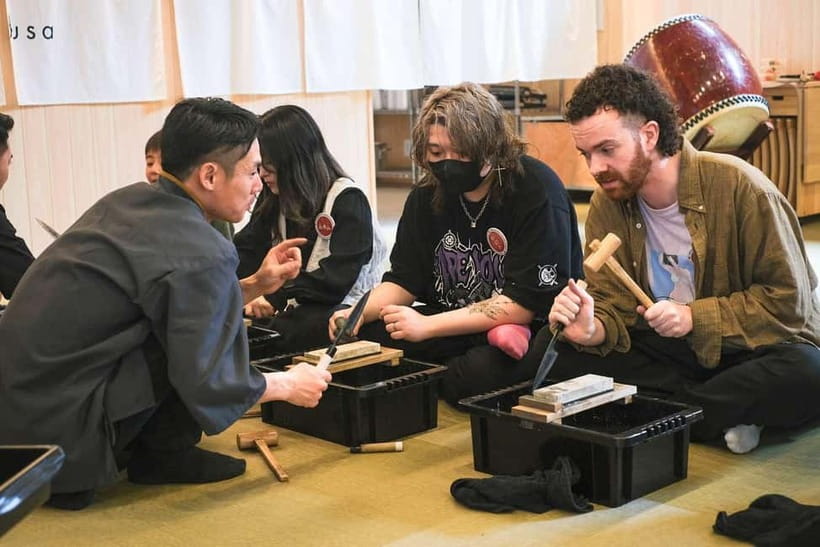
After sharpening, you work on the handle. The handle is attached using a traditional hammer, and staff members guide you through the process. Hearing the repeated sound of the hammer is part of the charm. It gives the final stage a clear sense of progress.
The handle is a practical part of the knife, but it is also where the souvenir becomes personal. You are not simply taking home a boxed product with a shop label. You have helped assemble it and can point to the marks of your own work.
One useful caution: a participant specifically found the handle quality less impressive than the rest of the experience. That does not make the knife unusable, but it is a fair reason to keep expectations realistic. This is a guided craft activity and souvenir, not a custom-forged chef’s knife made from raw steel.
A completely different kind of day in Tokyo:
- Mt Fuji and Hakone 1-Day Bus Tour Return by Bullet Train
★ 5.0 · 26,383 reviews - 1-Day Tokyo Bus Tour
★ 5.0 · 14,250 reviews - Tokyo: teamLab Planets TOKYO Digital Art Museum Entry Ticket
★ 4.6 · 9,779 reviews - Mt Fuji & Hakone Cruise, Drum Show Bullet Train 1 Day from Tokyo
★ 4.0 · 7,413 reviews
Engraving your Japanese name
The engraving stage is the most memorable part for many people. Staff help write your name in Japanese letters on the handle, and you use the tools to mark it. You can also try engraving a picture or another design if your imagination takes you in that direction.
This is harder than it looks. Small lettering on a handle leaves little room for a shaky hand, so your result may be charmingly imperfect. The instructors help with the Japanese basics and guide the process, but they do not erase the fact that you made the mark yourself.
If you want a very polished inscription, ask the staff what options are available before starting. One participant felt that having more engraving methods would improve the experience. At present, the appeal comes from trying the traditional approach and accepting a handmade result.
The engraving also gives the activity a cultural connection without turning it into a long classroom lecture. You learn a little Japanese writing, use your name in a new form, and carry that connection home on the handle.
Snacks, packaging, and the useful extras
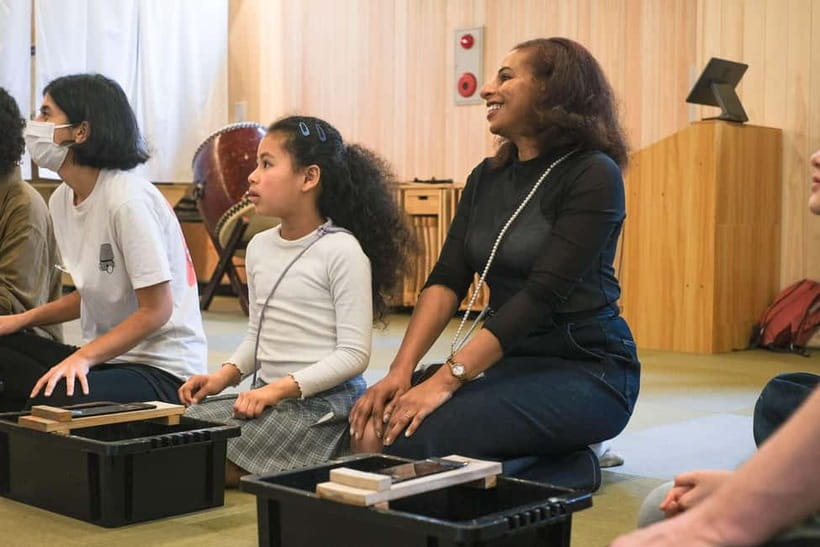
The session includes Japanese snacks and tea or soft drinks. These are modest additions, but they help break up the physical work and make the room feel welcoming. Bilingual staff adjust explanations to your level of English, so you do not need to know Japanese to follow the lesson.
You also receive aesthetic packaging for the finished knife. That is useful if the item is a gift or if you plan to display it. A customized key-holder with a unique design is included as an extra present, giving you a small souvenir that does not involve luggage restrictions.
The knife itself is the main value, though. At $161, you are paying for the blade, instruction, staff time, cultural explanation, engraving, and the chance to assemble the item. Compared with simply buying a knife in Tokyo, the workshop costs more. Compared with paying for a standard class and then separately buying a personalized souvenir, the price becomes easier to justify.
I would book it for the activity as much as for the knife. If you only want the cheapest Japanese kitchen knife, shop in Asakusa or another kitchen-goods district instead. If you want a story attached to the object, the class earns more of its price.
Who will enjoy the 90-minute format
This is a good fit for couples, friends, families, and solo visitors who like practical cultural activities. One parent took part with a 10-year-old, and the format has also worked well for couples where one person participates and the other watches.
You do not need prior knife-making or sharpening experience. The instructors expect beginners and provide hands-on help. The work is tactile and focused, so it suits you if you prefer making something to simply looking at historic objects.
It is especially appealing if you cook, collect kitchen tools, enjoy Japanese crafts, or want a souvenir that is more personal than a magnet. It also makes sense for someone interested in swords and Japanese history but who wants an activity that ends with a useful household object.
The activity may be less suitable if you have a packed schedule. Ninety minutes is the stated duration, but one session ran longer because the staff accommodated participants who needed extra time. That flexibility is kind, but you should not schedule an appointment immediately afterward.
Friends or family members can attend as observers, but an observation fee is charged on site. This is useful when two people want to learn together but do not need two knives. Check the fee before arriving so the arrangement is clear.
Packing the knife for your flight home
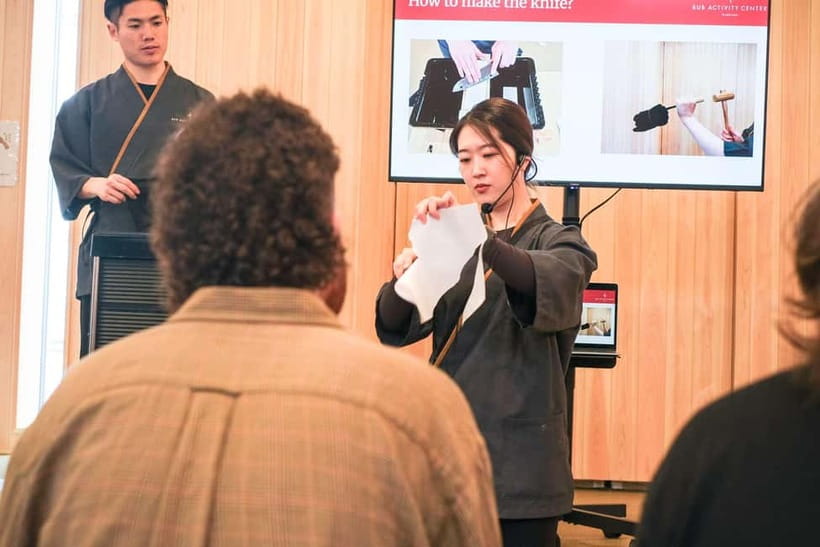
A knife is not the sort of souvenir you should casually place in a carry-on bag. The provider advises putting the knife box into your checked luggage or asking the staff to ship it.
Plan for that before the workshop. If you are flying soon and have no checked bag, shipping may be the simpler choice. The attractive packaging helps protect the knife, but it does not change airline and airport security rules.
This is also one reason to book the class earlier in your Tokyo stay rather than on the final morning. You will have time to arrange shipping or repack your luggage if needed. The activity center itself does not provide transportation, so you also need to handle your own journey to and from Asakusa.
The center is wheelchair accessible, and staff assistance is available in English. Alcohol and drugs are not allowed, which is sensible for a session involving blades and hammers.
Should you book the BUB knife workshop?
I would book this if you want a hands-on Tokyo experience with a useful result. The strongest features are the patient English-speaking staff, the chance to learn real sharpening basics, and the personal engraving. Guides including Lisa, Joe, Mori, and Agata help keep the mood friendly while still correcting technique when needed.
I would hesitate only if $161 feels too high for a souvenir, or if you want a professionally finished, premium chef’s knife rather than a handmade class project. Remember that some knife types cost extra, and one participant found the handle quality could be better.
For most people, the activity makes the most sense as a cultural workshop first and a shopping experience second. You learn about Japanese knives and swords, spend time speaking with local staff, and take home an object tied to your own effort. If that sounds better than another quick purchase in Tokyo, reserve a place.
FAQ
How long does the knife-making workshop last?
The activity lasts approximately 90 minutes, or 1.5 hours. Some sessions may run longer if staff allow extra time to finish the knife.
Where does the workshop take place?
It takes place at BUB Activity Center, Tokyo, Taito-ku, Asakusa, 2 Chome 6-11, Heiwa Building. Take the elevator to the fifth floor.
Is the workshop suitable for beginners?
Yes. No previous knife-making or sharpening experience is required. English-speaking staff provide guidance and correct your movements during the work.
What type of knife is included?
The price includes a standard-size, multipurpose knife to take home. You can select from up to five types, with some larger options requiring an additional fee.
Can I engrave my name on the knife?
Yes. You can engrave your name in Japanese on the handle. The activity also allows you to try a picture or another design with staff assistance.
Can a friend or family member watch?
Yes, but observers must pay an observation fee on site. This can suit couples or families where only one person wants to take home a knife.
How should I take the knife home on a flight?
Place the boxed knife in your checked luggage or ask the staff to ship it. Do not plan to carry it in your hand luggage.
Newly reviewed around Tokyo
- Tokyo Asakusa:Calligraphy & Make T-shirt Activity★ 5.0 · 62 reviews
- Intercity Shuttle, Tokyo to Haneda /Narita /Yokohama /Makuhari★ 5.0 · 5 reviews
- 1 Hour Travel around Tokyo with a Professional Photographer★ 5.0 · 3 reviews
- Travel Tokyo with Your Own Personal Photographer★ 5.0 · 43 reviews
- Train in Samurai Swordsmanship and Defeat the Demon in Tokyo★ 5.0 · 5 reviews
- Shuttle Van 6hr Tokyo Tour to-and-from Tokyo, Yokohama and Narita★ 5.0 · 9 reviews
- Kickboxing & Body Training with EX-Pro Fighter★ 5.0 · 4 reviews
- Traditional Japanese Knife Sharpening Class★ 5.0 · 18 reviews
Workshops, compared.
Sushi Making Tokyo Roll and Authentic Japanese Sushi Class
Read our review →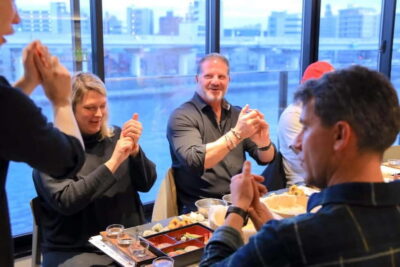
Roll and Authentic Sushi Making Class in Asakusa
Read our review →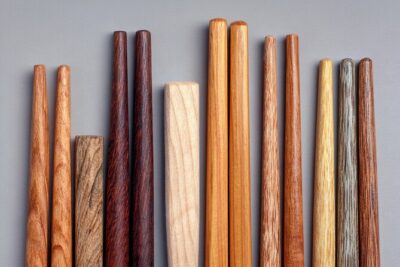
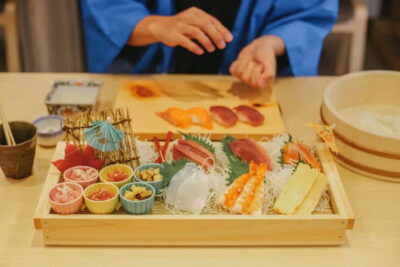
Sushi Making Class in a Happi Coat near a Famous Spot
Read our review →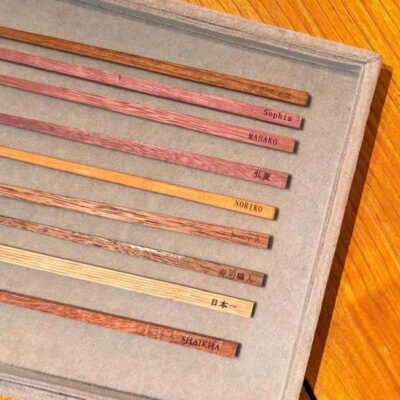
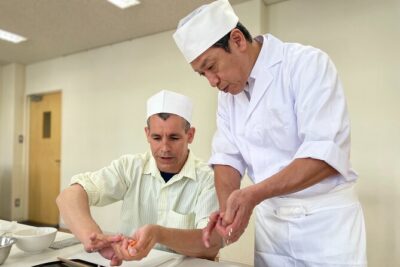
Tokyo Sushi Making Class in Tsukiji with Professional Chef
Read our review →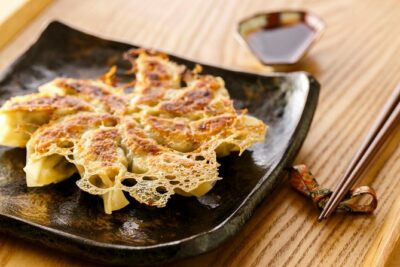
Ramen & Gyoza Cooking Class in Tokyo with Local Supermarket Visit
Read our review →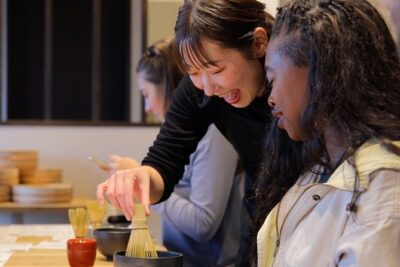
Matcha Making Class in Tokyo with Authentic Japanese Sweets Set
Read our review →Browse the lists this tour appears in