
Reviewed · GINZA TOURS
Tokyo’s Upmarket District: Explore Ginza with a Local Guide
Ginza is easiest to enjoy when you have a plan, but not a rigid one. This private tour lets you shape two to four hours around shopping, Japanese food, kabuki, family fun, or the quieter corners tucked behind Tokyo’s luxury storefronts. Your host may take you from the grand clock tower at Wako to the tiny restaurants beneath the Yamanote railway line.
I like the personal matching and the freedom to change direction as you go. I also like that the tour can balance Ginza’s polished side with places such as Yurakucho Gado-shita, where inexpensive local food sits close to fine restaurants. The main drawback is that $64 buys guidance, not a full day of sightseeing: food, attraction tickets, and transport cost extra, and the quality depends heavily on the host you receive.
Key points
- A private tour for up to six people, with a route shaped around your interests
- Ginza’s luxury side, including Wako, department stores, designer shops, and fine dining
- Local food advice, from high-end Japanese cuisine to small railway-side restaurants
- Cultural stops, including Kabukiza and its connection to kabuki theater
- Family-friendly choices, such as Hakuhinkan Toy Park
- Flexible walking time, usually two to four hours, with pickup possible from nearby accommodation
Ginza works best with a flexible plan
Ginza is not one single kind of neighborhood. It is a shopping district, a dining district, a theater quarter, and a place where old Tokyo customs sit beside gleaming towers. A private host can help you choose instead of forcing you through a fixed checklist.
Before the tour, you are contacted to discuss what you want. Book at least 72 hours ahead so the company has time to match you with a suitable local host and prepare the route. Your interests and personality matter here. A visitor seeking department stores needs a different afternoon from a parent looking for toys or a food lover seeking lunch advice.
The route can also change while you walk. If a shop catches your eye, you can spend more time there. If a planned stop does not appeal, you can move on. That flexibility is the central reason to choose this experience over a standard group walk.
The group is normally no larger than six people. That is small enough for conversation and questions, though you should mention a larger party when booking so arrangements can be made.
More things to do in Ginza:
- Chopstick Making Workshop in Ginza
★ 4.8 · 1,366 reviews - Tokyo: Art Aquarium Museum GINZA Entry Ticket
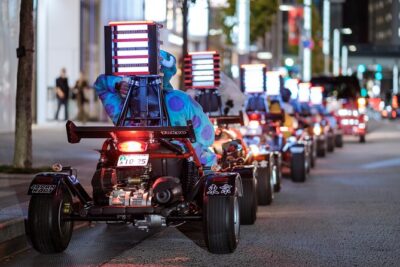
★ 4.5 · 278 reviews - Official Japan Go-Kart Through Tokyo Bay / Ginza (IDP Required)
★ 4.5 · 71 reviews
Starting beside Mitsukoshi’s Lion Sculpture
The meeting point is next to the Lion Sculpture by the main entrance to Mitsukoshi Ginza. This is a useful landmark in a district full of large department stores and busy streets.
Mitsukoshi gives you an immediate sense of Ginza’s character. Department stores here are not simply places to buy clothes. They bring together fashion, cosmetics, food, household goods, gifts, and carefully presented Japanese products. Your host can help you decide where to spend your time instead of letting the sheer number of choices wear you out.
Pickup from your accommodation may be possible if it is within a reasonable distance. Otherwise, you meet at the sculpture. Transportation during the tour is not included, so expect the experience to focus on walking unless you arrange a car or other transport for an additional fee.
That walking format suits Ginza. Storefronts, theaters, restaurants, side streets, and railway arches are close enough to connect on foot. Still, tell your host about mobility needs before the tour. The activity is listed as wheelchair accessible, but a personalized route will work best when your practical requirements are discussed early.
Wako and the polished side of Ginza
Wako is one of the district’s clearest landmarks. Its clock tower gives the area a grand focal point, while the store itself is known for luxury goods. If you enjoy high-end shopping, this is a natural part of the route.
You do not need to buy anything to appreciate the stop. Ginza’s appeal includes looking at displays, comparing department stores, and seeing how Tokyo presents luxury. Your host can also suggest less expensive shops, which matters if you want the atmosphere without committing to designer prices.
This is one place where your interests shape the value. A shopper focused on luxury brands could easily spend much of the tour around Ginza’s major stores. If shopping is not your priority, tell your host. Otherwise, you may spend too much of your limited two to four hours looking at polished storefronts when you would rather eat, visit a theater, or explore a quieter street.
The tour can also provide practical shopping advice. You can ask where to find the kind of goods you want and which parts of the district suit your budget. The information is more useful than a simple parade past famous stores because it helps you make choices later in your Tokyo stay.
Kabukiza brings old theater into modern Ginza
Kabukiza is the district’s major cultural stop. It is a playhouse devoted to kabuki, the traditional Japanese theater form known for stylized movement, costumes, makeup, and dramatic presentation.
You may not have time to attend a performance during a short walking tour, and admission tickets are not included. Even so, seeing the theater gives the neighborhood a different character. Ginza is not only about restaurants and fashion. It also has a connection to long-running Japanese performance traditions.
Ask your host what interests you about kabuki. You may want a brief explanation of the theater, advice about seeing a performance, or simply an exterior stop while moving between other parts of Ginza. Since the itinerary is private, you can decide how much time to give it.
This is a good example of the tour’s strength. A fixed itinerary might give every participant the same short explanation. Here, you can ask questions at your own pace, though the depth of the explanation will depend on the host assigned to you.
More guided tours in Tokyo:
- Tokyo 6hr Private Tour with Government-Licensed Guide
★ 5.0 · 3,902 reviews - Tokyo: Shinjuku Local Bar and Izakaya Guided Walking Tour
★ 4.9 · 1,794 reviews - Tokyo: Private City Highlights Tour with Local Guide
★ 4.8 · 1,433 reviews - Tokyo: Tsukiji Fish Market Guided Walking Tour
★ 4.9 · 1,397 reviews
Yurakucho Gado-shita changes the mood
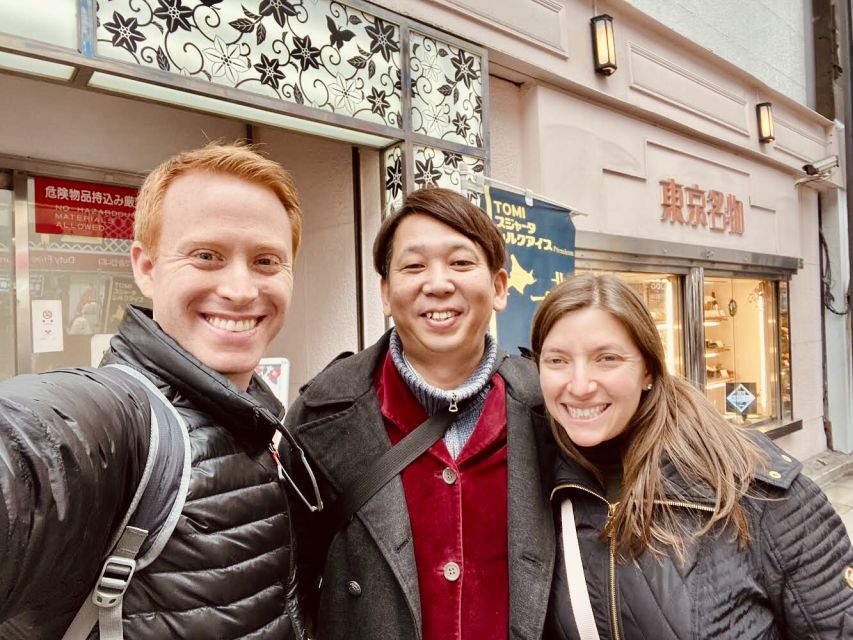
For a sharper contrast with Ginza’s luxury stores, ask about Yurakucho Gado-shita. This collection of small restaurants sits beneath the Yamanote railway line. It offers a very different mood from the department stores, with places serving everything from French wine to inexpensive local street food.
This is one of the most useful suggested stops for anyone who wants to eat well without treating every meal as a major splurge. You can see how a highly polished district connects with casual dining spaces where the setting is more informal and the choices are broader.
Food and drinks are not included in the $64 price, so budget separately for anything you order. That is not a flaw in itself, since it lets you choose what and where to eat. But the final cost can rise quickly if your group chooses a substantial meal, drinks, or several tastings.
The food advice may be especially valuable if you have dietary needs. One recent tour involved help finding a suitable vegetarian lunch. If you eat vegetarian food or have other requirements, mention them before the tour rather than waiting until you are hungry.
Fine dining and the Grand 47 option
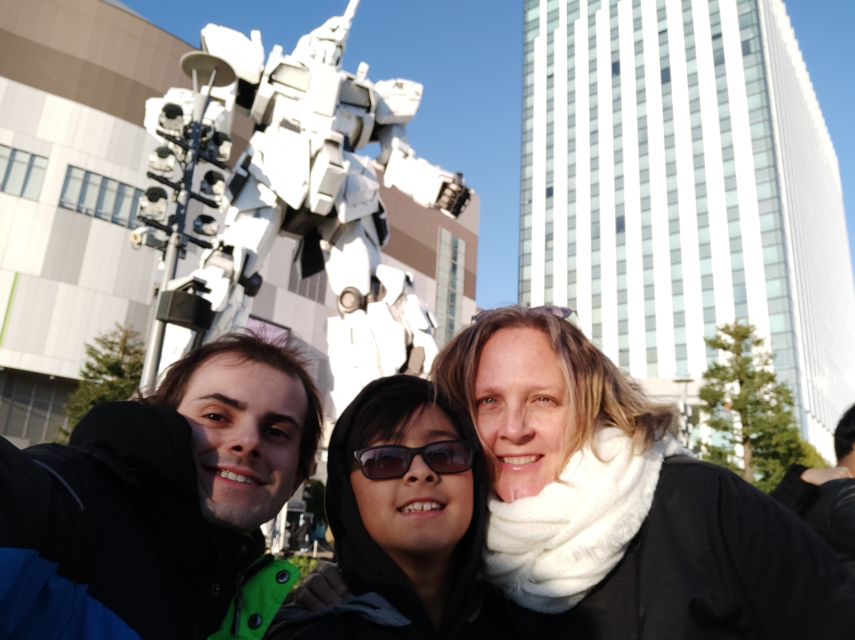
Ginza has no shortage of ambitious restaurants. The Grand 47 is presented as one possible stop, with a modern approach to classic Japanese cuisine. It may suit you if you want a polished meal and are interested in contemporary Japanese cooking.
The tour does not include the meal, and the experience is not a restaurant reservation package. Think of your host as someone who can help shape the food portion of your outing, not as a prepaid dining ticket.
This distinction matters at the $64 price. You are paying for private time, local suggestions, and a route built around you. Restaurant bills are separate. If your main goal is an expensive dinner, you may prefer to ask the host for advice and keep the walking portion short. If you want a mix of sights and food, a longer two to four hour route makes better sense.
Hakuhinkan Toy Park for families and playful adults
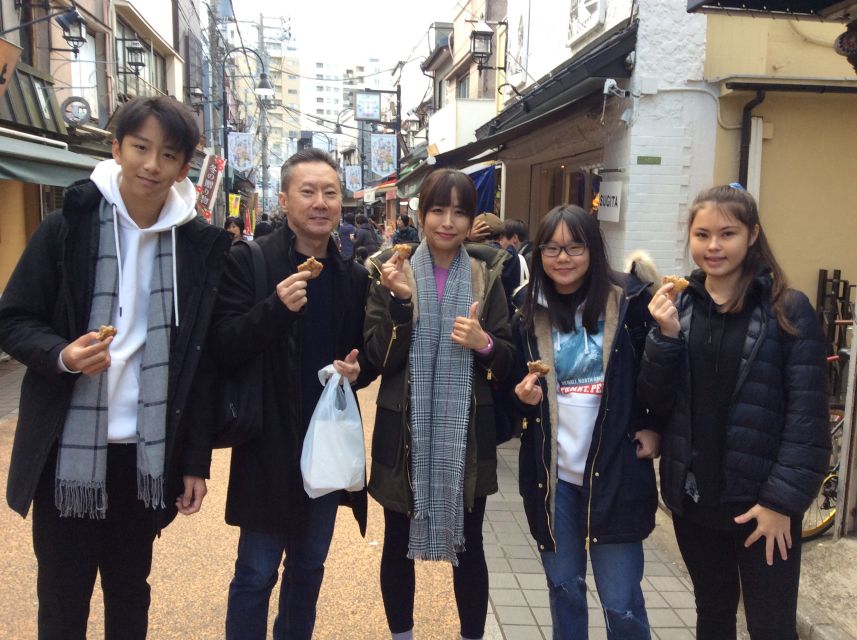
Hakuhinkan Toy Park gives the itinerary a lighter side. It is one of Japan’s best-known toy stores, with giant stuffed toys and many other products aimed at children and anyone who still enjoys a good toy shop.
This stop is useful for families because it offers a clear activity beyond shopping for clothes or souvenirs. It also gives the host a way to build a route around a child’s interests rather than asking young children to follow an adult shopping plan.
The store can work for adults, too, especially if you want an unusual look at Japanese toys and gifts. Still, it is a focused stop. If your group has no interest in toys, ask for more time at Kabukiza, food spots, or the district’s shops instead.
The private format helps here. You can include a toy store without making every participant commit to a long family itinerary, or skip it entirely if it does not fit your group.
What your host adds to the experience
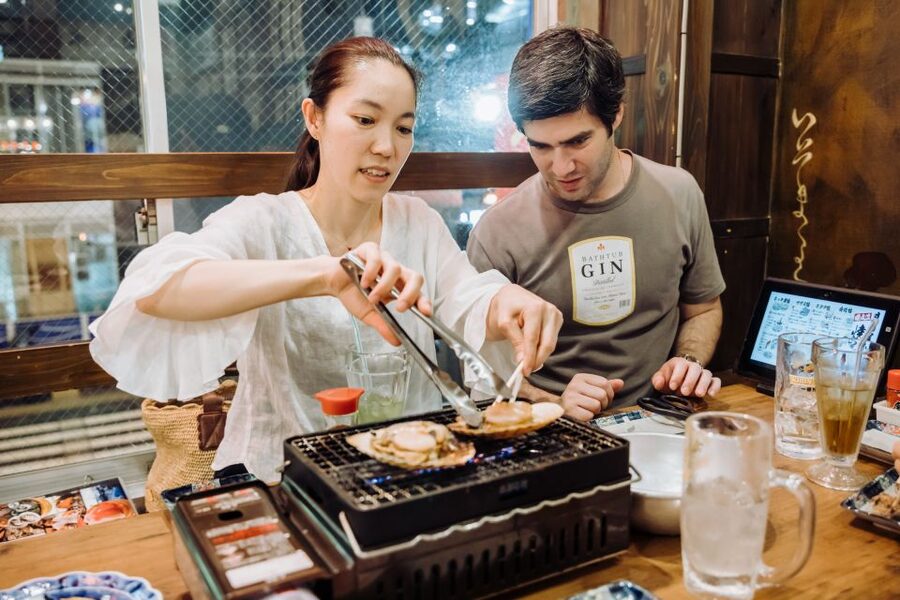
The host is the deciding factor. Past bookings have involved hosts named Alberto, Shoko, and Noriko. Alberto was praised for explaining interesting historic areas, while Shoko was described as talkative and kind. Noriko was credited with doing more to help than expected.
Those details point to the best use of the tour: conversation. Ask questions. Explain what you like. Tell your host if you want history, food, shopping, family stops, or practical Tokyo advice. A silent walk past stores would not justify the private-tour price.
The experience is offered in English or Japanese. Your host can also give suggestions for things to do elsewhere in Tokyo, which can be useful early in your stay. You can use the tour to get your bearings, then spend later days following up on recommendations that match your interests.
There is also a real limitation. One booking received a very poor assessment because the guide explained little and offered weak value. That is a reminder that personalization does not guarantee the same level of communication from every host. Give clear requests in advance and use the pre-tour contact to explain the type of guide you want.
Is $64 a fair price for two to four hours?
At $64 per person, this is not the cheapest way to walk around Ginza. It can be good value for a private group, especially if several people share the same interests and you want advice rather than a generic route.
The value improves when you use the host well. A shopping plan, vegetarian lunch search, family route, or introduction to kabuki can save you time and reduce guesswork. The cost feels less attractive if you simply want to see Ginza’s main streets and do not plan to ask questions.
Remember the extra expenses:
- Food and drinks are separate.
- Attraction tickets are separate.
- Transport to and from the meeting point is separate.
- Transport during the tour is not included.
- Additional requirements can be arranged at extra cost.
The base price covers a private and personalized experience with a local host, plus walking and possible pickup from nearby accommodation. It does not cover a full day of spending. Set your food and shopping budget before you arrive.
How to plan your best Ginza route
I would keep your request specific. Saying you like Ginza is too broad. Instead, tell the host three or four priorities.
You might ask for Wako and department stores, one cultural stop at Kabukiza, an inexpensive meal near Yurakucho, and advice for shopping elsewhere in Tokyo. A family might request Hakuhinkan Toy Park, a short walk, and food suitable for children. A food-focused group might spend less time shopping and more time comparing casual and fine dining options.
Allow room for changes. The tour is designed to remain flexible, so you do not need to fill every minute with planned stops. At the same time, two hours passes quickly in Ginza. If you want shopping, food, theater, and history, choose the full four-hour duration if available.
A practical request is to ask for a route that mixes famous places with less expensive local options. That gives you Ginza’s polished center without making the whole experience feel like a luxury shopping advertisement.
Who should book this private Ginza walk?
This suits first-time Tokyo visitors who want help making sense of Ginza. It also works for repeat visitors who have already seen the main sights and want a more personal route.
I would recommend it most to:
- Couples who want a flexible food and shopping walk
- Families interested in Hakuhinkan Toy Park
- Visitors who want practical advice for the rest of Tokyo
- Shoppers who need help comparing luxury and lower-cost stores
- Small groups seeking an English or Japanese speaking host
- People with specific food interests or dietary needs
I would be more cautious if you want guaranteed historical depth, a fixed list of attractions, or included meals and admission. The experience depends on the host, and the disappointing booking shows that the match is not always perfect.
The activity is wheelchair accessible, but share your needs during the planning stage so the route can be set up properly. A larger group can be accommodated only if you mention it in advance.
Should you book this Ginza experience?
Book it if you want a private afternoon shaped around your own interests, especially shopping, food, family activities, or local advice. The strongest part is the contrast between Wako and Kabukiza on one side, and the modest restaurants beneath the railway on the other.
Do not book it expecting a complete sightseeing package with meals, tickets, and transportation included. The $64 fee pays for the host and the planning. To get good value, contact the company early, explain exactly what you want, and ask for a route that includes both Ginza’s famous sights and places that fit your budget.
FAQ
How long does the Ginza tour last?
The tour lasts between two and four hours. Starting times depend on availability.
Where does the tour meet?
The host waits next to the Lion Sculpture by the main entrance to Mitsukoshi Ginza.
Is pickup from my accommodation included?
Pickup may be possible if your accommodation is within a reasonable distance. Confirm this when arranging the experience.
Is transportation included during the tour?
No. The experience is primarily a walking tour. Other transportation can be arranged at an additional cost.
Are food, drinks, and attraction tickets included?
No. Food, drinks, and tickets are not included. They can be arranged as part of additional requirements for an extra cost.
What languages are available?
The tour is offered in English and Japanese.
Can I cancel or pay later?
You can cancel up to 24 hours in advance for a full refund. You can also reserve now and pay later, so no payment is required today.
Newly reviewed around Tokyo
- Tokyo Asakusa:Calligraphy & Make T-shirt Activity★ 5.0 · 62 reviews
- Travel Tokyo with Your Own Personal Photographer★ 5.0 · 43 reviews
- Intercity Shuttle, Tokyo to Haneda /Narita /Yokohama /Makuhari★ 5.0 · 5 reviews
- 1 Hour Travel around Tokyo with a Professional Photographer★ 5.0 · 3 reviews
- Train in Samurai Swordsmanship and Defeat the Demon in Tokyo★ 5.0 · 5 reviews
- Shuttle Van 6hr Tokyo Tour to-and-from Tokyo, Yokohama and Narita★ 5.0 · 9 reviews
- Kickboxing & Body Training with EX-Pro Fighter★ 5.0 · 4 reviews
- Traditional Japanese Knife Sharpening Class★ 5.0 · 18 reviews
Ginza Tours, compared.
Official Japan Go-Kart Through Tokyo Bay / Ginza (IDP Required)
Read our review →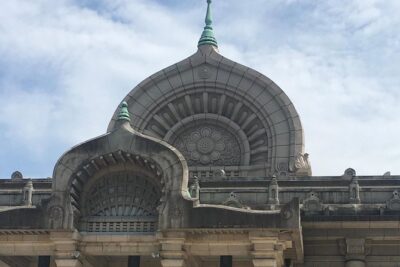
【SUMO FESTIVAL】Tokyo Ginza: Sumo Show & Photo Experience
Read our review →
Tokyo GINZA: KONPARU Japanese Cabaret Show with Drink
Read our review →
Browse the lists this tour appears in