
Reviewed · TOKYO BIKE TOURS
Tokyo: 2-Hour Night Bike Tour of the City’s Hidden Gems
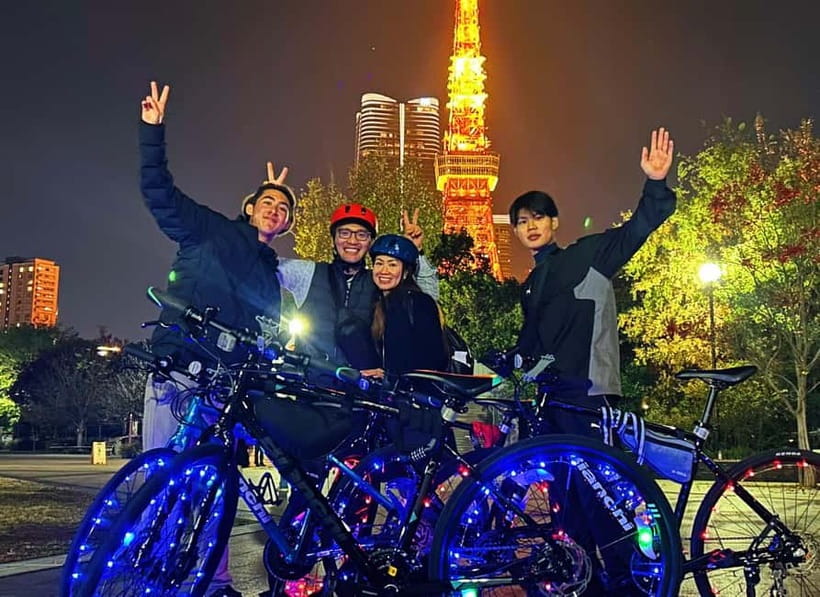
Tokyo looks different from a bicycle after sunset. On this two-hour ride, you pedal a neon-lit Bianchi or Fuji bike from Yoyogi Park toward Shibuya, Omotesando, Roppongi, Tokyo Midtown, and Tokyo Tower. The glowing wheels add a playful touch, but the real treat is seeing how these districts connect beyond the train stations.
I like the personal route choices and the chance to ask questions along the way. Guides such as Kei have adjusted rides for guests who wanted to see something beyond the planned stops. I also like the small details: a phone pouch mounted on the bike, bike insurance, and an English-speaking guide who can explain what you are seeing.
The catch is important: you need to ride confidently. Tokyo cycling can mean sharing roads without bike lanes, and this is not a beginner lesson. Cars, traffic signals, and city crowds require attention, especially if you are used to quiet bike paths.
Key points at a glance
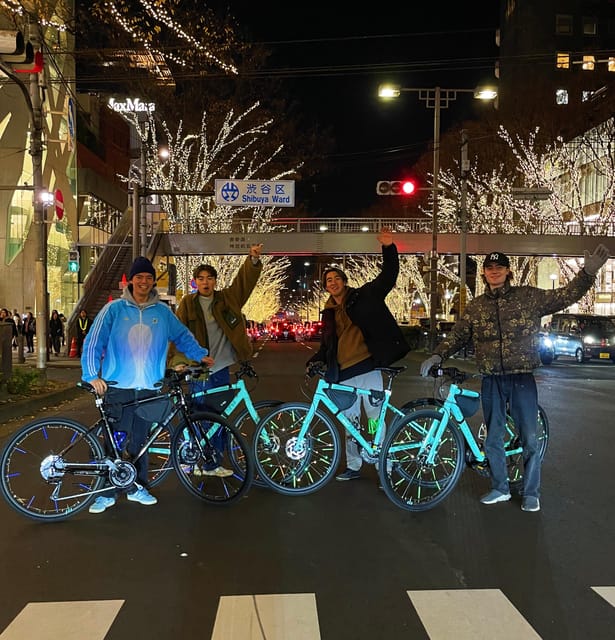
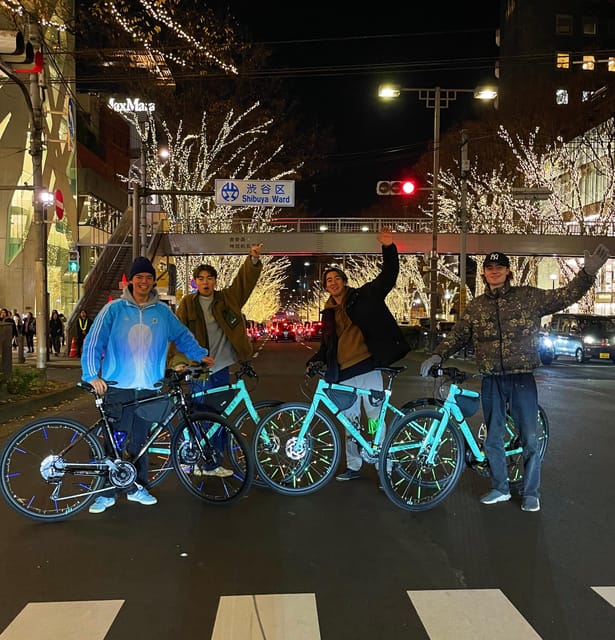
- Neon-lit Bianchi and Fuji bikes: The custom lights make your group easy to spot and turn an ordinary ride into a memorable night out.
- A city-spanning route: In two hours, you pass through Shibuya, Omotesando, Roppongi, Tokyo Midtown, and Tokyo Tower.
- A flexible guide-led ride: Guides can respond to your interests, with Kei praised for adapting routes and adding local details.
- Yoyogi Park meeting point: Look for the illuminated bikes at the park’s main entrance.
- Road cycling, not a lesson: You should already be comfortable riding in traffic and on streets without dedicated bike lanes.
- Good for night views: The ride focuses on Tokyo’s illuminated streets, buildings, crossings, and seasonal displays rather than indoor sights.
Starting at Yoyogi Park with a glowing bicycle
Your meeting point is the main entrance of Yoyogi Park. The illuminated bikes should make the group easy to find, which is useful in a city where even a simple meeting can become a small navigation project.
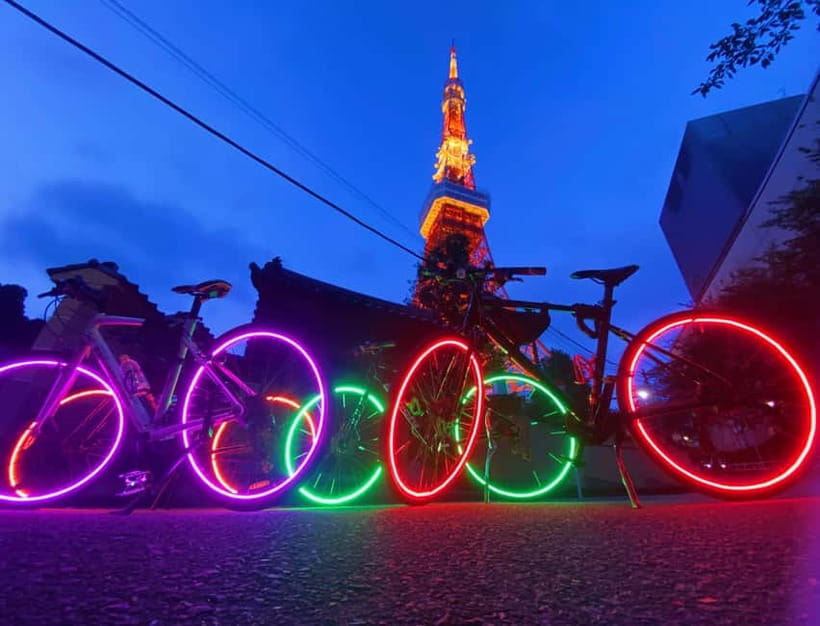
The bikes are customized Bianchi and Fuji models. The neon lights are not just decoration. They give the group a clear visual identity and make the ride feel festive from the first minute. You also receive a small pouch attached to the bike for a phone, wallet, or keys, so you do not need to keep reaching into a pocket while riding.
The tour lasts two hours and ends back at Yoyogi Park. That makes planning easier than a one-way cycling activity. You can leave luggage at your accommodation, enjoy the ride, and return to the same general area without arranging a pickup at another district.
Wear comfortable clothing and shoes. Bring water, since even an evening ride can leave you warm, particularly if you are cycling at a steady pace. Smoking, alcohol, drugs, and littering are not allowed.
More Tokyo bike tours:
- Tokyo Great Cycling Tour
★ 5.0 · 811 reviews - Tokyo Top Highlights 3h Guided E-bike Tour
★ 5.0 · 714 reviews - 3h Tokyo E-Bike Tour: Hidden Gems, and Local Life with guide
★ 5.0 · 670 reviews
Shibuya after dark, with the city moving around you
Shibuya is one of the tour’s most recognizable sections. Its famous Scramble Crossing is a fast-moving show of people, lights, signs, and traffic. Seeing the area by bike gives you a different rhythm from visiting on foot. You are not simply crossing the district between train platforms and shops. You are moving through its streets as the signs and buildings glow around you.
This part of the route is also where cycling skill matters most. Shibuya is not presented as a quiet cycle path. You may need to ride on roads without bike lanes, follow traffic signals, and stay alert around vehicles and pedestrians. If you are only comfortable on a protected path, this may feel stressful rather than fun.
I would treat the Shibuya section as a moving city tour, not a photo stop at every corner. The ride is designed to show you Tokyo’s nighttime energy from the saddle. Your guide can point out details and help keep the group together, but you remain responsible for handling the bicycle safely.
Omotesando’s illuminated avenue
From Shibuya, the ride continues toward Omotesando. This broad, polished avenue is known for its modern shops and design-conscious buildings, and seasonal lights can add an extra layer of sparkle after sunset.
Omotesando is a good contrast to Shibuya. Shibuya feels louder and more kinetic, while Omotesando offers a cleaner, more deliberate visual style. Glass fronts, shop displays, and carefully arranged lighting create a very different mood. The tour lets you see both districts in one evening without spending time on train transfers.
Seasonal displays can vary, so you should not book this solely for one particular decoration unless the operator confirms it for your date. Still, the route’s value does not depend on a single installation. You get a changing series of illuminated streets, with the guide adding context as you go.
The bike makes a difference here. On foot, you might cover only a short stretch before stopping or turning back. By bicycle, you can connect Omotesando with the other neighborhoods while keeping the evening focused on Tokyo’s outdoor night scenes.
Roppongi’s glass towers and modern glow
The ride then reaches Roppongi, where the mood shifts again. This district combines upscale buildings, contemporary design, and bright urban lighting. Reflections from glass towers and installed lights create some of the tour’s more futuristic views.
Roppongi works well in a night cycling itinerary because much of its character comes from the relationship between buildings and illumination. You are not stopping for a museum visit or a long interior tour. Instead, you are watching the city’s surfaces change as you ride past them.
The guide is especially useful here. A good guide can turn a string of impressive buildings into a sense of place by explaining what you are passing and why the district looks the way it does. Kei is specifically praised for being friendly, entertaining, and willing to adjust the route around personal interests. If he is leading your ride, tell him early what you would like to see.
That flexibility is one of the stronger reasons to choose a guided bike tour instead of simply renting a bicycle. You are paying for the bike, but also for someone who can connect the stops, manage the route, and answer questions in English.
A completely different kind of day in Tokyo:
- Mt Fuji and Hakone 1-Day Bus Tour Return by Bullet Train
★ 5.0 · 26,383 reviews - 1-Day Tokyo Bus Tour
★ 5.0 · 14,250 reviews - Tokyo: teamLab Planets TOKYO Digital Art Museum Entry Ticket
★ 4.6 · 9,779 reviews - Mt Fuji & Hakone Cruise, Drum Show Bullet Train 1 Day from Tokyo
★ 4.0 · 7,413 reviews
Tokyo Midtown and seasonal light displays
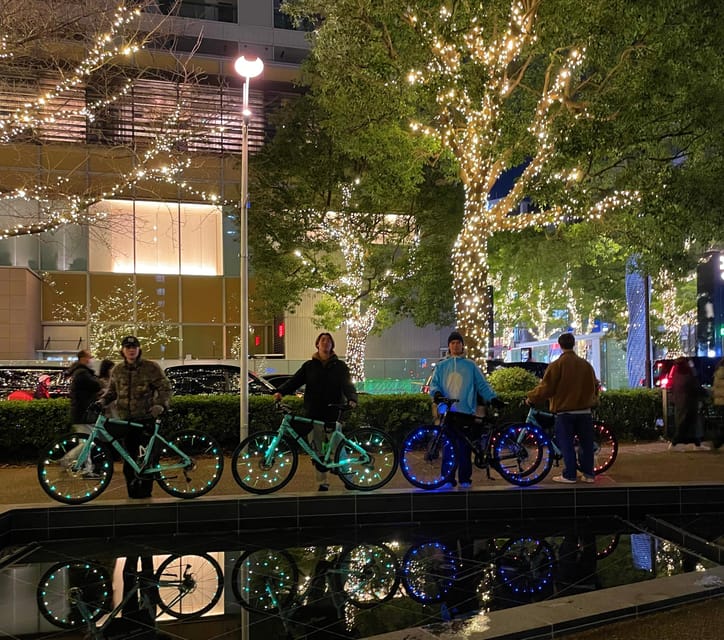
Near Tokyo Midtown, the tour passes seasonal illuminations. These displays can give the ride a more arranged, almost park-like pause after the road sections through Shibuya and Roppongi.
Tokyo Midtown is also a useful point for comparing Tokyo’s different styles of nighttime lighting. Shibuya uses giant signs and constant motion. Omotesando leans toward refined street lighting. Roppongi brings glass towers and modern installations. Tokyo Midtown adds a more planned presentation, often with lights arranged around public spaces.
Do not expect a long stop with an extensive guided explanation unless your guide chooses to pause. The activity is still a bicycle ride, and the route covers several districts in only two hours. You will see the illuminations as part of a moving circuit rather than spending the whole evening in one display area.
For me, that is both a strength and a limitation. You see more of Tokyo, but you have less time to study any single place. If you want a slow photography session, a walking tour may suit you better. If you want a broad sample of Tokyo at night, the bike is the better tool.
Finishing beneath Tokyo Tower
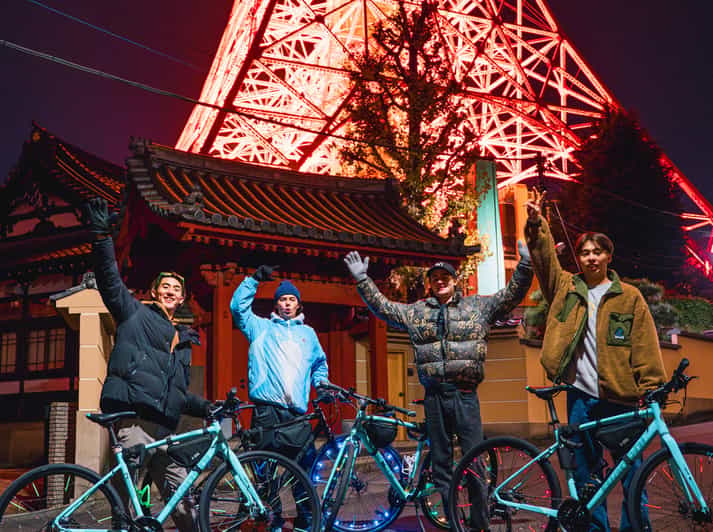
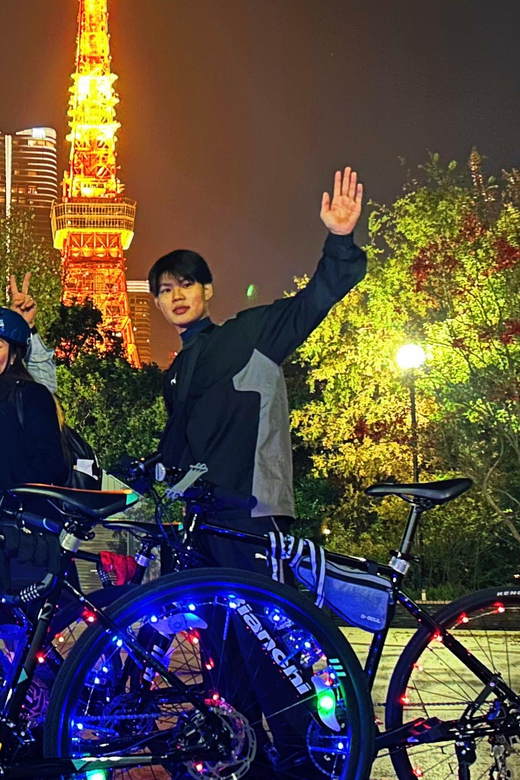
The ride culminates at Tokyo Tower, whose red and white form is easy to recognize against the night sky. After the more abstract glow of glass buildings and seasonal displays, the tower provides a clear visual finish.
Tokyo Tower is one of the best places on this route for understanding the city’s mix of old and new visual references. The tour does not promise entry to the tower, an observation deck visit, or an extended stop inside. Its focus is the exterior view and the ride through the surrounding city.
Ending at Tokyo Tower gives the itinerary a satisfying sense of direction. You have moved from the meeting point near Yoyogi Park through several central districts and reached one of Tokyo’s most familiar landmarks. The group then returns to the Yoyogi Park meeting point, so you are not left figuring out a new departure point late at night.
Because the ride returns to its starting place, allow enough time after the activity before making a tight dinner or train reservation. The stated duration is two hours, but city cycling is not always as predictable as a train timetable.
What the guide adds to the experience
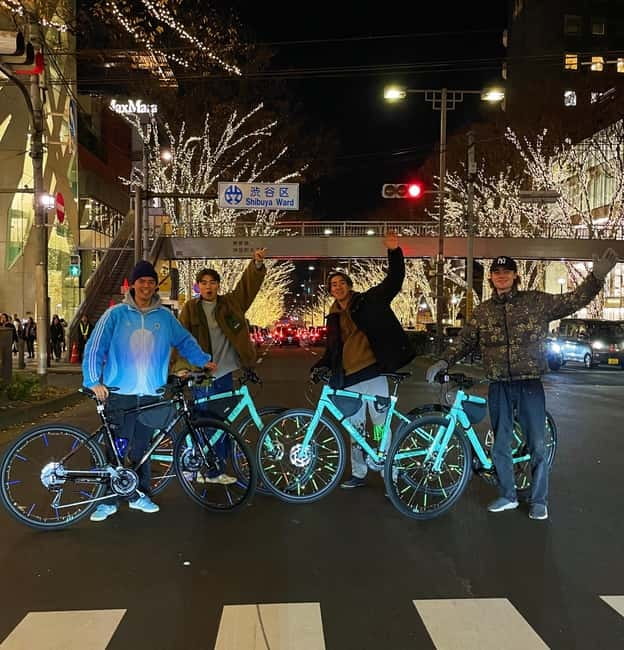
The guide is central to the value of this activity. The tour is conducted in English, and the guide provides local stories and practical help as you move through the streets.
I would use the guide actively. Ask why a particular district is illuminated in a certain way, what makes one avenue different from the next, or which part of the route has the best view. The experience becomes much more rewarding when you treat the ride as a conversation rather than a silent bicycle rental.
Kei is the guide name associated with especially strong praise for adapting the route and accommodating individual interests. That does not mean Kei will lead every departure, so you should not book on the assumption that he is guaranteed. It does show the kind of service the activity aims for: a congenial guide who can respond rather than simply recite a fixed script.
A flexible route is especially helpful for repeat visitors to Tokyo. You may already know Shibuya or Tokyo Tower but still want a different angle, a new side street, or a better explanation of how the districts fit together. The ride can also suit first-time visitors who want a quick visual introduction before exploring the city on their own.
Road conditions and who should book
This is best for experienced cyclists, not beginners. The tour information specifically excludes people who cannot ride a bike, and the route may include roads without bike lanes. You should be comfortable starting, stopping, steering, and watching traffic while paying attention to a guide.
Children under 12 are not suitable for the activity. Pregnant women and people with back problems should also avoid it. These limits make sense for a two-hour ride through central Tokyo, where road conditions can demand steady concentration.
I would not choose this as a casual family outing if some members rarely cycle. The neon lights may appeal to teenagers, but the cycling requirement still comes first. A confident young rider could enjoy the novelty, while a nervous rider might spend the entire evening worrying about traffic.
The rules are simple: no smoking, alcohol, drugs, or littering. Follow the guide’s instructions and Tokyo’s road rules. Bike insurance is included, but insurance does not turn an unsuitable rider into a suitable one.
Is $73 a fair price?
At $73 per person, this is not the cheapest way to see Tokyo at night. You could walk around Shibuya, Omotesando, Roppongi, and Tokyo Tower on your own for much less, though you would spend more time navigating between them.
The price makes better sense if you value the custom bicycle, English-speaking guide, route planning, local stories, and insurance. You are also covering the convenience of seeing several districts during one organized evening rather than piecing together a route yourself.
The value depends heavily on your cycling ability. A strong cyclist receives a two-hour city ride with a distinctive bike and a guide who can add personal touches. A hesitant cyclist may find the same price poor value because the road sections become a source of worry.
I would also compare it with the cost of a private guide or bicycle rental. The group format keeps the price below many private experiences, while the guide offers more structure than an ordinary rental. The neon lights are fun, but they are not the main reason to pay. The real value is covering a lot of central Tokyo in a short time with someone who knows how to connect the route.
Practical preparation before you ride
Meet at the main entrance of Yoyogi Park and look for the illuminated bicycles. Arrive ready to ride rather than dressed for a formal evening. Comfortable shoes and clothes will help more than stylish but restrictive clothing.
Bring water. The bike has a mini pouch for a phone, wallet, and keys, but you should keep valuables limited. The available information does not promise helmets, rain gear, or special equipment, so ask the operator about any item you consider essential before booking.
The tour can be canceled up to 24 hours in advance for a full refund. You can also reserve and pay later, which helps if your Tokyo schedule is still shifting. Keep your evening flexible enough for the full two-hour ride and the return to Yoyogi Park.
Should you book the Tokyo neon bike tour?
Book it if you already ride confidently, want to see several central districts in one evening, and like the idea of a guide who can shape the route around your interests. The illuminated Bianchi and Fuji bikes give the activity personality, while the run from Shibuya to Tokyo Tower provides plenty of visual variety.
Skip it if you are a nervous cyclist, have back problems, are pregnant, or want a slow walking tour with long stops at each sight. Tokyo’s roads are part of the experience, and they require attention.
For the right rider, $73 buys more than glowing wheels. It buys a lively two-hour connection between Tokyo’s best-known night districts, with a guide helping you notice what you might miss from a train or car.
FAQ
Where does the Tokyo night bike tour start?
The tour starts at the main entrance of Yoyogi Park. Look for the neon-lit bikes.
Where does the activity finish?
The ride ends back at the Yoyogi Park meeting point.
How long does the bike tour last?
The activity lasts two hours.
Which language is the tour conducted in?
The tour is conducted in English.
Which Tokyo sights are included on the route?
The route includes illuminated areas around Shibuya, Omotesando, Roppongi, Tokyo Midtown, and Tokyo Tower.
Do I need to be an experienced cyclist?
You should already be able to ride confidently. The route may include roads without bike lanes, and the activity is not a cycling lesson.
Who should not take this tour?
The activity is not suitable for children under 12, pregnant women, people with back problems, or people who cannot ride a bike.
More 2 Hour Experiences in Tokyo
- Ninja Samurai 2-hour hands-on lesson by Japanese master in Tokyo
★ 5.0 · 194 reviews - Tokyo 2-Hour Genuine Samurai Experience: Kendo in Japan
★ 5.0 · 112 reviews - Tokyo: Flagship 2-Hour Street Go-Kart Tour by Street Kart
★ 4.9 · 94 reviews - Tokyo: Shinjuku Izakaya and Golden Gai Bar Hopping Tour (2h)
★ 4.9 · 67 reviews
More Tokyo night tours
- Tokyo Night Foodie Tour in Shinjuku – Seasonal Sushi, Wagyu Beef
★ 5.0 · 1,161 reviews - Tokyo: Daikoku JDM Car Meet & Night Car Culture Tour
★ 4.8 · 626 reviews - Tokyo After 5: Authentic Japanese Food & Drink Night Tour
★ 4.5 · 560 reviews - Tokyo: Samurai Entertainment Night Show in Kanda Shrine
★ 4.6 · 417 reviews
Newly reviewed around Tokyo
- Tokyo Asakusa:Calligraphy & Make T-shirt Activity★ 5.0 · 62 reviews
- Intercity Shuttle, Tokyo to Haneda /Narita /Yokohama /Makuhari★ 5.0 · 5 reviews
- 1 Hour Travel around Tokyo with a Professional Photographer★ 5.0 · 3 reviews
- Travel Tokyo with Your Own Personal Photographer★ 5.0 · 43 reviews
- Train in Samurai Swordsmanship and Defeat the Demon in Tokyo★ 5.0 · 5 reviews
- Shuttle Van 6hr Tokyo Tour to-and-from Tokyo, Yokohama and Narita★ 5.0 · 9 reviews
- Kickboxing & Body Training with EX-Pro Fighter★ 5.0 · 4 reviews
- Traditional Japanese Knife Sharpening Class★ 5.0 · 18 reviews
Tokyo Bike Tours, compared.
3h Tokyo E-Bike Tour: Hidden Gems, and Local Life with guide
Read our review →
3-hour Guided E-Bike Tour of the City’s Hidden Gems
Read our review →
3-Hour Bike/E-Bike Tour of the City’s Highlights
Read our review →
Browse the lists this tour appears in