
Reviewed · WALKING TOURS
Sumida Riverside Walk:Garden&Temple Ritual(4 Meeting Points)
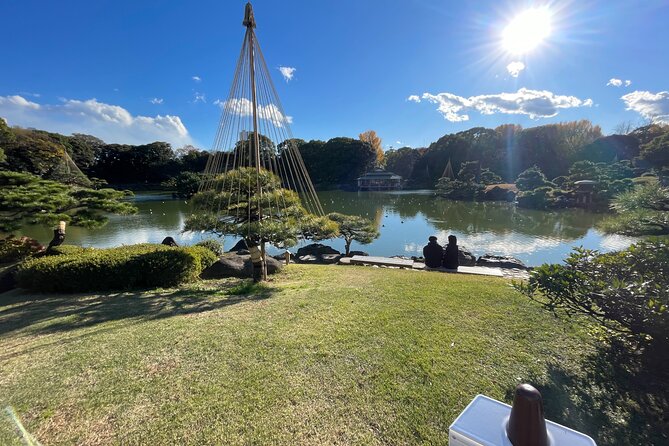
Tokyo has a quieter side, and this tour finds it in Kiyosumi Garden, beside the Sumida River, and inside Fukagawa Fudo-do. The best part is the change of pace: within one morning, you move from carefully arranged garden scenery to open water and then into a temple where religious practice is still part of daily life.
I like the small group of no more than four people, which should make it easier to ask questions and hear your English-speaking guide. I also like the practical design: train travel to the first stop, garden and temple admission, and a 3-hour route are bundled into the $48 price. The main consideration is that this is a walking tour with a fixed start. Arrive early, since the group may leave if you are more than 10 minutes late.
Key points to know before booking
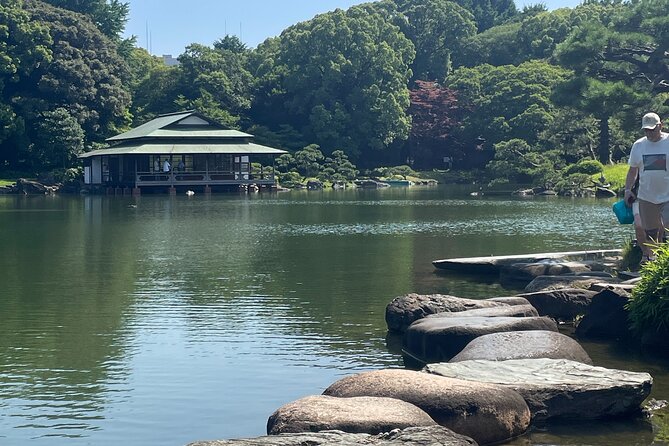
- Kiyosumi Garden comes first, with about 40 minutes for guided history, plants, and design details.
- The Sumida River walk lasts about 40 minutes, offering water views, passing boats, and a quieter view of Tokyo.
- Fukagawa Fudo-do is an active temple, not simply a photo stop, with a powerful goma fire ritual.
- Guide Hiro leads the English tour, and his name is specifically praised in the available feedback.
- Four meeting points make the start flexible, including Shibuya, Shinjuku, Asakusa, and Ginza.
- The group is limited to four people, useful for a personal morning in less hectic Tokyo.
Why this three-hour route feels different from central Tokyo
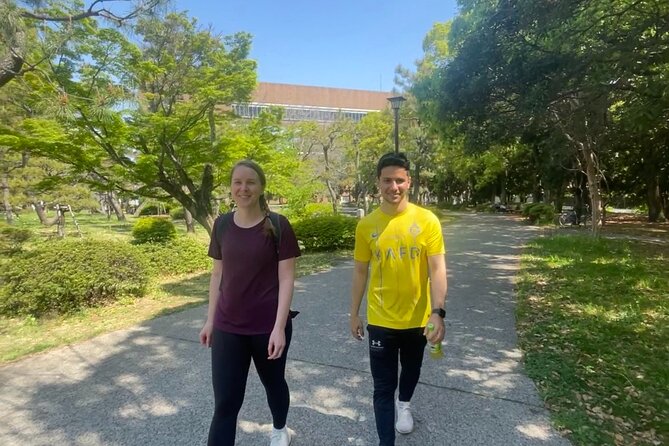
Many Tokyo tours chase famous crossings, shopping streets, and major shrines. This one follows a calmer thread. You begin in a garden, walk beside the river, and end at a temple with a strong ritual life. The route is less about collecting famous sights and more about seeing how nature, water, neighborhood streets, and belief fit into the city.
That makes the experience especially useful if you have already seen Tokyo’s biggest attractions or want a slower morning between busy sightseeing days. You still get structure and explanation, but the schedule leaves room for quiet observation.
The tour is led in English by Hiro, a Tokyo-born guide. That detail matters here because the experience depends on context. A garden can look beautiful without explanation, but a guide can point out why it was arranged in a certain way. A temple ceremony can seem dramatic or unfamiliar, but a guide can explain what you are seeing in clear, everyday terms.
The group limit of four is another real advantage. In a large group, a riverside walk can turn into a line of people following a flag. With four participants, you should have a better chance to hear the guide, ask about local customs, and move at an easy pace.
More Tokyo walking tours:
- Tokyo Tsukiji Fish Market Food and Culture Walking Tour
★ 5.0 · 3,184 reviews - Tokyo: Imperial Palace and Shogun Historical Walking Tour
★ 5.0 · 2,251 reviews - Tokyo: Shinjuku Local Bar and Izakaya Guided Walking Tour
★ 4.9 · 1,794 reviews
Starting from four parts of the city
You can choose among four meeting points: SHIBUYA TSUTAYA, UNIQLO Shinjuku West, Asakusa Culture Tourist Information Center, or Nissan Crossing. The exact meeting location depends on the option you book, so check that detail carefully before setting out.
This choice is useful if your hotel or morning plans already place you near one of these areas. The guide then travels with you by train to the first destination, and the ticket to that first stop is included. That removes some of the usual early-morning confusion of navigating Tokyo rail lines alone.
There is also a practical limit to this flexibility. Four meeting points do not mean you can join anywhere on the route. You must go to the selected point at the assigned time. Arrive before the meeting time, not just at it, because the tour may leave without you after a delay of more than 10 minutes.
The starting points also show how the tour is designed. You do not need to find your way independently to Kiyosumi Garden. Instead, you meet Hiro in a familiar central area and travel together. For a first morning in Tokyo, that can be worth more than it sounds.
Kiyosumi Garden: a quiet opening with seasonal detail
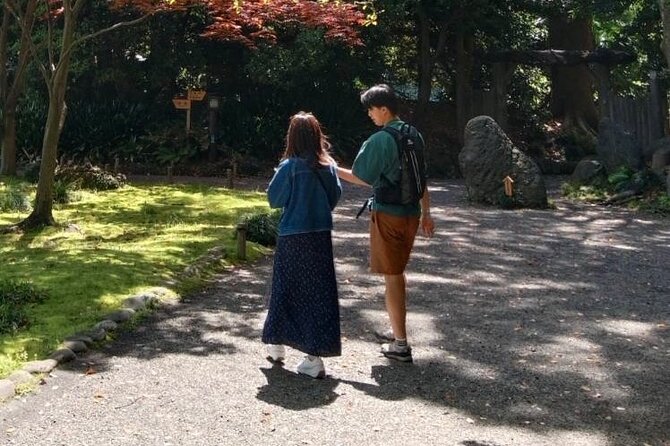
Kiyosumi Garden receives about 40 minutes of guided attention. This is the first major stop, and it sets the tone for the rest of the morning.
The garden is known for its peaceful beauty and seasonal plants. Expect a carefully maintained Japanese setting where water, paths, greenery, and open spaces work together. The appeal is not simply the presence of plants. It is the way the garden directs your attention, giving you changing views as you move through it.
I like that the garden portion is guided rather than treated as a quick photo stop. Hiro is expected to explain the garden’s background and point out design details that are easy to miss when you walk alone. You might notice a view, a plant, or a path arrangement without knowing why it matters. The explanation gives those details a place in the larger picture.
The 40-minute length is also sensible. It gives you enough time to understand the garden without turning the morning into a long botanical visit. If gardens are your main reason for booking, you should know that this is one part of a three-stop route, not an extended garden tour.
The garden also offers a useful contrast with the rest of Tokyo. The city may be close by, but the experience asks you to slow down and pay attention to texture, shape, and season. That slower start makes the later riverside walk feel more connected, rather than like a separate attraction.
The Sumida River walk: water, boats, and breathing room
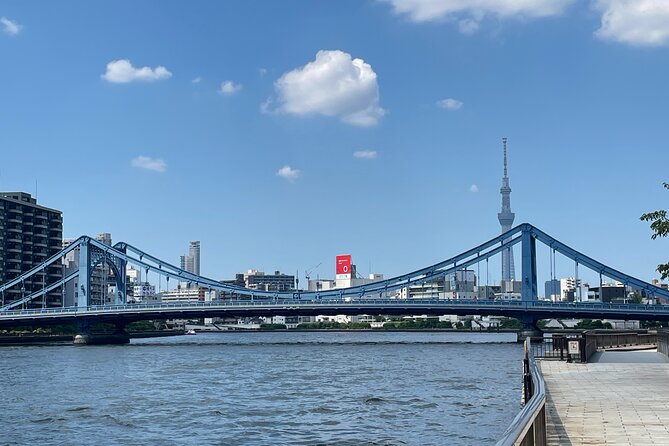
From Kiyosumi Garden, the tour continues with roughly 40 minutes beside the Sumida River. This is a gentle walk, not a strenuous hike, and the focus is on the changing mood of the city.
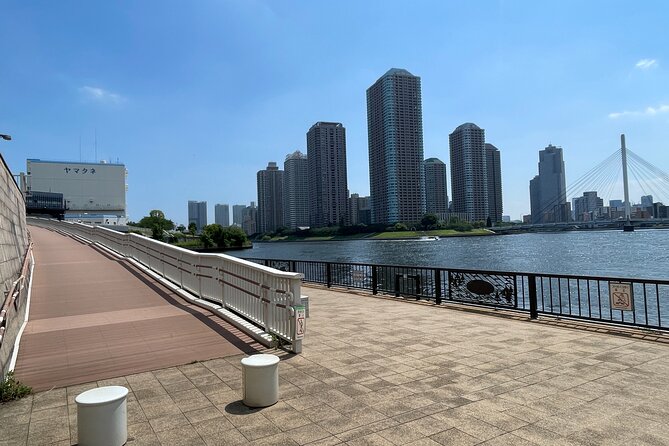
You can expect views of the water, passing boats, and quieter urban scenes. The description does not promise a long cruise or a major viewpoint, and that is part of the point. You are walking along the river and watching Tokyo from ground level, where the city feels less compressed than it does on a crowded train platform or commercial street.
I like this section because it gives the tour a natural pause between the garden and the temple. The garden is enclosed and carefully shaped. The river opens the view and introduces movement through boats and water. Then the route turns toward a neighborhood where local tradition remains visible.
The riverside walk also gives you time to ask questions. With a group capped at four, this can be the most relaxed part of the tour. You might use it to ask Hiro about Tokyo life, the neighborhood, or the temple ahead. The tour information presents the walk as a chance to slow down and reconnect with your senses, but you should also see it as a useful transition through the city.
Do not book this route expecting a nonstop list of major sights. The riverside portion is deliberately calm. If you want constant landmarks and rapid commentary, you may find it too quiet. If you want a break from Tokyo’s faster rhythm, the 40 minutes should feel well placed.
A completely different kind of day in Tokyo:
- Mt Fuji and Hakone 1-Day Bus Tour Return by Bullet Train
★ 5.0 · 26,383 reviews - 1-Day Tokyo Bus Tour
★ 5.0 · 14,250 reviews - Tokyo: teamLab Planets TOKYO Digital Art Museum Entry Ticket
★ 4.6 · 9,779 reviews - Mt Fuji & Hakone Cruise, Drum Show Bullet Train 1 Day from Tokyo
★ 4.0 · 7,413 reviews
Fukagawa Fudo-do and the meaning of the goma ritual
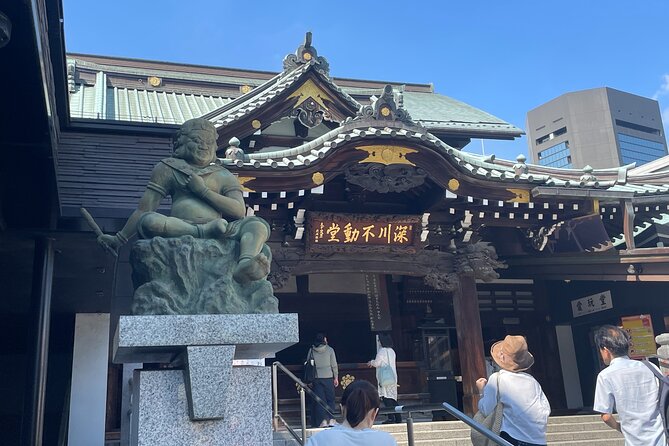
The final major stop is Fukagawa Fudo-do, also called Naritasan Fukagawa Fudodo in the tour details. It has more than 400 years of history and is presented as the emotional center of the morning.
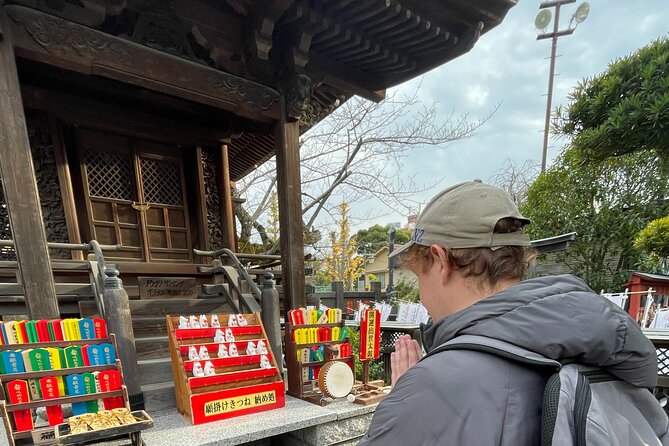
This is a temple with an active spiritual role. You are not just looking at architecture or taking a quick exterior photograph. The visit includes admission and a guided explanation of the beliefs and practices connected with the site. That matters if you have little background in Japanese religion, since a ritual can otherwise be striking but hard to understand.
The highlight is a traditional goma fire ritual. Goma is a Buddhist fire ceremony, and the flames provide the visual focus of the temple visit. The ritual gives the stop a sense of purpose that goes beyond sightseeing. You are seeing faith expressed through a formal practice, in a place where that practice remains present.
The scheduled guided visit lasts about 45 minutes, making it the longest of the three main stops. That gives Hiro time to explain what happens and why the temple is important. The tour is designed to make the experience accessible even if you are not religious. You can approach it as a cultural visit, a chance to learn about local practice, or a moment of quiet attention.
The temple may be the strongest reason to choose this tour over a standard garden-and-river walk. Kiyosumi Garden gives you beauty, and the Sumida gives you space, but Fukagawa Fudo-do adds meaning and ceremony. It also asks for a little more respect and attention than an ordinary sightseeing stop. Listen to the guide and follow the temple’s rules while the ritual is taking place.
What the guide adds to the experience
A walk like this depends heavily on the guide. The route itself is pleasant, but the value comes from connecting the three stops.
Hiro is described as being born and raised in Tokyo, and that local connection fits the tour well. The route is not only about famous places. It moves through a quieter neighborhood where daily life and tradition continue alongside modern Tokyo. A guide with personal knowledge of the city can help you see that relationship.
The strongest praise attached to this experience focuses on the guide. One verified comment calls the experience excellent and the guide wonderful. Marcus from Germany specifically names Hiro as a great tour guide. With only a few available comments, you should not treat that as proof that every tour will be identical, but it does point to the guide as a central strength.
The small group also gives Hiro room to adjust his explanations. If you know little about Japanese gardens, he can explain the basics. If you have already visited temples in Japan, you can ask more specific questions about this ritual and temple. That flexibility is harder to provide in a group of 20 or 30 people.
Is $48 a fair price?
At $48 per person, the tour is priced as a guided small-group experience rather than a simple admission bundle. The value comes from several parts working together: train travel to the first destination, Kiyosumi Garden admission, Fukagawa Fudo-do admission, and three hours with an English-speaking guide.
You could visit many Tokyo sights independently for less than $48. That is especially true if you only count entry fees. The comparison changes when you include the time needed to plan the route, find the garden, connect it with the river, locate the temple, and understand the ritual once you arrive.
For me, the strongest value is the route design. The three stops are close enough in theme to make sense together, but different enough to keep the morning from feeling repetitive. You receive nature, open water, a neighborhood walk, and a religious ceremony in one compact outing.
The four-person limit also matters. A private tour would cost much more, while a large group might offer less personal attention. This sits in the middle: a shared tour with a level of access and conversation that should feel fairly personal.
The value is weaker if you only want a long garden visit or a temple tour. The schedule divides time among three locations, so each stop has a clear limit. Book it for the combination, not for one single attraction.
Timing, pace, and who should book
The full experience lasts three hours. The listed guided portions total about 125 minutes: 40 minutes in Kiyosumi Garden, 40 minutes along the Sumida River, and 45 minutes at the temple. The remaining time covers meeting, train travel, and movement between stops.
That makes the pace feel purposeful without being packed. You will need to keep to the schedule, especially at the beginning, but you are not spending the whole morning rushing from one major attraction to another.
I would recommend this tour to you if:
- You want a quieter side of Tokyo.
- You enjoy gardens, riverside walks, and cultural sites.
- You prefer a small group over a bus tour.
- You want an English-speaking guide to explain temple practice.
- You are curious about Japanese religious ceremonies.
- You have already seen some of central Tokyo and want a different setting.
It may be less suitable if you want shopping, nightlife, a food-focused route, or a long visit at one famous landmark. It is also not suitable for babies under one year old. The supplied information does not give a detailed accessibility description, so if you have specific mobility needs, ask before booking.
The tour runs in the morning according to the description, and the river section is presented as part of that morning rhythm. Check the available start times for your date. Bring comfortable shoes and arrive early, since the group can depart after a delay of more than 10 minutes.
My call: book it for the combination
I would book this tour if I wanted three hours of slower, more thoughtful Tokyo, especially after spending time in crowded districts. Kiyosumi Garden and the Sumida River provide the calm, while Fukagawa Fudo-do gives the morning a clear cultural focus through the goma ritual.
The experience is not built around grand city views or a long list of famous sights. Its strength is the connection between ordinary movement through the city and places that carry older traditions. Guide Hiro’s strong feedback is another reason to give it serious consideration.
Choose it if the $48 price feels fair for a small group, included admissions, train travel, and personal guidance. Skip it if you want maximum independence or prefer to spend the whole day at one major attraction. For the right kind of morning, this is a thoughtful way to see Tokyo without racing through it.
FAQ
How long does the Sumida Riverside Walk take?
The experience lasts three hours, including the meeting, train travel, guided stops, and walking between locations.
Where can I meet the guide?
There are four possible starting points: SHIBUYA TSUTAYA, UNIQLO Shinjuku West, Asakusa Culture Tourist Information Center, and Nissan Crossing. Your meeting point depends on the option you book.
Is transportation included?
Yes. The guide travels with you by train to the first destination, and the train ticket to that first destination is included.
What languages are available?
The tour is conducted in English by a live guide.
How large is the group?
The tour is limited to four participants, making it a small-group experience.
What admissions are included?
Admission to Kiyosumi Garden and Fukagawa Fudo-do Temple is included.
Can I cancel the booking?
You can cancel up to 24 hours in advance for a full refund. The reserve-now, pay-later option is also available.
Newly reviewed around Tokyo
- Tokyo Asakusa:Calligraphy & Make T-shirt Activity★ 5.0 · 62 reviews
- Intercity Shuttle, Tokyo to Haneda /Narita /Yokohama /Makuhari★ 5.0 · 5 reviews
- 1 Hour Travel around Tokyo with a Professional Photographer★ 5.0 · 3 reviews
- Travel Tokyo with Your Own Personal Photographer★ 5.0 · 43 reviews
- Train in Samurai Swordsmanship and Defeat the Demon in Tokyo★ 5.0 · 5 reviews
- Shuttle Van 6hr Tokyo Tour to-and-from Tokyo, Yokohama and Narita★ 5.0 · 9 reviews
- Kickboxing & Body Training with EX-Pro Fighter★ 5.0 · 4 reviews
- Traditional Japanese Knife Sharpening Class★ 5.0 · 18 reviews
Walking Tours, compared.
Tokyo Tsukiji Fish Market Food and Culture Walking Tour
Read our review →
Imperial Palace and Shogun Historical Walking Tour
Read our review →
Shinjuku Local Bar and Izakaya Guided Walking Tour
Read our review →
Asakusa Walking Tour with Sensoji Temple Visit
Read our review →
Tokyo Castle & Imperial PalaceーShogun Walking Tour
Read our review →
Browse the lists this tour appears in