
Reviewed · TOKYO SUMO EXPERIENCES
Exclusive Sumo Morning Practice in Tokyo with Photo Opportunity
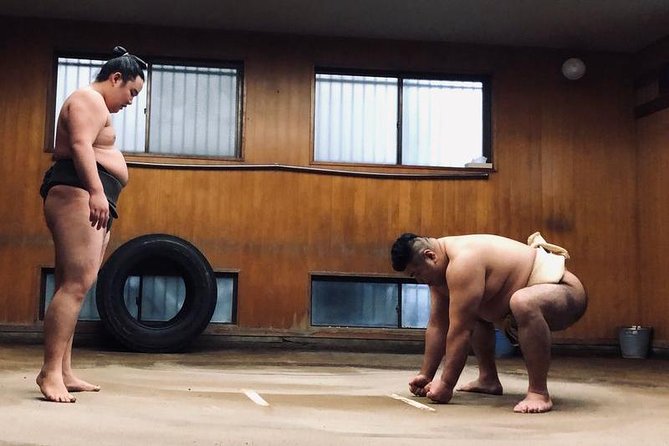
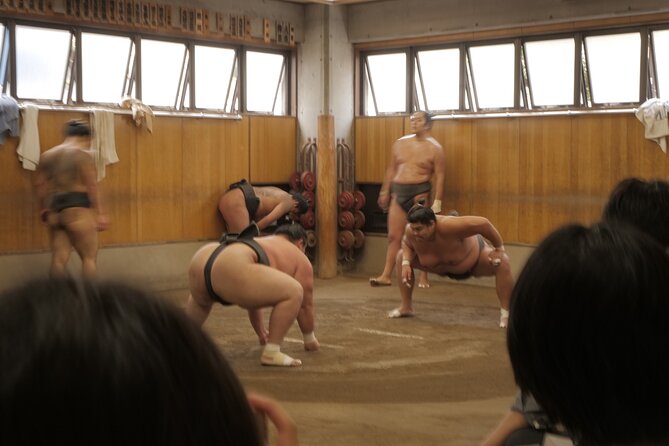
The striking part of this Tokyo morning is its closeness. You sit on the tatami area of a real sumo stable and watch wrestlers train at arm’s length, not perform a polished show for a stadium crowd. You see warm-ups, hard sparring, and the intense focus behind a sport many people know only from tournament broadcasts.
I like the small group of up to 10, which gives you a better chance to hear the guide and understand what is happening. I also like the chance to take photos with the wrestlers and the stable at the end. The main consideration is seating: it is first come, first served, so arriving late can put you two or three rows back.
Key points to know before booking
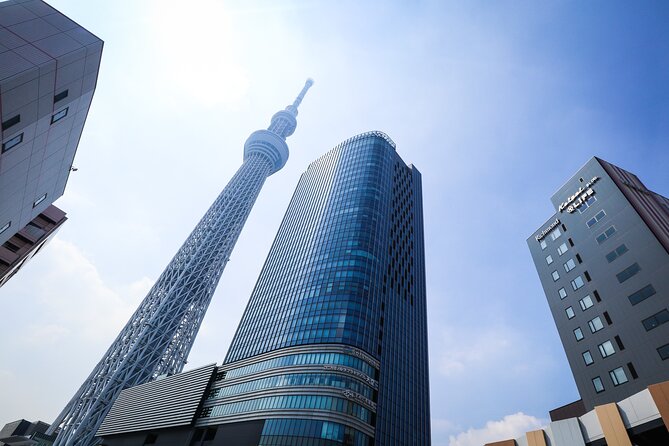
- Watch a real morning practice near Tokyo Skytree, with no tournament schedule required.
- Meet at Oshiage Station at 8:00 am, then visit one of the sumo stables in the area.
- Learn the customs and meaning behind the training, with guides such as Hana, Kentake, and Yuki leading recent departures.
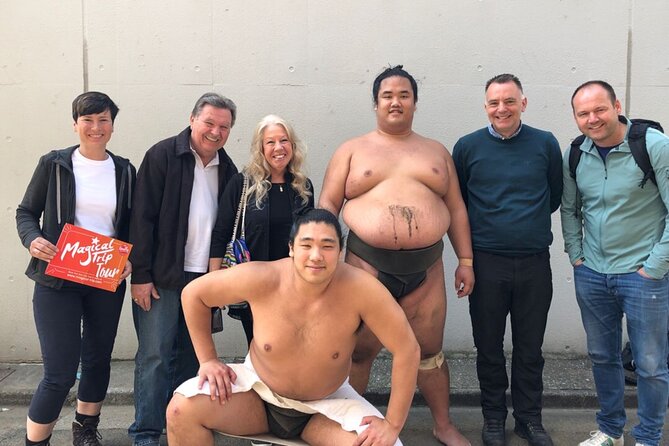
- Take photos with wrestlers and the stable, including the sensei when conditions allow.
- Expect a compact two-hour activity, though the practice itself can feel repetitive after about an hour.
- Plan for floor seating and summer heat, with water and a hat strongly advised in hot weather.
Seeing sumo before the city wakes up
Sumo practice is not a staged demonstration. The wrestlers are training for themselves, and that changes the feel of the room. You watch them prepare, repeat movements, and test one another with serious concentration. The attacks can be startlingly powerful, especially from such a short distance.
This is also a useful way to see the human side of sumo. Several people who took this tour were surprised by how young the wrestlers looked in person. Their size is obvious, but so are the discipline, effort, and control required to train at this level.
You are not simply watching large athletes collide. Your guide explains the etiquette, the structure of practice, and the ideas that shape sumo. Guides have included Hana, Kentake, and Yuki. Kentake has been praised for fluent English and detailed explanations, while Hana is known for an energetic approach. Yuki has explained the background and philosophy in a way that helps first-time viewers follow the action.
More Tokyo sumo experiences:
- Tokyo: Sumo Show and Dining Experience
★ 4.8 · 2,742 reviews - the SUMO show
★ 5.0 · 1,960 reviews - Tokyo Shinjuku Sumo Show & Experience with Photo
★ 5.0 · 1,750 reviews
Meeting at Oshiage Station at 8:00 am
The meeting point is the taxi stand inside the station rotary at Oshiage Station, in Sumida City. The listed address is 1-chome Oshiage, Tokyo 131-0045. Oshiage is a practical place to meet because it is near Tokyo Skytree and well connected by public transport.
Give yourself extra time to find the correct part of the station. One person found the meeting point confusing at first, then had no trouble once located. That is a good reason to arrive early rather than rushing in at 8:00 am.
From the meeting point, the group visits one of the sumo stables around Tokyo Skytree. The activity ends back at the same meeting point, and the full outing takes about two hours. Since the morning schedule is short, you can fit it before other sightseeing, though the early start means you should plan breakfast around it.
The group size is limited to 10 people. That matters here. A large crowd would make it harder to hear explanations or see into the training area, while a small group lets the guide respond to questions and keep the visit orderly.
Inside the sumo stable
A sumo stable is where wrestlers live and train under the direction of a stablemaster, or sensei. This visit gives you a look at training that most people in Japan, and almost all visitors from overseas, never get to see.
The viewing area is limited. Only the tatami, or straw-flooring, areas are open to the group. Other parts of the stable are off-limits, so you should not expect to wander around or inspect the building. That restriction is part of the experience’s character. You are entering a working place with its own rules, not a museum arranged for public access.
Sit quietly and watch closely. The practice can include warm-ups, repeated drills, and sparring. The intensity rises when wrestlers attack one another, but not every moment is a dramatic clash. One hour of practice is enough for some people, since the repeated training can begin to feel similar after a while.
That is the main difference between this visit and a tournament. A tournament gives you formal bouts, a lively audience, and a clear winner. Morning practice shows the work behind those bouts. It is less tidy and less predictable, but it can feel more direct.
Why the training feels different from a tournament
A sumo tournament is the public face of the sport. Practice is the private engine behind it. Here, you see wrestlers concentrating on technique and stamina instead of playing to a crowd.
You may notice that the action does not always look fast. Sumo relies on balance, timing, footwork, and force held in reserve. A short burst can be explosive, but much of the training is preparation for that burst. The guide’s explanations are important because they give you a way to read what otherwise might look like a series of similar pushes.
The close setting also changes your sense of scale. From television, wrestlers can seem like distant figures in a large arena. On the tatami, you can better appreciate how much physical effort goes into each attack. You also see that the sport is built on strict control and respect, not random aggression.
A few hours at a stable will not teach you every rule of sumo. It will, however, give you enough context to watch a later tournament with sharper eyes.
More early morning tours in Tokyo:
- Tokyo: Sumo Morning Practice Viewing Tour
★ 4.8 · 570 reviews - Tokyo: Sumo Morning Training Visit
★ 4.4 · 370 reviews - Tokyo: Sumo Morning Practice Tour at Sumida City
★ 4.8 · 308 reviews - Tokyo Sumo Morning Practice Tour at Stable
★ 5.0 · 298 reviews
The photo opportunity at the end
The photo session is one of the strongest reasons to choose this activity instead of simply watching sumo from a distance. At the end, you may have the chance to pose with the wrestlers and the stable. Photos with the full stable and the sensei have been possible on past visits.
Keep your expectations flexible. The wrestlers are training, and the exact photo arrangement can depend on the stable’s schedule and permission. Still, the opportunity makes the visit feel personal. You leave with more than a view from the edge of a room.
Use good manners during this part. Follow the guide’s instructions, stay in the permitted tatami areas, and remember that the stable is a working environment. The best photos come when the group moves efficiently and respectfully.
Is $99.10 a fair price?
At $99.10 per person, this is not a cheap way to fill two hours. You are paying for access to a place that is normally difficult to enter, a guide who provides context, and a small group rather than a large general tour.
The value is strongest if you care about Japanese culture, traditional sports, or unusual access. A tournament ticket may offer more action, but tournaments are seasonal and can sell out. This morning visit gives you a way to see sumo even when no tournament is scheduled.
The price is less convincing if you only want nonstop wrestling. Practice has quiet stretches and repeated drills. If you expect a full program of matches, the experience may feel short or slow. If you want to understand how wrestlers prepare and see them close up, the cost is easier to justify.
I would compare it with the price of a normal guided cultural activity in Tokyo, then ask how much you value access. The stable visit is not simply a photo stop near Skytree. It offers a look into a part of Japanese life that is normally closed to casual sightseeing.
Seating, clothing, and summer comfort
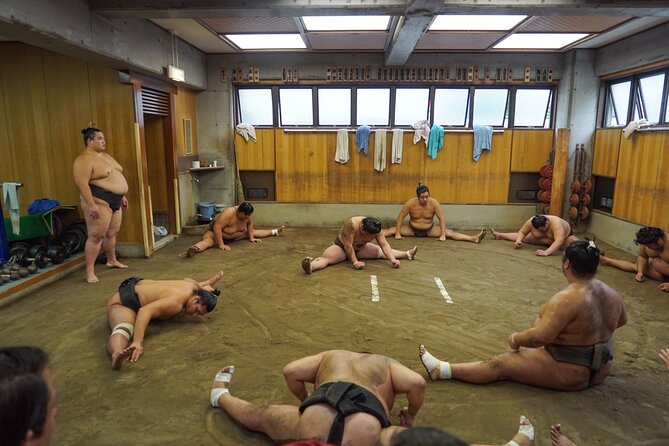
Seating is first come, first served. The stable is often visited by several tour groups, so late arrivals may sit two or three rows from the front. You will still see the practice, but the close-up feeling is strongest near the front.
Arrive early enough to meet the guide and settle before the session begins. Do not count on choosing any seat you want. The organizer specifically asks for patience with the seating arrangement.
The area is on tatami, so you should be prepared for floor seating. The supplied information does not promise chairs or special seating arrangements. If sitting on the floor is difficult for you, contact the provider before booking.
Tokyo summers can be hot and humid. Bring water and wear a hat for the walk and time outside. The activity takes place indoors at the stable, but the route to and from the meeting point can still be uncomfortable in strong heat.
The tour is near public transportation, and most people can participate. Confirmation is provided at booking, and you use a mobile ticket.
Who will enjoy this morning most?
This is a strong choice for:
- First-time visitors to sumo, who want an explanation of what they are seeing.
- Sports fans, especially those who enjoy watching training rather than only formal competition.
- Culture-focused visitors, who want access to a working tradition rather than a standard attraction.
- Photographers and families with older children, provided everyone can sit quietly and follow the stable’s rules.
- People with a tight Tokyo schedule, since the activity takes about two hours and begins early.
It may not suit you if you need a fully flexible morning, dislike floor seating, or want a long sequence of dramatic bouts. The short format is convenient, but it also limits how much time you spend inside.
The tour is also a good option when no sumo tournament is running. You do not have to plan around the tournament calendar to see wrestlers train.
What the guide adds
Without explanation, sumo practice can be hard to follow. The wrestlers may perform movements that look simple, while the important details involve timing, position, ritual, and discipline.
A good guide bridges that gap. Hana has been described as enthusiastic about sumo practice. Kentake has offered clear English explanations and background on the wrestlers and the sport. Yuki has focused on the philosophy and meaning behind what you are watching.
Guide assignments can vary, so you should not book on the assumption that one particular person will lead your date. Still, the activity is designed around guided interpretation, not silent viewing. That is valuable when you are new to sumo.
I especially like that the explanations help you see the wrestlers as young athletes with demanding routines, not cartoon versions of oversized fighters. The close setting can correct a lot of shallow ideas about the sport.
Booking and cancellation details
You can cancel for a full refund up to 24 hours before the 8:00 am start time. Cancellations or changes made less than 24 hours ahead are not accepted for a refund, and the cut-off uses Tokyo local time.
Book only after checking your morning plans. Because the meeting time is fixed and late arrival can affect your seating, this is not an activity to squeeze in after a slow breakfast or an uncertain train journey.
Should you book this sumo morning practice?
Book it if you want rare access, close viewing, and useful cultural context in a compact Tokyo activity. The chance to watch serious training near Tokyo Skytree, then possibly take photos with the wrestlers and sensei, gives this morning a personal quality that a stadium seat cannot match.
Skip it if you want a tournament atmosphere or continuous action. Practice can repeat, and seating is not guaranteed near the front. For most people who are curious about sumo and willing to sit quietly on tatami, though, this is a memorable and fairly efficient way to meet the sport on its own ground.
FAQ
Where does the sumo practice tour meet?
The group meets at the taxi stand inside the station rotary at Oshiage Station, in Sumida City, Tokyo. The listed start time is 8:00 am.
How long does the activity last?
The full activity takes about two hours and ends back at the Oshiage Station meeting point.
Where does the sumo practice take place?
The group visits one of the sumo stables around Tokyo Skytree.
How many people can join the tour?
The activity has a maximum of 10 participants.
Can I take photos with the sumo wrestlers?
The experience includes a photo opportunity with the wrestlers and stable members. Photos with the full stable and the sensei have also been possible.
What happens if I arrive late?
Seating is first come, first served. Late arrivals may be seated two or three rows from the front, so arrive before the 8:00 am meeting time if you want the best chance of sitting close.
Can I cancel for a refund?
Yes. You can cancel at least 24 hours before the local start time for a full refund. Cancellations or changes made less than 24 hours before the activity are not accepted.
Newly reviewed around Tokyo
- Tokyo Asakusa:Calligraphy & Make T-shirt Activity★ 5.0 · 62 reviews
- Intercity Shuttle, Tokyo to Haneda /Narita /Yokohama /Makuhari★ 5.0 · 5 reviews
- 1 Hour Travel around Tokyo with a Professional Photographer★ 5.0 · 3 reviews
- Travel Tokyo with Your Own Personal Photographer★ 5.0 · 43 reviews
- Train in Samurai Swordsmanship and Defeat the Demon in Tokyo★ 5.0 · 5 reviews
- Shuttle Van 6hr Tokyo Tour to-and-from Tokyo, Yokohama and Narita★ 5.0 · 9 reviews
- Kickboxing & Body Training with EX-Pro Fighter★ 5.0 · 4 reviews
- Traditional Japanese Knife Sharpening Class★ 5.0 · 18 reviews
Tokyo Sumo Experiences, compared.
Tokyo Shinjuku Sumo Show & Experience with Photo
Read our review →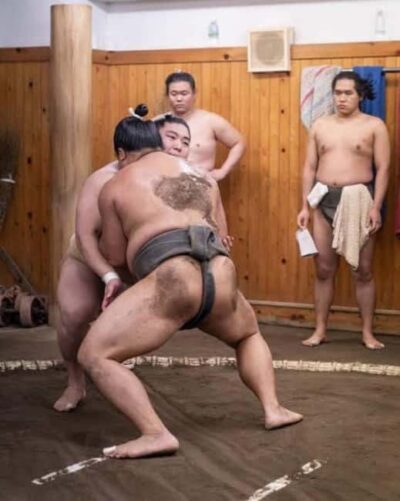

Luxury Sumo Show Experience & Japanese cuisine & Drink
Read our review →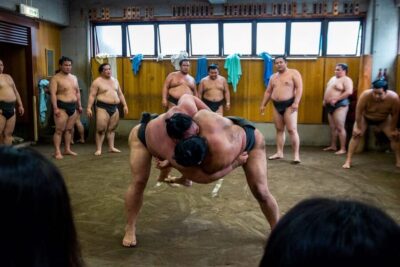
Tokyo Sumo Experience: Chanko & Mochi with a Former Pro
Read our review →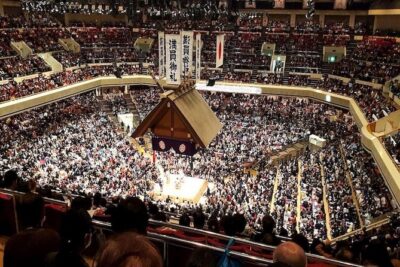
Ultimate Sumo Tournament: Tokyo, Osaka, Nagoya, Fukuoka
Read our review →Browse the lists this tour appears in