
Reviewed · TOKYO COOKING CLASSES
Discover Japanese Umami: Onigiri & Dashi Masterclass in Tokyo
The smartest part of this Tokyo cooking class comes early: you taste three kinds of dashi side by side. Kombu, katsuobushi, and awase dashi may look like simple broths, but comparing them makes Japan’s savory umami flavor much easier to understand.
I like the practical cooking. You make a fluffy rolled omelet in a rectangular pan, then shape onigiri with fillings you choose. I also like that the class sends you home with printed recipes and Japanese seasonings, so the lesson can continue in your own kitchen. The main consideration is the price: at $129.49 per person for about two hours, it is not a cheap lunch, though the meal, tasting, instruction, supplies, sake, and take-home materials help explain the cost.
Key Points
- Three dashi styles compared: Taste kombu, katsuobushi, and awase dashi separately before using them in Japanese cooking.
- Hands-on tamagoyaki: Learn to cook dashimaki tamago in the traditional rectangular pan.
- Build-your-own onigiri: Choose from traditional fillings and shape the rice balls by hand.
- English instruction: The class is designed for beginners, with no previous cooking experience required.
- Small group setting: Attendance is limited to eight people, which should allow room for questions and individual help.
- A full washoku lesson: The class includes miso soup, side dishes, plating, lunch, sake tasting, recipes, seasonings, and a participation certificate.
Why Dashi Makes This Class More Than a Rice Ball Lesson
Onigiri is the part most people picture first. These hand-shaped rice balls are familiar, approachable, and easy to enjoy at lunch. But the class begins with dashi because dashi explains much more about Japanese cooking than a single recipe can.
You learn how kombu creates a gentle sea-grown savoriness, how katsuobushi brings the distinctive flavor of dried bonito, and how awase dashi combines ingredients for a fuller stock. Tasting them one after another gives you a useful reference point. Instead of hearing that umami is Japan’s fifth taste, you can notice how it changes the flavor in your mouth.
That comparison is valuable if you cook at home. Dashi often appears in miso soup, side dishes, sauces, and rolled omelets. One especially useful lesson here is that it is not just a soup ingredient. It forms a base for many dishes that might otherwise seem unrelated.
The class is led by instructors rooted in kappo tradition, and all instruction is in English. No cooking background is required. If Japanese food usually feels difficult to reproduce at home, this is a friendly way to see the building blocks without committing to a full culinary course.
More Tokyo cooking classes:
- Tokyo: Roll and Authentic Sushi Making Class in Asakusa
★ 4.9 · 1,957 reviews - Tokyo Shinjuku Chopsticks Making Class
★ 5.0 · 1,763 reviews - Tokyo: Sushi Making Class in a Happi Coat near a Famous Spot
★ 4.9 · 1,377 reviews
Starting at Kappodo’s Nishiazabu Studio
The class begins at 11:00 a.m. at Kappodo H.Q., Tokyo D Kitchen Studio, listed at DK Building in Nishiazabu, Minato City, Tokyo 106-0031. The meeting point is near public transportation, but you should still allow time to find the building. Tokyo addresses can be less intuitive than the street-number systems many visitors know at home.
The activity takes place in a group of no more than eight people. That limit matters. A cooking class can become frustrating when a large crowd gathers around one demonstration table, but a group of this size should make it easier to see the instructor and ask questions. It is a good fit for couples, friends, or a small family group.
You do not need to arrange private transportation. The class begins and ends at the same location, making it easy to fit into a day in western central Tokyo. Since the session starts at 11:00 a.m. and includes lunch, you should arrive ready to eat but not stuffed.
Tasting Kombu, Katsuobushi, and Awase Dashi
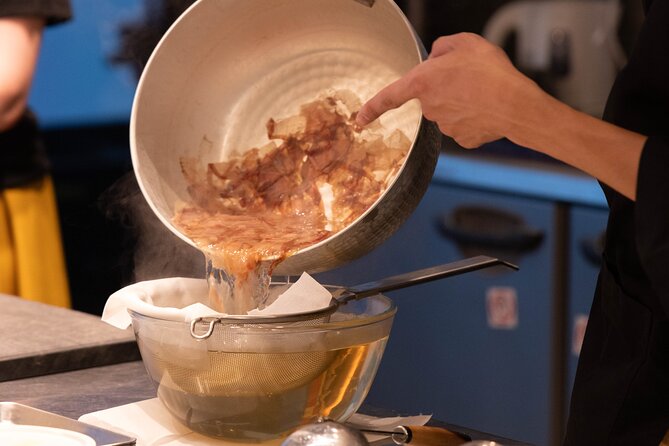
The first lesson focuses on umami and dashi. You see the three types prepared in front of you, then taste them separately. This is the strongest educational part of the experience because it turns an abstract food term into something you can identify.
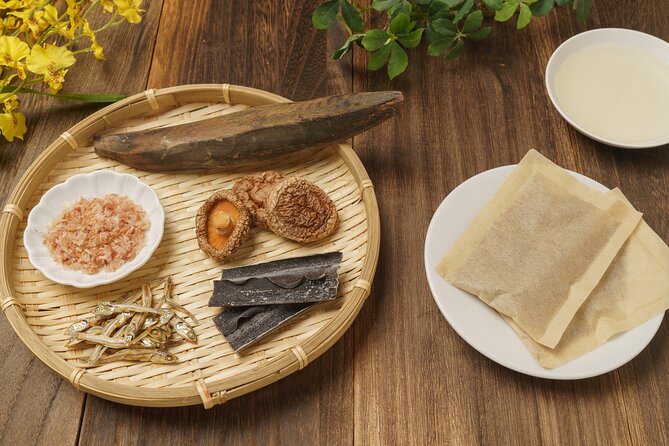
Kombu dashi offers a clean, subtle base. Katsuobushi dashi brings the flavor of dried bonito, while awase dashi combines kombu and katsuobushi. The point is not simply to memorize three names. It is to learn how Japanese cooks choose and combine ingredients to create depth without relying on heavy sauces.
The class also gives you a chance to ask questions about how umami works in Japanese food. One useful outcome is confidence. After tasting the stocks and learning their role, you should have a better idea of why a simple soup or simmered dish can taste full without being rich or greasy.
The dashi lesson may be the best value for anyone planning to cook after returning home. Onigiri is easy to find and easy to make, but understanding dashi helps you with a much wider range of Japanese dishes.
Watching Miso Soup and Side Dishes Come Together
After the dashi lesson, you watch a demonstration of miso soup and traditional side dishes. This section gives the class a broader washoku frame. You are not only preparing one snack or lunch item. You are seeing how rice, soup, side dishes, and presentation work together.
The instructor also demonstrates plating. That may sound like a small detail, but it helps explain why Japanese meals often feel carefully organized even when the individual dishes are simple. The placement of food, the balance of colors, and the use of small serving pieces all contribute to the meal.
This is a demonstration rather than a fully hands-on preparation of every dish, so keep your expectations clear. If you want to cook each side dish from start to finish, this class may feel limited. If you want a compact introduction to how a Japanese meal is assembled, the demonstration fits well into the two-hour format.
Miso soup also connects directly to the dashi lesson. You can taste how the stock supports the miso instead of treating the soup as just salty broth. That connection is one reason the order of the class works: first taste the base, then see where it goes.
A completely different kind of day in Tokyo:
- Mt Fuji and Hakone 1-Day Bus Tour Return by Bullet Train
★ 5.0 · 26,383 reviews - 1-Day Tokyo Bus Tour
★ 5.0 · 14,250 reviews - Tokyo: teamLab Planets TOKYO Digital Art Museum Entry Ticket
★ 4.6 · 9,779 reviews - Mt Fuji & Hakone Cruise, Drum Show Bullet Train 1 Day from Tokyo
★ 4.0 · 7,413 reviews
Rolling Dashimaki Tamago in a Rectangular Pan
The hands-on omelet portion is likely to be the most technical part of the class. Dashimaki tamago is a Japanese rolled omelet made with dashi, and the traditional rectangular pan gives it its familiar shape.
You use the pan yourself rather than only watching a demonstration. The aim is a soft, fluffy omelet built in layers. A rectangular pan can feel unfamiliar if you normally use a round skillet, so expect a little practice as you spread, cook, and roll the egg.
This is a useful choice for a class because the technique is simple to describe but harder to understand without seeing it. The instructor can show you how the omelet is formed, and you can try the movement while the lesson is still fresh.
The dashi connection matters here, too. This is not just a plain egg dish. The stock adds savory flavor and links the omelet to the earlier tasting. You get to see how a small amount of dashi changes an everyday ingredient.
If you are concerned about cooking skill, do not let the omelet intimidate you. The class is designed for beginners, and the small group size should make it possible to ask for help. You will not need to arrive with professional knife skills or prior Japanese cooking experience.
Choosing Fillings and Shaping Your Own Onigiri
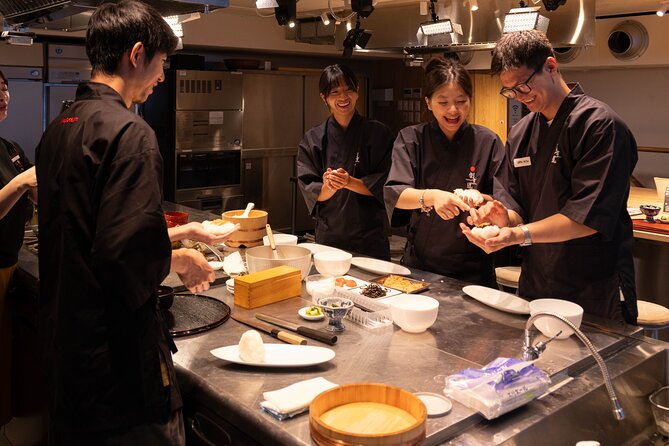
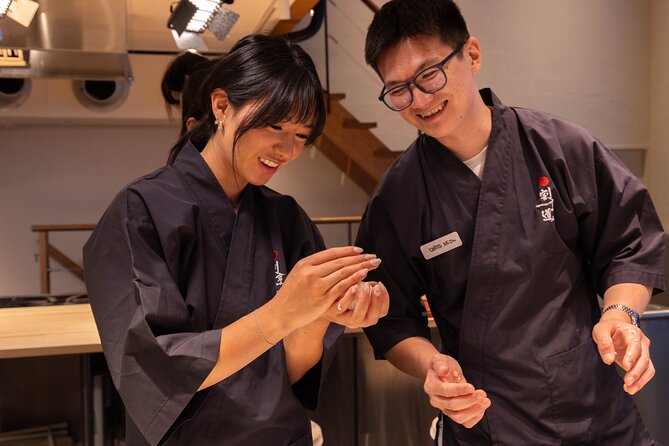
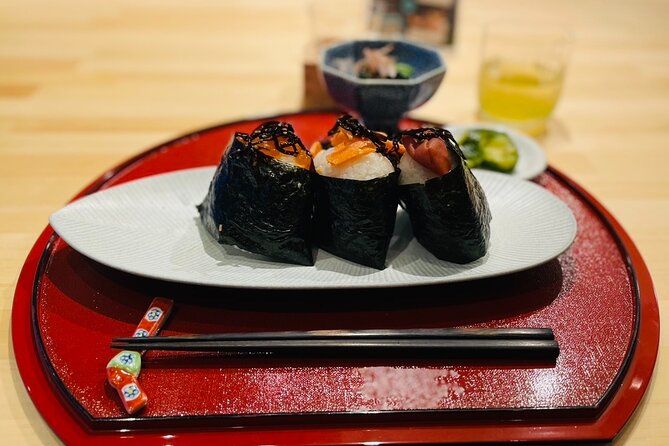
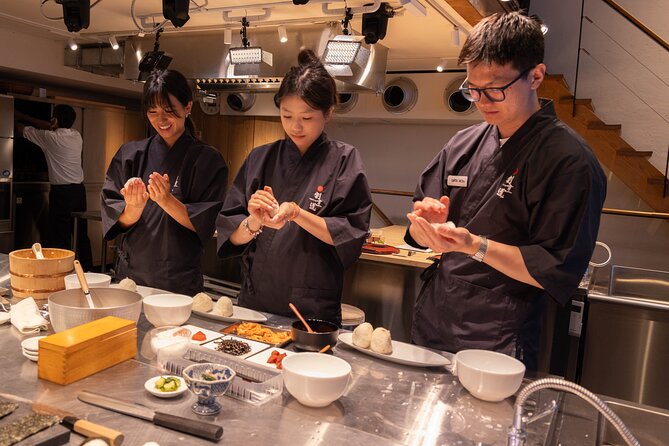
The onigiri portion is the most relaxed and hands-on part of the class. You choose from a variety of traditional fillings, then make and shape the rice balls by hand.
Onigiri is a good dish for a short class because it rewards basic technique. You learn how to handle warm rice, add the filling, and form the shape without turning the rice into a heavy lump. The finished result is practical food, not a decoration that looks good only on the studio table.
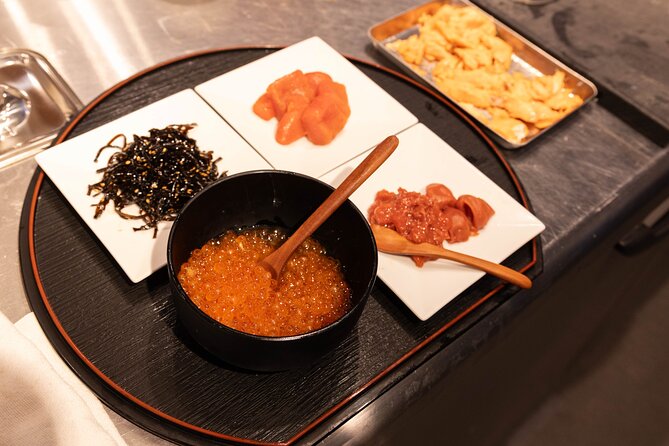
The choice of fillings gives you some control over lunch. If you are visiting Japan for the first time, you can try familiar flavors alongside something new. The supplied information does not list each filling, so you should not book this expecting a specific ingredient. You will, however, have several traditional options from which to choose.
This portion also makes the class social without requiring advanced skills. You can compare shapes, fillings, and results with the people in your group, while still producing something you will want to eat. Since the class includes lunch, your onigiri is part of a full meal rather than a tiny sample.
A Lunch With Sake and Take-Home Tools for Home Cooking
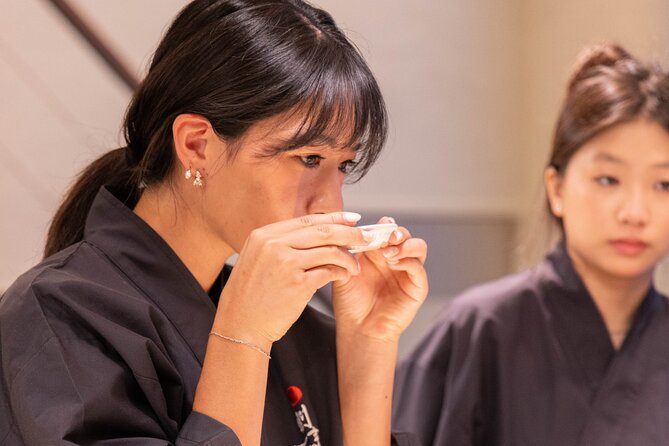
The class includes lunch, an alcoholic beverage tasting of Kappodo’s original sake, and the dishes prepared during the session. The sake tasting adds a local touch, but it is worth remembering that it is only one part of the experience. You should not choose this class solely as a drinking activity.
The food component helps justify the price. At $129.49 per person, you are paying for instruction, lunch, ingredient preparation, use of cooking tools, an apron, the dashi tasting, and a small-group format. You also receive a printed recipe set and Japanese seasonings to take home, plus a certificate of participation.
For me, the recipes and seasonings are more useful than the certificate. The certificate is a pleasant souvenir, but the papers and seasonings give you a chance to repeat the dishes. One of the most practical strengths of the class is that it aims to send you home with enough understanding to recreate Japanese flavors rather than just a memory of lunch.
The price still deserves a clear-eyed look. If you only want to eat onigiri and miso soup, a restaurant will cost much less. If you want a guided lesson, hands-on practice, several tastings, a meal, and materials for home use, the fee is easier to defend. Group discounts may also help if you are booking with companions.
Who Will Get the Most From This Two-Hour Class
I would recommend this experience to curious food lovers who want context with their meal. It is especially suitable if you have wondered why dashi appears in so many Japanese dishes, or if you want to take home techniques that go beyond a one-time tasting.
It also works well for beginners. You do not need previous cooking experience, and the English instruction removes a major barrier for international visitors. The class covers several dishes without asking you to master a complicated menu.
Couples and small groups are a natural match because the maximum attendance is eight people. Families may enjoy the onigiri shaping, though the supplied details do not specify a minimum age or child policy, so check before booking with young children.
This is less suited to someone seeking a long, advanced culinary workshop. The session lasts about two hours, and some dishes are demonstrated rather than prepared entirely by each person. You get a focused lesson, not a full professional kitchen course.
Practical Details Before You Book
The activity starts at 11:00 a.m. and returns to the same meeting point. It is near public transportation, and private transportation is not included. Build in extra time for the Nishiazabu address, especially if you are coming from another part of Tokyo.
A mobile ticket is available, and confirmation is provided at booking. The experience requires a minimum number of participants. If that minimum is not met and the class is canceled, you are offered another date or experience, or a full refund.
Free cancellation is available up to 24 hours before the local start time. Cancellations or changes made less than 24 hours ahead are not refunded or accepted, so keep your Tokyo schedule firm once the deadline passes.
The class ends back at the meeting point. That makes it easy to continue sightseeing afterward, though you may want to leave room in your plans for a relaxed meal rather than scheduling another food stop immediately.
Is the $129.49 Price Worth It?
The value depends on what you want from lunch. For a basic meal, no. You can eat Japanese food for far less. For a compact cooking lesson that explains dashi, includes several preparations, and gives you a full lunch plus take-home materials, the price is reasonable for a small-group Tokyo activity.
The highest-value feature is the side-by-side dashi tasting. It gives you a clear sensory lesson that is difficult to gain from reading a recipe. The hands-on tamagoyaki and onigiri work adds skill practice, while the miso soup and side-dish demonstration shows how those ingredients fit into a meal.
The main limitation is time. Two hours requires a quick pace, and you will not prepare every component from start to finish. Still, the structure is efficient: taste the foundations, watch a meal come together, practice the omelet, shape rice balls, eat lunch, and take home recipes.
Should You Book This Kappodo Cooking Class?
Book it if you want to understand Japanese flavor, not just photograph Japanese food. The class gives you three useful takeaways: how dashi differs by ingredient, how to make dashimaki tamago, and how to shape onigiri with traditional fillings.
I would choose it for a food-focused morning in Tokyo, especially if you cook at home and want skills that remain useful after your trip. I would skip it if your main goal is a low-cost meal, a long advanced workshop, or a class where every side dish is prepared individually.
At $129.49, it asks you to pay for instruction as well as lunch. The small group, English teaching, dashi comparison, sake tasting, recipes, and seasonings make that a fair trade for the right person. If those details appeal to you, this is a practical way to leave Tokyo with more than a full stomach.
FAQ
Where does the cooking class take place?
The class meets at Kappodo H.Q., Tokyo D Kitchen Studio, at DK Building in Nishiazabu, Minato City, Tokyo 106-0031. The listed address is Japan, 106-0031 Tokyo, Minato City, Nishiazabu, 2-chōme21-12 DK Building.
What time does the experience start?
The class starts at 11:00 a.m.
How long does the class last?
The activity lasts approximately two hours.
Is the instruction in English?
Yes. All instruction is provided in English.
Do I need cooking experience?
No. Prior cooking experience is not required.
What dishes will I make?
You will make dashimaki tamago, a Japanese rolled omelet, and onigiri with traditional fillings. You will also see demonstrations of miso soup and side dishes.
Is lunch included?
Yes. Lunch is included, along with a tasting of Kappodo’s original sake.
How many people can join the class?
The group has a maximum of eight participants.
What happens if I need to cancel?
You can receive a full refund if you cancel at least 24 hours before the local start time. Cancellations or changes made less than 24 hours before the start are not accepted for a refund.
Newly reviewed around Tokyo
- Tokyo Asakusa:Calligraphy & Make T-shirt Activity★ 5.0 · 62 reviews
- 1 Hour Travel around Tokyo with a Professional Photographer★ 5.0 · 3 reviews
- Travel Tokyo with Your Own Personal Photographer★ 5.0 · 43 reviews
- Intercity Shuttle, Tokyo to Haneda /Narita /Yokohama /Makuhari★ 5.0 · 5 reviews
- Train in Samurai Swordsmanship and Defeat the Demon in Tokyo★ 5.0 · 5 reviews
- Shuttle Van 6hr Tokyo Tour to-and-from Tokyo, Yokohama and Narita★ 5.0 · 9 reviews
- Kickboxing & Body Training with EX-Pro Fighter★ 5.0 · 4 reviews
- Traditional Japanese Knife Sharpening Class★ 5.0 · 18 reviews
Tokyo Cooking Classes, compared.
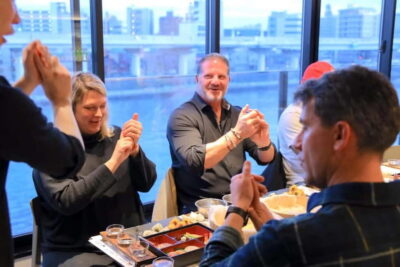
Roll and Authentic Sushi Making Class in Asakusa
Read our review →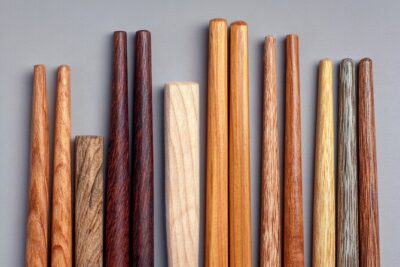
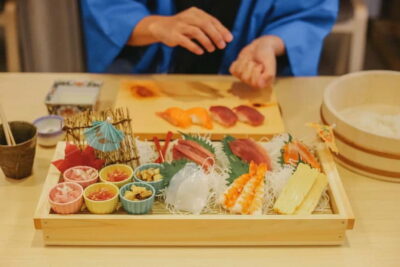
Sushi Making Class in a Happi Coat near a Famous Spot
Read our review →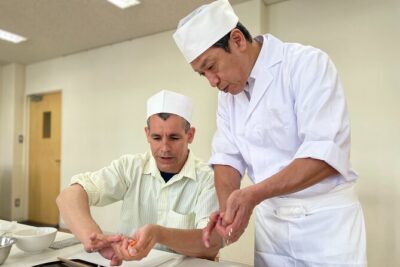
Tokyo Sushi Making Class in Tsukiji with Professional Chef
Read our review →
Ramen & Gyoza Cooking Class in Tokyo with Local Supermarket Visit
Read our review →
Matcha Making Class in Tokyo with Authentic Japanese Sweets Set
Read our review →
Tsukiji Fish Market Sushi Making Class with Pro Chef
Read our review →
Browse the lists this tour appears in