
Reviewed · WORKSHOPS
Tokyo: Kappodo sushi Live Workshop
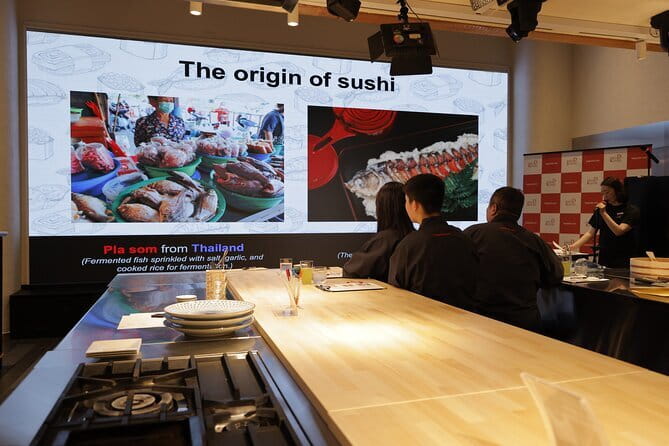
Tokyo’s Kappodo workshop puts you close to the essentials of sushi: fish, rice, knife work, and careful hand movements. An English-speaking sushi chef demonstrates each stage in front of you, then guides you as you make seven nigiri, one gunkan, and a thin roll.
I like the small maximum of four people, which should give you useful time beside the chef rather than a quick demonstration from across a room. I also like the mix of practical cooking and fish knowledge, including how different fish live in the ocean and why each one is handled in a certain way.
The main drawback is the price. At $160 for about 1 hour and 45 minutes, this is not a cheap lunch. You are paying for instruction, a professional setting, drinks, sake tasting, a certificate, and a very small class, so it makes the most sense if learning proper technique matters to you.
Key points to know before booking
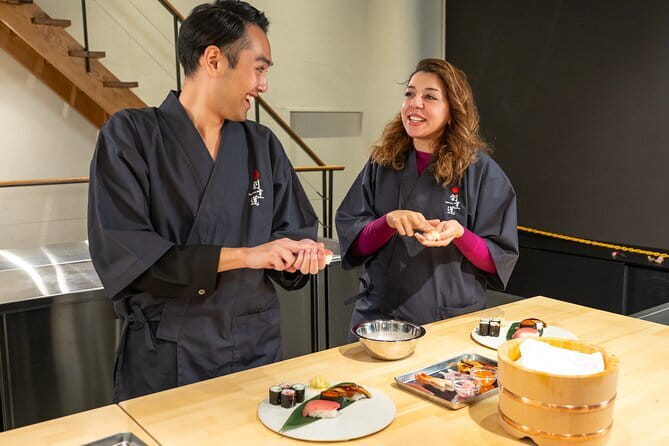
- You make three sushi styles: Seven nigiri, one gunkan-style piece, and a thin roll cut into six pieces.
- The chef works in English: You receive step-by-step guidance on fish, rice, shaping, and presentation.
- The group is capped at four: This is a useful size for asking questions and getting hands-on help.
- The fish lesson goes beyond recipes: You learn about fish types, their characteristics, and their lives in the ocean.
- Food and drinks are part of the experience: Lunch, a welcome drink, cool drinks, and original sake tasting are included.
- You finish at the studio: The activity starts and ends at Kappodo’s Tokyo D kitchen studio in Nishiazabu.
Making sushi in a four-person Tokyo kitchen
The heart of this experience is not simply eating sushi. It is learning why sushi chefs make each small movement count.
At Kappodo’s kitchen studio in Nishiazabu, you work with an active sushi chef who demonstrates the process directly in front of you. The class is conducted in English, so you can follow the explanation without relying on guesswork or watching someone several steps ahead.
The class has a maximum of four participants. That limit matters. Sushi preparation depends on small corrections: how much rice you use, where your fingers press, how you place the topping, and how tightly you form a roll. A large class can turn this into a performance. Here, you should have a better chance to ask questions and receive help while your hands are actually working.
The chef also explains the reasons behind the method. That is useful because sushi can look simple from the outside. A piece of nigiri may contain only rice and fish, but the finished shape depends on touch, timing, and restraint.
More hands-on classes and workshops in Tokyo:
- Sushi Making Tokyo Roll and Authentic Japanese Sushi Class
★ 5.0 · 3,971 reviews - Tokyo: Roll and Authentic Sushi Making Class in Asakusa
★ 4.9 · 1,957 reviews - Tokyo Shinjuku Chopsticks Making Class
★ 5.0 · 1,763 reviews
A welcome drink and a short introduction
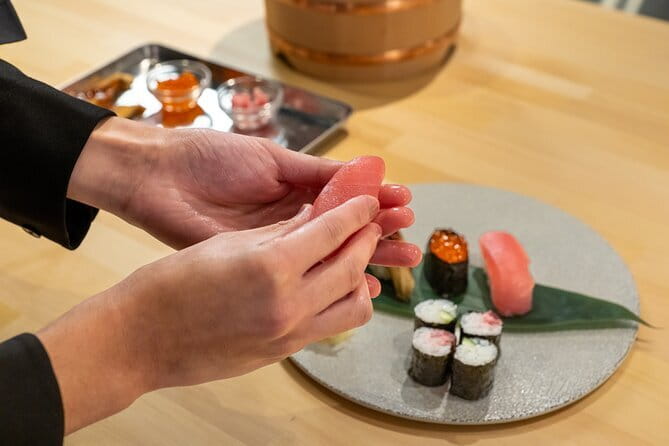
The workshop begins with water or green tea. This is a modest start, but it gives the chef a moment to introduce the class and explain what you will make.
You are not simply handed ingredients and told to copy a finished piece. The session includes background on sushi and an explanation of the fish used during the class. The chef discusses each fish’s characteristics and offers a little information about how it lives in the ocean.
I like this part because it gives the meal some context without turning the class into a lecture. You learn to see fish as more than a topping. Different fish have different textures and qualities, and the chef explains how those differences affect preparation.
The historical material is described as part of the lesson rather than a separate museum-style presentation. If you already know a good deal about sushi, you may find the basic history familiar. For a first workshop, though, it helps connect the food on your plate with the wider Japanese tradition.
Watching fish being cut in front of you
One of the most useful sections is the demonstration of cutting and decorating the fish. The chef performs this directly before you, explaining what he is doing and why.
This is a better way to understand sushi preparation than seeing only pre-cut slices. You can watch how a professional handles the fish, how pieces are prepared for different sushi styles, and how appearance affects the final dish.
The supplied information does not specify every fish used on the day, so the exact selection may vary. That is worth keeping in mind if you are hoping to work with one particular fish. The lesson is focused on technique and understanding, not on a guaranteed menu of named species.
The demonstration also sets a standard for your own work. You see the intended size and shape before trying to make your pieces. That is especially helpful if this is your first time handling sushi rice or arranging fish by hand.
Learning nigiri step by step
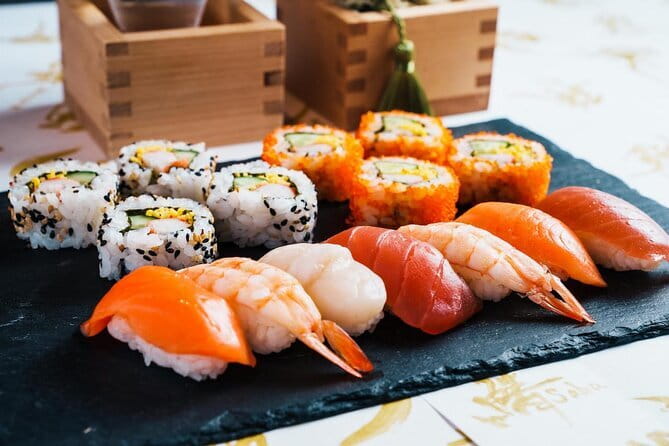
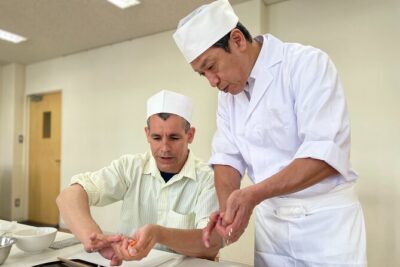
Nigiri is the main event. The chef first makes sushi himself while explaining each stage in English, then you repeat the process with him standing beside you or directly in front of you.
You will make seven nigiri pieces. That is enough repetition to notice improvement. Your first piece may feel awkward, while later pieces should give you a clearer sense of how much rice to use and how gently to shape it.
The chef explains not only how to form nigiri, but why the technique matters. Sushi rice must be handled with care. Too much pressure can make it heavy, while too little can leave it loose. The class is designed to show these differences through practice rather than words alone.
This is where the small group becomes especially valuable. You can ask about the rice, the fish, your hand position, or the finished shape. Previous comments about Kappodo’s classes also point to attentive instruction and patient answers, including support for younger participants. That makes this a reasonable choice for a family interested in food rather than a quick novelty activity.
Still, do not expect to leave as a trained sushi chef. You will learn the basic movements and the logic behind them, but professional sushi preparation takes much longer than one session. The best result is a stronger understanding of the craft and the confidence to try simple sushi again.
A completely different kind of day in Tokyo:
- Mt Fuji and Hakone 1-Day Bus Tour Return by Bullet Train
★ 5.0 · 26,383 reviews - 1-Day Tokyo Bus Tour
★ 5.0 · 14,250 reviews - Tokyo: teamLab Planets TOKYO Digital Art Museum Entry Ticket
★ 4.6 · 9,779 reviews - Mt Fuji & Hakone Cruise, Drum Show Bullet Train 1 Day from Tokyo
★ 4.0 · 7,413 reviews
Gunkan sushi and the thin roll
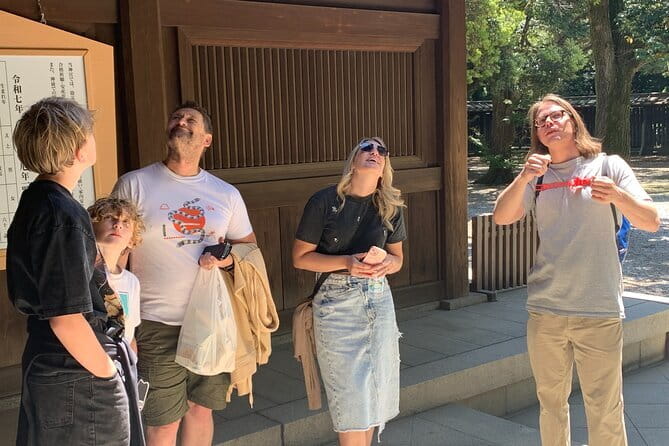
After nigiri, the class moves to gunkan-style sushi and a thin roll. These formats add variety and show that sushi is not one single technique.
Gunkan sushi has a different shape from nigiri, so you learn how the rice and seaweed work together to hold the topping. It is a small piece, but the construction teaches you to think about support, balance, and presentation.
You also make one thin roll. Once it is prepared, you cut it into six pieces. This gives you a practical lesson in shaping and portioning. Cutting a roll cleanly requires a steady hand, and the chef can show you how to approach the task without crushing the rice or losing the shape.
I like that the final menu includes seven nigiri, one gunkan, and six pieces from the thin roll. You get several kinds of practice, then a real meal made from your own work. It is more satisfying than producing one decorative piece and moving straight to a tasting.
Placing your sushi and sitting down to eat
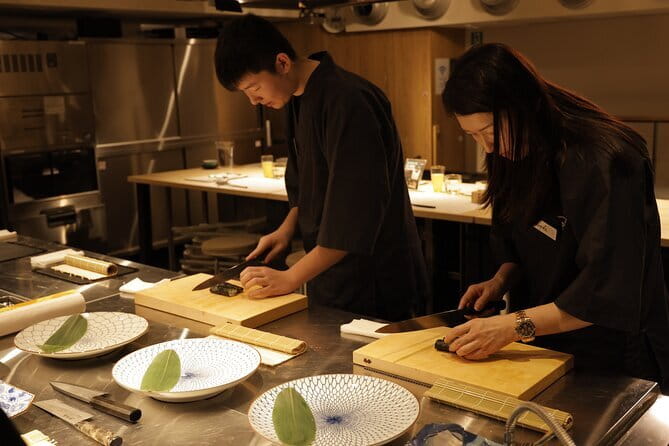
When the sushi is ready, you arrange the pieces you made. The class includes a commemorative photograph, so you have a record of the finished plate before lunch begins.
Then you eat the sushi with a cool drink. Original sake tasting is also available as part of the included alcoholic beverages. If you do not drink alcohol, the welcome water, green tea, and other drink options still give you a nonalcoholic route through the meal.
The food is the reward, but it is also part of the lesson. You can look at each piece and remember how it was formed. A slightly uneven piece may taste perfectly good, while a neat one may remind you how much pressure and placement affect the result.
You can ask the chef questions about sushi during the meal. This open question time is useful if you want to understand fish, rice, cutting, presentation, or the customs connected with sushi. The experience is best for curious eaters who want conversation and instruction, not for anyone seeking a silent restaurant meal.
What the $160 price really covers
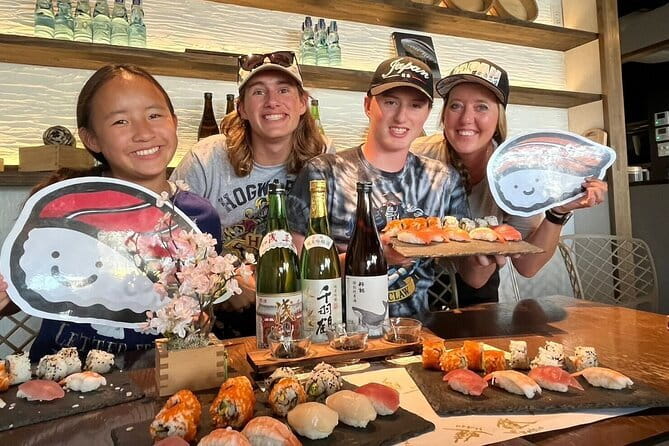
At $160, this workshop needs to deliver more than lunch to feel worthwhile. The price includes the hands-on lesson, the chef’s demonstrations, the sushi you prepare, lunch, alcoholic beverages, original sake tasting, a participation certificate, and the small class format.
The maximum of four is the strongest value point. Private or near-private instruction is expensive in Tokyo, and this class gives you direct access to a professional chef without booking a fully private experience.
You are also paying for the chance to work in a kitchen studio rather than simply attend a restaurant meal. The fish-cutting demonstration and explanations about ingredients add educational value that you would not receive from ordering a sushi set.
The value is weaker if your main goal is simply to eat excellent sushi. In that case, $160 buys a costly lunch. The value improves if you want a structured activity, personal instruction, questions answered in English, and a skill you can try again at home.
A 10 percent discount on items at Kappodo’s first-floor shop is available on the same day. This may be useful if you want to buy something connected with the workshop, though the information provided does not specify the products or prices. Treat the discount as a small extra, not a reason by itself to book.
Getting to Kappodo in Nishiazabu
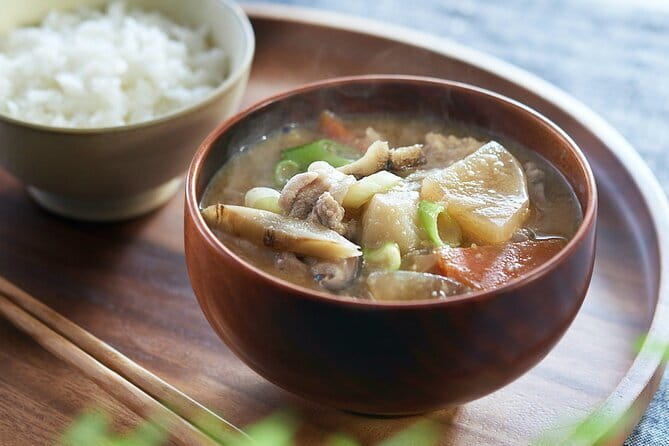
The meeting point is Kappodo H.Q., Tokyo D kitchen studio, at DK Building in Nishiazabu, Minato City, Tokyo 106-0031. The listed address is 2-chome 21-12 Nishiazabu.
The studio is near public transportation, but private transportation is not included. You will need to make your own way to the meeting point, and the activity returns there at the end.
Allow enough time to find the building. Kitchen studios can be less obvious than major tourist sights, and arriving late could reduce your time with the chef. Your mobile ticket is useful at check-in, so keep it ready on your phone.
The entire session lasts about 1 hour and 45 minutes. That is long enough for a real lesson without taking over half a day. You can fit it into a Tokyo itinerary, but allow extra time before the start for transport and finding the studio.
Who will get the most from this workshop
I would choose this class for a first-time sushi maker who wants more than a quick food sample. You receive a clear introduction to nigiri, gunkan, and rolls, along with basic information about fish and sushi history.
It also suits families with older children or teens who enjoy making food. A previous class experience at Kappodo was enjoyed by a tween, and the repeated attention from the staff was noted as a strength. The supplied information does not set a specific age range, so you should confirm suitability for very young children before booking.
Couples and small groups of friends may also like the format. Four people can work together without losing the personal side of the lesson. It is a good rainy-day option or a planned food activity between sightseeing stops.
I would be more cautious about booking it for someone who has serious fish or seafood restrictions. The information provided does not explain substitutions or allergy procedures, so ask Kappodo before paying if that affects you.
It is also not the right choice if you want a long chef’s meal, a large cultural tour, or a full knife-skills course. This is a focused sushi workshop with a meal at the end.
Practical details that matter
You receive confirmation when you book, and the experience uses a mobile ticket. Free cancellation is available if you cancel at least 24 hours before the local start time. Cancellations within 24 hours are not refunded, and changes inside that window are not accepted.
The activity requires a minimum number of participants. If Kappodo cancels because that minimum is not met, you are offered another date or experience, or a full refund.
The participation certificate is a pleasant extra, especially if you enjoy collecting small records of your activities. It should not be treated as a professional qualification. The real takeaway is the technique and the understanding of how sushi is made.
Should you book Kappodo’s sushi workshop?
Book it if you want hands-on instruction in a very small group, especially if English guidance matters to you. The combination of fish preparation, sushi history, seven nigiri, gunkan, a thin roll, sake tasting, and lunch gives you a full lesson in under two hours.
Think twice if $160 feels high for a meal or if you already make sushi confidently. You will get more value from this experience if you care about the reasons behind the technique and want time to ask questions.
For a first sushi-making class in Tokyo, this is a focused and practical choice. Just arrive prepared to learn, handle the food yourself, and accept that your first nigiri may look more handmade than restaurant-perfect.
FAQ
How long does the Kappodo sushi workshop last?
The workshop lasts approximately 1 hour and 45 minutes.
Where does the activity start and finish?
It starts and ends at Kappodo H.Q., Tokyo D kitchen studio, at DK Building in Nishiazabu, Minato City, Tokyo 106-0031.
How many people can join the workshop?
The activity has a maximum of four participants.
What types of sushi will I make?
You will make seven nigiri sushi pieces, one gunkan-style piece, and one thin roll that you cut into six pieces.
Is lunch included?
Yes. Lunch is included, along with beverages. Original sake tasting is available as part of the included alcoholic beverages.
Can I cancel for a full refund?
Yes, if you cancel at least 24 hours before the experience start time. Cancellations within 24 hours are not refundable, and changes during that period are not accepted.
Newly reviewed around Tokyo
- Tokyo Asakusa:Calligraphy & Make T-shirt Activity★ 5.0 · 62 reviews
- Intercity Shuttle, Tokyo to Haneda /Narita /Yokohama /Makuhari★ 5.0 · 5 reviews
- 1 Hour Travel around Tokyo with a Professional Photographer★ 5.0 · 3 reviews
- Travel Tokyo with Your Own Personal Photographer★ 5.0 · 43 reviews
- Train in Samurai Swordsmanship and Defeat the Demon in Tokyo★ 5.0 · 5 reviews
- Shuttle Van 6hr Tokyo Tour to-and-from Tokyo, Yokohama and Narita★ 5.0 · 9 reviews
- Kickboxing & Body Training with EX-Pro Fighter★ 5.0 · 4 reviews
- Traditional Japanese Knife Sharpening Class★ 5.0 · 18 reviews
Workshops, compared.
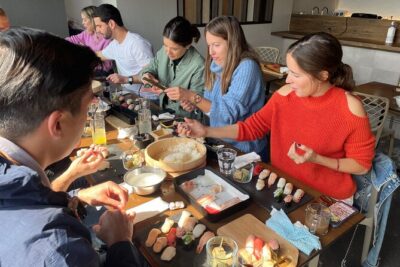
Sushi Making Tokyo Roll and Authentic Japanese Sushi Class
Read our review →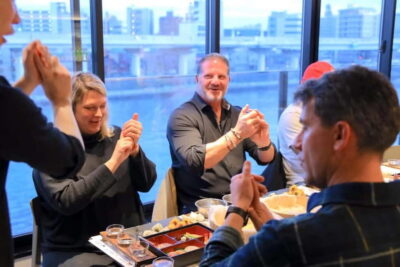
Roll and Authentic Sushi Making Class in Asakusa
Read our review →
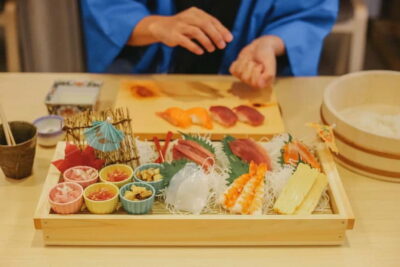
Sushi Making Class in a Happi Coat near a Famous Spot
Read our review →
Tokyo Sushi Making Class in Tsukiji with Professional Chef
Read our review →
Ramen & Gyoza Cooking Class in Tokyo with Local Supermarket Visit
Read our review →
Matcha Making Class in Tokyo with Authentic Japanese Sweets Set
Read our review →Browse the lists this tour appears in