
Reviewed · TOKYO SUMO EXPERIENCES
TOKYO , No1 Yokozuna Stable Morning Practice in Ryogoku
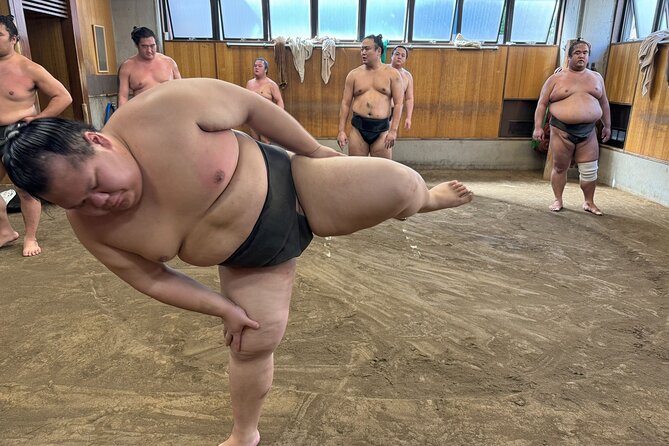
The most striking part of this Tokyo tour is the chance to watch sumo wrestlers train only a few feet away inside a stable led by a former Yokozuna. This is not a staged demonstration. It is a quiet morning practice shaped by Shinto custom, strict routine, and respect for the wrestlers.
I like two things here. First, the stable visit gives you a close look at the work behind the sport, not just the grand matches at Ryogoku Kokugikan. Second, the walk adds useful local context, from Nominosukune Shrine and Yokozuna monuments to Katsushika Hokusai’s art and Edo-style food.
The main consideration is the early start and the strict behavior expected inside the stable. You meet at 7:45 a.m., must watch quietly, and should not expect a long museum visit or a full meal to be included.
Key points to know before booking
- A rare stable visit: Watch a real morning practice session at a stable led by a former Yokozuna, one of only 72 Grand Champions in more than 1,500 years of sumo history.
- Very close viewing: Wrestlers may be just a few feet away, giving you a far more personal look than a seat in the arena.
- A small group: The maximum group size is 14 people, which helps the guide manage the quiet stable setting.
- Ryogoku context: Visit Nominosukune Shrine and pass Ryogoku Kokugikan, the city’s main sumo arena.
- More than sumo: The route includes the Sumida Hokusai Museum and Ryogoku Edo Noren, linking sumo with local art and food.
- Early but efficient: The experience lasts about two and a half hours and ends back at the meeting point.
Why the morning stable visit matters
Sumo is easy to recognize but harder to understand from the outside. You see the enormous athletes, the dramatic ring entrances, and the tournament rituals. You do not always see the daily work that makes those moments possible.
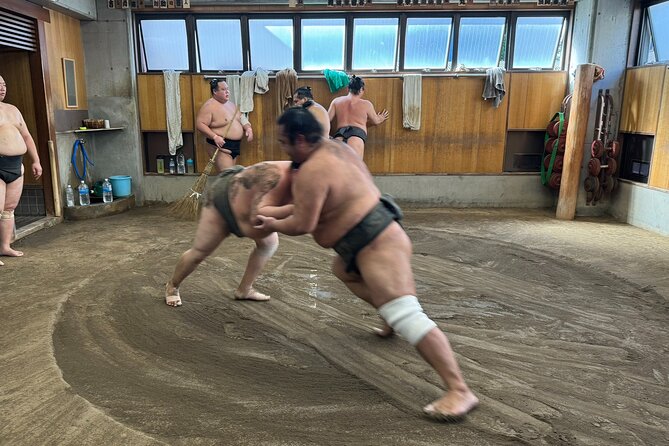
This visit changes that. The main session lasts about 90 minutes, giving you time to watch wrestlers repeat drills, push their bodies, and follow the stable’s traditional rhythm. The training is based on Shinto customs, so silence and respect are essential. Your role is to observe, not to interrupt or treat the stable like a photo studio.
That quiet setting is part of the value. At a tournament, you watch a formal contest from your seat. Here, you see the discipline behind it. You may notice how much of sumo is built on repetition and control rather than showmanship.
The stable is led by a former Yokozuna. Only 72 wrestlers have reached that rank in more than 1,500 years of sumo history, so the connection gives the visit real weight. You are not simply entering a generic training room. You are seeing the daily work of wrestlers under the leadership of someone who reached the sport’s highest title.
Photography may be possible if the situation allows. Do not count on a posed picture, but you might have a chance to take a photo with a wrestler. The close viewing is already the main reward.
More Tokyo sumo experiences:
- Tokyo: Sumo Show and Dining Experience
★ 4.8 · 2,742 reviews - the SUMO show
★ 5.0 · 1,960 reviews - Tokyo Shinjuku Sumo Show & Experience with Photo
★ 5.0 · 1,750 reviews
Meeting at Ryogoku Station at 7:45 a.m.
You meet your guide at 7:45 a.m. in front of the 7-Eleven after leaving the West Exit of JR Ryogoku Station. This is an important detail. The group does not wait around for late arrivals, since the stable’s morning schedule cannot be held up.
The first 15 minutes are used for introductions and a brief explanation of sumo before the group walks to the stable. Arrive early enough to find the West Exit and the meeting spot without rushing. Ryogoku is easy to reach by public transport, but Tokyo station areas can still be confusing when you are watching the clock.
The group is capped at 14 people. That is large enough to give the tour energy, but small enough for the guide to keep everyone together and remind the group about the stable’s rules. Two guides associated with this experience are Rothko and Ryoko. Guide assignments can vary, but the best part of their role is the context they provide before and after the practice.
You should wear something comfortable for walking and be prepared for a morning that begins before many Tokyo attractions open. The tour is not designed around a leisurely breakfast. Eat beforehand if you need a substantial meal, since lunch and drinks are not included.
Watching wrestlers train at close range
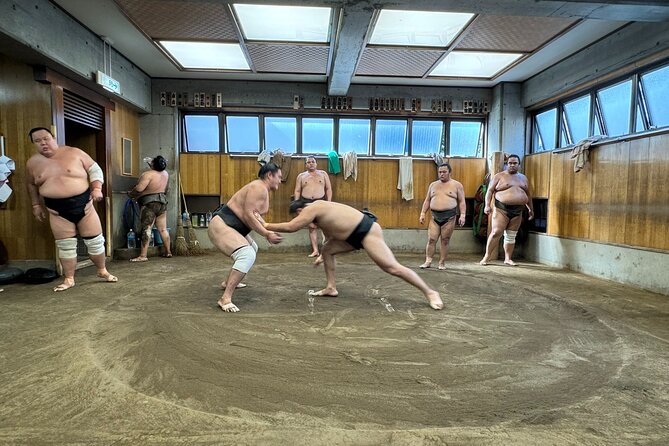
The 90-minute practice is the heart of the experience. You sit or stand quietly as the wrestlers train, often at a distance of only a few feet. That close range helps you notice the physical force of sumo in a way that a tournament seat may not.
The session is not a performance arranged for visitors. The wrestlers are there to train, and the stable follows its own routine. This means the exact activity can vary. Your guide can explain what you are seeing, but you should not expect a running commentary during every moment of practice.
That is a useful distinction when you compare this tour with a sumo-themed show. The appeal here is not entertainment in the usual sense. It is the chance to observe a working athletic tradition from close by, while respecting the customs that govern the space.
The stable visit also gives you a better feel for the seriousness of sumo. The wrestlers are not simply large athletes appearing in colorful costumes. They are following a demanding path that includes daily practice and a strong connection to the stable system.
Follow every instruction from your guide. Keep your voice low, avoid sudden movement, and wait for permission before taking photos. If a wrestler is available for a picture, treat that as a bonus rather than a promised part of the schedule.
Nominosukune Shrine and the roots of sumo
After the practice, the tour turns toward the religious and historical side of sumo. Nominosukune Shrine is dedicated to the god of sumo, and its grounds contain stone monuments to past Yokozuna.
This is a short stop, about 10 minutes, but it helps connect the sport to place. Ryogoku is not just where an arena happens to be. It is the part of Tokyo most closely tied to sumo, with training stables, tournament traditions, shrines, monuments, and businesses built around the sport.
Newly promoted Yokozuna traditionally perform their first ring-entering ceremony at the shrine. That detail gives the site a special role in the career of a champion. You may not spend long here, but the stop adds meaning to what you saw at the stable earlier in the morning.
The shrine is also a good point to ask your guide questions. If you want more than photographs, ask how the shrine connects to the sumo ranking system and the traditions of promotion. The quality of the explanation will depend on your guide, but guides such as Rothko and Ryoko are described as adding useful local history along the route.
More early morning tours in Tokyo:
- Tokyo: Sumo Morning Practice Viewing Tour
★ 4.8 · 570 reviews - Tokyo: Sumo Morning Training Visit
★ 4.4 · 370 reviews - Tokyo: Sumo Morning Practice Tour at Sumida City
★ 4.8 · 308 reviews - Tokyo Sumo Morning Practice Tour at Stable
★ 5.0 · 298 reviews
Passing Ryogoku Kokugikan and the Sumo Museum
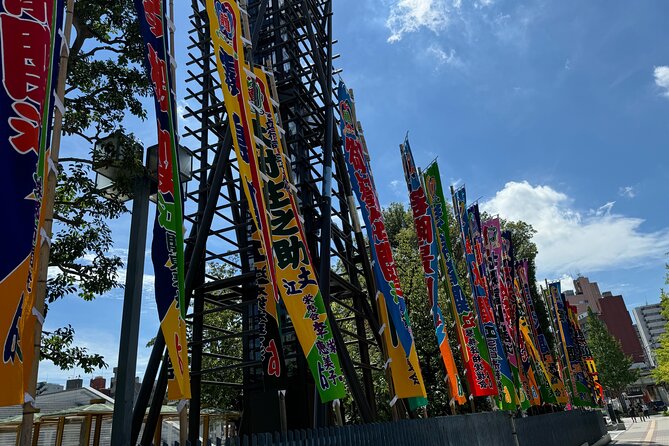
The route continues past Ryogoku Kokugikan, the famous arena where the Grand Sumo Tournament is held three times a year. Even when no tournament is taking place, the building gives you a sense of sumo’s public scale after the intimate stable visit.
The contrast is useful. At the stable, you see a private working environment. At Kokugikan, you see the formal public home of the sport. The experience links the two sides without asking you to buy a tournament ticket.
The Sumo Museum may be included if time allows. Admission is free, but it is closed on weekends and holidays. The stop is also short, around 10 minutes, so treat it as a possible extra rather than the main reason to book.
If the museum is open, it can provide a quick look at sumo objects and traditions. If it is closed or time does not allow a visit, the tour still includes the stable, shrine, arena exterior, Hokusai museum area, and Edo-style food hall. Do not build your plans around the museum alone.
A quick look at Hokusai in Sumida
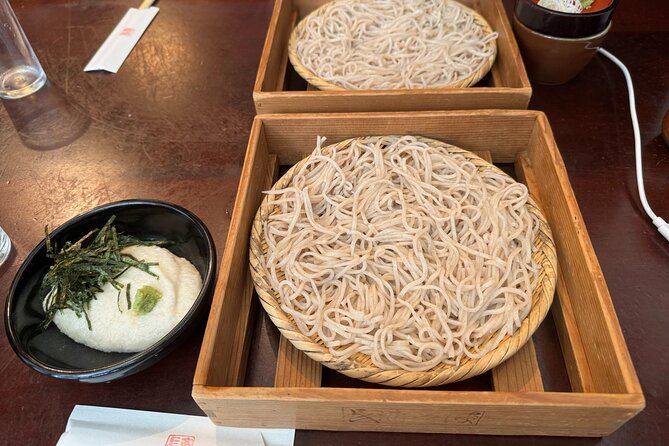
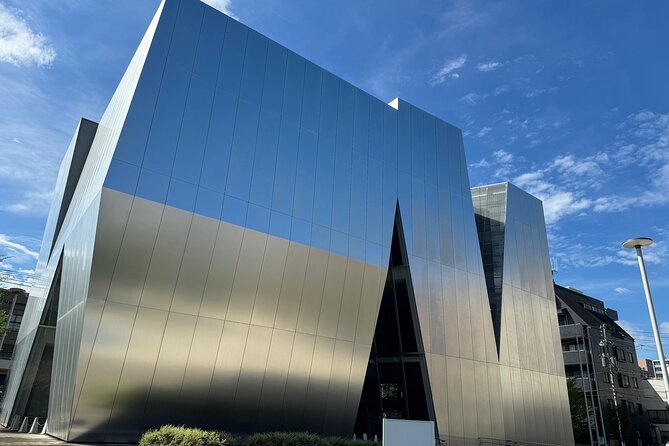
The Sumida Hokusai Museum adds a different kind of culture to a sumo-focused morning. Katsushika Hokusai was born in the Honjo-Wari-Gesui area, now part of Sumida Ward, in 1760. He spent almost all of his roughly 90 years in the district.
The planned stop is brief, about five minutes in the schedule, so this is more of an introduction than a full museum visit. If you are a serious Hokusai fan, you may want to return on your own with enough time to see the displays properly.
Admission costs ¥400 and is not included. That small extra fee is worth keeping in mind when you compare the advertised tour price with your final cost. The museum’s place in the route is still useful, because it shows that Sumida’s cultural identity extends beyond sumo.
I like this change of subject. After watching athletes train according to old rules, you shift to the work of an artist who helped define how the outside world imagines Edo-period Japan. The stop is short, but it keeps the morning from feeling like a single-theme outing.
Finishing at Ryogoku Edo Noren
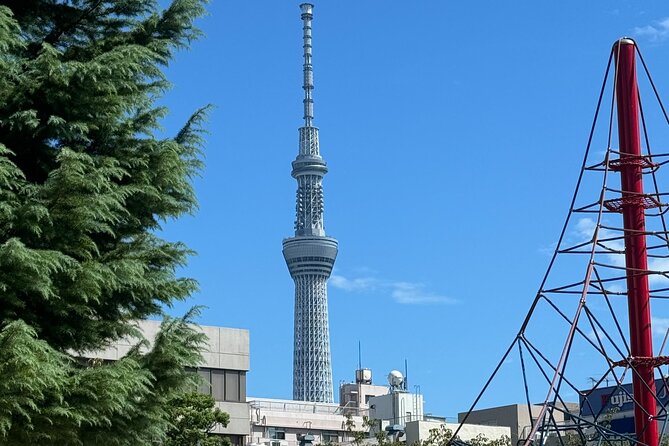
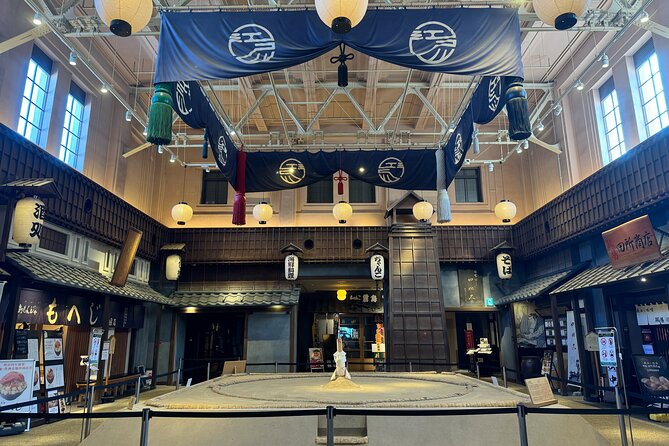
The last stop is Ryogoku Edo Noren, located in the old Ryogoku Station building. The space uses an open ceiling and an Edo-style design to connect modern food with the area’s past.
The schedule allows about 10 minutes here, so the purpose is mainly to show you the dining area rather than provide a full lunch. Lunch and beverages are not included. If you are hungry after the early start, you should plan to stay longer on your own after the official tour ends.
This is a practical ending. You finish near food rather than being left at a random street corner, and you can choose from several options inside the old station building. The activity itself ends back at the meeting point, so check with your guide before splitting off to eat.
Is $110 a fair price?
At $110 per person, this is not a cheap sightseeing walk. The price makes sense only if the stable visit is your main goal.
You are paying for access to a setting that is difficult to arrange independently, plus a guide who handles the meeting, introductions, cultural explanation, and stable etiquette. The stable admission fee and a small gift from the stable are included. Transportation, food, drinks, the ¥400 Hokusai Museum fee, personal expenses, and tips are not included.
For someone who simply wants to see Ryogoku’s arena from outside, the cost is high. You can visit the shrine, walk past Kokugikan, and explore the station area on your own for far less.
For someone who wants a close look at morning practice, the calculation is different. The 90-minute session is a rare access point, and the small group keeps it more personal than a large sightseeing outing. The added neighborhood walk gives you enough context to understand why Ryogoku matters.
The mobile ticket is convenient, but confirmation is sent within 48 hours of booking and depends on availability. Since the experience requires a minimum number of participants, the operator may offer another date or a full refund if the outing is canceled for that reason.
Who will enjoy this experience most?
I would choose this tour if you have a real interest in sumo, Japanese traditions, or the daily work behind a public sport. It is also a strong fit for first-time visitors who want one focused morning rather than a long list of unrelated attractions.
The experience suits most people, and it is near public transportation. Still, the early meeting time matters. If you know you will struggle to reach Ryogoku by 7:45 a.m., the stable visit may become stressful before it even begins.
You should also be comfortable with quiet observation. This is not a hands-on activity, and you cannot treat the wrestlers like performers waiting for audience interaction. The value comes from watching carefully and letting the stable operate on its own terms.
Families and casual culture seekers may enjoy the route, but the 90-minute silent practice could feel long to anyone who wants constant activity. Sumo fans will get the most from the chance to see training up close.
Free cancellation is available until 24 hours before the start time. Cancellations made less than 24 hours before the experience do not receive a refund, and last-minute changes are not accepted.
Should you book this Ryogoku sumo tour?
Book it if you want the stable visit more than anything else. The close view of wrestlers training, the connection to a former Yokozuna, and the quiet Shinto setting are the reasons to spend the money.
The shrine, Kokugikan, Hokusai Museum, and Edo Noren make the morning more useful, but they are supporting stops. You could visit those places separately. You cannot easily reproduce the stable access on your own.
My practical advice is to arrive early, eat something before meeting the guide, and keep your expectations focused. You are paying for a rare look at real sumo practice, not a full museum tour or included lunch. If that sounds like the right kind of Tokyo morning, this small-group experience is worth serious consideration.
FAQ
Where does the tour begin?
You meet at 7:45 a.m. in front of the 7-Eleven after exiting the West Exit of JR Ryogoku Station in Sumida City, Tokyo.
How long does the experience last?
The tour lasts approximately two hours and 30 minutes.
How long do you watch sumo practice?
The stable visit lasts about one hour and 30 minutes.
How large is the group?
The activity has a maximum of 14 participants.
Is the stable admission included?
Yes. The sumo stable admission fee and a small gift from the stable are included.
Is the Hokusai Museum ticket included?
No. Museum admission is not included and costs ¥400. The planned museum stop lasts about five minutes.
Is lunch included?
No. Lunch and beverages are not included. Ryogoku Edo Noren offers food options in the old Ryogoku Station building.
Can you cancel for a full refund?
Yes, if you cancel at least 24 hours before the experience start time. Cancellations made less than 24 hours before the start time are not refunded.
Newly reviewed around Tokyo
- Tokyo Asakusa:Calligraphy & Make T-shirt Activity★ 5.0 · 62 reviews
- Intercity Shuttle, Tokyo to Haneda /Narita /Yokohama /Makuhari★ 5.0 · 5 reviews
- 1 Hour Travel around Tokyo with a Professional Photographer★ 5.0 · 3 reviews
- Travel Tokyo with Your Own Personal Photographer★ 5.0 · 43 reviews
- Train in Samurai Swordsmanship and Defeat the Demon in Tokyo★ 5.0 · 5 reviews
- Shuttle Van 6hr Tokyo Tour to-and-from Tokyo, Yokohama and Narita★ 5.0 · 9 reviews
- Kickboxing & Body Training with EX-Pro Fighter★ 5.0 · 4 reviews
- Traditional Japanese Knife Sharpening Class★ 5.0 · 18 reviews
Tokyo Sumo Experiences, compared.
Tokyo Shinjuku Sumo Show & Experience with Photo
Read our review →

Luxury Sumo Show Experience & Japanese cuisine & Drink
Read our review →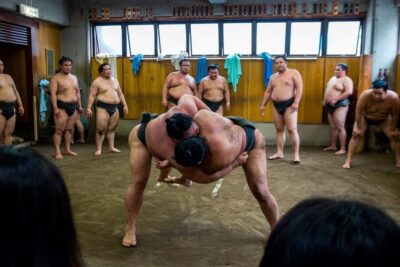
Tokyo Sumo Experience: Chanko & Mochi with a Former Pro
Read our review →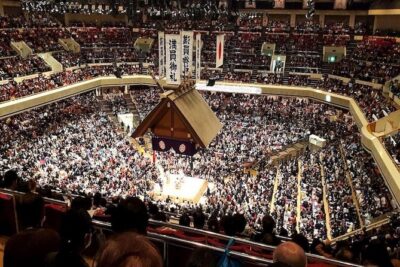
Ultimate Sumo Tournament: Tokyo, Osaka, Nagoya, Fukuoka
Read our review →Browse the lists this tour appears in