
Reviewed · TOKYO SUMO EXPERIENCES
Tokyo Sumo Morning Training/ Sumo Practice with Wrestlers
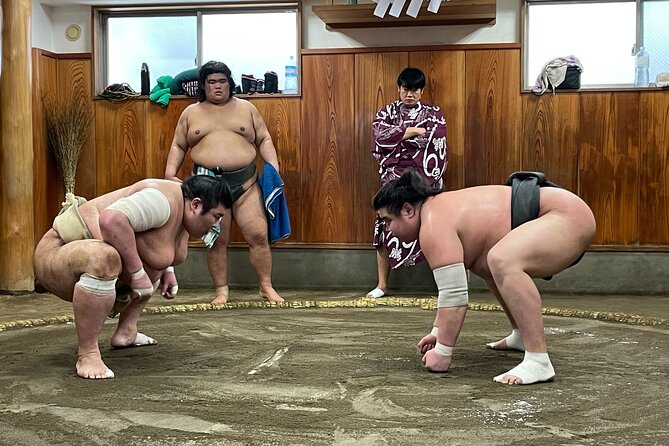
The most unusual part of this Tokyo experience happens before any tournament bout: you watch wrestlers train inside their stable, close enough to see the repetition, strength, and discipline behind sumo. The visit usually lasts about an hour, though practice length can change.
I like the close view of daily training and the chance to ask questions through a guide, rather than simply watching a match from a distant seat. I also like the photo opportunity with a wrestler afterward, a simple souvenir that gives the visit a personal finish.
The main caution is that this is a serious practice session, not a staged show. You must sit quietly, keep your phone silent, avoid video and flash, and remain inside until practice ends. Do not book it expecting a guaranteed Yokozuna appearance or a fixed schedule.
Key points to know before booking
- You watch real training, not a tournament bout, with warmups, drills, and repeated bouts forming the heart of the visit.
- The stable, meeting time, and practice length can change, so check the operator’s message after booking.
- English guidance may be provided through a headset or live explanation, helping newcomers follow what they see.
- You may sit on a floor mat, and some stables do not provide chairs.
- Women can join the experience, but may not enter the dohyo, or sumo ring, at facilities observing that tradition.
- Photos are allowed without flash or shutter sounds, but video recording is not permitted.
Watching sumo before the crowds arrive
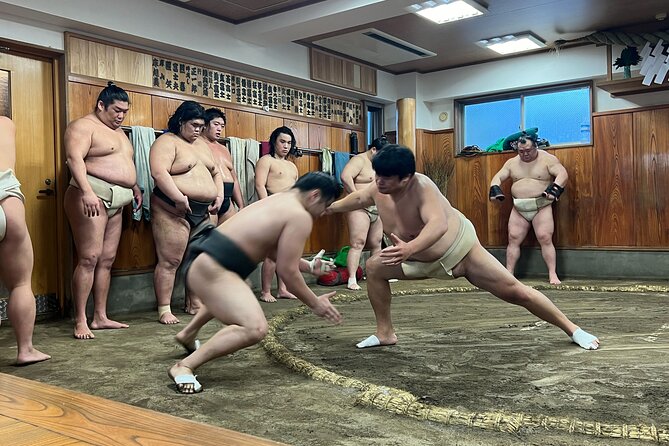
Sumo is often presented through tournament highlights, ceremonial entrances, and dramatic final throws. This visit shows the quieter, harder part of the sport: the daily work that builds a wrestler’s balance, timing, leg strength, and stamina.
You will meet your guide, receive a short explanation of sumo, and then walk to the stable. The first briefing may happen near a station or roadside area, where traffic noise can make spoken English difficult. If you use a headset, keep it close and check that you can hear before the practice begins.
The stable itself is not a public arena. It is a working place, and the rules make more sense once you understand that. The wrestlers are training, not performing for an audience. Your job is to watch without interrupting their concentration.
That difference matters. If you want a lively demonstration with constant explanation, this may feel restrained. If you want to see how much effort goes into a traditional sport, the quiet setting is part of the value.
More Tokyo sumo experiences:
- Tokyo: Sumo Show and Dining Experience
★ 4.8 · 2,742 reviews - the SUMO show
★ 5.0 · 1,960 reviews - Tokyo Shinjuku Sumo Show & Experience with Photo
★ 5.0 · 1,750 reviews
The five-minute introduction and walk to the stable
The official schedule gives about five minutes for the meeting and introduction, followed by roughly 55 minutes inside the stable. In practice, the total period may be shorter or longer, depending on the day’s training.
The meeting point is listed at 1-chōme-2-8 Chitose in Sumida City, but the operator may send a different address and start time after you reserve. Do not rely only on the original booking page. Check your messages from Japan Wonder Travel, especially on the morning of the experience.
This is one of the tour’s practical weak points. A late change can create a real problem if you are already on a train or walking toward the first address. One scheduled session was canceled with little notice because of a stable conflict, so I would allow flexibility in your morning rather than placing a major timed activity immediately afterward.
Arrive early. The group can have up to 25 people, and the stable is not a place where late arrivals can slip in unnoticed. Once practice begins, you cannot leave and re-enter. Use the restroom before meeting the guide, since restroom access during the session should not be assumed.
Inside the stable: why the practice is worth seeing
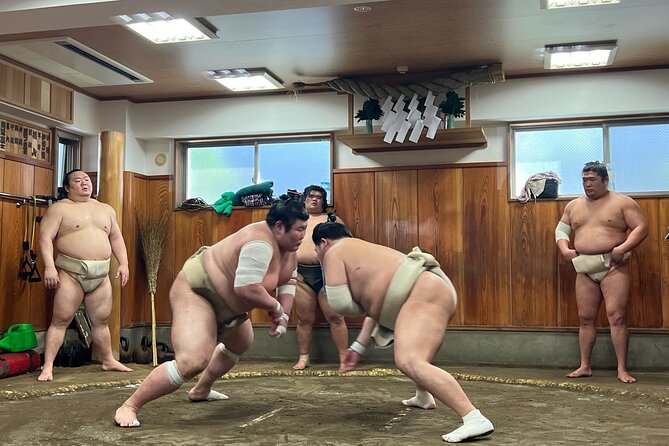
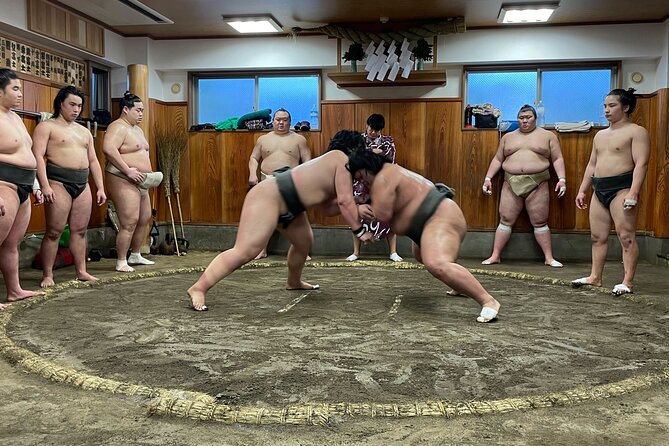
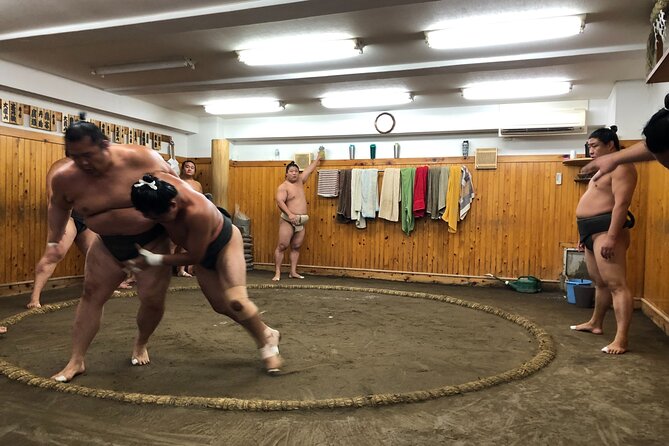
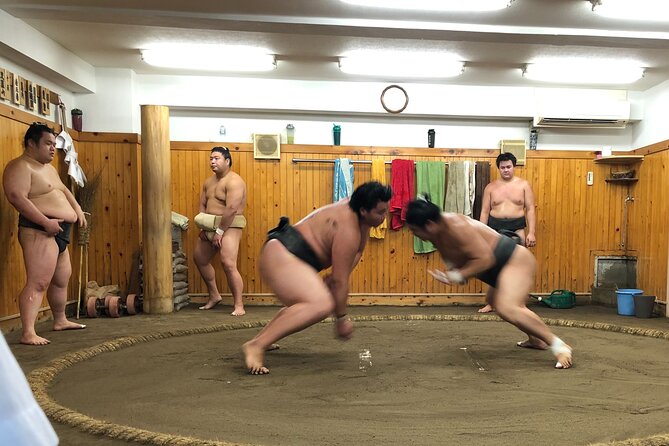
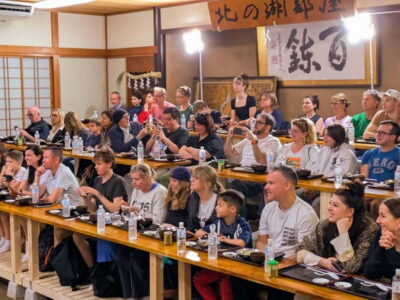
Once seated, you will watch wrestlers carry out their regular routine. The focus may include stretching, warmups, footwork, strength drills, and bouts, with the exact order and intensity changing from day to day.
A guide helps explain what is happening. You may learn about sumo rules, training habits, the life of a wrestler, and the meaning behind certain movements. English commentary has been offered through a headset on some visits, which can be especially useful when the room is quiet and the guide cannot speak loudly without disturbing the practice.
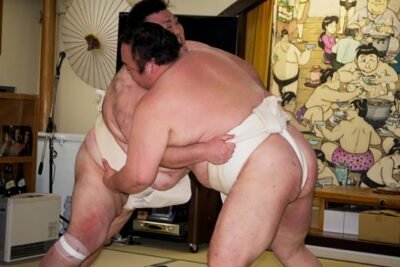
The best part is the physical detail. Sumo can look slow on television when a bout ends quickly, but a stable visit lets you see the work between those brief contests. Repeated movements, heavy impacts, long holds, and controlled footwork show that the sport depends on much more than size.
You may also see wrestlers from different ranks training in the same room. Do not assume that a famous wrestler will be present. A stable may be associated with a Yokozuna, yet there is no guarantee that he will train there on your particular morning. Tournament preparation and stable schedules can alter who appears and how long the session lasts.
Some accounts describe a full two-hour practice, while the advertised visit is about one hour. That variation is important. You may get a longer session when the stable’s schedule allows, but you should not count on it when arranging transport or another booking.
The rules are part of the experience
The etiquette here is simple but strict. Keep your cellphone on silent, do not eat, and watch quietly. Water and sports drinks are allowed inside, but food is not.
Photos are permitted only without flash or shutter sounds. Video is not allowed. This may disappoint anyone hoping to record a dramatic clash, but the restriction protects the wrestlers’ focus and keeps the stable from turning into a film set.
Do not stretch your legs toward the ring. Showing the soles of your feet toward the wrestlers is considered impolite. Sit in the position that is comfortable and respectful, but avoid casual movement that could distract the athletes.
You may need to remove your shoes before entering the practice area. Some stables use floor mats instead of chairs, so wear clean socks and comfortable clothing. Sitting cross-legged for a long session can be uncomfortable, particularly if practice runs well beyond the planned hour.
If you feel unwell, skip the visit. You cannot step outside midway through and then return, so this is not a good activity when you need frequent breaks.
More early morning tours in Tokyo:
- Tokyo: Sumo Morning Practice Viewing Tour
★ 4.8 · 570 reviews - Tokyo: Sumo Morning Training Visit
★ 4.4 · 370 reviews - Tokyo: Sumo Morning Practice Tour at Sumida City
★ 4.8 · 308 reviews - Tokyo Sumo Morning Practice Tour at Stable
★ 5.0 · 298 reviews
Women, the dohyo, and the photo afterward
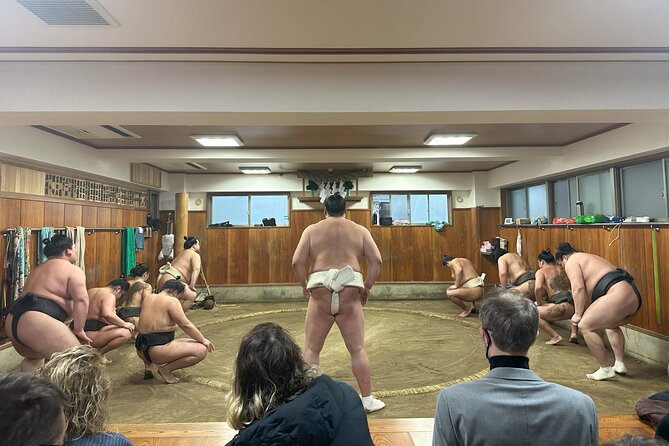
Women are welcome on the Sumo Practice with Wrestlers option, but cultural and religious traditions at the facility may prevent female participants from stepping onto the dohyo. Women can still watch the training fully from the designated seating area.
Men may be asked to remove their shoes before stepping onto the dohyo. These rules are not minor details. They shape where you can sit, how you move, and how you interact with the wrestlers, so read the instructions before you arrive.
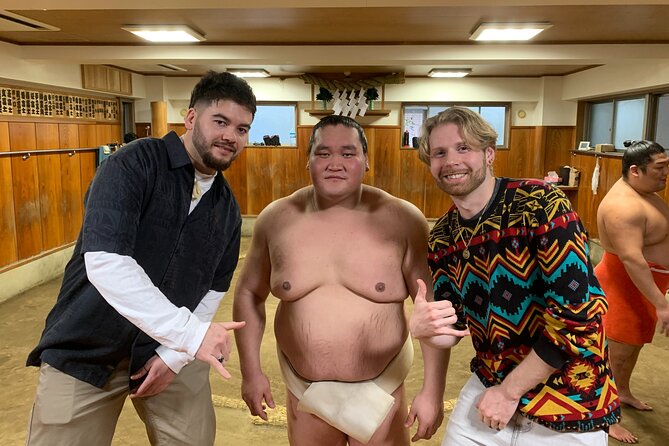
After practice, the experience includes a photo with a sumo wrestler. This is often the most relaxed moment of the visit, giving you a chance to speak briefly and take a keepsake photo. The precise interaction can depend on the stable’s schedule and the wrestlers’ availability, so treat it as a planned feature rather than a long meet-and-greet.
You should also keep expectations clear about who you will meet. The experience is described as a visit to a sumo training stable, but the people present can vary. Some sessions may include active professionals, while another option or day may involve retired wrestlers or former participants. If meeting current top-division wrestlers is your main reason for booking, ask the operator what is expected for your date.
How much value do you get for $99.10?
At $99.10 per person, this is not a cheap way to fill an hour. The price pays for access to a restricted working space, a guide, language support, and the chance to observe training at close range. You are not paying for a long sightseeing route or a full-day tour.
I think the price makes the most sense if sumo is one of your reasons for visiting Tokyo. The setting is difficult to arrange independently, and a guide adds context that you would miss by simply standing outside a stable. The photo afterward also gives the experience a clear ending.
The value is weaker if you expect a polished performance. There may be little talking once training starts, and some of the session can look repetitive. One account found the activity too focused on explanation and not enough on action, while another felt that only a very brief amount of amateur wrestling was included. That difference suggests you should confirm the exact option you are buying. A stable observation and a hands-on practice session are not the same experience.
You should also understand that the operator cannot promise a particular wrestler, a fixed practice length, or a tournament-like spectacle. The closer a major Grand Tournament gets, the more the morning schedule may shift. Practice could end early, which can reduce the value if you booked mainly for duration.
Who will enjoy this Tokyo sumo visit?
I would recommend it most strongly to:
- First-time sumo fans who want help understanding the movements and rules
- Visitors curious about Japanese sporting traditions and daily discipline
- Families with older children who can sit quietly for the full session
- People who value access and atmosphere more than entertainment
- Anyone who has already seen a tournament and wants to understand training
It may not suit you if you need to leave at a precise time, dislike floor seating, or want to take video. It is also a poor choice for anyone who expects an interactive class throughout. The session is mainly observation, with the photo and possible conversation coming after practice.
The group limit of 25 keeps this from being a private visit, but the stable setting still feels more personal than a stadium event. Your view may depend on where you are seated, so arrive on time and follow the guide’s directions.
Planning your morning in Sumida
The activity ends back at the meeting point. Since the address and start time may change, do not plan your route until the operator sends the final details. The experience is near public transportation, but you should still build in time to find the correct entrance and remove your shoes before practice begins.
Wear comfortable clothes. Avoid anything that makes floor sitting difficult, and choose socks you are happy to wear inside a traditional practice space. Bring water if you need it, but leave food for afterward.
The cancellation policy is reasonable: cancel at least 24 hours before the local start time for a full refund. Changes or cancellations within 24 hours are not accepted for a refund. If you miss the meeting point or arrive late without checking the operator’s messages, compensation is not provided.
Because the practice schedule can shift or the session can be canceled by the stable, keep your plans flexible. If a canceled morning would ruin your day, place this activity early in your Tokyo visit rather than on the day you leave.
My call: book it for access, not spectacle
I would book this experience if you want to see sumo as daily work, not just as a tournament show. The close seating, guide commentary, and chance to watch a full training routine can make this one of Tokyo’s most distinctive sports experiences.
I would skip it if your main goal is a guaranteed champion sighting, a long hands-on lesson, or constant action. Before paying, check the exact option, confirm the meeting details, and accept that the day’s practice may be shorter, longer, quieter, or different from what you imagined.
For a sumo fan, $99.10 is a fair price for access that is hard to arrange alone. For a casual sightseer, the strict etiquette and uncertain schedule make it a more selective choice. Go with patience, sit respectfully, and let the training speak for itself.
FAQ
How long does the Tokyo sumo practice experience last?
The advertised duration is about one hour, with roughly five minutes for the meeting and explanation and about 55 minutes inside the stable. The actual practice can be shorter or longer depending on the day.
Where does the experience begin?
The listed starting point is 1-chōme-2-8 Chitose, Sumida City, Tokyo 130-0025, Japan. The location and time may change by date, and the operator sends the final meeting details after booking.
Can I take photos inside the sumo stable?
Yes. Photos are allowed without flash or shutter sounds. Video recording is not allowed.
Can I leave during the practice?
No. You cannot leave the stable in the middle of practice and re-enter. You should use the restroom before arriving.
Are women allowed to join the experience?
Yes. Women can join the Sumo Practice with Wrestlers option, but may not be allowed onto the dohyo at facilities observing that cultural and religious tradition. They can watch from designated seating areas.
Will I definitely see a Yokozuna?
No. The stable may be one where a Yokozuna trains, but his presence is not known until the morning of the experience and is not guaranteed.
Is cancellation free?
You can receive a full refund if you cancel at least 24 hours before the local start time. Cancellations or changes made less than 24 hours before the experience are not refunded.
Newly reviewed around Tokyo
- Tokyo Asakusa:Calligraphy & Make T-shirt Activity★ 5.0 · 62 reviews
- Travel Tokyo with Your Own Personal Photographer★ 5.0 · 43 reviews
- Intercity Shuttle, Tokyo to Haneda /Narita /Yokohama /Makuhari★ 5.0 · 5 reviews
- 1 Hour Travel around Tokyo with a Professional Photographer★ 5.0 · 3 reviews
- Train in Samurai Swordsmanship and Defeat the Demon in Tokyo★ 5.0 · 5 reviews
- Shuttle Van 6hr Tokyo Tour to-and-from Tokyo, Yokohama and Narita★ 5.0 · 9 reviews
- Kickboxing & Body Training with EX-Pro Fighter★ 5.0 · 4 reviews
- Traditional Japanese Knife Sharpening Class★ 5.0 · 18 reviews
Tokyo Sumo Experiences, compared.
Tokyo Shinjuku Sumo Show & Experience with Photo
Read our review →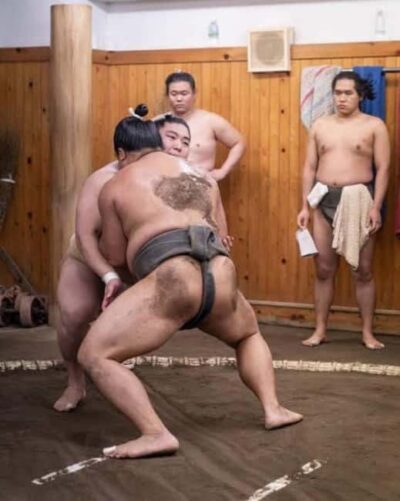

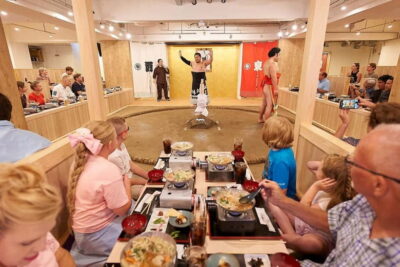
Luxury Sumo Show Experience & Japanese cuisine & Drink
Read our review →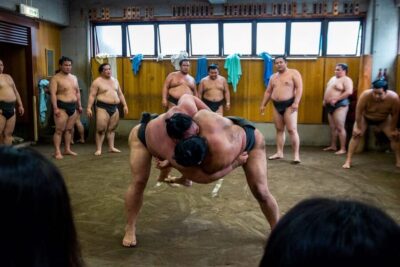
Tokyo Sumo Experience: Chanko & Mochi with a Former Pro
Read our review →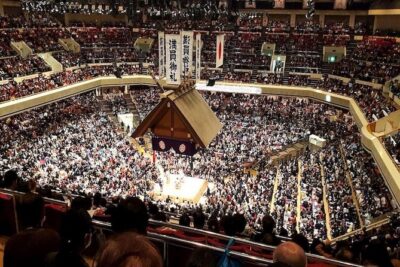
Ultimate Sumo Tournament: Tokyo, Osaka, Nagoya, Fukuoka
Read our review →Browse the lists this tour appears in