
Reviewed · TOKYO WALKING TOURS
Tokyo Shibuya and Harajuku Walking Tour With A Guide
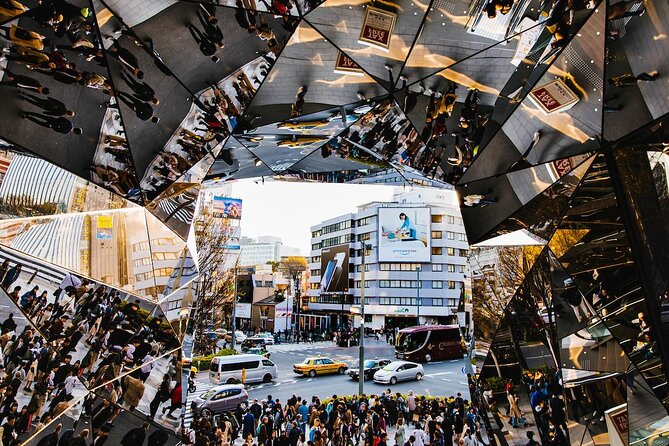
Shibuya Scramble and Harajuku’s street culture are the heart of this three-hour walk. You move from Hachiko and neon-lit Center-gai to Takeshita Street, Ura-Hara, Omotesando, and Meiji Shrine, seeing several sides of Tokyo in one compact outing. I like the way the route mixes famous sights with quieter side streets, and I like the chance to shape the walk around your interests. The main catch is simple: you will walk a lot, and any train or subway fare is extra.
I also like the human side of this tour. Guides such as Riccardo, Sébastien, Francine, Timothy, Joe, Jenny, and Sergio have been praised for explaining daily life in Japan, sharing personal experience, and suggesting places to eat and explore later. That can make the difference between merely seeing Shibuya and understanding how its youth culture, fashion, shopping, and shrine traditions fit together.
Key points to know before you book
- Three hours, nine major stops: The walk covers Shibuya and Harajuku at a brisk but manageable pace.
- A strong first-day introduction: You get famous landmarks, shopping streets, fashion districts, and a Shinto shrine in one outing.
- Private or small-group choices: A private booking means only your party joins, while the group option requires at least two participants.
- Guides in four languages: English, Spanish, French, and Italian are available.
- Good for fashion and street-culture fans: Shibuya 109, Takeshita Street, Ura-Hara, and Omotesando each show a different side of Tokyo style.
- Budget for your own extras: Food, drinks, monument or museum admission, tips, and public transport are not included.
Why this walk works for a first look at Tokyo
Tokyo can feel like several cities stitched together. Shibuya is loud, polished, commercial, and young. Harajuku adds playful fashion, independent shops, cafés, and narrow backstreets. Then Meiji Shrine offers a quiet change of pace under tall trees.
This tour gives you that contrast without asking you to plan every train connection. The guide leads you between the districts, explains what you are seeing, and can adjust the focus when the tour is private or customized. You are not simply moving from one photo stop to the next. You are seeing how shopping, youth culture, street fashion, religion, and daily city life sit close together.
At $48.21 per person, the value depends on your group size and your need for guidance. For a private tour, that price is reasonable if you want local context and help finding less obvious streets. For someone comfortable navigating Tokyo alone, the same areas are accessible without a guide, so the real purchase is interpretation, route planning, and personal recommendations.
More things to do in Shibuya:
- Official Street Go-Kart in Shibuya
★ 5.0 · 3,435 reviews - Tokyo: Street Kart Experience in Shibuya
★ 4.9 · 1,484 reviews - Shibuya Meltdown Nightlife Tour: All-You-Can-Drink Bar Hopping
★ 5.0 · 1,058 reviews
Starting near Shibuya Station
The meeting point is at 24-2 Sakuragaokachō, Shibuya, Tokyo 150-0031. The walk then heads toward the Tokyu Tokyo Metro Shibuya Station Tourist Center and the famous crossing area.
Shibuya Station is not a gentle introduction to Tokyo navigation. It is a large transport hub with several exits, shops, eateries, and streams of people moving in every direction. Meeting your guide first is useful because it gets you oriented before the busiest part of the walk.
You spend about 20 minutes around the station area. That is enough time to understand the scale of the district, take in the city energy, and prepare for the crossing. If you are arriving after a long flight, wear shoes you trust. The route is urban, but the constant pavement and crowds can tire you faster than the distance suggests.
Hachiko and the famous scramble
The Hachiko Statue sits just outside Shibuya Station. It honors Hachiko, the Akita dog remembered for his loyalty to his owner, and it has become one of Tokyo’s best-known meeting places.
Your guide can give this stop more meaning than a quick photograph. Hachiko is not only a statue. It is a marker for how Tokyo uses small public spaces in a very large city. People arrange to meet here, pass through here, and use the statue as a fixed point in the flow around the station.
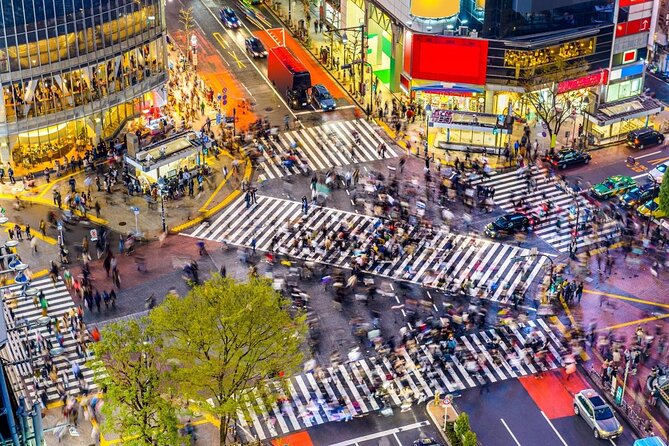
From this area, you experience Shibuya Scramble Crossing. The sight of several streams of pedestrians crossing at once is one of Tokyo’s defining urban scenes. The crossing itself is free, but the value comes from knowing where to stand, what to watch, and how the surrounding streets connect.
Do not expect a long stop at each point. The schedule allows about 20 minutes per location, so the guide has to keep the group moving. That rhythm helps you cover a lot, but it leaves little time for extended shopping during the walk.
Center-gai and Shibuya 109
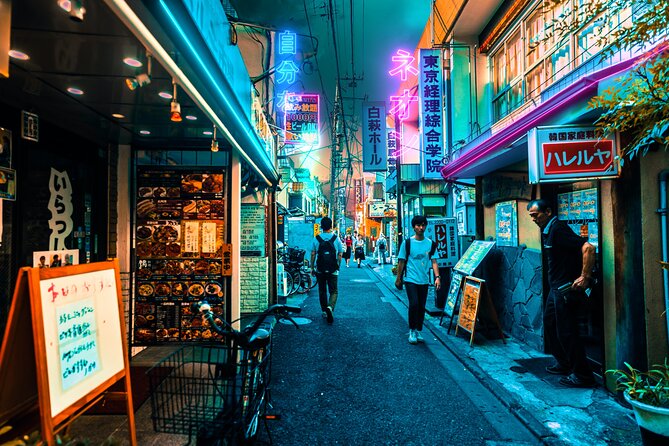
Shibuya Center-gai is a pedestrian street lined with shops, cafés, boutiques, and places to eat. It is one of the clearest places to see the district’s youth culture at street level.
This is where the tour shifts from landmark sightseeing to watching city life unfold. Shop signs, clothing, food stops, and the flow of pedestrians all contribute to the feel of the area. A guide can point out what is aimed at young shoppers and help you understand how the street relates to the wider fashion scene.
Shibuya 109 offers a different view. This landmark department store is known for fashion aimed mainly at young women and for its quick response to changing styles. Even if you do not plan to buy anything, the building helps explain why Shibuya has such a strong role in Tokyo fashion.
You should see this stop as a cultural and commercial visit rather than a museum experience. Shopping is part of the point. If you are interested in clothing, accessories, or Japanese youth trends, you will get more from it than someone seeking temples and old architecture.
More things to do in Harajuku:
- Tokyo Go-Kart Tour Shibuya-Harajuku-Shinjuku (*IDP Required)
★ 5.0 · 217 reviews - Tokyo: Guided Go Kart Tour from Harajuku to Shibuya Crossing
★ 4.5 · 166 reviews - Shibuya & Harajuku: Hidden Gems & Highlights Private Tour
★ 4.7 · 139 reviews - Harajuku Kawaii Fashion and Pop-Culture Tour
★ 5.0 · 94 reviews
Harajuku Station and Takeshita Street
Harajuku Station marks the change from Shibuya’s large-scale city movement to a more playful shopping district. The area is closely linked with youth fashion, colorful street style, novelty shops, cafés, and Takeshita Street.
Takeshita Street is busy and compact, with shops selling clothing, accessories, snacks, and unusual gifts. It is a strong people-watching stop, but it can also feel crowded and commercial. Keep your expectations balanced. This is not a quiet historic lane. It is a concentrated display of pop culture and youthful shopping.
The guide’s role matters here. A good walk through Harajuku is not just about pointing out stores. It is about explaining why this neighborhood became associated with alternative style and how the shopping streets differ from the designer districts nearby. Past guides such as Francine and Jenny have been singled out for adjusting the route to personal interests, which is useful in a district where one person may want fashion and another may care more about food or local life.
You should also allow time after the tour if you want to shop. The 20-minute stop is a useful introduction, not a full retail visit.
Ura-Hara, the backstreets with a different tone
Ura-Hara, short for backstreet Harajuku, takes you away from the main crowds. The area is linked with independent boutiques, alternative fashion, and streetwear.
This is one of the best reasons to choose a guided walk instead of simply following a standard Tokyo route. The main streets are easy to find. The smaller lanes require more judgment about where to turn and what is worth your time.
The mood here is less direct than Takeshita Street. You might find smaller shops and a more design-focused side of Harajuku, though the exact stops can change because the tour is customizable. If you care about clothing, sneakers, graphic design, or Tokyo street style, tell your guide early. The private format gives the guide a better chance to shape the conversation around those interests.
There is a tradeoff. Backstreet shopping districts are best enjoyed slowly, but this tour has a fixed three-hour window and several major stops. You will get an introduction rather than a detailed store-by-store exploration.
Omotesando and Tokyo’s polished side
Omotesando Avenue is often compared with Paris’s Champs-Élysées. It is lined with luxury boutiques, designer flagship stores, stylish cafés, and modern buildings.
This stop adds a useful contrast to Takeshita Street and Ura-Hara. Harajuku is not only quirky shops and youth fashion. It also includes polished architecture, international luxury brands, and some of Tokyo’s most carefully designed retail spaces.
You may not want to shop here, and you do not need to. Walking the avenue is enough to see how the district changes within a few blocks. The guide can help connect the different styles rather than treating each area as an unrelated stop.
For architecture and design fans, Omotesando may be more interesting than Shibuya 109. For visitors focused on budget shopping or Japanese snacks, it may be less important. This is another point where customization can improve the experience.
Meiji Shrine and a quieter finish
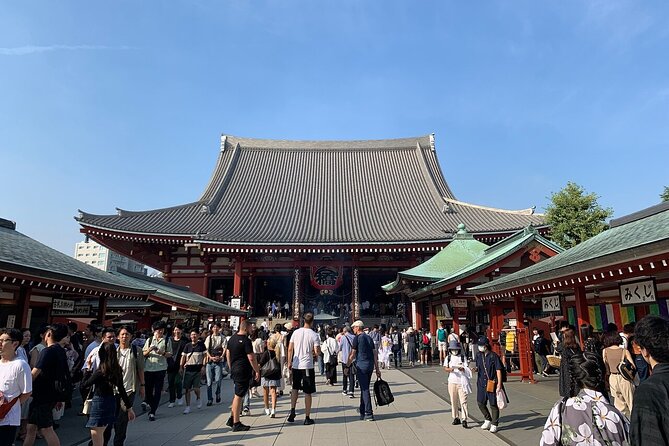
The final major stop is Meiji Shrine and its surrounding Imperial Garden area. The shrine is dedicated to Emperor Meiji and Empress Shoken and sits in a forested setting in Shibuya.
After the noise of Shibuya and the tight crowds of Takeshita Street, the shrine provides a welcome pause. You can see a major Shinto site and get a sense of the quiet, respectful atmosphere that Tokyo can offer just minutes from its busiest shopping zones.
The tour is a city walk, not an in-depth visit inside monuments or museums. Entry to monuments and museums is not included, and the route does not promise a long religious or historical lecture. Still, this finish gives the outing a better shape than ending in another shopping street.
Bring the right attitude to the shrine. It is an active religious place, not just a photo stop. Your guide can explain basic customs and help you approach the grounds with respect, while you take in the contrast between the forest and the city around it.
What the guides add to the experience
The strongest part of this tour is the guide’s ability to turn a route into a conversation about Tokyo. Past guide names include Riccardo, Sébastien, Francine, Timothy, Joe, Jenny, and Sergio. Their backgrounds differ, and Sergio, for example, has lived in Japan for more than 10 years without being Japanese-born.
That detail matters. You are not promised one fixed style of guiding. Some guides may focus more on Japanese culture and history, while others may draw on life in Tokyo, fashion, food, or local habits. The supplied language choices are English, Spanish, French, and Italian.
When you book, think about what you want from the walk. Tell the guide if you care most about:
- Japanese daily life and customs
- Youth fashion and streetwear
- Shopping and food suggestions
- Photography and major sights
- Quiet side streets
- Planning the rest of your Tokyo visit
Several guides have been praised for giving useful suggestions for later meals, visits, and neighborhoods. That makes the tour particularly helpful near the start of your trip, when you can still use those ideas.
Timing, pace, and practical costs
The advertised duration is about three hours, with roughly 20 minutes allocated to each of nine stops. That is an efficient format. You see a lot, but you should not expect long independent breaks at every location.
The route includes substantial walking, and previous participants have specifically enjoyed the amount of ground covered. At the same time, that pace may not suit anyone who wants a slow shopping afternoon. Wear comfortable shoes and keep your hands free where possible, especially on the crowded streets.
Food and drinks are not included. Neither are public transport costs, tips, or admission to monuments and museums. The tour itself is conducted on foot, but you are responsible for any train or subway fare used during the experience.
Confirmation arrives at booking, and the start point is near public transport. The activity ends back at the meeting point. Most people can participate, but the supplied details do not promise a fully accessible route, so you should ask the operator if you have specific mobility needs.
Cancellation is flexible enough for ordinary trip planning: you can cancel up to 24 hours before the experience for a full refund.
Who should book this Shibuya and Harajuku walk?
I would choose this tour for a first visit to Tokyo, especially if you want an informed introduction before exploring alone. It is also a good fit for couples, families, and small parties who want a private route instead of joining a large crowd.
Fashion fans get the most specialized value from Shibuya 109, Takeshita Street, Ura-Hara, and Omotesando. You will see four different shopping moods in a short time, from youth trends to independent streetwear and luxury design.
I would be less keen to book it if your main goal is temples, museums, or a slow food tour. The walk includes Meiji Shrine, but its center of gravity is modern Tokyo, not traditional sightseeing. You should also reconsider if you dislike crowds or prefer to spend hours inside shops.
Should you book it?
Book this walk if you want to understand Shibuya and Harajuku quickly, prefer company over map reading, and value a guide who can add personal context. The combination of Scramble Crossing, Hachiko, Center-gai, Shibuya 109, Takeshita Street, Ura-Hara, Omotesando, and Meiji Shrine gives you a broad first look at two very different districts.
The best choice is the private option if you have clear interests or want the route adjusted. Choose the small-group format if you want a lower-key social outing and are comfortable with a fixed pace. At $48.21 per person, it is a fair buy for guidance, orientation, and local suggestions, but not for entry tickets or a long shopping session. Bring good shoes, budget for your own food and transport, and book near the start of your stay so you can use the advice for the rest of Tokyo.
FAQ
How long does the Tokyo Shibuya and Harajuku walking tour last?
The tour lasts approximately three hours.
Where does the tour start?
The meeting point is 24-2 Sakuragaokachō, Shibuya, Tokyo 150-0031, Japan.
Where does the tour end?
The activity ends back at the meeting point.
Which languages are available for the guide?
In-person guides are available in English, Spanish, French, and Italian.
Are food, drinks, and public transport included?
No. Food, drinks, tips, monument or museum admission, and public transport costs are not included.
Can I cancel for a full refund?
Yes. You can cancel up to 24 hours in advance for a full refund.
More Tokyo walking tours
- Tokyo Tsukiji Fish Market Food and Culture Walking Tour
★ 5.0 · 3,184 reviews - Tokyo: Imperial Palace and Shogun Historical Walking Tour
★ 5.0 · 2,251 reviews - Tokyo: Shinjuku Local Bar and Izakaya Guided Walking Tour
★ 4.9 · 1,794 reviews - Tokyo: Tsukiji Fish Market Food and Walking tour
★ 5.0 · 1,724 reviews
Newly reviewed around Tokyo
- Tokyo Asakusa:Calligraphy & Make T-shirt Activity★ 5.0 · 62 reviews
- Intercity Shuttle, Tokyo to Haneda /Narita /Yokohama /Makuhari★ 5.0 · 5 reviews
- 1 Hour Travel around Tokyo with a Professional Photographer★ 5.0 · 3 reviews
- Travel Tokyo with Your Own Personal Photographer★ 5.0 · 43 reviews
- Train in Samurai Swordsmanship and Defeat the Demon in Tokyo★ 5.0 · 5 reviews
- Shuttle Van 6hr Tokyo Tour to-and-from Tokyo, Yokohama and Narita★ 5.0 · 9 reviews
- Kickboxing & Body Training with EX-Pro Fighter★ 5.0 · 4 reviews
- Traditional Japanese Knife Sharpening Class★ 5.0 · 18 reviews
Tokyo Walking Tours, compared.
Tokyo Tsukiji Fish Market Food and Culture Walking Tour
Read our review →
Imperial Palace and Shogun Historical Walking Tour
Read our review →
Shinjuku Local Bar and Izakaya Guided Walking Tour
Read our review →
Asakusa Walking Tour with Sensoji Temple Visit
Read our review →
Tokyo Castle & Imperial PalaceーShogun Walking Tour
Read our review →
Browse the lists this tour appears in