
Reviewed · TOKYO FOOD TOURS
Asakusa Historical And Cultural Food Tour With A local Guide
Asakusa is where old Tokyo feels easiest to find, and this tour puts its temples, food stalls, craft shops, and small amusement park into one four-hour walk. You begin at the Asakusa Culture Tourist Information Center, then work through Nakamise Shopping Street, Sensoji Temple, Asakusa Shrine, and nearby food stops.
I like the practical mix of sightseeing and eating. You get the major landmarks, but also time to try local dishes and sweets such as sushi, tempura, beef, dango, and daifuku. I also like the small group size, which is limited to 10 people, and the chance to ask questions in English or Japanese.
The main consideration is the price: at $180 per person, this is not a cheap neighborhood stroll. You are paying for a private-feeling small group, a local guide, several food tastings, and four hours of structured exploring, but you should choose it only if you want food and guiding rather than sightseeing alone.
Key points to know before you book
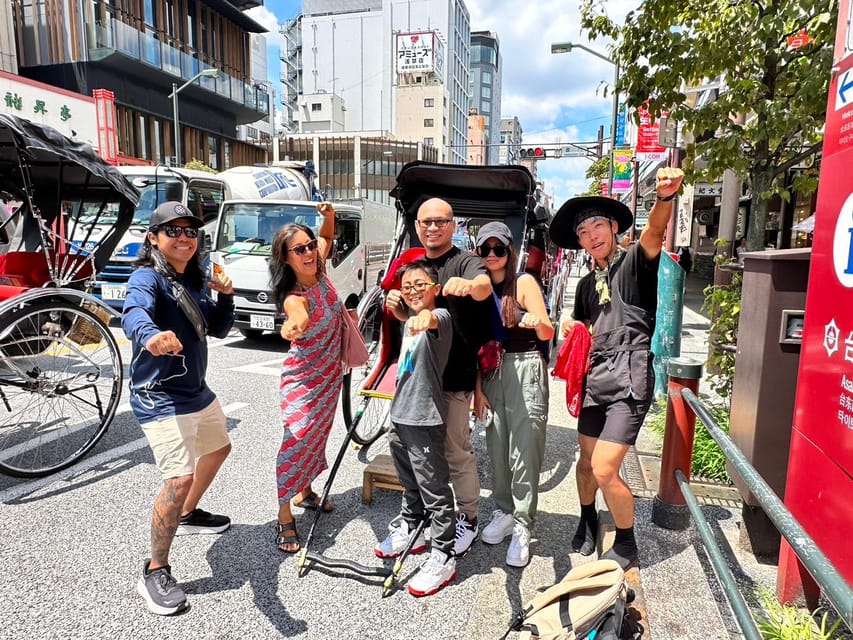
- Start at the Asakusa Culture Tourist Information Center: The meeting point is at 2-chōme-18-9 Kaminarimon, close to the district’s main sights.
- Taste more than one kind of Japanese food: Beef, sushi, tempura, snacks, desserts, dango, and daifuku are part of the food focus.
- See Asakusa’s essential landmarks: The route includes Sensoji Temple, Nakamise Shopping Street, Asakusa Shrine, and Hanayashiki Amusement Park.
- Keep the group small: No more than 10 participants are included, which should make conversation with the guide easier.
- Plan for a walking-heavy morning or afternoon: The experience lasts four hours and includes several sightseeing and shopping stops.
- Alcohol costs extra: Two soft drinks and water are included, but alcoholic drinks must be purchased separately.
Why Asakusa works so well for a food walk
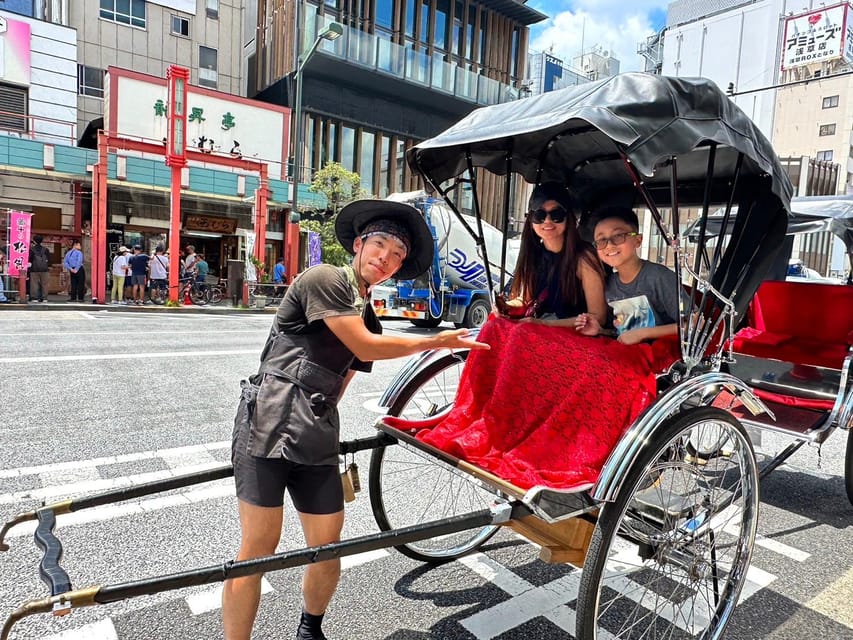
Asakusa gives you a useful introduction to an older side of Tokyo. Around Sensoji, traditional shops and food stalls line the approach to the temple, while the district also includes a long-running amusement park and a riverside park used for festivals and fireworks.
That mixture is what makes the area worth seeing with a guide. You are not moving from one isolated monument to another. The streets, shops, temple grounds, food counters, and entertainment spots all sit within the same compact district.
I find Asakusa especially helpful for a first visit to Tokyo because the area offers clear cultural contrasts. You can see Buddhist and Shinto sites, sample familiar Japanese foods, browse local-style shops, and then look toward Tokyo Skytree and the modern city beyond.
The tour is also designed for people who want context while they walk. The guide speaks English or Japanese, and a small group of up to 10 means you are less likely to feel lost in the crowds around the temple approach.
More Asakusa and Sensoji tours:
- Tokyo: Japanese Dance Cabaret Theater Asakusa-Kaguwa Ticket
★ 4.8 · 2,270 reviews - Tokyo: Meiji Shrine, Asakusa, Skytree Bus Tour and Cruise
★ 4.7 · 1,986 reviews - Tokyo: Roll and Authentic Sushi Making Class in Asakusa
★ 4.9 · 1,957 reviews
Meeting at the Culture Tourist Information Center
The tour begins at the Asakusa Culture Tourist Information Center on Kaminarimon. This is a sensible starting point because the center is directly tied to the district’s main attractions and is easy to use as a fixed point before and after the walk.
You return here at the end, so the route has a clear beginning and finish. That matters in Asakusa, where the streets around Sensoji can feel confusing once you leave the main approach.
The first visit to the center lasts about 30 minutes. The supplied details do not specify exactly what activities take place during this portion, so you should think of it as an orientation stop rather than a separate museum visit. It gives the guide a chance to frame the neighborhood before you head into the shopping streets and temple area.
If you are meeting friends afterward, the return to the same location is convenient. If you plan to continue toward the river or Tokyo Skytree, ask the guide for directions before the tour ends.
Nakamise Shopping Street and the walk to Sensoji
Nakamise Shopping Street is one of the clearest snapshots of Asakusa’s old-style character. The street leads toward Sensoji and is lined with traditional craft shops and food stalls.
The scheduled stop lasts about 30 minutes. That is enough time to look at the shop fronts, notice the snacks and sweets, and hear how the approach to the temple fits into Asakusa’s local culture. It is not enough time for a long, relaxed shopping session, so keep purchases focused.
This is also one of the better parts of the tour for food sampling. As you walk, the guide can help explain what you are seeing and point out the difference between a quick street snack and a full dish. The experience includes snacks and desserts, with dango and daifuku highlighted as examples.
Dango is a Japanese sweet made from rice flour, often served on a skewer. Daifuku is a soft rice cake with a sweet filling. These are simple foods, but they help you understand the everyday side of Japanese eating better than a formal restaurant meal alone.
Sensoji Temple, Asakusa’s main landmark
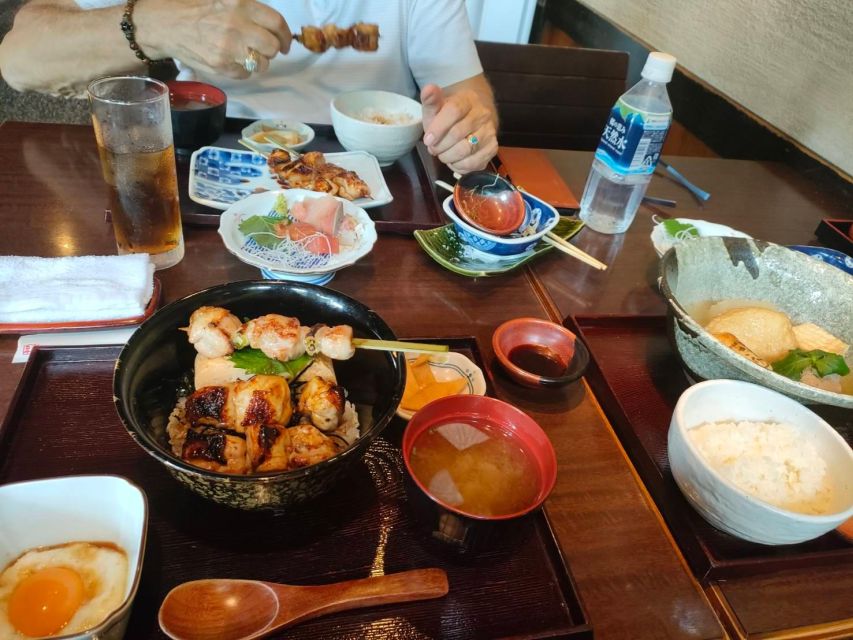
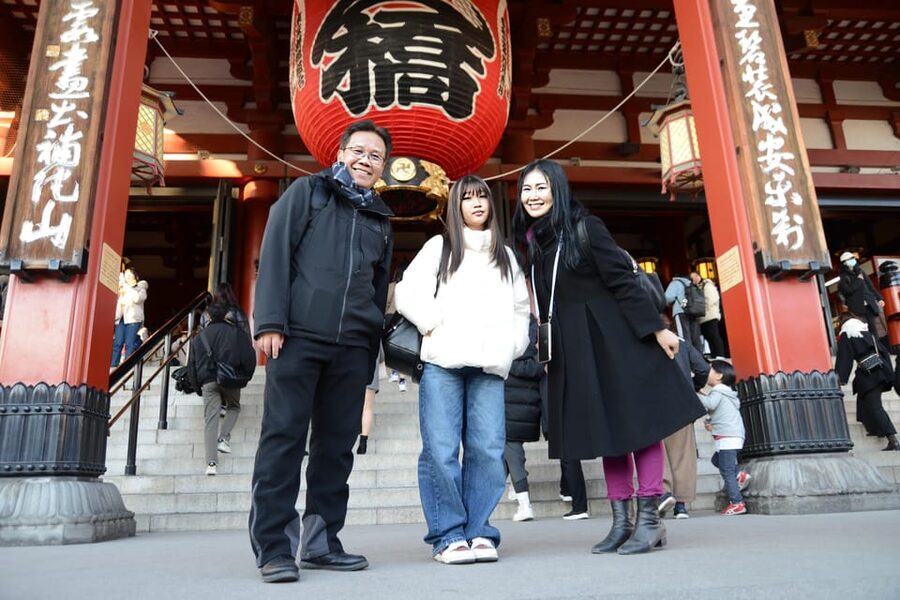
Sensoji is an ancient Buddhist temple and one of Tokyo’s most visited sights. Its importance makes it the natural centerpiece of the route.
You have about 30 minutes for sightseeing here. That is enough for a guided look at the main temple area, but it is a short visit if you want to study every detail or take your time with photographs. Stay close to the guide and listen for the practical explanation of what you are seeing.
The value of seeing Sensoji with a local guide is not just the building itself. A guide can help you place the temple within Asakusa’s wider identity, explain the difference between the nearby Buddhist and Shinto sites, and keep the visit from becoming a quick photo stop.
Because Sensoji is highly visited, expect the area to feel active, especially around the main approach. The tour does not promise a quiet temple experience. Instead, it gives you a way to understand the site while sharing the space with other people.
More Tokyo food tours:
- Tokyo: Shinjuku Food Tour (13 Dishes at 4 Local Eateries)
★ 5.0 · 6,603 reviews - Tokyo: Shinjuku Food Tour (15 Dishes and 4 Eateries)
★ 4.9 · 2,033 reviews - Best of Shinjuku: Izakaya Food Tour (4 Stops, 14+ Tastings)
★ 5.0 · 1,863 reviews - Tokyo Night Foodie Tour in Shinjuku – Seasonal Sushi, Wagyu Beef
★ 5.0 · 1,161 reviews
Food stops: sushi, beef, tempura, and sweets
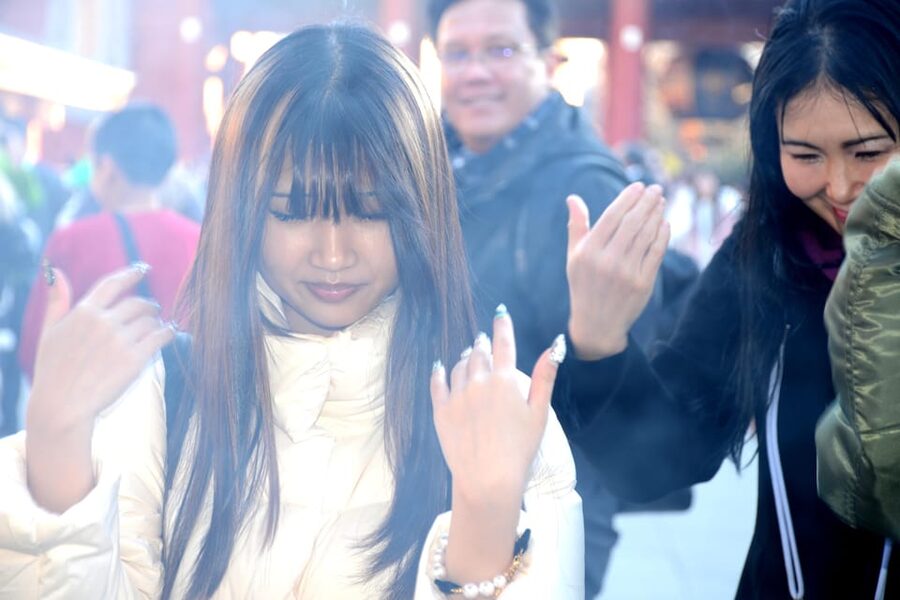
Food is the reason this experience costs more than a basic walking tour. Included tastings cover beef, sushi, tempura, snacks, desserts, two soft drinks, and water.
The information does not specify the exact restaurants, portion sizes, or menu choices. You should therefore view the food as a series of tastings rather than a guaranteed full meal. The total amount may suit a light lunch, but you should not assume it replaces every meal of the day.
I like this format because it lets you try several types of Japanese food in one outing. Sushi gives you a familiar reference point, tempura offers a classic cooked dish, and sweets such as dango and daifuku add a different texture and flavor.
The guide can also make these stops more useful by explaining what is local to Asakusa and what is simply common across Japan. That distinction matters. A food tour is strongest when you leave knowing not only what tasted good, but also what you might order again on your own.
Alcohol is not included, though you can buy alcoholic drinks separately. If you prefer to keep the tour simple, the included water and soft drinks cover the basic refreshment needs.
Asakusa Shrine and the district’s second tradition
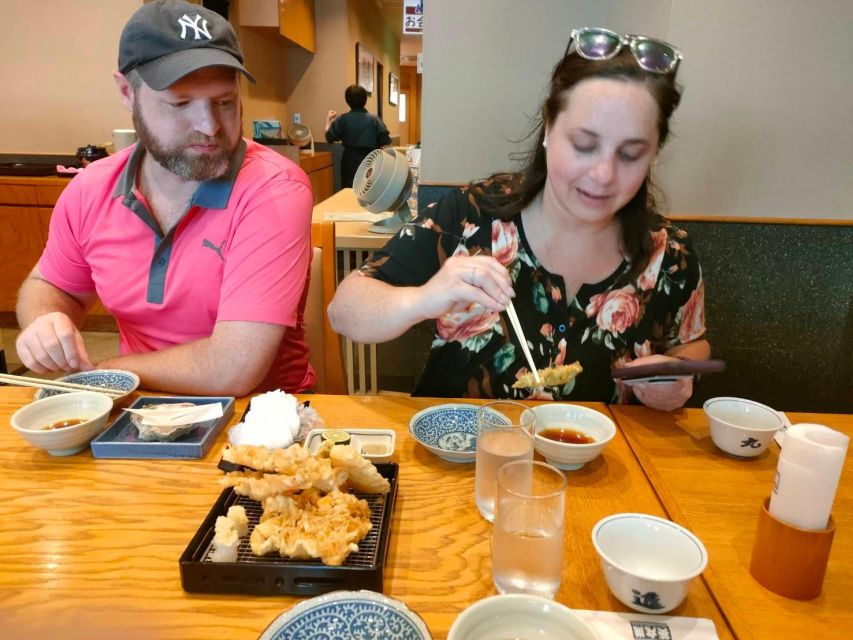
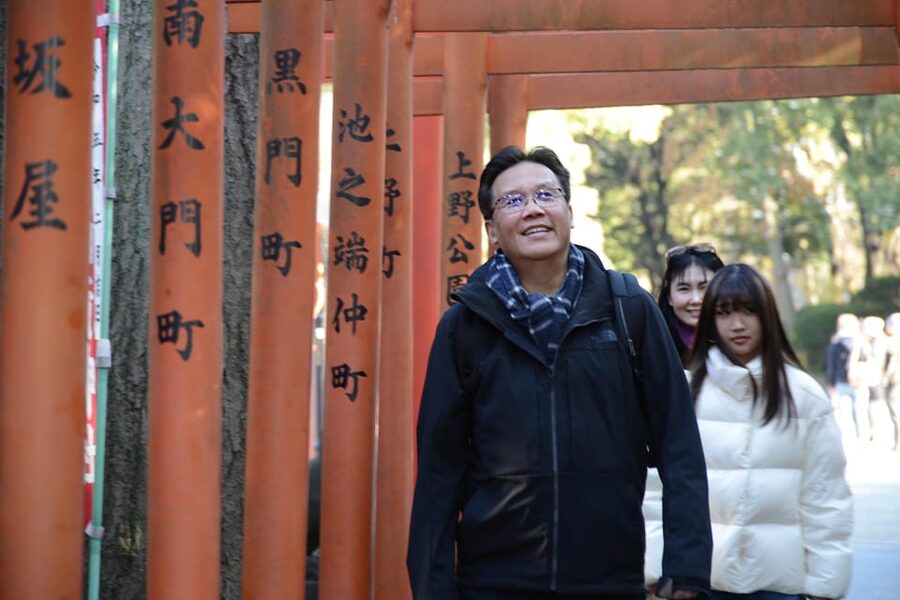
After Sensoji, the route includes Asakusa Shrine, another 30-minute sightseeing stop. Having both sites on the same walk is useful because you can compare Buddhist and Shinto traditions without needing public transport.
The experience description does not provide a detailed explanation of the shrine’s buildings or rituals, so the guide’s live commentary will be important here. Use this stop to ask questions about the difference between a temple and a shrine, how people behave at each, and how both fit into daily life in Japan.
The shrine stop also breaks up the food and shopping portions. Four hours can pass quickly when you are walking, tasting, and listening, so the change of pace helps keep the route varied.
Hanayashiki, Japan’s old amusement park
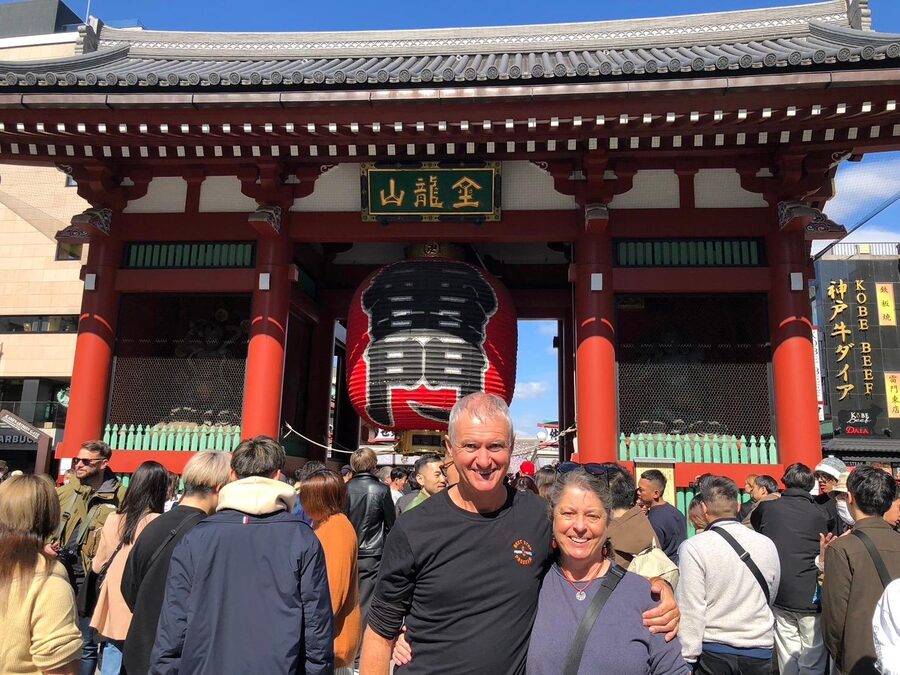
Hanayashiki Amusement Park adds an unexpected note to the tour. The park dates to the mid-19th century and includes rides and cafes.
You spend about 30 minutes sightseeing and walking around the area. This is not described as a ride-inclusive visit, so do not book expecting time for a full amusement park session. It is better understood as a look at one of Asakusa’s distinctive landmarks.
That contrast is part of the appeal. The same neighborhood gives you an ancient temple, a traditional shopping street, a Shinto shrine, and a historic amusement park. You get a broader sense of Asakusa than you would from a temple-only tour.
If you enjoy old entertainment districts, this stop may be one of the most memorable parts. If your main goal is food, it is also the section most likely to feel less essential.
Tokyo Skytree views and the wider city
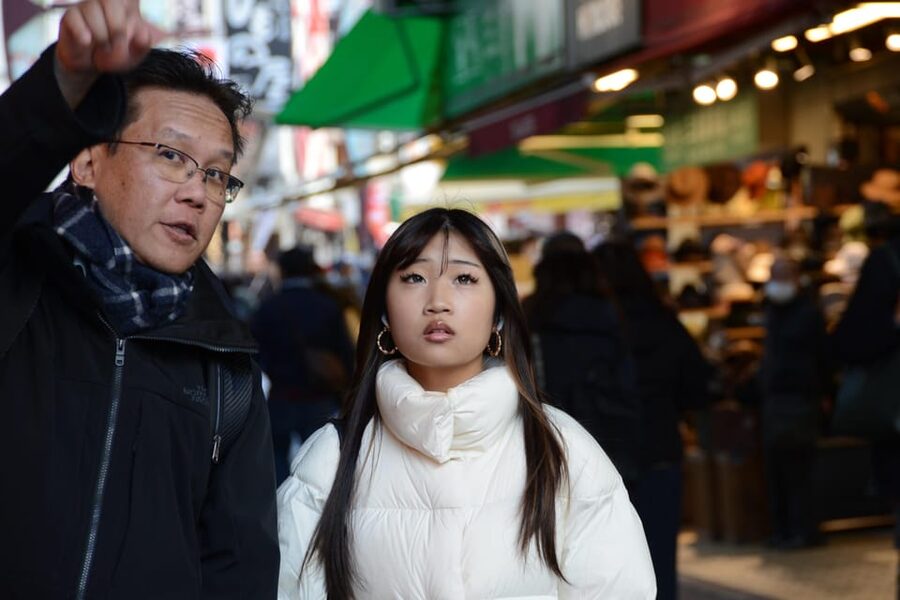
The experience information highlights Tokyo Skytree as part of the Asakusa experience, with its 634-meter height and broad city views. The stated itinerary does not include a separate visit to the tower or an observation-deck ticket.
That distinction is important. You may see or discuss Skytree during the tour, but you should not assume that admission to the tower is included. If seeing Tokyo from the observation decks is a priority, plan that as a separate activity and confirm the details before booking.
Even without entering the tower, Skytree helps you understand Asakusa’s position in Tokyo. The historic streets feel compact at ground level, while the tower gives a sense of the city’s size and density from above.
Kuritsu Sumida Park, beside the river, is also part of the area’s wider appeal. The park hosts regular festivals and fireworks, though it is not listed as a scheduled stop on this four-hour route. Treat it as a nearby idea for later, not as a guaranteed part of the tour.
What $180 buys you
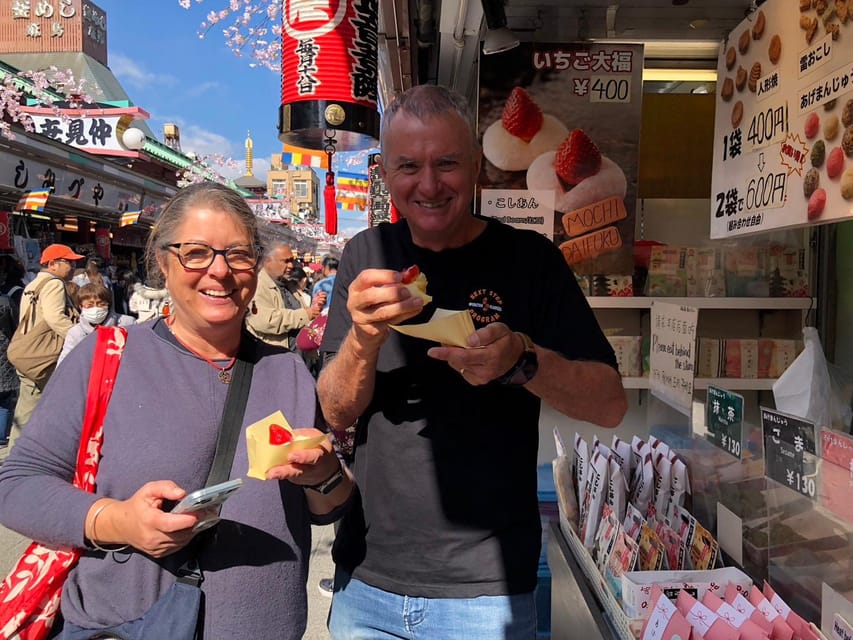
At $180 per person, the tour sits firmly in the paid-guided experience category. The cost includes four hours with a local guide, a small group capped at 10, food tastings, two soft drinks, water, snacks, and desserts.
The value depends on how much you would use a guide. If you are comfortable finding Sensoji, Nakamise, and Asakusa Shrine alone, you can see the landmarks for less. You would then need to choose your own food stops and pay separately for each dish.
I think the price makes more sense for first-time visitors who want a clear route and a food introduction without having to research every stop. It is also useful if you want to ask questions as you go and prefer a small group to a large bus-style tour.
The price makes less sense if you mainly want independent shopping, a long meal, or a private tour. Four hours goes quickly, and the scheduled 30-minute sections leave limited time to linger.
One verified booking review praised Adam for being on time, polite, and full of useful insight. Adam may not be the guide assigned to your date, so treat that as a helpful indication rather than a promise. The important practical point is to confirm the guide and language available when you book.
Who should choose this Asakusa tour
I would recommend this experience to you if you want a structured introduction to Asakusa and like to learn through food. It suits first-time Tokyo visitors, couples, families, and solo visitors who prefer a small group to exploring alone.
It is also a good fit if you want to combine famous sights with sweets and everyday dishes. The food list is broad enough to give you several starting points for later meals in Japan.
You may want to skip it if you dislike walking, want a quiet temple visit, or prefer to spend hours shopping at your own pace. The route moves through several stops, and the four-hour schedule does not leave much room for extended browsing.
People with specific dietary needs should ask the provider about the food before booking. The included dishes are listed, but no allergy, vegetarian, or other dietary arrangements are described.
Free cancellation is available up to 24 hours before the activity for a full refund, and you can reserve now while paying later. Those terms are useful if your Tokyo schedule is still shifting.
Should you book it?
Book this tour if you want Asakusa explained as a neighborhood, not just a checklist of Sensoji and Nakamise. The strongest parts are the small group, the food range, the local guide, and the way temples, shopping, sweets, and Hanayashiki fit into one walk.
At $180, it is a considered purchase. You are paying for convenience and interpretation, not for luxury dining or a private car. If that sounds like the right balance, this is a practical way to get your bearings in one of Tokyo’s most distinctive districts.
FAQ
Where does the Asakusa food tour meet?
The meeting point is the Asakusa Culture Tourist Information Center at 2-chōme-18-9 Kaminarimon, Taito City, Tokyo 111-0034, Japan.
How long does the tour last?
The walking tour lasts four hours.
What languages does the guide speak?
Live guiding is available in English and Japanese.
How many people can join the tour?
The group is limited to 10 participants.
What food and drinks are included?
Included items are beef, sushi, tempura, snacks, desserts, two soft drinks, and water.
Is alcohol included?
No. Alcoholic drinks are not included, but they are available to purchase.
Which Asakusa sights are included?
The route includes Nakamise Shopping Street, Sensoji Temple, Asakusa Shrine, the Asakusa Culture Tourist Information Center, and Hanayashiki Amusement Park.
Can I cancel for a full refund?
Yes. You can cancel up to 24 hours in advance for a full refund.
More history and heritage tours in Tokyo
- Tokyo: Imperial Palace and Shogun Historical Walking Tour
★ 5.0 · 2,251 reviews - Tokyo: Imperial Palace Japanese History Walking Tour
★ 4.9 · 987 reviews - Tokyo: Shinjuku Historical Walking Tour & Secret Backstreets
★ 5.0 · 530 reviews - Yanaka Walking Tour: Historic and Traditional District of Tokyo
★ 5.0 · 530 reviews
Newly reviewed around Tokyo
- Tokyo Asakusa:Calligraphy & Make T-shirt Activity★ 5.0 · 62 reviews
- Intercity Shuttle, Tokyo to Haneda /Narita /Yokohama /Makuhari★ 5.0 · 5 reviews
- 1 Hour Travel around Tokyo with a Professional Photographer★ 5.0 · 3 reviews
- Travel Tokyo with Your Own Personal Photographer★ 5.0 · 43 reviews
- Train in Samurai Swordsmanship and Defeat the Demon in Tokyo★ 5.0 · 5 reviews
- Shuttle Van 6hr Tokyo Tour to-and-from Tokyo, Yokohama and Narita★ 5.0 · 9 reviews
- Kickboxing & Body Training with EX-Pro Fighter★ 5.0 · 4 reviews
- Tokyo History: Sensoji Temple & Asakusa District Private Tour★ 5.0 · 28 reviews
Tokyo Food Tours, compared.
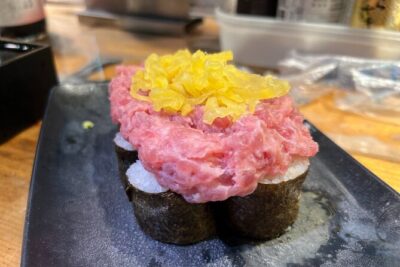
Shinjuku Food Tour (13 Dishes at 4 Local Eateries)
Read our review →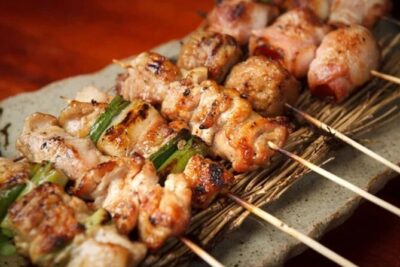
Shinjuku Food Tour (15 Dishes and 4 Eateries)
Read our review →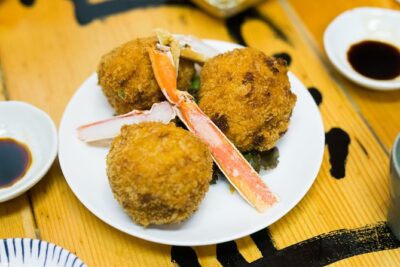
Best of Shinjuku: Izakaya Food Tour (4 Stops, 14+ Tastings)
Read our review →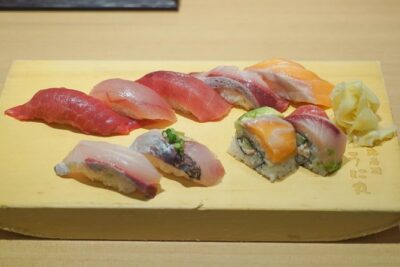
Tokyo Night Foodie Tour in Shinjuku – Seasonal Sushi, Wagyu Beef
Read our review →
Eat and Drink Like a Local: Tokyo Ueno Food Tour-Taverns&Ramen
Read our review →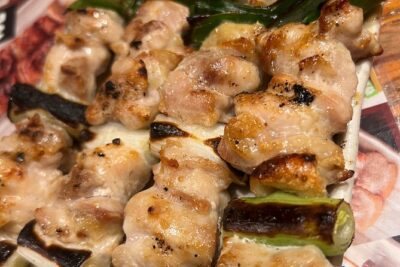
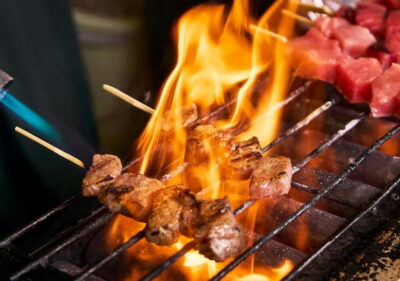
Tsukiji Fish Market: Street Food & Culture Walking Tour
Read our review →
Browse the lists this tour appears in