
Reviewed · TOKYO SUMO EXPERIENCES
Tokyo: Sumo Morning Practice Viewing Tour at a Real Stable
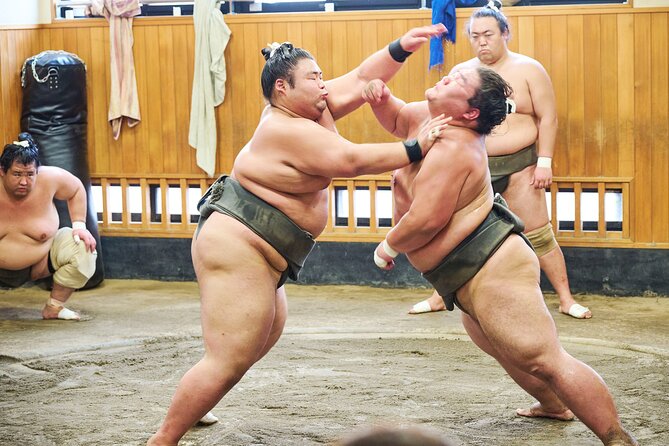
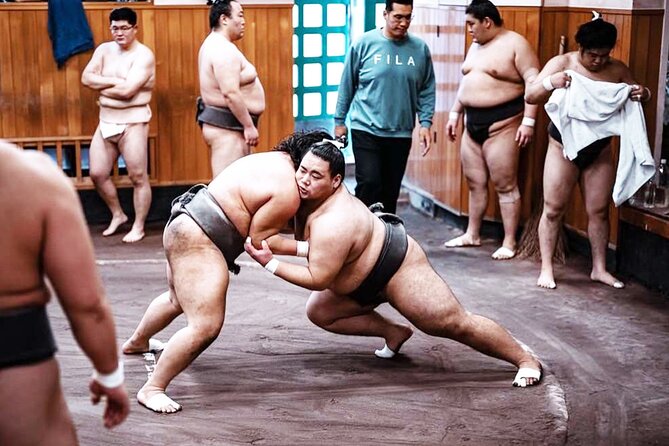
You do not watch a staged sumo show here. You sit quietly inside a real training stable while wrestlers work through their morning practice at close range. That makes this a rare look at the daily discipline behind Japan’s national sport, not just a photo stop.
I like the genuine training setting and the way the guide makes the sport understandable, even if you know little about sumo. I also like the practical care shown by guides such as Mao and Tomo, including help with questions and local food suggestions. The main drawback is that you must remain quiet during practice, so this is better for patient observers than for anyone wanting a lively, hands-on activity.
Key points at a glance
- Real morning practice: Watch wrestlers train at a working sumo stable rather than attending a staged demonstration.
- About 90 minutes inside: The practice viewing takes roughly an hour and a half, with the full experience lasting about two hours.
- Quiet viewing matters: No one is allowed to speak during training, so listen carefully to the guide before practice and use the arranged WhatsApp group for questions if available.
- Guides add useful context: Mao and Tomo explain sumo rules, rituals, and traditions in clear terms.
- Possible wrestler photos: You have an opportunity to take photos with wrestlers, depending on how the stable visit unfolds.
- Easy morning meeting point: Meet at Kiyosumi-Shirakawa Station at 8:30 am, then return to the same meeting point afterward.
Why a Real Stable Feels Different From a Sumo Show
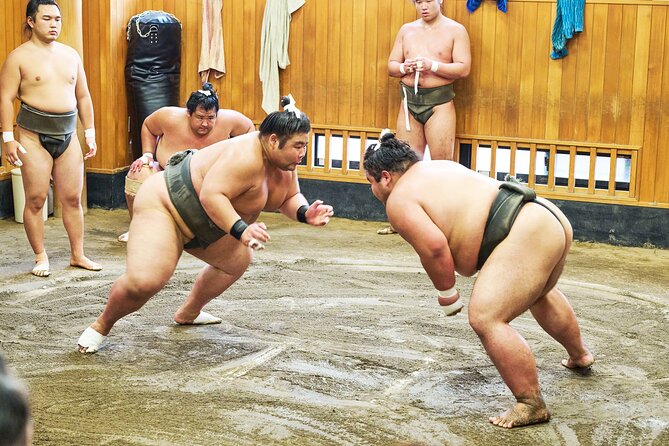
Sumo is easy to recognize but not always easy to understand. Two large athletes collide, one is forced out of the ring, and the action may be over in seconds. Without context, you can miss the rules, ritual, and strategy packed into those brief moments.
This visit gives you time to watch the work between the matches. You see wrestlers repeat movements, push themselves, and train close enough for the physical effort to feel immediate. It is less polished than a formal performance, but that is the point.
The setting also changes your behavior. You are not encouraged to clap, call out, or move around freely. During the practice, silence is required. That can feel strict at first, especially if you are used to guided sightseeing where questions are welcome at every turn. Here, quiet observation is part of showing respect to the wrestlers.
I find that restriction useful. It directs your attention to the training itself. You begin to notice the rhythm of the session and the concentration in the room instead of treating the visit like a quick entertainment stop.
More Tokyo sumo experiences:
- Tokyo: Sumo Show and Dining Experience
★ 4.8 · 2,742 reviews - the SUMO show
★ 5.0 · 1,960 reviews - Tokyo Shinjuku Sumo Show & Experience with Photo
★ 5.0 · 1,750 reviews
Meeting at Kiyosumi-Shirakawa at 8:30 am
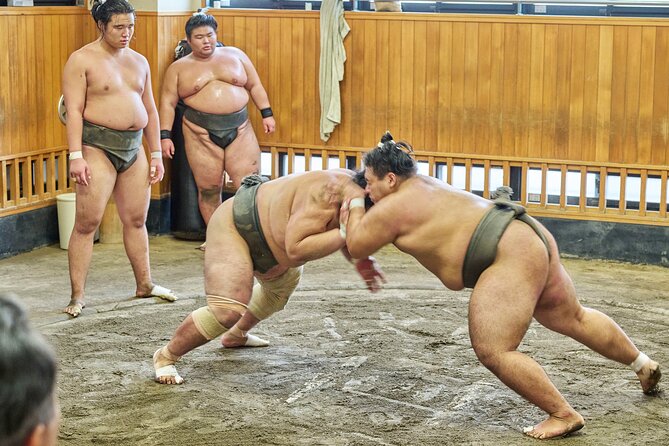
The meeting point is at Kiyosumi-Shirakawa Station, at 1-chōme-6-13 Shirakawa in Koto City. The start time is 8:30 am, so plan your morning carefully. You do not want to arrive rushed, especially when the entire experience depends on reaching the stable with the group.
The tour ends back at the meeting point. That makes it easier to plan a later activity in Tokyo, though I would avoid booking anything with a tight connection immediately afterward. The visit is advertised as approximately two hours, while the actual practice viewing lasts about 90 minutes. Allowing some extra time is sensible.
The meeting point is near public transportation, which helps with one of the less glamorous parts of Tokyo sightseeing: getting across the city before the crowds and heat build up. Your guide takes you from the station to the stable, so you are not left trying to identify an unmarked training facility on your own.
You receive confirmation when you book, and the ticket is mobile. Keep the booking details easy to access on your phone.
What You See During the 90-Minute Practice
The central part of the visit is the morning training session. You are watching athletes prepare, not competing in an official tournament. That distinction matters.
A tournament has ceremony, crowd energy, announcements, and a clear winner. Practice is more repetitive and focused. The wrestlers are there to improve. Some moments may be forceful and dramatic, while others may look slow or methodical. If you expect a series of full matches, you may find the session less exciting than a tournament day.
If you approach it as a chance to observe training, the experience makes more sense. You are seeing the routine that supports public competition. The close distance also helps you understand the size and power of the wrestlers without relying on a television broadcast.
The guide explains the rules and traditions before or around the viewing, since speaking during practice is not allowed. This preparation is important. You can arrive with no background in sumo and still understand what you are seeing.
One practical point: the stable visit is not a free-form tour. You are expected to follow the guide’s instructions and protect the quiet of the session. That means you may not be able to ask a question at the exact moment it occurs to you. Mao has used a WhatsApp group so participants can send questions without breaking the silence, though you should treat that as a guide-specific arrangement rather than a guaranteed feature for every date.
The Guides Make the Sport Easier to Follow
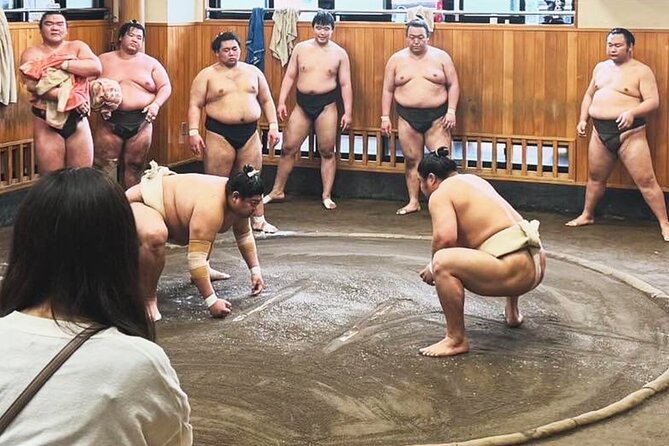
The guide is more than an escort to the stable. This person provides the framework that turns a short visit into something meaningful.
Mao has been praised for explaining the morning practice and helping the group understand what it was seeing. She also made sure people could ask questions without interrupting the wrestlers. Tomo has been especially helpful with questions and has offered suggestions for places to eat afterward.
Those details matter because sumo has its own vocabulary, rules, and customs. A guide who can explain what is happening saves you from trying to research the sport on your phone while sitting in a quiet room. You can focus on the wrestlers rather than wondering why a particular movement or sequence matters.
The guide also helps with the social side of the visit. A sumo stable is a working environment, not a museum. Visitors need to know when to speak, when to take photos, and how to behave around the athletes. Clear instructions make the experience more comfortable for everyone.
The strongest part of the guiding is the balance between information and restraint. You get an explanation, then the guide steps back so the training can speak for itself.
More early morning tours in Tokyo:
- Tokyo: Sumo Morning Practice Viewing Tour
★ 4.8 · 570 reviews - Tokyo: Sumo Morning Training Visit
★ 4.4 · 370 reviews - Tokyo: Sumo Morning Practice Tour at Sumida City
★ 4.8 · 308 reviews - Tokyo Sumo Morning Practice Tour at Stable
★ 5.0 · 298 reviews
Photo Opportunities With the Wrestlers
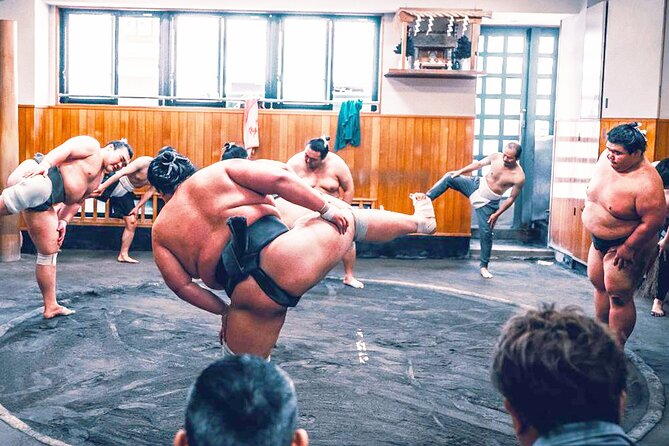
A photo with sumo wrestlers may be possible during the visit. This is one of the appealing extras, especially if you want a personal reminder of the experience rather than only pictures of the training room.
Do not treat the photo opportunity as the main event. The practice session is the reason to book, and any interaction afterward depends on the stable’s routine and what can be arranged that morning. Respect for the wrestlers comes first.
This is also where the quiet rules matter. Keep your phone ready before you need it, follow the guide’s instructions, and avoid assuming that every moment can become a selfie. The guide can tell you when photography is appropriate.
For families, the photo chance can give younger participants something concrete to look forward to. Still, children must be able to remain quiet for the practice. One guide helped a group of energetic nephews stay focused by explaining the silence rule clearly at the start. That is a useful clue about the activity’s rhythm: even lively children may manage it, but only with preparation.
The Value of Paying $118.92
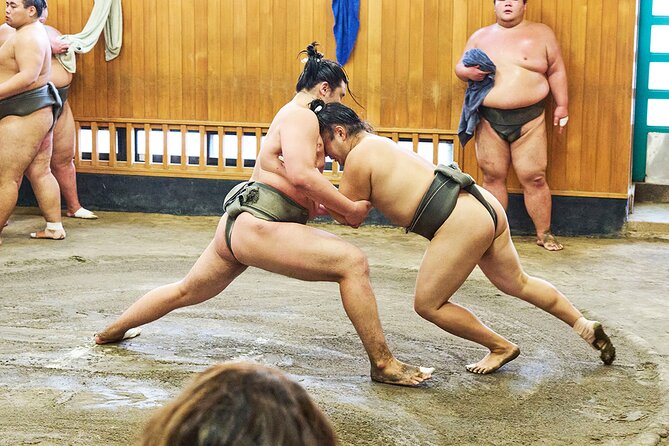
At $118.92 per person, this is not a budget sightseeing stop. The price makes more sense if you place a high value on access and explanation rather than length alone.
You receive roughly two hours of organized time, including about 90 minutes watching a real training session. The stable access is the key part. You are paying for a setting that most visitors cannot simply enter on their own, plus a guide who explains the rules and manages the visit.
Compared with a standard Tokyo attraction, the experience is expensive for its duration. Compared with the rarity of seeing professional sumo training at close range, the cost can be reasonable. I would book it for a first Tokyo visit if sumo is one of your priorities, or for a return visit when you want something beyond major sights.
The value is weaker if you are only mildly curious and mainly want a fast photo. In that case, the strict silence and early start may not justify the price. You should also remember that this is practice, not a tournament ticket.
The experience has a maximum group size of 50. That is a fairly large possible group for an intimate setting, although the supplied details do not say how many people will attend on a particular date. If you strongly prefer a very small group, check the expected group size before booking.
Who Will Enjoy This Morning Most
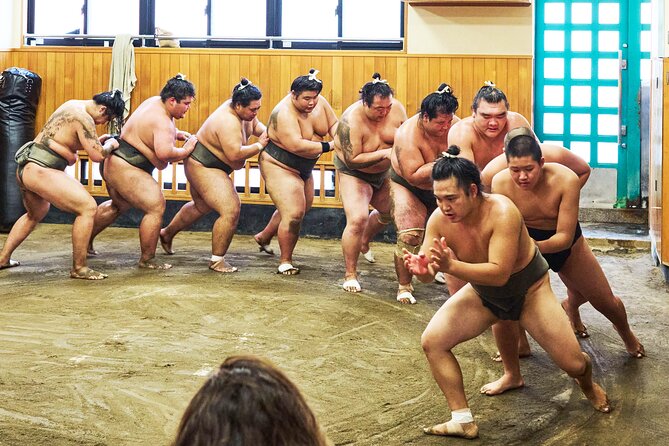
I would recommend this activity to you if you like seeing ordinary routines that are normally closed to the public. It suits people who enjoy sports, Japanese culture, photography, and guided experiences with clear rules.
It is also a good choice if you know little about sumo. The guide covers the basics, so you do not need to study the sport in advance. You can arrive curious and let the explanation give shape to what you see.
Families can enjoy it, but only if everyone understands the quiet requirement. Children who need constant movement or conversation may struggle during 90 minutes of observation. Older children who can watch patiently may find the wrestlers and the close setting fascinating.
I would be more cautious about recommending it to you if you want to participate physically, meet wrestlers for a long conversation, or see formal tournament drama. This is a behind-the-scenes viewing experience. You are there to watch, listen, and respect the stable’s routine.
It is also worth considering your morning schedule. The 8:30 am start is early by sightseeing standards, and you need to reach Kiyosumi-Shirakawa on time. The early hour is part of the appeal, since you are seeing the stable during its working day, but it will not suit every Tokyo itinerary.
Practical Advice Before You Go
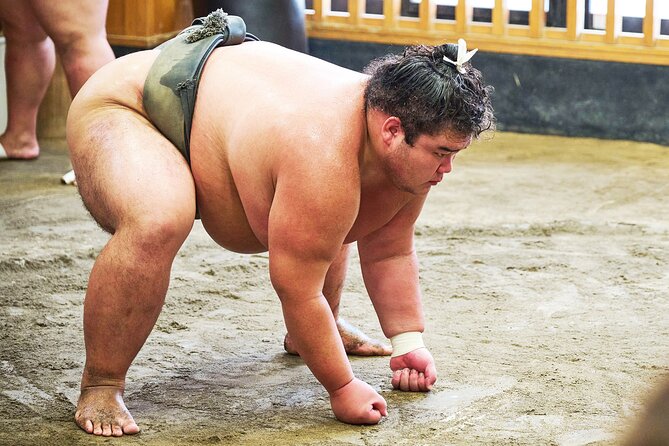
Read the confirmation details as soon as you book and keep the mobile ticket available. Meet at Kiyosumi-Shirakawa Station, not at the stable itself, unless your confirmation says otherwise.
Wear something that lets you sit and watch comfortably for an extended period. The provided details do not specify seating, so avoid assuming that the setting will work like a theater. More important than clothing is your ability to remain still and quiet.
Do not plan to talk through the practice. Ask your questions before the session begins or use the communication method the guide provides. Mao’s WhatsApp arrangement is a useful example, but the exact system may vary by guide.
Keep your camera or phone accessible, but wait for permission before taking photos. The chance to photograph wrestlers is valuable only if it does not interrupt training.
Finally, leave room in your schedule after the official end time. The activity is approximately two hours and returns to the station meeting point, but a relaxed morning is better than rushing to your next reservation.
Cancellation and Booking Flexibility
Free cancellation is available if you cancel at least 24 hours before the experience start time. Cancellations made less than 24 hours before the start are not refunded, and changes inside that window are not accepted.
The cutoff uses Tokyo local time. That detail is easy to miss when arranging a trip from another time zone, so check the local deadline before making changes.
Should You Book This Sumo Experience?
Book it if you want real sumo training, a guide who can explain what you are seeing, and a quiet look at a working stable. The close viewing, the chance of photos with wrestlers, and the help from guides such as Mao and Tomo give the morning more substance than a simple photo stop.
Skip it if you want a loud, theatrical show or a guaranteed long conversation with the athletes. The price is high for two hours, and the silence rule is firm.
For the right visitor, this is one of Tokyo’s more unusual cultural experiences. You leave with a better sense of the effort behind sumo, not just an image of two wrestlers colliding in a ring.
FAQ
How long does the sumo morning practice tour last?
The experience lasts approximately two hours. About 90 minutes is spent watching the morning practice.
What time does the activity start?
The activity starts at 8:30 am.
Where is the meeting point?
You meet at Kiyosumi-Shirakawa Station, at 1-chōme-6-13 Shirakawa, Koto City, Tokyo 135-0021, Japan.
Where does the activity end?
The activity ends back at the meeting point.
Do I need prior knowledge of sumo?
No. The guide explains the rules, rituals, and traditions, so you do not need to research sumo before attending.
Can I take photos with sumo wrestlers?
You have the opportunity to take photos with sumo wrestlers. The guide will direct you on when photography is appropriate.
How many people can join the activity?
The maximum group size is 50 people.
Can I cancel for a full refund?
Yes, if you cancel at least 24 hours before the experience start time. Cancellations made less than 24 hours before the start time are not refunded.
Newly reviewed around Tokyo
- Tokyo Asakusa:Calligraphy & Make T-shirt Activity★ 5.0 · 62 reviews
- Intercity Shuttle, Tokyo to Haneda /Narita /Yokohama /Makuhari★ 5.0 · 5 reviews
- 1 Hour Travel around Tokyo with a Professional Photographer★ 5.0 · 3 reviews
- Travel Tokyo with Your Own Personal Photographer★ 5.0 · 43 reviews
- Kickboxing & Body Training with EX-Pro Fighter★ 5.0 · 4 reviews
- Train in Samurai Swordsmanship and Defeat the Demon in Tokyo★ 5.0 · 5 reviews
- Shuttle Van 6hr Tokyo Tour to-and-from Tokyo, Yokohama and Narita★ 5.0 · 9 reviews
- Traditional Japanese Knife Sharpening Class★ 5.0 · 18 reviews
Tokyo Sumo Experiences, compared.
Tokyo Shinjuku Sumo Show & Experience with Photo
Read our review →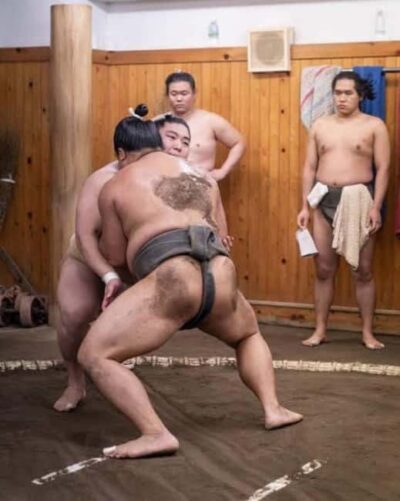

Luxury Sumo Show Experience & Japanese cuisine & Drink
Read our review →
Tokyo Sumo Experience: Chanko & Mochi with a Former Pro
Read our review →
Ultimate Sumo Tournament: Tokyo, Osaka, Nagoya, Fukuoka
Read our review →Browse the lists this tour appears in