
Reviewed · TOKYO COOKING CLASSES
Experience Big soba knife Soba Making Class in Tokyo Kappabashi
The main draw here is wonderfully clear: you make Japanese soba by hand, then eat the noodles you cut with an oversized soba knife. The class uses buckwheat flour from Nagano and a simple four-step method that packs a lot into about 50 minutes.
I like the hands-on format and the fact that the finished noodles become your snack or meal. I also like the practical setup: aprons and gloves come in different sizes, the group is capped at 15, and the instructor uses demonstrations, humor, photos, and video to make the process easy to follow. The main consideration is that this is a quick introduction, not a long culinary workshop, and you cannot enter if you have a buckwheat allergy.
Key points at a glance
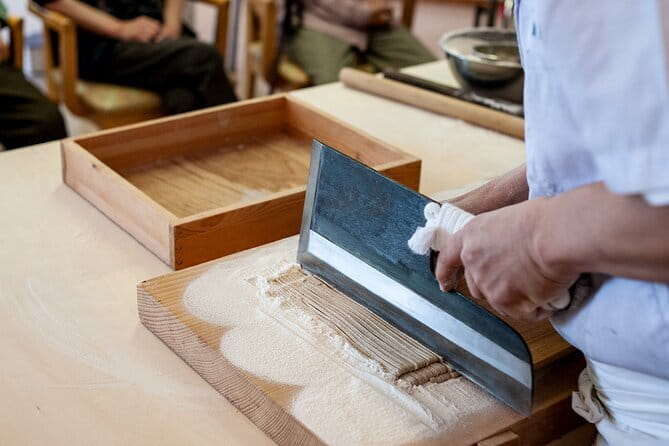
- Cut noodles with a large soba knife: The unusual tool makes the final step memorable and gives you a real feel for traditional noodle preparation.
- Four steps in roughly 30 minutes: You add water, knead the dough, stretch it, and cut it before tasting the result.
- Your noodles are cooked for you: You do not leave with a bag of raw dough and no idea what to do with it.
- Kappabashi location: The class takes place on Tokyo’s famous kitchen-equipment street, about 25 minutes from Sensoji Temple in Asakusa.
- Small class, useful supplies: Up to 15 people can join, with aprons and gloves provided in various sizes.
- Optional Japanese flavors: Matcha soba costs 700 yen, while a three-sake comparison costs 1,500 yen.
Making soba in Tokyo’s kitchen town
Kappabashi is one of the best places in Tokyo to pair a food activity with a little local shopping. The street is known for professional kitchen tools, restaurant supplies, knives, dishes, plastic food displays, and other equipment used by chefs and restaurant owners.
That setting gives this class more character than a generic cooking lesson in a hotel room. You are making noodles in an area built around the tools of Japanese cooking. Even if you do not buy anything, walking along Kappabashi before or after class adds useful context.
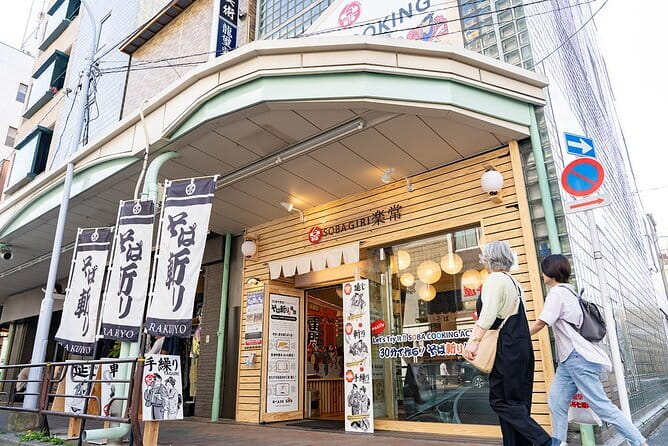
Open Kitchen Studio is in Matsugaya, in Taito City, on the Kappabashi Tool Specialty Store Street. From Sensoji Temple in Asakusa, the walk takes about 25 minutes. The activity begins and ends at the same location, so you can combine it with Asakusa sightseeing without arranging another pickup.
The venue is on the ground floor and has enough room for up to 30 people. The class itself is limited to 15, which is the number that matters most for instruction. A smaller group should make it easier to see the demonstration and get help with the dough, though the room can also accommodate larger groups for dining or other use.
More Tokyo cooking classes:
- Tokyo: Roll and Authentic Sushi Making Class in Asakusa
★ 4.9 · 1,957 reviews - Tokyo Shinjuku Chopsticks Making Class
★ 5.0 · 1,763 reviews - Tokyo: Sushi Making Class in a Happi Coat near a Famous Spot
★ 4.9 · 1,377 reviews
What the 50-minute class actually includes
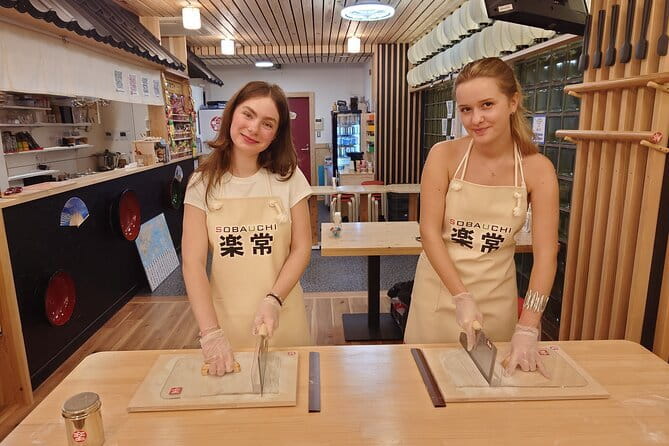
The full experience lasts about 50 minutes. The noodle-making portion takes roughly 30 minutes, followed by tasting. That makes this a good fit for a morning or afternoon in Asakusa, especially if you want a food activity without giving up half a day.
The method is presented in four stages:
- Adding water to the buckwheat flour
- Kneading the mixture
- Stretching the dough
- Cutting the noodles
The ingredients are deliberately simple: buckwheat flour and water. That simplicity is part of the lesson. You can see how much skill comes from handling the dough correctly rather than from adding a long list of ingredients or relying on complicated equipment.
The class uses buckwheat flour produced in Nagano Prefecture. Nagano is well known in Japan for soba, and using flour from there gives the activity a clear regional connection. You are not just shaping an anonymous noodle. You are working with a central ingredient from one of Japan’s important soba-producing areas.
An instructor demonstrates the process and helps you copy the movements. English ability may vary, but the lesson is designed around visual instruction and practical demonstration. One instructor was praised for communicating clearly through humor and actions even without speaking English. That is useful to know if you are worried about a language barrier.
The class is described as using the provider’s own smart technique to make the process manageable in a short period. You should still expect to get your hands involved. This is not a demonstration where you sit and watch someone else make the noodles.
The large knife is the memorable part
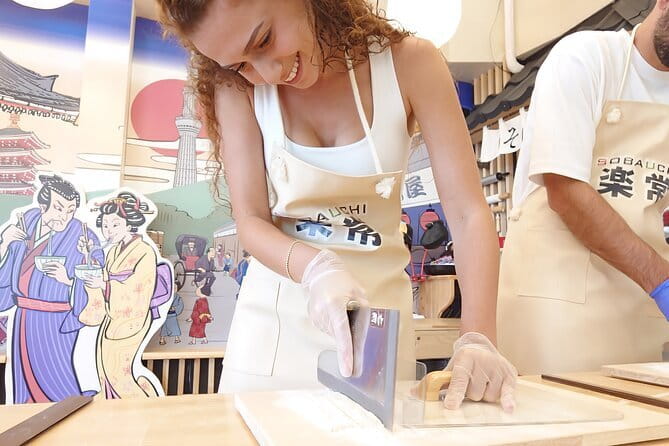
The final cutting stage gives the experience its title and much of its personality. You use a large knife designed specifically for soba to cut the stretched dough into long, thin noodles.
This is not the same as slicing with a small kitchen knife. The larger tool is part of the traditional soba-making image, and using it gives you a better sense of the precision required. The noodles need to be cut evenly so they cook at a similar rate.
Do not expect instant perfection. Handmade soba can vary in thickness, especially when you are learning. That is part of the point. You get to see the connection between technique and texture rather than receiving a polished restaurant plate with none of the work explained.
The instructor’s role matters here. The feedback describes careful demonstrations, clear steps, and a playful teaching style. Photos and video may also be taken and sent to you, which can be a nice record of the cutting stage and a useful reminder of what you learned.
Aprons and gloves are available in various sizes. That makes the class easier for families and groups with different needs, and it keeps the practical side of the lesson simple. You do not need to bring special cooking clothes or equipment.
Eating the soba you made yourself
The best payoff comes after the cutting. The staff cook the soba so you can taste what you made.
This changes the value of the class. You are not paying only for a craft activity or a photo opportunity. You also receive a freshly prepared food tasting, and the result gives you a direct lesson in how handmade soba should be served.
The included food is described as a snack, although the noodles can also function as a meal depending on your appetite. The exact serving style and flavor selection are not specified, so you should not book this expecting a large multi-course lunch. Think of it as a satisfying taste of your own work at the end of a short class.
You can also take out the noodles you made. That option is helpful if you are already full, want to save them, or prefer to treat the class as part of a longer food day in Asakusa. The details of packaging and how long the noodles remain suitable to eat are not provided, so ask the staff if you plan to carry them around Tokyo.
If you choose a vegan or no-pork flavor option, an additional 500 yen is charged. This is important to budget in advance. The standard price is $51.33 per person, but dietary substitutions may change the final cost.
More hands-on classes and workshops in Tokyo:
- Sushi Making Tokyo Roll and Authentic Japanese Sushi Class
★ 5.0 · 3,971 reviews - Chopstick Making Workshop in Ginza
★ 4.8 · 1,366 reviews - Tokyo Sushi Making Class in Tsukiji with Professional Chef
★ 5.0 · 1,177 reviews - Ramen & Gyoza Cooking Class in Tokyo with Local Supermarket Visit
★ 5.0 · 823 reviews
Matcha soba and a sake comparison
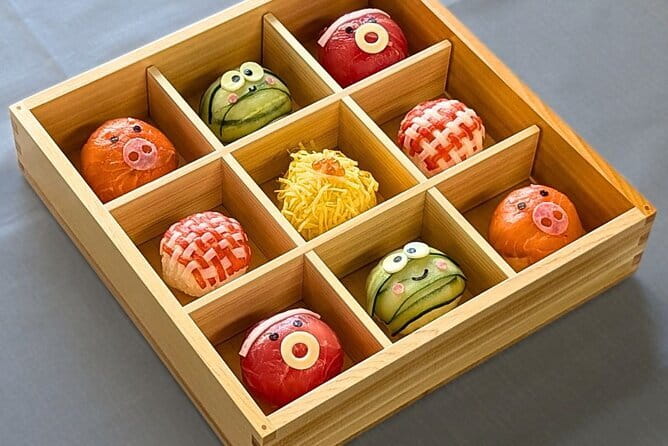
The class also offers two optional additions.
Matcha soba costs 700 yen. Green tea is mixed into the soba flour, giving you a different color and flavor from standard buckwheat noodles. This is a good choice if you want a small variation on the basic lesson or are interested in how Japanese ingredients can change a familiar food.
A three-type sake comparison costs 1,500 yen. The owner selects the sake for comparison, giving you a chance to taste several styles side by side rather than ordering a single drink without context.
These extras are not required for the class to work. I would treat them as add-ons for adults who want to turn a short noodle lesson into a broader food tasting. Families with children will probably get more value from the basic soba activity, while a group of friends may enjoy adding one or both options.
The available details do not state age rules for the sake option, so you should check before booking if your group includes anyone under the legal drinking age.
Is $51.33 good value?
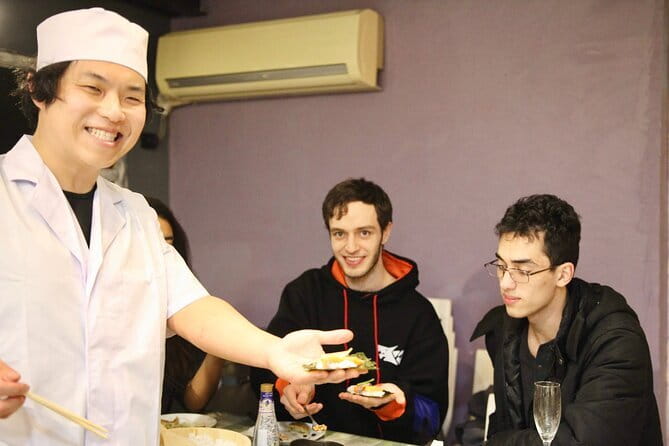
At $51.33 per person, this is not the cheapest snack in Tokyo. You can eat soba for much less at a casual noodle shop. The price makes more sense when you separate the food from the activity.
You are paying for instruction, ingredients, the use of specialized tools, aprons and gloves, the prepared noodles, and the chance to eat what you made. The small class limit also matters. A cheap restaurant meal teaches you nothing about how soba is made, while this class gives you a practical skill and a memorable setting.
The experience is especially good value if you want something your whole group can do together. Couples, families with children, and groups of four or more are the main types of parties using the space. The activity is short enough for children who may lose patience during a longer cooking course, though the large knife means parents should pay close attention during the cutting stage.
The class becomes less attractive if you are mainly seeking a full meal, a long lesson, or a serious professional cooking course. At 50 minutes, it is an introduction. You will learn the basic sequence, but you will not become a soba artisan in one sitting.
Planning the Asakusa and Kappabashi stop
The meeting point is at Matsugaya 3-chome, Taito City, Tokyo 111-0036. It is near public transportation, but the supplied details do not name a specific station. Use the exact address and your mobile ticket when planning your route.
The class starts and ends at the meeting point. That makes the day easy to organize. You can visit Sensoji Temple first, walk about 25 minutes to Kappabashi, make soba, and then continue shopping or sightseeing nearby.
The location is more practical than scenic. Kappabashi is a working kitchen-supply district, not a temple courtyard or a grand dining room. That is a strength if you enjoy seeing the everyday business behind Japanese food. It may feel less special if you are looking for a formal cultural performance.
Allow enough time to find the studio. A short class can be ruined by arriving late, particularly when the activity depends on a group moving through several hands-on steps together. Your mobile ticket should be ready, and you should use the confirmation details for the exact meeting instructions.
Who will enjoy this most
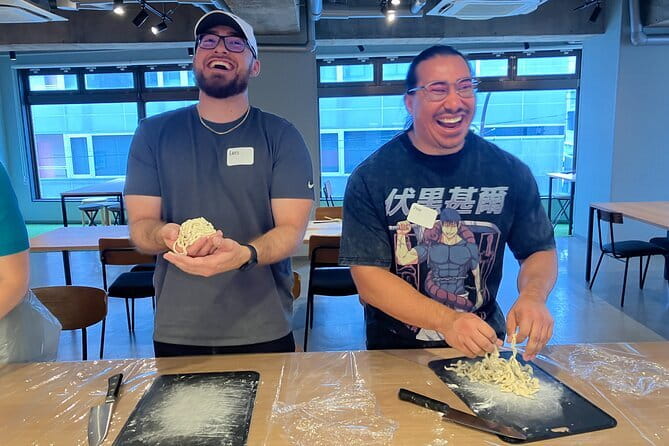
I would recommend this class to you if you fit one or more of these descriptions:
- You want a hands-on food activity in Tokyo.
- You are staying near Asakusa or planning to visit Kappabashi.
- You are traveling with family or a small group of friends.
- You like learning through doing rather than watching.
- You want to taste soba and understand how the noodles are made.
- You prefer a short activity that leaves time for other sightseeing.
- You want photos or video of a distinctive Japanese cooking experience.
It is also a useful choice for people who have already seen Tokyo’s major sights and want a more specific connection to Japanese food culture. The lesson does not require a full day, and the Kappabashi setting gives you another reason to visit an area many first-time visitors skip.
I would think twice if you have a buckwheat allergy. The restaurant does not permit people with buckwheat allergies to enter, so this is not a matter of simply requesting another dish.
You should also consider the quick pace. The method takes about 30 minutes, and the whole visit lasts around 50 minutes. If you want time to ask many technical questions, practice several batches, or learn restaurant-level preparation, choose a longer course instead.
Booking and cancellation details
Confirmation is provided at the time of booking, and the experience uses a mobile ticket. Free cancellation is available if you cancel at least 24 hours before the start time.
Cancellations made less than 24 hours before the activity are not refunded, and changes inside that window are not accepted. The cut-off follows Tokyo local time, so check the time carefully if you are booking from another country.
The activity allows service animals and is near public transportation. Specific information about wheelchair access, seating, or other mobility needs is not provided, so contact the provider before booking if those details matter for your group.
The class has a maximum of 15 people. That cap is useful for a hands-on lesson, especially during kneading and cutting, when clear demonstrations and personal guidance matter most.
FAQ
How long does the soba-making class last?
The experience lasts approximately 50 minutes. The noodle-making process itself takes about 30 minutes, followed by time to taste the soba.
Where does the class take place?
It takes place at Open Kitchen Studio in Matsugaya, Taito City, on Kappabashi Tool Specialty Store Street in Tokyo.
How far is the studio from Sensoji Temple?
The studio is about 25 minutes from Sensoji Temple in Asakusa.
Is the soba included in the price?
Yes. You can taste the soba you cut yourself, and the activity includes all fees and taxes. An extra 500 yen applies if you choose a vegan or no-pork flavor option.
Are aprons and gloves provided?
Yes. Aprons and gloves are available in various sizes.
Can I take home the noodles I make?
Yes. You can take out the noodles you made.
Are optional matcha soba and sake available?
Yes. Matcha soba is available for an additional 700 yen. A comparison of three types of sake costs an additional 1,500 yen.
Can someone with a buckwheat allergy join?
No. People with buckwheat allergies are not permitted to enter the restaurant.
Should you book the Big Soba Knife Soba Making Class?
Book it if you want a short, practical food experience that fits neatly into an Asakusa day. The combination of Kappabashi, Nagano buckwheat flour, the large soba knife, and the chance to eat your own noodles gives the class a clear sense of place.
The strongest reasons to go are the friendly instruction, the easy four-step format, and the fact that your work becomes food rather than a souvenir you cannot use. The main limits are the brief duration, the extra charge for some dietary options, and the strict buckwheat allergy rule.
For $51.33, I would choose this over a standard soba meal if you value participation and cultural context. If you only want a filling bowl of noodles, eat at a soba shop instead. If you want to make the noodles, cut them with a traditional tool, and finish with a taste of your own work, this is a smart addition to a Tokyo itinerary.
Newly reviewed around Tokyo
- Tokyo Asakusa:Calligraphy & Make T-shirt Activity★ 5.0 · 62 reviews
- Intercity Shuttle, Tokyo to Haneda /Narita /Yokohama /Makuhari★ 5.0 · 5 reviews
- 1 Hour Travel around Tokyo with a Professional Photographer★ 5.0 · 3 reviews
- Travel Tokyo with Your Own Personal Photographer★ 5.0 · 43 reviews
- Train in Samurai Swordsmanship and Defeat the Demon in Tokyo★ 5.0 · 5 reviews
- Shuttle Van 6hr Tokyo Tour to-and-from Tokyo, Yokohama and Narita★ 5.0 · 9 reviews
- Kickboxing & Body Training with EX-Pro Fighter★ 5.0 · 4 reviews
- Traditional Japanese Knife Sharpening Class★ 5.0 · 18 reviews
Tokyo Cooking Classes, compared.
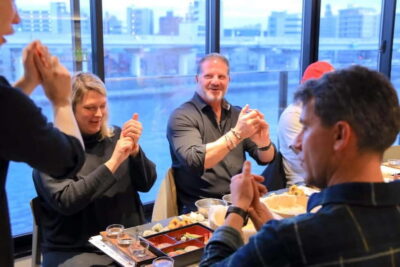
Roll and Authentic Sushi Making Class in Asakusa
Read our review →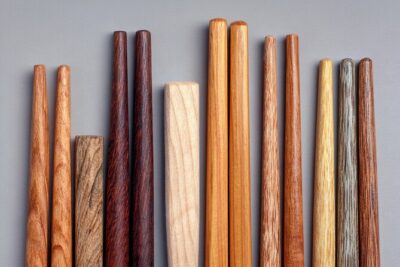
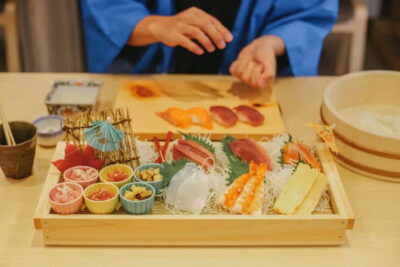
Sushi Making Class in a Happi Coat near a Famous Spot
Read our review →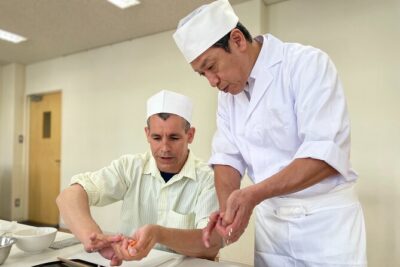
Tokyo Sushi Making Class in Tsukiji with Professional Chef
Read our review →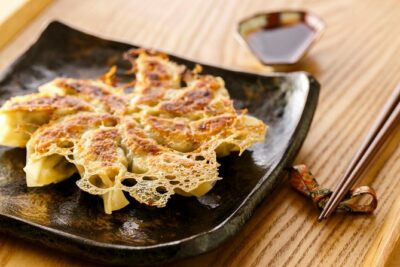
Ramen & Gyoza Cooking Class in Tokyo with Local Supermarket Visit
Read our review →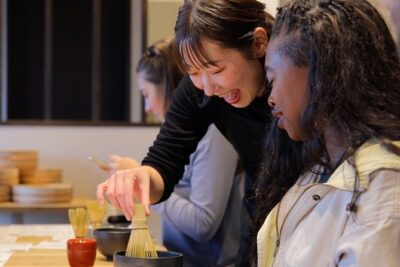
Matcha Making Class in Tokyo with Authentic Japanese Sweets Set
Read our review →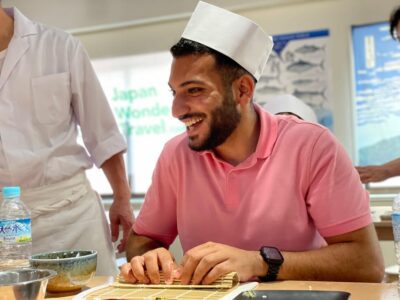
Tsukiji Fish Market Sushi Making Class with Pro Chef
Read our review →
Browse the lists this tour appears in