
Reviewed · CITY TOURS
Tokyo Private Tour: Temples, Culture & Modern City Highlights
Tokyo makes the most sense when you connect its old neighborhoods with its new ones. This private tour can take you from Senso-ji Temple and the Sumida River to Harajuku, Shibuya, or Shinjuku, with a local guide helping you use the trains and understand what you are seeing.
I like the flexible route, which lets you spend more time on temples, food, shopping, photography, or pop culture. I also like the practical help with Tokyo’s transit system. The main catch is simple: this is a walking and public transportation tour, not a private car tour, and some days can reach 20,000 to 25,000 steps.
Key points to know before booking
- Private and customizable: Only your group takes part, and the route can be shaped around your interests.
- Old Tokyo meets new Tokyo: Senso-ji, Shinobazu Pond, Meiji Jingu, Shibuya, Shinjuku, and other districts can fit into one day.
- Local transit is part of the lesson: Public transportation is not included, but guides can help you use the subway and JR system.
- Several languages are available: Tours are offered in English, French, or Japanese, with guides including Renaud, Julien, Jimmy, Sebastien, and Leeloo.
- Central Tokyo pickup is included: Pickup is offered from central Tokyo hotels, while airport or outside-central-Tokyo pickup costs ¥10,000 per booking.
- Plan for a long day on your feet: The tour lasts about four to seven hours, and comfortable shoes are essential.
A useful first day in Tokyo
At $99.08 per person, this tour is best understood as a private orientation rather than a simple sightseeing walk. You are paying for a guide who can adjust the pace, explain local customs, point out places to eat, and help you handle Tokyo’s trains.
That can be good value if you are visiting Tokyo for the first time, traveling with children, or trying to make sense of a huge city in limited time. One family used the day to learn how to navigate the subway, order food, and get a feel for the city before exploring alone.
The value is less obvious if you already know Tokyo well or prefer to wander without a plan. Public transportation, meals, and drinks are extra. You may also cover a lot of ground, but that means more train connections and plenty of walking.
The guides named in the experience include Renaud, Julien, Jimmy, Sebastien, and Leeloo. Renaud is especially associated with careful pacing, photo stops, food suggestions, and transit help. Julien is noted for explaining Japanese history, religion, food, and everyday culture. French-speaking guide Leeloo can lead the tour in French.
More private tours in Tokyo:
- Tokyo 6hr Private Tour with Government-Licensed Guide
★ 5.0 · 3,902 reviews - Private Tour to Mt. Fuji and Hakone (Fully Licenced Operator)
★ 5.0 · 1,910 reviews - Tokyo Customized Private Tour (Must See Places in 1 Day)
★ 5.0 · 1,499 reviews
Starting at Senso-ji and Asakusa
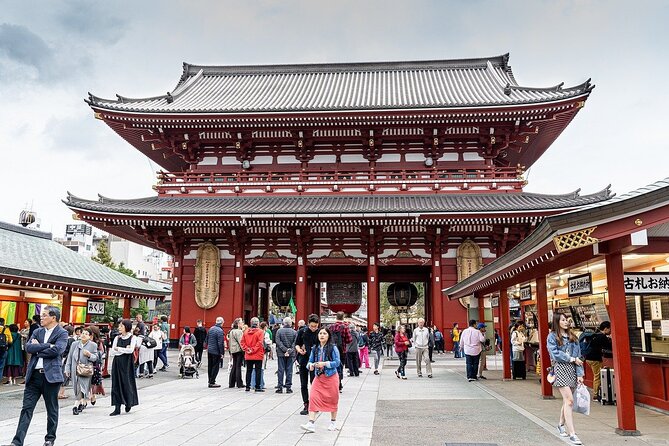
Senso-ji is a strong place to begin. Its huge red lantern and Nakamise shopping street give you an immediate introduction to old Tokyo, with temple buildings, traditional goods, and a steady flow of activity around the grounds.
The planned visit is about 45 minutes, enough to see the main spaces and hear the basic story of the temple without turning the morning into a long religious-history lecture. Your guide can explain the meaning behind the customs and point out how Buddhist and Shinto traditions fit into daily Japanese life.
Asakusa also works well for food stops. The exact meal is not included, but the guide can suggest local places and help you order. Keep cash handy because some small shops may not accept cards.
A quiet pause beside the Sumida River
The Sumida River stop takes about 15 minutes. That may sound brief, but it gives the tour a useful change of pace after the temple and shopping street.
You can walk along the river, look toward Tokyo Skytree, and take photos of the bridges and waterfront. It is also a chance to catch your breath before the next district. If you want a slower photographic morning, tell your guide early, since the route is flexible.
Ueno food streets and Shinobazu Pond
Ameyoko Shopping Street brings you back into the noisy side of Tokyo. It runs beside the railway tracks between Ueno and Okachimachi, with shops selling seafood, snacks, spices, clothing, and other everyday goods.
The scheduled visit is around 30 minutes. That is enough for a look and perhaps a snack, but not enough for a serious shopping session. If you want to browse carefully or eat several things, you will need to spend less time elsewhere.
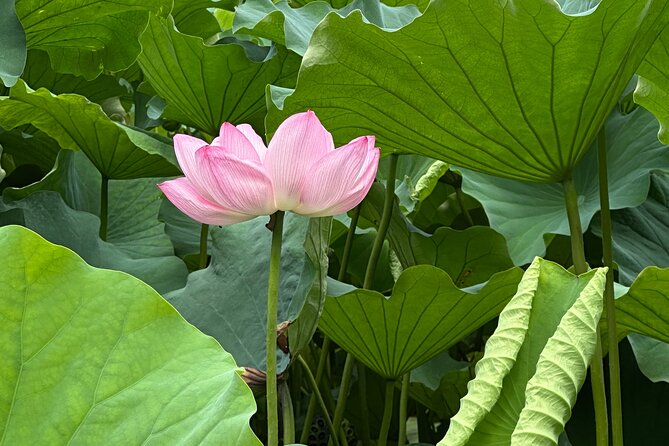
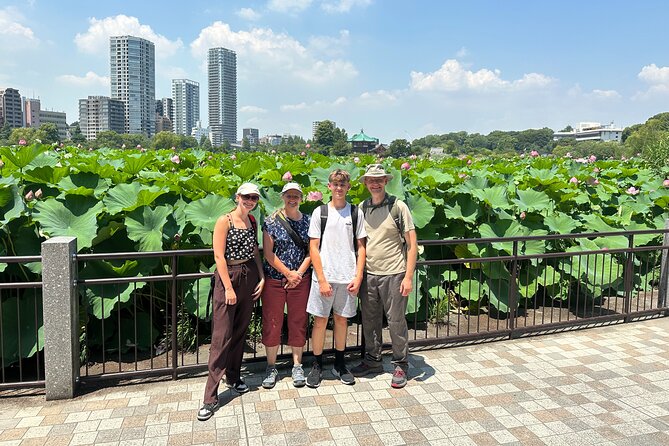
Nearby Shinobazu Pond offers a calmer stop. The pond has lotus, koi, turtles, and migratory birds at different times of year. It was once associated with couples during the Edo period, and today it remains a pleasant break from Tokyo’s roads and rail lines.
The pond visit is also about 30 minutes. It will appeal to you if you enjoy parks, small nature breaks, and photography. It may feel less important if your priority is seeing as many famous city districts as possible.
More Tokyo city tours:
- Tokyo: Private City Highlights Tour with Local Guide
★ 4.8 · 1,433 reviews - Tokyo: Asakusa, Skytree & Akhihabara Go-Kart City Experience
★ 4.7 · 761 reviews - Tokyo: 3-Hour Bike or E-Bike City Highlights Tour
★ 4.8 · 435 reviews - Tokyo: Sumo Morning Practice Tour at Sumida City
★ 4.8 · 308 reviews
Optional Akihabara, the Imperial Palace, and Kappabashi
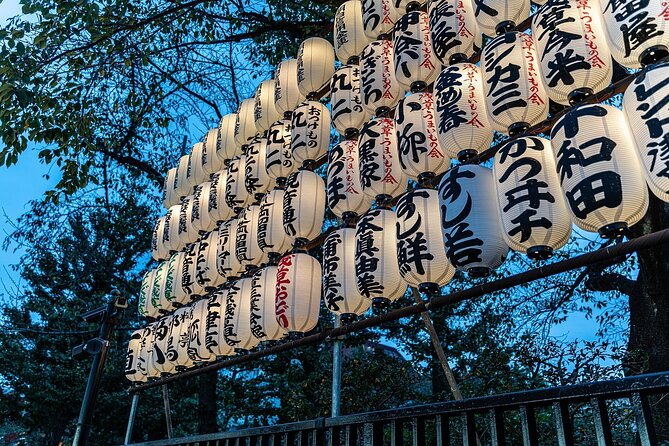
The route can be adjusted toward central and eastern Tokyo. Akihabara is the obvious choice for anime, games, arcades, electronics, and Japanese pop culture. The visit is listed at about 30 minutes, which gives you a taste of Electric Town but not enough time to inspect every multi-level shop.
This option is particularly useful if you want something beyond temples and major landmarks. The guide can also help you find food or shopping areas connected to your interests, including nightlife or anime culture.
The Imperial Palace East Gardens offer a very different mood. You can see the Ninomaru Garden, old samurai guardhouses, and remains connected with Edo Castle. The visit takes about 30 minutes and adds a compact dose of Japanese history without requiring a full museum visit.
Kappabashi Street is another useful choice, especially if you like cooking or Japanese tableware. Shops here sell knives, bowls, chopsticks, cookware, and the plastic food displays seen outside many Japanese restaurants. Allow extra time if you are serious about buying something, since the listed 30 minutes is a quick look.
Harajuku through Meiji Jingu
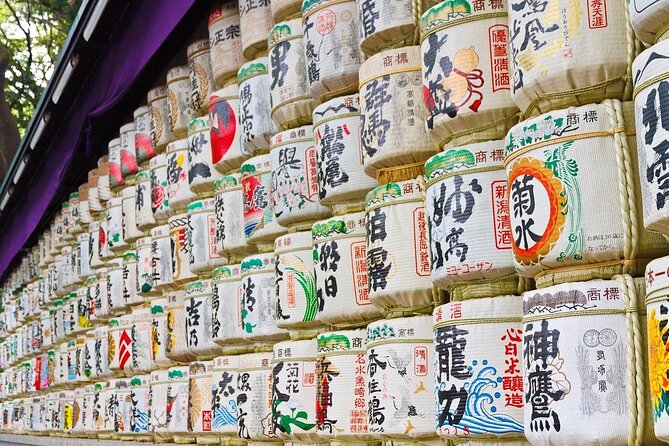
The western part of the route shifts from old Tokyo to youth culture and shrine grounds. Takeshita Street is narrow, colorful, and packed with fashion shops, novelty snacks, and pop culture stores.
The listed time is 45 minutes. That works for seeing the street and trying a snack, though it will feel short if you want to shop. The area can be crowded, so stay aware of your group and keep your expectations practical. Takeshita Street is more about energy and people-watching than quiet sightseeing.
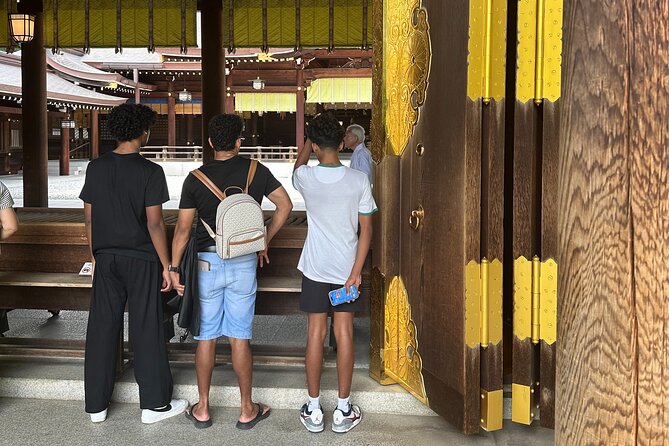
Meiji Jingu provides a sharp contrast. You enter through large wooden torii gates and walk through a broad forested setting before reaching one of Tokyo’s best-known Shinto shrines. The stop is planned for 45 minutes.
Your guide can explain shrine customs and the meaning of the rituals you see. This is one of the tour’s better pairings: Takeshita Street shows modern youth culture, while Meiji Jingu gives you a peaceful setting tied to Japan’s imperial past and Shinto tradition.
Shibuya, from the crossing to the city lights
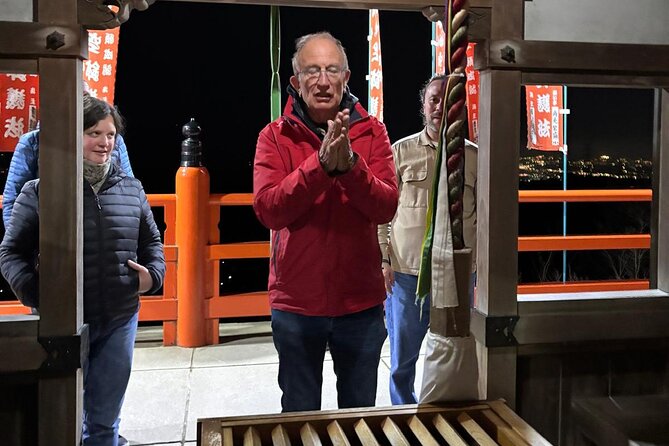
Shibuya gets about an hour. The district is known for the famous Scramble Crossing, shopping centers, neon signs, and nightlife.
A guide is useful here because the district can feel like a wall of signs and people when you first arrive. You can get help choosing a good photo position, understand how the crossing works, and decide how much time to spend around the major streets.
Shibuya is not only a photo stop. It shows how Tokyo uses compact districts for shopping, entertainment, offices, restaurants, and late-night activity. If you want time for shopping, food, or photographs, say so before the day begins.
Shinjuku after dark, or as a daytime introduction
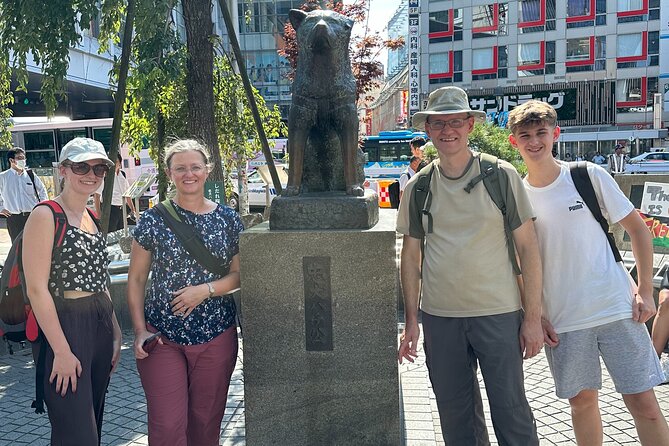
The Shinjuku portion focuses on recognizable modern sights. You may see the Godzilla Head, the giant 3D cat billboard, and Golden Gai, a maze of very small bars.
The planned time is about one hour. Golden Gai is most interesting if you want to see a distinct nightlife district, though the tour does not include drinks or meals. The guide can point out food options and explain the character of the area, but you should not assume that a bar visit is included.
Shinjuku is also a practical ending because it leaves you near one of Tokyo’s largest transit hubs. If you are continuing your evening alone, the guide can help you understand the rail connections and suggest places to eat.
What the walking and train travel are really like
The tour includes hotel pickup in central Tokyo, but transportation during the day is not included. You will use public trains and walk between stops. A Suica or Pasmo card is recommended, and the guides can help with the system.
This is one of the strongest parts of the experience for many visitors, especially if Tokyo’s rail network feels intimidating. You do not just get from one sight to another. You learn how to move around the city on your own afterward.
The tradeoff is physical effort. One six-hour day involved roughly 25,000 steps, and another long outing reached about 20,000. Those figures are not a fixed promise, but they show what can happen when you try to connect several districts.
Wear supportive shoes, carry water, and be honest about your pace. Since the route is private, you can ask to spend longer at one stop and cut another. A four-hour version will need a much shorter route than a seven-hour outing.
Food, photos, and small local decisions
Meals are not included, but food is an important part of the tour. Guides can recommend sushi, street snacks, local restaurant stands, and places suited to your interests. They can also help you order, which is useful when menus are difficult to read.
Do not treat the day as a food tour unless you arrange that focus in advance. The route covers many districts, and time spent eating reduces time for temples, parks, or shopping.
Photography is another strength. Guides can help with photo spots and allow time for pictures. One customized day was shaped around a photographer’s needs, with a patient pace and extra stops. Tell the guide if photographs are a major reason for booking, rather than hoping the route will naturally allow enough time.
Who will get the most from this private tour
I would recommend this experience to first-time visitors who want a clear introduction to Tokyo without joining a large group. Families may appreciate the private format, especially when children need breaks or the group wants help with trains and restaurants.
Solo visitors can also benefit. A private guide makes it easier to adjust the pace, ask practical questions, and explore markets or temples without feeling rushed. The experience has also been described as comfortable for solo women, with a respectful and patient guiding style.
It suits repeat visitors who want to focus on a specific interest, such as anime, food, shopping, photography, historic sites, or nightlife. You can ask for Akihabara instead of a garden, Kappabashi instead of a longer temple visit, or a route built around local food.
It is less suitable if you want a vehicle, minimal walking, or a fixed sightseeing schedule. The description makes hotel pickup sound convenient, but the day itself runs on foot and by train. Confirm the route and physical demands before booking.
Booking details and practical value
The tour is private, and only your group participates. It lasts approximately four to seven hours, with a price of $99.08 per person. Group discounts are offered, which can improve the value for families or small parties.
Central Tokyo hotel pickup is included. Airport pickup or pickup outside central Tokyo costs ¥10,000 per booking. Public transportation, meals, and drinks are extra, so budget for train fares and any food or shopping you want.
Free cancellation is available if you cancel at least 24 hours before the start time. Changes or cancellations inside that window are not accepted for a refund.
The experience has a 4.9 rating from 56 reviews, with 98 percent recommending it. Those figures suggest a strong record, but the more useful point is what the tour consistently provides: personal attention, transit help, flexible pacing, and a guide who can connect famous places with everyday Tokyo.
Should you book this Tokyo tour?
Book it if you want a private introduction to Tokyo and are happy to walk, ride trains, and adjust the route as you go. It is especially useful at the start of a trip, when a guide can teach you the city’s basic rhythm and leave you better prepared for later exploring.
Skip it if your idea of a private tour means a car, fixed sightseeing stops, or very little walking. At this price, the value comes from local guidance and flexibility, not luxury transportation.
For the best result, choose your top two interests before the day begins. Then tell your guide whether you want temples, food, photography, shopping, anime, or modern city views to lead the route.
FAQ
How long does the Tokyo private tour last?
The tour lasts approximately four to seven hours.
What is the price?
The listed price is $99.08 per person.
Is this a private tour?
Yes. Only your group participates in the activity.
Is hotel pickup included?
Pickup is included from hotels in central Tokyo. Airport or outside-central-Tokyo pickup costs ¥10,000 per booking.
Are meals and drinks included?
No. Meals and drinks are not included.
Is public transportation included?
No. Public transportation is not included. A Suica or Pasmo card is recommended for the day.
Which languages can the guide speak?
The tour can be guided in English, French, or Japanese.
Can I customize the route?
Yes. The itinerary is flexible and can be adjusted around your interests, including temples, food, photography, shopping, Akihabara, the Imperial Palace Gardens, or modern districts.
How much walking should I expect?
A considerable amount of walking is involved. Some full days have reached about 20,000 to 25,000 steps, so comfortable shoes are important.
Can I cancel for a full refund?
Yes, if you cancel at least 24 hours before the experience start time. Cancellations or changes made less than 24 hours before the start time are not refunded or accepted.
Newly reviewed around Tokyo
- Tokyo Asakusa:Calligraphy & Make T-shirt Activity★ 5.0 · 62 reviews
- Intercity Shuttle, Tokyo to Haneda /Narita /Yokohama /Makuhari★ 5.0 · 5 reviews
- 1 Hour Travel around Tokyo with a Professional Photographer★ 5.0 · 3 reviews
- Travel Tokyo with Your Own Personal Photographer★ 5.0 · 43 reviews
- Train in Samurai Swordsmanship and Defeat the Demon in Tokyo★ 5.0 · 5 reviews
- Shuttle Van 6hr Tokyo Tour to-and-from Tokyo, Yokohama and Narita★ 5.0 · 9 reviews
- Kickboxing & Body Training with EX-Pro Fighter★ 5.0 · 4 reviews
- Traditional Japanese Knife Sharpening Class★ 5.0 · 18 reviews
City Tours, compared.

Private City Highlights Tour with Local Guide
Read our review →
Asakusa, Skytree & Akhihabara Go-Kart City Experience
Read our review →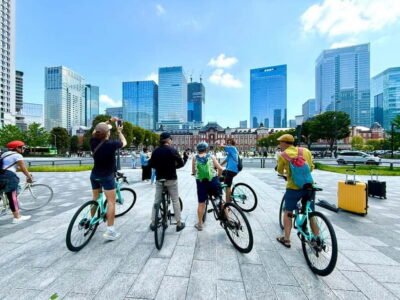

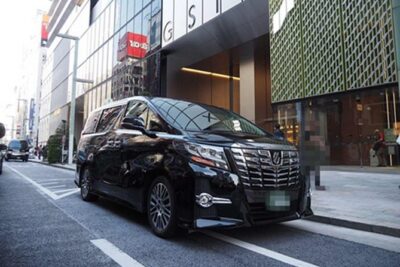
Private Haneda Airport (HND) to Central Tokyo City Transfer
Read our review →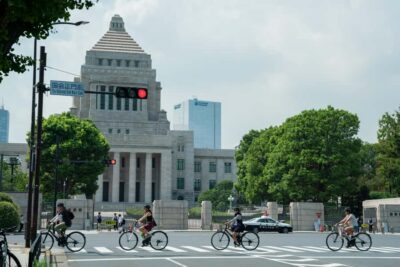
3-hour Guided E-Bike Tour of the City’s Hidden Gems
Read our review →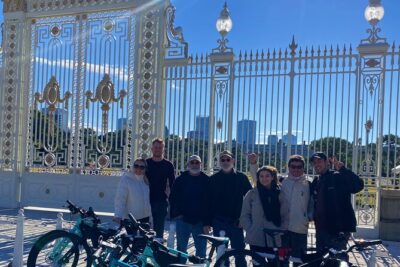
3-Hour Bike/E-Bike Tour of the City’s Highlights
Read our review →
Private departure transfer from Tokyo city to Tokyo Haneda Airport(HND)
Read our review →Browse the lists this tour appears in