
Reviewed · TOKYO SUMO EXPERIENCES
Sumo Morning Training Watch in Tokyo,Hotel-pickup w/English guide
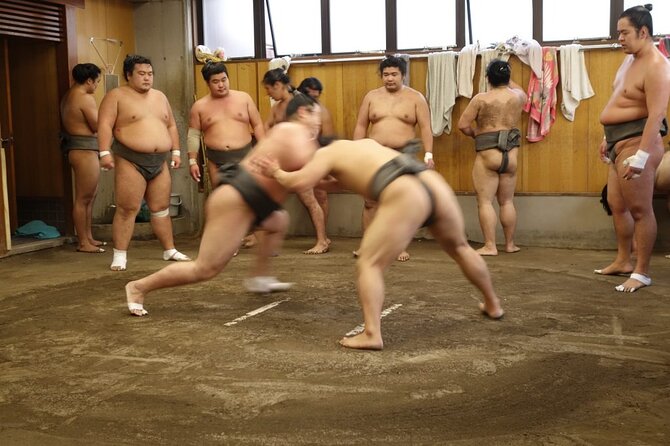
A sumo morning practice is not a polished stage show. You sit close to the ring as professional wrestlers stretch, perform strength drills, and collide in serious practice bouts. The stable may be quiet except for the slap of bodies and the coach’s instructions, giving you a rare look at the sport before tournament day.
I like the hotel pickup, especially because finding a private stable can be tricky. I also like having an English-speaking guide who can explain the gestures, rules, rankings, and rituals while you watch. Guides including Hiromi, Koichiro, Mari, and Hiro have been praised for handling trains, answering questions, and helping with photos.
The main catch is that pickup does not mean a private car. You will usually travel by subway or bus, often with some walking, and the stable’s rules may limit talking during practice. Training schedules can change, and photos with wrestlers are possible, not guaranteed.
Key points to know before you book
- Training takes place inside a genuine sumo stable, not at a tourist theater or staged exhibition.
- You watch from very close range, often seated on cushions beside the practice ring.
- Hotel pickup includes a guide escort, but transport to the stable is generally by public transportation.
- Silence matters during training, so your guide may use a dry-erase board, paper, or notes to answer questions.
- The morning usually includes drills and practice bouts, with a possible photo session afterward.
- The group is limited to 15 people, and the tour starts early at 7:30 a.m.
Watching real sumo practice from the edge of the ring
The heart of this experience is simple: you enter a working sumo stable and watch wrestlers train at close range. This is not a tournament with announcing, grand entrances, or formal matches for a cheering crowd. It is practice, and that makes it more revealing.
Depending on the stable and the day, the session begins with basic exercises. Wrestlers work their legs, hips, and upper bodies, then repeat drills that build balance, strength, and endurance. You may see stretching, pushing exercises, and other routines before the more forceful bouts begin.
The practice matches are the main event for most people. Two wrestlers face one another at a time, and the action can be startlingly physical. Even a short bout shows how much power, timing, and control are packed into this sport.
You may sit only a few feet from the ring. That closeness changes the experience. You hear the impact, see the footwork, and notice the hard repetition behind the formal sport seen during grand tournaments. The wrestlers around the ring may continue stretching or drilling while another pair competes.
This is also why you need to keep your expectations in check. You are observing a training session on the stable’s schedule, not ordering a private performance. Some mornings may feel intense and full, while others may be quieter, especially during a tournament period when certain wrestlers have lighter practice.
More Tokyo sumo experiences:
- Tokyo: Sumo Show and Dining Experience
★ 4.8 · 2,742 reviews - the SUMO show
★ 5.0 · 1,960 reviews - Tokyo Shinjuku Sumo Show & Experience with Photo
★ 5.0 · 1,750 reviews
Why the guide matters on a quiet morning
A sumo stable is not a place where you can freely ask questions during every bout. Silence helps the wrestlers concentrate, and visitors are expected to follow the stable’s rules. A guide gives you a way to understand what you are seeing without disrupting the session.
Several guides have earned especially warm praise for the way they handle the morning. Hiromi has been described as attentive from the hotel pickup onward. Koichiro has a strong personal interest in sumo and has used a dry-erase board to answer many questions while the wrestlers continued training. Mari has helped with trains, explained sumo along the way, and added a small local stop after the stable visit.
Other named guides include Sumi, Atsushi, Tadashi Umebayashi, Kyoko, Midori, Yuka, and Hiro. The quality of the guide can shape the outing, since the stable itself may offer little explanation in English. One unhappy account described a guide who gave only a sheet of stable rules and did not explain the action well. That is worth noting: the guide is not a minor extra here. The guide is your interpreter of the sport.
Some guides use handouts, sketches, or written notes to explain techniques. Others point out individual wrestlers, explain who is training, and answer questions after the session. If you want the most from the visit, arrive ready to ask questions once the quiet training period ends.
The 7:30 a.m. pickup and public transport
The early start is practical. Morning training begins early, and the tour starts at 7:30 a.m. Your guide meets you at your hotel and takes responsibility for getting you to the stable on time.
That help has real value in Tokyo. A stable may be tucked into an ordinary neighborhood and can be difficult to identify from the street. Guides have used trains and buses to reach the practice site, and some outings include a short walk. You should have a loaded Suica card or another way to pay for local transport, along with comfortable walking shoes.
This is not a chauffeured hotel transfer. The price includes hotel pickup and a guide, but not a private vehicle. The guide may escort you by subway, bus, and foot. For many people, that is part of the benefit, since you learn how Tokyo’s local transport works while heading into a residential area. If you expected a car waiting outside your hotel, you may feel misled unless you read the transport details carefully.
The tour lasts about three hours. The exact balance depends on travel time, the length of practice, and what happens afterward. Some practice sessions run about 90 minutes, while others may continue for close to two hours. The advertised end point is not a fixed schedule for the wrestlers, so leave some flexibility afterward.
What happens inside the stable
Before practice begins, your guide should explain the basics of sumo, stable etiquette, and what you are about to see. This introduction is important even if you know little about the sport. You will hear about the rules, traditional rituals, training methods, and the role of the stable in a wrestler’s daily life.
Once training starts, talking may not be allowed. Your guide can still point things out quietly or write answers for you. One useful setup described for this tour involves guests using paper and a pen or a small board to communicate during the bouts.
The session may include:
- Leg, hip, and upper-body exercises
- Strength-building routines
- Repeated sumo drills
- Practice bouts between two wrestlers
- Coaching and corrections from the stable master
- A possible photo opportunity after training
The training is not presented as a lesson with a fixed script. You are watching the stable’s actual morning routine. That can mean the experience feels more genuine, but it also means the pace and content are not fully under the operator’s control.
Seating may be on cushions near the ring. Low chairs may be available, though they can still be difficult for anyone who has trouble standing from a low position. The information provided does not promise standard chairs or special seating, so contact the operator if this is an important concern.
More early morning tours in Tokyo:
- Tokyo: Sumo Morning Practice Viewing Tour
★ 4.8 · 570 reviews - Tokyo: Sumo Morning Training Visit
★ 4.4 · 370 reviews - Tokyo: Sumo Morning Practice Tour at Sumida City
★ 4.8 · 308 reviews - Tokyo Sumo Morning Practice Tour at Stable
★ 5.0 · 298 reviews
The photo opportunity after practice
Photos with wrestlers may be offered after the session. This is one of the most memorable parts of the morning, but it depends on the stable’s schedule and the wrestlers’ availability.
The chance usually comes after the formal practice ends, when the atmosphere is less restrictive. Wrestlers have posed with visitors at the end of several sessions, and guides may help arrange the moment. Still, you should treat it as a possibility rather than a guarantee.
Do not bring a gift expecting a special exchange. One person wished they had brought something from home, but the tour does not list gifts as part of the program, and no such gesture is required. A polite thank-you and respect for the stable’s rules are enough.
A small slice of Tokyo beyond sumo
The morning can include more than the stable itself. Guides have sometimes taken people past a neighborhood shrine or temple on the way back to a station. Others have offered practical help with the next train or destination.
These extra stops are not presented as a fixed part of every tour, so you should not book this experience expecting a temple visit. Still, they show why a guide can add value beyond translation. You may get a short look at a local neighborhood, advice about Tokyo, or help finding your next stop.
The guide’s role can be especially useful on the first morning of a Japan trip. Instead of worrying about train changes and directions, you can focus on the experience. If you are already comfortable navigating Tokyo, you may see the escort as less essential, but the stable location and etiquette still make local help useful.
What the $159.88 price really buys
At $159.88 per person, this is not a cheap morning activity. You are paying for access to an authentic practice setting, hotel pickup, a nationally licensed English-speaking guide, and help with transportation and interpretation. Food, drinks, and hotel drop-off are not included.
The value depends on how much you want the context. If you only want to see sumo wrestlers from a distance, a tournament ticket may suit you better when one is available. If you want to sit close to training and understand why the wrestlers are doing what they do, the guide adds much more than a simple transfer.
A private visit to a working stable is also difficult to arrange independently. The guide handles the meeting, route, stable etiquette, and language barrier. That makes the cost easier to justify for first-time visitors, families, and anyone who does not want to gamble on finding the right place before breakfast.
The group can have up to 15 people. Smaller groups may allow more direct questions and easier viewing, but the maximum size means this is not necessarily a private tour. If your group is small, the operator may combine you with other participants.
Who will enjoy this morning most
I would recommend this to anyone with even a passing interest in sumo, Japanese customs, or sports training. You do not need to understand the rankings or rules in advance. A good guide can bring you up to speed quickly.
It is also a strong choice for people who have already seen a tournament and want to understand what happens behind the formal bouts. You will see the repetition, discipline, and coaching that lead to competition.
This may be less suitable if you want a relaxed late-morning outing, a guaranteed photo session, or a private car. It also requires an early start, public transportation, some walking, and quiet behavior inside the stable.
The experience is generally suitable for most people, but the low seating deserves attention. If kneeling or rising from a low cushion is difficult, ask about available seating before you book.
Dates, planning, and cancellation
The program is not available during these 2025 periods:
- May 10 to June 5
- June 26 to August 6
- September 13 to October 8
- October 23 to December 3
Availability is confirmed within 48 hours of booking. Since the activity is often booked well ahead, with an average booking time of about 57 days, I would reserve early if your Tokyo dates are fixed.
Free cancellation is available up to 24 hours before the start time for a full refund. Changes or cancellations inside that 24-hour window are not accepted for a refund. The cut-off follows Tokyo local time.
Should you book the sumo morning training?
Book it if you want a close, serious look at sumo rather than a staged cultural display. The strongest reasons are the authentic stable setting, the proximity to the wrestlers, and the guide’s help with rules, rituals, trains, and etiquette.
Go in knowing that the morning is quiet, physical, and dependent on the stable’s routine. The photo opportunity may not happen, the guide quality can affect how much you learn, and transport is usually by subway or bus rather than private car.
For many first-time visitors to Tokyo, the price is fair because it solves several hard parts at once: finding the stable, arriving on time, understanding the action, and navigating the language gap. If those are exactly the problems you want handled, this is a strong choice.
FAQ
What time does the sumo morning training tour start?
The tour starts at 7:30 a.m.
How long does the experience last?
The experience lasts approximately three hours.
Is hotel pickup included?
Yes. Hotel pickup is included, with an English-speaking guide meeting you at your hotel.
Is hotel drop-off included?
No. Hotel drop-off is not included.
How do you reach the sumo stable?
The guide may take you by public transportation, including trains or buses, with some walking. A Suica card and comfortable walking shoes are useful.
Is transportation included in the price?
The tour includes hotel pickup and guide assistance, but food, drinks, and hotel drop-off are not included. The provided details do not state that public transport fares are included.
Can you take photos with the wrestlers?
You may have a chance to take photos with the wrestlers after training, depending on the stable’s schedule and availability.
Can you talk during the training?
The stable may require silence while the wrestlers train. Guides may use paper, notes, or a dry-erase board to answer questions without disturbing the session.
What is the cancellation policy?
You can cancel at least 24 hours before the start time for a full refund. Cancellations or changes made less than 24 hours before the start time are not accepted for a refund.
Newly reviewed around Tokyo
- Tokyo Asakusa:Calligraphy & Make T-shirt Activity★ 5.0 · 62 reviews
- Travel Tokyo with Your Own Personal Photographer★ 5.0 · 43 reviews
- Intercity Shuttle, Tokyo to Haneda /Narita /Yokohama /Makuhari★ 5.0 · 5 reviews
- 1 Hour Travel around Tokyo with a Professional Photographer★ 5.0 · 3 reviews
- Train in Samurai Swordsmanship and Defeat the Demon in Tokyo★ 5.0 · 5 reviews
- Shuttle Van 6hr Tokyo Tour to-and-from Tokyo, Yokohama and Narita★ 5.0 · 9 reviews
- Kickboxing & Body Training with EX-Pro Fighter★ 5.0 · 4 reviews
- Traditional Japanese Knife Sharpening Class★ 5.0 · 18 reviews
Tokyo Sumo Experiences, compared.
Tokyo Shinjuku Sumo Show & Experience with Photo
Read our review →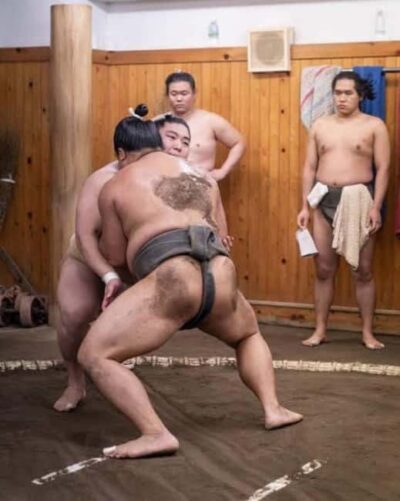

Luxury Sumo Show Experience & Japanese cuisine & Drink
Read our review →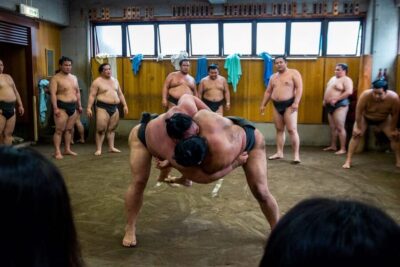
Tokyo Sumo Experience: Chanko & Mochi with a Former Pro
Read our review →
Ultimate Sumo Tournament: Tokyo, Osaka, Nagoya, Fukuoka
Read our review →Browse the lists this tour appears in