
Reviewed · MEIJI SHRINE TOURS
Tokyo: Meiji Shrine Walking Tour — Shintoism & Imperial System
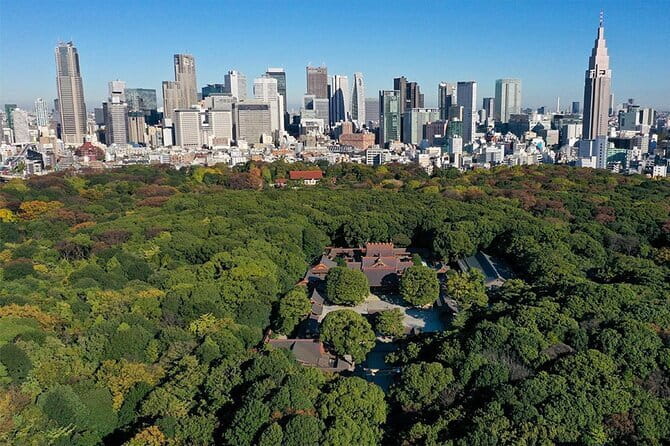
Meiji Shrine gives you a rare pause in central Tokyo. From Harajuku Station, you follow a broad forest path beneath giant torii gates, then reach a working Shinto shrine where you can pray, draw an omikuji, and learn how religion and Japan’s Imperial system connect. The walk is calm, green, and surprisingly far from the city noise.
I like the small maximum of 15 people, which gives your guide room to answer questions. I also like that the Meiji Shrine Garden admission is included, since you are not left sorting out an extra ticket during a short visit. Guides such as Yuuki, Nana, Keiko, Nonoka, and Nanami have been praised for clear English and warm, patient explanations.
The main consideration is time. At about 90 minutes, this is an introduction, not a leisurely exploration of every corner of the shrine grounds. The forest path can also feel long if you want a quick photo stop rather than a guided cultural walk.
Key points to know before you book
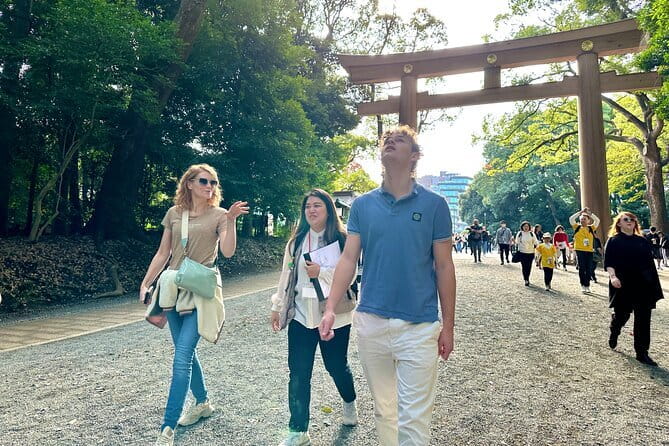
- A forest walk begins beside Harajuku: You leave the station area and enter a quiet wooded approach through one of Tokyo’s busiest districts.
- The torii gate is a major sight: One of Japan’s largest wooden torii gates is made from ancient cypress brought from Taiwan.
- Shinto customs are explained in context: The route includes a purification fountain, prayer customs, omikuji, ema, and omamori.
- The Imperial connection is part of the lesson: Your guide discusses Meiji Shrine as a place tied to Japan’s Imperial system, not simply as a pretty park.
- The tour suits first-time visitors: A local guide helps you understand what to do and why the rituals matter.
- The price is modest for a guided visit: At $21.22 per person, you pay mainly for interpretation and company rather than a long list of included attractions.
From Harajuku Station into a quieter Tokyo
The meeting point is Harajuku Station at 1 Chome-18 Jingumae. That location makes the tour easy to pair with a day in Harajuku, though you should allow enough time to find your guide before the scheduled start.
The change in mood comes quickly. Harajuku is known for crowds, shops, and young street culture, while the approach to Meiji Shrine leads you into a broad wooded setting. I like this contrast because it shows Tokyo at its best: modern city life and old religious traditions can sit only a short walk apart.
The guide leads you from the Harajuku entrance along a peaceful forest path. This is not just a transfer to the main building. It is part of the experience. As you walk, the guide can explain the role of the shrine, the meaning of the gates, and the customs you will see later.
The route is suitable for most people, according to the activity information, and it stays near public transportation. Still, expect a proper walking tour rather than a quick stop. The listed duration is about one hour and 30 minutes, with roughly 30 minutes at the opening shrine area, five minutes at the large torii, 30 minutes at the main shrine, and 15 minutes near the cafe and shop.
More Meiji Shrine tours in Tokyo:
- Tokyo: Meiji Shrine, Asakusa, Skytree Bus Tour and Cruise
★ 4.7 · 1,986 reviews - Tokyo Panoramic 1 Day: Meiji Shrine, Asakusa, Odaiba and SKYTREE®
★ 4.5 · 1,222 reviews - Tokyo: Meiji Shrine Walking Tour — Shinto & Imperial System
★ 4.9 · 266 reviews
The big torii and the meaning of crossing over
One of the first memorable points is the large wooden torii gate. It is made from ancient cypress brought from Taiwan, and its scale gives the entrance a quiet sense of ceremony.
Your guide can help you treat the torii as more than a photo backdrop. In a Shinto shrine, passing beneath a torii marks the move from an ordinary public space into a sacred one. The broad path and trees reinforce that change without needing flashy architecture or a long museum display.
The five-minute stop is brief, so do not expect a detailed architectural lecture here. It works better as part of the larger walk. You see the gate, hear why it matters, and then continue through the forest toward the shrine.
This is one reason I would choose the guided version over walking through on your own if you have limited knowledge of Shinto. The gate is easy to admire, but the guide adds the small cultural cues that can otherwise pass unnoticed.
Sake barrels, purification, and the first lessons in Shinto
Along the approach, you pass displays of sake barrels. These offer a visual introduction to the relationship between religious sites, traditional offerings, and Japanese culture. The display also breaks up the long path with something distinctive to look at.
The route includes a purification fountain. Your guide explains how visitors prepare before approaching the shrine. You can watch the process and follow along if you wish, using the information provided by your guide rather than guessing what to do.
That practical help matters. A shrine visit is not difficult, but unfamiliar customs can make you hesitate. This tour gives you a way to take part respectfully, while also explaining that the gestures are connected to Shinto practice rather than simply being tourist rituals.
The lesson is likely to be most useful for first-time visitors to Japan. You do not need prior religious knowledge, and the tour is not presented as a formal theological class. Instead, you learn through the actual places and actions in front of you.
At Meiji Jingu, prayer and personal wishes

The main shrine is the heart of the tour. Here, you can offer a prayer, draw an omikuji, write a wish on an ema wooden plaque, and look at the available omamori charms.
Each item gives you a different way to connect with the shrine. An omikuji is a traditional fortune, while an ema is a wooden plaque used for writing a wish. Omamori are protective charms. Your guide explains the differences, which is useful when the displays seem familiar but the purpose of each object is not obvious.
The tour also covers Meiji Shrine’s connection to the Imperial system. That topic adds needed context. Meiji Shrine is not simply a wooded religious site in the middle of Tokyo. The guide helps you understand how the shrine relates to the Emperor and the period in which it was created, while also explaining the religious traditions practiced there.
This part can be especially valuable if you are interested in Japanese history, religion, or government. The tour does not treat the shrine as a disconnected monument. It links the rituals to the country’s past and to the Imperial institution.
You should have time to look around and take part in the customs, but this is still a short guided visit. If you want a long period for private prayer, extensive photography, or careful reading of every display, you may find the schedule tight. The benefit is that you keep moving and gain a clear framework for what you are seeing.
More Tokyo walking tours:
- Tokyo Tsukiji Fish Market Food and Culture Walking Tour
★ 5.0 · 3,184 reviews - Tokyo: Imperial Palace and Shogun Historical Walking Tour
★ 5.0 · 2,251 reviews - Tokyo: Shinjuku Local Bar and Izakaya Guided Walking Tour
★ 4.9 · 1,794 reviews - Tokyo: Tsukiji Fish Market Food and Walking tour
★ 5.0 · 1,724 reviews
Why the garden admission matters

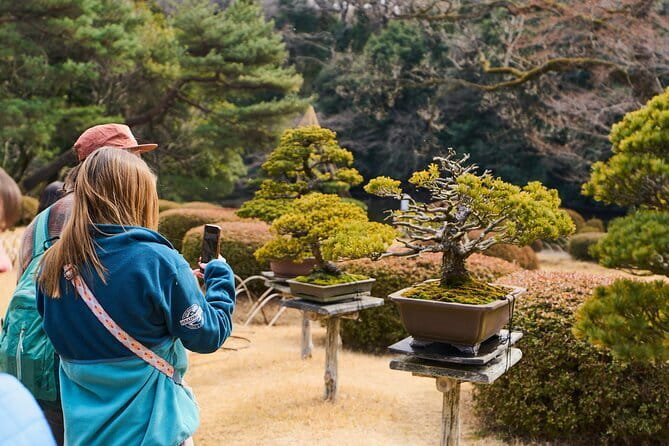
Admission to the Meiji Shrine Garden is included. That is a useful detail at this price, since the garden gives the visit more variety than a straight walk to the main shrine and back.
The garden portion is tied to the wider Meiji Shrine setting, where the forest and planted areas create a cool break from the paved city outside. One recent participant specifically valued the foliage during hot summer weather. You should not expect a full-day garden visit, but the included access makes the $21.22 fee easier to justify.
The guide helps you read the area as part of the Imperial and religious setting rather than treating it as a separate green space. That context is the main reason to visit with a guide. If you only want a quiet walk among trees, you can find that without booking. If you want to understand why the garden and shrine belong together, the tour has more to offer.
Mori no Terrace, a gentle finish near the shrine

The final stop is Mori no Terrace, a cafe and gift shop near the shrine grounds. The cafe offers light meals and drinks in a quiet forest setting, while the shop carries charms, traditional goods, and Meiji Jingu exclusive items.
This is a sensible ending. You can pause after the walk, browse for a small keepsake, or simply sit with a drink before returning to Tokyo’s faster pace. The scheduled stop is about 15 minutes, so treat it as a short finish rather than a long cafe visit.
The shop may be useful if you wanted an omamori or another shrine-related item but did not buy one earlier. Keep in mind that purchases are not part of the tour price. The included admission covers the garden, while food, drinks, and souvenirs are separate.
The activity ends back at the meeting point. That makes the tour easy to fit into a larger Harajuku or Shibuya plan, especially if you want to continue sightseeing after the shrine.
How the guides shape the experience
The local guide is the main reason to book this activity instead of visiting Meiji Shrine independently. The path itself is free to enter, but the tour gives you explanations at the exact moment you need them.
The guide names associated with recent departures include Yuuki A, Nono, Nana, Keiko, Nonoka, and Nanami. You are not guaranteed a particular person unless the booking offers that choice, but these names give you an idea of the kind of personal guiding style reported for the experience. Yuuki has been described as patient, and Nana as strong at explaining Shinto and ritual. Keiko has been praised for her enthusiasm and affection for the shrine.
English ability is also important here because the topic includes religious terms, historical references, and customs. The supplied feedback describes the guides as speaking English well and answering questions clearly. That is useful when you want more than a memorized route.
The group limit is 15 people. That is not a private tour, but it is small enough to keep the guide within reach. A larger group would make the purification fountain and prayer area feel less personal. At this size, you have a better chance of asking about the Imperial system, omikuji, or anything else that catches your attention.
Is $21.22 good value?
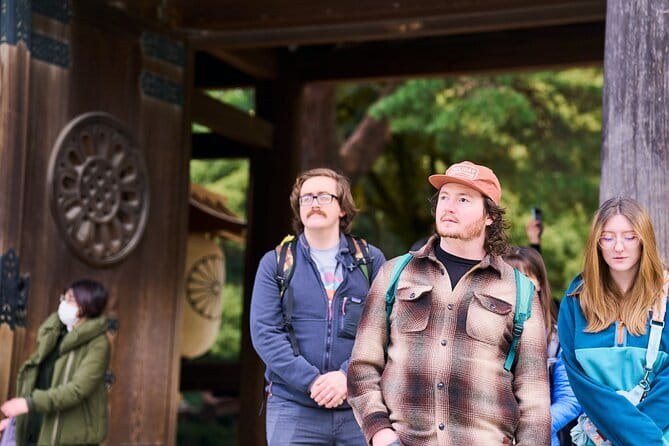
At $21.22 per person, this is a reasonably priced orientation to Meiji Shrine. You are paying for a 90-minute guided walk, a local guide, small-group access, and admission to the Meiji Shrine Garden.
The value depends on what you want. If you are comfortable researching Shinto customs and reading signs on your own, the shrine itself can be visited without this expense. If you want to understand the purification ritual, the sacred gates, the shrine’s Imperial connection, and the purpose of the items sold there, the fee is modest.
I would see this as a good first-day Tokyo activity for someone who wants cultural context without committing to a long museum tour. It gives you a clear introduction, leaves time for other plans, and places you near Harajuku and public transportation.
The tour is less suitable if you want a private guide, a slow photography session, or a deep study of the garden. The maximum group size is 15, and the schedule keeps moving. You receive a focused overview rather than unlimited time.
Timing, comfort, and practical planning
Two tour times are available, so you can choose the option that fits your day. The exact time matters because the walk takes place outdoors and includes a forest path. Bring comfortable shoes and plan for walking, even though the activity is only about 90 minutes.
The foliage can make the shrine feel cooler than the surrounding city, especially in summer, but you should still dress for Tokyo’s weather. The tour does not list a special weather plan, so check the forecast before you go.
A mobile ticket makes entry and confirmation simple. Booking confirmation is received at the time of booking, and the meeting point is near public transportation. The activity ends where it begins, which keeps your onward plans straightforward.
Cancellation is flexible up to 24 hours before the start time for a full refund. Inside that 24-hour window, the payment is not refunded and changes are not accepted. Since the tour uses set departure times, check your Tokyo schedule before committing.
Who should book this Meiji Shrine walk?
I would recommend it to first-time Tokyo visitors who want a calm cultural stop with a guide. It is also a good choice for solo visitors, couples, and families who prefer a short experience with a clear meeting point and a small group.
You will get the most from it if you are curious about Shinto rituals, the Imperial system, or the meaning behind shrine customs. The tour works well for people who might otherwise walk through, take a few pictures, and leave without understanding what they saw.
It may not be your best choice if you have already studied Meiji Shrine in detail or want to spend several hours exploring at your own pace. The guide-led schedule limits lingering, and the final cafe stop is short.
Should you book it?
Book this tour if you want context with your shrine visit, not just an attractive forest walk. The large torii, sake barrels, purification fountain, main shrine, garden, and charm shop create a well-paced route, while the guide explains the customs and Imperial links that are easy to miss alone.
At $21.22, the price is fair for a 90-minute small-group introduction with garden admission included. I would choose it early in a Tokyo trip, when you are still learning how Japanese shrines work. Skip it only if you prefer complete independence or need a much longer, slower visit.
FAQ
Where does the Meiji Shrine walking tour start?
The tour starts at Harajuku Station, at 1 Chome-18 Jingumae, Shibuya, Tokyo 150-0001, Japan.
How long does the tour last?
The experience lasts approximately one hour and 30 minutes.
What is included in the price?
The price includes the guided visit and admission to the Meiji Shrine Garden. Food, drinks, and purchases at the cafe and gift shop are not listed as included.
How large is the tour group?
The activity has a maximum of 15 travelers.
Does the tour end at Meiji Shrine?
No. The activity ends back at the meeting point.
Can I cancel for a full refund?
Yes. You can cancel at least 24 hours before the experience start time for a full refund. Cancellations or changes made less than 24 hours before the start time are not accepted and are not refunded.
Newly reviewed around Tokyo
- Tokyo Asakusa:Calligraphy & Make T-shirt Activity★ 5.0 · 62 reviews
- Intercity Shuttle, Tokyo to Haneda /Narita /Yokohama /Makuhari★ 5.0 · 5 reviews
- 1 Hour Travel around Tokyo with a Professional Photographer★ 5.0 · 3 reviews
- Travel Tokyo with Your Own Personal Photographer★ 5.0 · 43 reviews
- Train in Samurai Swordsmanship and Defeat the Demon in Tokyo★ 5.0 · 5 reviews
- Shuttle Van 6hr Tokyo Tour to-and-from Tokyo, Yokohama and Narita★ 5.0 · 9 reviews
- Kickboxing & Body Training with EX-Pro Fighter★ 5.0 · 4 reviews
- Tokyo History: Sensoji Temple & Asakusa District Private Tour★ 5.0 · 28 reviews
Meiji Shrine Tours, compared.

Meiji Shrine, Asakusa, Skytree Bus Tour and Cruise
Read our review →
Tokyo Panoramic 1 Day: Meiji Shrine, Asakusa, Odaiba and SKYTREE®
Read our review →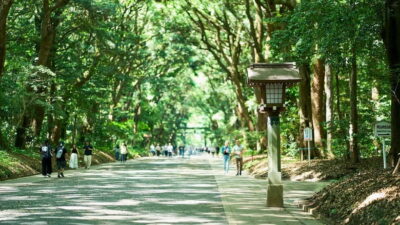
Meiji Shrine Walking Tour — Shinto & Imperial System
Read our review →
Meiji Jingu Shrine and Shinto Culture Walking Tour
Read our review →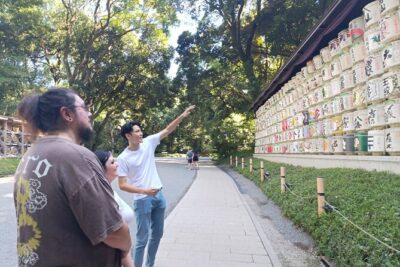

1 Day Bus Tour with Meiji-Jingu,Odaiba,lunch&Skytree
Read our review →
Tokyo Morning Tour : Meiji Shrine, Asakusa and Fish Market
Read our review →
Full Tokyo: Meiji Shrine, Imperial Palace, Asakusa & Skytree
Read our review →Browse the lists this tour appears in