
Reviewed · TOKYO WALKING TOURS
Tokyo Shibuya Crossing & Hidden Streets Walking Tour
Shibuya Crossing is the hook, but the best part of this two-hour walk is what comes after the famous scramble. You’ll move from Taro Okamoto’s powerful atomic-bomb mural to Miyashita Park, tiny drinking alleys, shopping streets, and Maruyamacho, seeing a side of Shibuya that is easy to miss on your own.
I like the small group limit of 12, which gives you room to ask questions, and I like the practical food and nightlife advice guides such as Loc, Rio, Grey, and Daichi share. The main drawback is the start point inside Shibuya Mark City, which can be hard to find. Shibuya also has plenty of uphill walking, so this is not a flat stroll.
Key Points at a Glance
- A wider look at Shibuya: The route includes the famous crossing, but also Miyashita Park, Nonbei Yokocho, Maruyamacho, and local shopping streets.
- Taro Okamoto’s Myth of Tomorrow: This striking mural adds serious historical weight before the tour reaches Shibuya’s neon energy.
- Small group format: The tour accepts no more than 12 people, making it easier to hear the guide and ask questions.
- Useful local advice: Guides share suggestions for bars, restaurants, shopping, and places that may not appear in a standard Tokyo plan.
- A hilly route: Expect stairs, slopes, and a fair amount of walking, especially in warm or humid weather.
- A tricky meeting point: The tour begins at SABON in Shibuya Mark City, not at the easier-to-spot Hachiko Statue.
Shibuya Crossing Is Only the Beginning
Most first-time visits to Shibuya begin and end with the scramble crossing. You watch the traffic stop, hundreds of people move in every direction, and the whole scene lasts only a few minutes. It is a fine introduction to Tokyo’s scale, but it does not tell you much about the neighborhood around it.
This walk uses Shibuya Crossing as one stop in a broader route. You’ll see the intersection, cross it, and then continue through older lanes, newer public spaces, shopping streets, and nightlife districts. That mix gives you a better sense of how Shibuya works: part transport hub, part shopping center, part entertainment zone, and part neighborhood with a long memory.
The tour lasts about two hours. The listed stops add up to roughly 75 minutes, so the remaining time goes toward walking, explanations, photographs, and moving between areas. That is a useful distinction. You are not standing at seven sites for two hours. You are walking through the district with a guide who keeps the route moving.
Because the group is capped at 12, this should feel more personal than a large bus tour or a crowded city orientation. Guides have included Loc, Rio, Grey or Gray, Zach or Zac, Daichi, and Dixce. The exact guide is not guaranteed, but the strongest experiences in the feedback center on clear explanations, humor, patience, and a willingness to answer questions.
More things to do in Shibuya:
- Official Street Go-Kart in Shibuya
★ 5.0 · 3,435 reviews - Tokyo: Street Kart Experience in Shibuya
★ 4.9 · 1,484 reviews - Shibuya Meltdown Nightlife Tour: All-You-Can-Drink Bar Hopping
★ 5.0 · 1,058 reviews
Starting with Myth of Tomorrow at Shibuya Station
The first stop is Myth of Tomorrow, a large mural by Japanese artist Taro Okamoto inside Shibuya Station. You get about 10 minutes here, with admission included.
The mural depicts the destruction caused by the atomic bombings of Hiroshima and Nagasaki. It is not a light opening to a walking tour, but that is exactly why it matters. Shibuya is often presented as flashing screens and youth culture. This artwork reminds you that modern Japan also carries difficult memories, and that public art can make those memories part of daily life.
A guide can add context that you may miss while rushing through the station. You’ll have time to look closely, take in the scale, and connect the artwork to the country’s wider history before heading into the commercial center of Shibuya.
The stop is free. The practical issue is that Shibuya Station is large and busy, so you’ll want to stay close to the guide from the start. This is one reason the guided format helps. Finding one mural in a major station can be harder than finding the famous crossing outside.
Crossing Shibuya’s Famous Scramble
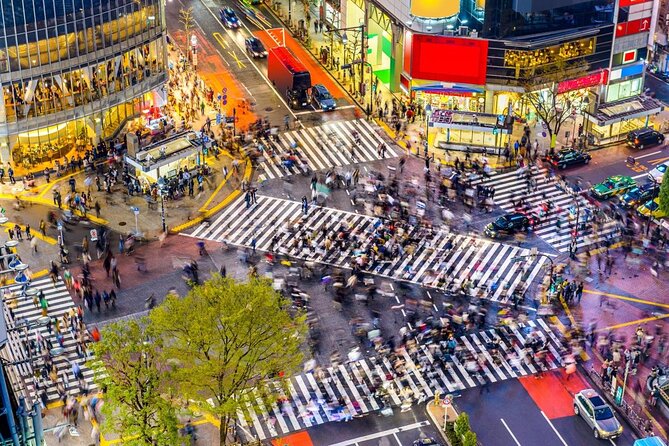
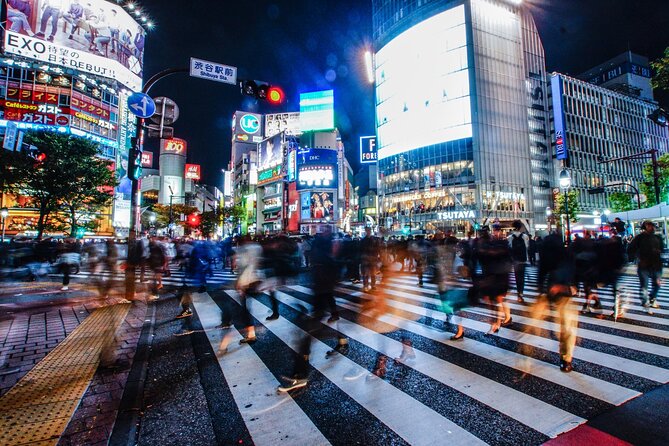
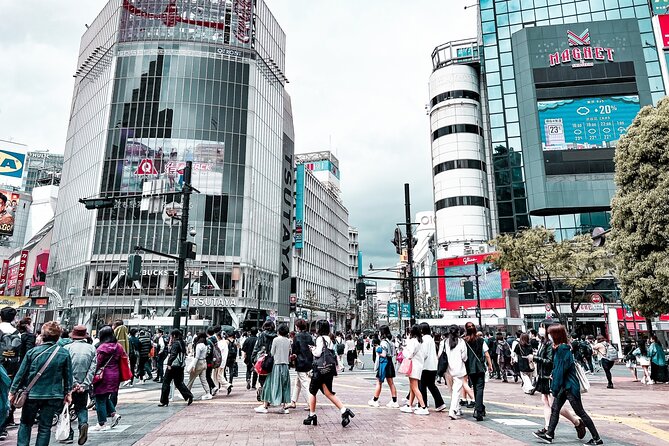
Shibuya Crossing gets about 10 minutes on the planned route. The guide takes you to the intersection, explains what makes it famous, and lets you experience the crossing itself.
The scene is often compared with Times Square, but the mood is different. The crossing is highly organized, and people generally move with calm purpose even when the intersection fills. From the curb, you see a wall of advertising screens, station buildings, side streets, and pedestrian flows meeting from every direction.
Ten minutes is enough for the basic experience, though not enough for every possible photo angle. If you want a longer look from above, you’ll need to arrange that separately. This tour focuses on seeing and crossing the intersection rather than turning it into a lengthy photography session.
I like having the guide here because it keeps the famous stop from taking over the entire tour. You get the photograph and the experience, then move on to places that are less obvious. If you have already seen Shibuya Crossing on an earlier Tokyo trip, the surrounding route is the part that adds real value.
Miyashita Park and Shibuya’s Newer Face
The next major stop is Miyashita Park, with about 20 minutes to look around. This is the longest scheduled stop, and it gives the guide time to explain how the area has changed.
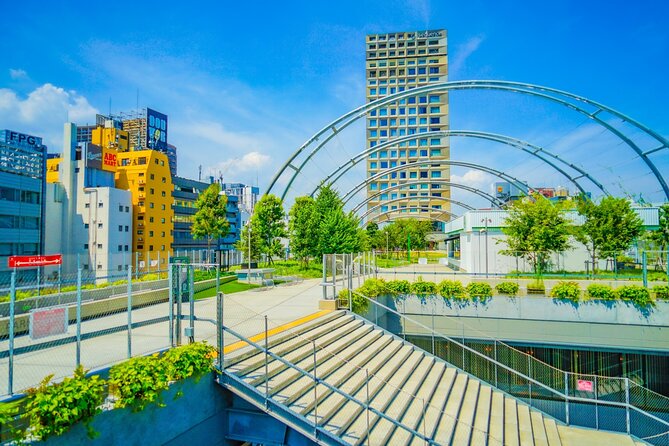
Miyashita Park is a multi-level urban recreation and shopping project built over land that was once a more ordinary public park. Its design reflects modern Shibuya: compact, built upward, and aimed at combining recreation, retail, and city life in one place.
You may find this stop especially useful if you want to understand present-day Tokyo rather than only photograph old streets and signs. It shows how the city creates public space where land is limited. The park also provides a change of pace after the crossing and station area.
The tour does not charge an extra admission fee. The 20-minute stop is long enough for an explanation and a look around, but not for a full shopping session. If you find a shop or cafe you want to explore, note the location and return later.
More Tokyo walking tours:
- Tokyo Tsukiji Fish Market Food and Culture Walking Tour
★ 5.0 · 3,184 reviews - Tokyo: Imperial Palace and Shogun Historical Walking Tour
★ 5.0 · 2,251 reviews - Tokyo: Shinjuku Local Bar and Izakaya Guided Walking Tour
★ 4.9 · 1,794 reviews - Tokyo: Tsukiji Fish Market Food and Walking tour
★ 5.0 · 1,724 reviews
Nonbei Yokocho and Tiny Bars
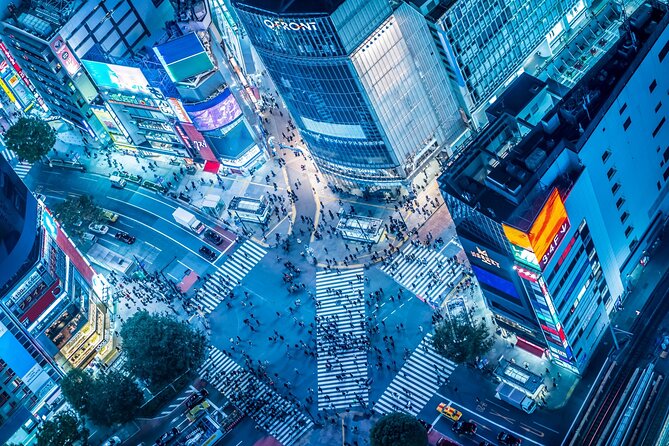
Nonbei Yokocho, often translated as Drunkard’s Alley, receives about five minutes. The stop is short, but the setting is memorable.
This narrow lane near Shibuya Station is known for very small traditional-style bars and eating places. Some spaces seat only three or four people. The close quarters make the alley feel very different from the wide streets, department stores, and large entertainment buildings nearby.
A guide can explain how these small establishments fit into Shibuya’s nightlife and why some may not remain unchanged forever. This is one of the places where a short introduction is more useful than a long lecture. You get a look at the lane, learn what you are seeing, and can return later if you want to try one of the businesses.
Do not expect a meal or bar visit to be included. The tour is about orientation. Food and drinks are your own expense, and the guide’s recommendations are one of the practical extras you can use after the walk.
Center-gai and the Shopping Streets
Shibuya Center-gai gets about 10 minutes. This pedestrian shopping street is one of the district’s main stages for fashion, youth culture, restaurants, and entertainment.
The contrast with Nonbei Yokocho is sharp. There, the lanes are narrow and intimate. Here, the streets are louder, more commercial, and designed for constant movement. A guide can help you read the area rather than simply pass through it, pointing out the types of shops and the role Center-gai plays in Shibuya life.
This is a useful stop for first-time visitors who plan to return for shopping. You can ask the guide about areas that match your interests, then use the walk as a first orientation before exploring on your own.
The stop is brief, so do not expect a detailed tour of individual stores. Its purpose is to place the street within the neighborhood and give you a sense of where to return. The guide may also offer suggestions for food and bars nearby, which can help you plan the rest of your evening.
Maruyamacho and Shibuya’s Nightlife History
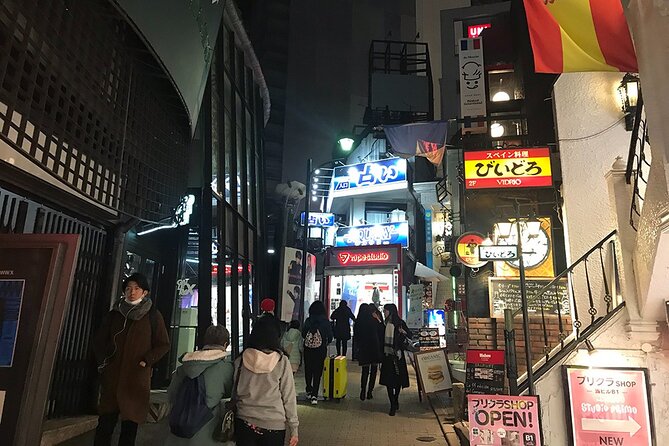
Maruyamacho receives about 10 minutes. This neighborhood was once associated with Shibuya’s red-light district and now has a mix of restaurants, bars, hotels, and newer businesses.
That shift gives the walk some historical depth. Shibuya is not a district that appeared fully formed around giant screens. Its streets have changed use over time, and Maruyamacho shows how an older nightlife area can become part of a modern entertainment center.
The neighborhood includes slopes, and this is where the route’s uphill character becomes more noticeable. One person specifically found the amount of uphill walking tiring, while another noted that the guide adjusted the pace and took breaks during humid weather. That makes this tour workable for many people, but you should wear comfortable shoes and avoid treating it as an effortless city stroll.
The stop is also useful if you want evening ideas. The guides can point you toward bars and restaurants, including places tucked away from the main roads. You will not get a guaranteed reservation or a meal, but you can leave with a better sense of where to explore after the tour.
Finishing with Hachiko
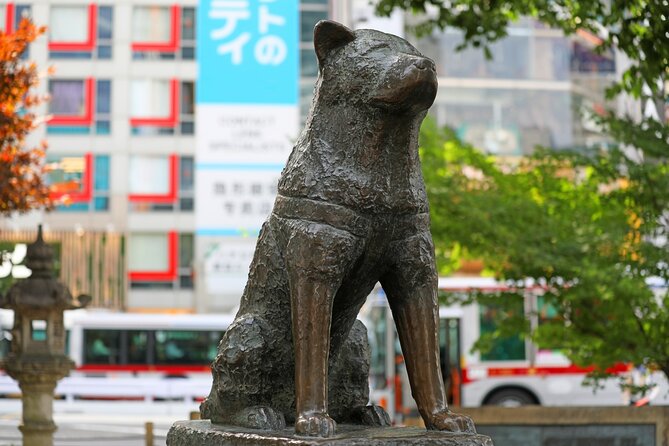
The tour ends at the Hachiko Statue outside Shibuya Station, at 2 Chome-1 Dogenzaka. Hachiko was an Akita dog remembered for his loyalty, and the bronze statue has become one of Tokyo’s best-known meeting points.
Ending here makes practical sense. You finish near a major transport hub, and the statue is easy to use as a landmark for the rest of your time in Tokyo. It also gives the route a clear final point after the less familiar lanes of Maruyamacho and Nonbei Yokocho.
The irony is that Hachiko would also be a much easier place to meet at the beginning. Several people had trouble finding the starting location at SABON in Shibuya Mark City, with one person spending about 20 minutes searching before giving up. Read your confirmation carefully, allow extra time, and use the exact Mark City and floor details rather than heading straight to Hachiko.
What the $25 Price Buys You
At $25 per person, this is a modestly priced introduction to one of Tokyo’s most confusing districts. All fees and taxes are included, and there are no paid attractions on the route. You are paying mainly for the guide’s time, route planning, local context, and help navigating crowded streets and station areas.
That matters in Shibuya. You can cross the famous intersection alone for free, and you can walk through Center-gai without assistance. The value comes from connecting those obvious sights with the mural, park, alleys, and neighborhood history in a single outing.
The price is strongest for a first visit or for anyone staying near Shibuya who wants a useful orientation before going out at night. It is also reasonable for a repeat visitor who has only seen the main roads. The experience is less valuable if you want an in-depth museum-style history tour, a food tasting, or extended time inside shops and bars.
Tips for the guide are not included. Bring water, wear shoes suited to slopes, and treat the food and nightlife suggestions as ideas for later rather than part of the booking.
Guide Quality and the Personal Touch
The guide can shape this experience more than any individual stop. Loc is repeatedly praised for being friendly, upbeat, and easy to talk with. Rio has been described as showing the area with personal pride, while Grey or Gray is noted for patience, humor, and strong local explanations. Zach or Zac has been praised for clear English and for adjusting the route discussion to match group interests.
Daichi has a particular interest in regional infrastructure and city planning, which can add a useful angle to Shibuya’s changing streets. Dixce is also singled out for making two hours feel packed with information while remaining approachable.
These descriptions point to a tour that works best when you ask questions. Ask about the small bars, love hotels, shopping areas, local food, or the changes taking place around Shibuya. One guide may focus more on history, another on daily life, another on nightlife. The exact style depends on who leads your group.
There is one important qualification. One person felt the cultural explanations were not as profound as expected and was disappointed that the guide was not local. The company describes a local guiding experience, but individual guides may have different backgrounds. If you want a highly academic treatment of Japanese culture, this is probably not the right format. If you want an approachable introduction with room for questions, it is a better match.
Walking Conditions, Weather, and Group Size
The route is about two hours and requires steady walking through crowded streets, station spaces, shopping zones, and hills. Most people can participate, and service animals are allowed, but the route is not described as fully step-free.
Humidity can slow the pace, especially in warmer months. One guide adjusted the walk and added breaks for an older participant, which suggests some flexibility, but you should still judge the route against your own comfort level.
The small group cap is a real benefit. Twelve people is large enough to keep the tour running even if a few people cancel, but small enough for the guide to answer questions without turning every stop into a struggle to hear. A smaller group can also make it easier to stay together in the station and crossing areas.
The tour requires good weather. If poor weather causes cancellation, you are offered another date or a full refund. You can cancel for a full refund up to 24 hours before the start time. Changes or cancellations made inside that window are not refunded.
Who Should Book This Shibuya Walk?
I would choose this tour if you are visiting Tokyo for the first time and want to understand Shibuya before exploring it at night. The route gives you the famous photo stop, but it also introduces places you might skip when moving between the station, shops, and restaurants.
It also suits repeat visitors who have crossed Shibuya many times without learning much about the nearby streets. The mural, Miyashita Park, Nonbei Yokocho, and Maruyamacho provide enough variety to make the district feel new again.
This is a good fit for people who like local recommendations and conversation. It is less suitable if you want a food tour with tastings, a long historical lecture, or a flat route with little exertion.
Should You Book It?
Book it if you want a well-priced Shibuya orientation with a real mix of modern Tokyo, older nightlife lanes, public art, shopping, and local advice. The small group and strong guides, especially Loc, Rio, Grey, and Daichi, add value beyond what you would get by walking to Shibuya Crossing alone.
Before booking, be honest about the hills and the meeting point. Allow extra time to find SABON inside Shibuya Mark City, and do not assume the Hachiko Statue is the starting location. If you can manage the walking and want more than a photograph at the crossing, this is a sensible first-day or early-evening choice.
FAQ
How long does the Tokyo Shibuya Crossing and Hidden Streets Walking Tour last?
The tour lasts approximately two hours.
How many people can join the tour?
The tour has a maximum of 12 participants.
Where does the tour start?
It starts at SABON Shibuya Mark City, in the East Mall on the third floor at Dōgenzaka 1-chōme 12-3, Shibuya, Tokyo.
Where does the tour end?
The tour ends at the Hachiko Statue at 2 Chome-1 Dogenzaka, Shibuya, Tokyo.
Is Shibuya Crossing included?
Yes. Shibuya Crossing is one of the scheduled stops, and the tour includes time to cross the intersection.
What happens if the weather is poor?
The experience requires good weather. If it is canceled because of poor weather, you can choose another date or receive a full refund.
Newly reviewed around Tokyo
- Tokyo Asakusa:Calligraphy & Make T-shirt Activity★ 5.0 · 62 reviews
- 1 Hour Travel around Tokyo with a Professional Photographer★ 5.0 · 3 reviews
- Travel Tokyo with Your Own Personal Photographer★ 5.0 · 43 reviews
- Intercity Shuttle, Tokyo to Haneda /Narita /Yokohama /Makuhari★ 5.0 · 5 reviews
- Train in Samurai Swordsmanship and Defeat the Demon in Tokyo★ 5.0 · 5 reviews
- Shuttle Van 6hr Tokyo Tour to-and-from Tokyo, Yokohama and Narita★ 5.0 · 9 reviews
- Kickboxing & Body Training with EX-Pro Fighter★ 5.0 · 4 reviews
- Traditional Japanese Knife Sharpening Class★ 5.0 · 18 reviews
Tokyo Walking Tours, compared.
Tokyo Tsukiji Fish Market Food and Culture Walking Tour
Read our review →
Imperial Palace and Shogun Historical Walking Tour
Read our review →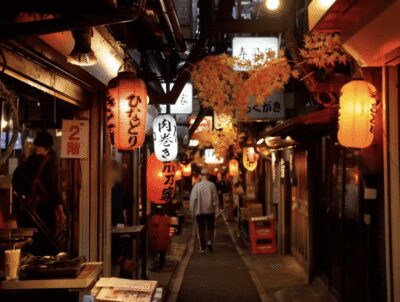
Shinjuku Local Bar and Izakaya Guided Walking Tour
Read our review →
Asakusa Walking Tour with Sensoji Temple Visit
Read our review →
Tokyo Castle & Imperial PalaceーShogun Walking Tour
Read our review →
Browse the lists this tour appears in