
Reviewed · WORKSHOPS
Kaisendon and Sashimi Cutting Workshop
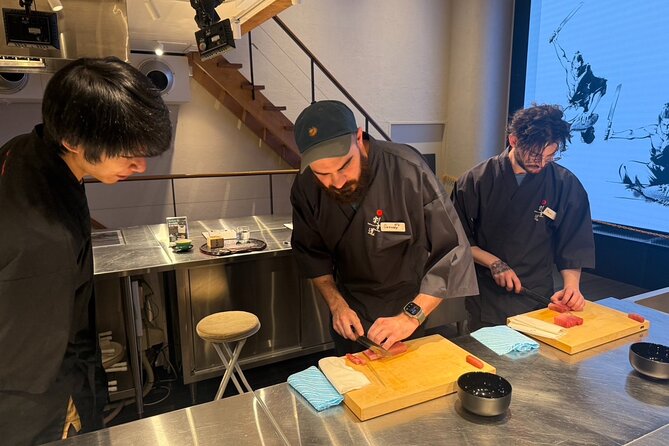
The best part of this 90-minute workshop is that you do not just watch a chef handle a Japanese knife. You use one yourself, first on flour dumplings, then on sashimi, and finish by building your own kaisendon seafood bowl. I like the direct, hands-on format and the chance to learn from Naoya Kumagai, whose demonstration gives the class a clear focus.
I also like that the meal is part of the lesson, with miso soup and sake available to complete it. The main consideration is its narrow scope: this is chiefly a sashimi-cutting class, not a full Japanese knife course or a lesson in sharpening. At $160, it makes the most sense if you value practical instruction and a small group over a cheap meal.
Key Points Before You Book
- You cut your own sashimi: Each participant practices with a sashimi knife and places the fish over vinegared rice.
- Naoya Kumagai leads the knife demonstration: You first watch Japanese cutting technique, then try it under guidance.
- The class is capped at four people: This allows for direct help, though the small group also means dates may be limited.
- Your lunch is the dish you make: Kaisendon, miso soup, and alcoholic beverages are included, with sake tasting available.
- The lesson uses flour dumplings first: This gives you a low-pressure way to practice knife movement before handling fish.
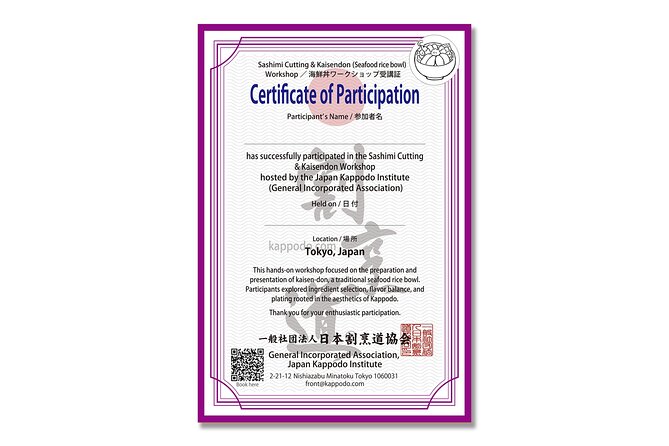
- You receive a certificate and shop discount: A participation certificate and 10 percent off purchases at the first-floor shop are included on the same day.
Slicing Fish at Kappodo’s Tokyo Studio
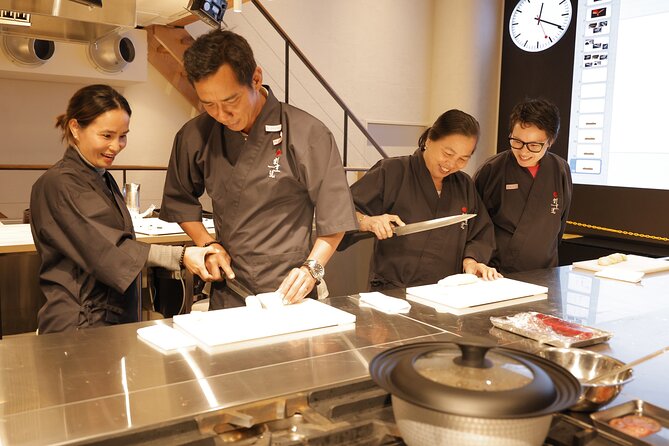
This workshop takes place at Kappodo H.Q., also called the Tokyo D Kitchen Studio, in Nishiazabu, Minato City. The meeting address is 2-chome 21-12, DK Building, Tokyo 106-0031, and the studio is near public transportation.
The setting matters because the activity feels more like a working cooking lesson than a staged food demonstration. You arrive with a specific task ahead: learn how a sashimi knife works, practice the motion, and use it to make lunch. The group size is limited to four people, which should give you a better chance to receive help than you would in a large cooking class.
The published start time is 1:00 p.m., while the detailed schedule lists registration at 12:45 p.m. for the afternoon session. Plan to arrive early enough to register and get settled, and check your booking confirmation for the exact meeting time.
The same program also appears with an earlier session, listed as registration at 10:45 a.m. and a start at 11:00 a.m. Since the information shows both morning and afternoon timings, confirm your selected slot before setting your day around it.
More hands-on classes and workshops in Tokyo:
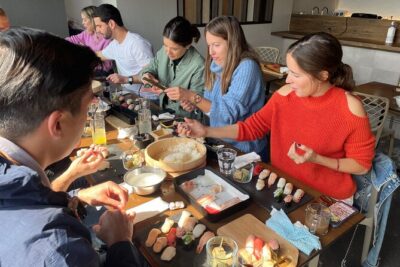
- Sushi Making Tokyo Roll and Authentic Japanese Sushi Class
★ 5.0 · 3,971 reviews - Tokyo: Roll and Authentic Sushi Making Class in Asakusa
★ 4.9 · 1,957 reviews - Tokyo Shinjuku Chopsticks Making Class
★ 5.0 · 1,763 reviews
A Short Lesson in Japanese Sashimi Knives
The class opens with a greeting and introduction, followed by a short lecture on sashimi knives. This is not simply a matter of learning which knife to hold. Japanese knife work depends on controlled movement, the angle of the blade, and the way the knife meets the fish.
Naoya Kumagai then gives a demonstration of Japanese knife technique. Watching first is useful because sashimi cutting can look deceptively simple. A professional makes the motion appear smooth and quick, but you need to pay attention to how the blade is guided rather than forced through the fish.
The instruction is designed to be practical. You do not spend most of the class listening to a long talk about knives. Instead, you get a brief explanation, see the technique performed, and then move to the work table.
The English support is another important part of the experience. The class includes a guide, and the teaching team has been praised for clear English, patient help, and a friendly manner. That matters in a knife lesson, where a small misunderstanding about grip or direction can affect both your result and your confidence.
Why the Flour Dumpling Practice Matters
Before you cut sashimi, you practice with flour dumplings. This may sound like a simple warm-up, but it gives you a chance to get used to the knife without worrying about wasting fish.
The exercise helps you feel the cutting motion and understand how much pressure to use. If you have never handled a sashimi knife, this is the point where you can ask for help, correct your grip, and learn the basic movement before the more important part of the lesson.
I like this order. You get a little practice before working with the ingredient you will eat, and you can focus on technique instead of trying to make a perfect slice straight away.
The class does not promise a complete education in Japanese knife care. One piece of feedback connected to a different Japanese knife class mentioned sharpening and vegetable cutting, but this seafood bowl workshop is described as a shorter session centered on sashimi cutting. If sharpening is your main goal, Kappodo offers a separate Tokyo keen Japanese knife and sashimi workshop.
Cutting Your Own Sashimi
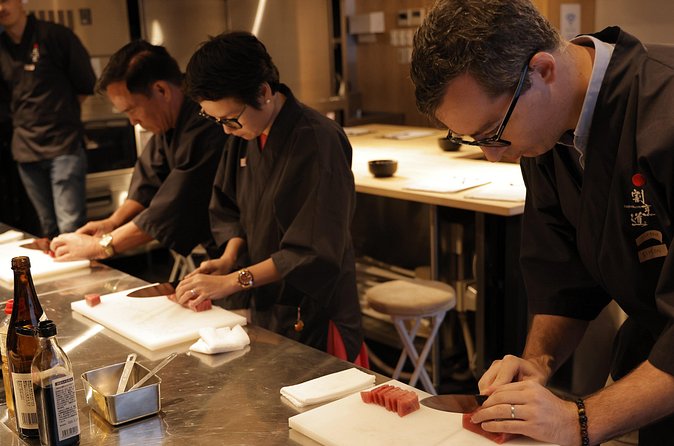
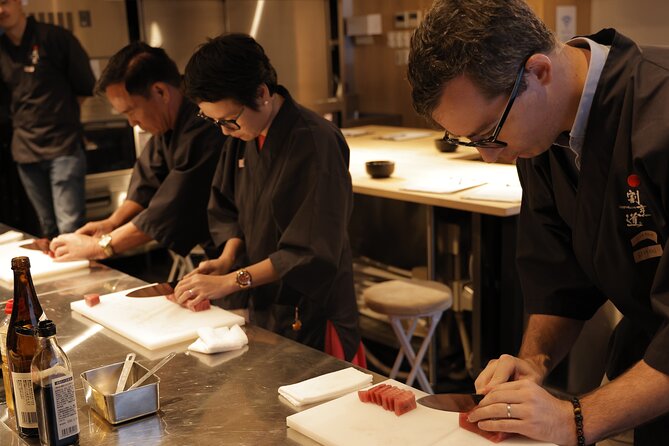
After the flour dumpling exercise, each participant cuts sashimi with a sashimi knife. This is the central moment of the class, and it is where the instruction becomes personal.
You are not merely copying a chef for entertainment. You are handling the knife, working on your own portion, and trying to create slices suitable for a seafood bowl. The instructor can show you how to approach the fish and help you adjust as you work.
The class is a good fit if you enjoy learning by doing. It is less suitable if you want a polished chef’s demonstration with no participation, or if you are uncomfortable using a sharp knife. The knife is an important tool here, not a prop.
You should also keep your expectations sensible. The goal is not to produce restaurant-perfect sashimi in 10 minutes. The value lies in understanding the basic technique and gaining enough experience to recognize how Japanese knife work differs from ordinary chopping.
The small maximum of four people should help. With so few participants, the guide can watch what you are doing and offer individual direction. A large class might give you more energy, but it would not offer the same chance to ask questions at the exact moment you need help.
A completely different kind of day in Tokyo:
- Mt Fuji and Hakone 1-Day Bus Tour Return by Bullet Train
★ 5.0 · 26,383 reviews - 1-Day Tokyo Bus Tour
★ 5.0 · 14,250 reviews - Tokyo: teamLab Planets TOKYO Digital Art Museum Entry Ticket
★ 4.6 · 9,779 reviews - Mt Fuji & Hakone Cruise, Drum Show Bullet Train 1 Day from Tokyo
★ 4.0 · 7,413 reviews
Building a Kaisendon for Lunch
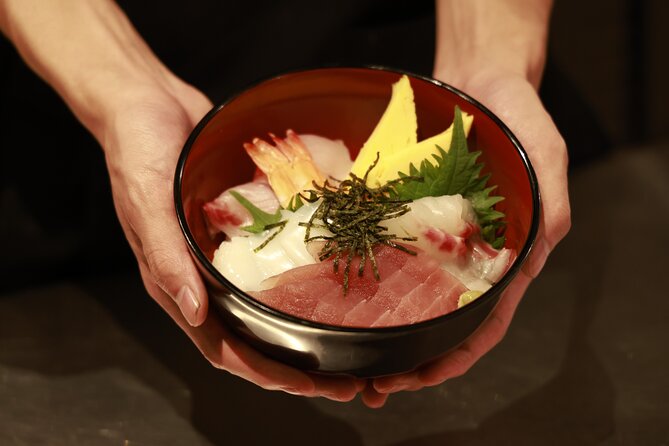
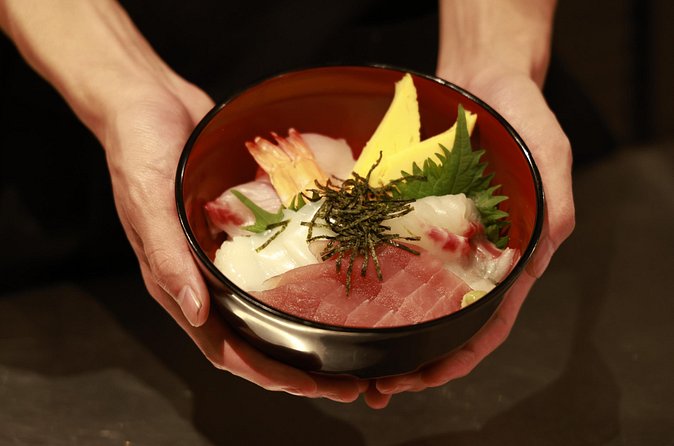
Once the sashimi is cut, you make your own kaisendon, a seafood bowl served over vinegared rice. This gives the lesson a satisfying purpose: your practice becomes the lunch you eat at the end.
The preparation is simple in concept. You place the sashimi on the rice, arrange the bowl, and then sit down to taste it. The dish is not just an add-on to the class. It is the final stage of the knife exercise, since the appearance and placement of the fish show what you managed to cut.
Miso soup accompanies the bowl, and alcoholic beverages are included. Sake tasting is also available, making the meal feel more complete and giving you another small taste of Japanese food culture.
The menu is a strong point for people who want lunch built into their sightseeing day. You finish with something substantial rather than leaving after a short demonstration. Still, this is not a broad cooking course. The food focus is sashimi and kaisendon, so you should not book it expecting lessons in several Japanese dishes.
The food also helps justify part of the $160 price, though the main value comes from the guided knife practice and small group. If you judge the experience only by the cost of the bowl, it will feel expensive. If you want instruction, a meal, tools, a certificate, and a shop discount in one short session, the price is easier to understand.
A Friendly Class With Clear English Guidance
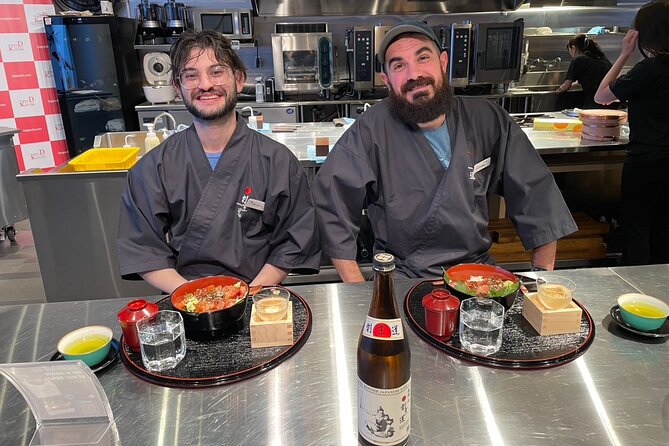
The teaching team includes Naoya Kumagai, who demonstrates the knife work, along with English support from the guide. The strongest praise has focused on helpful instruction, friendly interaction, and the way the staff stays involved throughout the process.
That style suits a lesson where you may need repeated explanation. Cutting fish is not the kind of skill most people master from one quick demonstration. You may need to ask about the angle, the pressure, or the direction of the cut, and the class format allows room for those questions.
The atmosphere also seems intentionally warm rather than formal. You can expect guidance, conversation, and some laughs along the way. That makes the workshop a good choice for solo visitors who want a social activity, couples looking for something different from a restaurant meal, or small groups who enjoy making food together.
The friendly tone does not remove the need to pay attention. You are still working with a sharp knife, and the lesson is practical. Listen carefully during the demonstration and follow the instructor’s directions.
What the $160 Price Includes
The $160 fee covers more than admission to a cooking demonstration. Included are:
- All tools used during the lesson
- A tour guide
- The seafood bowl you prepare
- Miso soup
- Alcoholic beverages
- Sake tasting availability
- A certificate of participation
- A 10 percent discount on items at the first-floor shop on the same day
The tool provision is useful for visitors. You do not need to bring cooking equipment, and you can concentrate on the lesson rather than arranging supplies.
The shop discount may appeal to anyone considering a Japanese knife purchase. The class gives you a chance to handle and understand a sashimi knife before buying, which is more useful than choosing one from a display with no instruction. The discount is only for purchases on the day of the workshop, so use it then if you intend to shop.
Private transportation is not included. You make your own way to the Nishiazabu studio, but the location is near public transportation. Since the activity ends back at the meeting point, you can continue your Tokyo plans from there without arranging a separate return transfer.
How Long the Workshop Really Takes
The listed duration is about one hour and 30 minutes. That is long enough for an introduction, knife lecture, demonstration, practice, bowl preparation, and tasting, but it is still a compact activity.
I see the short length as both a benefit and a limit. You can fit it into a busy Tokyo schedule, perhaps before dinner or alongside other plans in Minato City. You will not lose half a day to the class.
The tradeoff is that the lesson cannot cover every part of Japanese knife use. There is only limited time for sashimi practice, and the workshop does not focus on sharpening. If you want an intensive technical course, select the separate knife workshop instead.
The timetable gives the sequence in tight stages:
- Registration
- Greeting and introduction
- Sashimi knife lecture
- Naoya’s knife demonstration
- Flour dumpling practice
- Individual sashimi cutting
- Kaisendon preparation
- Tasting and possible sake sampling
Knowing this sequence helps you decide if the class suits your interests. The emphasis is clearly on doing, not on a long lecture.
Who Will Get the Most From This Experience
I would recommend this workshop to anyone curious about Japanese food beyond eating at a restaurant. You get a direct look at one small but important part of the cuisine: how fish is cut and presented.
It should suit beginners because the lesson starts with a simple practice exercise and provides all tools. You do not need to arrive with knife experience. The instructor explains the technique before asking you to use it.
It is also a good pick for home cooks who are considering a Japanese knife. You can learn why the knife feels different, see how it should be used, and decide if you want to buy one afterward. The 10 percent shop discount adds practical value.
Food-focused visitors will appreciate the meal, while culture-minded visitors may like the connection between tool, technique, and presentation. The class offers more context than simply ordering a seafood bowl, because you take part in preparing it.
I would be less likely to recommend it to someone who wants a full Japanese cooking course. You will not make several dishes, study a broad menu, or receive a dedicated sharpening lesson. It is also not the best choice if you dislike handling sharp kitchen tools.
Booking, Cancellation, and Practical Details
Confirmation is provided when you book, and the experience requires a minimum number of participants. If that minimum is not reached and the class is canceled, you can choose another date or experience, or receive a full refund.
You can cancel for a full refund up to 24 hours before the local start time. Cancellations or changes within 24 hours are not refunded or accepted, so check your Tokyo schedule before booking.
The class accepts mobile tickets, which keeps arrival simple. Bring the ticket on your phone and allow enough time to reach the studio in Nishiazabu. Since the group is limited to four people, booking ahead is sensible if the date matters to you.
Should You Book the Kaisendon Workshop?
Book this class if you want a small, hands-on Tokyo food experience with real knife practice, a meal, and English guidance. The strongest reasons are the limited group size, Naoya Kumagai’s demonstration, the chance to cut your own sashimi, and the fact that you eat the bowl you prepare.
At $160, this is not a budget lunch. You are paying for instruction, equipment, the guided activity, food, sake availability, a certificate, and access to a shop discount. That is fair value for someone who cares about Japanese knives and technique, but less compelling if you simply want seafood.
Choose the separate Japanese knife workshop if sharpening and broader knife care are your main interests. Choose this kaisendon session if you want a focused lesson that begins with practice and ends with a satisfying seafood bowl.
FAQ
Where does the Kaisendon and Sashimi Cutting Workshop take place?
It takes place at Kappodo H.Q., also called the Tokyo D Kitchen Studio, at DK Building, 2-chome 21-12 Nishiazabu, Minato City, Tokyo 106-0031.
What time does the workshop start?
The listed start time is 1:00 p.m. The detailed afternoon schedule lists registration at 12:45 p.m. An earlier session is also listed with registration at 10:45 a.m. and a start at 11:00 a.m., so check your booking confirmation for your selected time.
How long does the experience last?
The workshop lasts approximately one hour and 30 minutes.
What will I make?
You will cut sashimi and place it over vinegared rice to make a kaisendon seafood bowl. Miso soup is served with the meal.
Are tools provided?
Yes. All tools used during the lesson are included.
Is sake included?
Alcoholic beverages are included, and sake tasting is available during the tasting portion.
How many people can join the class?
The activity has a maximum of four participants.
What is the cancellation policy?
You can cancel at least 24 hours before the local start time for a full refund. Cancellations or changes made less than 24 hours before the start are not refunded or accepted.
Newly reviewed around Tokyo
- Tokyo Asakusa:Calligraphy & Make T-shirt Activity★ 5.0 · 62 reviews
- Intercity Shuttle, Tokyo to Haneda /Narita /Yokohama /Makuhari★ 5.0 · 5 reviews
- 1 Hour Travel around Tokyo with a Professional Photographer★ 5.0 · 3 reviews
- Travel Tokyo with Your Own Personal Photographer★ 5.0 · 43 reviews
- Train in Samurai Swordsmanship and Defeat the Demon in Tokyo★ 5.0 · 5 reviews
- Shuttle Van 6hr Tokyo Tour to-and-from Tokyo, Yokohama and Narita★ 5.0 · 9 reviews
- Kickboxing & Body Training with EX-Pro Fighter★ 5.0 · 4 reviews
- Traditional Japanese Knife Sharpening Class★ 5.0 · 18 reviews
Workshops, compared.
Sushi Making Tokyo Roll and Authentic Japanese Sushi Class
Read our review →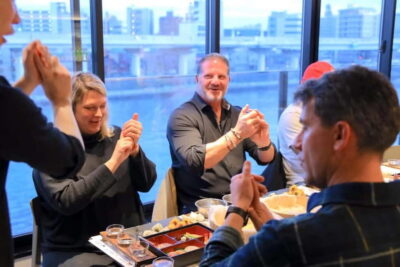
Roll and Authentic Sushi Making Class in Asakusa
Read our review →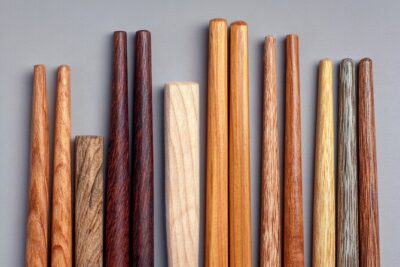
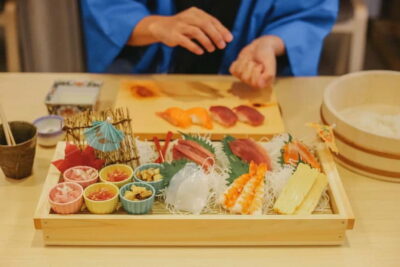
Sushi Making Class in a Happi Coat near a Famous Spot
Read our review →
Tokyo Sushi Making Class in Tsukiji with Professional Chef
Read our review →
Ramen & Gyoza Cooking Class in Tokyo with Local Supermarket Visit
Read our review →
Matcha Making Class in Tokyo with Authentic Japanese Sweets Set
Read our review →Browse the lists this tour appears in