
Reviewed · TOKYO SUMO EXPERIENCES
Tokyo: Sumo Morning Practice -Stable Visit Tour with a Guide
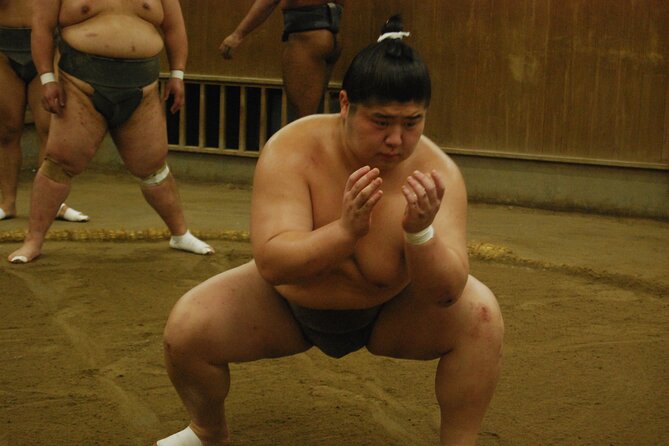
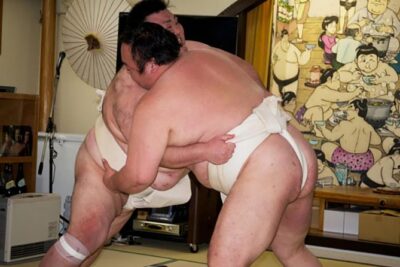
The most striking part of this Tokyo experience is the distance. You are not watching a bout from high seats at the Kokugikan. You are close enough to see the wrestlers’ expressions, hear their breathing, and feel the thud when bodies meet during morning practice. The coach’s voice may sound sharp, but it reflects the strict focus of the stable.
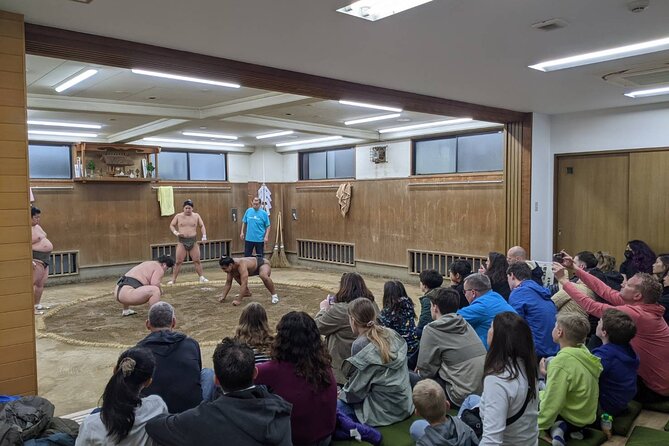
I like the small group of no more than 10 people, which gives the guide room to explain what you are seeing without turning the stable into a crowd. I also like the chance to take photos with the wrestlers and ask questions after practice, a more personal finish than simply observing from the sidelines.
The main drawback is that this is a quiet, rule-bound visit. You cannot hold private conversations during practice, record video, use flash photography, or bring food inside. You need to be comfortable watching respectfully and following the stable’s instructions.
Key points to know before booking
- Close-range morning practice: Watch wrestlers train inside a working sumo stable rather than attending a public tournament.
- Ikazuchi Sumo Stable: The visit takes place at a real training stable in Sumida, where apprentices and wrestlers prepare for the sport.
- Questions and photos afterward: You can ask the wrestlers questions and take photographs with them after the practice session.
- Small group size: The experience accepts a maximum of 10 people, making it easier to hear the guide and keep the room calm.
- Strict stable etiquette: No private conversations during practice, no video, no flash, and no snacks or other food.
- Morning start: Meet at 8:30 am at Water section1-chōme-1-1 Oshiage in Sumida City.
Why a sumo stable visit feels different from a tournament
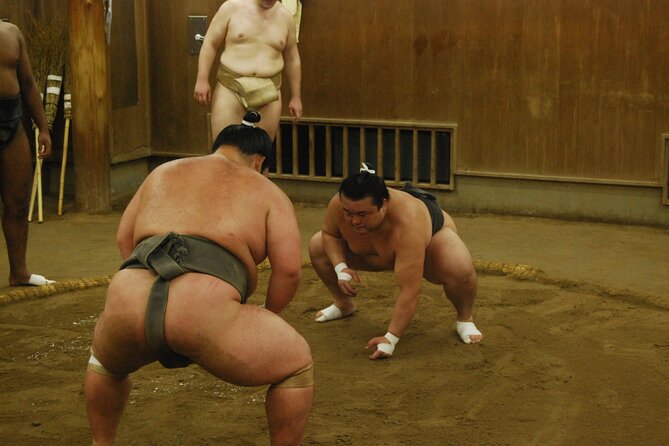
A sumo tournament gives you polished spectacle: formal entrances, a packed arena, loud support from the crowd, and bouts that last only a short time. A stable visit shows the work behind that spectacle. You watch wrestlers and apprentices repeat movements, build strength, and train under close direction.
That difference matters. At a tournament, your attention goes to the match. At the stable, you notice the preparation. The sounds are direct and physical. You hear bodies collide and the coach call out instructions. From a much shorter distance, you can see facial expressions and breathing that would disappear from ordinary arena seats.
I would choose this visit for anyone who wants to understand sumo as a daily discipline, not just a sporting event. It offers a look at the routine that keeps the sport going and helps pass it to future generations.
The stable is also a working place, not a theater designed for sightseeing. That makes the setting valuable, but it means you must adjust your behavior. The wrestlers are concentrating. You are there to observe, not to interrupt the session or create your own photo opportunity.
More Tokyo sumo experiences:
- Tokyo: Sumo Show and Dining Experience
★ 4.8 · 2,742 reviews - the SUMO show
★ 5.0 · 1,960 reviews - Tokyo Shinjuku Sumo Show & Experience with Photo
★ 5.0 · 1,750 reviews
What happens at the 8:30 am meeting
The experience begins at 8:30 am in Oshiage, in Tokyo’s Sumida City. The stated meeting point is Water section1-chōme-1-1 Oshiage, Tokyo 131-0045, and the activity returns to this same meeting point at the end.
The location is near public transportation, but you should still allow enough time to find the exact meeting place. Morning activities have little room for delay, and the training session follows the stable’s schedule rather than a flexible sightseeing timetable.
Your guide leads the group to the sumo stable and helps explain the setting. A special brochure is included, which is useful because sumo customs and training terms may be unfamiliar if this is your first close look at the sport.
The mobile ticket makes the booking simple. Confirmation is provided at booking, so keep the ticket available on your phone and check the meeting details before leaving for Oshiage.
Inside Ikazuchi Sumo Stable during practice
The visit takes place at the Ikazuchi Sumo Stable, described as one of the strong sumo stables in the area. You watch the wrestlers and their apprentices train for about an hour, with the total activity lasting around two hours.
The exact length deserves a little attention. The experience is advertised as approximately two hours, while the listed stable visit is about 1 hour and 30 minutes, including the practice and time around it. The training itself is described as one hour. In practical terms, plan your morning around the full stated duration rather than assuming you will be finished immediately after the practice ends.
The most memorable element is likely to be the sound. Sumo training is not silent stretching in a quiet gym. You hear the force of bodies colliding, the wrestlers’ breathing, and the coach’s strong voice. The tone can surprise you at first, especially if you expect a gentle demonstration for visitors.
That stern sound is part of the training environment. The coach’s instructions are aimed at the wrestlers, not at entertaining the group. The stable depends on trust between the coach and the rikishi who train there, and the strict atmosphere is part of how the practice works.
Your guide can help put those moments in context, but you should not expect a running commentary over every movement. The rules ask you to refrain from private conversation during the practice so the wrestlers and apprentices can stay focused. This is one of the rare times when saying less helps you see more.
The rules that protect the training session
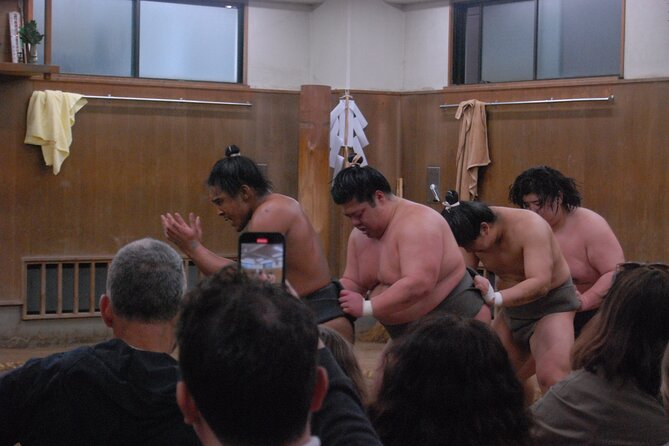
The etiquette is simple, but it is important. Do not carry on private conversations during practice. Even quiet chatter can distract people who are working under pressure, and the small room makes sound carry.
Video recording is not permitted inside the stable. Flash photography is also prohibited. Photographs without flash are allowed, so you can take still images while respecting the setting.
Food is not allowed during morning practice. That includes snacks, bread, rice balls, and similar items. You may bring your own drink, but it must have a lid. This is an easy detail to miss, so finish breakfast before you enter and bring only a closed drink if you need one.
These limits may feel strict compared with a normal sightseeing tour. I see them as a fair trade for access to a real practice session. The stable is giving you a chance to watch work that is usually closed to the public, and quiet, careful behavior helps keep that access possible.
More early morning tours in Tokyo:
- Tokyo: Sumo Morning Practice Viewing Tour
★ 4.8 · 570 reviews - Tokyo: Sumo Morning Training Visit
★ 4.4 · 370 reviews - Tokyo: Sumo Morning Practice Tour at Sumida City
★ 4.8 · 308 reviews - Tokyo Sumo Morning Practice Tour at Stable
★ 5.0 · 298 reviews
Photos and questions after the training
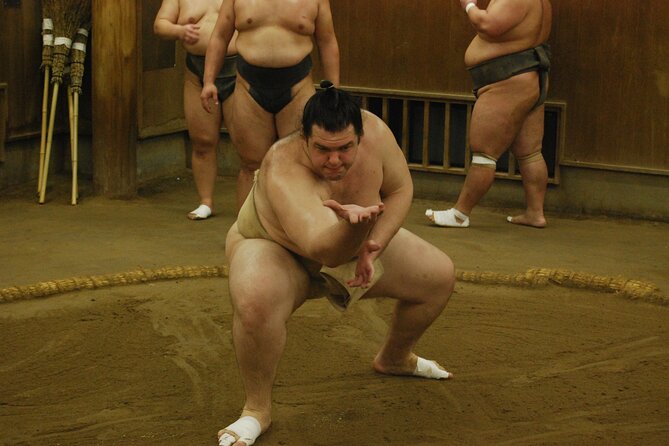
After the practice, you can take photos with the sumo wrestlers. You can also ask questions, which adds a human side to an otherwise formal observation.
The question period is especially useful for families and first-time visitors. One family-focused experience included children and found the question-and-answer portion a strong part of the morning. Kids may not follow every technical detail of practice, but meeting the wrestlers and being able to ask something directly can make the sport easier to understand.
You should remember that the photo and question time comes after practice. Do not treat the training period as a chance to request poses or start conversations. Wait until the guide indicates that the session has ended and the stable allows the next part to begin.
If you want to support the rikishi, you may leave a tip after practice. This is optional, not a required fee. Bring this into your decision only if you want to show appreciation in that way.
What the small group changes
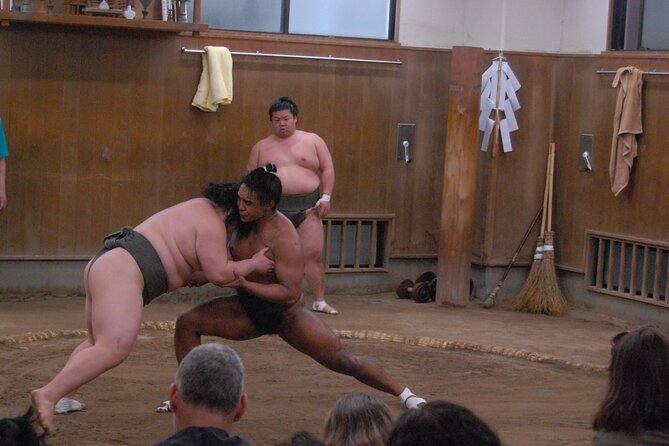
A maximum of 10 people is a useful limit for this kind of visit. A large group would be awkward in a training room, especially when everyone must remain quiet and keep their attention on the practice.
With fewer people, you have a better chance of hearing the guide’s explanations and participating in the question period. It also helps keep photography orderly after training. The group is still large enough that you should not expect unlimited one-to-one time with each wrestler, but it is much more controlled than a mass sightseeing stop.
The small size also makes the experience feel more serious. You are not being pushed through a photo line while a crowd gathers behind you. The stable remains the main focus.
That said, group size does not remove the need for patience. Practice is the reason you are there, and the schedule may not revolve around the group’s wishes. If you need constant activity, narration, or entertainment, this may feel slow. If you can sit quietly and watch, the format works well.
Is $82 a fair price?
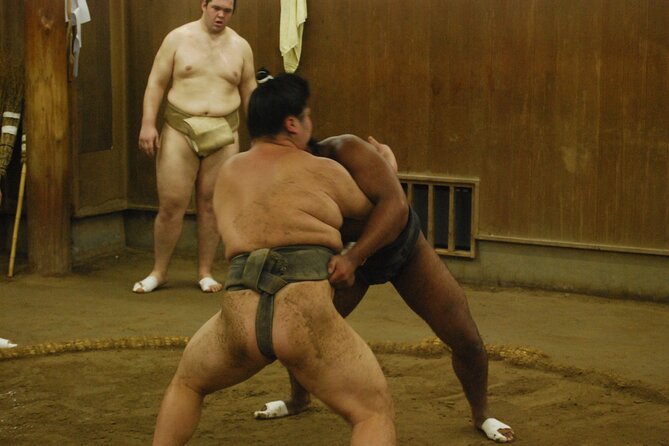
At $82, this is not the cheapest way to add sumo to a Tokyo itinerary. You are paying for access to a working stable, a guide, a special brochure, a small group, and the chance to meet wrestlers after practice.
The value depends on what you want. If you only need to see sumo once from a distance, a public tournament may offer more spectacle for your money. If you want to understand how wrestlers train and prefer a close, quiet setting, the stable visit gives you something a tournament cannot provide.
I think the price is easier to justify for first-time visitors who have limited time in Tokyo. The activity lasts only one morning, begins at 8:30 am, and returns to the meeting point. You get an unusual look at the sport without committing to a full tournament day.
It is also a better value for people who care about access and context. The included guide and brochure help you make sense of what you see, while the questions and photos provide a personal ending. The experience is not just a room where you watch exercise for an hour.
Still, keep expectations realistic. The $82 fee does not promise a public bout, a long conversation, or unrestricted photography. You are buying a respectful window into practice, not a private meeting with the stable.
Who will enjoy this morning most
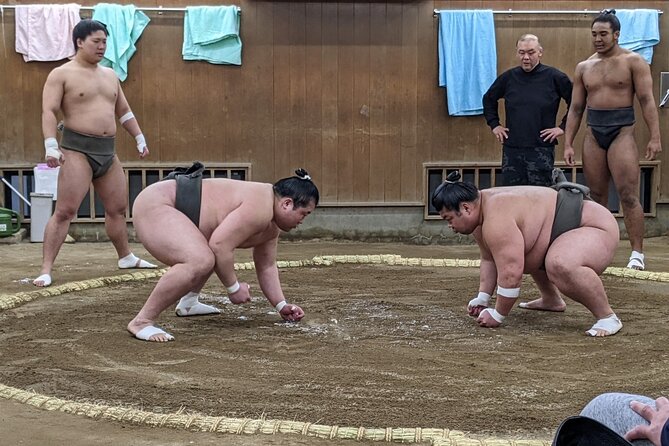
I would recommend the tour to several kinds of visitors:
- People who want an authentic look at sumo beyond the tournament arena.
- Families who value a short activity with a question period and photos.
- First-time Tokyo visitors who want a guided explanation of an unfamiliar tradition.
- Photography-minded visitors who are happy with still images and no flash.
- Anyone curious about the discipline, sounds, and routines of morning training.
It may be less suitable if you want to film the experience, eat during the visit, or talk freely while you watch. It also may not suit someone who dislikes early starts or quiet observation.
The activity states that most people can participate, but the supplied details do not describe specific accessibility arrangements. If you have mobility or other access needs, ask the provider before booking rather than assuming the stable will meet them.
Timing, cancellation, and practical planning
The start time is fixed at 8:30 am. Since the activity takes place during morning practice, punctuality matters more than it does on a flexible walking tour. Use public transportation to reach Oshiage and allow time to locate the meeting point.
Free cancellation is available if you cancel at least 24 hours before the start time. Cancellations within 24 hours are not refunded, and changes inside that period are not accepted. The cut-off uses Tokyo local time.
The activity also requires a minimum number of participants. If that minimum is not reached and the provider cancels, you will be offered another date or experience, or receive a full refund.
Bring a phone for the mobile ticket, a drink with a lid if needed, and a quiet attitude. Eat before you arrive. Most of the useful preparation is behavioral rather than physical: arrive on time, avoid private conversation, leave video equipment off, and wait for permission before taking photos with the wrestlers.
Should you book this Ikazuchi stable visit?
Book it if you want the close-up reality of sumo practice: the breathing, the heavy impacts, the firm coaching, and the disciplined silence. The chance to ask questions and take photos afterward makes the morning more personal, while the group limit of 10 keeps the visit manageable.
Skip it if your main goal is a full tournament atmosphere or if you need to record everything. The rules are strict, and the practice is not staged for tourists.
For most people who want a focused introduction to sumo in Tokyo, I think the $82 cost is reasonable, especially because this kind of stable access is not part of an ordinary city visit. Go early, follow the rules, and treat the session as a working practice rather than a show. That is where the value lies.
FAQ
Where does the sumo morning practice tour begin?
It begins at Water section1-chōme-1-1 Oshiage, Sumida City, Tokyo 131-0045, Japan.
What time does the tour start?
The meeting time is 8:30 am.
Where does the activity finish?
The activity ends back at the meeting point.
How long does the experience last?
The experience lasts approximately two hours. The stable visit is listed as about 1 hour and 30 minutes, with around one hour spent watching practice.
How many people can join?
The activity has a maximum of 10 participants.
Can I take photographs inside the sumo stable?
Yes, photographs without flash are allowed.
Can I record video during practice?
No. Video recording is prohibited inside the sumo stable.
Can I eat inside the stable?
No. Snacks, bread, rice balls, and other food are not allowed during morning practice.
Can I bring a drink?
Yes, but your drink must have a lid.
Can I ask the wrestlers questions?
Yes. After practice, you can ask questions and take photographs with the sumo wrestlers.
Is a guide included?
Yes. A tour guide and a special brochure are included.
What happens if I need to cancel?
You receive a full refund if you cancel at least 24 hours before the experience starts. Cancellations or changes made less than 24 hours before the start time are not refunded or accepted.
Newly reviewed around Tokyo
- Tokyo Asakusa:Calligraphy & Make T-shirt Activity★ 5.0 · 62 reviews
- Intercity Shuttle, Tokyo to Haneda /Narita /Yokohama /Makuhari★ 5.0 · 5 reviews
- 1 Hour Travel around Tokyo with a Professional Photographer★ 5.0 · 3 reviews
- Travel Tokyo with Your Own Personal Photographer★ 5.0 · 43 reviews
- Train in Samurai Swordsmanship and Defeat the Demon in Tokyo★ 5.0 · 5 reviews
- Shuttle Van 6hr Tokyo Tour to-and-from Tokyo, Yokohama and Narita★ 5.0 · 9 reviews
- Kickboxing & Body Training with EX-Pro Fighter★ 5.0 · 4 reviews
- Traditional Japanese Knife Sharpening Class★ 5.0 · 18 reviews
Tokyo Sumo Experiences, compared.
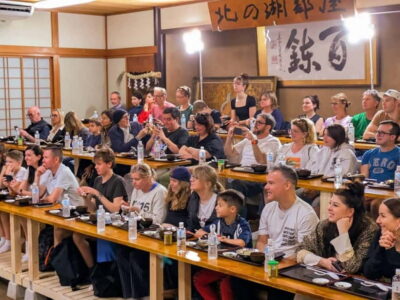
Tokyo Shinjuku Sumo Show & Experience with Photo
Read our review →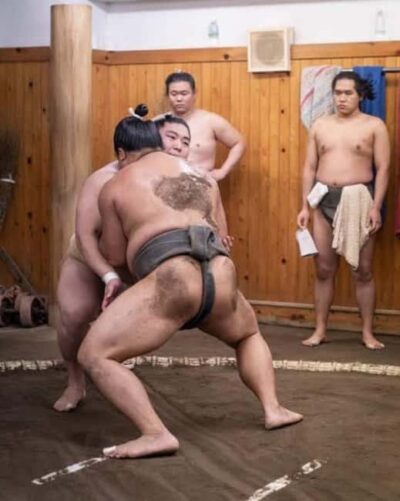

Luxury Sumo Show Experience & Japanese cuisine & Drink
Read our review →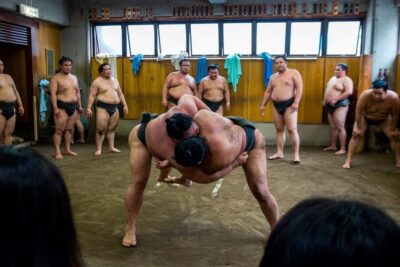
Tokyo Sumo Experience: Chanko & Mochi with a Former Pro
Read our review →
Ultimate Sumo Tournament: Tokyo, Osaka, Nagoya, Fukuoka
Read our review →Browse the lists this tour appears in