
Reviewed · TOKYO WALKING TOURS
The Dark Side of Tokyo – Night Walking Tour Shinjuku Kabukicho
Kabukicho is not simply Tokyo’s red-light district. It is a maze of neon, tiny bars, adult businesses, shrines, restaurants, and carefully observed local rules. This walking tour helps you read that maze without wandering into an unpleasant corner. I especially like the small-group format, capped at 12 people, and the way the route mixes famous sights with social history.
I also like using this as a first-night activity. Guides such as Polina, Gray, Danny, Loc, and Kumi are praised for clear English, humor, and practical explanations. The main drawback is that the tour ends in Shinjuku 3 Chome rather than returning to the East Exit, and rain or heavy crowds can make it harder to keep the group together.
Key points
- Shinjuku after dark: See Kabukicho’s neon streets when the district is fully awake.
- A social history lesson: Learn how nightlife, adult businesses, local customs, and Japanese law fit together.
- Several districts in one walk: The route includes Omoide Yokocho, Kabukicho, a narrow bar quarter, a shrine, and the LGBTQI+ area.
- Small groups: The maximum group size is 12, with some departures much smaller.
- Useful first-night orientation: Finish near Shinjuku 3 Chome with ideas for food, drinks, and further exploring.
- Bring your own budget: The guide fee is included, but dinner, drinks, and other purchases cost extra.
Why Kabukicho Makes Sense With a Guide
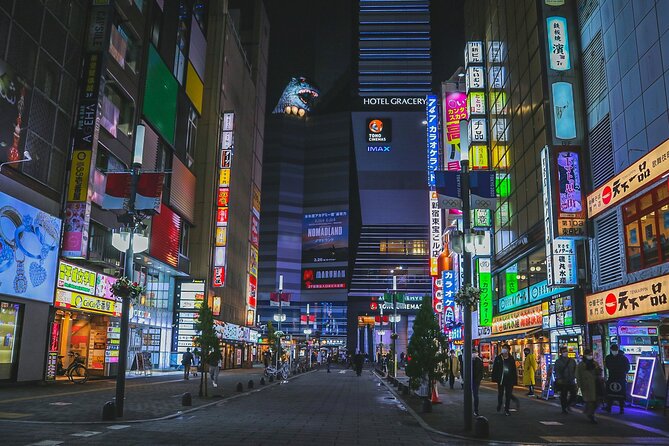
Tokyo is famous for being orderly, but Shinjuku after dark can still feel like sensory overload. Signs compete for your attention. Narrow entrances lead to places you cannot easily judge from the street. Some streets are packed with people, while others feel surprisingly quiet.
That is where this tour earns its keep. You are not just being marched from one neon sign to another. The guide explains what the districts are for, how the nightlife operates, and which areas are best treated with caution. Several guides, including Polina, Gray, Danny, and Loc, are praised for answering questions clearly and keeping the mood friendly rather than grim.
The dark side here is less about danger than about subjects many visitors do not encounter on a standard Tokyo tour. You hear about the adult entertainment industry, local traditions, hotels, food, nightlife customs, and the legal boundaries that shape the area. The result is a more useful picture of Tokyo than you get from a postcard view of Shibuya Crossing.
The walk lasts about two hours. That is long enough to cover several distinct areas without turning into an exhausting all-night expedition. It also leaves you free to continue into Shinjuku afterward.
More things to do in Shinjuku:
- Tokyo: Shinjuku Food Tour (13 Dishes at 4 Local Eateries)
★ 5.0 · 6,603 reviews - Tokyo Bar Hopping Tour in Shinjuku (All-You-Can-Drink + Dinner)
★ 5.0 · 3,587 reviews - Tokyo: Shinjuku Food Tour (15 Dishes and 4 Eateries)
★ 4.9 · 2,033 reviews
Meeting at Shinjuku East Exit
The starting point is the police box at Shinjuku Station East Exit, listed as 3 Chome, 38-1 Shinjuku. Be precise here. A police box is a small neighborhood police station, not a telephone box. One person had trouble finding the meeting point for exactly that reason.
Shinjuku Station is enormous, so give yourself time to get to the East Exit. Your mobile ticket is accepted, and confirmation is provided when you book. The tour operates near public transportation, which makes it easy to reach and simple to combine with an evening in central Tokyo.
The guide fee is included in the $25 price. Food and drinks are not. That separation is sensible because it keeps the tour affordable and lets you choose your own restaurant or bar later. At $25, I see this as a good-value orientation walk, especially if you are new to Tokyo and want context before spending an evening on your own.
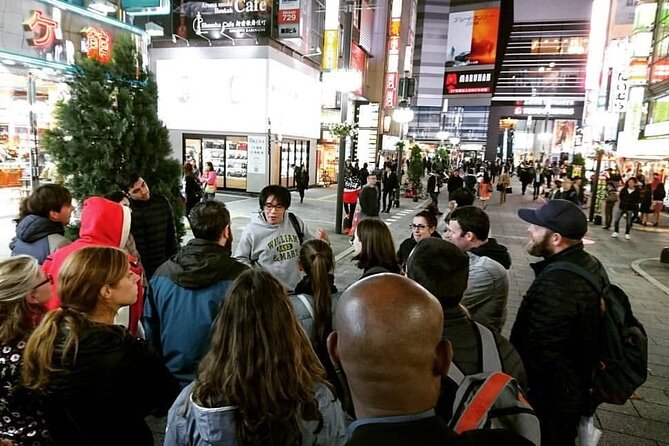
The group can have up to 12 people, though some departures are much smaller. One group had only four people, which allowed plenty of room for questions. A smaller group also matters on narrow streets, where a large crowd would block the pavement and make conversation difficult.
Omoide Yokocho and the Famous Drinking Alley
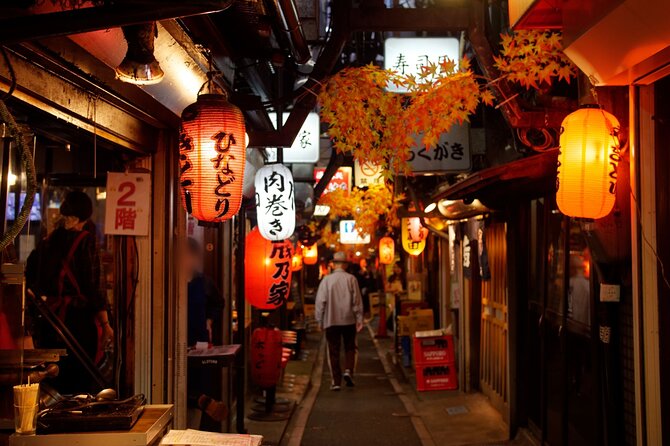
One early stop is Omoide Yokocho, the famous drinking alley near Shinjuku Station. Its narrow lanes and compact food businesses give you a sharp contrast to the wide station complex nearby. This is the kind of place that can look simple at first glance, but a guide gives it context.
You can expect to hear about local food and the role of small drinking spots in Tokyo nightlife. The tour does not include dinner, so you should not expect a meal here. Instead, treat the stop as a preview of where you might return after the walk.
That arrangement has an advantage. You can listen without rushing through a fixed meal, then decide later if a particular restaurant or alley appeals to you. Guides have also offered suggestions for foods and drinks to try, which can help you choose after the tour ends.
Omoide Yokocho is narrow, so stay close to the guide. This is one section where the small-group limit makes a real difference.
Kabukicho, Tokyo’s Biggest Nightlife District
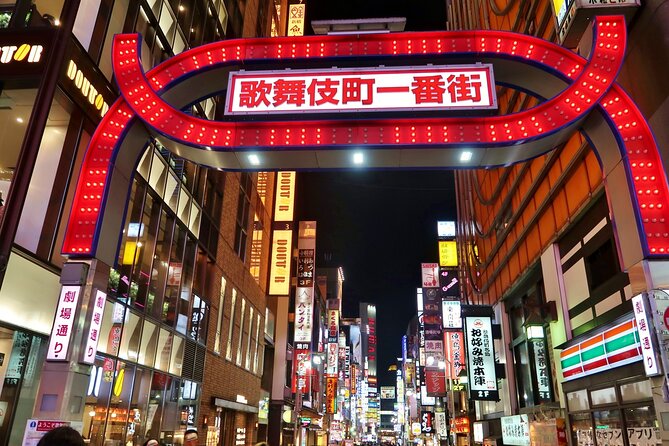
Kabukicho is the tour’s main stage. After sunset, hundreds of neon signs turn the streets into a wall of color and information. The visual effect is memorable, but the guide’s explanation is more valuable than the lights themselves.
You learn how the district is organized and how different kinds of businesses operate side by side. The tour also deals with the adult entertainment industry and the ways workers and businesses operate within Japanese law. This is handled as a cultural and social subject, not as a sales pitch.
That distinction matters. You are not being encouraged to enter businesses or spend money. You are being shown how to understand a district that can be confusing if all you see are signs and crowds. A guide can point out what is appropriate for a visitor and help you avoid straying into areas you would rather not visit.
The subject matter is adult in nature, so this is not the best choice for anyone looking for a gentle sightseeing walk. It suits adults who want an honest account of Tokyo’s nightlife, including the less polished parts.
More Tokyo walking tours:
- Tokyo Tsukiji Fish Market Food and Culture Walking Tour
★ 5.0 · 3,184 reviews - Tokyo: Imperial Palace and Shogun Historical Walking Tour
★ 5.0 · 2,251 reviews - Tokyo: Shinjuku Local Bar and Izakaya Guided Walking Tour
★ 4.9 · 1,794 reviews - Tokyo: Tsukiji Fish Market Food and Walking tour
★ 5.0 · 1,724 reviews
Godzilla Head and the Neon Show
The route includes the famous Godzilla Head, where you can see his show. This is the most obvious pop-culture stop on the walk, and it gives the evening a lighter break from discussions of law, nightlife, and the adult industry.
You will have a chance to see one of Kabukicho’s best-known visual landmarks in its proper setting. The guide can also help place it within the district, rather than treating it as an isolated photo stop.
Do not expect a long attraction visit or a full entertainment program. It is one part of a walking route, so the value comes from seeing the landmark while moving through the wider neighborhood. Have your phone ready, but listen too. The stop is brief compared with the time spent understanding the streets around it.
The Narrow Bar District
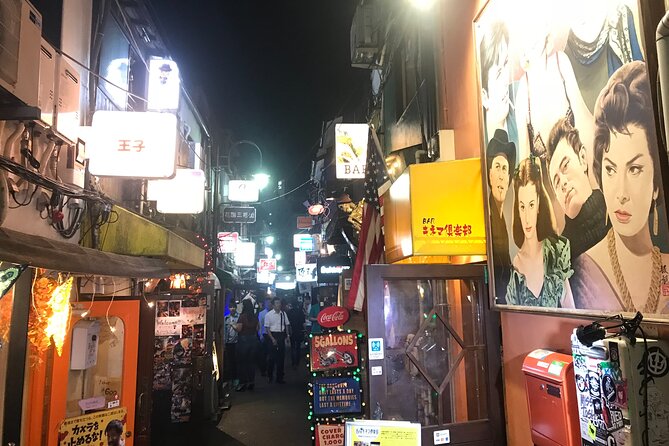
Another stop takes you into a narrow bar district. This is where the scale of Shinjuku changes again. Instead of broad streets and large signs, you encounter compact lanes and tiny establishments.
The guide helps explain why these spaces feel different and how they fit into the area’s nightlife. You can see the outside of the district without having to commit to a bar or pay for a drink. That is helpful if you are curious but cautious.
The narrow lanes also bring a practical issue: it is easier to lose sight of a guide. In rain, one person found the group harder to follow among other walking tours and crowds. A colorful sign or raised marker would help, but for now your best move is simple. Stay near the guide, especially when crossing from one lane to another.
A Shinto Shrine in the Middle of the Nightlife
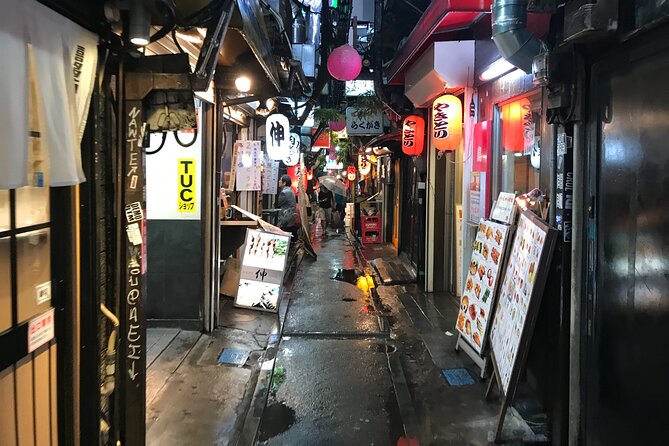
The itinerary also includes a Shinto shrine in Shinjuku. This stop gives the route a needed change of pace. You move from neon, bars, and adult businesses to a religious site with a quieter feel.
The contrast is one of the tour’s strongest features. Tokyo nightlife does not exist in a separate world. Traditional places remain part of the same urban fabric, sometimes only a short walk from noisy entertainment streets. Seeing both in one evening helps you understand how different parts of city life sit beside each other.
The shrine stop also keeps the tour from becoming narrowly focused on the provocative side of Kabukicho. You get a broader view of the neighborhood, including its traditions and everyday cultural setting.
Tokyo’s LGBTQI+ Quarter
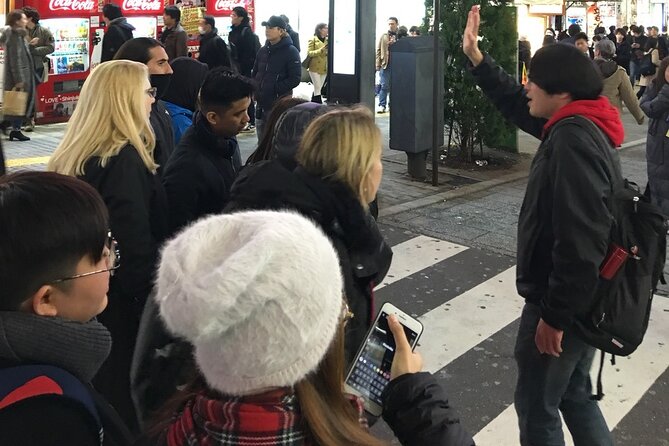
The walk continues to the LGBTQI+ district, often called Gay Town, described as Japan’s biggest LGBTQI+ town. This section adds another important layer to the evening. It shows that Shinjuku nightlife is not one single scene. Different communities and types of entertainment occupy nearby streets, each with its own character.
The guide provides cultural context and helps you see the district respectfully. You should approach this part as a neighborhood introduction, not as a bar crawl. Food and drinks remain separate from the tour price, and the walk itself focuses on explanation and orientation.
For visitors who would not otherwise know where this area is or how it fits into Shinjuku, the stop is especially useful. It broadens the tour beyond the usual Kabukicho stereotypes and gives you more options for exploring later.
The Guides Make the Difference
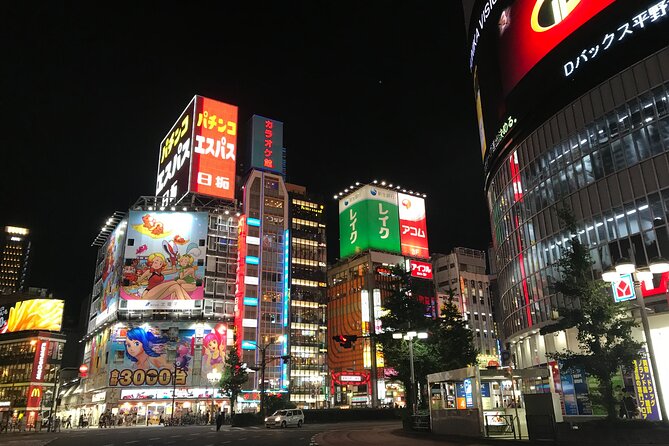
The strongest part of this experience is the guiding. Polina is described as professional, clear, enthusiastic, and willing to share the juicy details without losing control of the group. Gray is praised for humor, an inclusive approach, and strong explanations of local history. Danny is repeatedly described as friendly, entertaining, and easy to understand.
Loc is noted for answering questions well and giving the walk a sense of security. Kumi is described as informative and funny. Daniel is praised for explaining the different parts of Shinjuku and suggesting foods and drinks. The exact guide will depend on your departure, but the pattern is clear: the tour works best when the guide turns unfamiliar streets into a readable story.
This is also why the experience can be useful for a first night in Tokyo. You get a mental map of Shinjuku, learn which areas interest you, and can return later with more confidence.
What the $25 Price Really Covers
At $25 per person, you are paying for access to local explanation rather than attractions. There is no included dinner, drink, or admission ticket. If you compare it with a paid meal tour, the price is modest, but you will need additional money if you want to eat or drink afterward.
I think the value is strongest for first-time visitors. Without a guide, you can certainly walk through Kabukicho and see the signs. You will not necessarily understand the local rules, the history of the districts, the adult entertainment economy, or the relationship between the nightlife streets and the shrine.
The small group adds value. A maximum of 12 people keeps the walk personal, and a group of four can feel almost like a private introduction. The tour is also a practical way to avoid spending your first evening lost or uncomfortable.
Timing, Weather, and Walking Comfort
The tour takes about two hours and is conducted on foot. Wear comfortable shoes and keep your phone charged for the mobile ticket and photos. The route includes narrow areas and crowded streets, so stay alert when the group moves.
The experience requires good weather. If poor weather cancels the tour, you are offered another date or a full refund. For a full refund when you cancel yourself, you must do so at least 24 hours before the start time. Changes or cancellations inside that window are not accepted.
The walk is suitable for most people, and service animals are allowed. Still, the practical challenge is keeping together in rain or among other groups. If you are short, moving slowly, or easily separated from a group, stay near the guide from the start.
Who Should Book This Night Walk?
I would choose this tour if you want more than a standard Tokyo night view. It is a strong fit for first-time visitors, solo visitors who want a safer orientation, and curious adults who want to understand the social side of Shinjuku.
It also suits people who dislike rigid sightseeing. You are not spending the evening inside a museum or following a long list of monuments. You are walking through working neighborhoods and hearing how they function.
I would think twice if you want a quiet cultural tour, a food-focused experience, or a full evening of included entertainment. Dinner and drinks cost extra, and the adult nightlife subject matter is central to the tour. The route is informative and sometimes playful, but it is not a polished postcard version of Tokyo.
Should You Book the Dark Side of Tokyo Tour?
Book it if you want a clear introduction to Shinjuku’s nightlife before exploring on your own. The $25 price is fair, the route covers several very different districts, and the guides add the context you cannot get from English signs alone.
Keep the ending in mind. You finish around Shinjuku 3 Chome, not back at the East Exit. Plan your next stop from there, perhaps using the guide’s suggestions for food or drinks. If that small logistical point does not bother you, this is a useful, unusual way to spend your first evening in Tokyo.
FAQ
How long does the Dark Side of Tokyo tour last?
The walking tour lasts approximately two hours.
How much does the tour cost?
The price is $25 per person.
What is included in the price?
The tour price includes the tour guide fee.
Are food and drinks included?
No. Dinner, food, and drinks cost extra.
Where does the tour start?
The tour starts at the police box by Shinjuku Station East Exit, at 3 Chome, 38-1 Shinjuku, Shinjuku City, Tokyo.
Where does the tour finish?
The tour finishes around the Shinjuku 3 Chome area.
What places are included on the route?
The route includes Omoide Yokocho, Kabukicho, Godzilla Head, a narrow bar district, a Shinto shrine in Shinjuku, and the LGBTQI+ district often called Gay Town.
How large is the group?
The tour has a maximum of 12 participants.
Can I cancel for a refund?
Yes. You can receive a full refund if you cancel at least 24 hours before the experience starts. If poor weather causes the provider to cancel, you are offered another date or a full refund.
More Tokyo night tours
- Tokyo Night Foodie Tour in Shinjuku – Seasonal Sushi, Wagyu Beef
★ 5.0 · 1,161 reviews - Tokyo: Daikoku JDM Car Meet & Night Car Culture Tour
★ 4.8 · 626 reviews - Tokyo After 5: Authentic Japanese Food & Drink Night Tour
★ 4.5 · 560 reviews - Tokyo: Samurai Entertainment Night Show in Kanda Shrine
★ 4.6 · 417 reviews
Newly reviewed around Tokyo
- Tokyo Asakusa:Calligraphy & Make T-shirt Activity★ 5.0 · 62 reviews
- Intercity Shuttle, Tokyo to Haneda /Narita /Yokohama /Makuhari★ 5.0 · 5 reviews
- 1 Hour Travel around Tokyo with a Professional Photographer★ 5.0 · 3 reviews
- Travel Tokyo with Your Own Personal Photographer★ 5.0 · 43 reviews
- Train in Samurai Swordsmanship and Defeat the Demon in Tokyo★ 5.0 · 5 reviews
- Shuttle Van 6hr Tokyo Tour to-and-from Tokyo, Yokohama and Narita★ 5.0 · 9 reviews
- Kickboxing & Body Training with EX-Pro Fighter★ 5.0 · 4 reviews
- Tokyo History: Sensoji Temple & Asakusa District Private Tour★ 5.0 · 28 reviews
Tokyo Walking Tours, compared.
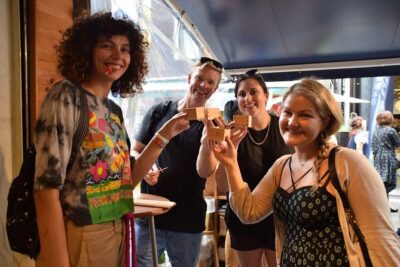
Tokyo Tsukiji Fish Market Food and Culture Walking Tour
Read our review →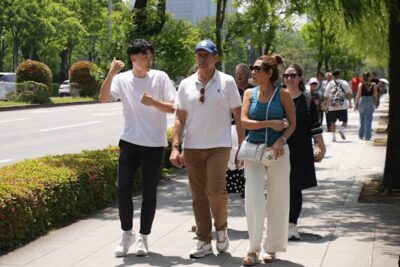
Imperial Palace and Shogun Historical Walking Tour
Read our review →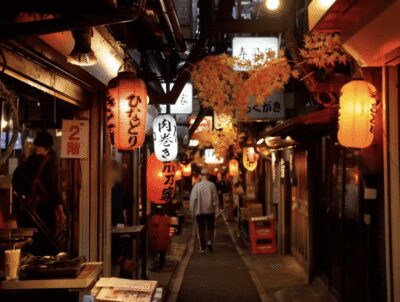
Shinjuku Local Bar and Izakaya Guided Walking Tour
Read our review →
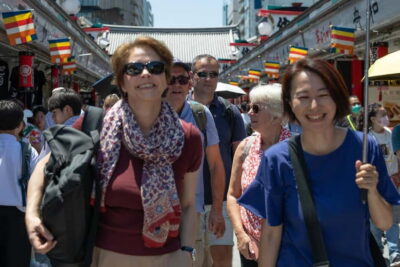
Asakusa Walking Tour with Sensoji Temple Visit
Read our review →
Tokyo Castle & Imperial PalaceーShogun Walking Tour
Read our review →
Browse the lists this tour appears in