
Reviewed · TOKYO TRADITIONAL CRAFT WORKSHOPS
Sumi-e (ink painting) experience in Tokyo
Sumi-e gives you a quiet, hands-on way to meet a classic Japanese art form without spending half a day in a museum. In about an hour, you learn the tools, practice basic brushwork, and create a bamboo painting with guidance from the instructor.
I like the small maximum group of nine, which should leave room for questions, and I like that your fee includes the calligraphy tools and instruction. The five-minute walk from JR Asagaya Station also keeps the meeting simple. The main drawback is that you must choose your art style by email after booking, and one poor experience involved a guest missing the class after having trouble finding the meeting point.
Key points to know before booking
- Sumi-e focuses on bamboo: You learn basic tools and brush methods while creating a simple bamboo painting.
- Four art choices are available: Pick ink painting, watercolor, ballpoint pen drawing, or colored pencil work.
- The session lasts about 60 minutes: It is short, direct, and easy to fit into a Tokyo day.
- Meet at JR Asagaya Station: Gather at the ticket gate five minutes before the start, then walk about five minutes to the venue.
- The group is capped at nine people: This is a better setup for questions than a large workshop.
- The price is $65.15 per person: The value depends on how much you want personal instruction and a compact cultural activity.
Why Sumi-e bamboo makes a good first art lesson
Sumi-e, or Japanese ink painting, is built around controlled brushwork, simple shapes, and the tone of the ink. Bamboo is a sensible subject for beginners because it can be reduced to a few key forms: stalks, leaves, and the spaces between them.
You are not being asked to produce a museum piece in one hour. The useful goal is to understand how the tools behave and how a few strokes can suggest a plant. That makes this more than a basic craft session, but less demanding than a full art course.
The class also teaches you how to look at Sumi-e. That detail matters. The art is not only about copying bamboo. You learn to notice the placement of strokes, the balance of empty space, and the way ink creates different shades. Even a short introduction can change how you view Japanese brush paintings afterward.
If you want a keepsake made by your own hand, this has a clear advantage over a standard sightseeing stop. You leave with a practical memory of Tokyo, not just another photograph. Still, the supplied details do not promise a formal exhibition-quality finished piece, so keep your expectations sensible.
More Tokyo craft workshops:
- Tokyo Shinjuku Chopsticks Making Class
★ 5.0 · 1,763 reviews - Chopstick Making Workshop in Ginza
★ 4.8 · 1,366 reviews - Kintsugi Experience: Art of Golden Joinery in Tokyo
★ 5.0 · 467 reviews
Four ways to spend the 60-minute session
You can choose among several art activities, and that choice affects the character of the class. After your booking is confirmed, you receive an email asking which experience you want. Reply before the activity so the instructor can prepare the right lesson.
Sumi-e ink painting
For the Sumi-e option, the instructor explains the tools before guiding you through a basic bamboo painting. The course includes calligraphy tools, so you do not need to arrange painting materials separately.
This is the best choice if you want a direct connection to Japanese artistic tradition. Bamboo is also more forgiving than a highly detailed subject. Your work will rely on bold strokes and spacing rather than painstaking realism.
The short format is both a strength and a limit. You can learn the basic approach in an hour, but you will not have much time for repeated practice. If you tend to work slowly, focus on understanding the brush technique rather than trying to perfect every leaf.
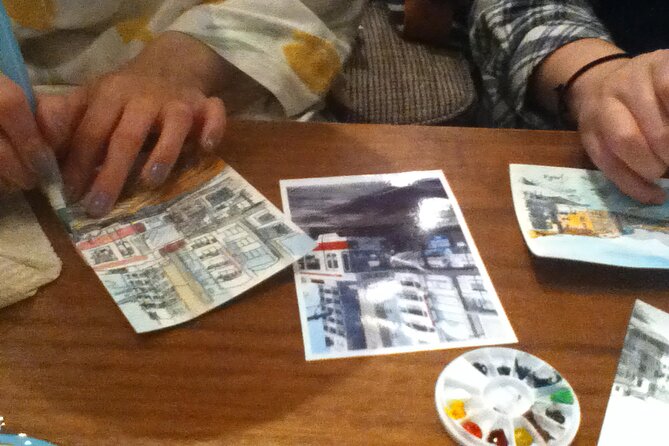
Watercolor painting
The watercolor option uses a Japanese scenery photograph selected by the instructor, with Mount Fuji given as the example subject. You are taught how to paint your own favorite scenery.
This may suit you better if you prefer color and a more familiar painting method. It also gives you a chance to work from a scenic subject rather than the spare black-and-white style of ink painting.
The description does not specify the exact paper size, number of colors, or final materials for watercolor. You should choose it for the teaching and the activity itself, not because you expect a detailed studio course.
A completely different kind of day in Tokyo:
- Mt Fuji and Hakone 1-Day Bus Tour Return by Bullet Train
★ 5.0 · 26,383 reviews - 1-Day Tokyo Bus Tour
★ 5.0 · 14,250 reviews - Tokyo: teamLab Planets TOKYO Digital Art Museum Entry Ticket
★ 4.6 · 9,779 reviews - Mt Fuji & Hakone Cruise, Drum Show Bullet Train 1 Day from Tokyo
★ 4.0 · 7,413 reviews
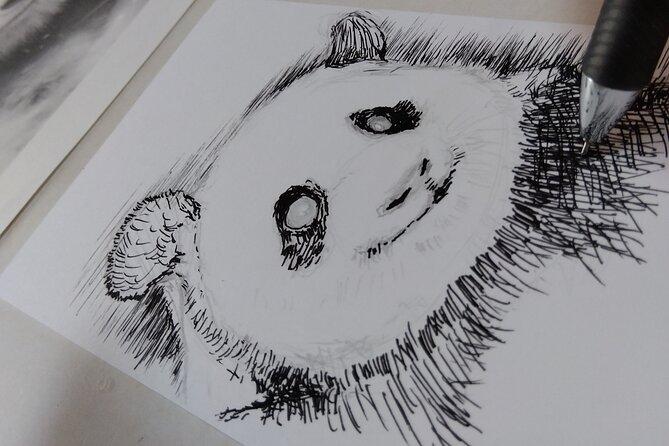
Ballpoint pen drawing
For ballpoint pen work, you draw from a Japanese scenery photograph chosen by the instructor. The focus is on shortcuts for a rough finish.
That makes this option appealing if you like sketching but do not consider yourself an artist. Ballpoint drawing can be practical for travel because the tools are simple, and a rough style can look intentional rather than unfinished.
The lesson appears aimed at producing a quick drawing, not a highly polished illustration. If you want a casual, low-pressure activity, that can be a plus. If you want instruction in advanced pen shading, this one-hour session may feel brief.
Colored pencil drawing
The colored pencil option teaches realistic drawing on postcard-size paper. The instructor shows you how to build a more lifelike image with colored pencils.
The postcard format is a useful detail. It gives you a small, manageable surface and makes the finished work easy to carry in your luggage. This is likely the most suitable option if you enjoy careful detail and want a compact souvenir.
Again, an hour is not a long time for realistic drawing. You should expect an introduction to the method and a modest finished study rather than a fully developed artwork.
Meeting at Asagaya Station without confusion
The meeting point is the ticket gate at JR Asagaya Station. You are asked to arrive five minutes before the meeting time, and the group then walks together for about five minutes to the venue.
Asagaya is in Suginami City, west of central Tokyo. The exact meeting address provided is 3-chome-36-2 Asagayaminami, Suginami City, Tokyo 166-0004, Japan. Keep the station and street address available on your phone before you leave.
This is a simple arrangement on paper, but do not treat the five-minute arrival window casually. One poor experience involved a participant missing the class after having difficulty finding the way. The communication afterward was also judged disappointing, with the instructor sending a brief message asking why the participant had not arrived. The provider apologized and said the message was not intended to sound cold.
My practical advice is straightforward: check the station location in advance, arrive early, and make sure you know which ticket gate is intended. Because the cancellation policy is strict, getting lost can be costly. The experience is near public transportation, but the supplied details do not provide a detailed map or landmarks for the walk.
Pickup is listed as available, yet the stated meeting procedure is still to meet at the JR Asagaya Station ticket gate. Confirm the exact arrangement by email if you are expecting pickup rather than station gathering.
What happens during the hour
The activity follows a compact sequence. First, everyone gathers at the station. The group then walks together to the venue, which takes about five minutes.
Once inside, the instructor explains how to use the tools and offers tips for producing good strokes. For Sumi-e, this means learning the basic brush and ink approach before attempting the bamboo. For the other options, the instructor introduces the selected drawing method and subject.
The main work period is hands-on. You actually draw or paint rather than simply watch a demonstration. The instructor chooses the Japanese scenery photo for the watercolor and ballpoint options, while the Sumi-e lesson centers on bamboo. Colored pencil work is done on postcard-size paper.
The final part includes questions and answers. That is useful in a short class because you can ask about a stroke, a tool, or the way to finish your piece while the instruction is still fresh.
The one-hour schedule keeps the activity easy to add before dinner or between other plans. At the same time, it leaves little room for delays. If the group starts late or you need extensive individual help, the practical work period may feel compressed.
What the $65.15 price really covers
At $65.15 per person, this is not a bargain-basement art activity. The value comes from the combination of a guide, prepared tools, a structured lesson, and a small group capped at nine people.
You are paying for instruction as much as for supplies. If you would otherwise spend time finding Sumi-e materials, learning the basics alone, and trying to locate a suitable workshop, the fixed format can make sense. It also gives you a scheduled cultural activity with a finished piece to take away.
The price is harder to justify if you only want to make a quick drawing and do not care about instruction. Tokyo offers many free visual experiences, and an hour of casual sketching with your own supplies would cost far less. This activity earns its price when you value a guide who explains the tools and corrects your approach.
Group discounts are listed, though no discount amount is provided. Ask about the current terms if you are booking for several people. Travel expenses are not included, so you must pay for transportation to and from Asagaya Station.
Who will get the most from this class
I would recommend this for a first-time visitor who wants an activity with a clear Japanese connection but does not want a long formal lesson. It also works for couples, families, and small groups who want to make something together.
The choice of four art styles broadens the appeal. One person can choose Sumi-e while another prefers watercolor, ballpoint, or colored pencil, although you should confirm how mixed selections are handled when booking as a group.
The class may suit you especially well if you enjoy:
- Short creative activities with a fixed one-hour schedule
- Hands-on cultural experiences rather than passive sightseeing
- Small groups and a chance to ask questions
- Portable artwork, especially the postcard-size colored pencil option
- Trying a Japanese art form without prior experience
I would be more cautious if you need a highly detailed lesson, a long practice period, or a guaranteed finished masterpiece. The information supports a beginner introduction, not an advanced workshop.
The communication details you should handle early
Confirmation is sent within 48 hours of booking, subject to availability. After confirmation, you receive an email asking you to choose ink painting, watercolor, ballpoint pen painting, or another listed art option.
The wording around the choices is slightly inconsistent. The overview first discusses Sumi-e, watercolor, ballpoint pen, and colored pencil, while the booking instructions specifically mention ink painting, watercolor painting, or ballpoint pen painting. If colored pencil is your preference, state that clearly in your reply and make sure the provider confirms it.
The activity is non-refundable and cannot be changed for any reason. That makes early planning important. Do not book until you know which day you can attend and which art style you want.
The experience is operated by Shuminavi Inc. No instructor name is provided, so you should not expect to select a particular teacher. The advertised satisfaction figure is 90 percent, with a rating of 4.6 from 10 reviews. That is encouraging, but the small number means you should pay close attention to the meeting instructions and the short class length.
Should you book the Asagaya art experience?
Book it if you want a compact, guided introduction to Japanese art and like the idea of taking home something you made yourself. Sumi-e bamboo is the clearest choice for a traditional Tokyo connection, while watercolor, ballpoint, and colored pencil give you room to choose a style that feels more comfortable.
I would book only after confirming your art choice and meeting details by email. Arrive early at the JR Asagaya Station ticket gate, and remember that the strict cancellation rule leaves little room for a missed start.
Skip it if you want a long, technical art course or if $65.15 feels high for a one-hour activity. For the right person, though, the short lesson, included tools, small group, and chance to learn how to see Sumi-e make this a worthwhile break from Tokyo’s usual sightseeing route.
FAQ
How long does the Sumi-e experience last?
The activity lasts approximately 60 minutes.
Where do I meet the group?
You meet at the ticket gate of JR Asagaya Station, at 3-chome-36-2 Asagayaminami, Suginami City, Tokyo 166-0004, Japan.
How early should I arrive?
You should arrive at the JR Asagaya Station ticket gate five minutes before the meeting time.
How far is the venue from the station?
The group walks together from the station to the venue, and the walk takes about five minutes.
Can I choose an activity other than Sumi-e?
Yes. The available choices include Sumi-e ink painting, watercolor painting, ballpoint pen drawing, and colored pencil drawing. You are contacted by email after confirmation to choose your preferred activity.
Are tools included?
Calligraphy tools and a guide are included. Travel expenses are not included.
Can I cancel or change my booking?
No. The experience is non-refundable and cannot be changed for any reason.
Newly reviewed around Tokyo
- Tokyo Asakusa:Calligraphy & Make T-shirt Activity★ 5.0 · 62 reviews
- Intercity Shuttle, Tokyo to Haneda /Narita /Yokohama /Makuhari★ 5.0 · 5 reviews
- 1 Hour Travel around Tokyo with a Professional Photographer★ 5.0 · 3 reviews
- Travel Tokyo with Your Own Personal Photographer★ 5.0 · 43 reviews
- Train in Samurai Swordsmanship and Defeat the Demon in Tokyo★ 5.0 · 5 reviews
- Shuttle Van 6hr Tokyo Tour to-and-from Tokyo, Yokohama and Narita★ 5.0 · 9 reviews
- Kickboxing & Body Training with EX-Pro Fighter★ 5.0 · 4 reviews
- Traditional Japanese Knife Sharpening Class★ 5.0 · 18 reviews
Tokyo Traditional Craft Workshops, compared.
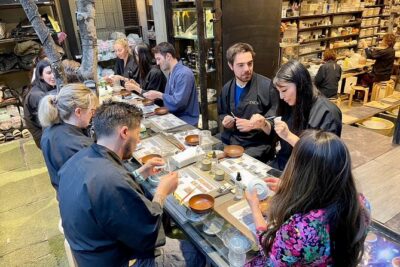
Kintsugi Experience: Art of Golden Joinery in Tokyo
Read our review →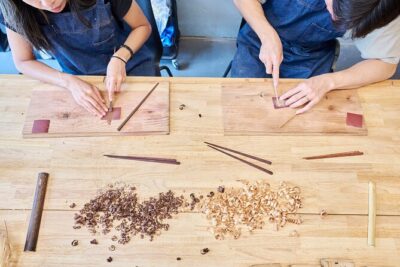

Authentic Pure Gold Kintsugi Workshop with Master Taku in Tokyo
Read our review →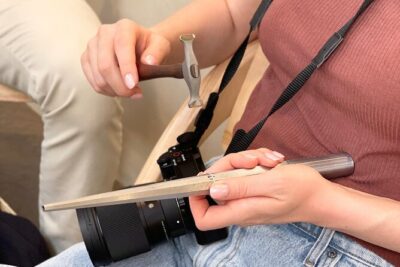
Private Handmade Ring Workshop Activity in Tokyo Shibuya
Read our review →
Browse the lists this tour appears in