
Reviewed · TOKYO TRADITIONAL CRAFT WORKSHOPS
Tokyo Ikebana Wellness Art Experience near Shinjuku
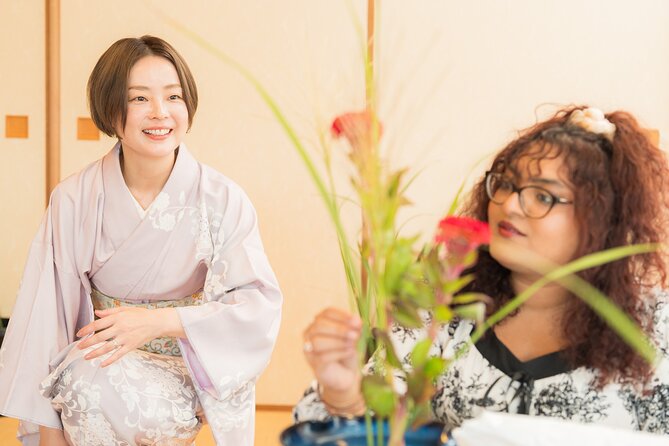
This small-group workshop turns a bunch of seasonal flowers into a lesson in Japanese aesthetics. Ai-sensei starts with the story and basic ideas behind Ikebana, then helps you shape your own arrangement in a quiet Japanese-style room near Nakano, a short distance from Shinjuku.
I like the personal guidance and the fact that every participant works with the same basic flowers yet produces something different. I also like the take-home arrangement, which gives you a simple souvenir you can enjoy in your hotel room instead of another item tucked into a suitcase.
The main consideration is the fixed format: this is a 90-minute beginner session, not a full formal course. The $52.71 price is fair for a small group of up to five, but the booking is non-refundable and cannot be changed, so choose your time carefully.
Key points at a glance
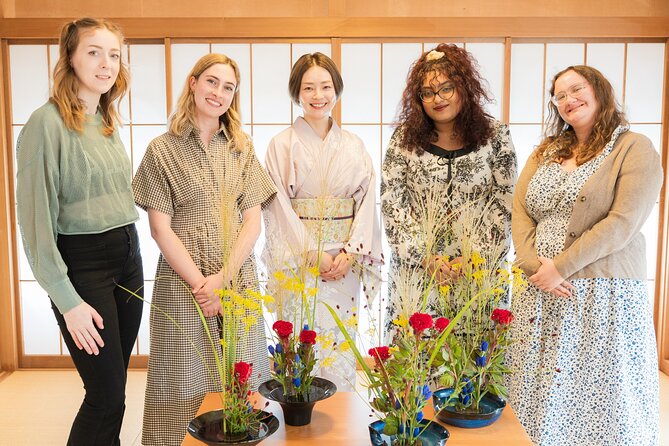
- Ai-sensei teaches in English, making the history, tools, flower handling, and basic forms accessible to first-timers.
- The group is limited to five people, allowing for individual advice about branch length, leaf direction, balance, and placement.
- You create a free-style arrangement, so the finished work can reflect your own sense of shape and space.
- The workshop lasts about 90 minutes, with a 1:00 pm start and the activity ending at the meeting point.
- You take your flowers home, giving you something to display during your Tokyo stay.
- The meeting point is in Nakano City, near public transportation, rather than in the busiest part of Shinjuku itself.
A quiet hour and a half with flowers
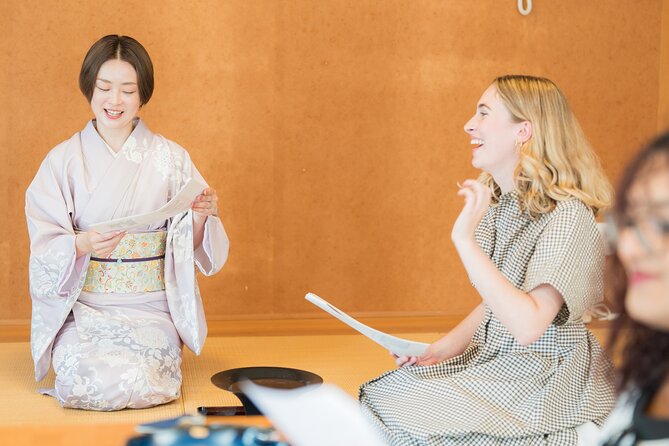
Tokyo can fill every spare minute with neon, trains, department stores, and crowded sidewalks. This Ikebana workshop offers a useful change of pace. For 90 minutes, you sit down, handle fresh flowers, and think about one branch or leaf at a time.
Ikebana is not simply flower arranging in the Western sense. The placement of empty space matters as much as the flowers. A branch may set the direction of the piece, a leaf may be removed to open the shape, and changing the height of one stem can alter the entire impression.
You do not need artistic training. You do not need to know Japanese manners. Ai-sensei begins with the basics and shows you how to use the flowers and tools. The session is built for beginners, including visitors who have always liked the look of Ikebana but felt it was too formal or difficult to try.
The experience begins at 1:00 pm and ends back at the meeting point. That makes it easy to pair with another Tokyo activity later in the day, though you should leave enough time to reach Nakano without rushing.
More things to do in Shinjuku:
- Tokyo: Shinjuku Food Tour (13 Dishes at 4 Local Eateries)
★ 5.0 · 6,603 reviews - Tokyo Bar Hopping Tour in Shinjuku (All-You-Can-Drink + Dinner)
★ 5.0 · 3,587 reviews - Tokyo: Shinjuku Food Tour (15 Dishes and 4 Eateries)
★ 4.9 · 2,033 reviews
Meeting Ai-sensei in Nakano
The meeting point is at Japan, 164-0001 Tokyo, Nakano City, Nakano, 3-chōme 8, M Square. The location is near public transportation, but you should check the exact route and building details after booking. The experience is described as being near Shinjuku, but the address is in Nakano City, so do not assume you are meeting in Shinjuku Station itself.
That distinction matters in Tokyo. Shinjuku is a large transport district, and Nakano is a separate area. If you are staying in central Tokyo, give yourself time to find the building, especially if this is your first visit to Japan.
The setting is one of the pleasant parts of the experience. The room is described as a clean, bright Japanese-style space. That helps the workshop feel like a cultural activity rather than a quick craft class in a commercial room.
Ai-sensei is the instructor, and her teaching style is central to the session. She explains each step carefully, gives advice at the participant’s pace, and uses English for the workshop. You can expect her to help with practical details such as how to handle the stems, where to cut, how to balance the branches, and how to make the arrangement look more open.
The group limit of five is a real advantage. In a larger class, you might copy a demonstration and then be left to guess what went wrong. Here, Ai-sensei can look at your individual arrangement and suggest a small correction.
Starting with 600 years of Ikebana
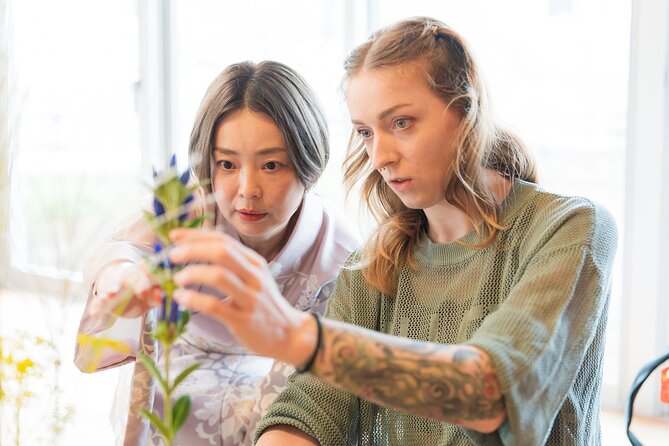
Before you pick up the flowers, Ai-sensei introduces the 600-year history and cultural background of Ikebana. She also uses photographs of her own work to show how the art can look in practice.
This introduction gives the activity more weight than a simple flower workshop. You learn that Ikebana has several styles and that the arrangement is shaped by more than color. The direction of the branch, the height of the stems, the relationship between flowers and empty space, and the character of each individual piece of plant material all matter.
The exact lesson can vary with the seasonal flowers available that day. That is part of the appeal. One session may use different flowers and branches from another, so the workshop is not a rigid exercise with an identical result every time.
You also learn about the vase, tools, and basic handling of flowers. This is useful if you want to continue arranging flowers at home. Several parts of the instruction focus on simple changes that make a large difference: turning a leaf, shortening a branch, or changing the position of a flower can give the work a new balance.
The history section is brief enough to keep the class moving. You are not signing up for an academic lecture. Instead, you receive the cultural background needed to understand why the practical steps matter.
Making your own free-style arrangement
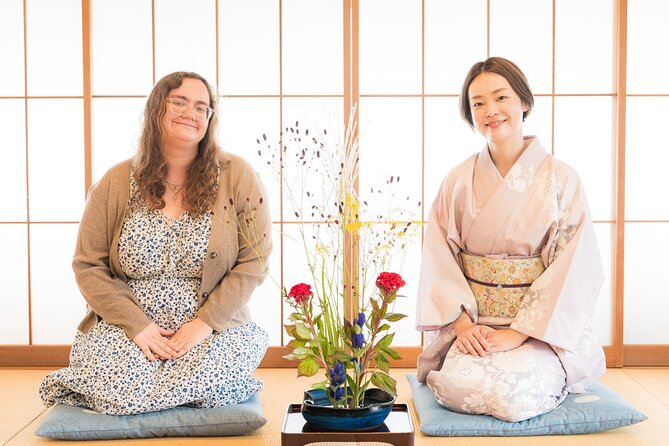
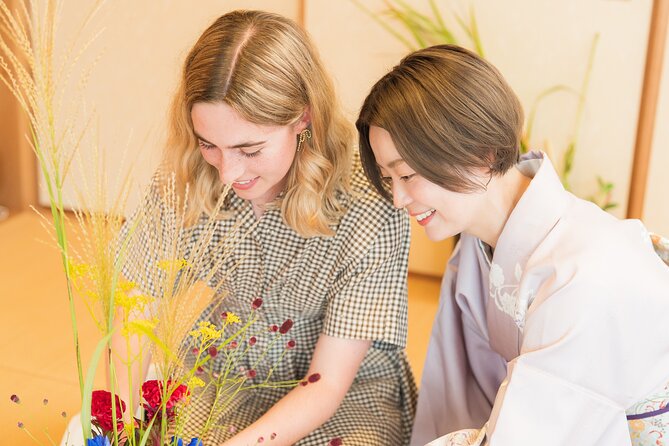
The hands-on portion is the heart of the experience. You receive flowers and branches, then begin deciding which pieces should lead the arrangement and which should support it.
The free-style approach is helpful for beginners. You learn basic rules, but you are not expected to reproduce a strict model. You can respond to the shape of the flowers in front of you and develop your own composition with Ai-sensei’s advice.
That freedom does not mean you are left without direction. Ai-sensei demonstrates the process and then provides individual guidance. She may point out the direction of a branch, suggest removing a leaf, or explain why a flower looks stronger at a different height.
This is also where the workshop becomes surprisingly personal. Two people can receive the same number and type of flowers and create very different arrangements. One person may favor a low, compact form. Another may leave more open space and allow a branch to reach upward.
You may not love your first arrangement immediately. That is normal. Ikebana asks you to adjust rather than force the flowers into a preconceived design. A branch that looks awkward at first may suggest a new shape once you turn it. A flower that seems too small may become the focus when the surrounding stems are moved aside.
The process is practical and tactile. You cut stems, handle leaves, compare angles, and reconsider the placement. It requires concentration, but not in a stressful way. The quiet attention is part of the wellness element.
More Tokyo craft workshops:
- Tokyo Shinjuku Chopsticks Making Class
★ 5.0 · 1,763 reviews - Chopstick Making Workshop in Ginza
★ 4.8 · 1,366 reviews - Kintsugi Experience: Art of Golden Joinery in Tokyo
★ 5.0 · 467 reviews - Tokyo Chopstick Making Workshop with Artisan
★ 5.0 · 466 reviews
Why the small group makes a difference
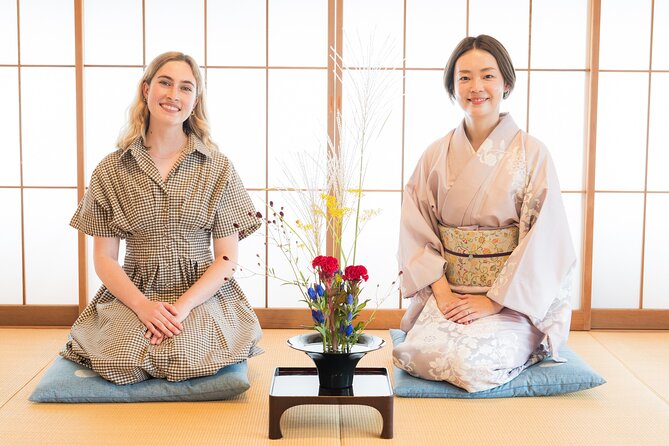
With a maximum of five participants, you have a better chance of receiving useful corrections at the right moment. You can ask why a branch should be shortened or how to keep a flower from disappearing behind another stem.
The small group also makes comparison part of the lesson. Seeing several arrangements made from similar flowers helps you understand that Ikebana is not about producing one correct answer. Each person’s sense of space and balance appears in the finished work.
That does not mean the class is completely private. You may share the room with other participants, and the social side can be pleasant for friends, couples, relatives, or colleagues. The workshop has enough structure to keep everyone working, but enough room for conversation.
The format suits a mixed-age group. The activity is designed for people of all ages, and most people can participate. Children or younger participants may need help with flower tools, but the basic process is accessible because the instructor explains it step by step.
Men who assume Ikebana is only for people already interested in traditional arts should also feel comfortable. The activity is about observation, shape, and making something with your hands. You do not need a particular style or background.
Taking the arrangement back to your hotel
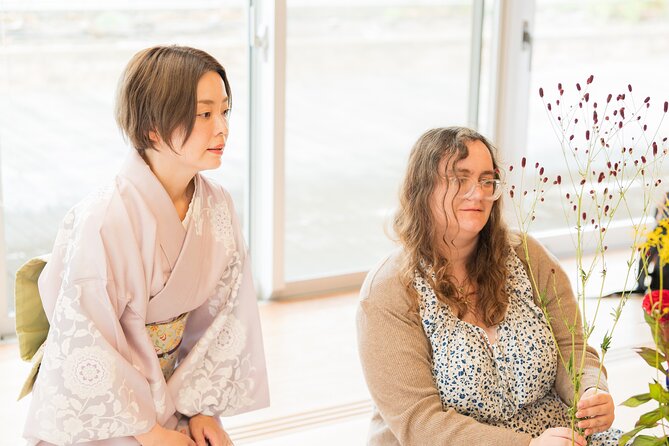
At the end, you can take your arrangement with you. This adds real value to the experience, especially if you are spending several nights in Tokyo.
A finished flower arrangement can brighten a hotel room and give you a reminder of the afternoon. You can also take the flower material home and continue enjoying it there, though the available method for carrying or preserving it is not specified, so ask Ai-sensei for practical advice before leaving.
The take-home element also changes the way you approach the class. You are not making something that disappears as soon as the session ends. You have a reason to think about how the arrangement will look after you leave the room.
Do not expect a large souvenir or a special container unless the provider specifically confirms one. The information promises that you can take your arrangement or flower material with you, but it does not describe packaging, a vase, or flower-preservation supplies.
What the $52.71 price includes in value
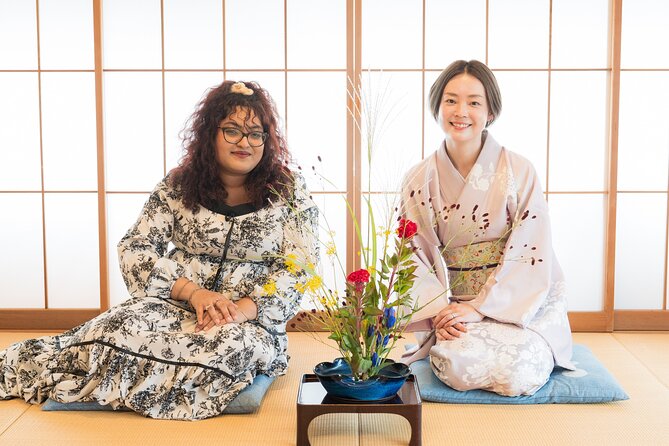
At $52.71 per person, the experience costs more than buying flowers at a Tokyo shop. The comparison is not quite fair, though. You are paying for instruction, cultural context, a small group, the use of workshop materials, and the chance to take your work with you.
The group size is the strongest value point. A class limited to five gives Ai-sensei time to work with each person. If you have tried a large craft class before, you know that personal correction can make the difference between feeling lost and leaving with a finished piece.
The price also makes sense for a first introduction to Ikebana. You can learn whether the art interests you without committing to a long series of formal lessons or buying your own tools and flower materials.
The value is less clear if you only want a quick photo opportunity. The session includes explanation and hands-on work, so you need to be willing to listen, make adjustments, and concentrate on the arrangement. This is not a sightseeing stop that you simply observe.
The activity is often booked about 22 days ahead. That suggests you should plan it rather than expect a last-minute place, especially because the group is so small. The booking is non-refundable and cannot be changed for any reason, so confirm your schedule before paying.
Who will enjoy this Tokyo activity
I would choose this workshop for you if you want a calm cultural experience between busy sightseeing days. It works especially well for:
- First-time visitors who want more than temples, shopping, and food
- Couples or friends looking for a shared activity
- Families seeking a hands-on introduction to Japanese culture
- Solo visitors who appreciate careful instruction in a small group
- Anyone interested in flowers, design, mindfulness, or traditional arts
- People who want a useful souvenir rather than another mass-produced item
It is also a good option for a rainy afternoon, though the information does not promise indoor transport from the station. You still need to reach the meeting point on your own.
You may want to skip it if you prefer fast-moving tours, large attractions, or activities with several locations. The workshop stays in one place and focuses closely on flowers. It rewards patience more than speed.
You should also consider your afternoon plans. The experience begins at 1:00 pm, lasts about 90 minutes, and finishes at the meeting point. It is easy to build around, but you should not schedule a tight connection immediately afterward.
Practical booking notes before you go
You receive confirmation when you book, and the activity uses a mobile ticket. Keep the ticket available on your phone and check the meeting instructions before setting out.
If you are already in Japan, you do not need to provide a passport number or flight information. If the booking form asks for those details, enter N/A as instructed.
The activity is near public transportation, and most people can participate. No prior Ikebana experience is required. The instructor supplies the teaching and guidance, but the available information does not specify every item included, so do not assume that a vase or special packaging comes with the booking.
Wear something that lets you sit and work comfortably. The information does not list a dress code, but flower arranging involves handling stems, leaves, and tools. You should also plan to carry the finished flowers carefully afterward.
Should you book the Ikebana workshop?
Book it if you want a small, thoughtful cultural activity and like the idea of making something you can enjoy during your stay. Ai-sensei’s step-by-step English guidance, the five-person limit, and the free-style format make the experience approachable even if Ikebana seems formal at first.
The strongest reason to go is the balance between instruction and personal expression. You learn the background, then make a piece that does not have to look exactly like anyone else’s. The main reasons to hesitate are the fixed, non-refundable booking and the fact that this is a focused workshop rather than a broad tour of Tokyo.
For a quiet 90 minutes near Nakano, $52.71 is a reasonable price, especially if you value personal attention and a take-home flower arrangement. Check the address carefully, confirm your afternoon schedule, and book this one when you want to slow down and see Japanese beauty in a very hands-on way.
FAQ
Where does the Ikebana experience take place?
The meeting point is Japan, 164-0001 Tokyo, Nakano City, Nakano, 3-chōme 8, M Square. It is described as being near public transportation and near the Shinjuku area, but the address itself is in Nakano City.
What time does the workshop start?
The stated start time is 1:00 pm.
How long does the activity last?
The experience lasts approximately 1 hour and 30 minutes.
Do I need previous Ikebana experience?
No. The workshop is designed for beginners, and no prior experience is needed.
Is the workshop taught in English?
Yes. Ai-sensei provides guidance in English, including explanations of the history, basics, and flower arrangement process.
How many people can join?
The maximum group size is five participants.
Can I take my flower arrangement with me?
Yes. You can take your arrangement or flower material with you and enjoy it during your stay, such as in your hotel room.
Do I need to provide passport or flight information if I am already in Japan?
No. If the booking form requests those fields, enter N/A as instructed.
More Tokyo massage and spa sessions
- Tokyo: Japanese Massage – Kangfu Beauty & Body Care Salon
★ 4.4 · 43 reviews - Experience Award-Winning Spa Treatments in Downtown Tokyo
★ 5.0 · 21 reviews - Tokyo: Scalp Care Treatment at a Head Spa
★ 4.6 · 9 reviews - Onsen Spa in Tokyo and Asakusa Bar Hopping with Local Guide
★ 5.0 · 3 reviews
Newly reviewed around Tokyo
- Tokyo Asakusa:Calligraphy & Make T-shirt Activity★ 5.0 · 62 reviews
- 1 Hour Travel around Tokyo with a Professional Photographer★ 5.0 · 3 reviews
- Travel Tokyo with Your Own Personal Photographer★ 5.0 · 43 reviews
- Intercity Shuttle, Tokyo to Haneda /Narita /Yokohama /Makuhari★ 5.0 · 5 reviews
- Train in Samurai Swordsmanship and Defeat the Demon in Tokyo★ 5.0 · 5 reviews
- Shuttle Van 6hr Tokyo Tour to-and-from Tokyo, Yokohama and Narita★ 5.0 · 9 reviews
- Kickboxing & Body Training with EX-Pro Fighter★ 5.0 · 4 reviews
- Traditional Japanese Knife Sharpening Class★ 5.0 · 18 reviews
Tokyo Traditional Craft Workshops, compared.
Kintsugi Experience: Art of Golden Joinery in Tokyo
Read our review →

Authentic Pure Gold Kintsugi Workshop with Master Taku in Tokyo
Read our review →
Private Handmade Ring Workshop Activity in Tokyo Shibuya
Read our review →
Browse the lists this tour appears in