
Reviewed · TOKYO TRADITIONAL CRAFT WORKSHOPS
Furoshiki Cloth Wrapping
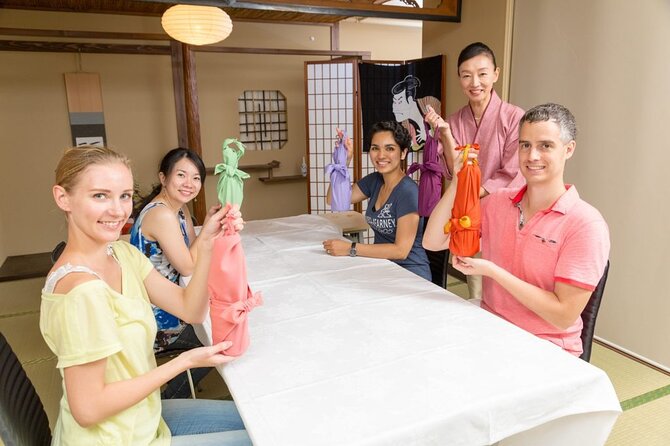
Furoshiki turns a square of cloth into a gift wrap, shopping bag, bottle carrier, hat, or cover. This Tokyo workshop gives you seven techniques in about 90 minutes, so you leave with a practical skill rather than just another souvenir.
I like the hands-on format and the keepsake cloth you can use at home. I also like the gentle cultural lesson: you learn why furoshiki matters in Japan today, especially as a reusable alternative to paper and plastic wrapping. The main drawback is the price, $77.26 per person, for a short class, and transportation to the venue is not included.
Key points to know before booking
- Seven techniques in 90 minutes: The class moves from basic folds and knots to more useful wraps for bags, gifts, covers, and wearable items.
- A useful souvenir: Your included furoshiki lets you repeat the lessons at home instead of leaving the skill behind in Tokyo.
- Japanese culture through making: The instructor explains the craft’s history and its modern environmental role while you work with the cloth.
- A small-group setting: The maximum is 28 people, large enough for a social class but not an intimate private lesson.
- Convenient central Tokyo venue: Meet at Kikai Shinko Kaikan in Shibakoen, near public transportation, and finish at the same place.
- Good for families and beginners: The class requires no stated prior experience, and a parent and teenage daughter found the techniques fun and approachable.
Starting with a square of cloth at Shibakoen
The class begins at Kikai Shinko Kaikan, at 3-chome-5-8 Shibakoen in Minato City. You make your own way there, so check the meeting address carefully before leaving your hotel. The venue is near public transportation, but transport is not part of the booking.
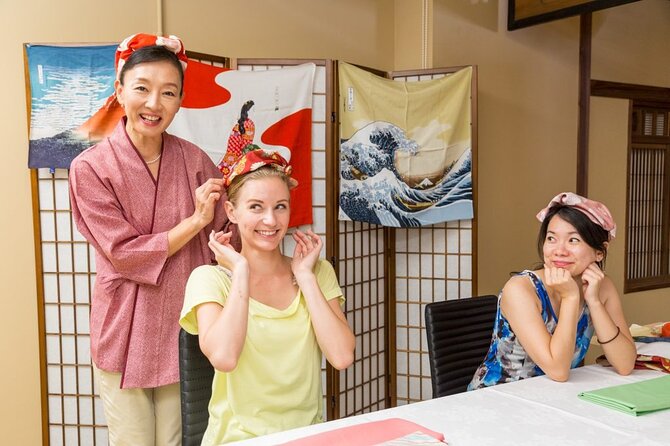
Once the activity starts, the focus is wonderfully simple: a square of fabric, your hands, and an instructor. The accredited furoshiki instructor introduces the basic folds and knots first. That order matters. Furoshiki can look effortless when someone experienced handles the cloth, but the right knot is the difference between a secure package and a loose bundle sliding onto the floor.
You should expect to spend much of the opening portion copying the instructor’s movements. This is not a lecture with a short demonstration at the end. You practice as you go, which makes the class a better fit if you enjoy learning by doing.
The group can reach 28 people. That is a moderate class size rather than a private workshop. You will have the social energy of a group activity, but the experience may feel less personal than a lesson with only a few participants. If you want individual coaching at every step, keep that limit in mind.
More Tokyo craft workshops:
- Tokyo Shinjuku Chopsticks Making Class
★ 5.0 · 1,763 reviews - Chopstick Making Workshop in Ginza
★ 4.8 · 1,366 reviews - Kintsugi Experience: Art of Golden Joinery in Tokyo
★ 5.0 · 467 reviews
Seven techniques, from simple knots to useful objects
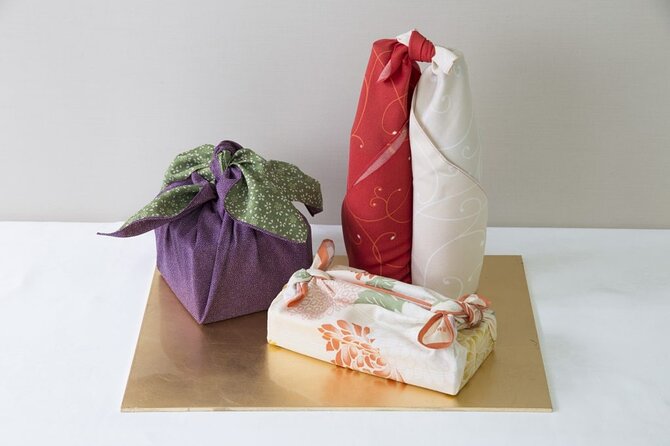
The central promise is seven furoshiki techniques in one workshop. The class starts with basic folds and knots, then builds toward more advanced ways to handle the cloth. The exact order can vary with the instructor and group, but the stated projects include gifts, bags, hats, covers, and other useful forms.
That range is what gives the activity its value. You are not learning one decorative trick that works only for a small box. You are seeing how the same square of fabric can change purpose depending on where you fold, pull, and tie it.
Gift wrapping is likely to be the most familiar use. Furoshiki makes a present feel personal without relying on disposable paper. The cloth itself becomes part of the gift, or you can untie it and use it again. This is especially appealing if you enjoy practical souvenirs and want to bring home a Japanese custom that fits everyday life.
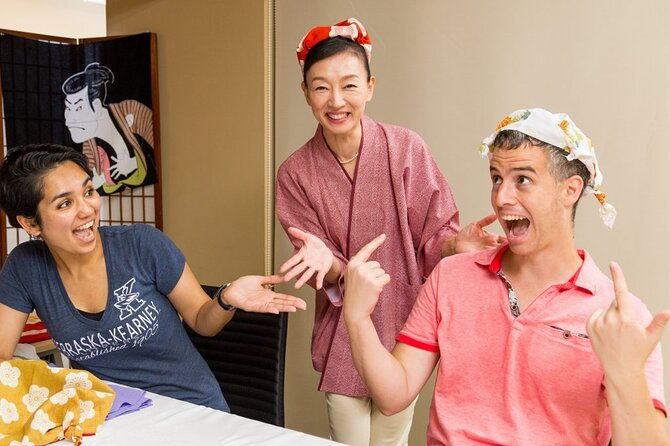
The bag techniques are useful in a different way. A cloth bag can carry small items, and the lesson shows how knots create handles and shape. The class also covers covers and wearable cloth accessories, including hats. These projects add a playful note, particularly for families and younger participants.
The key skill is not memorizing seven isolated designs. It is learning how folds and knots change the cloth’s function. Once that idea clicks, you can experiment with objects at home and adapt the methods to different sizes and shapes.
Why furoshiki makes a better souvenir than another trinket
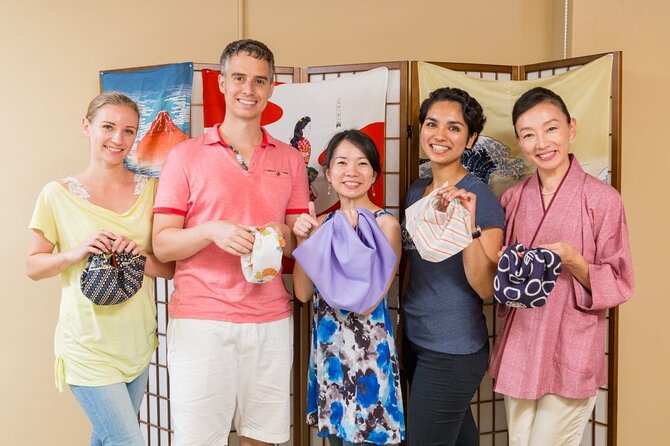
I like souvenirs that still earn their place in a suitcase after the holiday. The included furoshiki does that. You receive a cloth to take home and practice with, so the workshop continues after you leave Tokyo.
Furoshiki also carries a clear environmental message. The craft offers a reusable alternative to single-use wrapping paper, plastic bags, and some disposable household items. The class connects the practical techniques to this modern eco-friendly purpose, helping you understand why furoshiki remains useful rather than treating it as an old-fashioned curiosity.
That does not mean one cloth will replace every bag or package in your life. Its usefulness depends on what you carry and how often you practice. Still, the lesson gives you a low-cost way to reduce waste for gifts, lunches, small purchases, and storage at home.
The cloth is also a good memory prompt. Years later, tying the same knot can bring back the Tokyo class more vividly than a decorative object sitting on a shelf. If you are choosing between an activity with a take-home skill and a quick photo stop, this workshop has the stronger after-trip payoff.
The cultural lesson behind the folds
The instructor does more than show hand movements. You learn about the culture and history of furoshiki while making the objects yourself. That combination keeps the background information connected to something you can see and touch.
The modern environmental angle is especially relevant. Furoshiki shows how a traditional practice can answer a current problem without needing complicated equipment. The cloth is reusable, adaptable, and attractive. It can wrap a gift neatly, carry belongings, or become a temporary accessory with the right fold.
I also like that the cultural lesson is practical rather than abstract. You are not simply hearing that Japanese design values efficiency or simplicity. You are testing those ideas with your own hands. One piece of fabric does several jobs, and the change comes from technique rather than extra materials.
The experience may suit you best if you enjoy craft, design, Japanese culture, or sustainable living. It is less suitable if you want a fast-paced sightseeing stop, a food tasting, or a major Tokyo landmark. This is a quiet skills class, not a city tour.
A completely different kind of day in Tokyo:
- Mt Fuji and Hakone 1-Day Bus Tour Return by Bullet Train
★ 5.0 · 26,383 reviews - 1-Day Tokyo Bus Tour
★ 5.0 · 14,250 reviews - Tokyo: teamLab Planets TOKYO Digital Art Museum Entry Ticket
★ 4.6 · 9,779 reviews - Mt Fuji & Hakone Cruise, Drum Show Bullet Train 1 Day from Tokyo
★ 4.0 · 7,413 reviews
A friendly class for families and first-time crafters
No previous experience is stated as necessary, and the format is built around basic instruction. A parent and teenage daughter enjoyed learning the knots and practicing different wraps together, which points to the class working well for families with older children.
The activity also received praise for its friendly instruction. That matters here because knots can become frustrating when the teacher moves too quickly or explains only the finished result. The available feedback describes the instructors as friendly and clear, and one participant described learning a good deal in the session.
You should still be comfortable following visual instructions and repeating a movement several times. Furoshiki is simple in concept, but your first knot may not look like the instructor’s. The class is best approached with patience and a willingness to undo a fold and try again.
The 90-minute duration is a sensible length for an introduction. It is long enough to cover several techniques without taking half a day from your Tokyo plans. At the same time, seven methods in one session means you may remember the broad idea better than every detail. Take notes if allowed, or plan to practice soon after returning home while the movements are fresh.
Is $77.26 a fair price?
At $77.26 per person, this is not a bargain activity if you judge it only by time. Ninety minutes is short, and there is no food, beverage, transport, or sightseeing included. You are paying for instruction, a cultural lesson, a group experience, and the included furoshiki.
The value improves if you will use the cloth and repeat the techniques. A souvenir you practice with several times has more staying power than a one-time demonstration. The class also saves you from trying to learn every knot from a book or video without an instructor correcting the basics.
Group discounts may help if you are booking for a family or several friends. The maximum group size is 28, so ask about the available discount before paying if you have a larger party. Mobile tickets make the arrival process easier, though you still need to arrange your own route to Shibakoen.
I would consider the price reasonable for someone who values a guided cultural activity and a useful take-home item. I would hesitate if your budget is tight or you mainly want free activities in Tokyo. This is a craft workshop with a souvenir, not a low-cost filler between major attractions.
Planning the meeting point and timing
The class begins and ends at Kikai Shinko Kaikan. Since there is no transportation included, allow enough time to reach 3-chome-5-8 Shibakoen, Minato City, Tokyo 105-0011. The venue is near public transportation, which makes it easier to fit into a Tokyo day, but the booking does not specify a station or travel time from particular neighborhoods.
The stated duration is approximately one hour and 30 minutes. Add your own travel time on both sides when planning. The return to the same meeting point is convenient if you want to continue sightseeing in the area or collect your belongings from a nearby hotel.
Confirmation arrives within 48 hours, subject to availability. The experience is often booked about 40 days ahead, so reserve early if your dates are fixed. You can cancel for a full refund up to 24 hours before the start time. Changes or cancellations inside that 24-hour window are not accepted for a refund.
What you should bring and what you will take home
Food and drinks are not included, so plan around the 90-minute class rather than expecting refreshments at the venue. The important included item is the souvenir furoshiki, which provides the material for home practice.
Wear something that lets you move your arms comfortably. The activity involves repeated folding, pulling, and tying, so a restrictive outfit could make the hands-on work less pleasant. The supplied information does not specify a dress code or special equipment, and the class provides the essential cloth.
Bring a phone if you want to keep the mobile ticket handy. A small notebook could also help if you like recording knot names or short reminders, though note-taking rules are not provided. The most important thing to bring is a little patience. The first attempt at a neat wrap may take longer than the instructor’s demonstration.
Who should book this Tokyo workshop?
I would recommend this experience to you if you want a calm, practical cultural activity. It suits solo visitors who enjoy crafts, couples looking for something different from sightseeing, and families with older children or teenagers. It is also a good match for anyone interested in cutting down on disposable wrapping and bags.
It may be especially worthwhile near the beginning of your trip. You can practice with the cloth during your stay and perhaps use it to wrap small purchases or gifts before flying home. If booked near the end, it still works as a memorable final activity, but you will have less time in Tokyo to test the technique.
I would choose something else if you need a private lesson, dislike group classes, or want a longer workshop with time for detailed correction. The class can include up to 28 people, and the schedule must cover seven techniques in only 90 minutes. That is efficient, but not leisurely.
Should you book Furoshiki Cloth Wrapping?
Book it if you want to make something, learn a skill, and understand a piece of Japanese culture through practical work. The strongest reasons are the seven techniques, the reusable keepsake cloth, and the friendly, approachable instruction described by participants.
Skip it if $77.26 feels high for a 90-minute activity or if your Tokyo plans are already packed with hands-on experiences. For the right person, though, furoshiki is a smart souvenir: useful, light to pack, easy to practice, and tied to a clear Japanese idea of making one object serve many purposes.
FAQ
How long does the furoshiki workshop last?
The activity lasts approximately one hour and 30 minutes.
Where does the workshop meet?
It starts and ends at Kikai Shinko Kaikan, 3-chome-5-8 Shibakoen, Minato City, Tokyo 105-0011, Japan.
How many furoshiki techniques will I learn?
The workshop teaches seven different wrapping techniques, including methods for making gifts, bags, hats, covers, and other useful items.
Is a furoshiki cloth included?
Yes. Each participant receives a souvenir furoshiki cloth to take home and use for practice.
Is transportation or food included?
No. Transportation to the venue, food, and beverages are not included.
What is the cancellation policy?
You can cancel up to 24 hours before the experience start time for a full refund. Cancellations or changes made less than 24 hours before the start time are not accepted for a refund.
Newly reviewed around Tokyo
- Tokyo Asakusa:Calligraphy & Make T-shirt Activity★ 5.0 · 62 reviews
- Intercity Shuttle, Tokyo to Haneda /Narita /Yokohama /Makuhari★ 5.0 · 5 reviews
- 1 Hour Travel around Tokyo with a Professional Photographer★ 5.0 · 3 reviews
- Travel Tokyo with Your Own Personal Photographer★ 5.0 · 43 reviews
- Train in Samurai Swordsmanship and Defeat the Demon in Tokyo★ 5.0 · 5 reviews
- Shuttle Van 6hr Tokyo Tour to-and-from Tokyo, Yokohama and Narita★ 5.0 · 9 reviews
- Kickboxing & Body Training with EX-Pro Fighter★ 5.0 · 4 reviews
- Traditional Japanese Knife Sharpening Class★ 5.0 · 18 reviews
Tokyo Traditional Craft Workshops, compared.
Kintsugi Experience: Art of Golden Joinery in Tokyo
Read our review →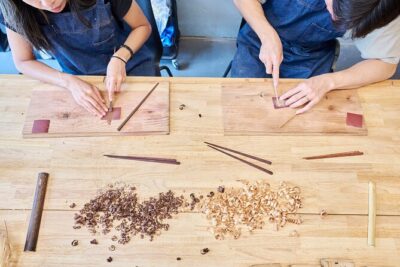

Authentic Pure Gold Kintsugi Workshop with Master Taku in Tokyo
Read our review →
Private Handmade Ring Workshop Activity in Tokyo Shibuya
Read our review →
Browse the lists this tour appears in