
Reviewed · TOKYO RAMEN TOURS AND CLASSES
Ramen & Gyoza Cooking Class in Tokyo with Local Supermarket Visit
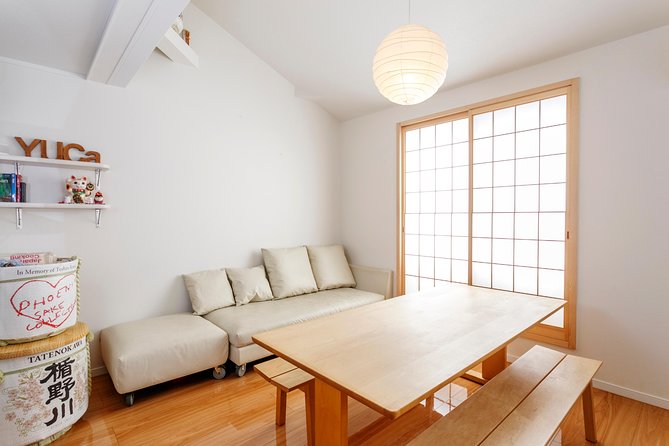
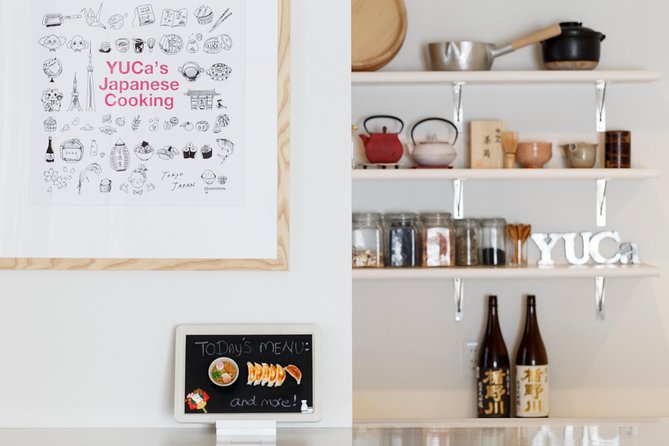
The best part of this Tokyo cooking class is the setting: you are welcomed into YUCa’s home kitchen in Nishiogu, away from the usual sightseeing circuit, and shown how ramen and gyoza fit into everyday Japanese cooking. You learn by making, shaping, seasoning, and eating, rather than watching a chef work behind a restaurant counter.
I like two things in particular. First, YUCa creates a friendly class for beginners, children, parents, and grandparents, with clear English instructions and jobs for everyone. Second, the meal is practical: the ramen and gyoza recipes are approachable enough to try at home. The main consideration is that the class can be partly demonstration-based, especially with a larger group sharing one kitchen, and the optional supermarket visit is not always included in practice.
Key points to know before booking
- YUCa teaches in her own home kitchen: This gives the class a personal feel and a look at an ordinary Japanese cooking space.
- Ramen and gyoza are prepared in the same session: You work on the noodle soup while the cooking time allows for dumpling preparation.
- The class suits mixed ages and skill levels: Families, couples, solo participants, teenagers, and complete beginners can take part.
- The group is capped at seven people: That keeps the experience fairly intimate, though hands-on time may vary.
- The supermarket tour is optional: It is scheduled after class from 12:30 to 1:00 p.m., but confirm that it will run.
- The class costs $122.70 per person: That is a premium price for a meal, but it includes instruction, cultural context, and a home visit atmosphere.
Meeting YUCa in Nishiogu
Your morning begins at 10:00 a.m. at YUCa’s Japanese Cooking, located at 2-chome-34-8 Nishiogu in Arakawa City. This is not central Tokyo’s neon-and-skyscraper zone. It is a residential part of the city, and that change of scene is part of the appeal.
You are visiting a real neighborhood rather than a purpose-built tourist kitchen. The class gives you a look at a quieter side of Tokyo and lets you see how a Japanese home kitchen functions. That setting also helps explain why the food feels practical. You are not learning a complicated restaurant menu designed for professional service. You are learning dishes you can reasonably recreate in your own kitchen.
The meeting point is near public transportation, but you should allow time to reach Nishiogu from your hotel. The class starts promptly at 10:00, and arriving early is sensible if you are unfamiliar with the area. The activity returns to the same meeting point at the end.
The group size is limited to a maximum of seven people. That is small compared with a large commercial cooking school, but it is not a private lesson. If the class fills, you may spend some time watching while another participant handles a task.
More Tokyo ramen tours and classes:
- Eat and Drink Like a Local: Tokyo Ueno Food Tour-Taverns&Ramen
★ 5.0 · 957 reviews - Tokyo: Ramen Tasting Tour with 6 Mini Bowls of Ramen
★ 4.9 · 432 reviews - Tokyo: Easy Ramen Cooking Experience in Kabukicho, Shinjuku
★ 4.6 · 321 reviews
10:00 to 10:30, Japanese food and daily life
The first part of the morning introduces Japanese home cooking and lifestyle. This short talk matters because ramen and gyoza are more than two famous foods on a menu. They are also useful examples of how ingredients, shortcuts, seasoning, and family cooking come together in Japan.
YUCa explains the process in English, with simple instructions that suit people who do not cook often. The focus is not only on what to add, but also on how the dishes fit into ordinary meals. You can ask about ingredients, cooking methods, and the cultural background behind the food.
One particularly nice personal touch is that YUCa has written participants’ names in Japanese characters based on pronunciation. That is a small detail, but it gives the class a warm welcome and a connection to the language.
The introduction lasts only about 15 minutes, so it does not take over the morning. You get enough context to understand what you are making, then move into the kitchen work.
Making ramen with simple, useful techniques
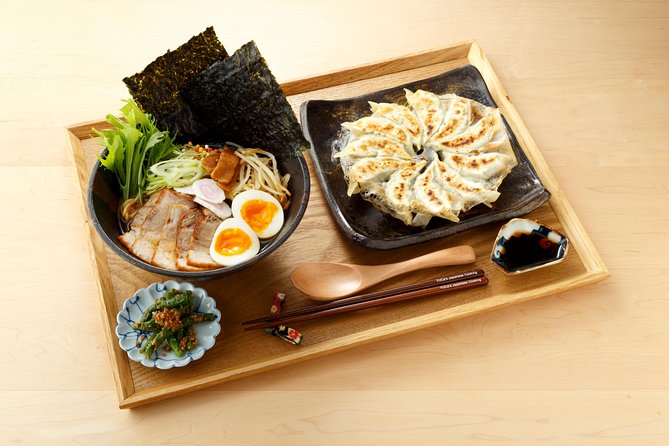
The ramen portion is designed as an approachable lesson rather than a professional noodle-making course. You learn how to prepare the components of a noodle soup, use vegetables and meat, and assemble the finished bowl.
The class includes some prepared or measured elements, which helps the group finish within two and a half hours. That is useful if you want to cook, taste the food, and still have time for the supermarket visit. It also means you should not expect to make every ingredient from scratch.
This is the main point to consider before booking. Some participants may want a highly technical lesson with long simmering, handmade noodles, or a detailed broth session. This class is more practical and streamlined. At points, your role may be to add a measured powder or liquid, mix ingredients, or follow YUCa’s demonstration rather than carry out a long preparation yourself.
For a first cooking class in Japan, that can be an advantage. You learn a repeatable method without spending the whole day on one dish. If you already cook a lot and want advanced ramen technique, the class may feel light.
The payoff comes when you assemble your bowl. You see how the separate ingredients become a complete meal, and you can taste the seasoning immediately. The food is not simply handed to you at the end. You take part in enough of the process to understand how to repeat it at home.
Folding gyoza while the ramen cooks
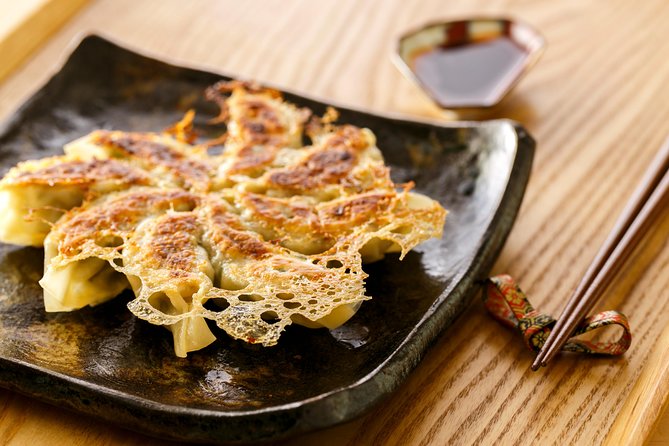
The gyoza section adds the most tactile part of the class. You prepare minced pork dumplings with vegetables and learn how to fill and fold them.
The timing works well. While the ramen components cook or wait, you turn your attention to the gyoza. This keeps the class moving and gives you a different task from the soup preparation. Folding dumplings is also the part most likely to involve everyone at once.
Families should pay attention to this section. Children as young as nine have taken part successfully, and teenagers can handle the folding and assembly with adult guidance. It is a good activity for mixed-age groups because the task is clear, social, and easy to share.
You should not expect every dumpling to look perfect. That is part of the fun. The useful lesson is learning how much filling to use, how to seal the wrapper, and how the dumpling fits into the finished meal. The class is intended to build confidence, not produce restaurant-window perfection.
Vegetarian participants can request a vegetarian option, but you need to advise the provider when booking. The standard description refers to meat and minced pork dumplings, so do not wait until you arrive to explain dietary needs.
More Tokyo cooking classes:
- Tokyo: Roll and Authentic Sushi Making Class in Asakusa
★ 4.9 · 1,957 reviews - Tokyo Shinjuku Chopsticks Making Class
★ 5.0 · 1,763 reviews - Tokyo: Sushi Making Class in a Happi Coat near a Famous Spot
★ 4.9 · 1,377 reviews - Tokyo Sushi Making Class in Tsukiji with Professional Chef
★ 5.0 · 1,177 reviews
Eating your own ramen and gyoza
The cooking and tasting period runs from about 10:30 a.m. to 12:30 p.m. You then sit down to eat the ramen and gyoza you helped prepare.
This is where the class becomes more than a lesson. You share a meal in a small home setting, meet the other people in the group, and have time to compare your dumpling folds and cooking results. Several families have found the format easy to enjoy across generations, while couples and solo participants can use it as a relaxed way to meet people.
The food portions appear sufficient for a light meal, though one participant felt they could be larger. I would treat this as a cooking lunch rather than a large restaurant feast. If you want a substantial meal after a very active morning, plan a later snack or lunch.
The class atmosphere is one of its strongest features. YUCa is described as warm, patient, energetic, and easy to understand. She encourages participation and explains the food and culture behind the recipes. That matters in a home class, where the teacher’s manner shapes the entire experience.
The optional supermarket visit from 12:30 to 1:00
After the cooking class, the schedule allows an optional local supermarket tour from 12:30 to 1:00 p.m. This can be one of the most useful parts for anyone who wants to cook Japanese food after returning home.
A neighborhood supermarket shows you the everyday side of Japanese ingredients. You can ask YUCa about unfamiliar packages, sauces, vegetables, and products that are difficult to identify at first glance. The tour also helps you understand what to buy rather than simply watching a recipe demonstration.
The setting is outside the main tourist areas, which makes the visit feel more local. It gives you another reason to explore Arakawa City instead of heading straight back to the central districts.
There is an important catch: the supermarket visit is optional, and it has not always taken place. One participant booked specifically for the market tour and missed it when circumstances required an early departure. Other class descriptions also suggest that the tour may not be consistently available. If this is a major reason for booking, contact YUCa in advance and confirm the plan for your date.
Do not assume that the supermarket tour is guaranteed simply because it appears in the schedule. The cooking class itself is the reliable core of the experience.
What the $122.70 price really covers
At $122.70 per person, this is not a cheap way to get ramen and gyoza. You could eat both dishes in Tokyo for much less. The price makes sense only if you value the teaching, the home setting, the cultural explanation, and the chance to prepare the meal yourself.
The group limit of seven helps support the cost. You are not joining a large sightseeing group with a microphone and a fixed demonstration. You are entering a personal kitchen, working in a small group, and receiving guidance from the host.
Still, the value depends on your expectations. If your goal is lunch alone, skip the class and eat at a ramen shop. If you want a polished professional culinary course with every ingredient made from scratch, this may also feel expensive for what it provides.
I see the strongest value for people who want a memorable food activity and a recipe they can use later. The experience combines instruction, a meal, and a look at local life. For a family that normally books cooking classes while abroad, or for someone who wants more than restaurant photos, the price is easier to justify.
Who will enjoy this class most
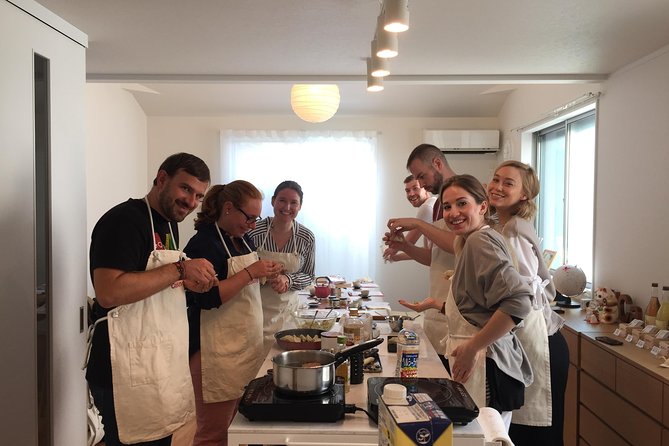
This class suits beginners best. You do not need advanced cooking skills, and the steps are explained clearly. The recipes are approachable, and the pace leaves room for tasting and conversation.
Families are a strong match. Children can help fold gyoza, teenagers can take on preparation tasks, and older relatives can enjoy the cultural side of the morning. The setting also gives a family something to do together instead of splitting up around a shopping district.
Couples and solo participants can enjoy it too. The group format gives you a natural way to meet other people, and the small kitchen creates more interaction than a standard restaurant meal.
You should think twice if you want intense hands-on work from start to finish. With one kitchen and several people, some stages are demonstration-style. You will participate, but you may not personally handle every step.
The class also works best for people with a free morning. The official duration is about two and a half hours, with the supermarket visit adding another 30 minutes. Since the meeting point is in Nishiogu, avoid booking a tightly timed attraction immediately afterward.
Booking details worth checking
A minimum of two people per booking is required, and the class accepts a maximum of seven participants. Confirmation is provided at booking, and you should give dietary requirements at that point. Vegetarian preparation is available if requested in advance.
The activity offers a mobile ticket, so you do not need to print a voucher. It begins at 10:00 a.m. and ends back at the meeting point.
Free cancellation is available up to 24 hours before the start time for a full refund. Changes or cancellations inside that 24-hour window are not accepted for a refund. If the minimum number is not reached and the activity is canceled, you are offered another date or experience, or a full refund.
Should you book YUCa’s ramen and gyoza class?
Book it if you want a personal Tokyo food experience rather than a restaurant meal or a polished stage show. YUCa’s friendly teaching style, home kitchen, manageable recipes, and family-friendly format make this a strong choice for beginners and mixed-age groups.
Book with realistic expectations. The class is not fully hands-on at every moment, the food portion may feel modest to some people, and the supermarket visit should be confirmed rather than assumed.
For me, the best reason to choose it is the combination of cooking and local context. You leave with more than a bowl of ramen. You gain a simple way to make the dishes at home and a glimpse of Tokyo life outside the central tourist zones. If that sounds worth $122.70, this is a well-focused addition to a Tokyo itinerary.
FAQ
Where does the cooking class take place?
The class takes place at YUCa’s Japanese Cooking, at 2-chome-34-8 Nishiogu, Arakawa City, Tokyo 116-0011, Japan.
What time does the activity start?
The class starts at 10:00 a.m.
How long does the cooking class last?
The full cooking activity lasts about two and a half hours. Cooking and tasting run from approximately 10:30 a.m. to 12:30 p.m.
What dishes will I make?
You will prepare ramen and gyoza, including minced pork dumplings with vegetables and a noodle soup.
Is the supermarket visit included?
The local supermarket visit is listed as optional and is scheduled from 12:30 to 1:00 p.m. Confirm its availability before booking if it is important to you.
Is a vegetarian option available?
Yes, a vegetarian option is available. You must advise the provider of this requirement when booking.
How many people can join the class?
The activity has a maximum of seven participants. A minimum of two people per booking is required.
Is the class suitable for children?
Yes. The activity is suitable for different ages, and families with children and teenagers have taken part.
Does the experience return to the meeting point?
Yes. The activity ends back at the original meeting point.
What is the cancellation policy?
You can cancel at least 24 hours before the start time for a full refund. Cancellations or changes made less than 24 hours before the start time are not accepted for a refund.
More hands-on classes and workshops in Tokyo
- Sushi Making Tokyo Roll and Authentic Japanese Sushi Class
★ 5.0 · 3,971 reviews - Chopstick Making Workshop in Ginza
★ 4.8 · 1,366 reviews - Matcha Making Class in Tokyo with Authentic Japanese Sweets Set
★ 5.0 · 744 reviews - Tokyo: Samurai Sword & Archery Class from Samurai Descendant
★ 5.0 · 603 reviews
Newly reviewed around Tokyo
- Tokyo Asakusa:Calligraphy & Make T-shirt Activity★ 5.0 · 62 reviews
- Intercity Shuttle, Tokyo to Haneda /Narita /Yokohama /Makuhari★ 5.0 · 5 reviews
- 1 Hour Travel around Tokyo with a Professional Photographer★ 5.0 · 3 reviews
- Travel Tokyo with Your Own Personal Photographer★ 5.0 · 43 reviews
- Train in Samurai Swordsmanship and Defeat the Demon in Tokyo★ 5.0 · 5 reviews
- Shuttle Van 6hr Tokyo Tour to-and-from Tokyo, Yokohama and Narita★ 5.0 · 9 reviews
- Kickboxing & Body Training with EX-Pro Fighter★ 5.0 · 4 reviews
- Tokyo History: Sensoji Temple & Asakusa District Private Tour★ 5.0 · 28 reviews
Tokyo Ramen Tours and Classes, compared.
Eat and Drink Like a Local: Tokyo Ueno Food Tour-Taverns&Ramen
Read our review →
Easy Ramen Cooking Experience in Kabukicho, Shinjuku
Read our review →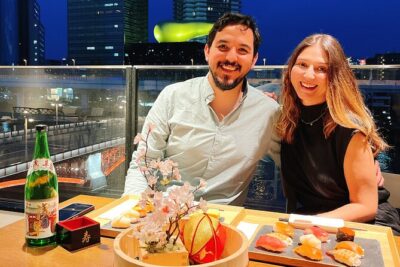
Ramen and Sushi Cooking Class with Sake Pairing Set in Tokyo
Read our review →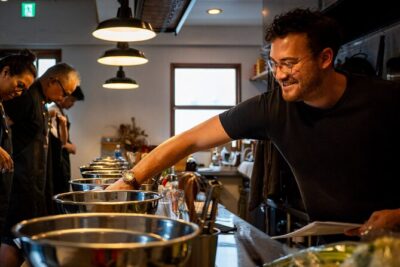
Professional Ramen & Gyoza with Ramen Chef in a restaurant!
Read our review →
Ramen Dojo Tokyo | Make All 3 (Tonkotsu/Shoyu/Miso)
Read our review →Ramen Dojo Tokyo | Make All 3 (Tonkotsu/Shoyu/Miso)
Read our review →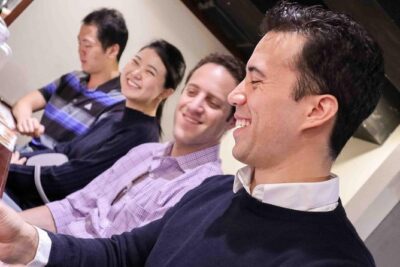
Browse the lists this tour appears in