
Reviewed · TOKYO TRADITIONAL MUSIC AND DANCE SHOWS
Tsugaru shamisen performance over traditional dinner
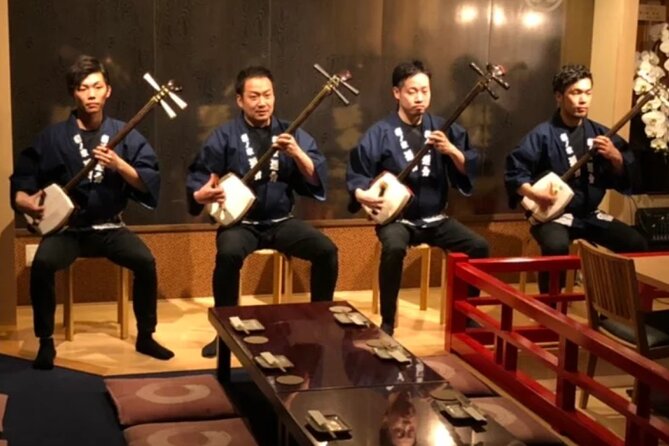
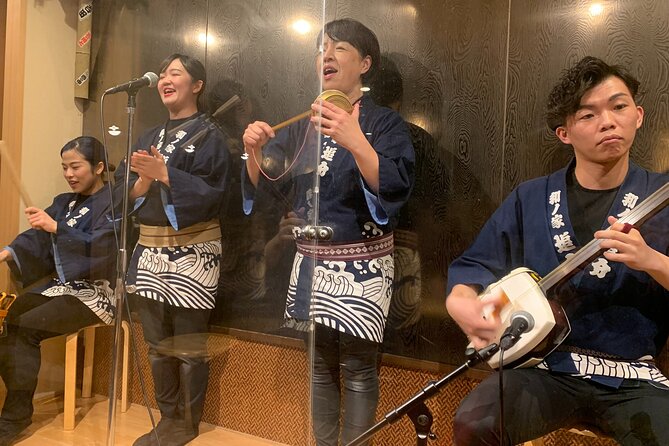
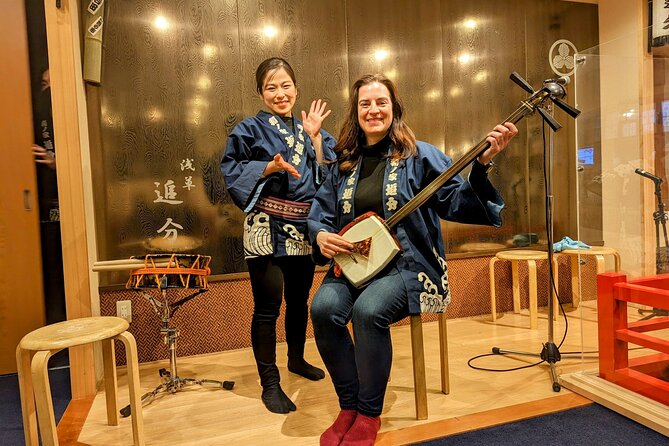
The best part of this four-hour experience comes after the Asakusa walk: you settle into a small Japanese restaurant for dinner and a 40-minute live Tsugaru shamisen concert. This is not background music in a big theater. The performers play close to the diners, then meet you afterward.
I like two things right away. First, the guide-led route gives you useful context for Senso-ji instead of leaving you to puzzle over the gates, lanterns, and temple customs. Second, dinner, a welcome drink, and the concert are bundled together, which makes an evening in Asakusa easy to plan. The main consideration is price: at $218.91 per person, this is a special-occasion outing rather than a cheap dinner.
Key points to know before booking
- A small-group Asakusa walk: The group is capped at eight, with stops at the Asakusa Culture Tourist Information Center, Kaminarimon, Nakamise Street, Hozomon, and Senso-ji Temple.
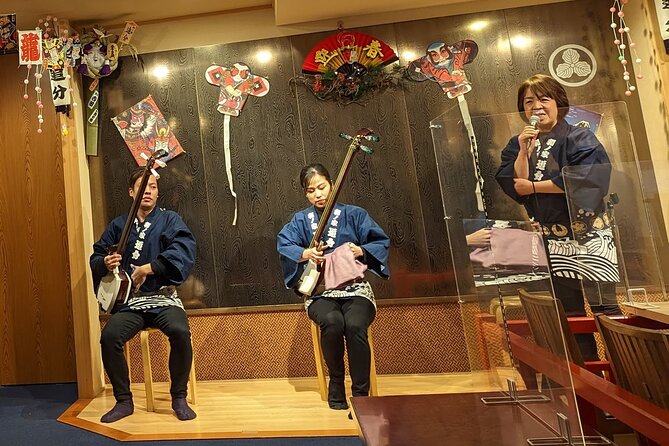
- A close-up shamisen concert: You get 40 minutes of traditional music by award-winning performers in a small restaurant.
- Dinner is part of the plan: The price includes a Japanese meal and one welcome drink. Additional drinks cost extra.
- The evening covers about a mile on foot: Wear comfortable shoes for the walk from the meeting point to the restaurant.
- Local guides add the context: Guides named Akiko and Yoko have led this experience, with explanations of Asakusa’s history and temple complex.
- It suits a compact Tokyo evening: Start at 5:30 pm and finish at the restaurant, with no hotel pickup or drop-off.
Why the shamisen concert is the heart of the evening
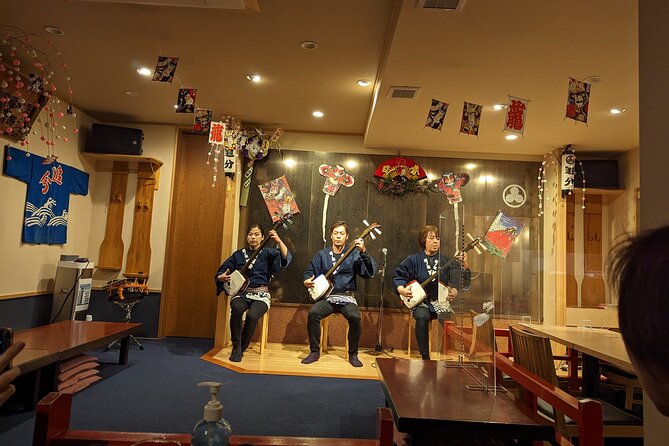
The Tsugaru shamisen is a three-stringed Japanese instrument with a bright, percussive sound. In a small restaurant, the music should feel direct and physical, not distant or polished into a stage production.
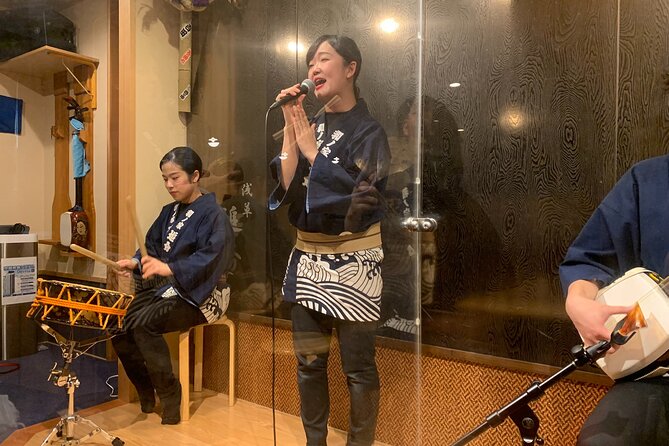
This concert lasts about 40 minutes and features award-winning performers. The program also includes other traditional Japanese instruments, so you are not getting only a quick demonstration before dinner. You have time to listen closely, watch the musicians’ technique, and enjoy the setting.
The small room matters. With a maximum of eight people on the tour, the performance is designed for a limited audience. That gives the evening a personal feel, and the chance to meet the musicians afterward adds something you would not get from a standard cultural show.
You should know what this is not. It is not a full-length concert with a large production, formal theater seating, or a long explanation of every song. The music is one part of a broader evening that combines sightseeing, dinner, and a live cultural performance.
More Tokyo traditional music and dance shows:
- Tokyo: Japanese Dance Cabaret Theater Asakusa-Kaguwa Ticket
★ 4.8 · 2,270 reviews - Tokyo: KABUKI Show at Kabukiza Theatre Admission Ticket
★ 4.8 · 152 reviews - Tokyo: KABUKI, BUNRAKU, etc. presented by National Theatre
★ 4.6 · 135 reviews
Starting above Asakusa at the Culture Tourist Information Center
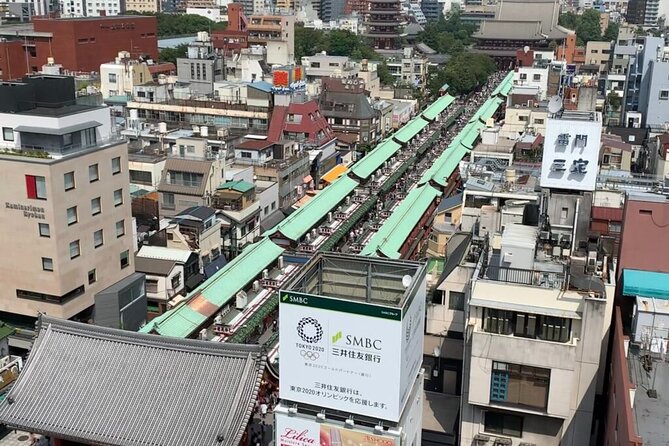
The meeting point is the Asakusa Culture Tourist Information Center at 5:30 pm. The building has an open terrace observation deck on its top floor, where you can get a wide view over the district.
This is a smart first stop. Asakusa can feel confusing at street level, especially when you are trying to connect the Kaminarimon, Nakamise Street, and Senso-ji Temple. From above, your guide can help you understand how the area fits together before you begin walking.
You only spend about 15 minutes here, so do not expect a long viewing session. Think of it as a quick orientation and a chance to look across the rooftops. It also gives you a useful starting point for the evening, especially if this is your first visit to Asakusa.
The tour is marketed as a way to explore the district away from the biggest daytime crowds. Still, Asakusa is a major sightseeing area, and conditions can vary. The small group helps you move more easily, but you should not expect an empty temple district.
Kaminarimon and its enormous red lantern
From the information center, the walk continues to Kaminarimon, or Thunder Gate. Its giant red lantern is one of Tokyo’s most familiar sights, and the gate marks the entrance to the Buddhist temple and Shinto shrine area.
The stop itself is brief, about five minutes. That is enough for a quick explanation and photographs, but not enough for a long talk about every detail. The value comes from having a guide point out what you are seeing and explain how the gate functions as the entrance to the religious complex.
This is also where the evening begins to feel distinctly Asakusa. The area is old Tokyo in character, with a strong connection to traditional entertainment, temples, and local neighborhood life. Your guide can give the sights a human scale rather than treating Kaminarimon as just another photo stop.
Walking Nakamise Street toward Senso-ji
Nakamise Shopping Street leads from Kaminarimon toward Senso-ji. The route is lined with small shops and has a friendly commercial character that may surprise you if you expect a quiet, solemn approach to a temple.
The planned stop is short, around five minutes, but you still walk along the street as part of the route. This is a place where you can notice the contrast between religious landmarks and the everyday business of selling snacks, souvenirs, and local goods.
Do not count on having a long shopping break. The tour’s purpose here is to connect the major Asakusa sights, not to give you free time at every shop. If you want to browse carefully or buy gifts, you may need to return to Nakamise on your own another day.
That said, the short visit keeps the evening moving. You have several stops before dinner, and the tour avoids turning the first half into an unstructured shopping trip.
More Tokyo dinner experiences:
- Tokyo Bar Hopping Tour in Shinjuku (All-You-Can-Drink + Dinner)
★ 5.0 · 3,587 reviews - Tokyo: Sumo Show and Dining Experience
★ 4.8 · 2,742 reviews - Sumida River: Japanese Traditional Yakatabune Dinner Cruise
★ 4.6 · 779 reviews - Tokyo Bay Yakatabune Dinner/Day Cruise with Japan Show and Drinks
★ 4.5 · 473 reviews
Hozomon and Senso-ji Temple
Hozomon is the inner of the two large gates leading toward Senso-ji. Its name means Treasure-House Gate, and the upper level houses important Buddhist objects. Like Kaminarimon, the stop lasts about five minutes, so your guide’s explanations are important.
Senso-ji is Tokyo’s oldest temple and one of the city’s most significant religious sites. A five-story pagoda stands nearby, and the temple complex gives you a strong sense of why Asakusa remains such an important part of Tokyo’s identity.
You will not get a long private visit inside the temple from this schedule. The Senso-ji stop is also about five minutes, which makes the tour more of an introduction than a complete temple study. If you want time for prayer, detailed photography, or a slower look at the grounds, plan a separate visit.
I still like having the temple included. The concert makes more sense when placed beside the religious and traditional culture of Asakusa. Instead of spending the evening only at a restaurant, you first see the neighborhood where many of the district’s cultural references begin.
A roughly one-mile walk before dinner
The walk from the tourist information center to the restaurant is about a mile, give or take. That is a modest distance for most people, but it is worth planning for because the route includes several stops and can take place after a full day of sightseeing.
Comfortable shoes are the sensible choice. The tour is described as suitable for most people and is near public transportation, but hotel pickup and drop-off are not included. You need to reach the information center yourself and make your own way home after the meal.
The walking portion helps justify the four-hour length. You are not simply being driven from one attraction to the next. You move through Asakusa on foot, see how the main landmarks connect, and arrive at the restaurant with a better sense of place.
Still, check the meeting point carefully before you leave. The listed address is in Taito City, and the tour begins promptly at 5:30 pm. Since the group is small, a late arrival could be more disruptive than on a large bus tour.
Dinner in a small Japanese restaurant
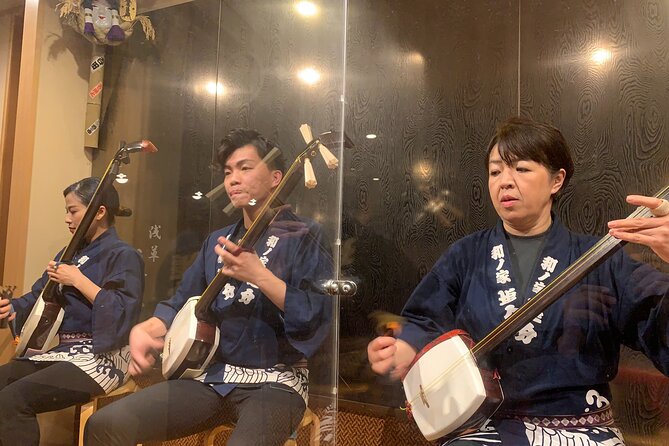
The final stop is a Japanese restaurant at 5-chome-37-7 Asakusa. The tour ends there, and the restaurant is where you watch the live performance over dinner.
Dinner includes a Japanese meal and one welcome drink. The meal features a range of familiar Japanese staples, giving you more than a single dish or snack. Additional drinks can be ordered separately, but they are not included in the tour price.
The restaurant has limited seating, which is part of the appeal and also a practical constraint. This is an intimate setting, not a large dining hall. You should expect the music and meal to share the same space, with the performers close to the tables.
Vegetarians should mention their dietary needs when booking or as early as possible. One vegetarian diner received special attention and found there was plenty to eat. That is encouraging, but you should still communicate your requirements clearly rather than assume the standard meal will suit you.
The dinner gives the evening a relaxed second half. After the walking tour, you can sit down, eat, and listen without needing to arrange another reservation. At the same time, this format may not suit you if you want a quiet meal with no performance or if you prefer to choose every dish independently.
What the $218.91 price really covers
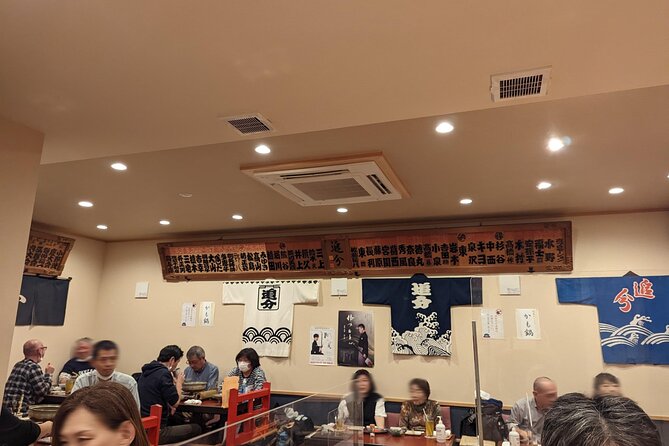
At $218.91 per person, this experience is expensive compared with simply visiting Senso-ji or ordering dinner in Asakusa. You are paying for several services in one evening: a small-group guide, the observation deck visit, the Asakusa walk, dinner, a welcome drink, and a 40-minute concert by award-winning musicians.
The value improves if you would otherwise book separate activities. A temple visit is free, but arranging a private guide, finding a suitable traditional performance, and reserving a small restaurant could take time. Here, those pieces are joined into one schedule.
The price makes less sense if your main goal is only to see Senso-ji. You can visit the temple without this tour, and the short stops do not allow the kind of detailed exploration a temple specialist might provide. The experience earns its cost through the combination of personal guiding, food, and music.
Group size is important to that calculation. With no more than eight people, the guide can keep the walk manageable and the restaurant setting personal. You are not paying for a huge show with mass seating. You are paying for a compact cultural evening with a limited audience.
Who will get the most from this evening
I would choose this for a first or second visit to Tokyo, especially if you want an easy introduction to Asakusa without spending several days arranging separate plans. It works well for couples, small families, and anyone who enjoys food paired with live culture.
It is also a good choice if you want to meet local musicians rather than only watch a performance from a distance. The chance to speak with the performers afterward is a genuine benefit, particularly for anyone curious about traditional Japanese instruments.
You may want something else if you dislike group schedules or prefer to linger. The temple stops are short, the route has a fixed pace, and dinner comes with a planned performance. Independent visitors who want long shopping time on Nakamise Street or a quiet temple visit should plan those separately.
The small group is helpful, but it does not turn the experience into a private tour. The maximum is eight people, and confirmation is subject to availability. The tour also requires a minimum number of participants, so the operator may offer another date or experience if that minimum is not met.
Timing, weather, and cancellation details
The tour begins at 5:30 pm and lasts about four hours. It ends at the restaurant rather than returning you to a hotel, so you should plan your onward route from Asakusa.
Good weather is required. If poor weather causes cancellation, you can be offered another date or a full refund. You can also cancel for a full refund up to 24 hours before the local start time. Changes or cancellations inside that 24-hour window are not accepted and are not refunded.
The activity is near public transportation, and most people can participate. No hotel pickup or drop-off is included, so the meeting point and the end point both matter when you plan your evening.
Should you book the Asakusa shamisen dinner?
Book it if you want three things in one evening: a guided look at Asakusa, a traditional Japanese meal, and a close-up concert in a small room. The experience is especially appealing if you value personal contact with performers and want someone else to handle the dinner reservation.
Skip it if $218.91 feels high for a four-hour outing, or if you want extended time at Senso-ji and Nakamise Street. You can see the temple area independently for far less.
For the right visitor, the appeal is not one spectacular landmark. It is the flow from city views, to temple gates, to dinner, to live music. That makes this a strong choice for a cultural evening, provided you are comfortable with a fixed schedule, a short walking tour, and a restaurant meal shared with a small group.
FAQ
How long does the experience last?
The experience lasts approximately four hours, beginning at 5:30 pm.
Where does the tour begin?
It begins at the Asakusa Culture Tourist Information Center in Taito City, Tokyo.
Where does the tour end?
The tour ends at the Japanese restaurant at 5-chome-37-7 Asakusa, where the live performance takes place.
Is dinner included?
Yes. Dinner and one welcome drink are included. Additional drinks can be ordered separately and are not included in the tour price.
How long is the shamisen concert?
The live concert lasts 40 minutes and features traditional Japanese instruments performed by award-winning musicians.
How large is the group?
The experience has a maximum of eight participants.
Is hotel pickup included?
No. Hotel pickup and drop-off are not included.
Newly reviewed around Tokyo
- Tokyo Asakusa:Calligraphy & Make T-shirt Activity★ 5.0 · 62 reviews
- 1 Hour Travel around Tokyo with a Professional Photographer★ 5.0 · 3 reviews
- Travel Tokyo with Your Own Personal Photographer★ 5.0 · 43 reviews
- Intercity Shuttle, Tokyo to Haneda /Narita /Yokohama /Makuhari★ 5.0 · 5 reviews
- Train in Samurai Swordsmanship and Defeat the Demon in Tokyo★ 5.0 · 5 reviews
- Shuttle Van 6hr Tokyo Tour to-and-from Tokyo, Yokohama and Narita★ 5.0 · 9 reviews
- Kickboxing & Body Training with EX-Pro Fighter★ 5.0 · 4 reviews
- Traditional Japanese Knife Sharpening Class★ 5.0 · 18 reviews
Tokyo Traditional Music and Dance Shows, compared.

Japanese Dance Cabaret Theater Asakusa-Kaguwa Ticket
Read our review →
KABUKI Show at Kabukiza Theatre Admission Ticket
Read our review →
KABUKI, BUNRAKU, etc. presented by National Theatre
Read our review →
Tokyo’s Authentic and Finest Taiko Drumming Experience
Read our review →
Tokyo’s Authentic and Finest Taiko Drumming Workshop
Read our review →
Authentic Japanese Dance Show ticket by professionals
Read our review →
Browse the lists this tour appears in