
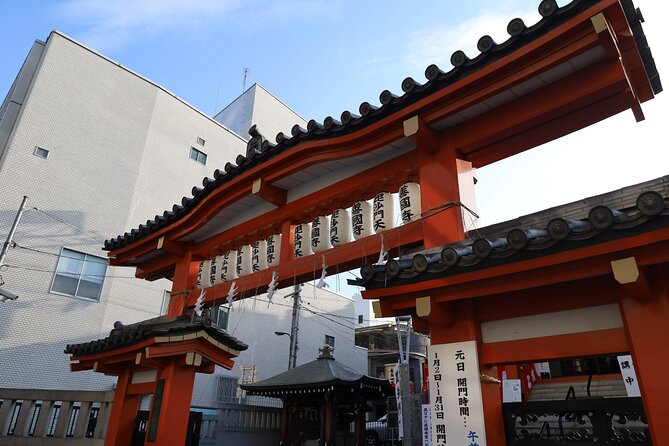
Reviewed · TOKYO WALKING TOURS
Private Walking Tour: The Little Kyoto of Tokyo, Kagurazaka
Kagurazaka gives you an old-Tokyo walk without leaving central Tokyo. In two hours, you move from Kengo Kuma’s modern architecture to shrines, temples, cobbled lanes, black wooden fences, and the stone remains of an Edo-era castle gate. It is a smart pick if you want a quieter side of the city.
I like the private format, which lets you ask questions instead of following a fixed lecture. I also like the mix of samurai history, geisha culture, religion, food, and literature in one compact neighborhood. The main drawback is simple: at $104.05 per person, this is a substantial price for a two-hour walk, and snacks are extra.
Key points to know before booking
- Kagurazaka’s cobbled lanes offer a calm change from Tokyo’s major sightseeing districts.
- Five historic stops include Akagi Shrine, Zenkoku-ji Temple, Tsukudo Hachiman Shrine, and the old Ushigome Gate.
- A private guide means only your group participates, with room for questions and a flexible pace.
- The food is not included, but you can buy sweets, doughnuts, tofu desserts, croquettes, and other local treats.
- The route begins at Kagurazaka Station and ends at Iidabashi Station, making it easy to continue sightseeing afterward.
- English, French, German, and Spanish guiding is available.
Why Kagurazaka feels unlike most of central Tokyo
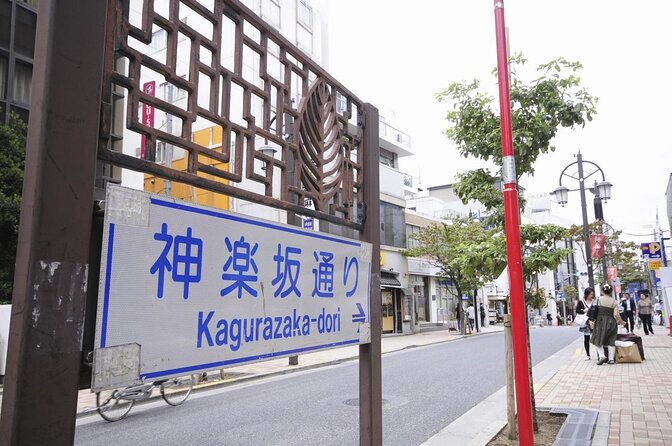
Kagurazaka sits near Iidabashi, but its mood is far removed from the city’s large stations and bright commercial centers. The main street slopes through shops and restaurants, while side lanes lead into a neighborhood of stone paving, old walls, temples, shrines, and homes.
The area grew around the outer edge of Edo Castle. Tokugawa Iemitsu, the third shogun, had Kagurazaka Street built in 1636. That date matters because the route is not simply a pleasant stroll through an old-looking district. It connects you with the planning and power of the Edo shogunate.
Kagurazaka also developed a reputation as an entertainment district with geisha houses. You should not book this walk expecting a staged geisha performance. Instead, the neighborhood’s layout, lanes, restaurants, and traditional details provide clues to that past. The guide can help explain how the area changed while keeping parts of its older character.
I especially like that the tour does not focus on only one version of Japan. You get religious history at the shrines and temple, military history at the castle gate, modern design at la kagū, and everyday shopping along the way. That range makes the walk useful early in a Tokyo visit, when you are still trying to understand how old and new Japan fit together.
More Tokyo walking tours:
- Tokyo Tsukiji Fish Market Food and Culture Walking Tour
★ 5.0 · 3,184 reviews - Tokyo: Imperial Palace and Shogun Historical Walking Tour
★ 5.0 · 2,251 reviews - Tokyo: Shinjuku Local Bar and Izakaya Guided Walking Tour
★ 4.9 · 1,794 reviews
Starting at la kagū with a modern Tokyo view
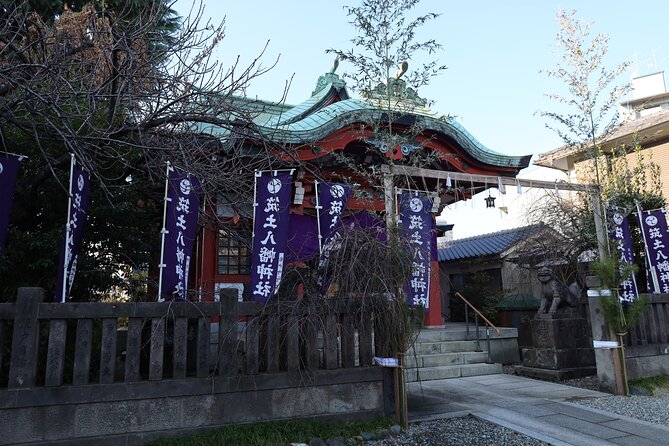
The walk begins at AKOMEYA TOKYO in la kagū, a commercial building created from a former Shinchosha Publishing warehouse. Architect Kengo Kuma renovated the structure, giving you a quick look at contemporary Japanese design before the route turns toward older streets.
AKOMEYA TOKYO sells high-quality food items such as rice, dashi, and seasonings, along with other goods. The stop lasts about 10 minutes and admission is free. It is less a major attraction than a useful opening note: Kagurazaka is not a preserved museum district. Modern shops and design sit directly beside historic religious sites and residential lanes.
If you like Japanese food culture, this is also a good place to notice ingredients and products you may see later in local shops. Do not expect a full tasting session, since snacks are not included in the tour price. You can purchase local items on your own, but the short stop is mainly about the building and neighborhood context.
Akagi Shrine and Kagurazaka’s religious side
About 15 minutes are set aside for Akagi Shrine. Its story reaches back to 1300, when Ohgoshi Hikotaro Shigeharu moved from the foot of Mount Akagi in Gunma Prefecture and founded the shrine. It was later relocated to its present site in 1555.
That origin gives the shrine a direct link to migration within Japan. A local family brought its religious traditions from another region, and the shrine became part of Kagurazaka’s identity. Your guide can explain the dates and legends in a way that a quick independent visit may not.
Akagi Shrine is also a useful reminder that Tokyo’s neighborhoods often preserve layers of time in very small spaces. You are not walking through one continuous historic zone. You are moving between a modern retail building, a working shrine, shops, and homes, with the guide showing how those pieces connect.
The stop is free, but remember that shrine visits are active religious experiences, not only sightseeing opportunities. Follow your guide’s lead on where to stand and how to behave. The tour description promises cultural insight, not a formal ceremony.
Zenkoku-ji Temple and the Bishamonten connection
The next major stop is Zenkoku-ji Temple, also called Bishamonten. Tokugawa Ieyasu established the temple in 1595 in Nihonbashi Bakurocho, under the idea that it would protect the nation. Fires later forced relocation, and the temple eventually became part of Kagurazaka.
The temple gives the walk a clear connection to the early Edo shogunate. At Akagi Shrine, you heard about a much older local religious tradition. Here, the story links directly to Tokugawa power and the political world that shaped Tokyo.
Allow about 15 minutes. That is enough time for an explanation and a look around, but not enough for a long, unhurried temple visit. If you want to stop for extended prayer, photography, or quiet observation, you may need to discuss the pace with your guide.
This is one of the places where a private tour earns its keep. A guide can explain why Bishamonten matters and place the temple within Kagurazaka’s history instead of leaving you with only a name and a photo.
A completely different kind of day in Tokyo:
- Mt Fuji and Hakone 1-Day Bus Tour Return by Bullet Train
★ 5.0 · 26,383 reviews - 1-Day Tokyo Bus Tour
★ 5.0 · 14,250 reviews - Tokyo: teamLab Planets TOKYO Digital Art Museum Entry Ticket
★ 4.6 · 9,779 reviews - Mt Fuji & Hakone Cruise, Drum Show Bullet Train 1 Day from Tokyo
★ 4.0 · 7,413 reviews
Tsukudo Hachiman Shrine and older legends
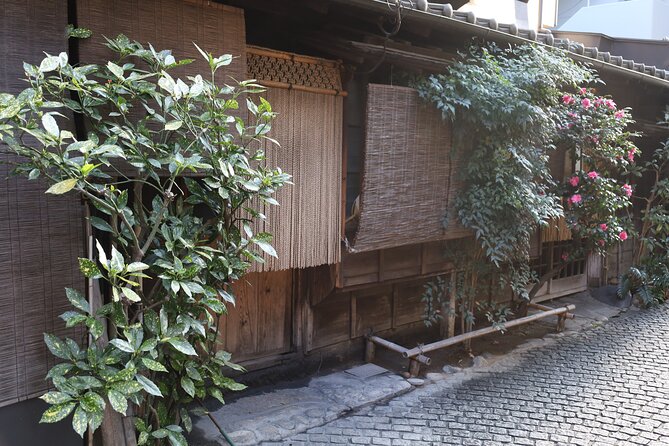
Tsukudo Hachiman Shrine receives another 15 minutes. It is believed to have been founded about 1,200 years ago, making it one of the oldest religious sites on the route.
The shrine is also associated with a statue of Amitabha Buddha said to have been carved by Saicho. That detail shows how Japanese religious traditions can overlap. A site called a shrine may carry Buddhist stories, while a temple may reflect political and social roles as well as religious ones.
You do not need specialist knowledge to enjoy this stop. The value is in hearing how belief, legend, and local identity developed over many centuries. The guide can also help separate firm historical dates from traditional stories, something that is difficult to do from a short sign in English.
Again, the visit is free. The short time allocation keeps the tour moving, but it also means this is a sampler. If sacred sites are your main interest, you may wish you had more time at each one.
The Ushigome Gate and the scale of Edo Castle
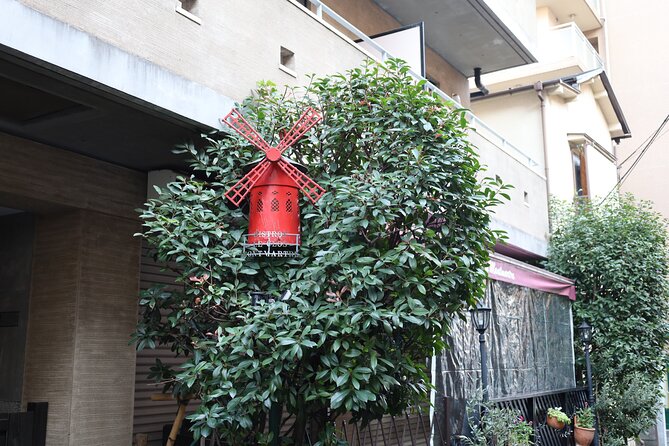
The final listed stop is the remains of Ushigome Gate, with about 10 minutes for the visit. The gate formed part of the outer moat of Edo Castle and was built in 1636, the same period when Kagurazaka Street was constructed.
Today, you see stone remains rather than a complete gate. That may sound modest, but the stones help you picture the size and strength of the original structure. The site is valuable because it turns a date in a history book into something physical beneath your feet.
The name Ushigome is tied to the area’s old identity, and the guide can connect the gate with the wider structure of Edo Castle. This is not a grand castle viewpoint or a reconstructed building. It is a compact historical stop, best appreciated when someone explains what is missing and why the remaining stonework matters.
I like ending near this remnant because it gives the walk a strong sense of place. You finish not with a souvenir shop, but with a piece of the city’s former defenses and a better idea of how Kagurazaka fit into Edo.
Cobblestones, black fences, and food along the way
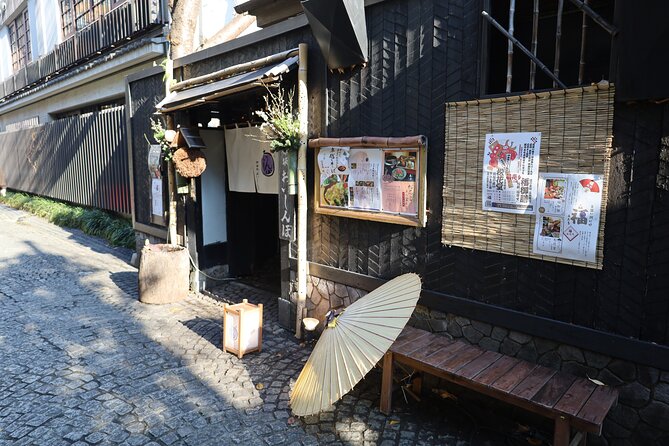
The stated stops are only part of the experience. The walking route itself is the main event. Kagurazaka is known for cobbled paths, black wooden fences, narrow lanes, and unexpected turns. You may encounter heart-shaped stones, small details that are easy to miss when you are focused only on major attractions.
The neighborhood also has connections to geisha culture. That does not mean you should treat local people as photo subjects or expect a guaranteed encounter. It means the guide can point out the physical setting and explain how Kagurazaka became known for traditional entertainment.
Food is another pleasant layer, but it is not part of the included package. You might find traditional Japanese sweets, doughnuts, tofu desserts, or croquettes from local butcher shops. These are optional purchases, so bring some spending money if tasting the neighborhood is important to you.
Because the walk lasts about two hours, you will not have time to sample everything. I would choose one or two items rather than trying to turn the tour into a full food crawl. If you are hungry, ask the guide early whether a short purchase fits the schedule.
What the private format is worth at $104.05
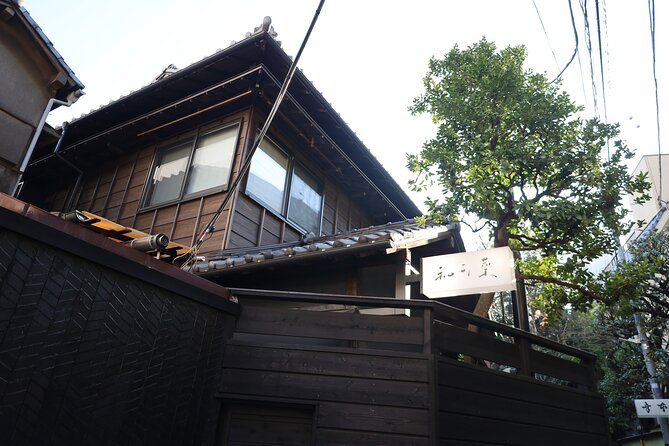
At $104.05 per person, this is not a bargain sightseeing walk. The price makes more sense for a small private group that values personal attention, cultural explanation, and the ability to ask questions.
A private tour is particularly useful if your group includes people with different interests. One person can ask about shogun-era politics, another about architecture, and another about food or religion. You are not limited to the pace of a large group, although the two-hour schedule still puts a limit on how long you can linger.
The experience is also sold with group discounts, so the per-person cost may work better for a larger party. Since only your group participates, families and friends can keep the outing focused on their own questions.
The format has limits. It is not a full-day cultural program, a food tour with included tastings, or a broad survey of Tokyo. You pay for a tightly focused neighborhood walk with a guide. If you mainly want photographs and free time, exploring Kagurazaka independently will cost less.
The strongest value comes from interpretation. Without a guide, you can see a shrine, a temple, and old stones. With the right guide, you understand why those places are there and how they relate to one another.
Guides, language, and the feel of the walk
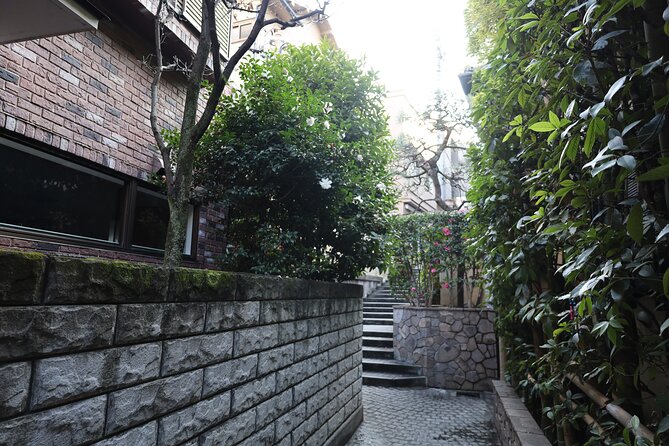
The tour includes a multilingual local guide in English, French, German, or Spanish. Specific guides associated with this experience include Shinya Yamada and Chiharu Iida. The available guide may vary, so you should confirm your language and guide details when the booking is confirmed.
The personal reports connected with this experience emphasize an entertaining manner, clear local explanation, and the chance to ask many questions. One small group of four found that format especially useful. That is a good clue about how to get the most from the walk: arrive with a few questions instead of treating it as a passive sightseeing loop.
The tour is private, but private does not mean fully custom unless the guide agrees to adjustments. The listed route has five main stops and a two-hour duration. If you want to spend much longer at one shrine or add shopping time, ask before the walk begins.
The experience operates near public transportation, and most people can participate. Service animals are allowed. Wear shoes suitable for walking on uneven cobblestones, and keep the timing in mind if you plan another reservation immediately afterward.
Meeting points and planning the day
You meet at Kagurazaka Station, at the Yaraicho area of Shinjuku City. The walk ends at the west exit of JR Iidabashi Station. That point-to-point design is useful because you do not have to return to the starting station.
I would place this tour on a day when you want a slower morning or afternoon in central Tokyo. The listed operating hours run from 9:00 a.m. to 8:30 p.m., Monday through Sunday, during the stated operating period. Confirmation is sent within 48 hours of booking, subject to availability.
The tour is booked, on average, about five days ahead. That does not guarantee any particular date, but it suggests that last-minute planners should not assume a private guide will be available.
The cancellation rule is strict. The experience is non-refundable and cannot be changed for any reason, so book only when your plans are firm.
Who should book this Kagurazaka walk
I would recommend this tour to you if you have already seen Tokyo’s biggest districts and want a quieter neighborhood with more local texture. It also suits first-time visitors who want a short introduction to Japanese history without committing to a full-day excursion.
History fans will appreciate the links to the Tokugawa shogunate, Edo Castle, and the old gate. Architecture fans get the contrast between Kengo Kuma’s renovation and traditional streets. Food-minded visitors can use the route to find local sweets and savory snacks, though they should budget extra for purchases.
Families and small groups can benefit from the private setup, especially if children or older relatives need a flexible pace. The route is still a walking tour, so anyone who has difficulty with cobbled or uneven surfaces should consider that before booking.
I would skip it if your priority is a large number of major monuments, included food, or a very low-cost activity. The appeal is subtle: the neighborhood details, the questions you ask, and the connection between ordinary streets and Tokyo’s past.
Should you book the Little Kyoto of Tokyo tour?
Book it if you want a calm, guided look at Kagurazaka and value context more than a checklist of famous sights. The combination of private guiding, five historic stops, local food possibilities, and a convenient finish at Iidabashi makes it a useful two-hour addition to a Tokyo itinerary.
Think carefully about the price and the strict cancellation rule. You are paying for a focused private introduction, not for meals or a full day of sightseeing. If that sounds right, Kagurazaka offers a rewarding change of pace, with enough history to make its quiet lanes feel meaningful.
FAQ
How long does the Kagurazaka walking tour last?
The tour lasts approximately two hours.
Where does the tour start?
The meeting point is Kagurazaka Station in the Yaraicho area of Shinjuku City, Tokyo.
Where does the tour end?
The walk ends at the west exit of JR Iidabashi Station.
Is this a private tour?
Yes. Only your group participates in the activity.
Which languages are available?
The local guide service is available in English, French, German, and Spanish.
What places are included on the route?
The listed stops are AKOMEYA TOKYO in la kagū, Akagi Shrine, Zenkoku-ji Temple, Tsukudo Hachiman Shrine, and the remains of Ushigome Gate.
Are admission fees included?
Admission to the listed stops is free, and the tour includes those visits.
Are snacks included?
No. Snacks are not included. You can buy local items such as Japanese sweets, doughnuts, tofu desserts, and butcher-shop croquettes separately.
Is the tour suitable for most people?
Most people can participate, and service animals are allowed. The experience takes place on foot, including streets with cobblestones.
Can I cancel for a refund?
No. The experience is non-refundable and cannot be changed for any reason after booking.
Newly reviewed around Tokyo
- Tokyo Asakusa:Calligraphy & Make T-shirt Activity★ 5.0 · 62 reviews
- Intercity Shuttle, Tokyo to Haneda /Narita /Yokohama /Makuhari★ 5.0 · 5 reviews
- 1 Hour Travel around Tokyo with a Professional Photographer★ 5.0 · 3 reviews
- Travel Tokyo with Your Own Personal Photographer★ 5.0 · 43 reviews
- Shuttle Van 6hr Tokyo Tour to-and-from Tokyo, Yokohama and Narita★ 5.0 · 9 reviews
- Kickboxing & Body Training with EX-Pro Fighter★ 5.0 · 4 reviews
- Train in Samurai Swordsmanship and Defeat the Demon in Tokyo★ 5.0 · 5 reviews
- Traditional Japanese Knife Sharpening Class★ 5.0 · 18 reviews
Tokyo Walking Tours, compared.
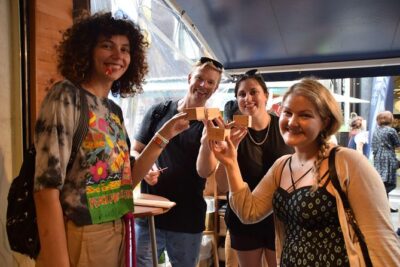
Tokyo Tsukiji Fish Market Food and Culture Walking Tour
Read our review →
Imperial Palace and Shogun Historical Walking Tour
Read our review →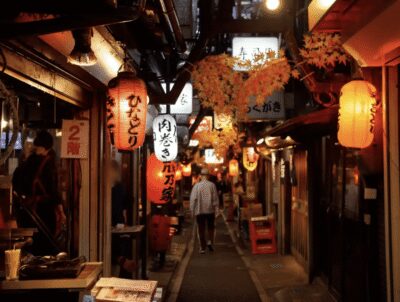
Shinjuku Local Bar and Izakaya Guided Walking Tour
Read our review →
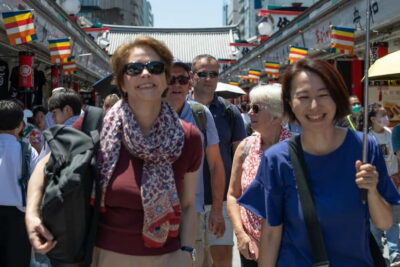
Asakusa Walking Tour with Sensoji Temple Visit
Read our review →
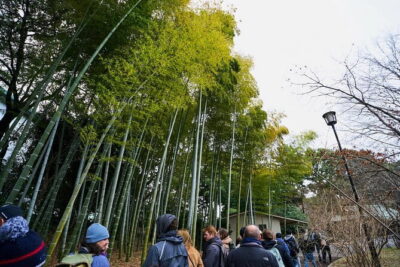
Tokyo Castle & Imperial PalaceーShogun Walking Tour
Read our review →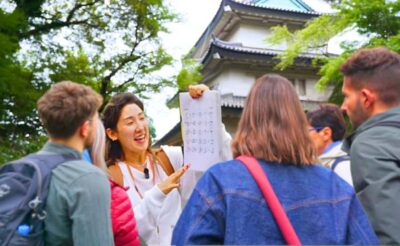
Browse the lists this tour appears in