
Reviewed · CYCLING TOURS
2.5 Hour-Guided Cycle Tour in the Central Tokyo
Tokyo can feel overwhelming from street level, but a bicycle gives you a calmer view. This 2.5-hour ride with Takeshi moves through residential lanes, riverside paths, temple grounds, and old shopping streets around Asakusa and Sumida. You get close to daily life instead of spending the whole outing on major roads.
I like the gentle pace and the mix of famous sights with quieter places such as Honryuin Matsuchiyama Shoden and Imado Shrine. I also like the small-group format, with no more than six people, and the chance to stop at local food stalls. The main consideration is the bike size: the folding bikes suit people from 140 to 180 centimeters tall, so taller riders should contact the operator ahead of time.
Key points to know before you ride
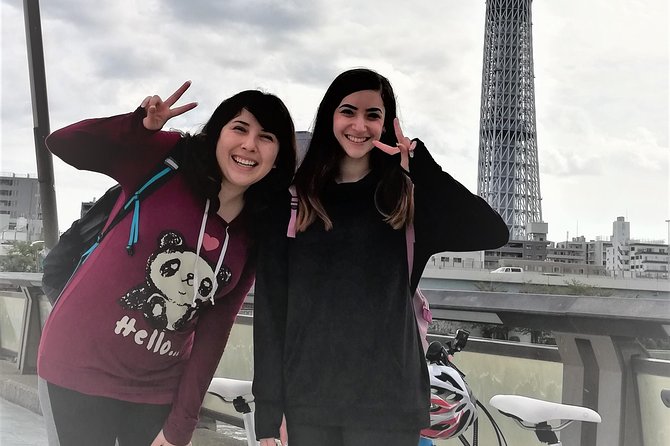
- Ride below Tokyo Skytree: You see the tower from several angles while moving through the streets around Sumida.
- Visit two quieter religious sites: Honryuin Matsuchiyama Shoden and Imado Shrine offer a slower break from Asakusa’s crowds.
- Use a compact folding bike: The provided bikes have 14 to 20-inch wheels and suit riders from 140 to 180 centimeters.
- Expect a recreational pace: The ride is suitable for families and casual cyclists, including children aged 13 and 16 according to the experience details.
- Meet at Hikifune Station: The starting point is in a shared office near Higashimukojima Station and public transport.
- Keep the rest of your day free: The activity lasts about two and a half hours and returns to the same meeting point.
Why a bicycle works well in eastern Tokyo
This is not a race, and it is not a long-distance cycling challenge. It is a short guided outing that links several sights in an area where walking between every stop would take more time and energy.
The route covers eastern Tokyo, especially Sumida and Asakusa. These districts give you a useful contrast. Senso-ji is one of the city’s best-known temples, while nearby backstreets show a quieter side of Tokyo with local homes, small businesses, older shopping areas, and ordinary streets.
A bike also lets you see how the city changes from one block to the next. You may pedal beside the Sumida River, cross a bridge, pass below Tokyo Skytree, and then turn into a narrow neighborhood street. That variety is the point.
The tour is described as private for your group, with a maximum of six people. That matters here. A small group is easier to manage at temple entrances, on shared paths, and when stopping for photographs. It also gives Takeshi more room to adjust the speed and explain what you are seeing.
More Tokyo bike tours:
- Tokyo Guided Small-Group Biking Tour
★ 5.0 · 1,250 reviews - Tokyo Great Cycling Tour
★ 5.0 · 811 reviews - Tokyo Top Highlights 3h Guided E-bike Tour
★ 5.0 · 714 reviews
Meeting Takeshi near Hikifune Station
The meeting point is Tokyo Backstreets Bike Tour Japan, inside the shared office called Synapse at 2-24-14 Higashimukojima, Sumida City, Tokyo 131-0032. The experience information places it near public transportation and identifies Hikifune Station as the easy reference point.
Check the exact directions before setting out. The meeting point is not presented as a grand street-front shop, but as a business inside a shared office. Giving yourself extra time to find the building is sensible, especially if you are unfamiliar with Tokyo’s station exits.
At the start, you receive a helmet and a folding bicycle. These are compact city bikes rather than full-size touring bicycles. Riders between 140 and 180 centimeters should fit the stated range, while anyone over 180 centimeters should contact the operator in advance.
A tandem bike may be available if requested at least three days before the booked date. That is a useful option for a couple or family member who prefers to ride together, but it needs to be arranged ahead of time rather than requested on the spot.
Along the Sumida River and beneath the Skytree
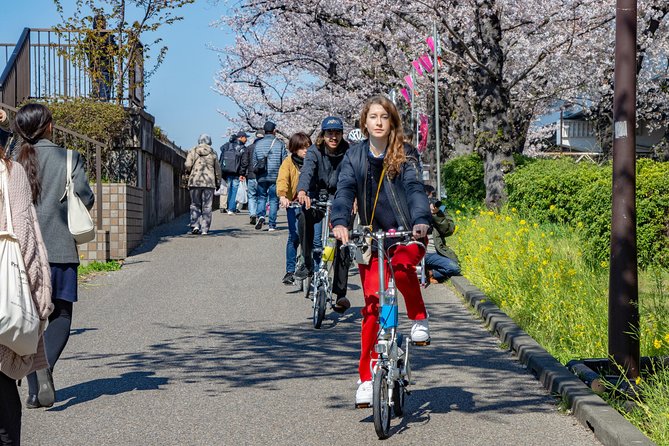
One of the pleasant early sections follows the bank of the Sumida River. In spring, the river is known for its cherry blossoms, so the setting can be especially attractive during that season.
The river ride gives you space before the temple visits begin. It also puts Tokyo Skytree into perspective. Rather than seeing the tower only from a distant viewing platform, you watch it appear between buildings, above neighborhood streets, and from different points along the route.
The tour later crosses a bridge over the Sumida River. This is a simple but worthwhile part of the ride, since bridges open up broad views of the water and surrounding city. The route then continues under Tokyo Skytree, giving you a close look at one of Tokyo’s most recognizable structures without making the tower itself the entire focus of the outing.
Your guide may take photographs during the tour. One solo rider specifically appreciated having a photo taken with Skytree, and another participant received photographs by email soon after the ride. That makes this a helpful feature if you are traveling alone or want a few pictures without relying on strangers.
Honryuin Matsuchiyama Shoden and the radish symbols
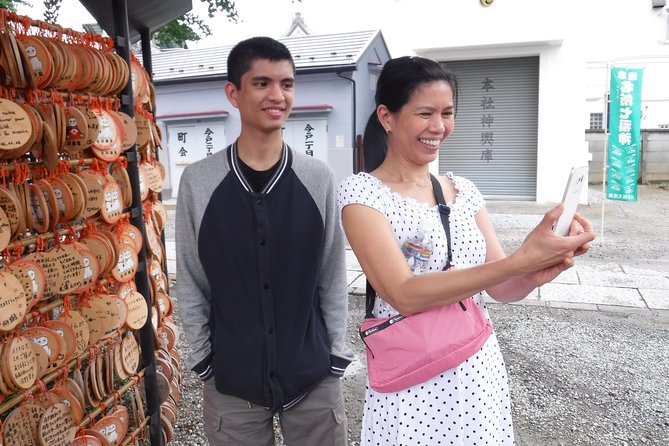
The first named temple stop is Honryuin Matsuchiyama Shoden, part of the wider Senso-ji temple tradition and founded in 595. You have about 20 minutes here, with no admission charge listed.
The temple is distinctive for its repeated images of daikon, or Japanese radishes, along with pouches. The radish represents minds caught in deep ignorance, while the pouch carries its own religious meaning. These symbols give the stop a clear visual identity and provide something specific to look for as Takeshi explains the site.
This is the kind of place that benefits from a guide. Without context, you might notice the radishes but miss why they appear throughout the temple. The stop is also a good change of pace after cycling, since you leave the bike and spend a few minutes on foot.
Do not expect a long temple visit with every building explored. Twenty minutes is enough for an introduction, a short look around, and photographs, but not a full religious study.
More guided tours in Tokyo:
- Tokyo 6hr Private Tour with Government-Licensed Guide
★ 5.0 · 3,902 reviews - Tokyo: Shinjuku Local Bar and Izakaya Guided Walking Tour
★ 4.9 · 1,794 reviews - Tokyo: Private City Highlights Tour with Local Guide
★ 4.8 · 1,433 reviews - Tokyo: Tsukiji Fish Market Guided Walking Tour
★ 4.9 · 1,397 reviews
Imado Shrine and Tokyo’s lucky-cat connection
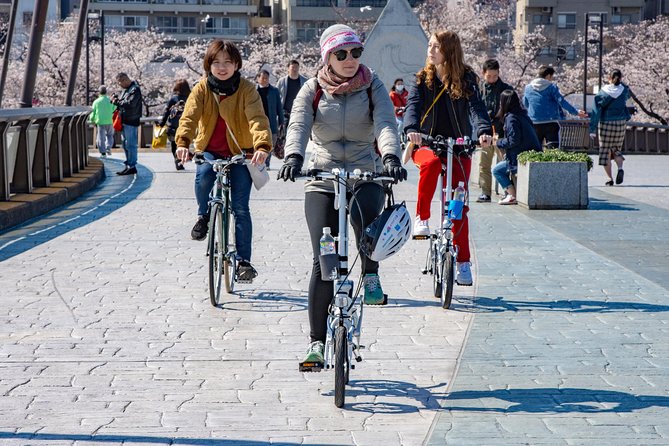
Next comes Imado Shrine, founded in 1063. The scheduled stop lasts about 15 minutes, and admission is free.
The shrine is known as a power spot for people seeking love or marriage partners. It is also associated with the maneki-neko, the beckoning cat figure often linked with good fortune. The short stop gives you time to see the grounds and hear the local connection without turning the tour into a lengthy shrine visit.
I like this pairing with Honryuin. The temple and shrine are close enough to fit into a short cycle, but they offer different settings and stories. One is marked by daikon and pouches, while the other appeals to people interested in relationships, luck, and popular Japanese customs.
As with any spiritual site, keep the visit respectful. Your guide can help explain what you are seeing, but the tour is not presented as a formal ceremony or religious service.
Senso-ji in a practical half-hour stop
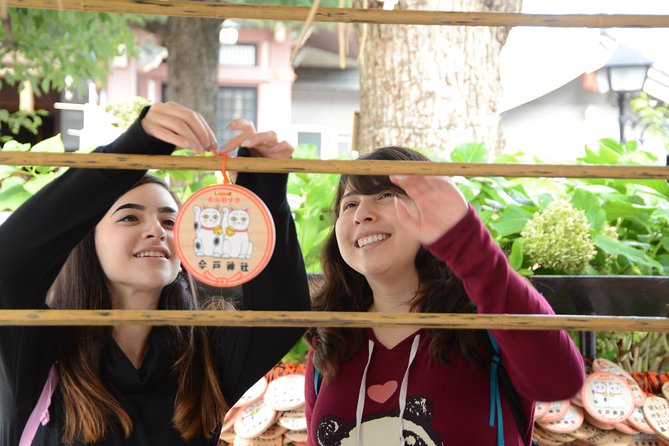
Senso-ji is the major name on the route. The bikes are parked nearby, and you stroll inside the temple area for about 30 minutes. There is no admission charge listed.
Senso-ji can be crowded, especially around its best-known entrance and shopping approach. The bicycle format helps by handling the awkward part of arriving with a group: you ride close, park, and continue on foot instead of spending the whole visit figuring out where to leave a bicycle.
Thirty minutes gives you a useful first look, but it is not enough for every corner of the temple precinct. If Senso-ji is a major priority for you, plan to return independently later, perhaps when you have more time to explore. On this tour, it functions as one part of a larger neighborhood route.
That balance is a strength. You see Tokyo’s famous temple, then move on before the whole afternoon disappears there. The outing is designed to connect well-known places with ordinary streets, not to provide a complete tour of every major monument.
Watching candy take shape at Asakusa Amezaiku Ameshin
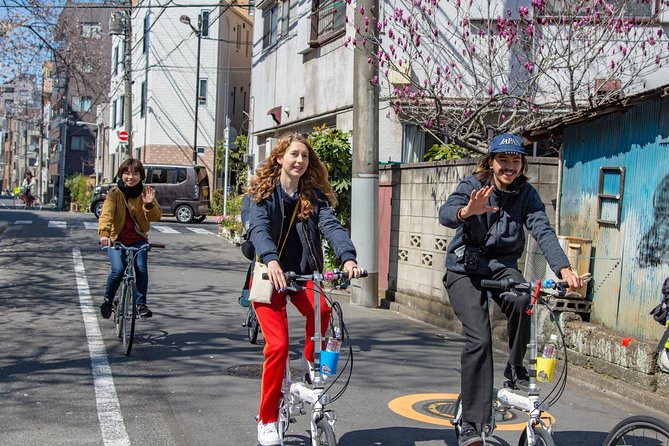
Asakusa Amezaiku Ameshin is a traditional Japanese craft candy shop. You can watch candy being shaped into artistic forms during a stop of about 15 minutes.
This is a small but memorable addition. It brings in a craft tradition that is easy to miss if you focus only on temples and city views. The short visit also keeps the tour moving, which matters on a 2.5-hour schedule.
The supplied details do not state whether purchases or demonstrations cost extra, so bring some yen if you want to buy something, but do not assume an item is included in the tour price. The stop is mainly about seeing the craft in action.
The broader route also includes visits to street stalls selling authentic Japanese foods. Food purchases are not described as included, so treat them as optional expenses. This gives you a chance to add a snack without turning the experience into a formal food tour.
Kyojima Minami Park and everyday Tokyo
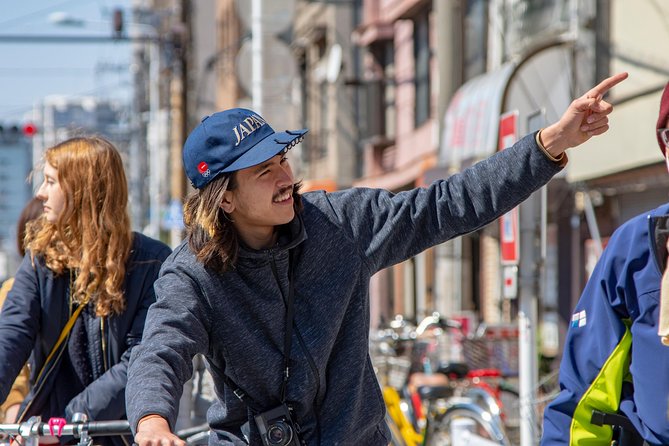
The final named stop is Kyojima Minami Park, where you spend about 20 minutes. The area includes an old-fashioned shopping mall and offers a look at everyday Japanese life.
This may be the most useful stop for someone who has already seen Tokyo’s major sights. There are no grand monuments to tick off here. Instead, you get a glimpse of the local rhythm that exists beyond Asakusa’s main attractions.
The phrase old-fashioned shopping mall should set your expectations. This is not a glossy department store or a modern retail complex. It is an area where ordinary shopping and daily routines remain visible, making it a good match for the tour’s focus on backstreets.
The route then returns to the starting point. Since the activity ends where it began, you do not need to plan a complicated trip across Tokyo after the ride.
How difficult is the cycling?
The ride is described as gentle, and that is important. It suits recreational cyclists rather than people seeking a hard workout. A family with children aged 13 and 16 found the pace manageable, and a cautious solo cyclist felt safe despite initial concerns about riding in a busy city.
Still, you need to be comfortable riding a bicycle. Tokyo has traffic, crossings, pedestrians, and shared spaces. Takeshi’s role is to lead the group and watch out for safety, but you remain responsible for controlling your bike and following instructions.
The folding bikes have smaller wheels than standard bicycles. That can make them easy to handle and store, though riders used to large touring bikes may find the feel different. If you are taller than 180 centimeters, contact the operator before booking. The same applies if you need a tandem.
Rain can change the experience. One ride took place in wet, cold weather, with raincoats provided and safety kept in focus. Another booking was adjusted when rain was forecast. The tour requires good weather, and if poor conditions cause cancellation, you are offered another date or a full refund.
What the $50.08 price gets you
At $50.08 per person, the value depends on how you like to see Tokyo. You are paying for the guide, bicycle, helmet, and a planned route that links several sites in a short time. You also get local explanations and help navigating streets that can be confusing on your own.
The cost is reasonable if you want a guided introduction to Asakusa and Sumida without committing to a full-day activity. The two and a half hour schedule leaves most of the day open for museums, shopping, or another neighborhood.
It is less compelling if you already know the area well, own a bicycle, and are happy to navigate independently. You should also budget separately for food from street stalls and anything you choose to buy at the candy shop.
The small-group format improves the value. With no more than six people, this is more personal than a large coach excursion, and the guide can spend time answering questions or taking photographs. Group discounts are available, which may make the cost more attractive for families or friends booking together.
The experience is booked, on average, 36 days ahead. That suggests you should reserve early if your Tokyo dates are fixed, particularly if you want a specific day or need a tandem bike.
Who should book this ride?
I would recommend it to first-time visitors who want a quick orientation to eastern Tokyo, families with older children, solo visitors who want help with photographs, and casual cyclists curious about neighborhoods beyond the main tourist routes.
It also suits anyone who prefers a light morning or afternoon activity. You are not locked into a full day, and the route includes enough famous sights to feel substantial without exhausting you.
I would be more cautious about recommending it to serious cyclists, riders over the stated height range who have not contacted the operator, or anyone wanting a long, strenuous ride. It is a sightseeing tour on bikes, not a cycling workout.
The tour is also not ideal if you want extended time at Senso-ji or a detailed examination of each temple. The stops are short by design. You get a series of clear impressions, then keep moving.
Booking, cancellation, and practical details
Confirmation is provided at booking, and mobile tickets are available. The activity begins and ends at the same meeting point near Hikifune Station.
You can cancel up to 24 hours before the start time for a full refund. Changes or cancellations made less than 24 hours ahead are not accepted for a refund. Cut-off times use Tokyo local time.
The experience needs a minimum number of participants. If that minimum is not reached, you are offered another date or experience, or a full refund. Poor weather can also lead to a new date or full refund.
Wear clothes that are comfortable for cycling and bring water. The supplied details do not specify a dress code or luggage storage, so avoid arriving with bulky bags that could make a folding bike harder to handle.
Should you book the Central Tokyo cycle tour?
Book it if you want a gentle, personal way to connect Asakusa’s famous sights with quieter Sumida neighborhoods. Takeshi’s careful approach, the small group, the temple and shrine stops, and the views of Skytree give the ride a useful mix of culture and ordinary city life.
Skip it if you want a demanding ride, a full Senso-ji visit, or a highly specialized food tour. For most casual cyclists, though, the $50.08 price buys a well-shaped introduction to a side of Tokyo that is easy to miss from the train or main road.
FAQ
How long is the guided cycle tour?
The tour lasts approximately 2 hours and 30 minutes.
Where does the tour begin?
It begins at Tokyo Backstreets Bike Tour Japan, inside the shared office called Synapse at 2-24-14 Higashimukojima, Sumida City, Tokyo 131-0032. Hikifune Station is the stated meeting point reference.
Where does the tour end?
The activity ends back at the meeting point.
How many people can join?
The tour has a maximum of six participants.
Are helmets provided?
Yes. A provided helmet is included for safety.
What type of bikes are used?
The tour uses folding bikes with 14 to 20-inch wheels.
What height range suits the bikes?
The bikes are suitable for people from 140 to 180 centimeters tall. Contact the operator in advance if you are over 180 centimeters.
Can I request a tandem bike?
Yes, but you must inform the operator at least three days before the booked date.
Is the tour suitable for casual cyclists?
Yes. The ride is described as gentle and suitable for recreational cyclists. Most people can participate.
What happens if the weather is poor?
If the tour is canceled because of poor weather, you are offered a different date or a full refund.
Newly reviewed around Tokyo
- Tokyo Asakusa:Calligraphy & Make T-shirt Activity★ 5.0 · 62 reviews
- 1 Hour Travel around Tokyo with a Professional Photographer★ 5.0 · 3 reviews
- Travel Tokyo with Your Own Personal Photographer★ 5.0 · 43 reviews
- Intercity Shuttle, Tokyo to Haneda /Narita /Yokohama /Makuhari★ 5.0 · 5 reviews
- Train in Samurai Swordsmanship and Defeat the Demon in Tokyo★ 5.0 · 5 reviews
- Shuttle Van 6hr Tokyo Tour to-and-from Tokyo, Yokohama and Narita★ 5.0 · 9 reviews
- Kickboxing & Body Training with EX-Pro Fighter★ 5.0 · 4 reviews
- Traditional Japanese Knife Sharpening Class★ 5.0 · 18 reviews
Cycling Tours, compared.
3h Tokyo E-Bike Tour: Hidden Gems, and Local Life with guide
Read our review →
3-hour Guided E-Bike Tour of the City’s Hidden Gems
Read our review →
3-Hour Bike/E-Bike Tour of the City’s Highlights
Read our review →Browse the lists this tour appears in