
Reviewed · TOKYO BAY AND SUMIDA RIVER CRUISES
Tokyo: Asakusa Walking Tour -Sumida River to Senso-ji Temple
Tokyo’s old and new sides meet neatly on this 90-minute Asakusa tour. You begin with a short Sumida River cruise, seeing Tokyo Skytree and Kaminarimon Gate from the water, then continue to Senso-ji Temple for a guided look at rituals, customs, and the famous Nakamise-dori street. I like the two-part design and the included fortune at Senso-ji. I also like that the group is capped at 10, which gives guides such as Nori and Naoko room to answer questions.
The main consideration is timing. Thirty minutes on the river and one hour at the temple gives you a useful introduction, not a slow, detailed exploration of Asakusa. The start near Kuramae Police Box and the finish at Asakusa Station also require careful attention to the meeting instructions.
Key points to know before booking
- Two classic Asakusa sights in 90 minutes: Combine a Sumida River cruise with Senso-ji Temple without arranging the pieces yourself.
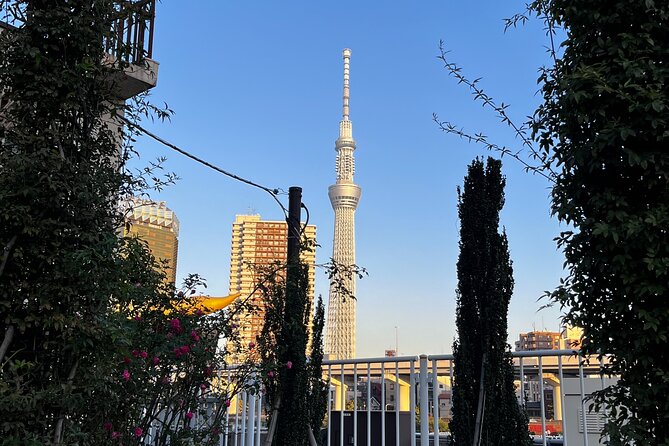
- Views from the water: See Tokyo Skytree and Kaminarimon Gate from a different angle during the approximately 30-minute cruise.
- A guide-led temple visit: Learn about Japanese customs, religion, and the Edo period while touring Senso-ji.
- Fortune included: Drawing a fortune at Senso-ji is part of the experience, not an extra activity to arrange.
- Small group size: The maximum is 10 people, making it easier to ask questions and pause for photographs.
- Convenient finish: The tour ends at Asakusa Station, with guides available to help explain onward travel.
Why this Asakusa combination works
Many first visits to Tokyo can feel like a race between large sights. This tour gives you a simple way to connect two important parts of the city: the Sumida River and Senso-ji Temple. You get an introduction to Tokyo’s riverside setting, then walk through one of its best-known religious and cultural areas.
I like that the cruise comes first. From the water, Tokyo feels less crowded and more spacious. You can look toward Tokyo Skytree, one of the city’s most recognizable landmarks, and see Kaminarimon Gate from an unusual angle. The river section is short, but it changes your view of Asakusa before you enter the temple district.
The second half moves into a more traditional setting. Senso-ji is not presented simply as a photo stop. Your guide explains the temple complex, Japanese traditions, religious customs, and the meaning behind what you see. That context matters, especially if you are not familiar with shrine and temple etiquette.
The experience is also practical for your first day in Tokyo. One person handles the sequence, timing, and directions. You can focus on the surroundings instead of figuring out how to combine a boat ride with a temple visit on your own.
More Asakusa and Sensoji tours:
- Tokyo: Japanese Dance Cabaret Theater Asakusa-Kaguwa Ticket
★ 4.8 · 2,270 reviews - Tokyo: Meiji Shrine, Asakusa, Skytree Bus Tour and Cruise
★ 4.7 · 1,986 reviews - Tokyo: Roll and Authentic Sushi Making Class in Asakusa
★ 4.9 · 1,957 reviews
Starting near Kuramae Police Box
The meeting point is at Kuramae 2-chome Police Box, at 2-chome-15-8 Kuramae, in Taito City. This is not the same as meeting directly at Senso-ji or Asakusa Station, so check the starting address carefully before setting out.
The tour begins in the Kuramae area and then proceeds toward the Sumida River. Since the activity has a fixed start point, allow enough time to find the police box. The information provided confirms that the tour is near public transportation, but it does not specify a particular train line or station exit, so you should use the exact address when planning your arrival.
The maximum group size is 10. That is small enough for a more personal exchange with the guide, while still being large enough to keep the price reasonable. If you enjoy asking questions about customs or local history, this format should suit you better than a large sightseeing group.
Guides named in the feedback include Nori and Naoko. Nori is noted for explaining the Edo period during the riverside walk, while Naoko is described as smart, funny, informative, and especially good at making time for questions, exploring, and photographs. Guide assignments can vary, so you should not assume one particular person will lead your date.
A 30-minute view of Tokyo from the Sumida River
The cruise lasts about 30 minutes and is included in the tour price. Its appeal is not a long boat excursion. It is the change in viewpoint. From the river, you see Tokyo Skytree and Kaminarimon Gate as part of a wider city scene instead of encountering them only from street level.
Tokyo Skytree gives the ride a clear visual anchor. Even if you already plan to visit the tower, seeing it from the river helps you understand its place in the eastern Tokyo skyline. Kaminarimon Gate, associated with the entrance to Senso-ji, creates a useful link between the first and second parts of the tour.
I would think of the cruise as a calm opening rather than the main event. You have time to take in the city and capture photographs, but not enough time for a full river sightseeing program. Weather also matters. The experience requires good weather, so the river portion can be canceled if conditions are poor.
The short duration is useful if you have a packed Tokyo schedule. You are not giving up half a day for a boat ride. On the other hand, if your main goal is a long cruise with detailed commentary about every riverside landmark, this is not that kind of outing.
Entering Senso-ji through Kaminarimon Gate
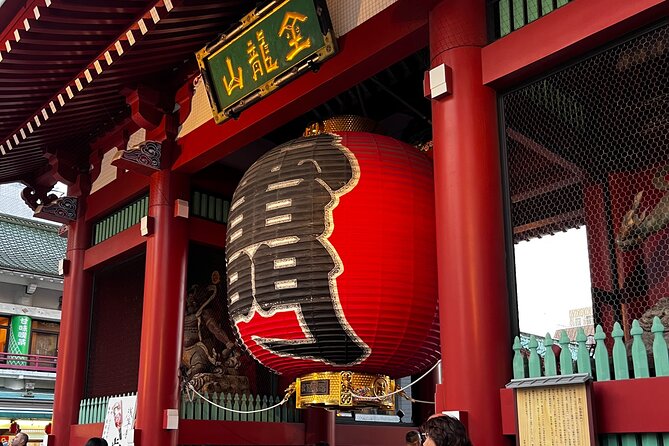
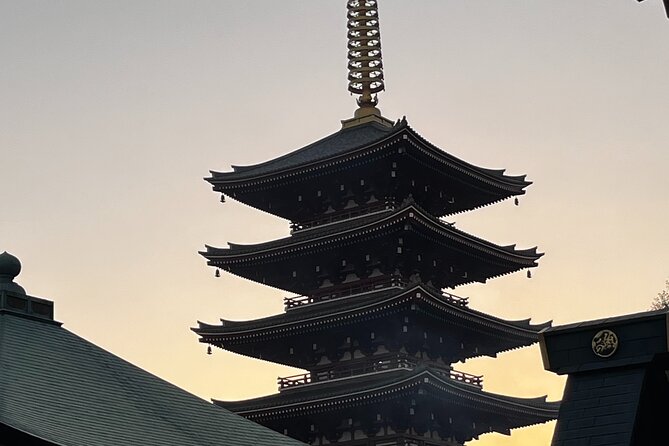
The tour then turns to Senso-ji, Tokyo’s famous Buddhist temple in Asakusa. The first major sight is Kaminarimon Gate, whose large lantern makes it one of the city’s most familiar visual symbols.
A guide helps turn the gate from a quick photograph into part of a larger story about Japanese religious places and customs. You can ask about what you are seeing, how people behave in the area, and how Senso-ji fits into Japanese culture. That is particularly useful if you have never visited a Buddhist temple in Japan.
The tour is designed to teach etiquette at shrines and temples, according to the information shared about the experience. That makes it a good choice early in your trip, when you are still learning how to approach sacred sites respectfully. You will not need to arrive with specialist knowledge. The point is to understand the setting while you are in it.
Because the group is limited to 10, the guide can give you time to stop, look, and take pictures. The exact pace may depend on the group, but the format is more personal than a large coach-style visit.
More Tokyo boat trips and river cruises:
- Flagship 2-Hours Official Street Go-Kart Tour – Tokyo Bay Shop
★ 5.0 · 4,974 reviews - Sumida River: Japanese Traditional Yakatabune Dinner Cruise
★ 4.6 · 779 reviews - Dynamic Tokyo: Tokyo Tower, Tea Experience, Bay Cruise Day Tour
★ 4.5 · 521 reviews - Tokyo Bay Yakatabune Dinner/Day Cruise with Japan Show and Drinks
★ 4.5 · 473 reviews
Nakamise-dori and the temple approach
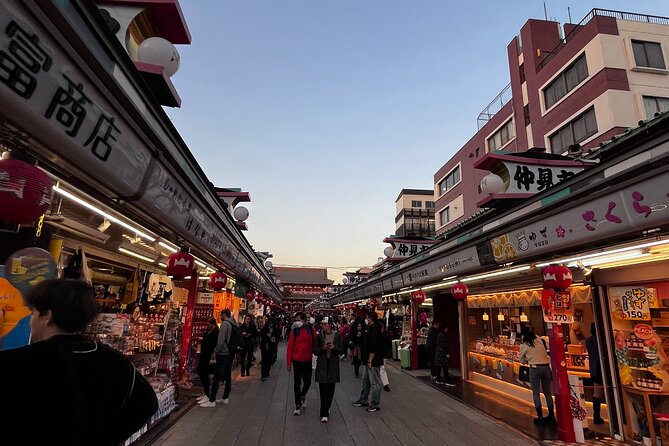
After Kaminarimon Gate, the route includes Nakamise-dori, the shopping street leading toward the main temple hall. This section connects the religious site with the everyday commercial life around it.
Nakamise-dori is useful context for understanding how Senso-ji is experienced today. You are not moving from a quiet gate straight into an isolated sanctuary. The approach includes shops and activity, followed by the temple’s more formal spaces. A guide can help explain that transition and point out details you might otherwise pass without noticing.
The tour does not give you a separate shopping period. If you see souvenirs or snacks you want to investigate, the one-hour Senso-ji portion may not leave unlimited time for browsing. You should treat the street as part of the guided route rather than assuming you can stop at every shop.
That is one reason the tour works best as an introduction. You receive an organized look at the gate, shopping street, and main hall, then can return independently if you want more time. The end point at Asakusa Station makes it practical to continue exploring after the formal tour ends.
The main hall, customs, and spiritual culture
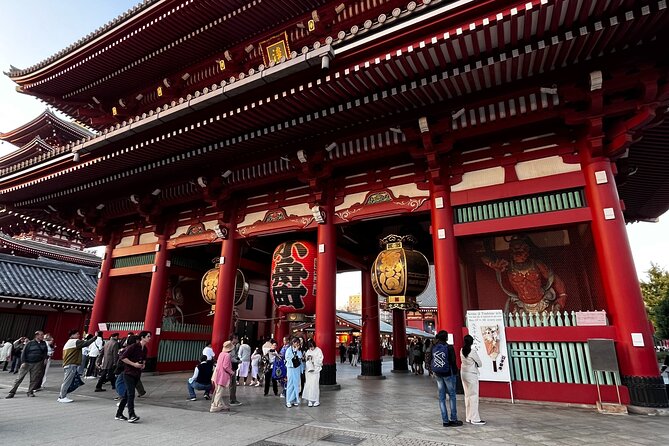
The guided visit includes Senso-ji’s majestic main hall and the wider temple complex. The focus is not only on architecture. You learn about Japan’s traditions, religious practices, and spiritual culture as you move through the site.
I value this part because Senso-ji can be easy to reduce to a list of famous pictures: lantern, shopping street, temple hall. The guide gives those sights a human meaning. You can ask why people perform certain actions, how to behave in a religious place, and what makes the temple important.
The supplied details specifically highlight explanations of Japanese culture and religion. That makes this experience more useful for someone visiting Japan for the first time than for someone who wants only independent photography time. You are given a framework for reading the place.
Naoko is praised for answering questions and allowing time for photographs. That suggests the guide style can be interactive rather than a nonstop speech. Still, no tour can guarantee the same guide or the same pacing on every date, and the one-hour temple visit sets a firm limit.
Drawing a fortune at Senso-ji

A fortune is included in the price. This is a small but memorable feature because it turns the temple visit into something you take part in, rather than something you only observe.
If the fortune is favorable, it can be a cheerful souvenir of the visit. If it is not, the temple setting gives you a chance to learn about the custom instead of treating the result as a prediction you must fear. The provided information confirms that drawing fortunes is part of the Senso-ji experience, though it does not explain the exact process or the language of the fortune.
The inclusion also adds value to the $43 price. You are paying for a guide, the river cruise, the temple visit, and this activity in one short booking. The value is strongest if you want cultural explanation and a managed route. It is weaker if you are comfortable arranging the cruise and visiting Senso-ji independently.
How much value do you get for $43?
At $43 per person, this is not the cheapest way to see Asakusa. You can visit the temple area on your own, and the river ride may be available separately. The question is what you want your money to do.
The price pays for a compact plan that combines two sights, a guide, a small group, and the fortune at Senso-ji. You also avoid spending time working out how to fit the river and temple visits together. For a first day in Tokyo, that convenience has real value.
The small group matters here. A maximum of 10 allows more direct contact with the guide than a large group. If you want to ask about the Edo period, temple manners, or the meaning of what you see, that access can make the cost worthwhile.
The tour is less compelling for independent visitors who already understand Japanese temple customs or plan to spend several hours at Senso-ji. You may prefer to explore at your own speed, browse Nakamise-dori, and return to the main hall whenever you like.
The booking pattern also suggests practical planning. This experience is booked an average of 67 days in advance, so you should not assume that leaving it until the last minute will always work. That is especially relevant if you have only a few days in Tokyo.
Who should book this experience?
I would recommend this tour to first-time Tokyo visitors who want a clear introduction to Asakusa without committing half a day. It also suits you if Japanese religious customs are unfamiliar and you would rather have a guide explain what is happening on site.
It is a good fit for couples, families, and small groups who enjoy asking questions. The 10-person limit keeps the outing personal, and the combination of river scenery, city landmarks, shopping street, temple architecture, and a fortune gives the 90 minutes some variety.
You may also like it as an early-trip orientation. The Edo period context mentioned during the route can help you place Asakusa within Tokyo’s longer story, while the etiquette advice can help you feel more comfortable at other temples and shrines later.
I would hesitate to recommend it if you want an unhurried visit. The river cruise lasts about 30 minutes, and the temple portion lasts about one hour. You will see the key areas, but the schedule does not promise long shopping stops or extended independent exploration.
The tour requires good weather, and poor conditions may lead to a different date or a full refund. It also requires a minimum number of participants, so a cancellation for that reason may result in another date, another experience, or a full refund.
Getting the most from the 90 minutes
Read the start address carefully. The tour begins at Kuramae 2-chome Police Box, not at the final station. Arriving late could be costly on a short tour because every minute counts.
Bring a phone that can display your mobile ticket. Confirmation is provided when you book, and the experience uses a mobile ticket.
Use the river section for skyline photographs, then save your more detailed questions for the temple portion. If you want advice about getting home, ask your guide at the end. The tour finishes at Asakusa Station, and the guide can help explain the available ways to continue from there.
Finally, keep your expectations realistic. This is a well-planned introduction to Asakusa, not a full-day cultural study. Its strength is the compact connection between river, landmark, temple, and local custom.
Should you book the Asakusa walking tour?
Book it if you want a short, guided introduction to eastern Tokyo with more substance than a simple photo stop. The Sumida River cruise gives you a fresh view of Tokyo Skytree and Kaminarimon Gate, while the Senso-ji visit adds customs, context, and an included fortune.
Skip it if you prefer complete freedom or want hours to shop and explore the temple grounds. For everyone else, the combination of a small group, a 90-minute schedule, and guides such as Nori or Naoko makes $43 a fair price for getting your bearings in Asakusa.
FAQ
How long is the Tokyo Asakusa tour?
The experience lasts approximately 1 hour and 30 minutes.
What are the two main parts of the tour?
The tour includes a cruise on the Sumida River followed by a guided visit to Senso-ji Temple in Asakusa.
How long is the Sumida River cruise?
The river portion lasts about 30 minutes.
How long is the Senso-ji Temple visit?
The guided Senso-ji portion lasts about one hour.
What landmarks can I see from the river?
The cruise offers views of Tokyo Skytree and Kaminarimon Gate.
Is a fortune at Senso-ji included?
Yes. Drawing a fortune at Senso-ji is included in the experience.
Where does the tour begin?
The starting point is Kuramae 2-chome Police Box, at 2-chome-15-8 Kuramae, Taito City, Tokyo 111-0051, Japan.
Where does the tour end?
The tour ends at Asakusa Station, at 1-chome-1-3 Asakusa, Taito City, Tokyo 111-0032, Japan.
How many people can join the tour?
The maximum group size is 10 people.
Can I cancel for a full refund?
You can cancel for a full refund up to 24 hours before the experience starts. Changes or cancellations made less than 24 hours before the start time are not accepted for a refund. If poor weather or an insufficient number of participants causes the tour to be canceled, you will be offered another date or experience, or a full refund.
More Tokyo walking tours
- Tokyo Tsukiji Fish Market Food and Culture Walking Tour
★ 5.0 · 3,184 reviews - Tokyo: Imperial Palace and Shogun Historical Walking Tour
★ 5.0 · 2,251 reviews - Tokyo: Shinjuku Local Bar and Izakaya Guided Walking Tour
★ 4.9 · 1,794 reviews - Tokyo: Tsukiji Fish Market Food and Walking tour
★ 5.0 · 1,724 reviews
Newly reviewed around Tokyo
- Tokyo Asakusa:Calligraphy & Make T-shirt Activity★ 5.0 · 62 reviews
- Intercity Shuttle, Tokyo to Haneda /Narita /Yokohama /Makuhari★ 5.0 · 5 reviews
- 1 Hour Travel around Tokyo with a Professional Photographer★ 5.0 · 3 reviews
- Travel Tokyo with Your Own Personal Photographer★ 5.0 · 43 reviews
- Train in Samurai Swordsmanship and Defeat the Demon in Tokyo★ 5.0 · 5 reviews
- Shuttle Van 6hr Tokyo Tour to-and-from Tokyo, Yokohama and Narita★ 5.0 · 9 reviews
- Kickboxing & Body Training with EX-Pro Fighter★ 5.0 · 4 reviews
- Traditional Japanese Knife Sharpening Class★ 5.0 · 18 reviews
Tokyo Bay and Sumida River Cruises, compared.
Flagship 2-Hours Official Street Go-Kart Tour – Tokyo Bay Shop
Read our review →
Sumida River: Japanese Traditional Yakatabune Dinner Cruise
Read our review →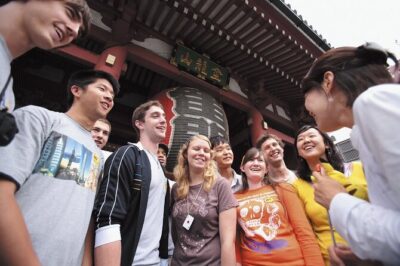
Dynamic Tokyo: Tokyo Tower, Tea Experience, Bay Cruise Day Tour
Read our review →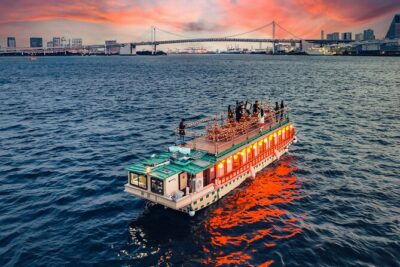
Tokyo Bay Yakatabune Dinner/Day Cruise with Japan Show and Drinks
Read our review →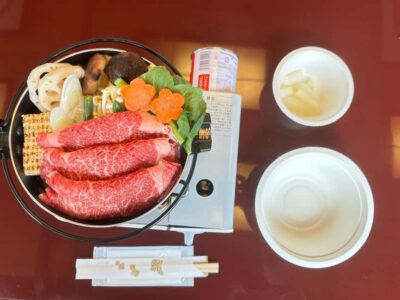
Tokyo Dinner Cruise & Tradition Show & Drinks & Tokyo Tower
Read our review →
Official Japan Go-Kart Through Tokyo Bay / Ginza (IDP Required)
Read our review →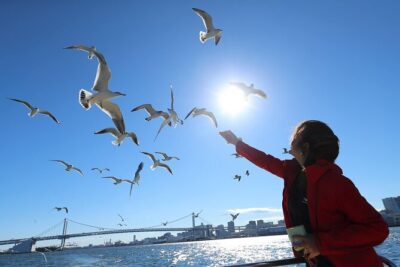
Scenic Bay Cruise with Local Guide on Private Boat
Read our review →Scenic Bay Cruise with Local Guide on Private Boat
Read our review →Browse the lists this tour appears in