
Reviewed · TOKYO GO-KART TOURS
Official Japan Go-Kart Tokyo Skytree/Akihabara (IDP Required)
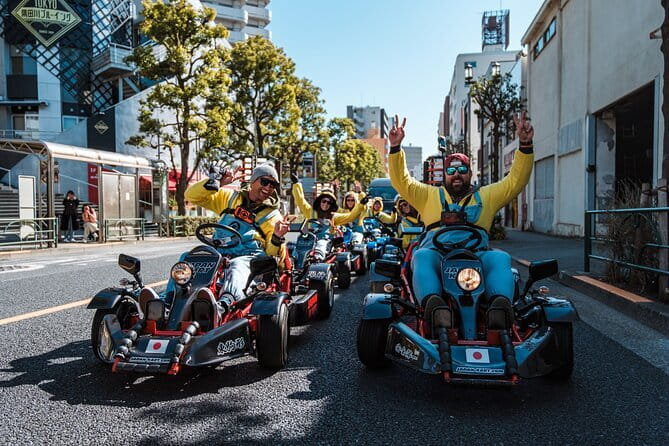
Tokyo looks very different from a go-kart. From the seat of a small open vehicle, you move through Asakusa, Ueno, and Akihabara instead of simply walking between them. The route links food shops, old temple streets, markets, parks, and Tokyo Skytree in about an hour and a half.
I like the compact group, capped at 10, and the chance to cover several districts in one outing. I also like the simple format: a guide leads the way, staff explain the kart, and a three-minute instructional video helps you get ready. The main catch is serious: you need the correct driving documents, or you can be refused without a refund.
Key points before you book
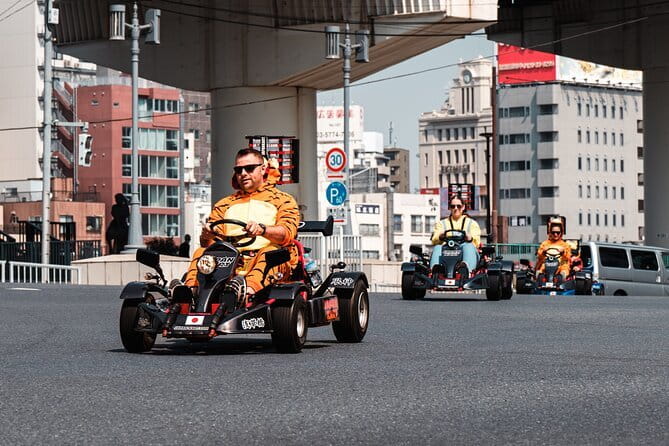
- Tokyo streets from a go-kart seat: Pass through Asakusa, Ueno, Akihabara, Kappabashi, and the Skytree area.
- Small group of up to 10: The limited size should make instructions and route guidance easier to follow.
- Costumes are available: You can choose an outfit before setting off, adding a playful touch to the ride.
- Strict license rules: Japan accepts a 1949 Geneva Convention IDP booklet, not a Vienna Convention 1968 permit.
- Good for a short schedule: The experience lasts about 1 hour 30 minutes, with the route covering more ground than a walking tour.
- Weather matters: Poor weather can lead to a rescheduled trip or a full refund.
What this Tokyo go-kart tour is really like
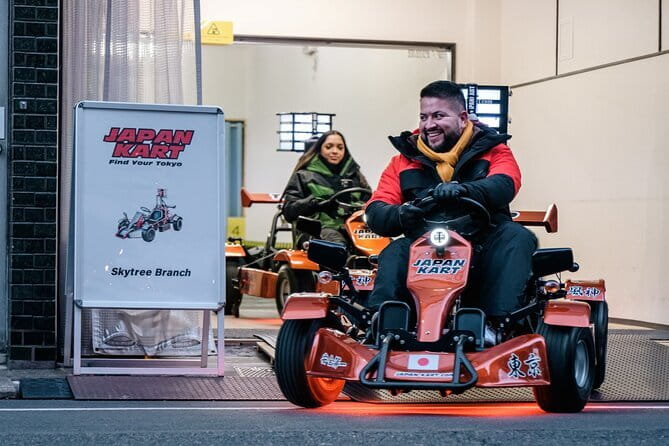
This is not a race track activity. You drive on public streets in a guided group, following the lead vehicle through central Tokyo. That makes the outing exciting, but it also means you must pay attention to traffic, instructions, and the pace of the group.
At the shop, you complete the waiver, choose from available costumes, and watch a short instructional video. Staff then help you get familiar with the go-kart before the group leaves. One participant described being placed in the lead kart ahead of the guide vehicle, which added extra responsibility and excitement.
The guide speaks English and Japanese. That matters here because the activity moves quickly, and you need clear directions before entering city streets. The small group size is another plus. With no more than 10 people, it should be easier to hear instructions and stay together than in a large convoy.
The experience is also highly dependent on your comfort behind the wheel. If you enjoy driving and like seeing a city from street level, this offers a memorable way to connect several neighborhoods. If you prefer a relaxed sightseeing pace, the traffic and open-road format may feel more demanding than a bus, train, or walking tour.
More Tokyo Skytree tickets:
- Tokyo: Meiji Shrine, Asakusa, Skytree Bus Tour and Cruise
★ 4.7 · 1,986 reviews - Tokyo Panoramic 1 Day: Meiji Shrine, Asakusa, Odaiba and SKYTREE®
★ 4.5 · 1,222 reviews - Tokyo Go Kart: Asakusa, Skytree, and Akihabara **IDP MUST**
★ 5.0 · 988 reviews
Starting at Azumabashi near Asakusa
The meeting point is JapanKart at 2-chōme-18-15 Azumabashi, Sumida City. The activity returns to this same location, so you do not need to work out a separate end-of-tour transfer.
Arrive 15 minutes before your booking time. The operator can wait only up to 10 minutes after the scheduled start, and a late arrival could mean missing the group. Plan your route carefully, especially if you are coming by train or crossing from another part of Tokyo.
Before driving, staff handle the basic preparation. You sign the waiver, select a costume if you want one, and watch the safety video. Alcohol before the tour is prohibited. Wear practical clothes and closed, flat shoes. Long skirts, high heels, and sandals are not allowed.
The short preparation period is useful, but do not treat it as a full driving lesson. You should already feel comfortable operating a vehicle and following road instructions. This is a city-driving activity, not a place to learn from scratch.
Kaminarimon and the Asakusa approach
Kaminarimon, or Thunder Gate, marks the entrance to Sensō-ji in Asakusa. Its oversized red lantern and statues of Fujin and Raijin make it one of Tokyo’s most recognizable street scenes.
Seeing this area from a go-kart gives you a quick look at one of Tokyo’s most traditional districts before the route moves toward newer commercial areas. The contrast is part of the appeal. You begin near temple streets and historic symbols, then continue toward markets, electronics shops, and the tall silhouette of Tokyo Skytree.
The tradeoff is that a driving pass is not the same as visiting Sensō-ji on foot. You will not have time to browse temple grounds, examine the lantern closely, or stop for a long look at the shops. Treat this stop as a visual introduction rather than a temple tour.
If Sensō-ji is important to you, visit separately before or after the kart outing. The go-kart route is best for seeing how Asakusa fits into the larger city, not for detailed sightseeing at the temple.
Ameyoko market and Ueno’s street energy
Ameyoko, short for Ameya Yokocho, is a street market in Ueno. Its name is linked to American goods sold there after the Second World War, and today the area is known for its dense mix of shops and food stalls.
The route gives you a quick look at one of Tokyo’s most active shopping areas. From a kart, you notice the signs, narrow commercial streets, and constant movement of the neighborhood. It is a useful counterpoint to the formal temple setting around Asakusa.
You should keep your expectations in check. You are passing through, not stopping for a market lunch or shopping session. The tour does not include dinner, and there is no listed food stop. If you want to sample the market, plan a separate visit when you can walk at your own pace.
The same applies to Ueno Park. The park is known for cultural attractions such as the Tokyo National Museum and Ueno Zoo, as well as cherry blossoms in spring. From the kart, you see the district and park area as part of the route, but you will not have time to explore its museums, zoo, or paths.
That limitation is also what makes the tour useful. In a short period, you can get a sense of several neighborhoods that would take much longer to connect on foot.
More Akihabara and anime tours:
- Official Street Go-Kart Tour – Akihabara
★ 5.0 · 1,578 reviews - Akihabara Anime & Game Adventure Walking Tour (Group or Private)
★ 5.0 · 404 reviews - Tokyo: Gameboy Mod Workshop at Akihabara
★ 5.0 · 253 reviews - Owl Cafe Tokyo Akiba Fukurou
★ 4.8 · 154 reviews
Akihabara’s neon and anime culture
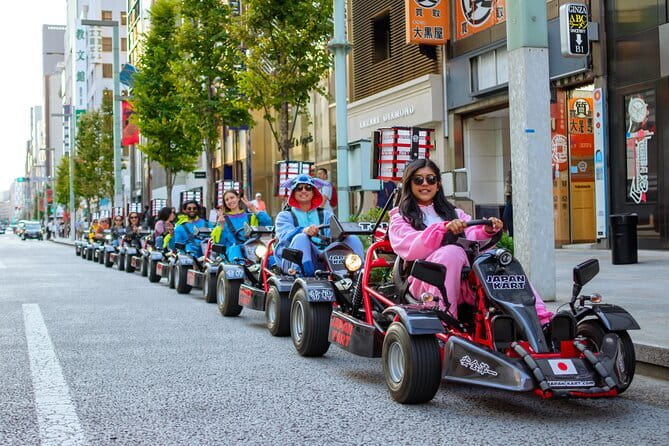
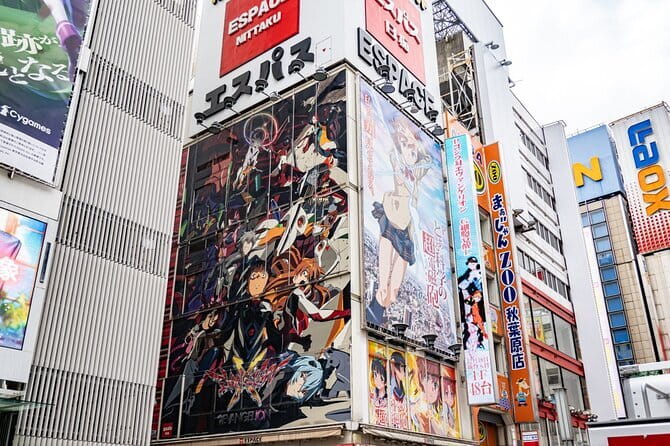
Akihabara is Tokyo’s center for electronics, anime, manga, and otaku culture. Tall signs, specialist shops, and bright storefronts give the district a look unlike Asakusa or Ueno.
This is likely the most playful section of the ride, especially if you choose a costume. The unusual sight of a line of go-karts moving through Akihabara attracts attention, and one participant described waving at people along the route. You should expect plenty of visual stimulation, but not a private or quiet experience.
The benefit here is access to the district’s broad character in a short time. You pass through the area rather than spending hours deciding which electronics store or anime shop to enter. For a first look, that is efficient.
The drawback is that Akihabara rewards slow browsing. If you want to shop for electronics, visit themed cafés, or spend time in anime and manga stores, save several hours for a separate visit. The kart tour gives you the street view, not the full shopping experience.
Kappabashi, Tokyo’s kitchen supply street
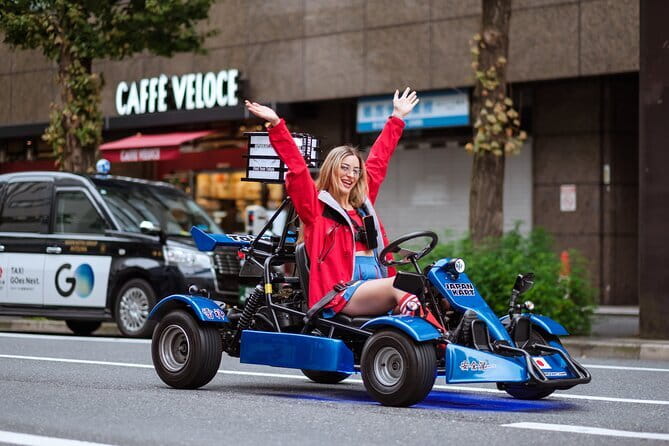
Kappabashi is often called Kitchen Town. Its shops sell professional knives, cookware, restaurant supplies, and the plastic food models seen outside many Japanese restaurants.
This stop adds a practical side to the route. Tokyo is not only temples, neon, and skyscrapers. Kappabashi shows the commercial machinery behind its food culture, from kitchen tools to display items.
Again, the kart provides a moving view rather than a shopping opportunity. You will not be able to stop and compare knives or cookware during the ride. If you are interested in Japanese cooking, kitchen tools, or food displays, mark Kappabashi for a separate return visit.
I like this part of the route because it is less obvious than the major landmarks. It gives the tour a local commercial detail instead of turning the entire outing into a checklist of famous sights.
Finishing near Tokyo Skytree
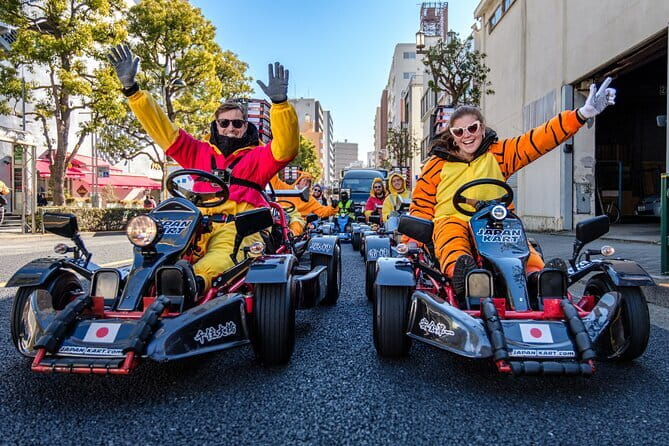
At 634 meters, Tokyo Skytree is Japan’s tallest structure. Its observation decks offer wide views across Tokyo and toward Mount Fuji in suitable conditions. The complex also contains shops, restaurants, an aquarium, and a planetarium.
The Skytree section gives the route a clear visual finale. After passing through low-rise commercial streets and busy neighborhoods, you get the scale of one of Tokyo’s largest landmarks. Seeing it from the road is different from buying an observation-deck ticket, and the two activities work well as separate plans.
You should not assume that this tour includes entry to Skytree. The experience includes the go-kart and guide, not admission to the tower or its attractions. If you want the views from above, arrange that separately and allow extra time.
The route ends back at the Azumabashi meeting point. That makes planning easier, since you return to where you left any belongings and do not need to meet a driver elsewhere.
The documents that can make or break the booking
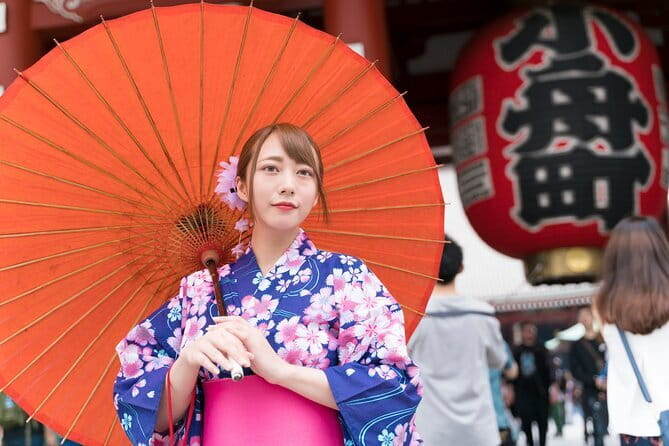
The driving rules are the most important practical issue. You must bring:
- A valid International Driving Permit issued under the 1949 Geneva Convention
- Your original driving license
- Your passport
The IDP must be an official booklet. Paper or A4 versions are not accepted, and an International Driving Permit issued under the 1968 Vienna Convention is not accepted in Japan.
The permit must also come from an approved issuer in your country. Examples given for the United States are AAA or AATA, for Australia AAA, for the United Kingdom AA or RAC, and for Canada CAA.
There are special rules for licenses from Switzerland, Germany, France, Taiwan, Belgium, and Monaco. Instead of an IDP, you need your own license plus a Japanese translation issued by the Japan Automobile Federation, also called JAF, or obtained through its online translation application.
Do not leave this check until the morning of the tour. If your documents are wrong or missing, you can be denied participation and lose the payment. One poor experience came from a group arriving without the required permit, so this is not a minor detail buried in the planning process.
Is $65.69 a fair price?
At $65.69 per person, the value depends on what you want from a city tour. You are paying for the kart, the guide, the preparation, and a route that links several districts in roughly 90 minutes. You are not paying for meals, tower admission, museum entry, or a long stop at any single attraction.
For someone with limited time, the price is reasonable because the tour gives you a fast overview of central Tokyo neighborhoods. You also get an activity that feels different from standard sightseeing. The costume option and open-road format add a social, playful side that a regular bus tour does not offer.
The value is weaker if your main goal is detailed sightseeing. You can explore Asakusa, Ameyoko, Ueno, Akihabara, and Kappabashi more thoroughly by walking and using trains, though that takes much longer. You are paying for the unusual driving experience and the route, not for extended access to each sight.
The small group helps justify the cost. A maximum of 10 people allows the guide to manage the convoy and give clearer instructions. It also keeps the experience from feeling like a large group transfer.
Weather, clothing, and cancellation details
This activity requires good weather. If poor weather causes a cancellation, you can receive a full refund or reschedule based on availability. Because the karts are open vehicles, this rule makes practical sense.
You can cancel for a full refund up to 24 hours before the start time. Cancellations or changes made within 24 hours are not refunded or accepted. Cutoff times use Tokyo local time.
Wear comfortable clothing that will not interfere with driving. Long skirts, high heels, and sandals are prohibited. The operator also asks you not to consume alcohol before the tour.
The confirmation includes an instructional video. Watch it before arrival, even though a short video is also shown as part of the preparation. It will help you arrive ready to listen to the guide rather than spending your limited time learning the basics.
Who should book this experience?
I would choose this for a confident driver who wants an unusual way to see Tokyo and has already handled the permit requirements. It suits people with a short schedule, especially those who want a quick look at several districts rather than a detailed visit to one attraction.
It is also a good match for friends or couples who enjoy costumes, photos, and a little public attention. The experience can feel nerve-wracking at first, but that tension is part of the appeal for people who like active sightseeing.
I would not choose it for someone who dislikes city traffic, cannot drive comfortably, wants frequent stops, or hopes to spend time inside the temples, markets, shops, or Skytree. Families and groups should also confirm that every participant meets the driving document rules before booking.
My call on the Japan Go-Kart route
Book it if you want a fast, funny, street-level look at Tokyo and you have the exact documents required to drive in Japan. The route has strong variety, from Kaminarimon to Ameyoko, Akihabara, Kappabashi, and Tokyo Skytree, while the 10-person limit keeps the outing manageable.
Skip it if you want a traditional sightseeing tour, a food experience, or deep time at each landmark. The best reason to book is not simply that the route covers famous places. It is that you get to connect them from behind the wheel, with a guide, a costume option, and a distinctly unusual view of the city.
FAQ
How long does the go-kart experience last?
The activity lasts approximately 1 hour 30 minutes.
Where does the tour start and finish?
It starts at JapanKart, 2-chōme-18-15 Azumabashi, Sumida City, Tokyo 130-0001. It ends back at the same meeting point.
Which places does the route pass?
The route includes Kaminarimon in Asakusa, Ameyoko, Ueno Park, Akihabara, Kappabashi, and Tokyo Skytree.
What driving documents do I need?
You need a driving license from your country of origin, your passport, and an International Driving Permit issued in the 1949 Geneva Convention booklet format. Permits issued under the 1968 Vienna Convention are not accepted.
Are there exceptions to the International Driving Permit rule?
Yes. Participants with licenses from Switzerland, Germany, France, Taiwan, Belgium, or Monaco need their original license and a Japanese translation from the Japan Automobile Federation.
What should I wear?
Do not wear long skirts, high heels, or sandals. You should also avoid alcohol before the activity.
Can I cancel for a refund?
You can cancel up to 24 hours before the start time for a full refund. Cancellations within 24 hours are not refunded. If bad weather cancels the tour, you can receive a full refund or reschedule based on availability.
More Tokyo go-kart tours
- Flagship 2-Hours Official Street Go-Kart Tour – Tokyo Bay Shop
★ 5.0 · 4,974 reviews - Official Street Go-Kart in Shibuya
★ 5.0 · 3,435 reviews - Tokyo: Street Kart Experience in Shibuya
★ 4.9 · 1,484 reviews - Shibuya Official Street Go-Kart in Shibuya Annex
★ 5.0 · 972 reviews
Newly reviewed around Tokyo
- Tokyo Asakusa:Calligraphy & Make T-shirt Activity★ 5.0 · 62 reviews
- Travel Tokyo with Your Own Personal Photographer★ 5.0 · 43 reviews
- Intercity Shuttle, Tokyo to Haneda /Narita /Yokohama /Makuhari★ 5.0 · 5 reviews
- 1 Hour Travel around Tokyo with a Professional Photographer★ 5.0 · 3 reviews
- Train in Samurai Swordsmanship and Defeat the Demon in Tokyo★ 5.0 · 5 reviews
- Shuttle Van 6hr Tokyo Tour to-and-from Tokyo, Yokohama and Narita★ 5.0 · 9 reviews
- Kickboxing & Body Training with EX-Pro Fighter★ 5.0 · 4 reviews
- Traditional Japanese Knife Sharpening Class★ 5.0 · 18 reviews
Tokyo Go-Kart Tours, compared.
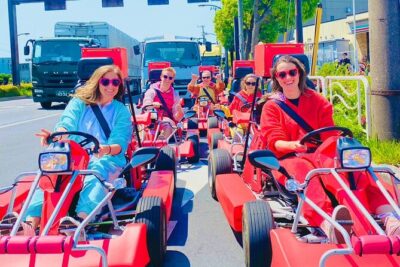
Flagship 2-Hours Official Street Go-Kart Tour – Tokyo Bay Shop
Read our review →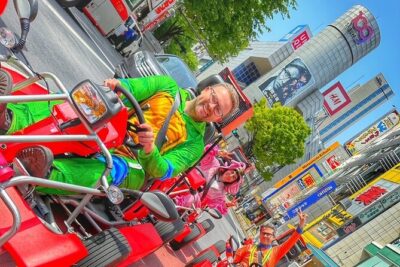
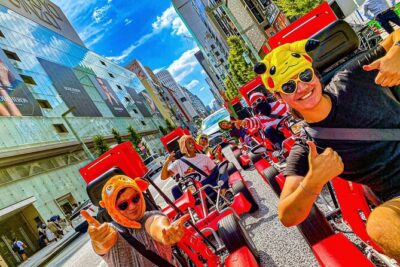
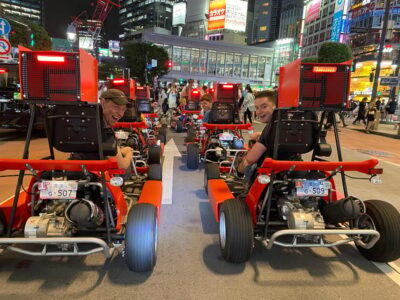
Tokyo Go Kart: Asakusa, Skytree, and Akihabara **IDP MUST**
Read our review →
Shibuya Official Street Go-Kart in Shibuya Annex
Read our review →
Asakusa, Skytree & Akhihabara Go-Kart City Experience
Read our review →
Premium Go-Kart Tour with Tower & Shibuya Crossing
Read our review →Browse the lists this tour appears in