
Reviewed · TOKYO SUMO EXPERIENCES
Tokyo: Sumo Tournament with Guide & Assigned Reserved Seat
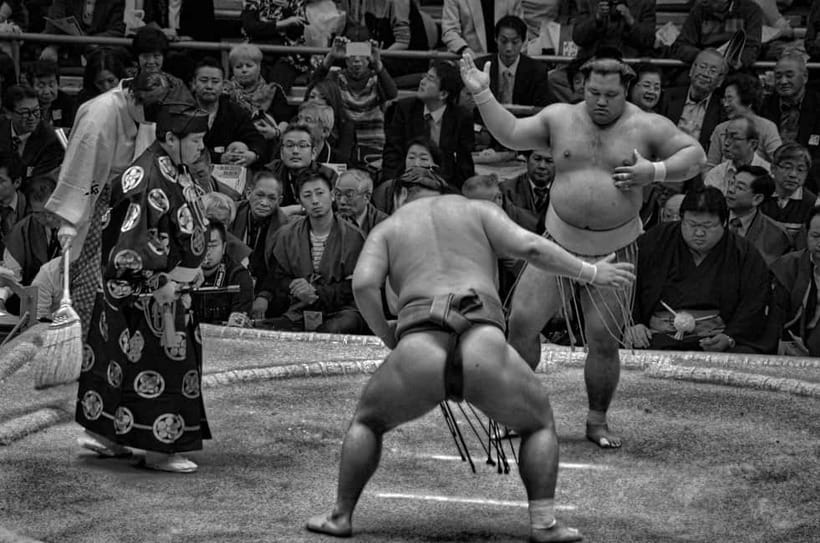
A live sumo tournament is one of Tokyo’s best chances to see Japan’s old customs still working in the present tense. At Ryogoku Kokugikan, the match itself is only part of the show. The wrestlers’ entrances, salt throwing, foot stamping, judging, rankings, and formal gestures all matter. Without some explanation, you may see a few seconds of pushing and wonder what you missed.
I like the English-speaking sumo guide, especially for a first visit. Guides such as George, Jorge, Lily, Cesar, Erik, Miki, and Mili have been praised for explaining the action clearly and answering questions. I also like the guaranteed reserved seat, since official tournament tickets can be difficult to obtain during a Tokyo visit.
The drawback is price. At $209 per person, this is far more than the apparent face value of a basic B or C class ticket, which some attendees place around ¥5,000 to ¥6,000. You are paying for access, convenience, and instruction, not just the seat. That may be worthwhile for a rare visit, but it is the central question to consider.
Key points to know before you book
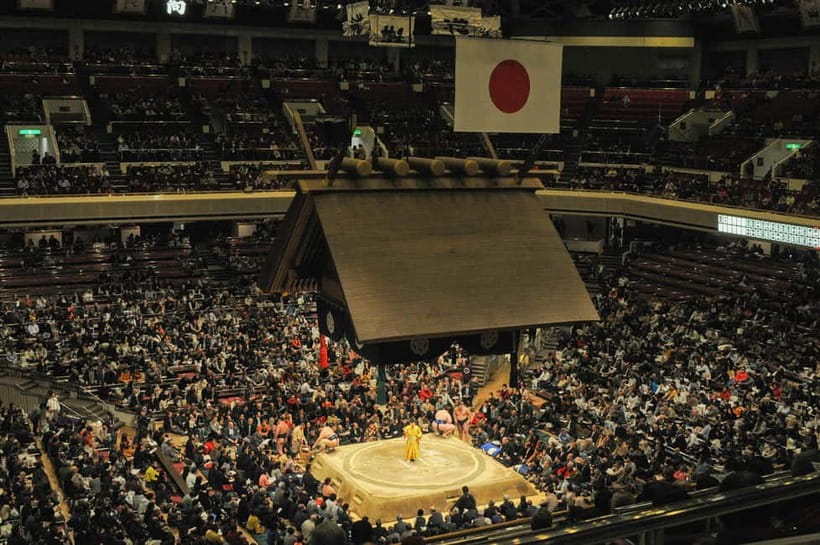
- The tournament takes place at Ryogoku Kokugikan, Tokyo’s major sumo venue and the heart of the city’s sumo district.
- Your seat is assigned in B or C class on the second floor, rather than selected from a detailed seat map.
- The guide explains rankings, rituals, rules, and techniques, making the bouts much easier to follow.
- The main stadium visit lasts about four hours, with a separate guided introduction of roughly 30 minutes.
- Seats may be separated, even when you book together, so ask about this if sitting side by side matters.
- Food and drinks are not included and are not allowed, so plan around that restriction.
Why live sumo makes more sense than sumo on television
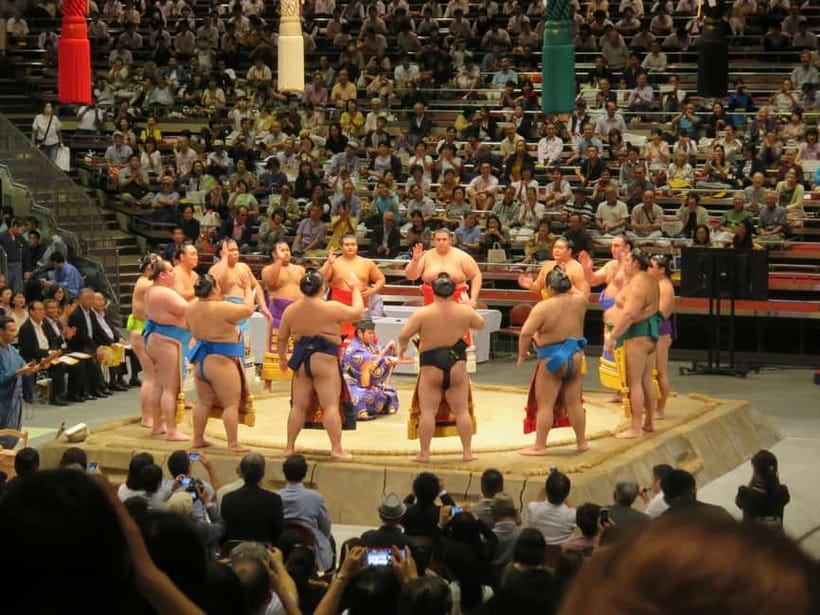
On television, sumo can look simple. Two large wrestlers face each other, a referee gives the signal, and the bout may end in seconds. At the stadium, you notice everything around that brief clash: the ring purification, the ceremonial movements, the wrestler introductions, and the way the crowd reacts before a match even starts.
The guide gives you a framework for what you are seeing. You learn how the ranking system works, why the wrestlers perform certain gestures, and how a bout can be won without a dramatic throw. That background changes the afternoon from a sequence of short contests into a living sporting tradition.
I especially value this help if you know little about sumo. Several guides are described as enthusiastic and clear, with George and Cesar receiving particular praise for making the event easy to follow. Lily and Erik have also been singled out for friendly, attentive introductions. Your guide is assigned, so you cannot count on a particular person, but the repeated strength of the guiding is one of the main reasons to consider this package.
More Tokyo sumo experiences:
- Tokyo: Sumo Show and Dining Experience
★ 4.8 · 2,742 reviews - the SUMO show
★ 5.0 · 1,960 reviews - Tokyo Shinjuku Sumo Show & Experience with Photo
★ 5.0 · 1,750 reviews
Meeting near Ryogoku and getting oriented
The experience offers two starting location options, both identified as the Matsuura-Bungo Mansion Site. Your exact meeting details depend on the option booked, so read the confirmation carefully before leaving your hotel.
The introduction lasts about 30 minutes at or near Ryogoku Kokugikan. This is useful because the sumo district gives the talk a proper setting. You are not learning about an abstract sport in a generic classroom. You are preparing to watch the real thing a short distance away.
Some groups have also had time near a temple, cemetery, or garden in the area. Treat these as possible extras rather than guaranteed stops. They can add local context, but the main purpose of the outing is the tournament. If you are mainly interested in architecture or temples, this is not the right tour to choose for those sights.
One practical issue is sound. The area around the arena can be noisy, and a large group may make it harder to hear every explanation. Stand close to the guide, arrive ready to listen, and ask questions while the group is still gathered. The instruction is most useful before you take your seat, when the guide can explain the basics without the noise and distractions of the matches.
Entering Ryogoku Kokugikan for the tournament
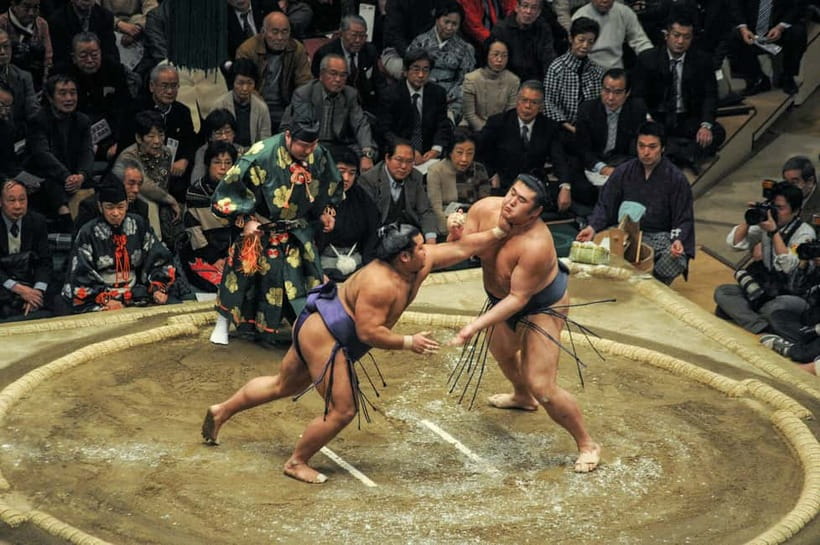
The arena is the heart of the experience. You spend roughly four hours inside, watching the tournament unfold at its own measured pace. The early bouts and changing rhythm help you understand how the day builds toward the higher-ranked wrestlers.
Your ticket is a reserved B or C class seat on the second floor. That means you have a designated place rather than standing or hoping to find an open seat. The second-floor position gives you a useful overall view of the ring, although it will not provide the same closeness as a premium lower-level seat.
The seats are assigned, not chosen from a seat map. That distinction matters. A booking confirmation may secure your class of seating without allowing you to pick the exact row or location. Some groups have also been split up, even when people booked together. The guide may try to speak with everyone during the day, but you should not assume that your party will be seated together.
For many people, the view is still very good. The elevated angle lets you follow the full ring and see the formal movements clearly. You may sacrifice a close look at the wrestlers’ expressions, but you gain a better sense of the ceremony and the surrounding crowd.
What the guide adds during the matches
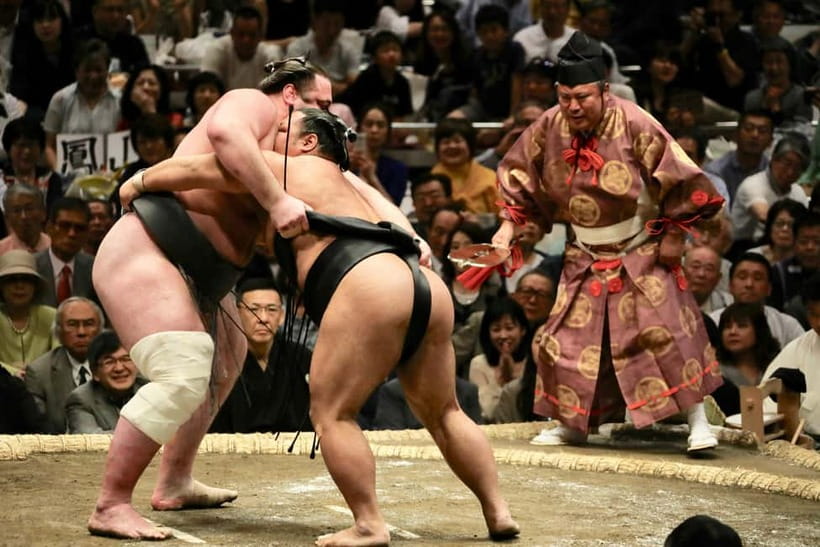
The best part of the guided format is not simply hearing facts before the tournament. It is having someone explain what is happening while you watch.
You can ask about a wrestler’s rank, the significance of a ritual, or the reason a match ended in a particular way. Guides have been praised for knowing the wrestlers’ names, explaining advancement, and answering questions in plain English. When a guide does not know an answer immediately, one account describes the guide checking it rather than brushing the question aside.
That said, the quality of the explanations can depend on the group and where you are standing. A large group may make it hard to hear, and the guide cannot provide a running private commentary to every seat for four hours. Some instruction focuses more on history and general customs than on specific fighting techniques.
If techniques are your priority, say so early. Ask about throws, pushes, footwork, illegal moves, and the difference between winning by forcing an opponent out and winning by making an opponent touch the ground. The supplied details promise explanations of rules, rituals, ranking, and culture, but the exact balance can vary by guide.
More guided tours in Tokyo:
- Tokyo 6hr Private Tour with Government-Licensed Guide
★ 5.0 · 3,902 reviews - Tokyo: Shinjuku Local Bar and Izakaya Guided Walking Tour
★ 4.9 · 1,794 reviews - Tokyo: Private City Highlights Tour with Local Guide
★ 4.8 · 1,433 reviews - Tokyo: Tsukiji Fish Market Guided Walking Tour
★ 4.9 · 1,397 reviews
The rituals are the real cultural lesson
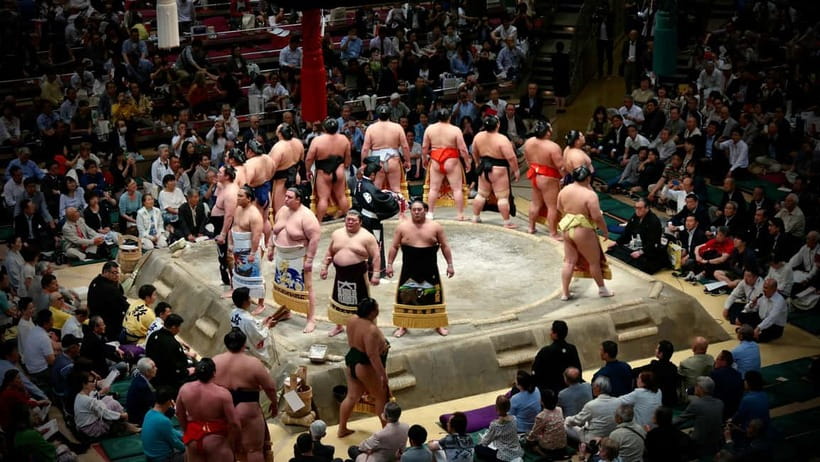
Sumo is compelling because the athletic contest sits inside a strict ritual structure. The preparation may last longer than the bout. The wrestlers’ movements, the referee’s role, and the formal atmosphere tell you that this is not simply a modern sports event with Japanese decoration added around it.
A guide can point out the parts you might otherwise overlook. You begin to notice the symbolic gestures, the care taken before the clash, and the importance of rank. Even the waiting period becomes easier to appreciate when you understand that the ceremony is part of the sport’s identity.
I would not rush through the opening sections. The shorter bouts help you learn the patterns without the pressure of a major match. By the time the more important contests arrive, you have a better idea of what to watch.
If you have time before Tokyo, read a short introduction to the ranking system and learn a few basic terms. You do not need to become a sumo expert. Knowing that wrestlers rise and fall through a formal hierarchy, and that rank affects the order and status of competition, will make the guide’s explanations land more clearly.
Is $209 fair value for a sumo afternoon?
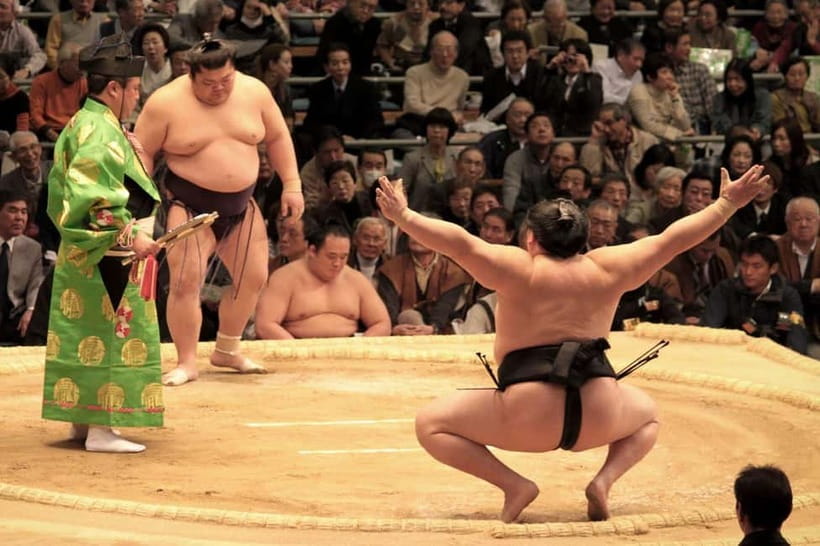
This is an expensive outing. Some attendees have pointed out that a B or C class ticket can cost roughly ¥5,000 to ¥6,000 when bought through ordinary channels. At $209, the added cost is substantial, especially if your main goal is simply to sit inside the arena.
The price becomes easier to defend when you value three things: a guaranteed ticket, help securing access during a sold-out tournament, and an English-language introduction to a complicated tradition. Official tickets can be hard to obtain, especially when you are booking from abroad or planning close to your travel dates. The package removes much of that uncertainty.
Still, do not confuse convenience with a bargain. You are paying a large premium over the ticket’s likely basic value. The guide may be excellent, but the group can be sizable, and the guide’s attention is shared. If you already understand sumo and are comfortable arranging tickets yourself, this package is probably poor value.
If this is your only chance to see a grand tournament, the calculation changes. Missing the event because you could not secure a ticket may cost more in memories than the premium costs in money. I would view the fee as a specialist access charge, not as the normal price of a sumo seat.
Food, comfort, and practical limits
Food and drinks are not included, and the activity information says they are not allowed. Plan your day with that restriction in mind. You should not expect a food-focused arena visit or a meal as part of the package.
The total duration is four to five hours. That includes the introduction and the tournament visit, so this is a substantial block in your Tokyo schedule. Avoid placing it beside another fixed booking unless you have plenty of spare time.
The experience is not suitable for people with mobility impairments. The exact seating and walking arrangements are not described in detail, so anyone with access needs should check before booking rather than assume the venue or group format will suit them.
The activity is non-refundable. That is important because tournament dates and availability may shape your Tokyo plans. Confirm your date, meeting point, and party size before payment.
Who will get the most from this experience
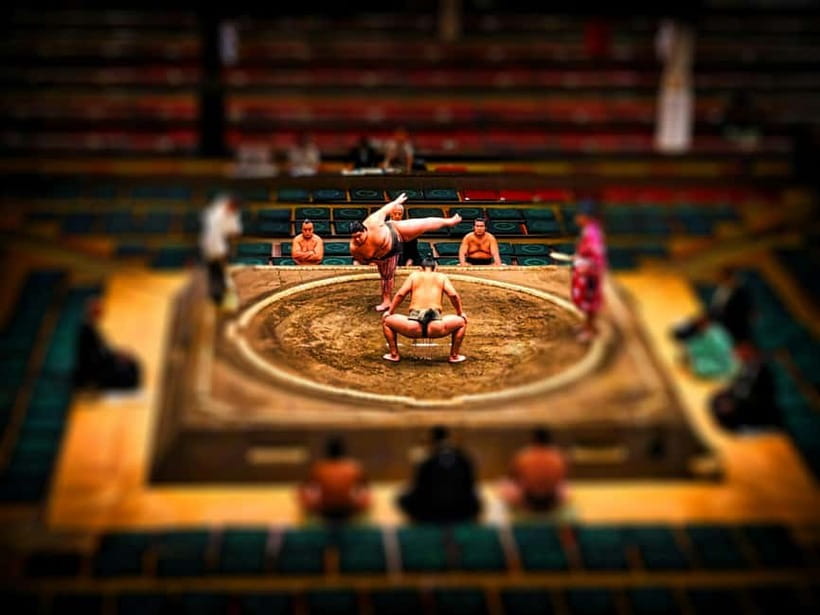
I would recommend it most strongly to a first-time sumo spectator who wants help making sense of the event. You get a reserved seat, an English-speaking guide, and enough time to watch the tournament rather than simply stopping by the arena for a quick look.
It also suits anyone who has tried and failed to secure official tickets. In that case, the premium buys access at a time when the event may otherwise be closed to you. The guide is a useful bonus, particularly if you do not know the ranking structure or customs.
Families and groups should think about seating. Assigned seats may not be together, and a large group can make explanations harder to hear. If staying side by side is essential, ask before booking.
I would be more cautious if you are watching your budget, already follow sumo closely, or mainly want the cheapest possible ticket. You may feel that the guide adds less value than the price suggests. The package is strongest as a one-time cultural outing, not as a low-cost sports ticket.
My verdict on the Ryogoku sumo tour
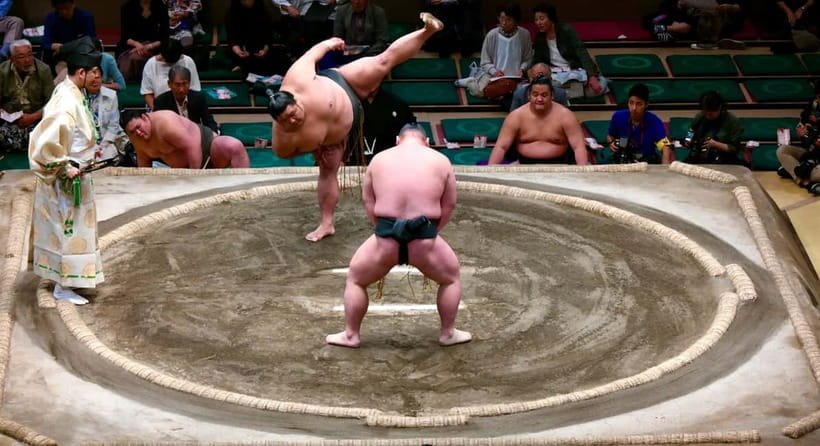
I would book this if seeing a live grand tournament is high on your Tokyo list and you cannot obtain tickets directly. The reserved seat takes away the biggest access problem, while the guide helps you understand the rituals and rankings that make sumo special.
I would not book it blindly. The price is high, the seat is assigned, food and drinks are not allowed, and your party may be separated. If you accept those limits and treat the fee as the cost of reliable access plus instruction, this can be a memorable afternoon at one of Japan’s most distinctive sporting events.
FAQ
Where does the sumo experience take place?
The tournament visit takes place at Ryogoku Kokugikan in Tokyo, on Honshu, Japan.
How long does the activity last?
The experience lasts about four to five hours. The guided introduction at Ryogoku Kokugikan lasts about 30 minutes, followed by roughly four hours at the tournament.
What type of seat is included?
You receive an assigned reserved B or C class seat on the second floor of Ryogoku Kokugikan.
Can I choose my exact seat?
The seat is assigned, so the activity does not promise a choice of exact seat or a detailed seat map.
Will my group sit together?
This is not guaranteed. Assigned seats may be separated, even when people book together.
Is a guide included?
Yes. An English-speaking sumo guide explains the traditions, rules, rituals, ranking system, and cultural meaning of the sport.
Are food and drinks included?
No. Food and drinks are not included, and the activity information says they are not allowed.
Can I cancel for a refund?
No. The activity has a non-refundable cancellation policy.
Newly reviewed around Tokyo
- Tokyo Asakusa:Calligraphy & Make T-shirt Activity★ 5.0 · 62 reviews
- Intercity Shuttle, Tokyo to Haneda /Narita /Yokohama /Makuhari★ 5.0 · 5 reviews
- 1 Hour Travel around Tokyo with a Professional Photographer★ 5.0 · 3 reviews
- Travel Tokyo with Your Own Personal Photographer★ 5.0 · 43 reviews
- Train in Samurai Swordsmanship and Defeat the Demon in Tokyo★ 5.0 · 5 reviews
- Shuttle Van 6hr Tokyo Tour to-and-from Tokyo, Yokohama and Narita★ 5.0 · 9 reviews
- Kickboxing & Body Training with EX-Pro Fighter★ 5.0 · 4 reviews
- Traditional Japanese Knife Sharpening Class★ 5.0 · 18 reviews
Tokyo Sumo Experiences, compared.
Tokyo Shinjuku Sumo Show & Experience with Photo
Read our review →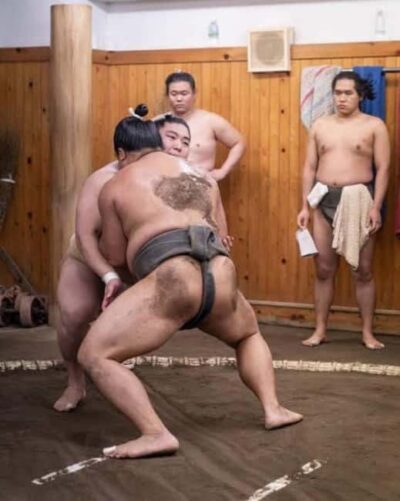
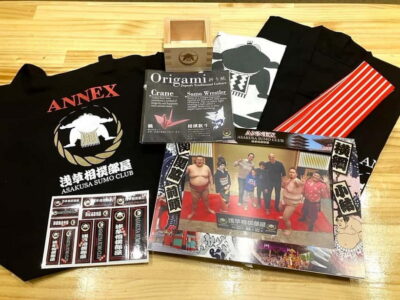
Luxury Sumo Show Experience & Japanese cuisine & Drink
Read our review →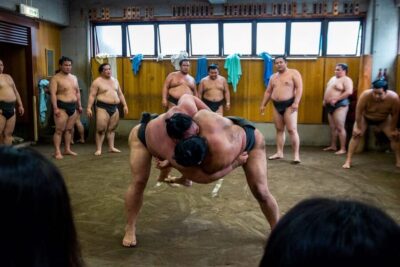
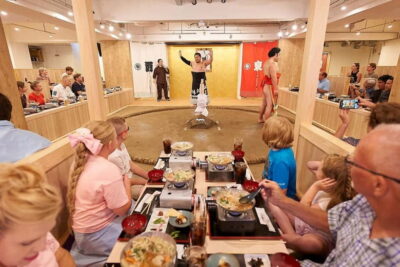
Tokyo Sumo Experience: Chanko & Mochi with a Former Pro
Read our review →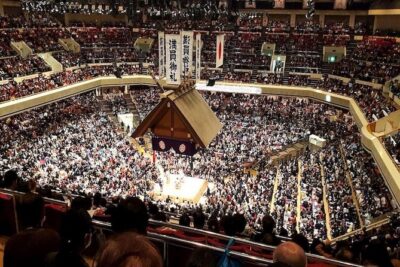
Ultimate Sumo Tournament: Tokyo, Osaka, Nagoya, Fukuoka
Read our review →Browse the lists this tour appears in