
Reviewed · TOKYO SUMO EXPERIENCES
Tokyo Sumo Morning Practice: Viewing & Exclusive Interaction
Tokyo sumo is not a stage show. In the quiet morning, you enter an active stable and watch professional wrestlers train at close range, with bodies colliding, feet stamping, and rituals that make the sport far more than a simple contest of strength. I especially like the real training setting and the chance to speak with active wrestlers afterward. The main consideration is that you must stay quiet, follow strict rules, and be comfortable with an early start.
I also like the choice of floor cushions or back-row stools, a small detail that matters if sitting on the floor is difficult. Guides including Haru, Momo, Sana, Sarah, and Ryoko have been praised for clear explanations and friendly help. The practice can be intense, and the experience may feel less comfortable for children under six or anyone expecting a polished entertainment show.
Key points at a glance
- Watch genuine morning practice: See warmups, drills, and sparring inside an active sumo stable.
- Talk with current wrestlers: Ask about training, daily life, and the mindset required for professional sumo.
- Choose your seat: Sit on a traditional zabuton cushion near the action or use a stool at the back.
- Receive an official banzuke: Take home a sumo ranking sheet in a special souvenir folder.
- Finish with open questions: Use the final session in Narihira Park to ask about sumo or get Tokyo tips.
- Plan your morning well: The three-hour outing ends around 11:00 AM, close to Tokyo Skytree and Asakusa.
Why a sumo stable is different from a tournament
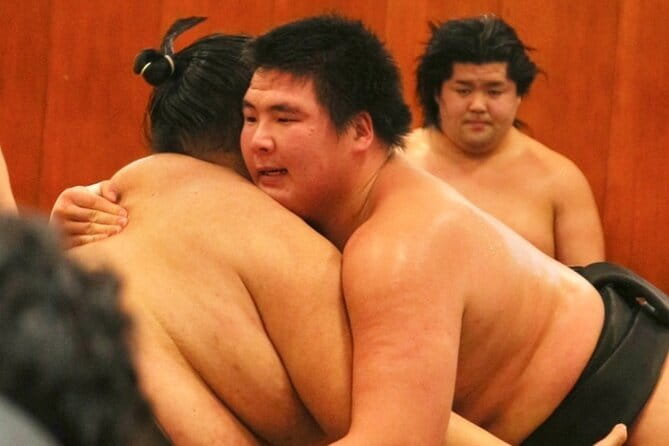
A Grand Sumo Tournament is the big public spectacle, but a morning practice shows the daily work behind it. Here, you are not watching a choreographed demonstration or a dinner performance. You are watching wrestlers train in the place where they prepare for real competition.
That difference matters. Practice can look repetitive at first, but the repetition is the point. Warmups, footwork, pushing drills, and bouts build the strength and discipline needed in the ring. You see effort before applause, and you get a clearer sense of how much work sits behind a short match.
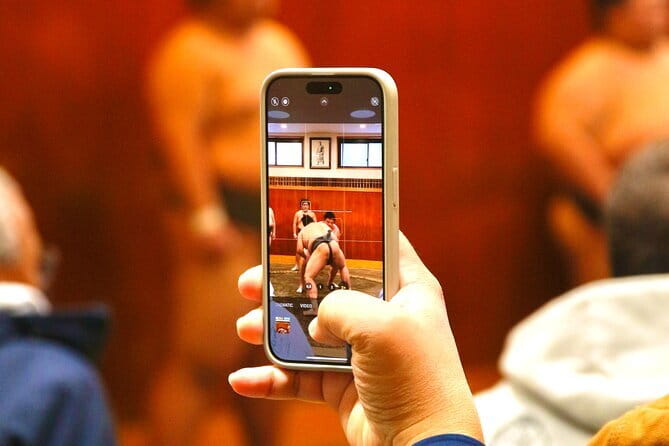
The atmosphere is also more restrained than a tournament. You are expected to keep quiet while practice is underway, avoid flash photography, and follow instructions about where you may sit. This is not the right outing if you want to wander around, chat with your group, or film everything on your phone.
For me, the best reason to book is the combination of access and explanation. The guide gives you enough background to understand what you are seeing, then lets the training speak for itself.
More Tokyo sumo experiences:
- Tokyo: Sumo Show and Dining Experience
★ 4.8 · 2,742 reviews - the SUMO show
★ 5.0 · 1,960 reviews - Tokyo Shinjuku Sumo Show & Experience with Photo
★ 5.0 · 1,750 reviews
Starting at Narihira Park in Sumida
The meeting point is near the multipurpose restroom at Narihira Park. Arrive ready to begin, since the guide checks names, hands out sumo material, and explains the manners you must follow inside the stable.
This opening is more useful than it might sound. Sumo has its own rules, ranks, gestures, and customs. Without a short introduction, you could mistake a ritual for a warmup or miss why a simple movement matters. The guide sets the scene before you enter, so you can watch with some understanding rather than simply stare at a group of large athletes.
The guides work in English and Japanese. Haru, Momo, Sana, Sarah, and Ryoko are among the guides praised for being clear, friendly, and helpful. Their role is not just translation. They explain the sport in plain terms and help you follow the stable’s rules.
The park also becomes important at the end. You return there for the souvenir and the final question period, making the morning feel like a complete lesson rather than a quick look through a doorway.
Walking into an active stable
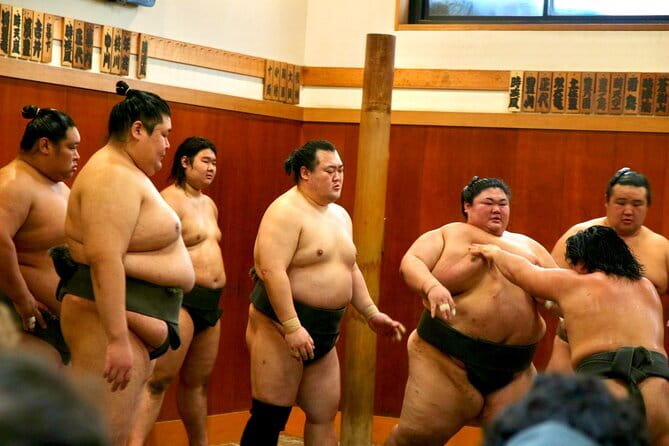
From the park, you take a short walk to the sumo stable. The stable is a working training hall, not a visitor attraction built around a scheduled show. That gives the experience its strongest quality, but it also means you need to respect the setting.
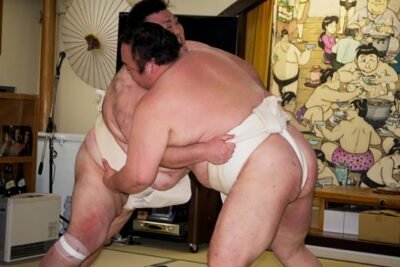
You may see wrestlers warming up, working through training exercises, and engaging in sparring. The physical force can be startling at close range. Even before a bout begins, the sounds and movements show that professional sumo demands serious conditioning.
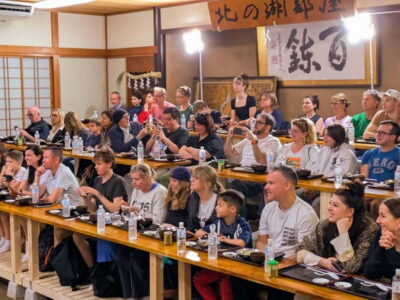
The best viewing position is on a traditional zabuton cushion near the front. Sitting close gives you a more direct view of the wrestlers and the details of their movement. If you do not want to sit on the floor, stools are available toward the back.
That seating choice is a genuine advantage. Floor seating is part of the traditional atmosphere, but it is not easy for everyone. If your knees or hips object to sitting cross-legged, choose the stool and enjoy the practice without turning the morning into a test of flexibility.
The stable is a quiet place during training. You may take photographs, but only within the rules given by the guide. Flash photography, video recording, and audio recording are not allowed. Food, alcohol, and drugs are also prohibited.
What the practice reveals about sumo
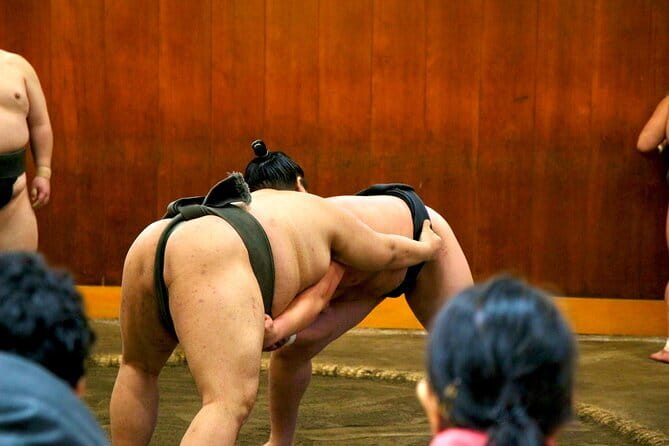
The training gives you a useful look at sumo as a disciplined sport, not merely a contest between heavy wrestlers. You can watch athletes repeat movements, work on balance, and test one another in bouts. The close setting makes the exertion easy to read.
This is also where the tour’s introductory talk pays off. You have some basic knowledge of the sport’s history, rules, and etiquette before practice starts. The explanations help you notice details that might otherwise pass quickly.
Do not expect a fixed performance lasting exactly the same amount of time each day. The activity takes about three hours overall, but the rhythm of training belongs to the stable. During the Grand Sumo Tournament periods, usually around two weeks in January, May, and September, practice starts 30 minutes earlier and the viewing time is about one hour.
That tournament-period change is important when planning your morning. Check the start time carefully, especially if you have booked a hotel breakfast, a museum visit, or another timed activity afterward.
More early morning tours in Tokyo:
- Tokyo: Sumo Morning Practice Viewing Tour
★ 4.8 · 570 reviews - Tokyo: Sumo Morning Training Visit
★ 4.4 · 370 reviews - Tokyo: Sumo Morning Practice Tour at Sumida City
★ 4.8 · 308 reviews - Tokyo Sumo Morning Practice Tour at Stable
★ 5.0 · 298 reviews
The wrestler Q&A and photo session
After practice, the mood becomes more personal. You have an opportunity to speak directly with the wrestlers through the guide, ask questions, and take commemorative photographs with them.
This is where the experience moves beyond observation. You can ask about training, daily life, or the mental side of competing. The guide helps with communication, so you do not need to know Japanese to take part.
The conversations are a strong reason to choose this tour instead of simply watching a tournament. A tournament shows the public face of sumo. This session gives you a chance to ask about the people doing the work.
Photographs are allowed at this stage, subject to the stable’s rules. Keep your camera ready, but do not assume every moment can be recorded. The no-video and no-audio rules apply, and the guide’s instructions take priority.
Some sessions may include a playful invitation for male audience members to try a short bout with a professional wrestler. This has happened during the experience, but it should be treated as a possible extra, not a promised part of the itinerary. If it occurs, it can be fun for the participants and entertaining for the group. If it does not, the Q&A and photo session still provide the main personal contact.
The banzuke souvenir and final questions
The group returns to Narihira Park after the stable visit. You receive an official banzuke, the ranking sheet used in sumo, inside a specially designed souvenir folder.
This is a better memento than a generic tour card because it connects directly to the sport’s ranking system. Keep it flat if you can, since a printed ranking sheet is easy to crease while moving around Tokyo.
The final session is set aside for questions with the guide. You can ask about customs you saw during practice, sumo traditions, or other parts of your Tokyo trip. This is also a useful moment to clarify anything that went by quickly inside the stable.
I like this ending because it avoids rushing you toward a meal or a shop. The tour uses the last part of the morning for conversation and context. That makes the experience especially useful for first-time visitors who want more than a photograph.
The tour wraps up around 11:00 AM. From there, you are well placed to continue toward Tokyo Skytree or the Asakusa area. Those nearby plans make sense, since the sumo visit occupies the morning and leaves the rest of the day open.
Is $93 a fair price?
At $93 per person, this is not a bargain activity in the usual sightseeing sense. You are paying for access to a working sumo stable, an English-speaking guide, the stable visit fee, wrestler interaction, and the souvenir banzuke.
The value depends on what kind of experience you want. If you only want to see sumo once from a distance, a tournament ticket may be a better fit when one is available. If you want a close look at training and a chance to ask questions, this outing offers something a regular spectator seat cannot.
The price also includes practical help. A guide prepares you before entry, explains the etiquette, translates questions, and stays for the final discussion. That support matters because the stable is not a self-guided attraction.
Transportation to Narihira Park is not included, so add the cost of reaching the meeting point to your budget. The activity offers reserve-now, pay-later booking and free cancellation up to 24 hours before the start, which gives you some flexibility when arranging a Tokyo schedule.
Who will enjoy this morning most?
This tour suits travelers who care about authentic cultural access and do not mind following rules closely. It is especially good for first-time visitors who want a clear introduction to sumo without spending an entire day at a tournament.
It also works well for sports fans. The physical training is the main event, and the setting lets you see the preparation behind professional competition.
Families should note the minimum age. Children under six cannot join. Older children may enjoy the spectacle, but parents should explain in advance that silence, no filming, and careful seating are part of the visit.
Photographers can take still images, but this is not a free-form photo shoot. Flash is forbidden, and video and audio recording are not allowed. If your main goal is to produce a long film, choose another activity.
The tour is also a good match for visitors who want to combine it with Skytree or Asakusa afterward. Since it ends around 11:00 AM, you can make a full morning of it without losing the rest of your day.
Practical tips before you book
- Wear something comfortable for an early morning: You will walk from the park to the stable and may sit for a period of time.
- Decide between cushion and stool seating: Choose the zabuton for a close traditional view, or the stool if floor sitting is uncomfortable.
- Prepare questions in advance: Ask about training, daily life, rankings, or the mindset of the wrestlers.
- Keep your phone on silent: Practice is quiet and respectful. Avoid flash, video, and audio recording.
- Check the date carefully: Practice begins 30 minutes earlier during the January, May, and September tournament periods, and viewing time is about one hour then.
- Plan your next stop: Tokyo Skytree and Asakusa are convenient choices after the tour.
- Do not count on extra wrestling: An audience member may sometimes be invited to try a short bout, but the main scheduled interaction is the Q&A and photo session.
Should you book the Tokyo sumo morning practice?
Book it if you want to see working athletes in a real training setting, learn the basic customs, and speak with active wrestlers afterward. The stable access, flexible seating, banzuke souvenir, and guide-led explanations give the morning more substance than a quick photo stop.
Skip it if you need a relaxed, flexible activity with no restrictions, or if you mainly want to record video. The quiet rules and no-recording policy are firm, and the close physical action may feel intense.
For many visitors, the strongest plan is to pair this three-hour experience with Tokyo Skytree or Asakusa. You get a focused look at one of Japan’s most distinctive traditions, then still have most of the day ahead.
FAQ
Where does the sumo morning practice tour meet?
The meeting point is near the multipurpose restroom at Narihira Park in Sumida. The guide checks your name, provides sumo-related materials, and explains the rules before the stable visit.
How long does the activity last?
The activity lasts about three hours and normally finishes around 11:00 AM. During Grand Sumo Tournament periods in January, May, and September, practice starts 30 minutes earlier and viewing time is about one hour.
Is transportation to the meeting point included?
No. Transportation to Narihira Park is not included in the activity price.
Can I sit on a chair instead of the floor?
Yes. You can sit on a traditional floor cushion near the front or use stools available toward the back.
Can I take photographs during the visit?
Photography is allowed, but you must remain quiet during practice and follow the rules about flash and seating. Flash photography, video recording, and audio recording are not allowed.
Can I speak with the sumo wrestlers?
Yes. After practice, you have an opportunity to ask active wrestlers questions and take commemorative photos with them. The guide helps with communication.
Is the activity suitable for young children?
Children under six are not permitted to join. The experience also requires quiet behavior and careful attention to the stable’s rules.
Newly reviewed around Tokyo
- Tokyo Asakusa:Calligraphy & Make T-shirt Activity★ 5.0 · 62 reviews
- Intercity Shuttle, Tokyo to Haneda /Narita /Yokohama /Makuhari★ 5.0 · 5 reviews
- 1 Hour Travel around Tokyo with a Professional Photographer★ 5.0 · 3 reviews
- Travel Tokyo with Your Own Personal Photographer★ 5.0 · 43 reviews
- Train in Samurai Swordsmanship and Defeat the Demon in Tokyo★ 5.0 · 5 reviews
- Shuttle Van 6hr Tokyo Tour to-and-from Tokyo, Yokohama and Narita★ 5.0 · 9 reviews
- Kickboxing & Body Training with EX-Pro Fighter★ 5.0 · 4 reviews
- Traditional Japanese Knife Sharpening Class★ 5.0 · 18 reviews
Tokyo Sumo Experiences, compared.
Tokyo Shinjuku Sumo Show & Experience with Photo
Read our review →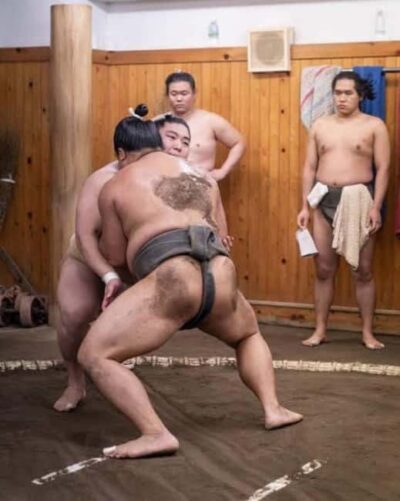

Luxury Sumo Show Experience & Japanese cuisine & Drink
Read our review →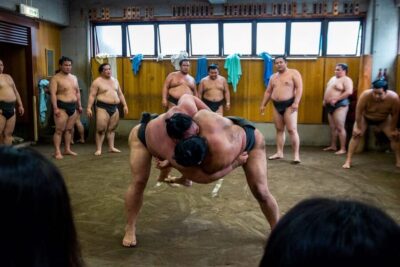
Tokyo Sumo Experience: Chanko & Mochi with a Former Pro
Read our review →
Ultimate Sumo Tournament: Tokyo, Osaka, Nagoya, Fukuoka
Read our review →Browse the lists this tour appears in