
Reviewed · TOKYO WALKING TOURS
Tokyo: Shinjuku Walking Tour with Godzilla Head
Shinjuku packs a surprising amount into two hours. You’ll see a giant 3D cat, shop inside a noisy discount store, thread through Golden Gai’s tiny bar lanes, look up at the Godzilla Head, and finish among yakitori stalls in Omoide Yokocho. It is a fast, colorful introduction to Tokyo’s most entertaining nightlife district.
I like the route for two clear reasons: it mixes famous photo stops with places that still feel local, and it requires no entrance fees beyond what you choose to buy or eat. The main drawback is the pace. Two hours goes quickly, and Don Quijote, Golden Gai, and Omoide Yokocho can each tempt you to linger.
Key points to know before booking
- The route links six Shinjuku sights on foot, from the East Exit Cat to Omoide Yokocho.
- Godzilla Head roars every hour, so your start time may affect what you hear.
- Golden Gai has more than 200 tiny bars, but this walk is mainly for seeing the lanes rather than sitting down for drinks.
- Don Quijote is part shopping stop, part sensory overload, with snacks, souvenirs, and goods stacked from floor to ceiling.
- Guide Tak may lead the walk, and the tour can be customized according to one verified booking comment.
- The $32 price is fair for orientation, especially if you want a guide to connect the district’s pop culture, nightlife, and old Tokyo corners.
Starting beneath Shinjuku’s giant 3D cat
The tour begins at the Shinjuku East Exit Cat, a giant feline displayed above the city. It appears in a three-dimensional format, making it look as if the cat is sitting over the street and watching the crowds below.
This is a clever first stop because it gives you an instant feel for modern Shinjuku. The cat is not a museum exhibit or a long formal visit. It is a quick visual hit, a good photo opportunity, and an easy landmark for meeting your guide.
Look for the guide holding a blue A4-sized board. That detail matters in Shinjuku, where the East Exit area can feel like a wall of signs, people, and station entrances. Your guide may speak English or Japanese. Tak is one guide associated with the experience, and the tour can be adjusted to suit the group.
I like beginning here because the cat shows Tokyo at its most playful and high-tech. It also sets up the contrast that follows. Within minutes, you move from a polished digital display to one of the city’s most unruly shops.
More things to do in Shinjuku:
- Tokyo: Shinjuku Food Tour (13 Dishes at 4 Local Eateries)
★ 5.0 · 6,603 reviews - Tokyo Bar Hopping Tour in Shinjuku (All-You-Can-Drink + Dinner)
★ 5.0 · 3,587 reviews - Tokyo: Shinjuku Food Tour (15 Dishes and 4 Eateries)
★ 4.9 · 2,033 reviews
Getting lost inside Don Quijote Shinjuku Kabukicho
Next comes the Don Quijote Shinjuku Kabukicho Store. This is not a calm shopping stop. Goods fill the store from floor to ceiling, and the selection ranges from snacks and souvenirs to an assortment of items that can be hard to classify at a glance.
You should expect noise, bright packaging, narrow aisles, and plenty of distractions. The fun is partly in trying to understand what you are looking at. If you want Japanese snacks or small gifts, this is a useful place to compare options, but you may need to keep moving so the two-hour schedule stays on track.
I would treat this stop as a quick introduction rather than a full shopping session. You can return later if something catches your eye. The guide helps give the shop a place in the route, but the experience works best when you accept that you may get a little lost.
This stop also makes the tour practical for first-time visitors. You get a look at a famous Japanese discount chain without having to plan your own visit. Still, your purchases are not included, and the cost of food, drinks, or souvenirs is up to you.
Walking the narrow lanes of Golden Gai
Shinjuku Golden Gai is one of the route’s most distinctive sections. More than 200 tiny bars line a network of narrow alleys, creating a part of Tokyo that feels far removed from the wide streets and towering signs outside.
Golden Gai is best understood as a nightlife neighborhood, not a conventional sightseeing attraction. The lanes are close and atmospheric, and the small bars are built for intimate evening drinking. During the day, you can see the compact layout and old-fashioned character without needing to sit down for a drink.
The area has long been linked with writers, artists, and people drawn to independent nightlife. That gives the walk more weight than a simple photo stop. You are seeing a place shaped by small spaces and personal businesses rather than large restaurants or chain venues.
I like this portion because it offers a glimpse of Tokyo that a major boulevard cannot provide. You will not need to pay an entry fee, but you should be respectful. These are working bars and narrow passageways, not a theme park.
The timing is important. A daytime visit lets you focus on the lanes and their atmosphere. If you want to return at night, do so separately and check each bar’s own rules and prices. The tour itself does not include food or drinks.
Looking up at Godzilla Head
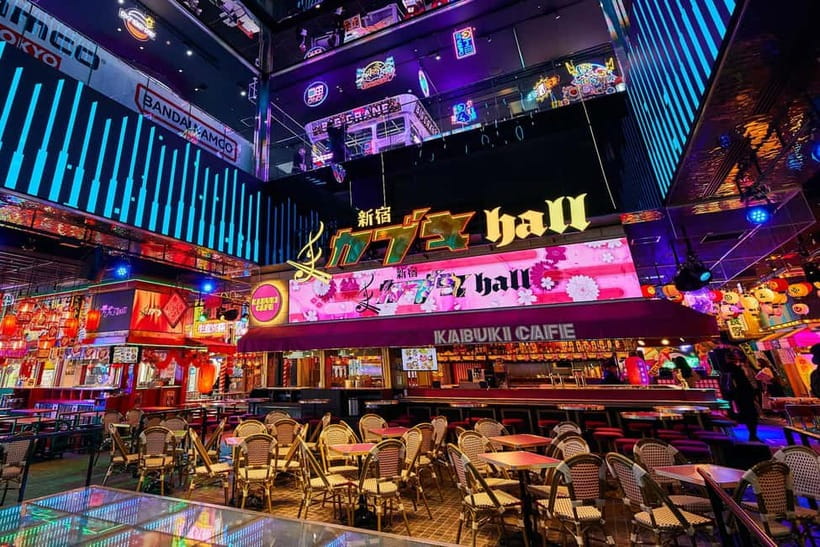
The Godzilla Head is the route’s biggest pop-culture moment. The enormous head watches over Kabukicho from a rooftop, turning an ordinary city block into a scene from a monster movie.
The head roars every hour, so listen for it if your timing lines up. The tour does not require an entrance ticket, and the main experience is seeing the figure from the street and nearby public areas. The rooftop itself is not described as a tour access point, so you should think of this as a dramatic viewing stop rather than a rooftop visit.
This is a strong stop for photos, especially if you enjoy Japanese film and popular culture. Even if Godzilla is not your main reason for visiting Tokyo, the scale of the head is hard to ignore. It gives the walk a clear focal point after the smaller, tighter spaces of Golden Gai.
The guide can also help place the figure within Kabukicho’s changing identity. The neighborhood combines nightlife, entertainment, shopping, and newer development. Godzilla fits the district’s bold visual style, but it also acts as a marker for how quickly this part of Shinjuku can shift from old lanes to modern attractions.
More Tokyo walking tours:
- Tokyo Tsukiji Fish Market Food and Culture Walking Tour
★ 5.0 · 3,184 reviews - Tokyo: Imperial Palace and Shogun Historical Walking Tour
★ 5.0 · 2,251 reviews - Tokyo: Shinjuku Local Bar and Izakaya Guided Walking Tour
★ 4.9 · 1,794 reviews - Tokyo: Tsukiji Fish Market Food and Walking tour
★ 5.0 · 1,724 reviews
Stepping into Tokyu Kabukicho Tower
Tokyu Kabukicho Tower provides the modern counterpoint to Golden Gai and Omoide Yokocho. It rises from the center of Kabukicho with a sleek, contemporary design, and the tour includes a chance to step inside and take a look.
The information provided does not promise a paid observation deck, a particular floor, or a special ticketed attraction. That is useful to know. You are getting a look at the building as part of the walking route, not a separate tower admission.
I find this stop valuable because it helps you see Shinjuku as a district in transition. One moment you are in a lane of tiny bars, and soon after you are standing inside a major new landmark. The contrast gives the walk a wider purpose than collecting photos.
If your main goal is a high view over Tokyo, this tour may not be enough on its own. If you want to understand the mix of old nightlife and new development in Kabukicho, the tower fits neatly into the route.
Finishing among the stalls of Omoide Yokocho
The tour ends at Omoide Yokocho, a narrow maze of yakitori stalls and small dining spots. The area carries a post-war feel, with smoky cooking aromas and compact spaces that contrast sharply with the bright displays of the East Exit.
This is the best place to finish because it shifts the mood from looking to eating. Food and drinks are not included, but you may want to stay after the walk for yakitori. The tour gives you an introduction to the area, then leaves you free to decide if you want to return at night.
I would not rush away at the end. Omoide Yokocho makes more sense when you slow down and look at the tightly packed stalls. Since the tour does not include a meal, you can choose your own budget and decide how long to remain.
The area is also a useful final landmark. By the end of the walk, you have crossed several sides of Shinjuku: digital advertising, discount shopping, tiny bars, giant pop culture, new architecture, and old-style food stalls. That range is the real strength of the route.
Is $32 a good value for two hours?
At $32 per person, the tour is reasonably priced if you want a guided introduction to Shinjuku. You are not paying for admission tickets, meals, or drinks. You are paying for the route, the guide, local context, and the convenience of connecting six places without planning the order yourself.
I see the value most clearly for a first visit. Shinjuku can be confusing, especially around the station and Kabukicho. A guide helps you get from the East Exit Cat to the smaller lanes and then onward to Omoide Yokocho without spending your limited sightseeing time checking maps.
The value is lower if you already know Shinjuku well or want long stops at every location. Two hours is enough for an overview, but not enough for a deep visit to Golden Gai, a serious shopping trip at Don Quijote, and a relaxed meal at Omoide Yokocho.
The tour also has a useful booking safety net. You can cancel up to 24 hours ahead for a full refund, and you can reserve now and pay later. That makes it easier to fit into a changing Tokyo schedule.
What the guide adds to the walk
The strongest feedback about the experience points to the guide rather than to any single landmark. Tak is described as friendly and helpful, and another booking comment highlights a guide who speaks great English, knows the area well, and can customize the experience.
That matters because the stops themselves are easy to photograph. The guide’s job is to connect them. At Golden Gai, you want context about the tiny bars. At Kabukicho Tower, you want to understand why the new building matters beside the older nightlife district. At Omoide Yokocho, you want help deciding how to use the area after the walk ends.
The tour is offered in English and Japanese. If clear communication is important to you, select the language you need when checking availability. The available guide may vary by date.
Who should book this Shinjuku walk?
I would recommend it to first-time visitors who want a compact introduction to Shinjuku without committing to a long food tour or a full-day city tour. It also suits pop-culture fans, photographers, and anyone curious about the contrast between neon entertainment and older alley neighborhoods.
Families may appreciate the short duration and the visual stops, though Don Quijote and the narrow lanes can feel crowded or intense. The route is listed as wheelchair accessible, which makes it worth considering for visitors who need that feature, though the tight character of some areas may still affect how comfortable the walk feels.
You should think twice if your priority is eating. Food and drinks are not included, and the schedule leaves limited time for a relaxed meal. You should also consider a self-guided visit if you want to shop for a long time or return to Golden Gai after dark.
The best plan is to use the tour as an orientation. Take notes on where you want to return, then revisit Don Quijote or Omoide Yokocho at your own pace. That way, the walk gives you both an overview and a shortlist of places for later.
Should you book the Shinjuku Godzilla tour?
Book it if you want a lively two-hour walk that brings together Shinjuku’s most recognizable sights and a few of its more personal corners. The combination of Godzilla Head, Golden Gai, Omoide Yokocho, and Don Quijote gives you a broad look at the district for a fair price.
Skip it if you prefer slow sightseeing, a dedicated food experience, or a tour focused on only one neighborhood. The pace is brisk, and each stop is an introduction rather than a long visit.
For most first-time visitors, I think the route makes a smart early stop in Tokyo. It helps you understand Shinjuku’s scale, gives you several memorable photo points, and ends in a place where you can continue exploring on your own.
FAQ
How long does the Shinjuku walking tour last?
The tour lasts two hours.
How much does the tour cost?
The price is $32 per person.
Where does the tour begin?
The tour begins at the Shinjuku East Exit Cat.
How do I identify the guide?
Look for the guide holding a blue A4-sized board.
What languages are available?
The tour is offered in English and Japanese.
Is the tour wheelchair accessible?
Yes, the activity is listed as wheelchair accessible.
Does the tour include food or drinks?
No. Food and drinks are not included.
Are entrance fees required?
No entrance fees are required for the listed locations.
Does Godzilla Head really roar?
Godzilla Head roars every hour, so you may hear it depending on the tour timing.
Can I cancel the booking?
Yes. You can cancel up to 24 hours in advance for a full refund.
Newly reviewed around Tokyo
- Tokyo Asakusa:Calligraphy & Make T-shirt Activity★ 5.0 · 62 reviews
- 1 Hour Travel around Tokyo with a Professional Photographer★ 5.0 · 3 reviews
- Travel Tokyo with Your Own Personal Photographer★ 5.0 · 43 reviews
- Intercity Shuttle, Tokyo to Haneda /Narita /Yokohama /Makuhari★ 5.0 · 5 reviews
- Train in Samurai Swordsmanship and Defeat the Demon in Tokyo★ 5.0 · 5 reviews
- Shuttle Van 6hr Tokyo Tour to-and-from Tokyo, Yokohama and Narita★ 5.0 · 9 reviews
- Kickboxing & Body Training with EX-Pro Fighter★ 5.0 · 4 reviews
- Traditional Japanese Knife Sharpening Class★ 5.0 · 18 reviews
Tokyo Walking Tours, compared.
Tokyo Tsukiji Fish Market Food and Culture Walking Tour
Read our review →
Imperial Palace and Shogun Historical Walking Tour
Read our review →
Shinjuku Local Bar and Izakaya Guided Walking Tour
Read our review →
Asakusa Walking Tour with Sensoji Temple Visit
Read our review →
Tokyo Castle & Imperial PalaceーShogun Walking Tour
Read our review →
Browse the lists this tour appears in