
Reviewed · TOKYO WALKING TOURS
Tokyo: Shibuya Crossing & Hidden Streets Walking Tour
Shibuya is more than a giant crossing and a wall of neon. This two-hour walk moves from Taro Okamoto’s powerful Myth of Tomorrow mural to old drinking alleys, a rooftop-style city park, youth shopping streets, and the famous Hachiko Statue. It gives you a quick but thoughtful look at how Tokyo mixes memory, nightlife, design, and daily life.
I especially like the contrast between Nonbei Yokocho, with its narrow old lanes, and the sleek public space at Miyashita Park. I also like the practical side of the tour: guides such as Loc, Kumi, Rio, Ryo, Grey, and Daichi have helped visitors with food, shopping, photos, and getting their bearings. The main drawback is the pace. Two hours is enough for an introduction, but not enough to linger at every stop or explore Shibuya in depth.
Key Points About the Shibuya Walk
- A strong starting point: Taro Okamoto’s Myth of Tomorrow adds art, history, and a serious note before the tour reaches Shibuya Crossing.
- Old and new Tokyo together: Nonbei Yokocho’s compact lanes contrast sharply with the modern Miyashita Park.
- A useful first visit: The route helps you understand where Center Gai, Maruyama-cho, Hachiko, and the station fit together.
- Friendly, flexible guiding: Loc, Kumi, Rio, Ryo, Grey, Daichi, and other English-speaking guides are praised for clear explanations and helpful local tips.
- Good value at $22: The price is modest for a live two-hour guide in one of Tokyo’s most confusing districts.
- A clear finish: You end at Hachiko, close to the station and surrounded by places to continue your evening.
Why This Two-Hour Walk Works in Shibuya
Shibuya can feel like several cities piled into one district. At street level, giant screens and crowds grab your attention. A few minutes away, tiny lanes preserve an older Tokyo. Then you turn a corner and find a polished public park, a nightlife quarter, or a shopping street filled with young people.
That change of mood is the real subject of this tour. You are not simply ticking off Shibuya Crossing. You are seeing how the district shifts from postwar memory to modern design, from intimate drinking spots to global pop culture.
At $22 per person, the tour offers good value if you are visiting Tokyo for the first time or want a short orientation before exploring on your own. A guide can explain what you are looking at and help connect separate places that might otherwise seem like random streets around a station.
The walk lasts two hours and is conducted in English. It includes the local guide fee, but food, drinks, and shopping are not listed as included. Keep that in mind if you expect a tasting tour. This is primarily a walking and storytelling experience, with recommendations along the way.
More things to do in Shibuya:
- Official Street Go-Kart in Shibuya
★ 5.0 · 3,435 reviews - Tokyo: Street Kart Experience in Shibuya
★ 4.9 · 1,484 reviews - Shibuya Meltdown Nightlife Tour: All-You-Can-Drink Bar Hopping
★ 5.0 · 1,058 reviews
Meeting at Mark City Without Losing Time
The meeting point is SABON Shibuya Mark City, inside Mark City on the third floor. The coordinates are 35.6586643, 139.6999525, and the guide holds a sign.
This detail matters. Shibuya Station and Mark City can be confusing on a first visit, with multiple exits, levels, and connected buildings. Give yourself extra time to find the third-floor meeting point rather than arriving at the station just before the start.
You are asked not to be late. That is sensible on a compact walking tour, since the group moves through several stops in a fixed period. Some guides have shown flexibility when people were delayed, but you should not count on that. Arrive early, locate SABON, and wait for the guide’s sign.
Nonbei Yokocho: A Small Dose of Old Tokyo
The walk visits Shibuya Nonbei Yokocho for about ten minutes. Its name is often translated as Drunkard’s Alley, and the area offers a sharp contrast to the broad streets and huge signs around the station.
Here, the scale changes. You see narrow lanes and small establishments packed into a tight urban setting. The guide provides context about the area and its place in Shibuya’s past, helping you notice details that are easy to miss when walking alone.
Do not expect a long meal stop. Ten minutes is enough for an introduction and photographs, but not for settling into one of the tiny venues. The value is in seeing a different side of Shibuya before the route returns to the district’s larger attractions.
This is also one of the better stops for understanding Tokyo’s layered character. The city does not replace every old corner with a tower. In places such as Nonbei Yokocho, older patterns survive beside major transport links and commercial centers.
Myth of Tomorrow: A Serious Moment Beside the Station
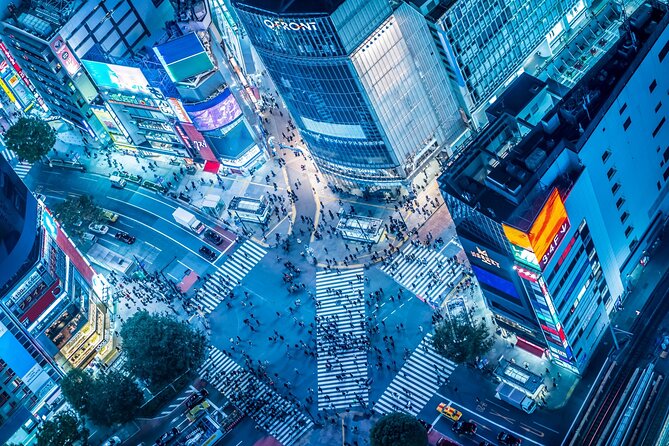
The tour then visits Myth of Tomorrow, a mural by Taro Okamoto. It depicts the effects of nuclear destruction, but its message also points toward hope.
This is a valuable choice for the route because it interrupts the usual Shibuya formula. Before you watch crowds stream across a famous intersection, you encounter a work of public art with weight and purpose. The guide spends about ten minutes explaining the mural and its meaning.
You will have time for a photo stop, though the artwork deserves more than a quick snapshot. Pay attention to the scale and the imagery, and listen to the explanation before moving on. The stop gives the rest of the walk a useful frame: Shibuya is not only about shopping, music, youth culture, and bright screens.
For first-time visitors, this can be one of the most memorable parts of the experience because it offers context you may not seek out on your own. It also shows how public spaces in Tokyo can carry serious historical and artistic messages without looking like a traditional museum.
More Tokyo walking tours:
- Tokyo Tsukiji Fish Market Food and Culture Walking Tour
★ 5.0 · 3,184 reviews - Tokyo: Imperial Palace and Shogun Historical Walking Tour
★ 5.0 · 2,251 reviews - Tokyo: Shinjuku Local Bar and Izakaya Guided Walking Tour
★ 4.9 · 1,794 reviews - Tokyo: Tsukiji Fish Market Food and Walking tour
★ 5.0 · 1,724 reviews
Shibuya Crossing: The Famous Moment, Properly Placed
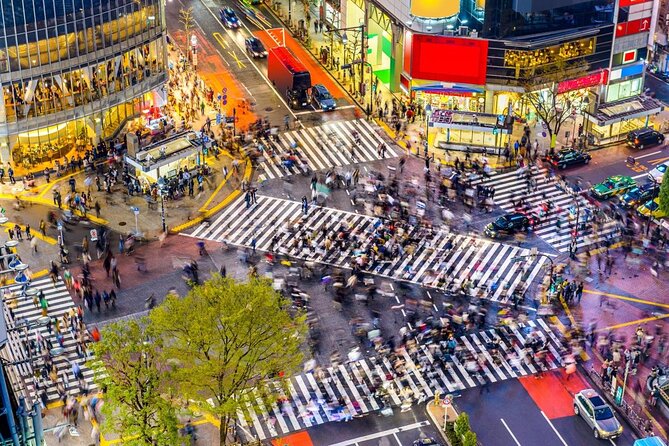
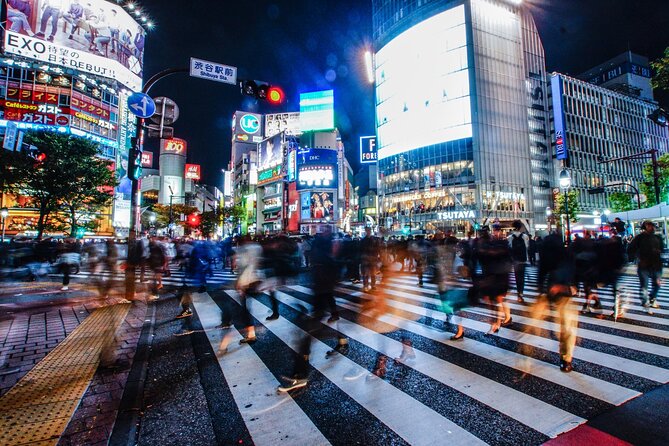
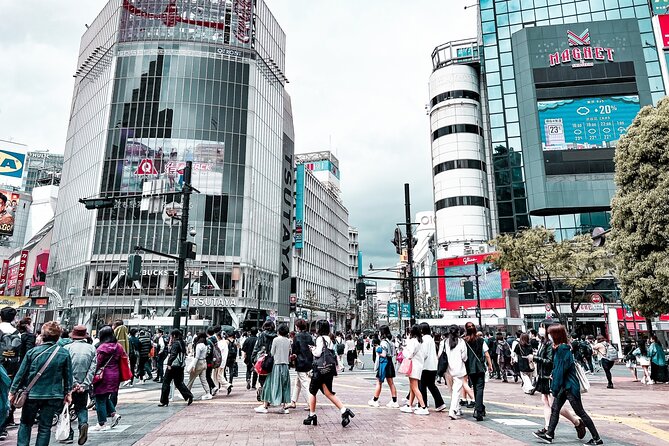
The crossing receives about ten minutes, including a photo stop and guided explanation. You will see the waves of people moving in different directions while screens, signs, station buildings, and high-rise fronts surround the intersection.
A guide is useful here for more than taking you to the viewing point. The surrounding streets can be confusing, and a good guide can suggest where to stand, when to cross, and how to frame a photograph. One solo visitor specifically appreciated help with photos, which can make a difference if you are exploring without a companion.
Still, keep your expectations sensible. Ten minutes is a brief introduction, not a long photography session. If you want repeated crossings, different viewpoints, or a visit after dark, you will need to return by yourself later.
The crossing is most useful when the guide explains its role within Shibuya. It is not an isolated attraction. It connects major shopping, dining, entertainment, and transport areas, which is why it feels so central to the district’s identity.
Miyashita Park and Shibuya’s New Public Face
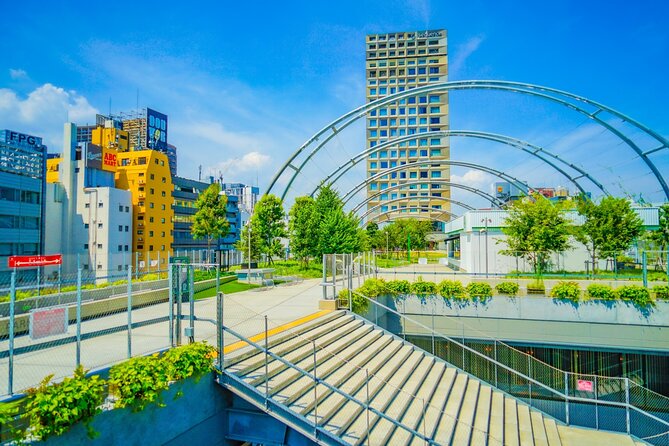
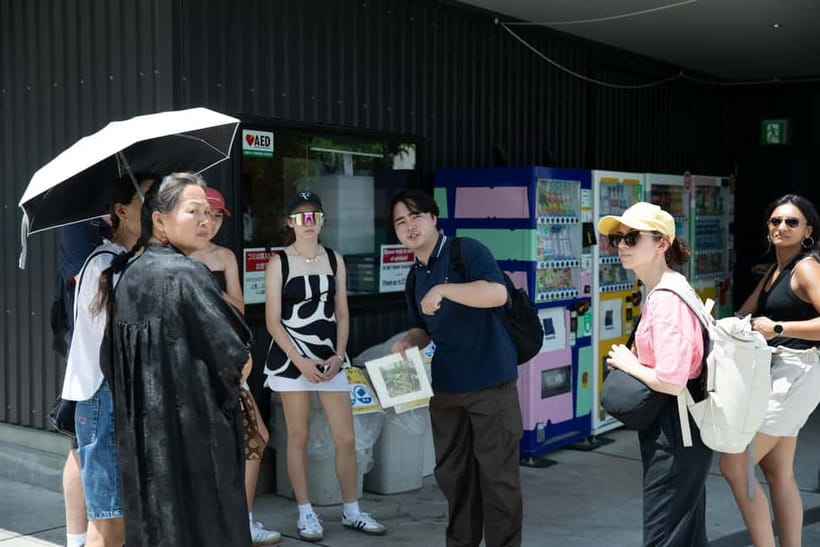
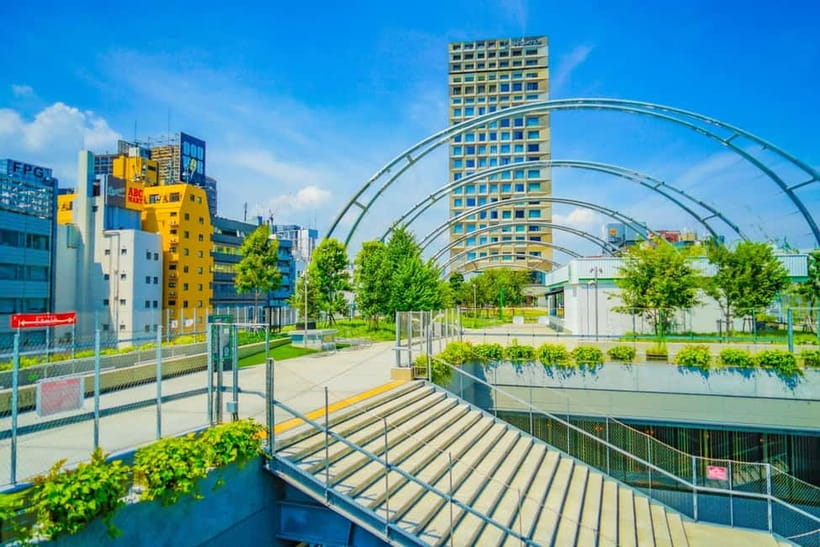
The walk spends about twenty minutes at Miyashita Park, the longest stop on the route. This multi-level urban park offers a calmer change from the station area and shows how Tokyo creates public space within a dense city.
The park is a good place to talk about present-day Shibuya. It combines recreation, retail, and open space in a way that feels distinctly modern. Your guide explains the setting and gives you time to take it in rather than rushing straight from one crowded street to another.
This stop may appeal to you if you are interested in urban design as much as sightseeing. You can see how a busy district makes room for a place to pause, meet, and look around.
The limitation is that the tour gives you an overview rather than a long break. If you want to shop, eat, or spend serious time in the park, plan to return after the walk. The guide may also have useful recommendations, especially if you have particular food or shopping needs. Guides have offered suggestions for vegan food, restaurants, and shopping areas.
Center Gai and Shibuya’s Youth Culture
Center Gai receives roughly ten minutes. This is one of the district’s best-known areas for shopping, entertainment, and youth culture.
The route gives you a guided look rather than asking you to navigate every side street alone. You will see the energy of a part of Shibuya that has long been linked with fashion, music, nightlife, and changing trends.
The guide’s commentary is important here. Without context, Center Gai can seem like a loud commercial street. With an explanation of how the area developed and how people use it, you get a clearer sense of why it matters to Tokyo’s younger generation.
Again, ten minutes is short. You will not cover every shop or venue, and the tour does not include time for shopping. Think of this as a useful preview. Afterward, you can return to the places that match your interests.
Maruyama-cho: From Older Streets to Nightlife
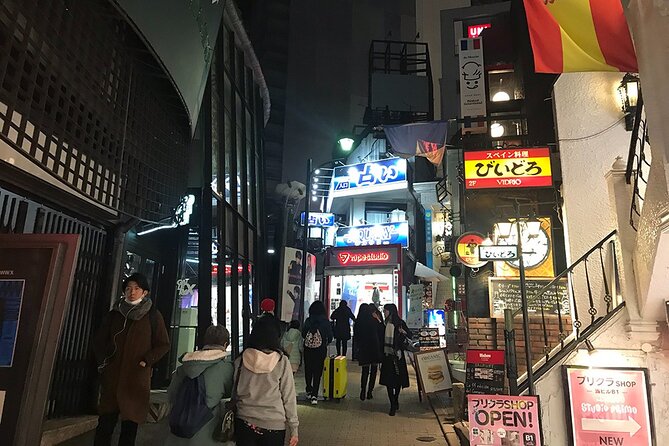
Maruyama-cho adds another change of mood. The area has historical streets but is now closely tied to modern nightlife.
This is one of the stops that gives the tour its title. You are not confined to the most photographed parts of Shibuya. The guide takes you through streets that many first-time visitors might miss while moving between the station and the crossing.
The area is especially useful for understanding how Tokyo districts change over time. A street can retain an older layout while taking on a new role through restaurants, bars, hotels, and evening entertainment. The guide helps connect those layers.
You should expect an introduction, not a nightlife crawl. The tour ends soon after, and food or drinks are not included. If Maruyama-cho catches your interest, ask your guide for suggestions before the walk finishes.
Finishing at Hachiko’s Statue
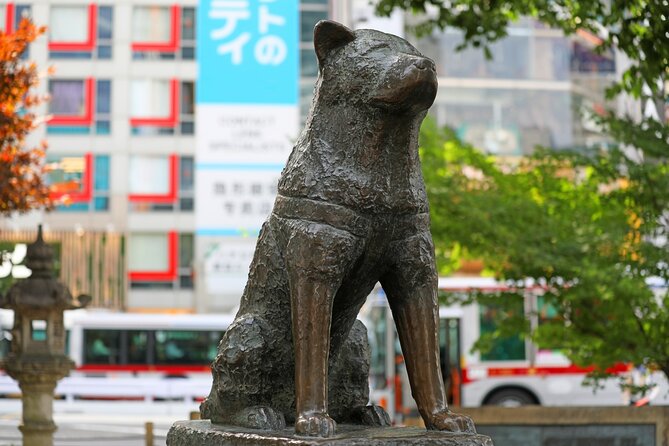
The final stop is the Hachiko Memorial Statue, one of Shibuya’s best-known meeting points. Hachiko is remembered as a symbol of loyalty, and the statue sits in the middle of the district’s constant movement.
Ending here makes practical sense. You finish close to the station, with easy access to the rest of Shibuya. It is also a useful landmark for your own return visit. Once you know where Hachiko is, it becomes easier to orient yourself around the crossing and nearby streets.
The statue is small compared with the surrounding buildings and screens, which is part of its appeal. It provides a human story in the middle of a very large city district. You will have a chance for a final photo and a clear point at which to continue your evening independently.
The Guides Make the Difference
The experience uses English-speaking local guides, and the guide assigned to you can vary. Names connected with particularly strong tours include Loc, Kumi, Rio, Ryo, Grey, Daichi, Zach, Annette, and others.
Across the feedback supplied for this experience, the most consistent strengths are clear explanations, cultural context, friendliness, and a willingness to answer questions. Loc is often praised for his storytelling, area knowledge, photos, and practical recommendations. Rio and Ryo are noted for an approachable style and strong English. Grey has been especially helpful with family groups and food suggestions, including vegan options.
That range matters because this is not a recorded audio route. The quality depends partly on how well the guide adjusts to your group. Families have had content adapted for teenagers, solo visitors have received photo help, and other groups have been able to set a comfortable walking speed.
You should still ask questions. This tour works best when you use the guide as a local resource. Ask about places to eat, shopping streets, nightlife, or anything you noticed but did not understand. The tour’s short length means the conversation can shape how useful it feels.
Who Will Get the Most From It
I would recommend this walk to first-time Tokyo visitors who want a quick introduction to Shibuya without giving up an entire day. It also suits solo visitors, couples, families with older children, and anyone who wants help with photos and orientation.
It is a good fit if you like a mixture of famous sights and less obvious streets. The route does not stay at the crossing. Nonbei Yokocho and Maruyama-cho provide a more local-feeling contrast, while Myth of Tomorrow adds cultural substance.
You may want something else if you prefer a food tour, extensive shopping time, or a slow photography walk. The schedule is compact, and each stop has a set amount of attention. You will see a lot, but you will not fully explore every area.
Wear comfortable shoes and arrive early at Mark City. Since the meeting point can be difficult to find, the extra time is more useful than rushing through the station. The tour runs at different starting times, so check availability when booking.
Is $22 Good Value?
At $22, the price is reasonable for a two-hour private-feeling introduction led by a live English-speaking guide. The value is not in admission tickets, since the route is made up of public streets, public art, parks, and outdoor landmarks. The value is in the explanation, route planning, and local advice.
You are paying to connect the dots. Without a guide, you can visit Shibuya Crossing and Hachiko easily. It is less simple to understand why Nonbei Yokocho matters, locate Myth of Tomorrow, or notice the contrast between Maruyama-cho and the newer parts of the district.
The tour also offers useful flexibility when your Tokyo schedule is tight. Two hours leaves room for another activity, dinner, shopping, or an evening walk. Free cancellation up to 24 hours before the start and reserve-now, pay-later booking add some planning flexibility.
Should You Book This Shibuya Walking Tour?
Book it if you want a friendly, efficient introduction to Shibuya with more substance than a quick photo at the crossing. The route combines art, local streets, urban design, youth culture, nightlife history, and a famous civic symbol in a manageable two hours.
I would be especially inclined to book it near the start of a Tokyo visit. You will leave with a clearer mental map and practical ideas for where to eat, shop, or return later. Just remember that this is an overview. If you want long stops, detailed museum-style history, or a full evening of food and nightlife, choose a longer or more specialized tour instead.
FAQ
How long does the Shibuya walking tour last?
The tour lasts two hours.
What language is the tour conducted in?
The tour is conducted in English with a live guide.
How much does the tour cost?
The listed price is $22 per person.
Where is the meeting point?
Meet at SABON Shibuya Mark City, inside the Mark City building on the third floor. The guide will be holding a sign.
Is the meeting point easy to find?
The meeting point can be difficult to find if you are visiting Tokyo for the first time. Allow extra time and use the provided coordinates, 35.6586643, 139.6999525.
Where does the tour finish?
The tour finishes at the Hachiko Memorial Statue.
What places are included on the walking route?
The route includes Shibuya Nonbei Yokocho, Myth of Tomorrow, Shibuya Crossing, Miyashita Park, Center Gai, Maruyama-cho, and Hachiko’s Statue.
Can I cancel for a full refund?
Yes. You can cancel up to 24 hours in advance for a full refund. You can also reserve now and pay later.
Newly reviewed around Tokyo
- Tokyo Asakusa:Calligraphy & Make T-shirt Activity★ 5.0 · 62 reviews
- Intercity Shuttle, Tokyo to Haneda /Narita /Yokohama /Makuhari★ 5.0 · 5 reviews
- 1 Hour Travel around Tokyo with a Professional Photographer★ 5.0 · 3 reviews
- Travel Tokyo with Your Own Personal Photographer★ 5.0 · 43 reviews
- Train in Samurai Swordsmanship and Defeat the Demon in Tokyo★ 5.0 · 5 reviews
- Shuttle Van 6hr Tokyo Tour to-and-from Tokyo, Yokohama and Narita★ 5.0 · 9 reviews
- Kickboxing & Body Training with EX-Pro Fighter★ 5.0 · 4 reviews
- Traditional Japanese Knife Sharpening Class★ 5.0 · 18 reviews
Tokyo Walking Tours, compared.
Tokyo Tsukiji Fish Market Food and Culture Walking Tour
Read our review →
Imperial Palace and Shogun Historical Walking Tour
Read our review →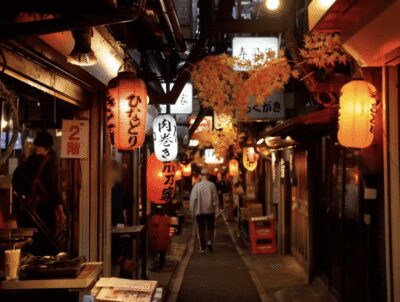
Shinjuku Local Bar and Izakaya Guided Walking Tour
Read our review →
Asakusa Walking Tour with Sensoji Temple Visit
Read our review →
Tokyo Castle & Imperial PalaceーShogun Walking Tour
Read our review →
Browse the lists this tour appears in