
Reviewed · TOKYO SAMURAI AND NINJA EXPERIENCES
Tokyo Samurai Experience: Kyudo (Archery) and Swordsmanship
The best part of this Asakusa experience is that you do not simply watch a samurai demonstration. You put on a hakama outfit, pick up a traditional bow, and learn how a samurai is expected to stand, hold a sword, and carry himself. The setting is playful rather than solemn, but the basic movements give you a real taste of two Japanese martial arts.
I like the mix of kyudo and katana training. The bow work feels different from Western archery, while the sword session gives you excellent photo moments and a simple physical challenge. I also like the friendly teaching style. Instructors including Joe and Coach Mori are patient, clear, and willing to adapt explanations to your English level.
The main drawback is the short length. One hour goes quickly once you change clothes, play the opening game, and take photos, so this is an introduction rather than serious martial arts training. At $96 per person, it makes the most sense if you value the outfit, instruction, snacks, and personal photos as part of the experience.
Key points to know before booking
- Kyudo feels unlike standard Western archery: You learn the posture and handling of a traditional Japanese bow, not just how to shoot at a target.
- The hakama outfit is part of the fun: Several heights and sizes are available, making the activity suitable for many ages and body types.
- A samurai-ranking game starts the session: It adds a light competition before the formal training begins.
- Katana practice focuses on form: You learn how to hold the single-edged sword and strike a strong samurai pose.
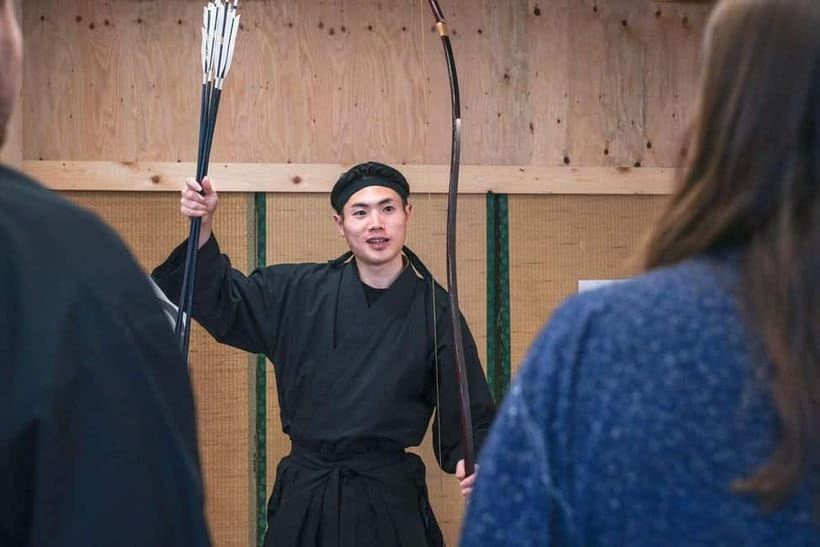
- English-speaking staff keep the lesson accessible: Joe and Coach Mori have received especially warm praise for their friendly, patient instruction.
- The central Asakusa location is easy to pair with sightseeing: The activity takes place at the Heiwa Building, near Asakusa’s well-known attractions.
Changing into a samurai at the Asakusa activity center
The meeting point is BUB Activity Center at Tokyo, Taito-ku, Asakusa, 2 Chome 6-11, Heiwa Building. Take the elevator to the fifth floor. This detail matters because the activity center is inside a building, not a large street-level museum or temple compound.
You should arrive 10 minutes before your start time. That gives you time to find the elevator, check in, and prepare for the clothing change without cutting into your one-hour session. Wear comfortable clothes and shoes. You will be handling equipment and moving through basic poses, so practical clothing is better than anything tight or difficult to manage.
The hakama outfit sets the mood right away. Hakama are traditional pleated trousers worn with Japanese formal and martial clothing. The available range of sizes and heights means the outfit is not limited to one body type. You do not need to bring costume pieces, since traditional clothing is included.
This first step is more than a photo opportunity. Clothing changes how you stand and move, and it helps turn a short lesson into a role-playing experience. Children and adults can take part together, though parents should remember that the session still includes instructions and controlled practice with a bow and sword.
More Tokyo samurai and ninja experiences:
- Tokyo: Samurai Ninja Museum Guided tour and Experience
★ 4.6 · 1,010 reviews - Tokyo: Samurai Sword & Archery Class from Samurai Descendant
★ 5.0 · 603 reviews - Best Samurai Experience in Tokyo
★ 5.0 · 458 reviews
A quick history lesson followed by a samurai rank game
After changing, you receive a short introduction to samurai history and traditions. This is not a long classroom lecture, which suits the one-hour format. You get enough background to understand the role of the samurai image, the purpose of the training, and the attitude behind the movements.
The opening mini-game determines your samurai rank. It gives the group an immediate reason to pay attention and adds a little friendly competition. You might not come out on top, but that is not the point. The training begins after the game, so losing does not leave you on the sidelines.
I like this structure because it breaks the ice. A traditional martial arts lesson can feel intimidating if everyone is standing quietly and waiting to be corrected. A short game makes the room feel more relaxed, especially for children, young adults, and families who may not have tried anything like this before.
The game also gives the instructors a chance to see how the group responds. From there, they can explain the next steps in simple English. The activity is listed as English-language, and the teaching is designed to adapt to different levels of English ability.
Learning kyudo with a traditional Japanese bow
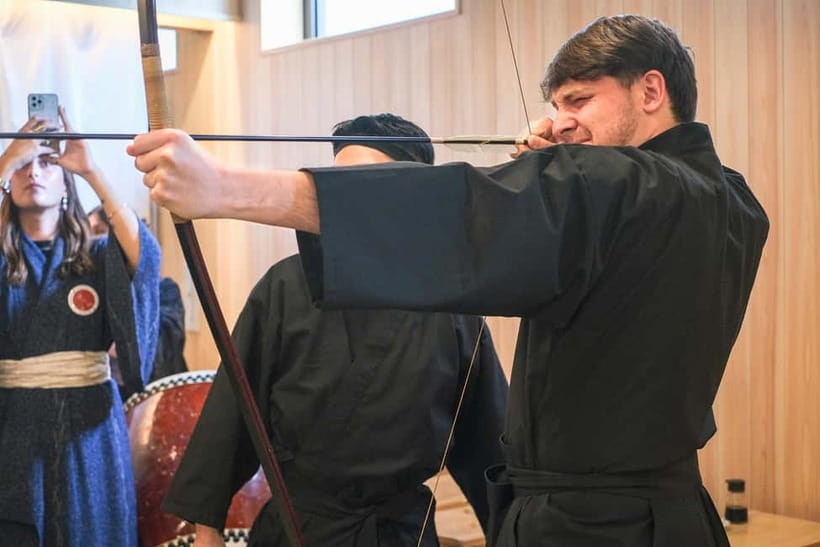
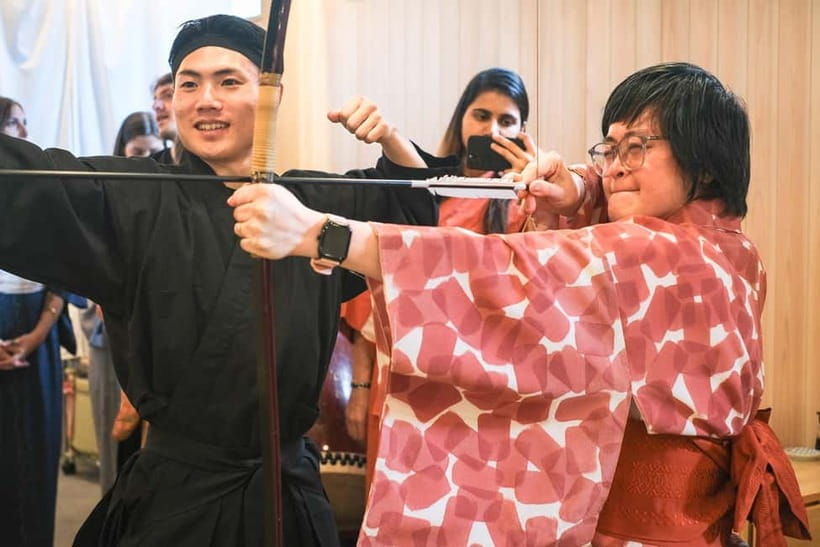
The kyudo section is the most distinctive part of the experience. Kyudo means Japanese archery, but it is not simply Western archery with different equipment. The posture, hand position, rhythm, and mental focus follow a different tradition.
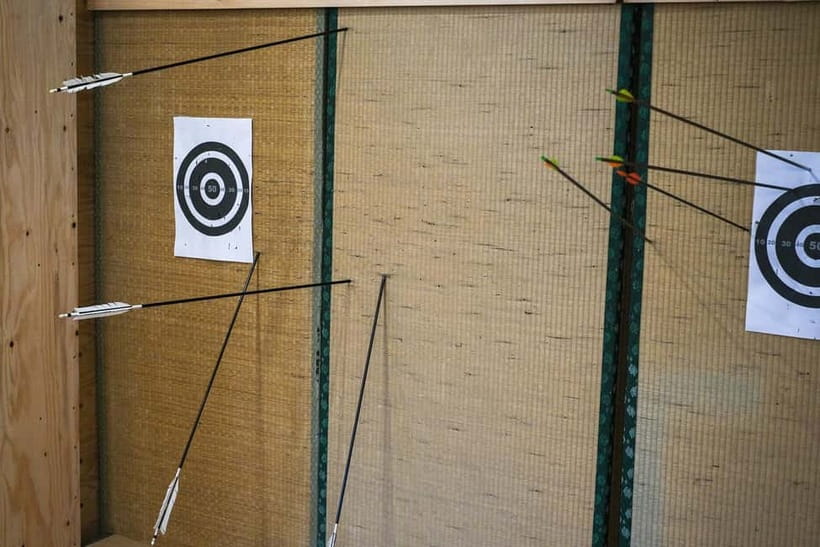
You learn how to use a traditional Japanese bow and take part in a friendly contest connected to the samurai-ranking theme. The aim is to compete for the general, or shogun, position. The competitive element keeps the lesson lively, but you do not need prior archery experience.
Do not expect a full kyudo school or an advanced examination in one hour. Kyudo is a discipline that takes years to study properly. Here, you are learning the basic feel of the bow, the stance, and the way the movement differs from what you may know from archery at home.
That distinction is useful when setting expectations. If you want a serious technical lesson with extended practice, this is too short. If you want a safe, guided introduction with a traditional Japanese flavor, the format works well.
The instructors guide you through the handling rather than leaving you to guess. This is important for beginners and younger participants. Coach Mori has been especially praised for being patient, while Joe is known for giving friendly and clear instruction. The tone is encouraging, so you can focus on learning instead of worrying about getting every movement perfect.
Holding the katana and finding the strongest pose
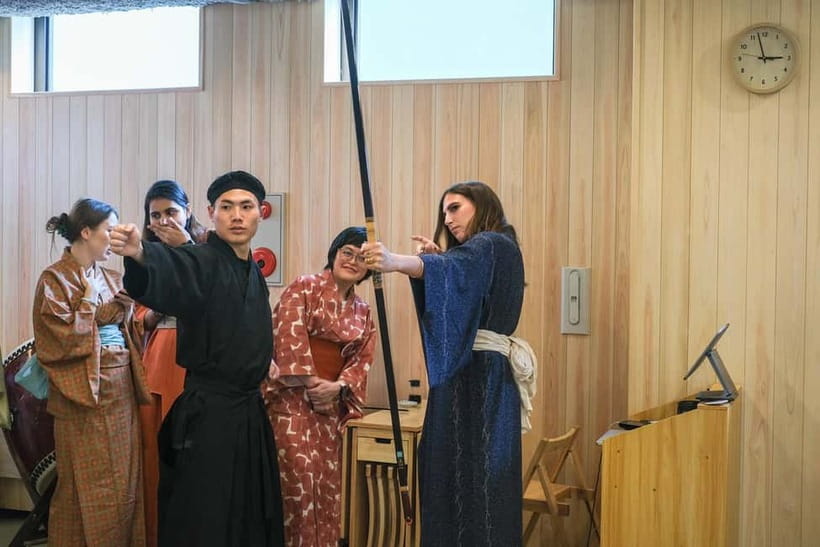
The katana lesson shifts from the open movement of archery to the controlled shape of swordsmanship. A katana is a single-edged Japanese sword, and this part of the activity focuses on the pose, the grip, and the way you hold your body.
You are not being trained for combat. Instead, the instructor shows you how to hold the sword properly and how to create the firm stance associated with a strong samurai. This makes the section approachable for people who have never handled a sword before.
The pose is also where the activity becomes especially useful for photographs. Staff help take plenty of pictures, so you can leave with more than a quick snapshot taken by another member of your group. The combination of hakama, bow, and katana creates a clear visual record of the experience.
I would think of the sword section as performance and posture rather than a technical fighting class. That is not a weakness if you are booking for cultural fun, family memories, or a memorable activity in Asakusa. It is a limitation only if you expect detailed swordsmanship training.
The lesson gives you a simple way to understand why martial arts place so much emphasis on stance. The shape of the body communicates control before any movement begins. Even in this short session, you can feel the difference between holding a sword casually and presenting it with purpose.
More Tokyo martial arts classes:
- Tokyo:Samurai sword and archery class from a samurai descendant
★ 5.0 · 121 reviews - Tokyo 2-Hour Genuine Samurai Experience: Kendo in Japan
★ 5.0 · 112 reviews - Tokyo: Samurai Kendo Practice Experience
★ 4.7 · 102 reviews - Samurai Experience – Learn Bushido through Kendo, in Tokyo
★ 5.0 · 88 reviews
Snacks, photos, and a friendly teaching style
Japanese snacks are included, adding a small hospitality touch to the session. The snacks do not turn the activity into a food tour, but they give you a chance to pause and enjoy something Japanese alongside the clothing and martial arts practice.
The staff also help with photos throughout the experience. This matters because dressing up and handling traditional equipment are central parts of the value. You are not paying only for a talk. You are paying for participation, instruction, costume use, and memories you can share later.
The teaching style receives the strongest praise. Joe is described as friendly and instructive, while Coach Mori is noted for being kind and patient. Other comments point to a fun, active team that offers useful suggestions about other things to do and places to shop in the area.
That warmth is particularly helpful in a short session. There is little time for long explanations, and the staff need to keep the group moving from one activity to the next. Clear demonstrations and a relaxed manner make the experience easier for families and visitors who are not confident English speakers.
The activity has received a perfect 5 rating from 14 reviews, with repeated praise for its fun atmosphere, photographs, and approachable instructors. That does not change the short duration or the price, but it does suggest that the human side of the experience is a major reason people enjoy it.
What the $96 price includes
At $96 per person, this is not the cheapest short activity in Tokyo. You should compare it with the full package rather than treating it as a one-hour archery lesson.
The price includes:
- Traditional hakama clothing
- Use of a traditional Japanese bow
- Use of a katana
- English-language instruction
- Japanese snacks
- Staff assistance with photos
- A samurai history introduction and ranking game
That is a fairer way to judge the cost. You are receiving a costume experience, two different martial arts introductions, personal guidance, and photo support. If you only want to fire a bow for a few minutes, the value may feel weak. If you want a compact cultural activity with several elements in one place, the price is easier to justify.
The one-hour schedule also helps if your Tokyo itinerary is crowded. You can fit this between sightseeing stops in Asakusa rather than giving up half a day. Still, you should not book it expecting a long lesson or a detailed study of Japanese martial arts. The value comes from variety and presentation.
Families and small groups may find the format especially worthwhile because the mini-game and friendly competition give everyone something to do. It also suits adults who want a memorable activity but do not want a physically demanding class.
Who will enjoy this activity most
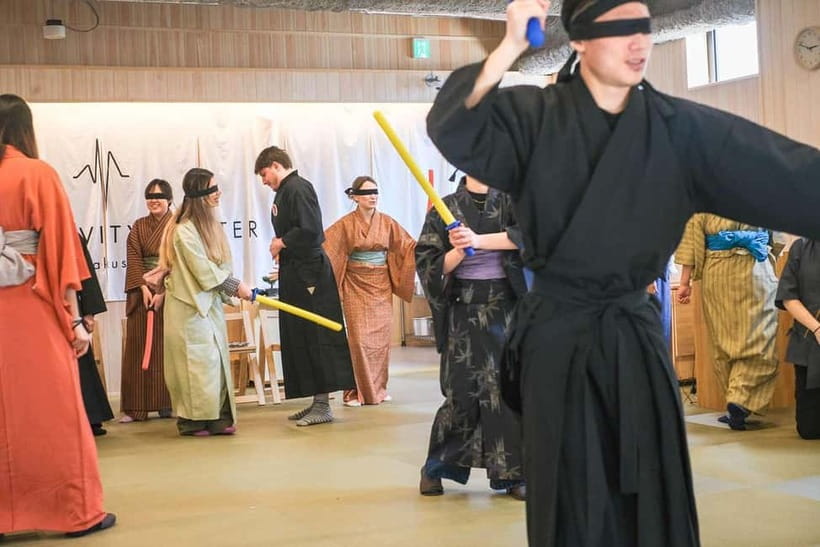
This experience is a strong match for first-time visitors to Japan who want something more active than looking at temples and museums. Asakusa already offers a major concentration of traditional sights, and the samurai session adds a hands-on activity to a day of sightseeing.
Families should find the format easy to enjoy. The activity is family-friendly, requires no prior experience, and uses a game to keep the opening lively. Children and young adults have been singled out as good candidates, though adults can take part on equal terms.
It also suits groups of friends who like light competition. The rank game and shogun contest create a playful goal without making the activity feel like a serious tournament.
English speakers with different levels of fluency should be comfortable. The instructor speaks English, and the staff are expected to keep explanations simple and adjust to your level. You still need to listen carefully during equipment instruction, but you do not need specialist vocabulary.
This may not be right for you if you want advanced kyudo, formal sword training, or a quiet and highly traditional ceremony. The experience is lively, social, and photo-friendly. Its purpose is to give you a taste of samurai culture, not to replace months of martial arts study.
Practical details for your Asakusa day
Plan your route carefully enough to reach the Heiwa Building before the start time. The instruction to use the elevator to the fifth floor is easy to miss, so keep the full address handy and contact the activity provider if you have trouble finding the entrance.
Comfortable shoes and clothing are the only listed items to bring. Alcohol and drugs are not allowed. Because the session includes clothing changes and equipment handling, avoid arriving in an outfit that is hard to move in.
The activity is wheelchair accessible. If you use a wheelchair, it is still sensible to contact the provider ahead of time with any specific needs, since the supplied information confirms access but does not describe the changing area or equipment setup in detail.
You can reserve now and pay later, which helps if your Tokyo schedule is still shifting. Cancellation is free up to 24 hours before the activity for a full refund. Check the available start times when booking, since the exact schedule can vary.
The central Asakusa location makes this easy to combine with other plans, but do not crowd the hour with a tight connection. Arriving early is the safer choice, especially if you are still getting used to Tokyo’s streets and building entrances.
Should you book the Tokyo Samurai Experience?
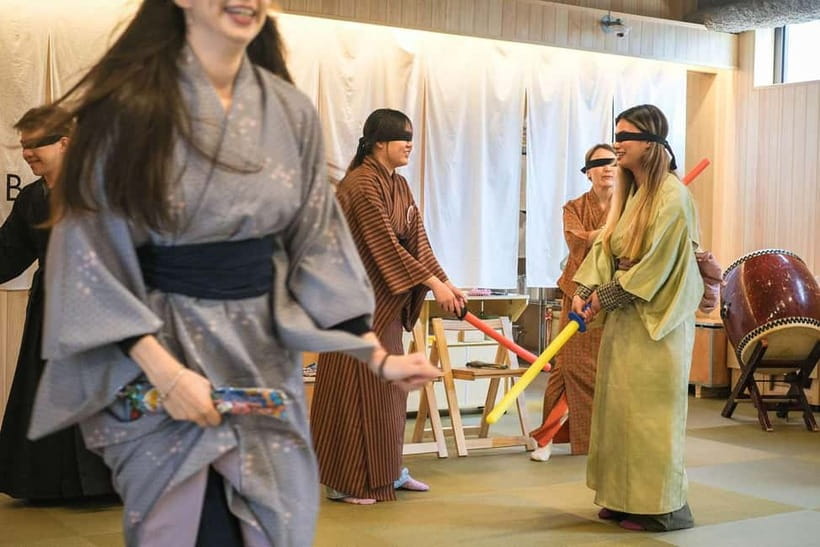
Book it if you want a short, active, and highly visual introduction to samurai culture. The strongest reasons are the chance to wear hakama, try both kyudo and katana handling, receive English instruction, and leave with staff-assisted photos. Joe and Coach Mori add a personal touch that suits beginners.
Think twice if you want serious martial arts instruction. One hour can teach the basic posture and feel of the equipment, but it cannot provide advanced technique. At $96, the experience is best understood as a complete cultural activity with costume, games, snacks, and photos rather than as a pure archery or sword lesson.
For families, first-time visitors, and groups seeking something different in Asakusa, I would book it. Arrive early, wear comfortable clothes, and treat the contest as part of the fun. You do not need to win the samurai rank game to have a good session.
FAQ
Where does the Tokyo Samurai Experience take place?
It takes place at BUB Activity Center, Tokyo, Taito-ku, Asakusa, 2 Chome 6-11, Heiwa Building. Take the elevator to the fifth floor.
How long does the experience last?
The activity lasts one hour. Starting times vary, so check availability when you book.
Is previous martial arts or archery experience required?
No. The activity is suitable for beginners, and no prior experience is necessary.
Is the experience offered in English?
Yes. The instructor and bilingual staff provide English explanations and adjust them to your level of English knowledge.
What is included in the price?
The price includes use of a traditional Japanese bow and katana, traditional clothing, Japanese snacks, and bilingual staff assistance.
What should I bring?
Bring comfortable shoes and comfortable clothes. Alcohol and drugs are not allowed.
Can I cancel the booking?
You can cancel up to 24 hours in advance for a full refund. You can also reserve now and pay later.
Newly reviewed around Tokyo
- Tokyo Asakusa:Calligraphy & Make T-shirt Activity★ 5.0 · 62 reviews
- Intercity Shuttle, Tokyo to Haneda /Narita /Yokohama /Makuhari★ 5.0 · 5 reviews
- 1 Hour Travel around Tokyo with a Professional Photographer★ 5.0 · 3 reviews
- Travel Tokyo with Your Own Personal Photographer★ 5.0 · 43 reviews
- Train in Samurai Swordsmanship and Defeat the Demon in Tokyo★ 5.0 · 5 reviews
- Shuttle Van 6hr Tokyo Tour to-and-from Tokyo, Yokohama and Narita★ 5.0 · 9 reviews
- Kickboxing & Body Training with EX-Pro Fighter★ 5.0 · 4 reviews
- Traditional Japanese Knife Sharpening Class★ 5.0 · 18 reviews
Tokyo Samurai and Ninja Experiences, compared.
Samurai Ninja Museum Guided tour and Experience
Read our review →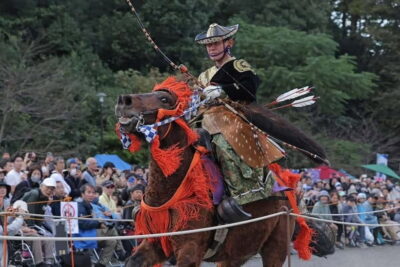
Samurai Sword & Archery Class from Samurai Descendant
Read our review →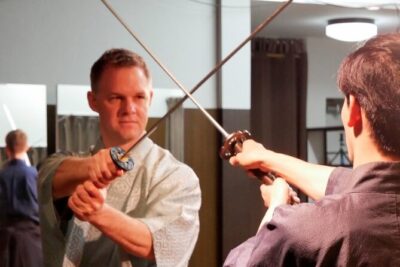
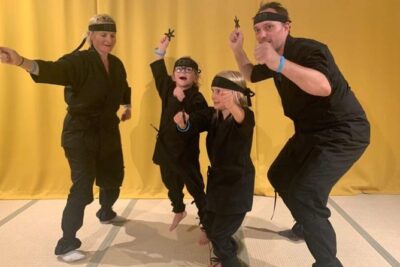
Ninja Experience (Family Friendly) at Samurai Ninja Museum TOKYO
Read our review →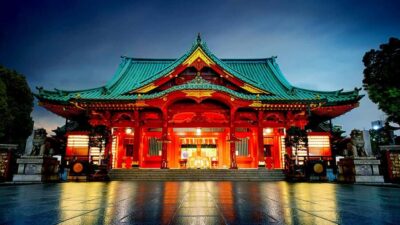
Samurai Entertainment Night Show in Kanda Shrine
Read our review →
Tokyo Sword Experience – includes Museum Ticket/Ninja Experience
Read our review →
Samurai Ninja Museum Asakusa: Samurai Sword Lesson & Tour
Read our review →
Ninja Samurai 2-hour hands-on lesson by Japanese master in Tokyo
Read our review →Browse the lists this tour appears in