
Reviewed · CITY TOURS
Tokyo: Private City Highlights Tour
Tokyo is easiest to enjoy when someone else handles the long jumps between neighborhoods. This private eight-hour tour links Asakusa, Shibuya, Harajuku, Tsukiji, Shinjuku, and the Imperial Palace area without asking you to decode every train transfer.
I like the custom route, which lets you give more time to temples, shopping, food, or city views. I also like the practical help from Ahmad, the guide named most often in the booking information, especially for families or anyone who needs shorter walks. The main drawback is ambition: this is a lot of Tokyo in one day, and entrance fees, lunch, and some major sightseeing costs are extra.
Key points
- Private vehicle for up to five people: Hotel pickup, drop-off, fuel, highway tolls, and onboard WiFi, when available, are included.
- A route built around your interests: You can adjust the suggested plan toward history, fashion, food, technology, or major viewpoints.
- Strong guide flexibility: Ahmad is described as punctual, patient, English-speaking, and willing to change the plan during the day.
- Tokyo’s old and new sides in one outing: Senso-ji and Meiji Shrine share the day with Skytree, Tokyo Tower, Shibuya Crossing, and Harajuku.
- Useful for limited mobility: The vehicle can reduce walking between sights, and one guest specifically received drop-offs close to attractions.
- A fast overview, not a slow neighborhood walk: With so many stops listed, you will need to choose priorities if you want meaningful time at each place.
A private way to cover Tokyo’s wide spread
Tokyo is not one compact sightseeing center. Asakusa sits far from Shibuya. Tsukiji, Harajuku, Shinjuku, and the Imperial Palace each have a different feel, and crossing the city by train can eat up time and energy.
This tour solves that problem with a private vehicle and hotel pickup in Tokyo. You can begin with the old temple district, move to a high observation deck, stop at the palace, and finish among the neon and street fashion of western Tokyo. That range is the tour’s biggest strength.
The price is $319 per group of up to five people. For one person, that is expensive. Split among five, it becomes a reasonable way to buy transport, a full day of door-to-door service, and a guide who can adapt the route. You still need to budget for entrance fees and lunch, and the price does not include personal purchases at Tsukiji or Takeshita Street.
The vehicle also matters in bad weather. A guide named Ahmad adjusted the plan for one group on a day with poor conditions, rather than forcing the original schedule. Highway traffic can cause delays of up to 30 minutes, so keep your day flexible and avoid booking a tightly timed evening activity right afterward.
More private tours in Tokyo:
- Tokyo 6hr Private Tour with Government-Licensed Guide
★ 5.0 · 3,902 reviews - Private Tour to Mt. Fuji and Hakone (Fully Licenced Operator)
★ 5.0 · 1,910 reviews - Tokyo Customized Private Tour (Must See Places in 1 Day)
★ 5.0 · 1,499 reviews
Senso-ji and Asakusa: Tokyo’s best first lesson
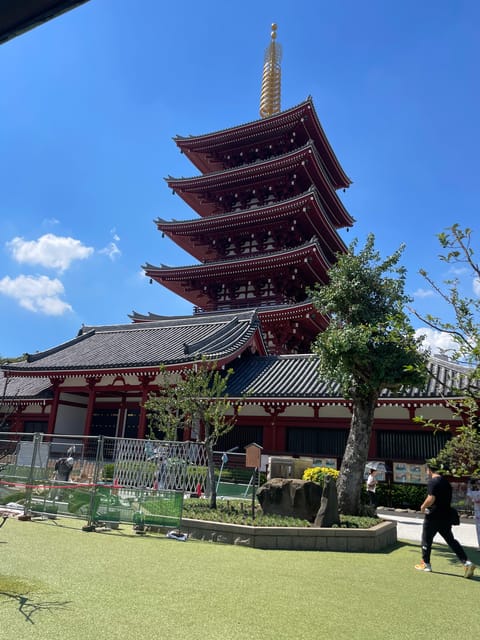
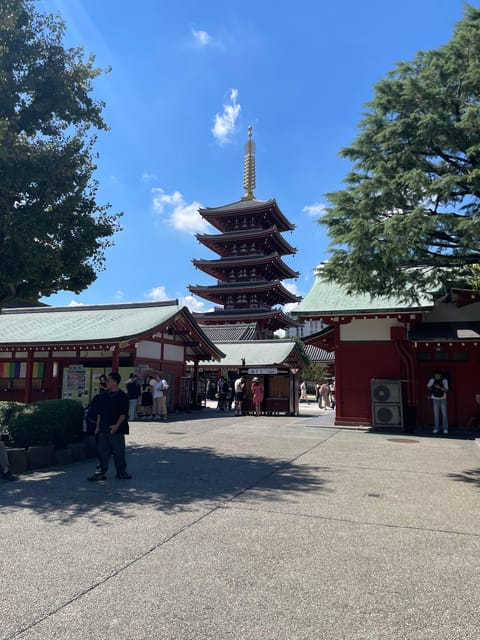
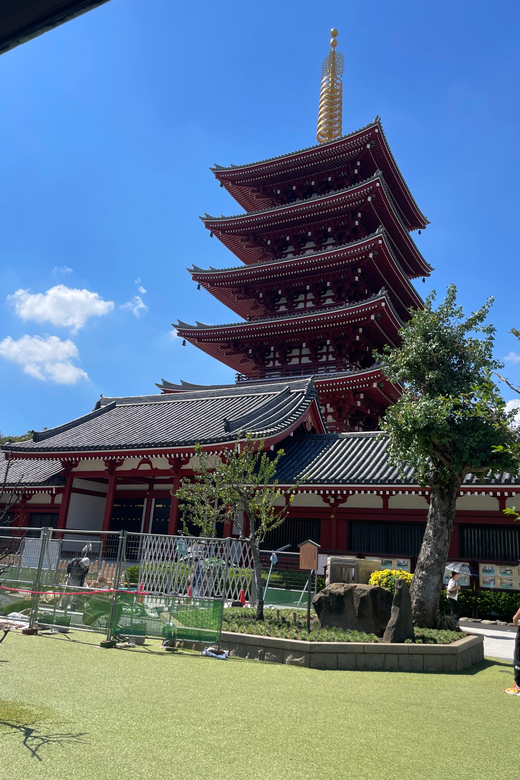
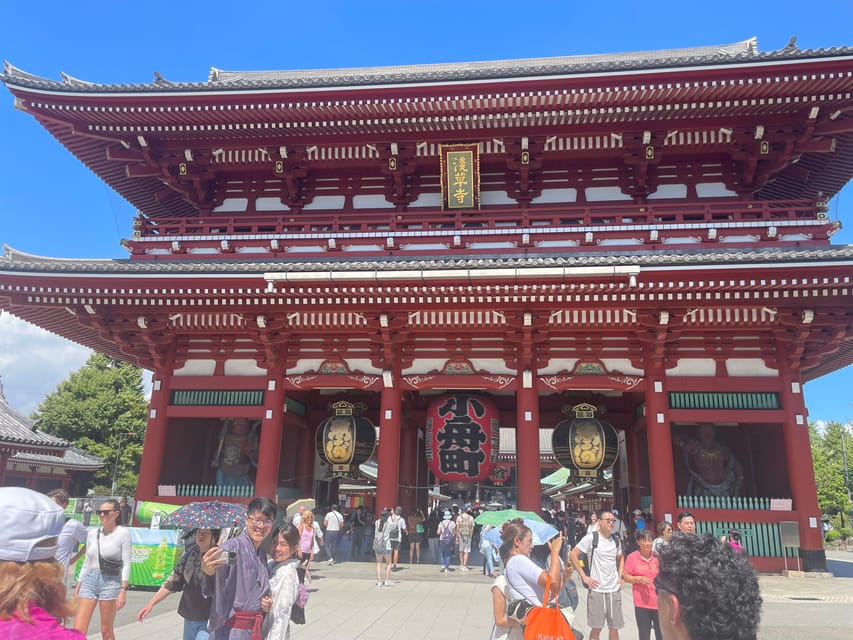
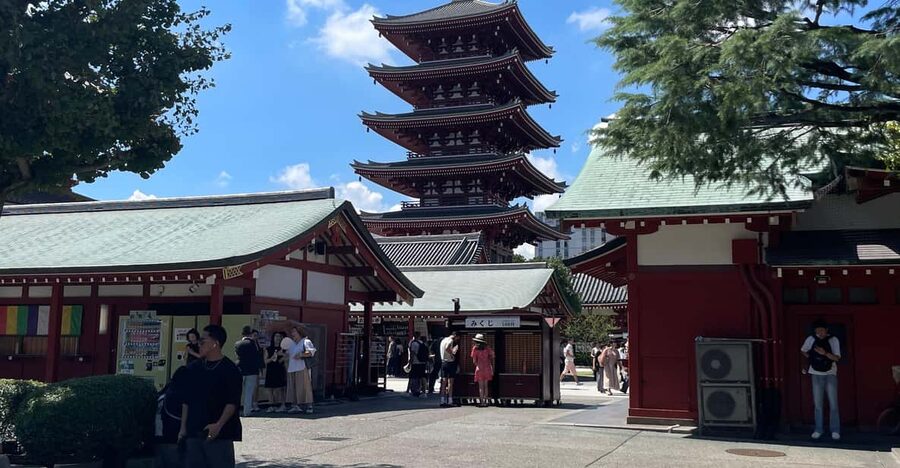
The day begins in Taito City, around Asakusa Shrine and Senso-ji. Senso-ji is Tokyo’s oldest and best-known Buddhist temple, with origins reaching back to 628. You enter through the Kaminarimon Gate, where the large lantern creates one of the city’s most recognizable photographs.
From there, Nakamise Street leads toward the temple. Its traditional shops sell snacks, souvenirs, and small craft items. This is a good place to ask your guide about temple customs, the difference between Shinto and Buddhism, and how the district survived as Tokyo changed around it.
The planned visit is about an hour. That is enough to see the main approach, browse a little, and reach the temple, but not enough for a slow shopping stop or a long look at every side building. If Senso-ji is a priority, tell the guide early so you do not lose this time to later stops.
The Asakusa portion gives you something the newer districts cannot: an immediate sense of old Tokyo. It is also one of the more practical stops for first-time visitors because the main sights are close together.
Tokyo Skytree: big views with a practical catch
Tokyo Skytree rises 634 meters and is Japan’s tallest structure. Its observation decks offer broad views across the city, with possible glimpses of Mount Fuji on a clear day.
The scheduled stop is about an hour. That can work well for a quick look, but it may feel short if you need to purchase tickets, wait for lifts, and spend time at the viewing levels. Entrance fees are not included, so confirm the cost and availability before treating the observation deck as guaranteed sightseeing time.
Skytree is particularly useful early in your Tokyo visit because it helps you understand the city’s scale. From above, the separate neighborhoods on your schedule begin to make sense. On cloudy or rainy days, the experience becomes less certain, though the building itself remains an impressive sight.
Do not confuse Skytree with Tokyo Tower, which also appears later in the route. Seeing both can be worthwhile if you care about architecture and city views, but it also uses time that could go toward another district.
Meiji Shrine and the quiet side of Harajuku
Meiji Shrine is dedicated to Emperor Meiji and Empress Shoken. It sits in a large wooded setting, giving you a calm break from Tokyo’s traffic and crowded commercial streets.
The visit includes about an hour of walking. That is enough to enjoy the approach and shrine grounds at a measured pace, though the exact amount of walking depends on where the vehicle can stop. Comfortable shoes are essential for this tour, especially because several stops involve sidewalks, paths, and outdoor grounds.
I like placing Meiji Shrine beside Harajuku because the contrast is immediate. One stop is quiet and ceremonial. The next is centered on youth fashion, food, and shopping. You do not need a long explanation to understand that Tokyo is a city of sharp changes in mood.
The shrine is also a sensible place to slow down. The tour includes many headline sights, but Meiji Shrine rewards attention rather than speed. If you want to learn about Shinto practice or Japanese imperial history, ask for extra explanation here and consider trimming one of the viewpoint stops.
More Tokyo city tours:
- Tokyo: Private City Highlights Tour with Local Guide
★ 4.8 · 1,433 reviews - Tokyo: Asakusa, Skytree & Akhihabara Go-Kart City Experience
★ 4.7 · 761 reviews - Tokyo: 3-Hour Bike or E-Bike City Highlights Tour
★ 4.8 · 435 reviews - Tokyo: Sumo Morning Practice Tour at Sumida City
★ 4.8 · 308 reviews
Takeshita Street and Harajuku’s youthful edge
Takeshita Street is the short, highly focused Harajuku stop, listed at about 30 minutes. It is known for street fashion, trendy shops, and the youth culture associated with the area.
Thirty minutes gives you a taste, not a shopping session. You can walk the main stretch, look at the storefronts, and sample the mood, but serious shopping will require a change to the schedule. Harajuku has more to offer than one street, and the private format lets you ask for additional time if fashion is one of your main reasons for booking.
This is a useful stop for anyone interested in how Tokyo’s style changes from one neighborhood to another. It is less useful if you prefer museums, gardens, or long temple visits. Tell the guide what kind of experience you want before the day begins, since the default route tries to serve many interests at once.
Tokyo Imperial Palace and East Gardens
The Imperial Palace is the Emperor of Japan’s residence, surrounded by gates, walls, and gardens. The East Gardens are open to the public and offer a chance to walk through a formal historic setting near central Tokyo.
The scheduled visit is about 45 minutes. That makes this more of an introduction than a full garden outing. You can see the area and enjoy a short walk, but the time may feel limited if you want to explore every section.
This stop works best for people interested in Japan’s modern imperial history and the physical shape of central Tokyo. It also breaks up the commercial districts with open space. If gardens are high on your list, ask whether the stop can be extended, perhaps by shortening Tokyo Tower or another viewpoint.
Tokyo Tower and Shinjuku Gyoen
Tokyo Tower receives about an hour on the route. It is the city’s older, orange-and-white tower and offers a different visual experience from Skytree. Seeing both viewpoints in one day gives you two ways to look at Tokyo, but the repetition may not suit everyone.
Shinjuku Gyoen National Garden also receives about an hour. The garden gives the itinerary another pause from dense streets and tall buildings. You can walk, take photographs, and reset before the final urban stops.
Together, these two locations show the tour’s broad reach. You get a famous structure and a major garden, but neither can receive the depth it would on a dedicated visit. If your priority is Tokyo’s parks, use the private format to protect Shinjuku Gyoen time. If your priority is city photography, keep both towers and accept a faster pace elsewhere.
Shibuya Crossing and the modern city
Shibuya Crossing is scheduled for about 45 minutes. The famous pedestrian scramble is a symbol of modern Tokyo, with people moving across the intersection from every direction when the signals change.
The crossing itself takes only a few minutes. The extra time lets you view it from nearby, take photographs, and experience the district rather than simply crossing the street. Your guide can help you decide how much of the stop should go to the intersection and how much to the surrounding streets.
This is one of the clearest examples of why a private tour is useful for first-time visitors. You can stop for the landmark, then leave when you have had enough. You are not tied to a group waiting for every person to finish shopping or taking pictures.
Shibuya is also a good final major sight because it gives the day a strong modern finish. Still, traffic around the district can be slow, so do not count on an exact arrival time at your hotel.
Tsukiji Outer Market: food with extra costs
The Tsukiji Outer Market is included as a stop, though no fixed visit length is given. The original wholesale fish market moved to Toyosu, but the outer market remains a place for seafood, sushi, tamagoyaki, and other local foods.
This is the stop where lunch decisions matter. Food is not included, so you will pay for whatever you eat. The market can also tempt you into spending more on snacks and small food items than planned. Carry a little patience and ask the guide which kind of stop fits your appetite and schedule.
Tsukiji works well as a food-focused visit, but it competes with the many other destinations on the route. If you want a proper meal, shopping time, and a relaxed look around the market, the guide may need to remove or shorten another stop.
How the private format changes the day
The driver-guide option is central to the experience. The guide named most often is Ahmad, with Ahmed also appearing as a spelling variation. He is described as speaking very good English, arriving on time, listening carefully, and remaining patient when plans change.
That flexibility matters more than a polished speech. One guest with walking difficulties was dropped close to sights to reduce the distance on foot. Another group changed its route during poor weather. Those details suggest the best use of this tour is to speak up early and keep communicating throughout the day.
The booking information says the guide will wait in your hotel lobby 10 minutes before pickup. Pickup is available from hotels, hostels, apartments, and other Tokyo addresses, but not from airports, ports, or stations. Check your address before booking.
The tour is wheelchair accessible, but you should tell the local provider about mobility needs, allergies, car seats, or other requirements in advance. The vehicle does not allow smoking, food, drinks, or alcohol.
Who will get the most value
I would choose this tour for a small family, a group of friends, or a couple who wants private transport and a flexible plan. It is especially useful if you are staying in Tokyo for a short time and want a broad first look without handling every long train journey yourself.
It also suits anyone who needs to reduce walking between districts. The guide can bring you close to sights, although the attractions themselves still include outdoor walking and standing.
I would be more cautious if you want slow, detailed sightseeing. Eight hours is not enough for an unhurried visit to every place listed. The best approach is to choose three or four priorities and treat the rest as shorter introductions.
The tour is rated 4.9 from 13 bookings, with repeated praise for punctuality, patience, English communication, local knowledge, and the willingness to adjust the day. One rating was four out of five, noting that the guide listened and changed the plan as the tour went on. That pattern points to a strong practical service, though the small number of ratings means you should still confirm the guide arrangement and exact route before paying.
Should you book the Tokyo private highlights tour?
Book it if you want maximum coverage with minimum transport hassle, especially for up to five people sharing the $319 group price. The hotel pickup, private vehicle, fuel, highway tolls, and possible guide support give the day real value when divided among a small group.
Book it with a plan. Decide if your must-see sights are Senso-ji, Skytree, Meiji Shrine, Shibuya, food at Tsukiji, or something else. Ask the guide to protect those stops and treat the remaining places as optional.
Skip it if you prefer to spend half a day in one neighborhood, or if you want all admission costs and lunch bundled into one price. For everyone else, this is a practical Tokyo sampler with enough flexibility to feel personal rather than fixed.
FAQ
How long is the Tokyo private city highlights tour?
The tour lasts eight hours, with pickup and drop-off in Tokyo.
How many people can join the private tour?
The price covers one private group of up to five people.
Is hotel pickup included?
Yes. Pickup is available from hotels, hostels, apartments, and other addresses in Tokyo. Pickup is not available from airports, ports, or stations.
Is transportation included?
Yes. Transportation is by private vehicle, with fuel and highway tolls included. WiFi is available onboard when possible.
Are entrance fees and lunch included?
No. Entrance fees, lunch, and personal expenses are not included.
Is the tour wheelchair accessible?
Yes, the activity is listed as wheelchair accessible. You should tell the local provider about mobility needs and any other requirements before the tour.
Can the itinerary be changed?
Yes. The private format allows you to adjust the plan around your interests, including history, shopping, food, technology, and city views. Changes may be needed because of traffic, weather, or the limited time available.
Newly reviewed around Tokyo
- Tokyo Asakusa:Calligraphy & Make T-shirt Activity★ 5.0 · 62 reviews
- Intercity Shuttle, Tokyo to Haneda /Narita /Yokohama /Makuhari★ 5.0 · 5 reviews
- 1 Hour Travel around Tokyo with a Professional Photographer★ 5.0 · 3 reviews
- Travel Tokyo with Your Own Personal Photographer★ 5.0 · 43 reviews
- Train in Samurai Swordsmanship and Defeat the Demon in Tokyo★ 5.0 · 5 reviews
- Shuttle Van 6hr Tokyo Tour to-and-from Tokyo, Yokohama and Narita★ 5.0 · 9 reviews
- Kickboxing & Body Training with EX-Pro Fighter★ 5.0 · 4 reviews
- Traditional Japanese Knife Sharpening Class★ 5.0 · 18 reviews
City Tours, compared.

Private City Highlights Tour with Local Guide
Read our review →
Asakusa, Skytree & Akhihabara Go-Kart City Experience
Read our review →

Private Haneda Airport (HND) to Central Tokyo City Transfer
Read our review →
3-hour Guided E-Bike Tour of the City’s Hidden Gems
Read our review →
3-Hour Bike/E-Bike Tour of the City’s Highlights
Read our review →
Private departure transfer from Tokyo city to Tokyo Haneda Airport(HND)
Read our review →Browse the lists this tour appears in