
Reviewed · TOKYO SAMURAI AND NINJA EXPERIENCES
Tokyo: Samurai Sword Academy in the Hometown of the Last Samurai
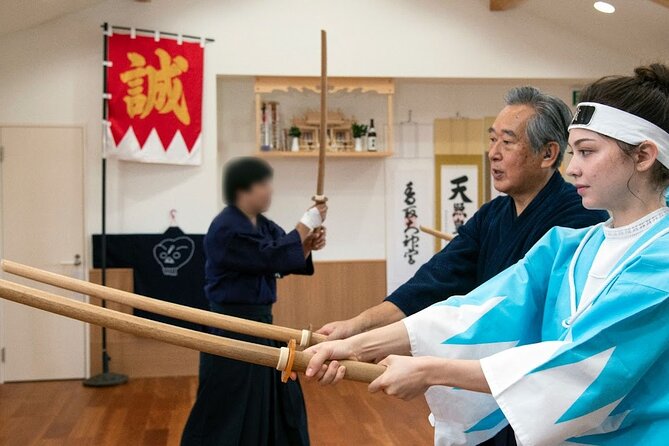
The striking feature here is that you are not watching a staged samurai show. You are learning Tennen Rishin-ryu, the sword style practiced by the Shinsengumi, in Hino, the group’s home ground. Masao Inoue, a descendant of Shinsengumi executive Genzaburo Inoue, leads the session, with English guidance from Yu Ma.
I like the small maximum of four people, which gives the instruction a personal feel. I also like the chance to handle a real Japanese sword and learn proper etiquette, basic forms, and stances rather than simply posing for photographs. The main consideration is that this is genuine martial-arts practice, not a light tourist activity, so you need moderate physical fitness and a willingness to follow instructions closely.
Key points
- Train in Shinsengumi swordsmanship: Learn the basic forms of Tennen Rishin-ryu, the style linked to the famous late-Edo-period swordsmen.
- Meet Masao Inoue: The program is led by a descendant of Shinsengumi executive Genzaburo Inoue.
- Use an authentic dojo: Practice takes place at the Tennen Rishin-ryu Hino Dojo in Hino City.
- Handle a Japanese sword: The session covers safe handling, posture, and the samurai sword tradition.
- Keep the group tiny: No more than four people can join, making it easier to receive direct instruction.
- Plan for a serious two hours: This is a physical and formal lesson, not a casual entertainment show.
Why Hino matters to the Shinsengumi story
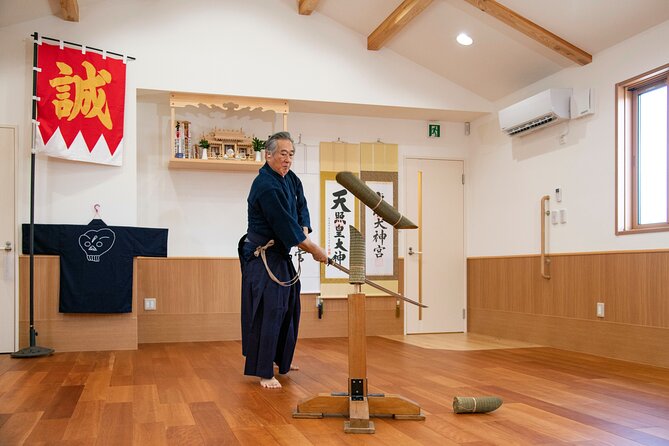
Tokyo is usually sold through neon streets, temples, food markets, and department stores. Hino offers a different angle. It is tied to the Shinsengumi, the late-Edo-period sword group often called the Shogun’s Last Samurai.
The men who practiced Tennen Rishin-ryu in Hino helped form the Shinsengumi. That link gives the lesson a strong sense of place. You are not studying an unrelated martial art in a generic studio. You are learning a sword tradition in the town connected with the people who made it famous.
That context matters. The sword forms become easier to appreciate when you understand that they were part of a living martial tradition, not just a modern performance. You will still spend most of your time practicing, but the setting gives the movements a clear historical purpose.
The experience begins at Genzaburo Inoue Shiryokan, at 4-11-12 Hinohonmachi, Hino, Tokyo 191-0011. This is also the end point, so you return to the meeting location after the session. The listed start time is 1:00 p.m.
More Tokyo samurai and ninja experiences:
- Tokyo: Samurai Ninja Museum Guided tour and Experience
★ 4.6 · 1,010 reviews - Tokyo: Samurai Sword & Archery Class from Samurai Descendant
★ 5.0 · 603 reviews - Best Samurai Experience in Tokyo
★ 5.0 · 458 reviews
Beginning at Genzaburo Inoue Shiryokan
Your meeting point is named for Genzaburo Inoue, a Shinsengumi executive and an important figure in this local story. The name gives you an immediate connection to the people and place behind the lesson.
The program information does not give a detailed room-by-room description of the site, so you should think of the Shiryokan primarily as your arrival point and historical anchor. From there, the activity leads into the Tennen Rishin-ryu Hino Dojo, the working training space where the sword instruction takes place.
That distinction is useful. You are not simply visiting a display about samurai. The main value comes from moving from historical context into practice. If you enjoy experiences where a place and its activity are closely connected, this is a strong match.
The address is near public transportation, but exact route details are not provided. I would allow enough time to find Hinohonmachi and arrive ready for a 1:00 p.m. start. Mobile ticketing is available, and booking confirmation is sent at the time of purchase.
Learning the etiquette before the sword work
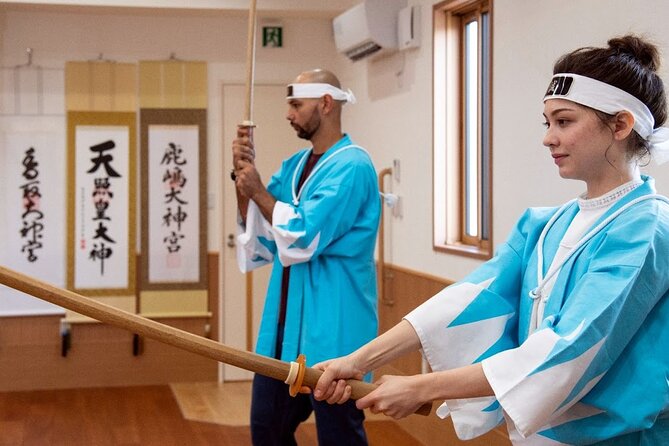
A proper sword lesson begins with conduct, not flashy cuts. The program teaches 礼儀作法, or etiquette and manners, along with the basic way to stand and hold the sword. That formal start is one of the best reasons to choose this activity over a short photo session.
You can expect the instructor to focus on how you position yourself, how you hold the weapon, and how you move through the basic forms. The supplied details do not list every exercise, so you should not expect a fixed catalogue of named techniques. Instead, the session is built around an introduction to the essence of Tennen Rishin-ryu.
This may feel more demanding than a standard sightseeing stop. You need to listen carefully, repeat movements, and accept correction. That is also what makes the experience worthwhile. The goal is not to make you look like a samurai for five minutes. It is to give you a small, serious taste of the discipline behind the image.
Practicing Tennen Rishin-ryu forms
The central lesson covers basic Tennen Rishin-ryu forms, or kata. A kata is not just a choreographed fight. It trains posture, timing, control, and concentration through a set pattern.
For you, the value is in learning how the sword is used as part of a complete body position. Your feet, hands, shoulders, and attention all matter. Even a basic form can become surprisingly exacting once an instructor starts correcting small details.
Masao Inoue leads the experience as chairman of the Tennen Rishin-ryu Hino Dojo. His family connection to Genzaburo Inoue adds unusual depth to the session, but the important point is that he is teaching within the tradition itself. English guidance is available through Yu Ma, making the lesson more approachable for English-speaking participants.
A small group is especially helpful here. With a limit of four people, you are less likely to disappear at the back of a class. You can watch the instructor demonstrate, try the movement yourself, and receive clearer correction than you might in a large workshop.
A completely different kind of day in Tokyo:
- Mt Fuji and Hakone 1-Day Bus Tour Return by Bullet Train
★ 5.0 · 26,383 reviews - 1-Day Tokyo Bus Tour
★ 5.0 · 14,250 reviews - Tokyo: teamLab Planets TOKYO Digital Art Museum Entry Ticket
★ 4.6 · 9,779 reviews - Mt Fuji & Hakone Cruise, Drum Show Bullet Train 1 Day from Tokyo
★ 4.0 · 7,413 reviews
Handling a Japanese sword with care
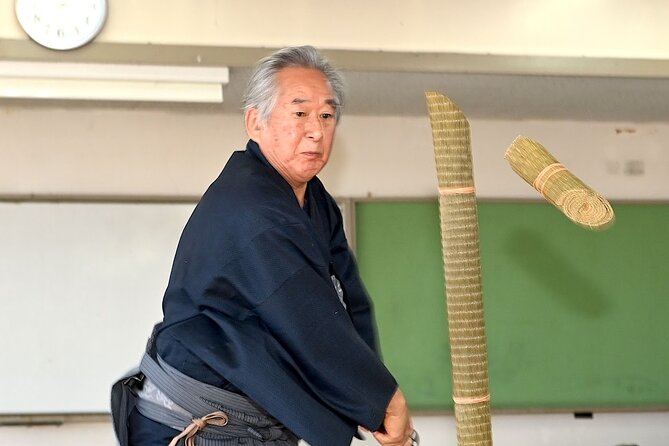
The chance to handle a Japanese sword is a major draw, but the setting calls for respect. The sword is presented as the soul of the samurai, and the lesson treats it as more than a costume prop.
You will learn how to hold and position the sword as part of the basic training. The experience description also refers to handling a Japanese sword and learning the essential forms of the school. A Japanese-language account of the program describes instruction in actual sword test cutting, or tameshigiri, along with etiquette, stance, and kata.
Because the supplied details do not promise test cutting for every booking, you should confirm the exact session content if that part is your main reason for coming. Do not assume that every participant will receive the same cutting exercise. What is clear is that sword handling is central to the experience, and that the lesson is conducted in a serious dojo environment.
This is where the moderate fitness requirement makes sense. You are not running or fighting, but you will be standing, holding a sword, repeating forms, and concentrating for about two hours. Wear clothing that allows comfortable movement and arrive prepared to follow safety instructions.
Why the four-person limit changes the experience
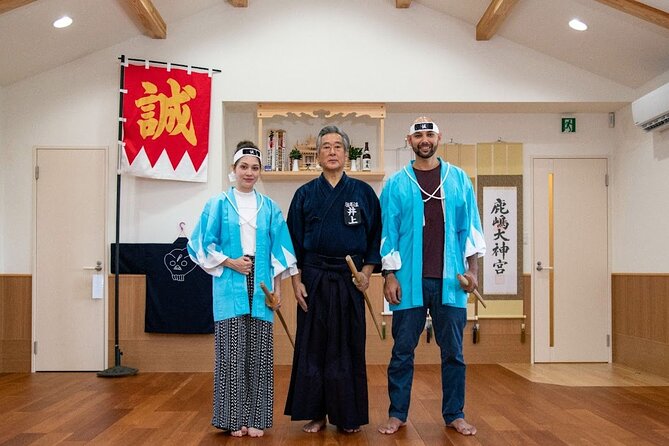
A class of four feels very different from a large cultural demonstration. The instructor can watch each person’s stance and correct mistakes before they become habits. You can also ask questions without stopping an entire room.
The small format may suit you if you want direct contact with the tradition and do not mind being noticed while you practice. It is less suitable if you prefer to stay anonymous in a crowd or simply watch an expert perform.
The group limit also helps protect the character of the dojo. The program is not trying to process dozens of people in quick succession. It gives the lesson room to remain formal and focused. At the same time, a four-person maximum means spaces may be limited, especially since the experience is booked an average of 31 days ahead. That advance-booking pattern is a useful hint: plan early if your Tokyo dates are fixed.
A two-hour lesson with real value at $118.60
At $118.60 per person, this is not a bargain-priced cultural activity. You are paying more than you would for a short demonstration or a basic photo opportunity.
The value comes from what the price includes in practical terms: about two hours of instruction, a small group capped at four people, access to an authentic dojo, direct guidance from Masao Inoue, English support from Yu Ma, and the chance to handle a Japanese sword. The family connection to the Shinsengumi adds meaning, but you should judge the cost mainly by the quality and rarity of the hands-on instruction.
I would consider it worthwhile for someone who has a real interest in Japanese martial arts, samurai history, or traditional training. If you only want a quick samurai-themed activity, the price may feel high. The program asks you to spend two hours learning, not simply consuming a performance.
It also offers something difficult to reproduce on your own. You can visit many places connected with Japanese history, but you will not normally walk into a functioning Tennen Rishin-ryu dojo and receive instruction in its basic forms. That is the part of the price you are really buying.
Who will enjoy this most
This experience suits you best if you:
- Have a strong interest in samurai history or Japanese martial arts
- Want a hands-on activity rather than a museum visit alone
- Appreciate formal instruction and traditional etiquette
- Can manage two hours of standing and repeated movements
- Prefer a group of four or fewer
- Want an experience connected to a specific Tokyo-area community
It may be less suitable if you want a relaxed, drop-in activity with no physical demands. The program is also not described as a broad historical tour of Tokyo. Its focus is narrow and clear: Tennen Rishin-ryu swordsmanship and the Shinsengumi connection in Hino.
Families should consider the moderate fitness requirement and the seriousness of handling a sword. The supplied information does not give a minimum age, so you should ask the provider before booking for a child.
Getting there and preparing for the afternoon
The meeting point is in Hino City, at Genzaburo Inoue Shiryokan. Public transportation is nearby, but no station name or step-by-step route is supplied. Use the full address when planning your journey, and allow time to arrive before the 1:00 p.m. start.
Bring your mobile ticket and wear practical clothing. The information does not list a required uniform, clothing rental, or equipment checklist, so do not assume those details without checking. Comfortable movement matters more than dressing for photographs.
The activity ends back at the meeting point. That makes it easier to plan the rest of your day, although the total time around the experience will include your journey to and from Hino.
The cancellation terms are friendly but firm. You receive a full refund if you cancel at least 24 hours before the local start time. Cancellations or changes made inside that window are not accepted for a refund.
The main strengths and the one real caution
The strongest part of this experience is its authenticity. You practice a sword tradition linked to the Shinsengumi in the town associated with that group, under the direction of a dojo chairman descended from one of its executives.
The second strength is the instruction. The session includes more than sword posing. You learn manners, stance, forms, and handling, with English guidance available. The very small group should make the two hours feel personal and useful.
The caution is equally clear: authenticity brings rules. This is not a loose, theatrical activity where you can improvise. You need moderate fitness, concentration, and respect for the dojo. If you are hoping for a quick thrill with little instruction, you may find the pace too serious.
Should you book the Hino sword academy?
Book it if you want a focused, hands-on connection to samurai history and you value being taught in a real dojo. The Shinsengumi setting, Masao Inoue’s family link, English guidance from Yu Ma, and four-person limit make this far more personal than a standard cultural show.
Skip it if your interest in samurai is mainly visual, or if $118.60 feels too high for a two-hour lesson. Also confirm the details of any test-cutting session before booking, since that aspect is described in the available material but not clearly guaranteed for every participant.
For the right person, this is a rare Tokyo-area experience: small, formal, physical, and tied closely to Hino’s own past. It asks more of you than a sightseeing stop, but it also gives you a more direct connection to the sword tradition.
FAQ
Where does the sword experience begin?
It begins at Genzaburo Inoue Shiryokan, located at Japan, 191-0011 Tokyo, Hino, Hinohonmachi, 4-chōme 11-12.
What time does the activity start?
The listed start time is 1:00 p.m.
How long does the experience last?
The activity lasts approximately two hours.
How many people can join?
The group has a maximum of four participants.
Who leads the sword lesson?
Masao Inoue, chairman of the Tennen Rishin-ryu Hino Dojo and a descendant of Shinsengumi executive Genzaburo Inoue, leads the program. English guidance is provided by Yu Ma.
Do I need to be physically fit?
Participants should have a moderate level of physical fitness. The session involves sword handling and practice of basic forms in a dojo setting.
Can I cancel for a full refund?
Yes. You can receive a full refund if you cancel at least 24 hours before the experience start time. Cancellations or changes made less than 24 hours in advance are not accepted.
Newly reviewed around Tokyo
- Tokyo Asakusa:Calligraphy & Make T-shirt Activity★ 5.0 · 62 reviews
- Intercity Shuttle, Tokyo to Haneda /Narita /Yokohama /Makuhari★ 5.0 · 5 reviews
- 1 Hour Travel around Tokyo with a Professional Photographer★ 5.0 · 3 reviews
- Travel Tokyo with Your Own Personal Photographer★ 5.0 · 43 reviews
- Train in Samurai Swordsmanship and Defeat the Demon in Tokyo★ 5.0 · 5 reviews
- Shuttle Van 6hr Tokyo Tour to-and-from Tokyo, Yokohama and Narita★ 5.0 · 9 reviews
- Kickboxing & Body Training with EX-Pro Fighter★ 5.0 · 4 reviews
- Traditional Japanese Knife Sharpening Class★ 5.0 · 18 reviews
Tokyo Samurai and Ninja Experiences, compared.
Samurai Ninja Museum Guided tour and Experience
Read our review →
Samurai Sword & Archery Class from Samurai Descendant
Read our review →
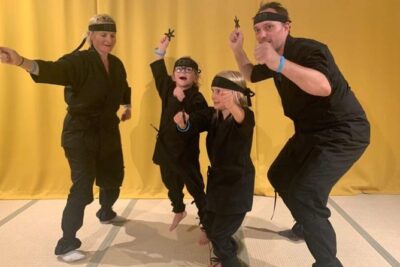
Ninja Experience (Family Friendly) at Samurai Ninja Museum TOKYO
Read our review →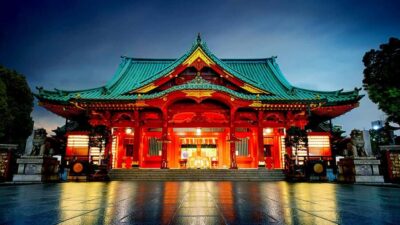
Samurai Entertainment Night Show in Kanda Shrine
Read our review →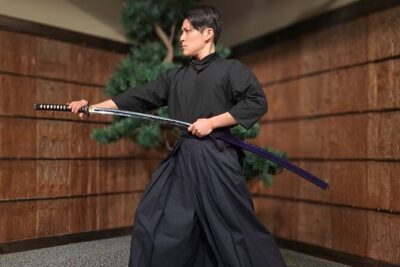
Tokyo Sword Experience – includes Museum Ticket/Ninja Experience
Read our review →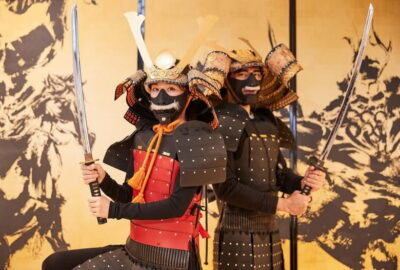
Samurai Ninja Museum Asakusa: Samurai Sword Lesson & Tour
Read our review →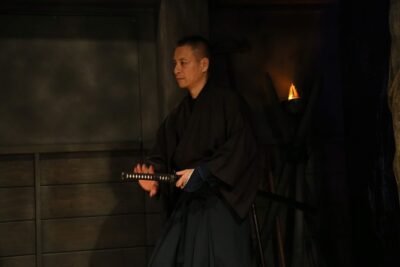
Ninja Samurai 2-hour hands-on lesson by Japanese master in Tokyo
Read our review →Browse the lists this tour appears in