
Reviewed · TOKYO KIMONO EXPERIENCES
Tokyo: Kimono Experience inside Shinjuku Gyoen National Garden
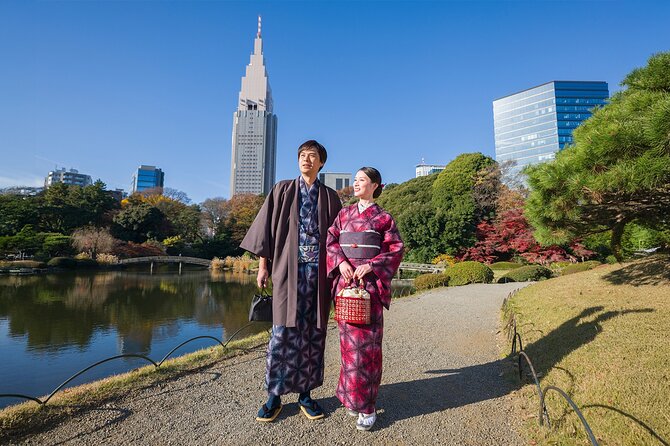
Inside Tokyo’s Shinjuku Gyoen, you can put on a real kimono at the historic Rakuu-tei tea house and then walk through one of the city’s most pleasant gardens. This is more than a quick costume change. Kouichi Store has made kimonos for 174 years, and the setting gives the experience a calm, traditional feel.
I like two things in particular: you get professional dressing rather than struggling with layers yourself, and the rental includes the small pieces that make the outfit look complete, from tabi socks and sandals to an obi and Japanese handbag. The main consideration is timing. Dressing takes about an hour, and the kimono must be back by 4:00 PM.
Key points to know before booking
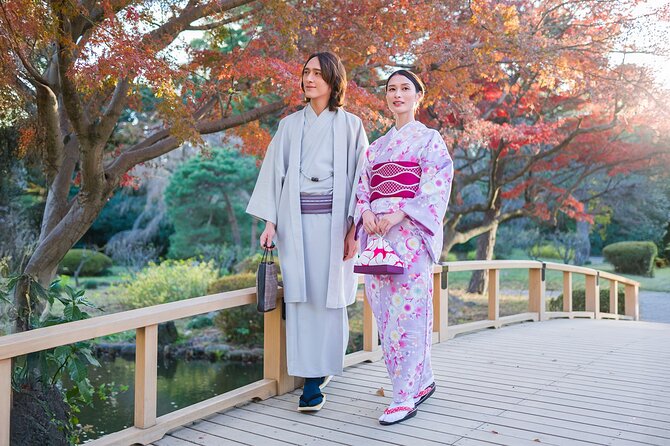
- The rental takes place inside Shinjuku Gyoen: You do not need to cross Tokyo for a traditional setting. The shop is in Rakuu-tei tea house, close to the garden.
- About 60 minutes goes to choosing and dressing: Staff help select a seasonal kimono and fit the obi, footwear, and accessories.
- Your garden time is flexible: After dressing, you can explore freely until the 4:00 PM return deadline.
- The rental includes the complete basic outfit: Kimono, obi belt, tabi socks, sandals, Japanese handbag, and basic hair styling for women are covered.
- The park entrance costs extra: You must pay the ¥500 Shinjuku Gyoen admission fee separately.
- The group is capped at five people: That keeps the fitting more personal than a large costume-rental operation.
Why Rakuu-tei makes this kimono rental different
Many kimono activities in Tokyo begin in a shop near a train station, then send you into ordinary city streets. This one begins inside Shinjuku Gyoen, at Rakuu-tei, a traditional tea house surrounded by the garden. That setting matters. You change clothes in a place that already feels connected to Japanese customs, rather than treating the kimono as a simple photo prop.
Kouichi Store is a long-established kimono maker with 174 years of experience. That does not turn a two-hour booking into a full lesson in textile history, but it does explain why the clothing and dressing process are treated seriously. You are working with a business built around kimono craftsmanship, not just a general clothing-rental counter.
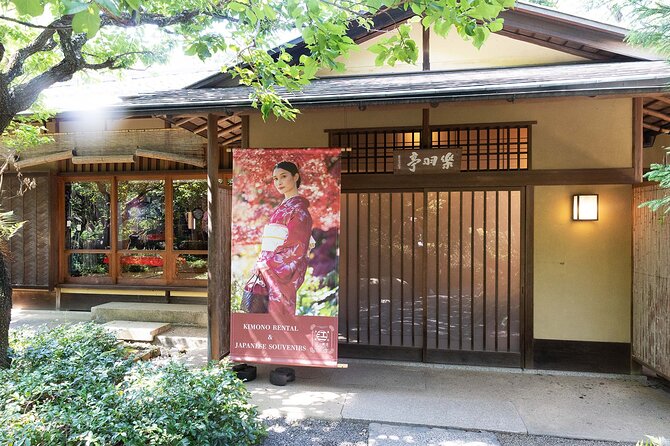
The shop is on the left side inside Rakuu-tei. The meeting location is listed as Rakuu-tei Kouichi Store, at 11 Naitomachi, Shinjuku City, Tokyo 160-0014. Because the shop is inside the paid garden, you need to buy your ¥500 park ticket before reaching the tea house.
The small group limit of five is another plus. You should expect help choosing your outfit, but this is not a private appointment unless your booking happens to contain only your own party. Even so, the cap should make the fitting more manageable and less rushed than a large group session.
More things to do in Shinjuku:
- Tokyo: Shinjuku Food Tour (13 Dishes at 4 Local Eateries)
★ 5.0 · 6,603 reviews - Tokyo Bar Hopping Tour in Shinjuku (All-You-Can-Drink + Dinner)
★ 5.0 · 3,587 reviews - Tokyo: Shinjuku Food Tour (15 Dishes and 4 Eateries)
★ 4.9 · 2,033 reviews
Choosing a kimono for the season
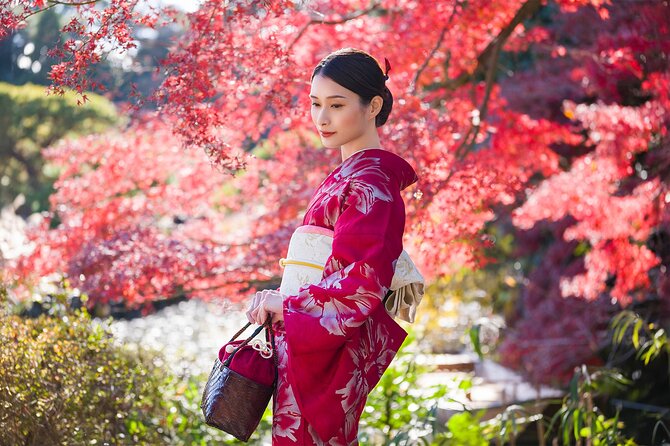
At check-in, staff help you choose from a range of authentic kimonos selected with the season in mind. The available colors and patterns are not specified in advance, so you should treat the choice as part of the experience rather than arriving with one exact design in mind.
This is useful if you are unsure what suits you. A kimono is not simply a robe with a belt. The obi, sleeve shape, socks, sandals, and handbag all affect the finished appearance. Professional assistance takes away much of the guesswork.
The seasonal approach also makes sense in Shinjuku Gyoen. You can select clothing that feels appropriate to the time of year, then walk through a garden that changes with the seasons. The kimono and the park become part of the same visual experience.
Do not expect unlimited accessories to be included. Traditional umbrellas and other small items are available only as optional add-ons. If you want a particular extra, ask about the cost before adding it.
The one-hour dressing process
The selection and dressing stage takes about 60 minutes. Staff help you put on the kimono, tie the matching obi belt, and finish the outfit with tabi socks, traditional sandals, and a Japanese handbag.
This hour is the practical heart of the activity. Proper kimono dressing requires attention to fit and layers, so the professional service is worth more than a do-it-yourself rental if you want to look presentable in photographs or simply move around without worrying about loose clothing.
Women receive basic hair styling as part of the booking. Additional hairstyles are available for an extra fee. The included service is useful, but you should not assume it covers an elaborate salon treatment. Ask about paid options if your hairstyle is a major part of your plans.
The dressing time also affects how you plan the day. The advertised duration is about two hours, but the exact amount of time you spend walking in the garden depends on your appointment start. If you begin late, you still have the fixed 4:00 PM return deadline. I would schedule this early enough to leave room for the fitting and a relaxed garden walk.
Walking through Shinjuku Gyoen in traditional dress
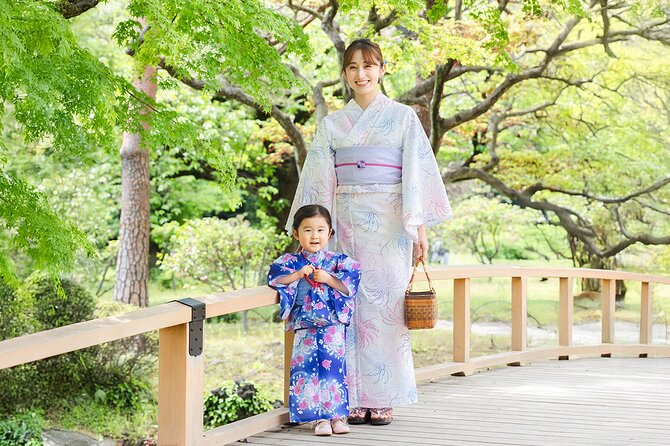
Once dressed, you are free to explore Shinjuku Gyoen and the surrounding area until it is time to return the outfit. You are not tied to a guide or forced to follow a set route. That freedom is one of the best features of the booking.
You can set your own pace, stop for pictures, and enjoy the park without a running commentary. The garden provides a quiet contrast to Tokyo’s busy streets, and the kimono gives you a different way to notice the setting. Paths, trees, open spaces, and traditional garden features become part of the experience rather than just scenery passed on the way to the next attraction.
There is no photography plan included. You can take your own pictures, but a professional photographer is not part of this activity. That keeps the price down, though it means you may need a companion to help with full-length photos or rely on a phone timer.
The freedom also comes with responsibility. A kimono is formal clothing, and traditional sandals are not designed for rushing. Plan a comfortable route through the garden and leave enough time to return to Rakuu-tei before the 4:00 PM cutoff.
The experience is best for people who value the setting and the clothing itself. If your main goal is a highly directed photo session with multiple poses and a photographer, this may feel too simple. If you prefer to make your own way through the park, the flexible format works well.
More Tokyo kimono experiences:
- Let’s make kimono !(Kimono is a gift for you
★ 5.0 · 252 reviews - Tokyo: Matcha and Kimono Experience
★ 4.7 · 219 reviews - Tokyo: Asakusa Kimono Dressing and Matcha Experience
★ 4.9 · 173 reviews - Asakusa: Kimono Tea Ceremony with Matcha and Sweet
★ 4.9 · 153 reviews
What the $46.04 price really covers
The listed cost is $46.04 per person. You also pay ¥500 per person for admission to Shinjuku Gyoen, so your actual day cost is the rental price plus the park entrance fee.
For that money, you receive more than a kimono alone. The package includes the obi belt, tabi socks, sandals, handbag, professional dressing, basic hair styling for women, and time to explore the garden. Paying separately for each of those pieces would make the arrangement less convenient, even if the total price varied.
The value depends on how much use you make of the setting. If you dress, take two quick photos, and return the kimono immediately, the price may feel high. If you spend time walking through the garden and treat the park as part of the activity, the package offers a fuller cultural outing.
The absence of a photography plan is important when comparing options. You are paying for the clothing, fitting, and location, not for a photographer or a finished photo package. Optional umbrellas, accessories, and extra hairstyles also raise the final cost.
The group limit of five improves the value for anyone who wants personal help during the fitting. It is still a short activity, not a full-day cultural course, so keep the scope clear when comparing it with longer kimono workshops.
Who will enjoy this experience most
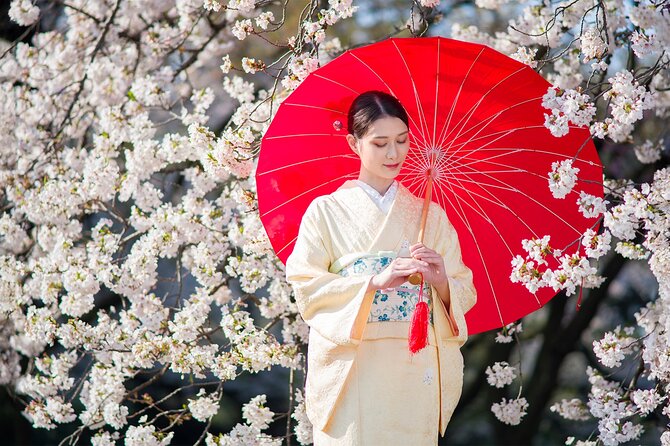
I would recommend this for you if you want a traditional activity that fits easily into a Tokyo sightseeing day. The garden setting makes it suitable for couples, families, solo visitors, and small groups who want photographs without committing to a formal photo shoot.
It is also a good choice if you are curious about kimono but do not want to buy one or spend a full day in a class. Staff handle the difficult dressing work, while you get enough time to walk around and enjoy the result.
You should think twice if you need a late afternoon start. The fixed return time of 4:00 PM limits your time in the kimono. It may also be less suitable if you want a large number of accessories, an elaborate hairstyle, or a professional photographer included in the base price.
The activity is designed for most people, and service animals are allowed. It is near public transportation, although the supplied details do not identify a specific station or give step-by-step directions from one. A mobile ticket makes entry information easy to keep on your phone, but bring the same valid passport or government-issued photo ID used for check-in.
Timing, return rules, and small practical details
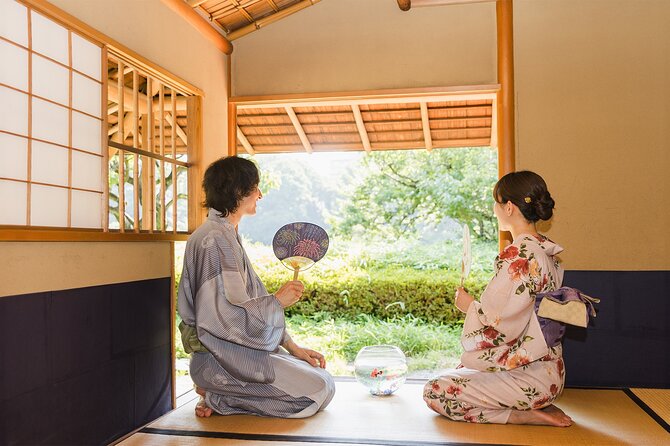
The kimono must be returned to the meeting point by 4:00 PM. There is no option described for keeping it into the evening, so plan your garden visit around that firm deadline.
Your booking confirmation is issued at the time of reservation. Keep it available on your phone, and bring valid identification for every person taking part. The activity ends where it begins, at Rakuu-tei Kouichi Store.
Free cancellation is available if you cancel at least 24 hours before the scheduled start time. Cancellations inside that 24-hour window are not refundable, and changes during that period are not accepted. The cutoff follows local Tokyo time, so check the booking time carefully if you are arranging this before arriving in Japan.
The activity accepts most people, and service animals are allowed. Since no detailed clothing or mobility guidance is provided, you should contact the provider in advance if you have special requirements that could affect dressing.
What this experience does not include
A clear idea of the limits will help you enjoy the booking.
- The ¥500 Shinjuku Gyoen entrance fee is separate.
- Professional photography is not available as part of the activity.
- Traditional umbrellas and other small accessories cost extra.
- More elaborate women’s hairstyles cost extra.
- The kimono cannot be kept after the 4:00 PM return time.
- The experience does not describe a guided tour of the garden or a formal lesson in kimono history.
None of these points makes the activity poor value. They simply define what you are buying: a professionally fitted kimono, a traditional tea house setting, and personal time in Shinjuku Gyoen.
Should you book the Rakuu-tei kimono experience?
Book it if you want the setting to do much of the work. The combination of a long-established kimono maker, a tea house inside Shinjuku Gyoen, professional dressing, and free garden time gives you a relaxed cultural activity with a strong sense of place.
I especially like it for a first kimono experience because you do not need to know how the clothing fits together. The staff handle the obi and finishing details, while the included socks, sandals, and handbag prevent the outfit from feeling incomplete.
Skip it if you are looking for a guided cultural lecture, a professional photo package, or an all-day rental. For everyone else, allow an hour for dressing, budget the extra ¥500 park fee, bring identification, and arrive with enough time to enjoy the garden before returning the kimono at 4:00 PM.
FAQ
Where does the kimono experience take place?
It takes place at Rakuu-tei Kouichi Store, a kimono rental and souvenir shop inside the Rakuu-tei tea house in Shinjuku Gyoen National Garden.
How long does the activity last?
The activity takes about two hours, though the exact amount of garden time depends on your start time and the fixed 4:00 PM return deadline.
How long does choosing and putting on the kimono take?
Kimono selection and dressing take about 60 minutes.
What is included in the rental?
The rental includes a kimono, matching obi belt, tabi socks, traditional sandals, and a traditional Japanese handbag.
Is hair styling included?
Basic hair styling for women is included. Additional hairstyles are available for an extra charge.
Is the Shinjuku Gyoen entrance fee included?
No. You must pay the garden entrance fee separately. The listed fee is ¥500 per person.
Can I take professional photographs during the experience?
A photography plan is not currently available. You may take your own photographs, but professional photography is not included.
When must I return the kimono?
You must return the kimono to the meeting point by 4:00 PM.
What identification do I need?
All participants must present a valid passport or government-issued photo ID at check-in.
Newly reviewed around Tokyo
- Tokyo Asakusa:Calligraphy & Make T-shirt Activity★ 5.0 · 62 reviews
- 1 Hour Travel around Tokyo with a Professional Photographer★ 5.0 · 3 reviews
- Travel Tokyo with Your Own Personal Photographer★ 5.0 · 43 reviews
- Intercity Shuttle, Tokyo to Haneda /Narita /Yokohama /Makuhari★ 5.0 · 5 reviews
- Train in Samurai Swordsmanship and Defeat the Demon in Tokyo★ 5.0 · 5 reviews
- Shuttle Van 6hr Tokyo Tour to-and-from Tokyo, Yokohama and Narita★ 5.0 · 9 reviews
- Kickboxing & Body Training with EX-Pro Fighter★ 5.0 · 4 reviews
- Traditional Japanese Knife Sharpening Class★ 5.0 · 18 reviews
Tokyo Kimono Experiences, compared.


Tokyo Asakusa: Traditional Kimono Rental Experience at Wargo
Read our review →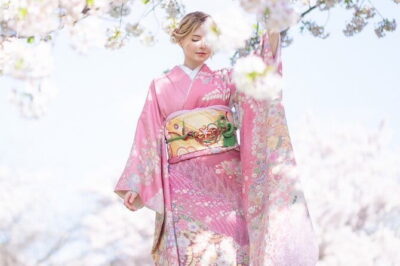
Tokyo Authentic Kimono Rental in Asakusa with Photography Option
Read our review →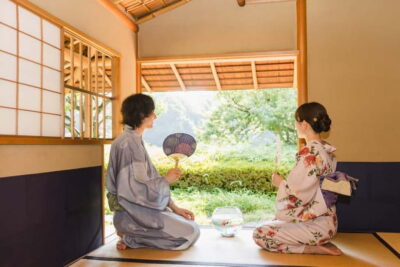
Kimono Rental inside Shinjuku Gyoen National Garden
Read our review →Browse the lists this tour appears in