
Reviewed · MEIJI SHRINE TOURS
Tokyo: Harajuku Meiji Shrine to Shibuya Crossing Guided Tour
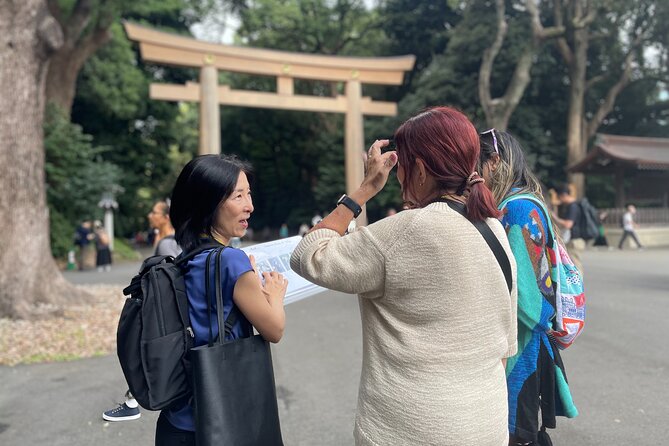
Tokyo reveals two very different faces on this compact walk. You begin beneath the quiet trees of Meiji Jingu Shrine, then move into the colorful shops and crepe stands of Takeshita Street before ending at the famous Shibuya Crossing. It is a smart way to connect three major Tokyo sights without fussing over maps.
I like the small group, capped at 10 people, and the clear route from Harajuku Station to Shibuya. I also like the human touches: an omikuji fortune paper is included, and a guide such as Naoko can add useful context about Japanese history and customs. The main drawback is pace. Two hours gives you an excellent first look, but not much time for shopping, eating, or lingering.
Key points at a glance
- Three famous Tokyo sights in two hours: Meiji Jingu Shrine, Takeshita Street, and Shibuya Crossing fit into one straightforward walk.
- A small group of up to 10 people: You get more room to hear the guide and ask questions than on a large city tour.
- A sharp change of mood: The route moves from forested shrine grounds to youthful Harajuku and then to high-energy Shibuya.
- A useful first-day orientation: The guide handles navigation while explaining local history, shrine customs, and modern Tokyo culture.
- A walk between districts: The route from Takeshita Street to Shibuya takes about 20 minutes on foot, so comfortable shoes matter.
- A reasonable but not bargain price: At $79.73 per person, the value rests on the guide, small group, and efficient route rather than paid admissions.
Starting at Meiji Jingu near Harajuku Station
The meeting point is Harajuku Station, at 1 Chome-18 Jingumae in Shibuya. That location makes sense for a first Tokyo outing because you can reach it by public transportation, and the route starts with one of the city’s most important religious sites.
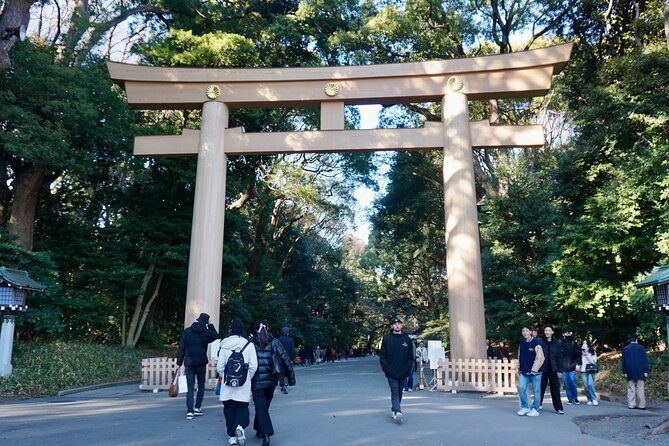
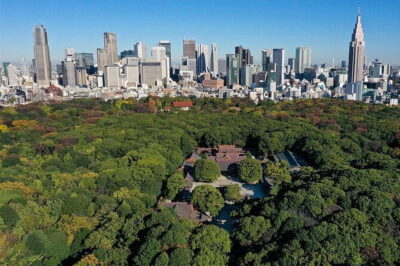
Meiji Jingu is dedicated to Emperor Meiji and Empress Shoken. The tour description emphasizes its huge natural setting and its place in Japanese culture. You are not simply checking off a shrine. You are entering a broad wooded area in the middle of one of Tokyo’s busiest districts, which gives the first part of the walk a welcome change of pace.
The shrine is especially important during Hatsumode, the first shrine visit of the New Year. It is said to be Japan’s most visited shrine for that custom. Your guide can explain how shrine visits work and help you notice details that are easy to miss when you are walking alone.
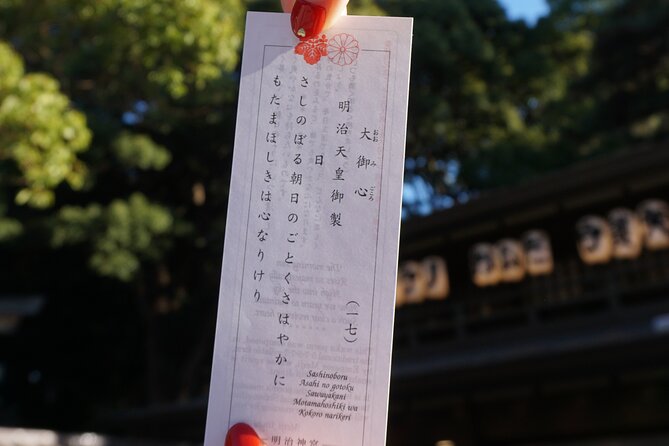
One useful part of the experience is the included omikuji, or fortune paper. This small ritual gives you a practical connection to the shrine rather than leaving you as a quiet observer. The information provided does not specify which type of omikuji you receive or how the guide handles it, so think of it as a simple included cultural activity, not a major add-on.
A past tour with guide Naoko included discussion of Japanese history and even an unexpected traditional wedding sighting. That kind of moment cannot be promised, but it shows the value of having a guide who can explain what is happening around you. If a ceremony or other custom appears during your visit, you will have a better chance of understanding its meaning and behaving respectfully.
The shrine portion lasts about one hour, making it the longest stop. That is appropriate. Meiji Jingu is not a quick photo stop, and rushing through it would weaken the contrast that makes this route work.
More Meiji Shrine tours in Tokyo:
- Tokyo: Meiji Shrine, Asakusa, Skytree Bus Tour and Cruise
★ 4.7 · 1,986 reviews - Tokyo Panoramic 1 Day: Meiji Shrine, Asakusa, Odaiba and SKYTREE®
★ 4.5 · 1,222 reviews - Tokyo: Meiji Shrine Walking Tour — Shinto & Imperial System
★ 4.9 · 266 reviews
From shrine calm to Takeshita Street style
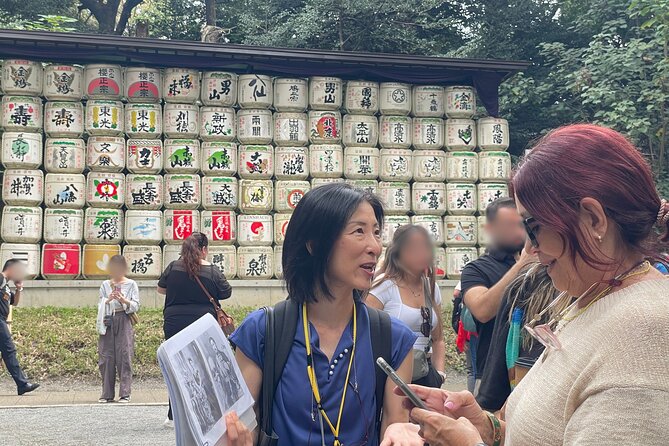
After the shrine, the mood changes quickly. Takeshita Street is the modern Harajuku portion of the walk, known for fashionable shops, colorful stores, and kawaii, or cute, Japanese pop style.
The tour allows about 30 minutes here. That is enough for a first look and perhaps a quick snack, but it is not enough for a serious shopping session. The street is the sort of place where you can easily spend an hour browsing small shops, examining unusual clothing, or waiting for a popular food item. If you want to shop, plan to return after the tour.
A Japanese-style crepe is one of the area’s classic treats, and the tour description specifically points to it. The guide may help you understand the local food culture, but the supplied details do not say that a crepe is included in the price. Budget separately if you want to try one.
This stop works because it gives you a direct comparison with Meiji Jingu. Within a short distance, Tokyo moves from traditional worship and tree-lined paths to youth fashion and playful street food. You learn more from that contrast than from visiting either district in isolation.
The tradeoff is crowding and limited time. Takeshita Street can be busy, and a group must keep moving to reach Shibuya on schedule. Keep valuables secure, stay close to the guide, and treat the stop as an introduction rather than a full Harajuku shopping tour.
Walking from Harajuku to Shibuya
From Takeshita Street, the group walks for about 20 minutes to Shibuya. That connection is important because the tour is not a series of disconnected stops reached by vehicle. You see how these famous neighborhoods relate to one another on foot.
The walking time also affects how you should prepare. A moderate level of physical fitness is required, and comfortable shoes are a good idea. The overall tour lasts about two hours, but the route includes shrine paths, city sidewalks, and the walk between districts.
There is no separate transport segment listed between Harajuku and Shibuya. That keeps the experience simple and gives the guide time to point out the change from one part of Tokyo to the next. At the same time, it means this is not the best pick if you want a slow, restful outing with little walking.
The route ends at Shibuya Mark City, at 1 Chome-12-1 Dogenzaka. The listed viewpoint is next to both the JR and Ginza lines, which is handy if you want to continue sightseeing or return to your hotel by train.
Finishing at Shibuya Crossing
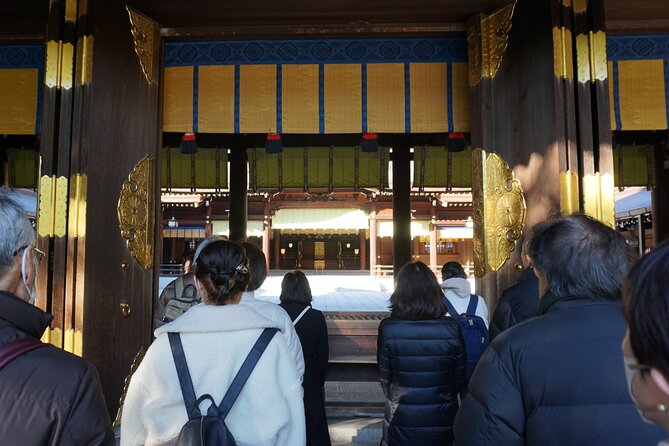
Shibuya Crossing is the grand finale. The tour allows about 30 minutes for the crossing and photographs. This is enough time to see the intersection from the stated viewpoint, cross with the crowds, and take pictures without turning the end into a rushed dash.
The crossing needs little introduction, but a guide adds useful structure. You can learn where to stand for a good view, how the crossing fits into Shibuya, and why this intersection became such a familiar image of Tokyo. The tour information does not promise a particular observation deck or restaurant stop, so expect a guided street-level experience rather than a long stay in a tower.
Ending here is practical. Shibuya Mark City is close to JR and Ginza line connections, so you are not left in an unfamiliar district at the end. You can continue exploring Shibuya on your own, meet friends, shop, or catch public transportation.
The drawback is that Shibuya Crossing is famous precisely because it is crowded and visually intense. If you want quiet streets or detailed photography, the 30-minute finish may feel short. If you want the excitement of seeing a Tokyo icon with some local explanation, it is a fitting end.
More things to do in Shibuya:
- Official Street Go-Kart in Shibuya
★ 5.0 · 3,435 reviews - Tokyo: Street Kart Experience in Shibuya
★ 4.9 · 1,484 reviews - Shibuya Meltdown Nightlife Tour: All-You-Can-Drink Bar Hopping
★ 5.0 · 1,058 reviews - Shibuya Official Street Go-Kart in Shibuya Annex
★ 5.0 · 972 reviews
What the small group changes
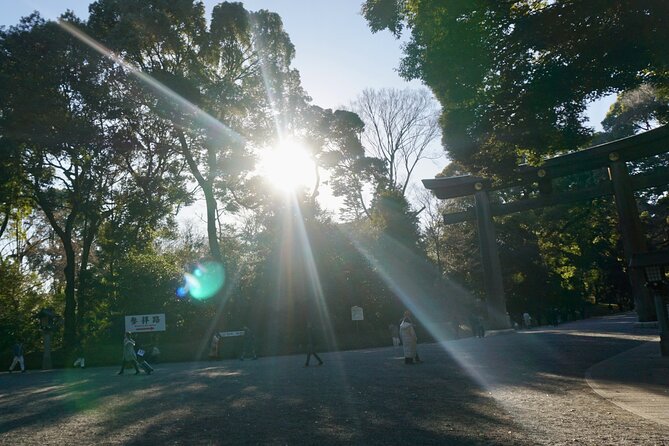
The maximum group size is 10 people. That is small enough to make the guide’s commentary useful, especially at the shrine where you may have questions about customs or history.
Small groups also make city walking easier. A guide can keep everyone together through Harajuku and help with navigation between the three main areas. You are less likely to feel like one person in a long line, though the group still needs to move at the same pace.
Guide quality matters a great deal on a short tour. Naoko received particular praise for being friendly, informative, and comfortable speaking English. The supplied information does not confirm that Naoko leads every departure, so you should treat her as an example of the type of guide associated with the experience, not a guaranteed assignment.
The strongest personal detail from the tour feedback was the traditional wedding sighting at the shrine. Again, that is luck rather than part of the schedule. Still, it points to the benefit of exploring Meiji Jingu with someone who can add context when an everyday or ceremonial moment appears.
Is $79.73 a fair price?
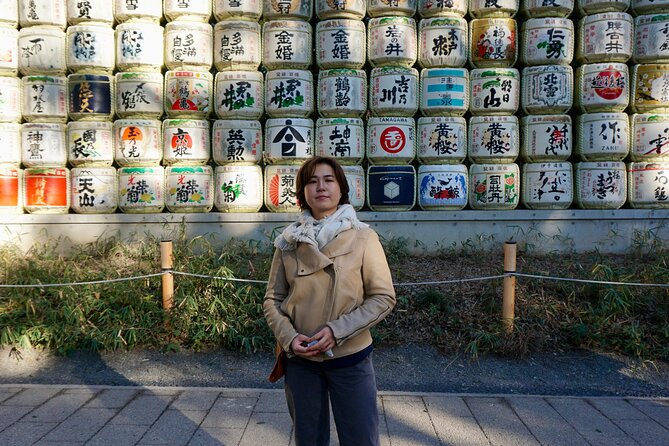
At $79.73 per person, this is not a cheap orientation walk. The main sights themselves have no listed admission charge, so you are paying for the guide, route planning, commentary, small-group size, and the included omikuji fee.
I think the price can make sense for a first visit, especially if you have limited time in Tokyo. In two hours, you cover three major names and finish beside useful train connections. A guide also saves you from piecing together the route between Harajuku and Shibuya on your own.
The value is weaker if you already know these districts or prefer to explore at your own speed. You can visit Meiji Jingu, Takeshita Street, and Shibuya Crossing without a paid tour, and you will have more freedom to shop or stop for food.
Think of this as a compact orientation, not a full-day cultural tour. Its real product is structure. You start with tradition, move through youth culture, and finish with a modern city spectacle. If that sequence matches your first-day plans, the price is easier to justify.
Who will enjoy this Tokyo walk?
This tour suits first-time visitors who want help getting their bearings. It is especially useful if you have only a short stay and want to see Harajuku and Shibuya without spending time planning the route.
It also suits people who enjoy learning while walking. The guide commentary covers local history and culture, and the shrine visit offers more than a quick photograph. An English-speaking guide such as Naoko can make the first stop much easier to understand.
The tour is less suitable for anyone who wants extensive shopping time. Thirty minutes on Takeshita Street is a preview, not a shopping afternoon. It is also not ideal if you dislike walking or need a slow pace, since the route includes a 20-minute walk between districts and requires moderate fitness.
Families and couples may appreciate the small group, but the activity still has a city-walking rhythm. You should be ready to stay with the group and move from one stop to the next.
Confirmation is provided when you book. The tour has free cancellation up to 24 hours before the start time, while cancellations or changes made later are not refunded or accepted. A minimum number of participants is required, and if the operator cancels for that reason, you are offered another date or experience, or a full refund.
Should you book it?
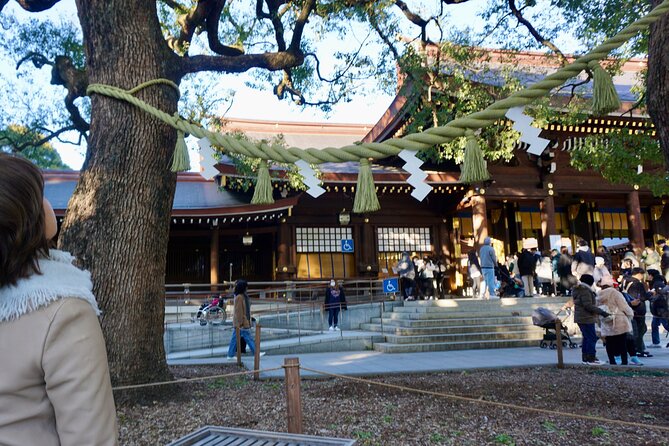
Book this tour if you want an efficient first look at western Tokyo, prefer having a guide handle the route, and value history and cultural context as much as photographs. The small group, shrine customs, and clear finish near Shibuya transport connections are the strongest reasons to choose it.
Skip it if your main goal is shopping, eating, or lingering in each neighborhood. You can visit the same areas independently for less money and set your own pace.
For most first-time visitors with only a few hours to spare, I see this as a useful orientation walk. It gives you three very different views of Tokyo, and it leaves you well placed to return to whichever district catches your interest.
FAQ
How long does the tour last?
The tour lasts approximately two hours.
Where does the tour begin?
It begins at Harajuku Station, at 1 Chome-18 Jingumae, Shibuya, Tokyo 150-0001, Japan.
Where does the tour end?
It ends at Shibuya Mark City, at 1 Chome-12-1 Dogenzaka, Shibuya, Tokyo 150-0043, Japan. The viewpoint is next to both the JR and Ginza lines.
Which places does the tour visit?
The route visits Meiji Jingu Shrine, Takeshita Street in Harajuku, and Shibuya Crossing.
How many people can join the tour?
The group is capped at 10 people.
Is transportation included between Harajuku and Shibuya?
The route includes an approximately 20-minute walk from Takeshita Street to Shibuya. No separate vehicle transfer is listed.
Is the omikuji included?
Yes. The omikuji fortune paper fee is included in the tour price.
Can I cancel for a full refund?
Yes. You can cancel up to 24 hours before the experience start time for a full refund. Cancellations or changes made less than 24 hours before the start time are not accepted, and the amount paid is not refunded.
More things to do in Harajuku
- Tokyo Go-Kart Tour Shibuya-Harajuku-Shinjuku (*IDP Required)
★ 5.0 · 217 reviews - Tokyo: Guided Go Kart Tour from Harajuku to Shibuya Crossing
★ 4.5 · 166 reviews - Shibuya & Harajuku: Hidden Gems & Highlights Private Tour
★ 4.7 · 139 reviews - Harajuku Kawaii Fashion and Pop-Culture Tour
★ 5.0 · 94 reviews
Newly reviewed around Tokyo
- Tokyo Asakusa:Calligraphy & Make T-shirt Activity★ 5.0 · 62 reviews
- Travel Tokyo with Your Own Personal Photographer★ 5.0 · 43 reviews
- Intercity Shuttle, Tokyo to Haneda /Narita /Yokohama /Makuhari★ 5.0 · 5 reviews
- 1 Hour Travel around Tokyo with a Professional Photographer★ 5.0 · 3 reviews
- Train in Samurai Swordsmanship and Defeat the Demon in Tokyo★ 5.0 · 5 reviews
- Shuttle Van 6hr Tokyo Tour to-and-from Tokyo, Yokohama and Narita★ 5.0 · 9 reviews
- Kickboxing & Body Training with EX-Pro Fighter★ 5.0 · 4 reviews
- Traditional Japanese Knife Sharpening Class★ 5.0 · 18 reviews
Meiji Shrine Tours, compared.
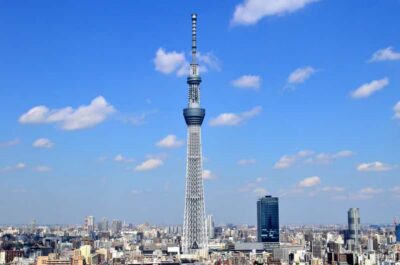
Meiji Shrine, Asakusa, Skytree Bus Tour and Cruise
Read our review →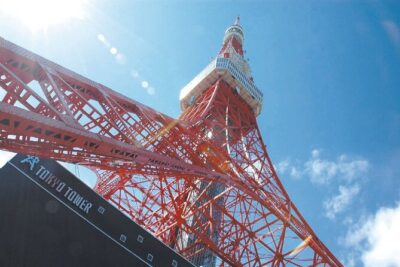
Tokyo Panoramic 1 Day: Meiji Shrine, Asakusa, Odaiba and SKYTREE®
Read our review →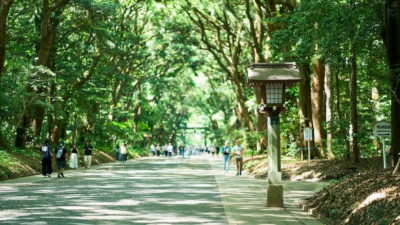
Meiji Shrine Walking Tour — Shinto & Imperial System
Read our review →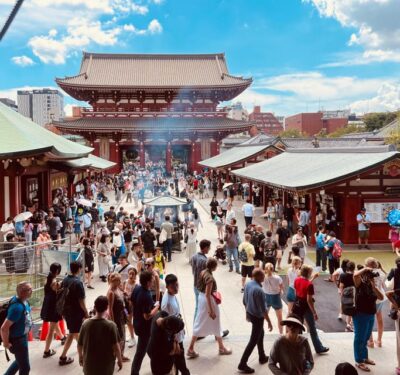
Meiji Jingu Shrine and Shinto Culture Walking Tour
Read our review →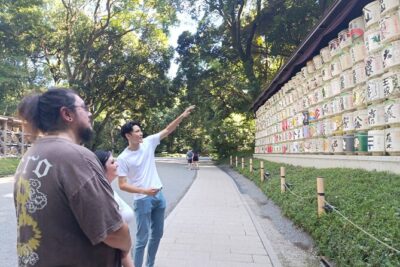
Meiji Shrine Walking Tour — Shintoism & Imperial System
Read our review →
1 Day Bus Tour with Meiji-Jingu,Odaiba,lunch&Skytree
Read our review →
Tokyo Morning Tour : Meiji Shrine, Asakusa and Fish Market
Read our review →Browse the lists this tour appears in