
Reviewed · TOKYO CALLIGRAPHY CLASSES
Tokyo: Calligraphy Experience at Japanese Room in Shibuya
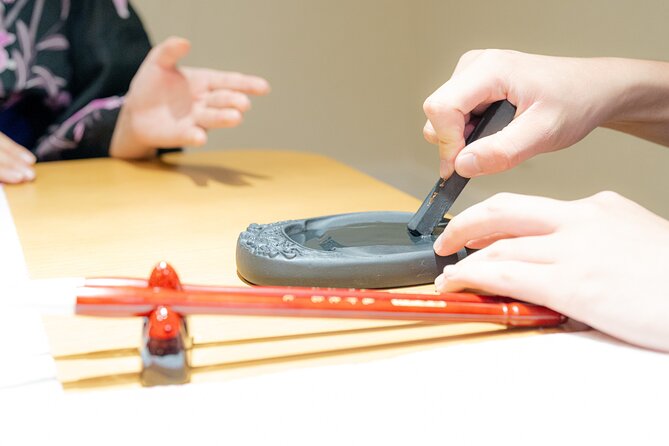
The most memorable part of this Shibuya workshop is the ink itself. You do not simply pick up a brush and copy a character. You first grind and mix ink on a traditional inkstone, a slow, hands-on ritual that sets the pace for the rest of the hour. Sowa then guides you through basic strokes before you create a final character on decorative paper.
I like two things right away. First, the class gives you practice time before the final piece, so beginners are not pushed straight into a keepsake they may not understand. Second, Sowa brings in cultural context, including the meaning of kanji, the scripts used in Japanese writing, and the etiquette behind the art.
The main consideration is time. One hour is enough for a thoughtful introduction, but not for advanced calligraphy or a long lesson in Japanese writing. You will leave with a personal piece and a better feel for the craft, not professional brush skills.
Key points at a glance
- Traditional ink preparation: Grind and mix your own ink with an inkstone before writing.
- Sowa’s patient instruction: Learn strokes, etiquette, kanji details, and cultural background step by step.
- A final work to take home: Write one chosen character on decorative paper as a personal keepsake.
- Small class size: The experience accepts a maximum of eight people, which allows room for guidance.
- Central Shibuya setting: Meet at 2-chōme-14-13 Shibuya, Tokyo, near public transportation.
- Good value for a short activity: At $32.84 per person, you get a hands-on cultural lesson rather than a simple demonstration.
Why the inkstone is the right place to begin
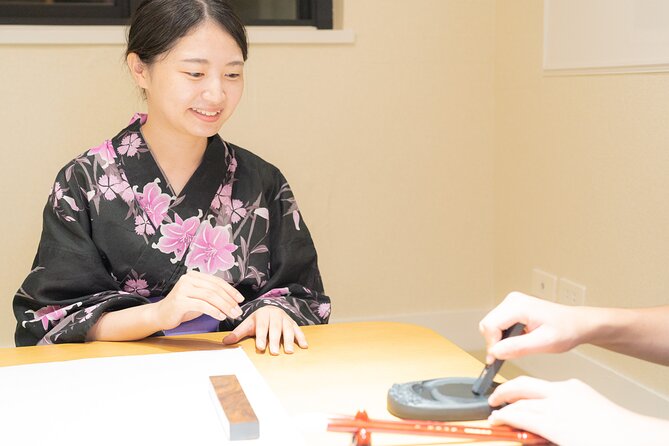
Many cultural activities hand you a finished tool and move quickly to the photo moment. This one begins with preparation. You grind the solid ink on an inkstone and mix it to the proper consistency, following the traditional method explained by the instructor.
That first step matters because it changes how you approach the brush. You are not treating calligraphy as ordinary handwriting. The pace slows down, and you start paying attention to pressure, movement, and the amount of ink on the brush.
I like this opening because it makes the class feel like a practice, not a craft project. It also gives you something to do while Sowa introduces the tools and explains the basic etiquette. You begin to understand that the ceremony around calligraphy is part of the art.
The practical catch is that preparation takes time. In a one-hour session, every minute counts. If your main goal is to produce a polished character, the inkstone ritual may seem like an extra step. If you want to understand how calligraphy is approached in Japan, it is one of the most useful parts.
More things to do in Shibuya:
- Official Street Go-Kart in Shibuya
★ 5.0 · 3,435 reviews - Tokyo: Street Kart Experience in Shibuya
★ 4.9 · 1,484 reviews - Shibuya Meltdown Nightlife Tour: All-You-Can-Drink Bar Hopping
★ 5.0 · 1,058 reviews
Learning the brush strokes before the final character
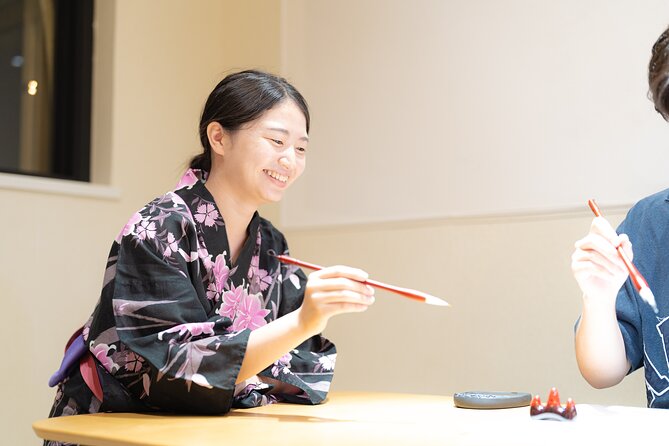
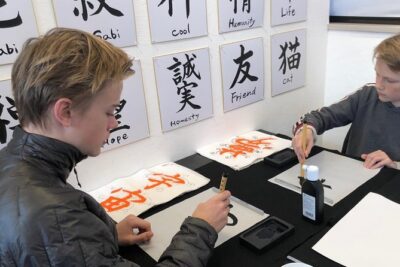
After the introduction, Sowa shows you the basic techniques and gives you time to practice. The lesson is built for beginners, with simple guidance rather than an expectation that you already understand Japanese characters.
You practice strokes at your own pace. That detail is important. Japanese calligraphy is not only about recognizing a kanji character. The order and direction of each stroke affect the form, balance, and feel of the finished work.
Sowa’s teaching style, as described through the experience, is friendly and encouraging. He explains characters clearly, uses real-life examples, and builds from basic parts of the writing system toward a finished piece. That step-by-step approach should help if you know little or nothing about kanji.
You also receive an introduction to Japanese scripts. The session is not presented as a full language class, so you should not expect to learn to read Japanese in an hour. Still, the explanation gives your chosen character more meaning than a decorative symbol copied from a chart.
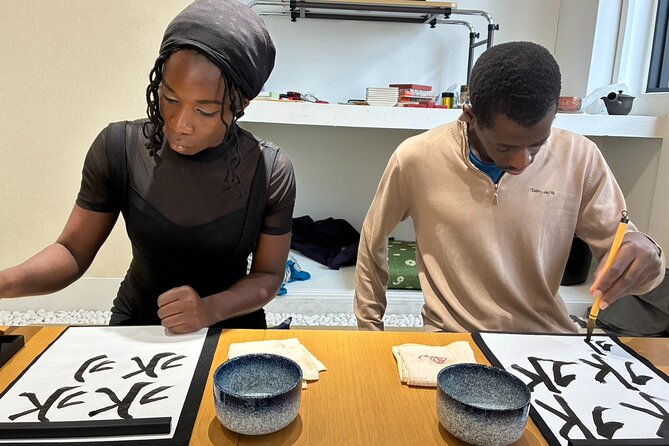
The practice sheets are also a quiet advantage. You can make awkward strokes, adjust your grip, and see how the brush responds before working on the final paper. I would take this part seriously and resist the urge to rush toward the keepsake. The mistakes made during practice are part of what makes the final attempt feel earned.
Choosing a character that means something to you
For the final work, you choose one character from a prepared list or use a character based on your own name. This gives the activity a personal edge without requiring you to arrive with a firm idea.
A prepared list is useful if you are unsure what to select. You can choose a character for its meaning, appearance, or connection to your time in Japan. If you prefer something personal, using your name lets you take home an artwork tied directly to you.
The choice also creates a small cultural question: what do you want your piece to say? You may focus on an idea, a name, or simply a character you like the look of. Sowa can help with the details around kanji, so you are not left guessing at the character’s form.
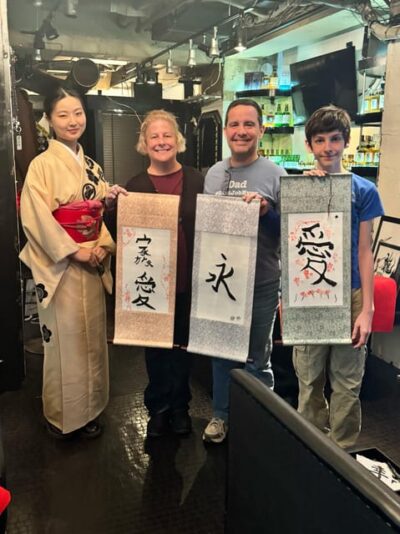
The final piece is written on decorative paper and becomes your keepsake. This is not a mass-produced souvenir picked up in a shop. You prepare the ink, practice the strokes, and make the final mark yourself. The result may not look perfect, and that is part of its charm.
Keep your expectations sensible. A one-hour class cannot turn a first-time brush user into a calligrapher. Your work will likely show the signs of a beginner, but it will also carry the memory of the process. For most people, that is the better souvenir.
What Sowa adds to the hour
The instructor is central to this experience. Sowa, also referred to as Sowa-san or Sowa-sensei, handles more than the mechanics of holding a brush. He explains the history and cultural setting of calligraphy, answers questions about kanji, and helps you work through the finer points of each character.
That broader explanation is what separates this from a basic brush-painting session. You are not only learning how to make marks. You are learning why certain strokes matter and how Japanese writing connects form, meaning, and discipline.
Sowa’s approach appears particularly suited to people who feel nervous about making mistakes. He gives clear instructions, encourages practice, and keeps the atmosphere calm. That matters in calligraphy, where a short session can become frustrating if the teacher makes you feel rushed.
The class also works for different interests. You might arrive curious about Japanese culture, interested in kanji, or simply looking for a quiet break from city sightseeing. You do not need to be an artist. You need only be willing to slow down and follow directions.
Parents may also find the format appealing. One participant specifically hoped to return with children, and the provider confirms that most people can participate. Still, the supplied information does not give a minimum age, so families with young children should confirm that point before booking.
More Tokyo calligraphy classes:
- Tokyo: Calligraphy on Kanji Fan & Scroll with Drink
★ 5.0 · 210 reviews - Let’s experience calligraphy in YANAKA, Taito-ku, TOKYO !!
★ 5.0 · 127 reviews - Experience all of Japanese culture and Japanese food experience classes “origami, udon, Japanese food, green tea, calligraphy” in 4 hours
★ 5.0 · 105 reviews - Tokyo: Calligraphy Workshop & Original T-Shirt Creation
★ 4.9 · 105 reviews
A calm pause in central Shibuya
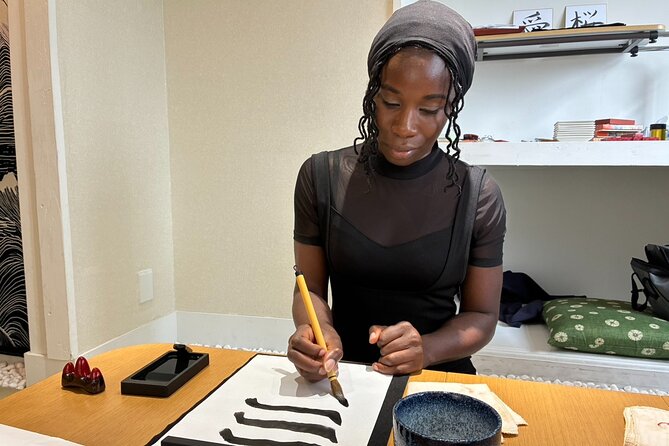
The meeting point is at 2-chōme-14-13 Shibuya, Tokyo 150-0002, and the activity ends back at the same place. It is near public transportation, making it practical to fit into a day in Shibuya.
The location gives you a useful contrast. Outside, Shibuya is one of Tokyo’s busiest areas. Inside the workshop, the pace turns inward. You spend the hour preparing ink, practicing lines, and concentrating on one character rather than moving from one sight to the next.
That calm setting is one of the strongest reasons to book this particular activity. You get a break from shopping, crossings, crowds, and screens without leaving the area. It is easy to pair with other Shibuya plans before or after the class.
The meeting details are simple, but take care with the address. The activity begins and ends at the stated meeting point, and the mobile ticket should be ready on your phone. Since the experience lasts about an hour, arriving with enough time to locate the meeting place is sensible.
The class accepts no more than eight people. That is small enough to make personal help possible, while still giving the room a social feel. A small group also suits calligraphy because each person needs space to practice and receive corrections.
Is $32.84 a fair price?
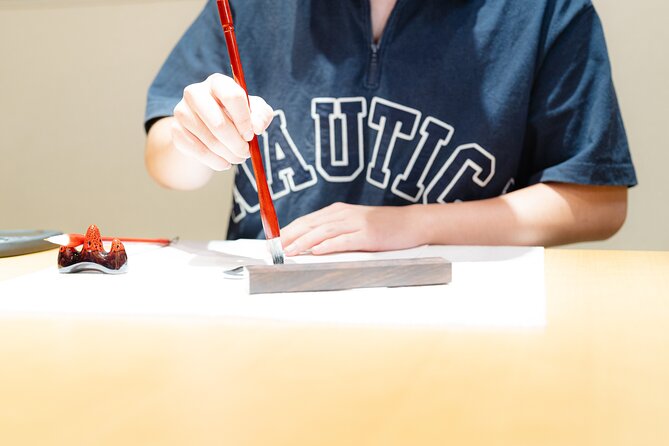
At $32.84 per person, this is fairly priced for a one-hour cultural activity in Tokyo, especially because it includes several hands-on parts. You are not paying only for a short demonstration. You prepare ink, practice calligraphy, receive instruction, choose a character, and create a finished piece on decorative paper.
The value depends on what you want from your time. If you want a long, technical lesson in Japanese calligraphy, the short duration may leave you wanting more. You will learn the basics and gain an introduction, but the session is not designed as an advanced course.
For a visitor with a crowded Tokyo schedule, the short format works well. You can add a focused cultural experience without giving up half a day. The keepsake also gives the activity more lasting value than a class that ends when you walk out the door.
I would compare it with the cost of other hands-on workshops rather than with a museum ticket. The appeal is personal participation. You leave knowing how the ink was prepared, how the strokes were introduced, and what it felt like to create the character yourself.
The strongest value comes if you engage with the cultural side. If you treat the hour as a quick photo opportunity, the price may feel less convincing. If you listen to the explanation, ask about your character, and use the practice time well, it becomes a compact introduction to an important Japanese art.
Who will enjoy this calligraphy class?
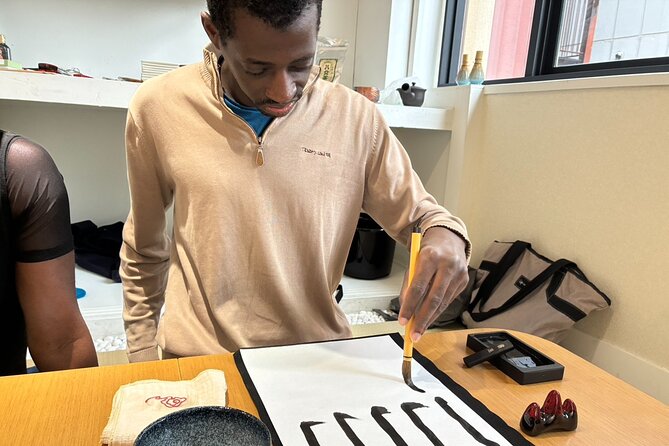
This experience fits first-time visitors who want a direct way to connect with Japanese culture. You do not need artistic training, Japanese language skills, or previous calligraphy experience. The prepared character list and guided instruction make it approachable.
It is also a good pick for solo visitors. The calm activity gives you something meaningful to focus on, and the small group size should make it easier to ask questions. Couples and friends can make different characters and compare the finished pieces afterward.
Families may enjoy it too, particularly with older children who can follow instructions and appreciate a quiet activity. The supplied information says most people can participate, but it does not provide specific child policies, so check before booking for a very young child.
You may want to skip it if you dislike slow, careful activities. The ink preparation and repeated practice strokes are not filler, but they do require patience. You will not spend the hour sightseeing, moving between locations, or producing several finished designs.
It is also not the right choice if you want a formal qualification or an extended study of Japanese writing. Think of it as a clear, welcoming first lesson with a personal result.
Practical details before you reserve
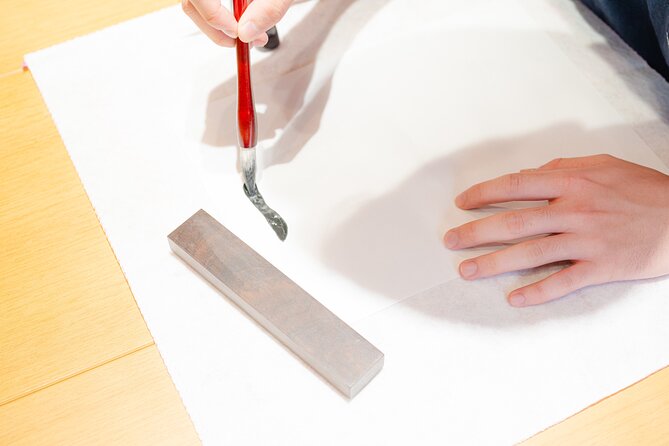
The duration is approximately one hour. That makes it easy to place between other plans, but it also means you should arrive ready to begin. The experience uses a mobile ticket, and confirmation is provided at booking.
The meeting point is in Shibuya at 2-chōme-14-13, with the activity ending at the same location. Public transportation is nearby, and no separate transfer is included in the information provided.
The maximum group size is eight. That limit is worth noting because calligraphy benefits from individual attention. You should have a better chance of receiving help with your strokes or character than in a large demonstration class.
Free cancellation is available if you cancel at least 24 hours before the start time. A cancellation made less than 24 hours in advance is not refunded, and changes inside that window are not accepted. The cut-off follows local Tokyo time, so check the time carefully if you are booking from another country.
The activity is provided by Japan Culture Experience. The main guide associated with the class is Sowa, whose role includes explaining calligraphy, kanji, etiquette, and the cultural background of the practice.
How to get the most from your hour
Go in with one simple goal: pay attention to the process. The inkstone, the first strokes, and the explanation of your character are just as important as the final sheet of paper.
If you have a name or character in mind, you can bring that idea with you. If not, use the prepared list and ask Sowa about the meaning and form of the options. Choosing a character with a personal connection will make the keepsake more useful after you return home.
Use the practice paper fully. Try the strokes more than once, notice how pressure changes the line, and ask for help before moving to the decorative paper. The final piece is one chance, so the practice stage is where you can experiment.
Wear something you can relax in and keep your attention on the brush. The provided information does not specify clothing rules or whether ink stains are possible, so sensible care with sleeves and personal belongings is wise without assuming special requirements.
Finally, leave room in your schedule for the workshop to end back at the meeting point. You may want to continue exploring Shibuya afterward, but the calm hour is best enjoyed without checking the clock every few minutes.
Should you book it?
Book this Tokyo calligraphy experience if you want a small, calm cultural activity with a handmade souvenir. The traditional ink preparation, guided practice, and personal kanji character give the hour real substance, while Sowa’s explanations make the art easier to understand.
The main limit is its length. You will receive an introduction, not a full course. At $32.84, though, the price makes sense for a hands-on lesson in central Shibuya, especially if you value personal instruction and want something quieter than the usual city attractions.
I would choose it for a first visit, a rainy-day plan, a couple looking for a shared activity, or anyone curious about Japanese writing. Skip it only if you want advanced training or prefer fast-moving sightseeing. For most beginners, it is a thoughtful way to slow down, make something with your own hands, and take a small piece of the experience home.
FAQ
How long does the calligraphy experience last?
The activity lasts approximately one hour.
Where does the calligraphy class meet?
The meeting point is 2-chōme-14-13 Shibuya, Tokyo 150-0002, Japan.
Where does the activity end?
The experience ends back at the meeting point.
How many people can join the class?
The maximum group size is eight participants.
What will I do during the workshop?
You will learn about Japanese calligraphy and its tools, prepare ink with an inkstone, practice basic strokes and etiquette, and create a final character on decorative paper.
Can I choose the character I write?
Yes. You can choose a character from a prepared list or select one based on your own name.
Do I get to keep my calligraphy?
Yes. You can take your finished calligraphy piece home as a personal keepsake.
Can I cancel for a full refund?
Yes, if you cancel at least 24 hours before the experience start time. Cancellations and changes made less than 24 hours in advance are not accepted for a refund.
Newly reviewed around Tokyo
- Tokyo Asakusa:Calligraphy & Make T-shirt Activity★ 5.0 · 62 reviews
- Intercity Shuttle, Tokyo to Haneda /Narita /Yokohama /Makuhari★ 5.0 · 5 reviews
- 1 Hour Travel around Tokyo with a Professional Photographer★ 5.0 · 3 reviews
- Travel Tokyo with Your Own Personal Photographer★ 5.0 · 43 reviews
- Kickboxing & Body Training with EX-Pro Fighter★ 5.0 · 4 reviews
- Train in Samurai Swordsmanship and Defeat the Demon in Tokyo★ 5.0 · 5 reviews
- Shuttle Van 6hr Tokyo Tour to-and-from Tokyo, Yokohama and Narita★ 5.0 · 9 reviews
- Traditional Japanese Knife Sharpening Class★ 5.0 · 18 reviews
Tokyo Calligraphy Classes, compared.
Let’s experience calligraphy in YANAKA, Taito-ku, TOKYO !!
Read our review →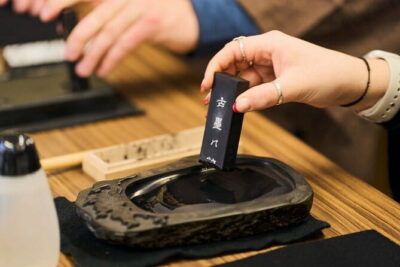
Calligraphy Workshop & Original T-Shirt Creation
Read our review →
Calligraphy Workshop & Original T-Shirt Creation
Read our review →
Calligraphy &Make your original folding fan in Asakusa
Read our review →
Tokyo Asakusa:Calligraphy & Make T-shirt Activity
Read our review →Browse the lists this tour appears in