
Reviewed · TOKYO WALKING TOURS
Tokyo 2-Day Private Walking Tour with Licensed Guide
Tokyo is too large for a hurried checklist, and this private tour handles that problem sensibly: you get two full six-hour days with the same licensed English-speaking guide, then choose the places that matter most to you. One day might pair Senso-ji with the Imperial Palace and Tsukiji, while the next links Meiji Shrine, Shibuya, and a Japanese garden.
I like the custom itinerary and the chance to ask questions as you go. I also like the human touch shown by guides such as Yoshi, Kazu, and Yasuho Suzuki, who have helped guests reach specific shops, arrange a tea ceremony, and adjust plans to suit the group. The main catch is that you pay for transport, meals, and most admissions separately, and Tokyo’s distance makes three or four stops per day a realistic limit.
Key points to know before booking
- Two consecutive six-hour days: You keep the same guide for both days rather than starting from scratch each morning.
- You choose 3 to 4 sights daily: Mix the two suggested lists to build a plan around gardens, temples, shopping, museums, or modern Tokyo.
- Hotel pickup is offered: You meet the guide on foot within the designated Tokyo area, then use public transport as needed.
- The guide adds context: Yoshi has led guests through Japanese culture and present-day society, while Kazu arranged a private tea ceremony for one group.
- Admissions and transport cost extra: Tokyo National Museum, gardens, Tokyo Tower, meals, trains, and other personal spending are not included.
- Best for focused sightseeing: This suits first-time visitors, families, and anyone who wants help managing Tokyo’s scale without joining a larger group.
Why two days make sense in Tokyo

Tokyo can look easy on a map. It is not. Asakusa, Shibuya, Ueno, Odaiba, and Shinjuku are not neighboring sights, and each area has a different feel. A single day often becomes a race between train stations.
This tour gives you roughly twelve hours with one guide across two consecutive days. That extra time matters because you can give one day to older Tokyo and another to shrines, gardens, shopping, or the city’s modern face.
You do not receive a fixed sightseeing script. Before the tour, you select your must-see places from the two supplied lists. You can choose three or four stops from either list on each day, so the real value comes from making smart combinations rather than trying to squeeze everything in.
A private guide can also change the emphasis. If you care about architecture, gardens, anime, Japanese history, food, or local neighborhoods, say so clearly. The guides have shown a willingness to research requests. Yasuho Suzuki, for example, looked into a specific shop that was not familiar to him and made the effort to help the group find it.
More Tokyo walking tours:
- Tokyo Tsukiji Fish Market Food and Culture Walking Tour
★ 5.0 · 3,184 reviews - Tokyo: Imperial Palace and Shogun Historical Walking Tour
★ 5.0 · 2,251 reviews - Tokyo: Shinjuku Local Bar and Izakaya Guided Walking Tour
★ 4.9 · 1,794 reviews
Day one: old Tokyo, imperial grounds, and local neighborhoods
The first menu includes some of Tokyo’s strongest cultural stops. You should not attempt all ten in six hours. Pick a compact group, since time spent crossing the city is time lost on foot.
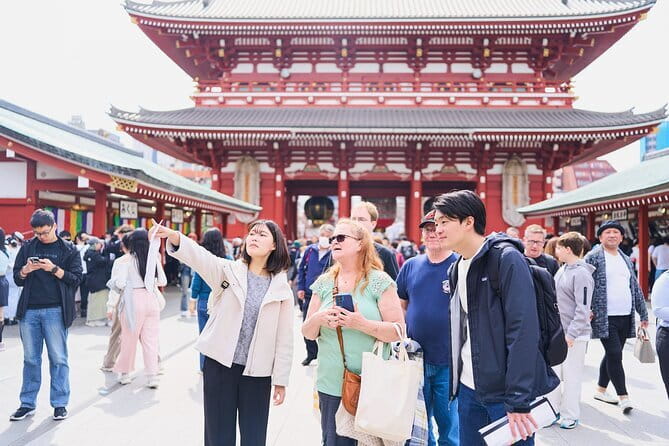
Asakusa and Senso-ji
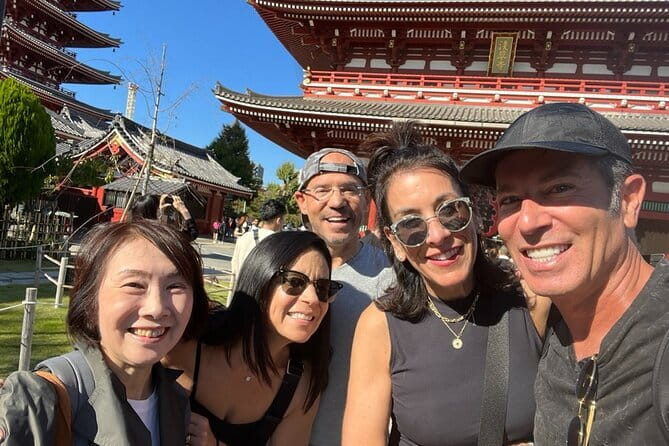
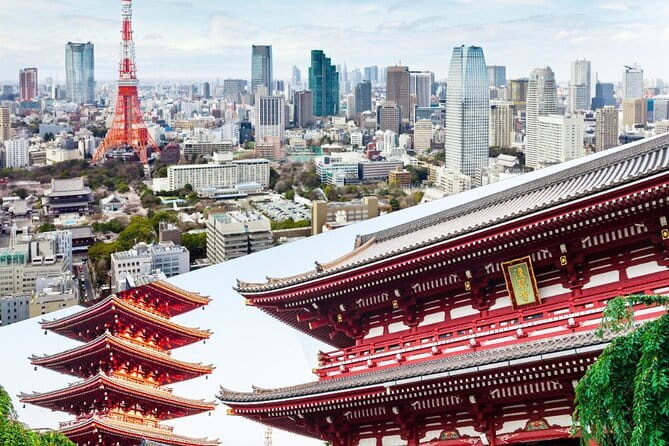
Asakusa gives you an immediate sense of old Tokyo. The area around Senso-ji is colorful and easy to pair with the temple itself, so choosing both as part of one morning makes practical sense.
Senso-ji is Tokyo’s best-known Buddhist temple and one of the city’s most popular sights. The guide can explain the temple’s origin story, its role in Asakusa, and the customs you see around a major Buddhist site. Admission is free, but crowds can make a calm visit difficult at busy times.
Asakusa is a strong choice if you want tradition without spending the whole day in a museum. It also gives your guide a natural place to explain how Tokyo’s older downtown areas differ from districts such as Shinjuku and Shibuya.
Imperial Palace and Tokyo National Museum
The Imperial Palace occupies the former site of Edo Castle, with moats, large stone walls, and open grounds. The important practical point is that this tour does not include access inside the palace. You are visiting the outer grounds and surrounding area, not entering the working palace complex.
That makes the palace best for people who enjoy setting, history, and broad views rather than palace interiors. It is also a useful contrast with Senso-ji, since your guide can connect Tokyo’s modern capital to the city’s earlier political center.
The Tokyo National Museum is a better choice if you want objects and exhibits rather than outdoor sightseeing. It is Japan’s oldest and largest national museum, but one hour is only enough for an introduction. Admission is not included, so check the extra cost when planning your day.
You should avoid pairing the museum with too many distant stops. A palace and museum combination can easily fill much of the six-hour period once walking and train travel are counted.
A completely different kind of day in Tokyo:
- Mt Fuji and Hakone 1-Day Bus Tour Return by Bullet Train
★ 5.0 · 26,383 reviews - 1-Day Tokyo Bus Tour
★ 5.0 · 14,250 reviews - Tokyo: teamLab Planets TOKYO Digital Art Museum Entry Ticket
★ 4.6 · 9,779 reviews - Mt Fuji & Hakone Cruise, Drum Show Bullet Train 1 Day from Tokyo
★ 4.0 · 7,413 reviews
Tsukiji Fish Market
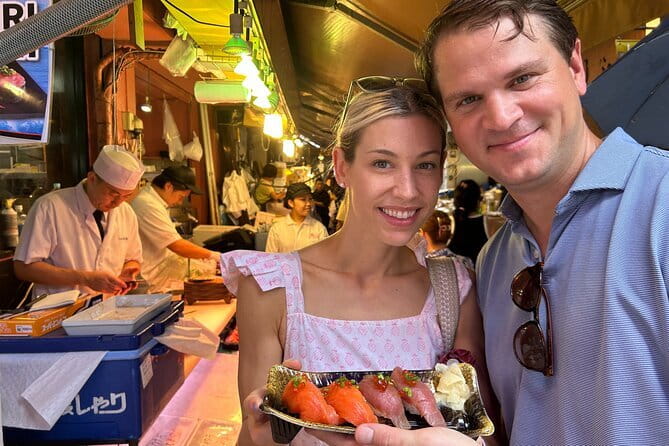
Tsukiji is listed as a 30-minute stop, making it useful as part of a wider day rather than a complete morning. You can explore the old fish-market area and ask the guide about its role in Tokyo’s food culture.
Do not treat this as a long market meal included in the tour. Food and personal expenses are your responsibility, and the experience provides no included meal. If eating is important to you, mention it when shaping the itinerary so the schedule leaves room for it.
Akihabara
Akihabara offers a sharp change of mood. The district is known for electronics shops and, in more recent years, its connection with anime, manga, and other parts of Japanese pop culture.
A 30-minute visit gives you a look at the district, but it is not enough for serious shopping. Choose Akihabara if you want an introduction or have one specific interest. If you hope to browse many stores, you may need to make it one of your main stops and drop another sight.
Hama Rikyu Gardens
Hama Rikyu is a central garden beside Tokyo Bay, known for ponds that change with the tides and a traditional teahouse. The setting offers a quiet break from the city, and the water makes the garden different from Tokyo’s inland parks.
Admission is not included. The listed visit is about 30 minutes, which may be enough for a first look but not a slow garden walk. If you want a more peaceful pace, choose Hama Rikyu as one of three stops rather than one of four.
Shibamata, Nezu, and Ueno Park
Shibamata retains an old-style neighborhood feel near the Edogawa River. It is a good choice when you want a less polished, less central side of Tokyo. The one-hour visit gives you time to walk around rather than simply step off a train for a photograph.
Nezu and nearby Yanaka preserve parts of Tokyo’s older downtown character. These areas avoided major damage from wars and natural disasters, so they offer a different look at the city from the grand temples and towers. Choose Nezu if small streets and local atmosphere appeal more than major landmarks.
Ueno Park contains museums, a zoo, Toshogu Shrine, and Shinobazu Pond. It is also famous for cherry blossoms. The itinerary lists only five minutes here, which should be understood as a brief stop or meeting point, not enough time for the park’s main attractions. If you want the Tokyo National Museum, Ueno is a sensible area to build around.
Day two: gardens, shrines, fashion, and Tokyo after dark
The second menu leans toward gardens, major city icons, and modern Tokyo. It is tempting to combine Shinjuku Gyoen, Harajuku, Meiji Shrine, and Shibuya. That can work better than mixing in Odaiba or Rikugien, since the first four are more naturally grouped.
Shinjuku Gyoen and Rikugien Garden
Shinjuku Gyoen is one of Tokyo’s largest and most popular parks. Its lawns, paths, and quieter corners offer a welcome pause near the busy Shinjuku district. Admission is not included.
Rikugien is a formal Japanese garden built around 1700 for the fifth Tokugawa shogun. Its design is tied to the six poems referenced in its name, giving your guide plenty to explain beyond the basic photo stop.
Both gardens deserve more than a rushed walk. Since each is listed at about an hour, you could make gardens the theme of your second day, but combining both with distant districts would create a packed schedule. Choose one if you want time to notice the details.
Yoyogi Park, Takeshita Street, and Meiji Jingu
Yoyogi Park offers broad lawns, ponds, and wooded areas near Harajuku. Admission is free, and the park is used for jogging, picnics, and other outdoor activities. It provides breathing space before the crowds and shops of Takeshita Street.
Takeshita Street is tied to Harajuku’s youth fashion and teenage culture. It is a lively, commercial place, but it is not the best fit if you are seeking quiet tradition. A guide helps you understand the area’s place in Tokyo’s fashion story rather than simply walking through the shops.
Meiji Jingu is dedicated to Emperor Meiji and Empress Shoken. Its location beside Harajuku Station makes it easy to pair with Takeshita Street and Yoyogi Park. The listed visit is 30 minutes, enough for an introduction, though a slower visit would make it easier to appreciate the approach and shrine setting.
This is one of the most efficient combinations on the two-day menu. You get a park, a shrine, and a modern shopping street without spending the day crossing Tokyo.
Shibuya Crossing
Shibuya Crossing is one of the city’s signature modern scenes. The tour allows about an hour here, which gives you time to observe the crossing and surrounding district rather than treating it as a quick photograph.
The stop is free, but shopping and food are extra. Shibuya works well after Meiji Jingu and Harajuku, especially if your idea of Tokyo includes major streets, youth culture, and city energy.
Koishikawa Korakuen and Tokyo Tower
Koishikawa Korakuen is one of Tokyo’s oldest Japanese gardens, created during the early Edo period for the Mito branch of the ruling Tokugawa family. It is a good pick for garden lovers who prefer a formal historical setting near central Tokyo.
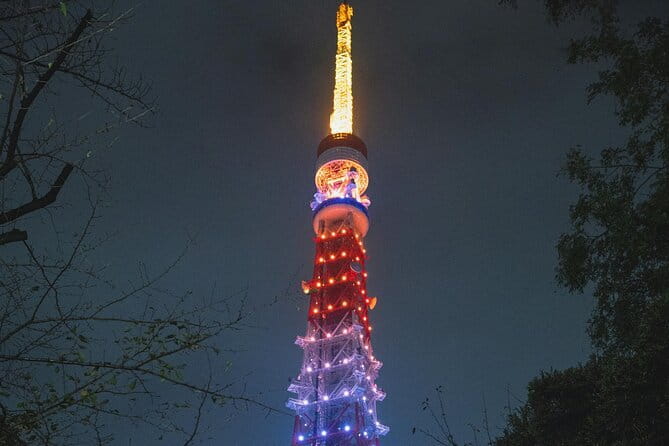
Tokyo Tower offers a different kind of view. The tour includes access only up to the main deck, not the top deck, and admission is extra. The tower is a recognizable Tokyo symbol, but the ticket cost should be part of your budget before you choose it.
These two stops do not naturally form the quickest pair. Select them only if you are happy to spend time moving between contrasting areas.
Kabukicho and Odaiba
Kabukicho includes the Golden Gai area, known for its compact eating and drinking establishments that developed after the postwar black-market period. The tour gives you an hour here, but meals and drinks are not included. This stop is most useful if you want to see Tokyo’s nightlife district with some historical context.
Odaiba sits on a man-made island in Tokyo Bay and is built around shopping and entertainment. It offers a modern waterfront side of the city, quite different from Nezu or Shibamata. Since it takes time to reach, give it a full hour and avoid pairing it with too many far-flung stops.
What the private guide adds
The guide is not simply there to point toward a gate or tell you the name of a shrine. The strongest reason to book privately is the ability to ask questions and adjust the pace.
Yoshi has been praised for explaining both Japanese culture and present-day social life, which is useful when Tokyo’s customs seem confusing or contradictory. He has also guided families at a comfortable pace and helped them reach requested sights efficiently.
Kazu has arranged an exclusive tea ceremony, including matcha, for a group. That kind of personal addition is not guaranteed, and it is not listed as a standard inclusion, but it shows why you should share special interests before the tour.
Yasuho Suzuki has dealt with difficult heat and humidity while still helping a group pursue a specific shop request. Tokyo weather can be hard on a walking day, so tell the agency about mobility concerns, heat tolerance, and your must-see priorities before the schedule is fixed.
Price, transport, and what you really pay for
The listed price is $286.16 per person for the two-day experience. That works out to about $143 per person per day before transport, meals, and admissions.
You are paying for a private licensed guide and roughly twelve hours of tailored help, not an all-inclusive sightseeing package. For a couple, family, or small group, that can be good value if you care about efficient routing, detailed explanations, and personal attention.
The price is less attractive if you only want a quick orientation or prefer exploring alone. Tokyo’s trains are extensive, and many listed sights are free. You should book this for the planning help and context, not because it bundles every cost into one payment.
There are no private vehicles included. You meet the guide on foot within the designated Tokyo area and cover transportation fees yourself. That is normal for a walking tour, but you should allow extra money for trains, gardens, museums, Tokyo Tower, food, and shopping.
Who should book this Tokyo tour
I would choose this tour if you have two consecutive days in Tokyo and a clear list of priorities. It is especially useful for first-time visitors who want old and modern Tokyo without spending hours studying train connections.
Families may like the private format because the guide can keep the pace manageable and change the plan if a child loses interest. Museum fans, garden lovers, food-focused visitors, and pop-culture fans can also build very different versions of the same experience.
You should think twice if your schedule cannot support two consecutive days. The booking is specifically for two days, not two separate half-day tours. It is also not ideal if you expect a private car, included meals, or included entry to every attraction.
The tour requires reasonable walking and uses public transport. Most people can participate, and service animals are allowed, but you should communicate any needs in advance.
Cancellation and weather details
You can cancel up to 24 hours before the start time for a full refund. Changes made less than 24 hours before the start are not accepted, and late cancellations are not refunded.
The experience requires good weather. If poor weather causes cancellation, you are offered another date or a full refund. Keep that rule in mind when planning a tight Tokyo itinerary.
Should you book it?
Book this tour if you want Tokyo explained by one person across two days, with the freedom to choose between temples, gardens, museums, markets, neighborhoods, and modern city sights. The strongest plan is to group nearby stops, such as Asakusa and Senso-ji, or Yoyogi Park, Meiji Jingu, Takeshita Street, and Shibuya.
Skip it if you want a fixed sightseeing bus, a private vehicle, or a package with admissions and meals included. At $286.16 per person, it is a serious spend, but the ability to shape two long private days can justify it when Tokyo’s size feels overwhelming.
FAQ
Is this tour private?
Yes. Only your group participates in the activity, and you have a licensed local English-speaking guide.
How long is each tour day?
Each day lasts approximately six hours, for two consecutive days.
Can I choose the sights I visit?
Yes. You select three to four sites from the two supplied lists for each day, and you can mix sites from both lists.
Do I keep the same guide for both days?
Yes. The tour is designed for you to have the same guide on both consecutive days.
Is hotel pickup included?
Pickup is offered, with the guide meeting you on foot within the designated area of Tokyo.
Are transportation and entrance fees included?
No. Transportation, meals, entrance fees, accommodation, and personal expenses are not included. Some listed sights are free, while places such as the Tokyo National Museum, Hama Rikyu Gardens, Tokyo Tower, and several other gardens require separate admission.
What happens if the weather is poor?
The experience requires good weather. If it is canceled because of poor weather, you are offered a different date or a full refund.
More 2 Day Experiences in Tokyo
- In 2026, 2-Day Mt. Fuji Climbing Tour with Mountain guide
★ 3.5 · 10 reviews - Tokyo Private Guided 1/2-Day Walking Subway Tour English guide
★ 5.0 · 7 reviews - Hakone Private Two Day Tour from Tokyo with Overnight Stay in Ryokan
★ 5.0 · 5 reviews - 2 Days Tokyo ,Mount Fuji / Hakone Private Tour from Tokyo
★ 5.0 · 3 reviews
Newly reviewed around Tokyo
- Tokyo Asakusa:Calligraphy & Make T-shirt Activity★ 5.0 · 62 reviews
- Intercity Shuttle, Tokyo to Haneda /Narita /Yokohama /Makuhari★ 5.0 · 5 reviews
- 1 Hour Travel around Tokyo with a Professional Photographer★ 5.0 · 3 reviews
- Travel Tokyo with Your Own Personal Photographer★ 5.0 · 43 reviews
- Train in Samurai Swordsmanship and Defeat the Demon in Tokyo★ 5.0 · 5 reviews
- Shuttle Van 6hr Tokyo Tour to-and-from Tokyo, Yokohama and Narita★ 5.0 · 9 reviews
- Kickboxing & Body Training with EX-Pro Fighter★ 5.0 · 4 reviews
- Tokyo History: Sensoji Temple & Asakusa District Private Tour★ 5.0 · 28 reviews
Tokyo Walking Tours, compared.
Tokyo Tsukiji Fish Market Food and Culture Walking Tour
Read our review →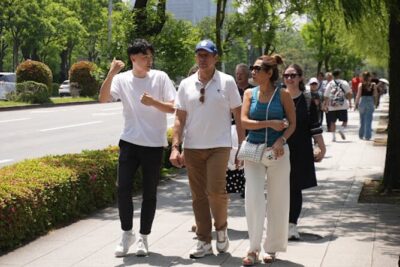
Imperial Palace and Shogun Historical Walking Tour
Read our review →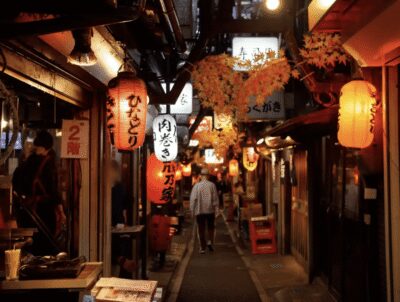
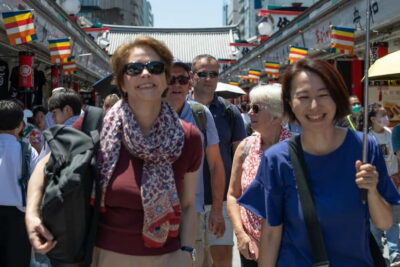
Shinjuku Local Bar and Izakaya Guided Walking Tour
Read our review →
Asakusa Walking Tour with Sensoji Temple Visit
Read our review →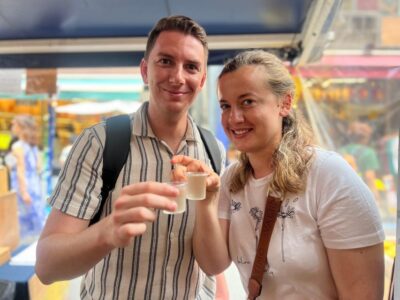
Tokyo Castle & Imperial PalaceーShogun Walking Tour
Read our review →
Browse the lists this tour appears in