
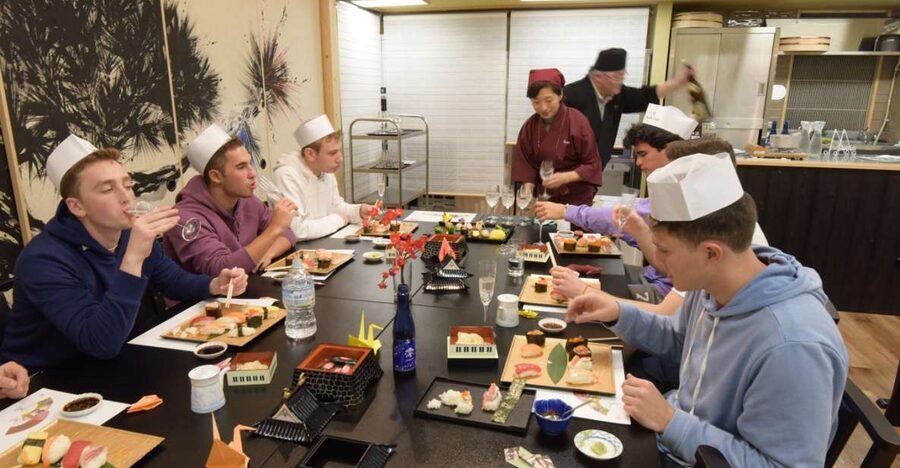
Reviewed · TOKYO SUSHI MAKING CLASSES
Sushi-Making Experience
Sushi here is not just lunch. In two hours, you learn three different ways to shape it, then sit down and eat what you made. The class takes place in Tokyo’s Kikai Shinko Kaikan building, directly opposite Tokyo Tower, with an English-speaking, nationally accredited instructor.
I like the small group of no more than 10 people, since the instructor can watch your hands and help when a roll goes sideways. I also like the two sushi-making kits included in the $106 price. They turn a one-time class into something you can try again at home.
The main consideration is cost. At $106 per person, this is not a cheap meal, but you are paying for instruction, ingredients, a full sushi meal, and equipment to keep. Hotel pickup is not included, so you must make your own way to the meeting point.
Key points to know before booking
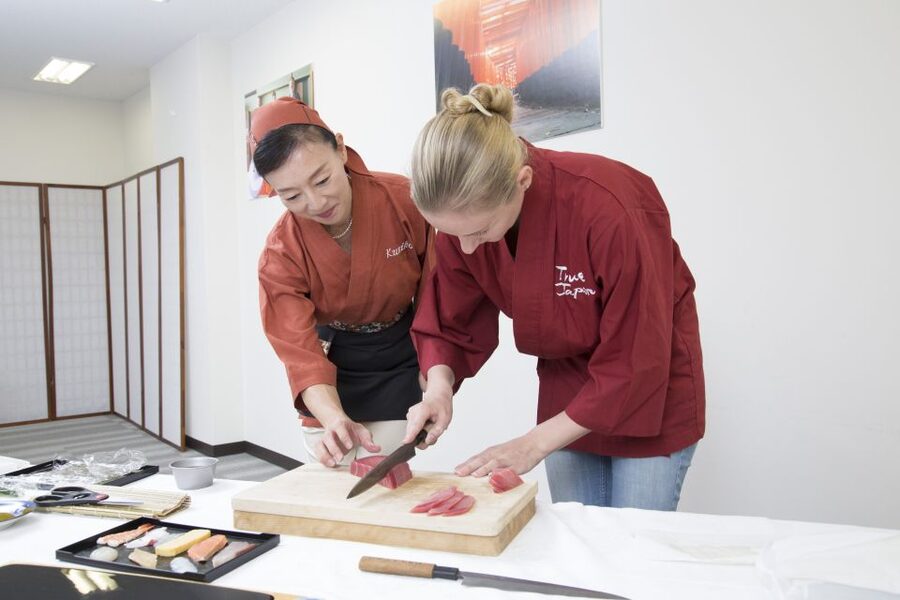
- Three classic sushi techniques: Learn nigiri zushi, gunkan maki, and hosomaki zushi rather than making only one basic roll.
- A meal you prepare yourself: The workshop ends with time to eat your finished sushi and try traditional condiments.
- English instruction for up to 10 people: The compact group size allows for direct help during the hands-on work.
- Two kits to take home: Continue practising after the class instead of leaving with only a few photographs.
- Tokyo Tower as your landmark: The Kikai Shinko Kaikan building is directly opposite the tower, making the meeting area easier to identify.
- A cultural lesson at the table: Dining etiquette is part of the experience, not an afterthought.
Three sushi styles in one Tokyo lesson
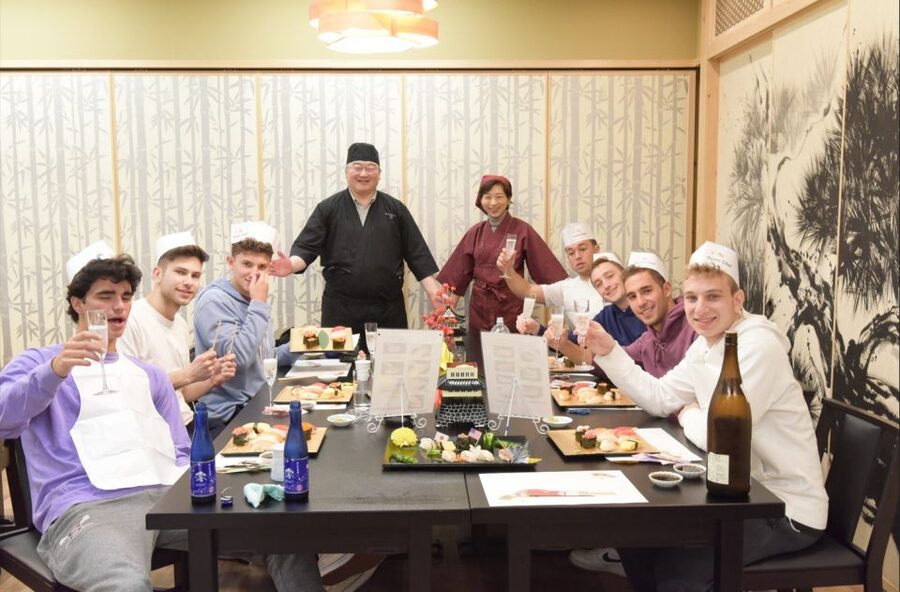
The appeal of this class is its range. You are not simply shown how to press rice into a shape and sent on your way. You practise three forms that look and behave differently.
Nigiri zushi is the familiar hand-formed sushi with rice and a topping. It looks simple, but shaping a neat piece takes control. The rice must hold together without becoming a heavy lump, and the final piece should look tidy enough for the table.
Gunkan maki has a different structure. The rice is wrapped with seaweed to create a small cup for its topping. This gives you a chance to work with height and shape rather than simply rolling ingredients inside seaweed.
Hosomaki zushi is the narrow rolled style. It requires a steady hand and attention to how much filling you use. Too much filling makes the roll difficult to close, while too little can leave it looking rather sad. The instructor demonstrates the method before you practise.
I like this three-part format because it gives you a useful introduction to sushi as a craft. Each style asks for a different movement, so the lesson should feel varied even though all three use familiar sushi ingredients.
More Tokyo sushi making classes:
- Sushi Making Tokyo Roll and Authentic Japanese Sushi Class
★ 5.0 · 3,971 reviews - Tokyo: Roll and Authentic Sushi Making Class in Asakusa
★ 4.9 · 1,957 reviews - Make Sushi and Create Unforgettable Memories in Tokyo
★ 5.0 · 1,413 reviews
Meeting the chef opposite Tokyo Tower
Your meeting point is the main entrance of the Kikai Shinko Kaikan building on the first floor. The building sits directly opposite Tokyo Tower, a useful landmark in a city where office buildings can otherwise blur together.
You meet the English-speaking instructor and the rest of the group before heading into the workshop. If you cannot find the instructor at the entrance, go to True Japan Tour in Room B109 on the basement level of the same building.
That meeting instruction matters. I would allow a little extra time to find the building and get oriented, especially if you are unfamiliar with the area. Hotel pickup and drop-off are not included, so the experience begins when you reach the building yourself.
The instructor is nationally accredited, and the class is designed for English speakers. You should expect explanations of the sushi-making methods and help while you work, rather than a demonstration that leaves you to guess the rest.
A short introduction to sushi culture
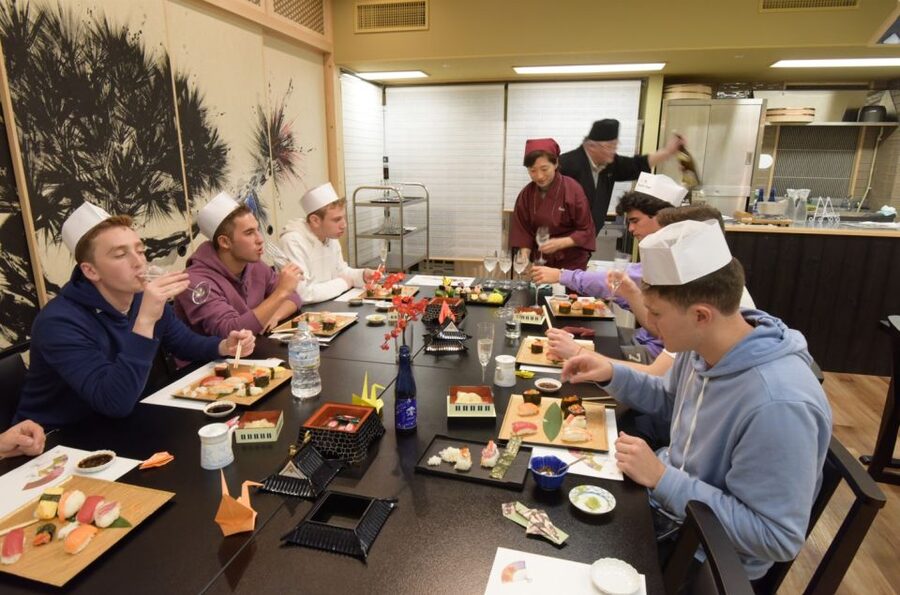
Before the knives, rice, and seaweed appear, the instructor gives you an overview of sushi in Japanese culture. This provides useful context for the food in front of you.
The cultural portion is brief, which suits a two-hour workshop. You are not signing up for a long lecture. Instead, you get enough background to understand that sushi is tied to more than the combination of rice and toppings.
I value this kind of introduction because it changes the way you approach the meal. You begin to notice the appearance of each piece, the way sauces are used, and the care taken at the table. The class connects preparation with eating, which makes the lesson feel more complete.
The information provided does not list the instructor’s name, so you should not expect a named chef-led event. The focus is on practical teaching from the accredited instructor assigned to your session.
Preparing ingredients and watching the demonstration
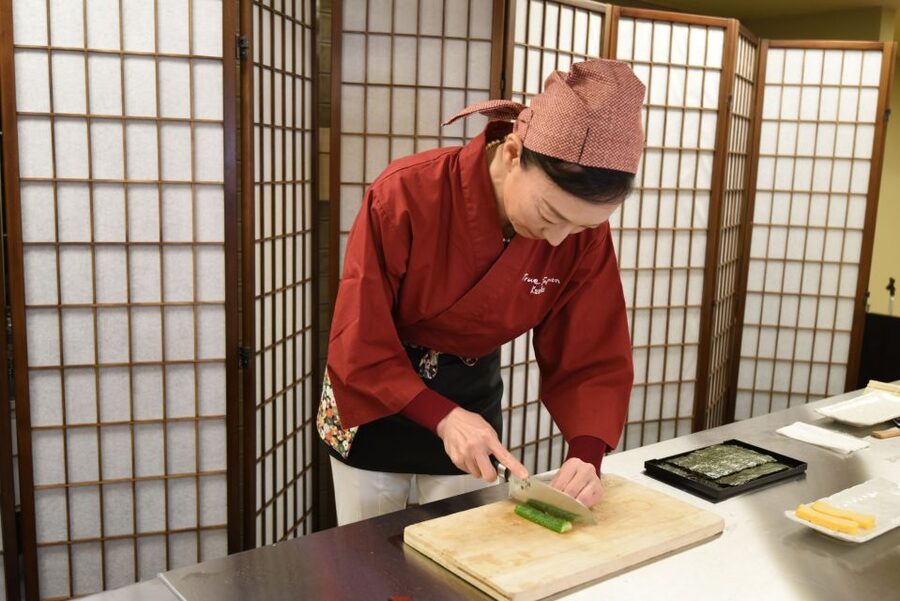
After the introduction, you get the ingredients ready. The instructor gives a quick demonstration of the basic methods, then you begin practising with guidance nearby.
This order works well for beginners. You first see the movement, then repeat it yourself while the instructions are fresh. The class is not built around watching an expert make perfect sushi while you sit at a distance.
The small group is important here. With a maximum of 10 participants, the instructor has a better chance of seeing when your rice is too loose, your seaweed is not positioned correctly, or your roll needs a little more care. One of the strongest points from the available feedback is that the instructors explain clearly and provide help. That is exactly what you want in a hands-on food class.
I would still keep your expectations sensible. You are learning the basics in two hours, not training as a sushi chef. Your finished pieces may not look identical to the instructor’s. That is part of the fun, and the meal gives you a good reason to keep going even if your first roll is imperfect.
A completely different kind of day in Tokyo:
- Mt Fuji and Hakone 1-Day Bus Tour Return by Bullet Train
★ 5.0 · 26,383 reviews - 1-Day Tokyo Bus Tour
★ 5.0 · 14,250 reviews - Tokyo: teamLab Planets TOKYO Digital Art Museum Entry Ticket
★ 4.6 · 9,779 reviews - Mt Fuji & Hakone Cruise, Drum Show Bullet Train 1 Day from Tokyo
★ 4.0 · 7,413 reviews
Making nigiri, gunkan, and hosomaki
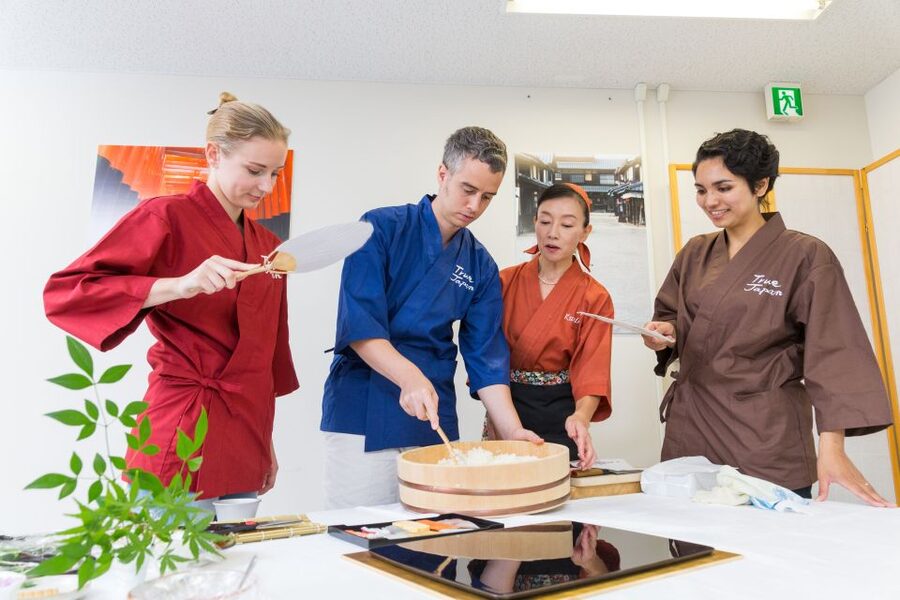
The three sushi styles make the practical section more interesting than a standard roll-making session.
With nigiri, you practise forming the rice by hand and placing the topping neatly. The finished pieces are small, so small errors show. That makes this a good exercise in control.
With gunkan maki, you form the seaweed around the rice and create a space for the topping. This style introduces a different shape and helps you understand how seaweed can act as a container.
With hosomaki, you roll the ingredients into a narrow cylinder. The technique rewards moderation. You need enough filling for flavour, but not so much that the roll refuses to close. The finished roll is then cut into individual pieces.
The activity description does not specify every ingredient or topping, so I would not book this expecting a particular fish or filling. What is clear is that the class supplies the ingredients and lets you practise all three methods.
The result should be a plate with enough visual variety to make the meal feel like the payoff for the work. You have made different shapes, not just repeated one recipe.
Sitting down to eat your own sushi
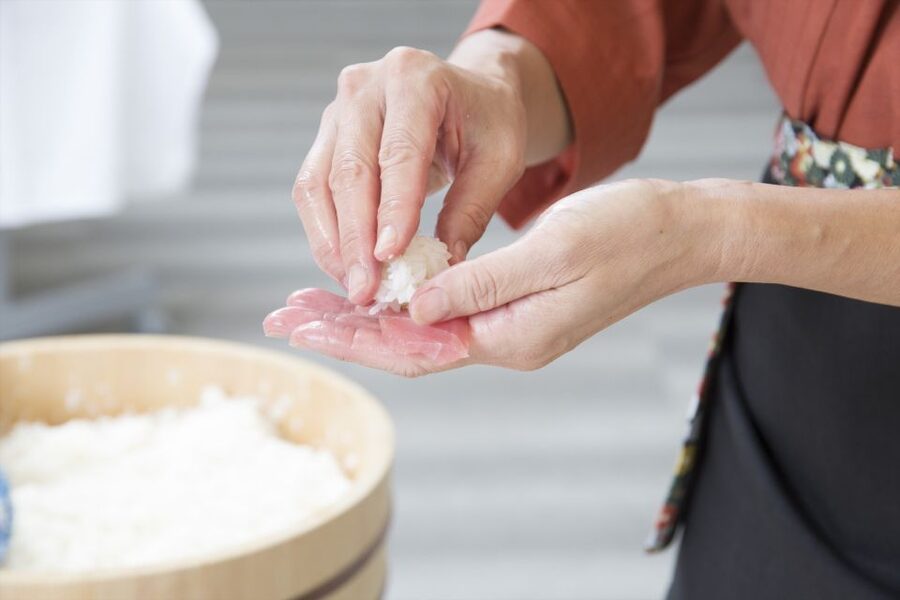
Once your sushi is ready, you take a seat and eat it as a meal. This is a small but important feature. The class does not end when the last roll is cut.
You also try a variety of sauces and condiments traditionally paired with sushi. These offer different flavour combinations and show you how the meal is meant to be approached. Since the specific sauces are not listed, the safe expectation is variety rather than any one named condiment.
The tasting also gives you time to see how your sushi holds together. A piece that looks good on the plate still needs to be easy to pick up and eat. That connection between making and eating is one reason I think the class suits people who want more than a quick food souvenir.
The finished meal is included in the price, along with the ingredients used during the class. You are not paying $106 simply for a demonstration. You receive food, instruction, cultural context, and two kits for later practice.
Learning Japanese dining etiquette at the table
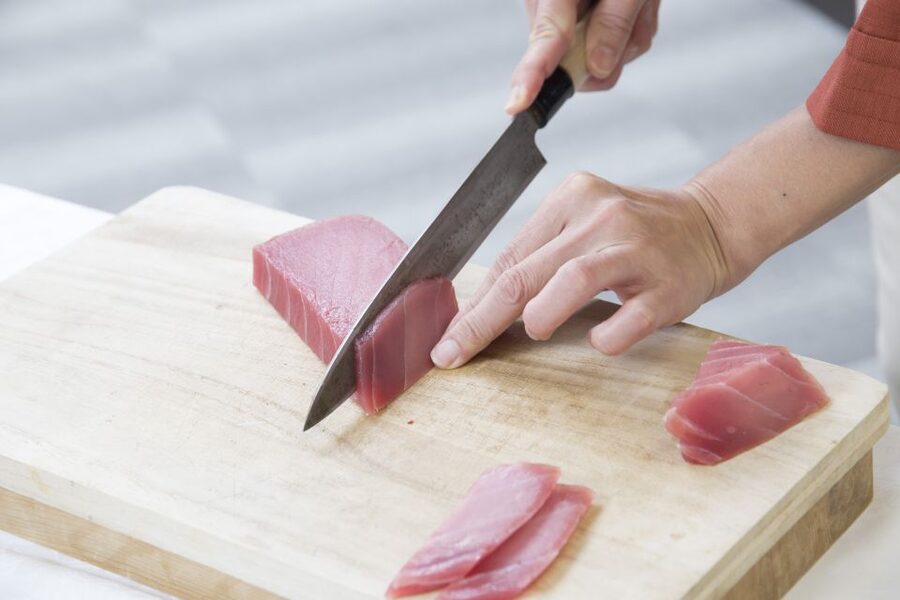
The final part covers Japanese dining etiquette. This makes sense after you have made the sushi, since you can apply the table guidance immediately.
Etiquette lessons are often most useful when they stay practical. Here, the food is already in front of you, and the instructor can explain how to approach the meal in context. You get a better sense of why presentation, sauces, and table manners matter together.
I would see this as a pleasant cultural addition rather than a formal etiquette course. The stated experience includes traditional dining etiquette, but it does not promise an exhaustive guide to every Japanese dining rule. You should come away with useful basics, not a certificate in table manners.
What the $106 price really covers
At $106 per person, the price is on the high side for a two-hour activity. It becomes easier to justify when you count what is included:
- A workshop with a nationally accredited sushi instructor
- All ingredients
- The sushi meal you prepare
- Two sushi-making kits for home practice
- English-language instruction
- A small group capped at 10 participants
If you only want to eat sushi, this is poor value. Tokyo offers simpler ways to have a sushi meal. If you want an activity that combines food, culture, instruction, and a take-home item, the price makes more sense.
The two kits are especially useful. Many short cooking classes end with a meal and nothing else. Here, you can repeat the basic methods after returning home. I would not assume the kits contain every ingredient you need for a full recreation, since their exact contents are not specified, but they are clearly intended to help you practise.
The class is also a reasonable choice for a short Tokyo itinerary. Two hours is long enough to feel substantial while leaving much of the day open for sightseeing around Tokyo Tower or elsewhere in the city.
Group size, language, and accessibility
The activity is offered in English, and the group is limited to 10 participants. That makes it a better fit for you if you want to ask questions or need a second explanation while shaping the sushi.
The small group does not guarantee private instruction. You are still sharing the chef’s attention with up to nine other people. But it is more personal than a large demonstration, and the available rating of 4.7 from four reviews supports the view that the teaching is a strong part of the experience.
The class is wheelchair accessible. That is useful practical information when planning your day, though the provided details do not explain the exact layout of the cooking stations or any specific seating arrangements. If you have particular mobility needs, you may want to confirm those details before booking.
No age requirement is provided, so I would avoid making assumptions about whether the class is designed specifically for children. The clearest match is anyone who can follow an English-language demonstration and take part in basic food preparation.
Timing, cancellation, and booking flexibility
The activity lasts two hours, but the starting time depends on availability. Check the schedule before you build the rest of your Tokyo day around it.
You can cancel up to 24 hours in advance for a full refund. The reserve-now, pay-later option also lets you hold a place without paying immediately, which is useful if your plans are still changing.
These policies do not change the meeting point or the need to reach the building yourself. You are responsible for getting to Kikai Shinko Kaikan, and you should keep the Tokyo Tower landmark in mind when finding the entrance.
Who will enjoy this sushi class most
I would recommend this experience to you if you want a hands-on introduction to Japanese food culture and prefer making something over simply watching a chef work.
It is particularly well suited to:
- First-time visitors who want a structured cultural activity in Tokyo
- Couples, families, or friends who enjoy practical food experiences
- Sushi fans who want to understand how different forms are assembled
- People who like taking home a skill, not just a photograph
- Visitors who value English instruction and a smaller group
I would be more cautious if you are looking for an advanced culinary course, a private chef experience, or a bargain meal. The lesson covers basic methods, the group is shared, and the price reflects the teaching and take-home kits as much as the food.
Should you book this sushi-making experience?
Book it if you want a compact Tokyo activity where you learn, make, eat, and take home tools for another attempt. The three sushi styles, clear English instruction, small group, and table etiquette give the two hours a good range.
Skip it if your main goal is simply to eat excellent sushi at the lowest possible price. At $106, this is a food workshop first and a meal second. For the right person, that is the point. For everyone else, it may feel expensive.
FAQ
Where does the sushi-making class meet?
Meet the instructor at the main entrance on the first floor of the Kikai Shinko Kaikan building. The building is directly opposite Tokyo Tower.
What should I do if I cannot find the instructor?
Go to True Japan Tour in Room B109 on the basement level of the Kikai Shinko Kaikan building.
How long does the activity last?
The sushi-making experience lasts two hours.
What types of sushi will I learn to make?
You will learn three methods: nigiri zushi, gunkan maki, and hosomaki zushi.
Is the instructor English-speaking?
Yes. The activity is conducted in English.
What is included in the price?
The price includes the workshop with a nationally accredited sushi instructor, ingredients, the sushi meal, and two sushi-making kits.
Is hotel pickup and drop-off included?
No. Hotel pickup and drop-off are not included.
How many people are in the group?
The class is a small-group activity limited to 10 participants.
Can I cancel for a full refund?
Yes. You can cancel up to 24 hours in advance for a full refund.
Newly reviewed around Tokyo
- Tokyo Asakusa:Calligraphy & Make T-shirt Activity★ 5.0 · 62 reviews
- Intercity Shuttle, Tokyo to Haneda /Narita /Yokohama /Makuhari★ 5.0 · 5 reviews
- 1 Hour Travel around Tokyo with a Professional Photographer★ 5.0 · 3 reviews
- Travel Tokyo with Your Own Personal Photographer★ 5.0 · 43 reviews
- Train in Samurai Swordsmanship and Defeat the Demon in Tokyo★ 5.0 · 5 reviews
- Shuttle Van 6hr Tokyo Tour to-and-from Tokyo, Yokohama and Narita★ 5.0 · 9 reviews
- Kickboxing & Body Training with EX-Pro Fighter★ 5.0 · 4 reviews
- Traditional Japanese Knife Sharpening Class★ 5.0 · 18 reviews
Tokyo Sushi Making Classes, compared.
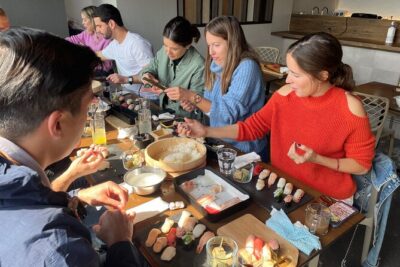
Sushi Making Tokyo Roll and Authentic Japanese Sushi Class
Read our review →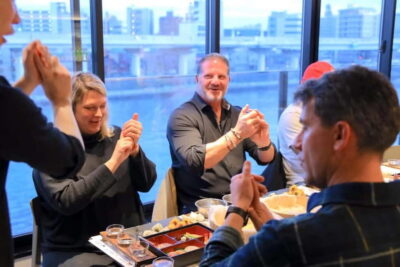
Roll and Authentic Sushi Making Class in Asakusa
Read our review →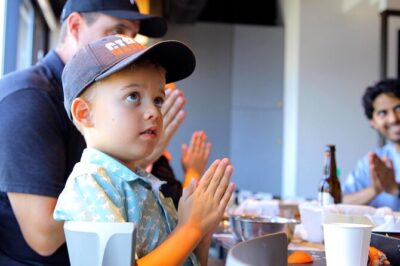
Make Sushi and Create Unforgettable Memories in Tokyo
Read our review →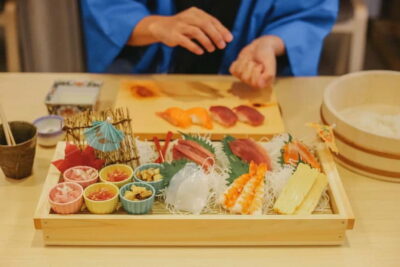
Sushi Making Class in a Happi Coat near a Famous Spot
Read our review →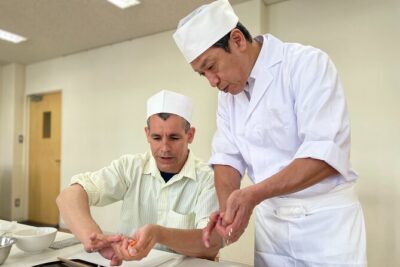
Tokyo Sushi Making Class in Tsukiji with Professional Chef
Read our review →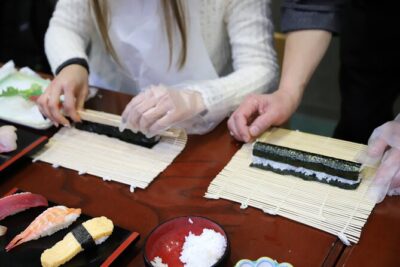
Tsukiji Fish Market Guided Tour and Sushi Making with Pro Chef
Read our review →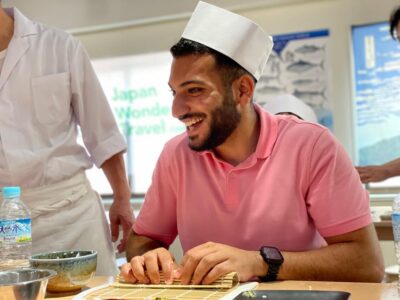
Tsukiji Fish Market Sushi Making Class with Pro Chef
Read our review →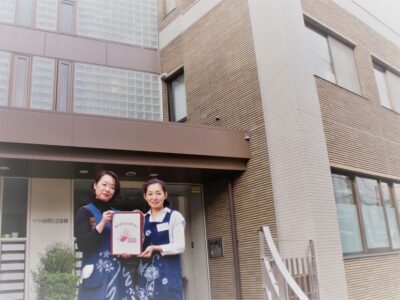
Browse the lists this tour appears in