
Reviewed · SHIBUYA TOURS
Shibuya and Shinjuku Photography Experience
Tokyo after dark is the real subject here. In two hours, Kenji leads you from the Hachiko Statue and Shibuya Scramble Crossing through Center-gai, Miyashita Park, and old-style drinking alleys before finishing beneath the lights of Shinjuku’s Kabukicho. It is part photo session, part night walk, and part quick introduction to two of Tokyo’s best-known districts.
I like two things right away: the small maximum of four people, and the fact that you receive 25 to 50 color-graded photos per person. Kenji also helps with poses, which matters if you are traveling alone and want more than hurried selfies. The main consideration is the strict start time. Arrive more than five minutes late and you cannot join, receive a refund, or reschedule.
Key points at a glance
- Starts at 8 pm by Hachiko Statue: Meet beside Shibuya Station and begin with one of Tokyo’s most familiar meeting spots.
- Covers both Shibuya and Shinjuku: You see polished city streets, youth-oriented shopping lanes, old drinking alleys, and Kabukicho nightlife in one walk.
- Small group of no more than four: Kenji can give more attention to poses, framing, and individual photos than a large city tour can.
- Includes 25 to 50 edited images: You are paying for a guided photo session as well as the walk.
- Requires a 170 yen train ride: The fare from Shibuya to Shinjuku is extra and is not included in the $62.13 price.
- Ends at Godzilla Road: The tour finishes at the entrance to Kabukicho, giving you a useful starting point for your own Shinjuku evening.
Why this photo walk works after dark
Many Tokyo sightseeing walks show you famous places in daylight, when the city can feel orderly and almost too clean. This experience is built around the hour when signs glow, streets fill, and the contrast between modern Tokyo and older pocket-sized nightlife becomes clear.
You begin in Shibuya and end in Shinjuku, so the route has a natural sense of movement. It is not simply a loop around one station. You get a look at two major city centers, along with the short train hop that connects them.
The photography focus changes the way you use the streets. Instead of only passing through Shibuya Scramble, you can pause to think about timing, position, and the people moving through the crossing. In the alleys, the focus shifts to signs, narrow lanes, food stalls, and the warm light of small bars.
The 25 to 50 edited photos are a major part of the value. A normal walking tour gives you memories and perhaps a few phone snapshots. Here, the finished images give you a record of the evening, including portraits if you want them. That is especially useful for solo visitors who often return from Japan with plenty of scenery but very few pictures of themselves.
More things to do in Shibuya:
- Official Street Go-Kart in Shibuya
★ 5.0 · 3,435 reviews - Tokyo: Street Kart Experience in Shibuya
★ 4.9 · 1,484 reviews - Shibuya Meltdown Nightlife Tour: All-You-Can-Drink Bar Hopping
★ 5.0 · 1,058 reviews
Meeting Kenji at Hachiko Statue
The meeting point is the Hachiko Statue at 2 Chome-1 Dogenzaka, close to Shibuya Station. Hachiko is remembered as a symbol of loyalty, and his statue has become one of Tokyo’s most popular rendezvous points.
You spend about five minutes here, so do not expect a long historical talk. Think of it as a practical meeting spot and a quick introduction to one of Shibuya’s best-known local symbols. Because the area around the station is crowded and full of exits, arrive early enough to find the statue without rushing.
Kenji is the English-speaking guide and photographer. The small group limit makes a difference at this first stop. You have a better chance of getting clear instructions and personal help than you would on a large photo outing.
The start time is 8 pm, and punctuality is not optional. The stated rule is strict: if you are more than five minutes late, you cannot join the experience, change the booking, or get a refund. I would plan to reach Shibuya Station well before 8 pm.
Shibuya Scramble: timing the famous crossing
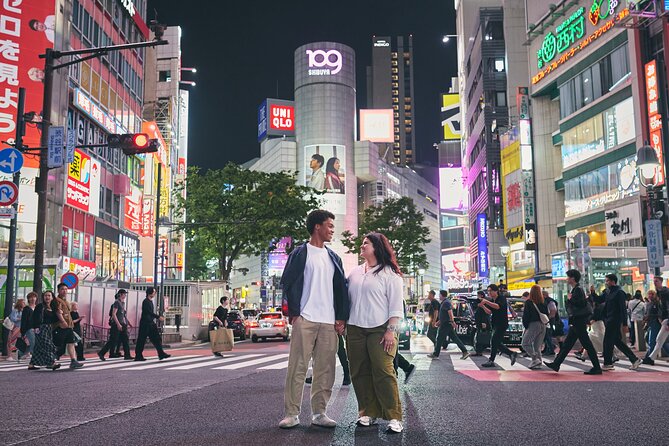
The walk then moves to Shibuya Scramble Crossing for about 20 minutes. When the signal changes, people cross from several directions at once, with the surrounding screens and buildings framing the scene.
This is the most obvious photo stop, but it is not only for wide city views. Kenji can help you think about where to stand and how to make the crossing look active without losing your subject in the crowd. If you want a portrait, the crossing provides a strong Tokyo background, though the short stop means you should be ready to follow directions.
The crossing is free, but the area is crowded and fast-moving. Keep your belongings secure and listen closely when moving between positions. You should also expect the experience to focus on getting useful photographs rather than lingering for a long architectural explanation.
Center-gai and Shibuya’s youth scene
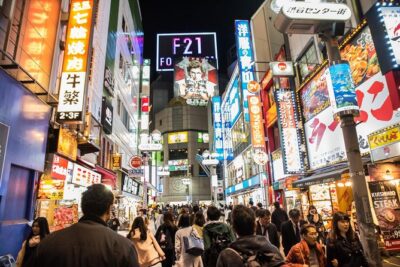
About 20 minutes are set aside for Shibuya Center-gai. This narrow street is lined with shops, restaurants, arcades, and bars, and it gives you a closer look at Shibuya’s youth culture than the broad crossing does.
For photographs, Center-gai offers tighter compositions. Signs, storefronts, pedestrians, and bright colors fill the frame. The street can feel crowded, so this is a place where a guide’s timing is useful. You may get better pictures by stopping at the edges and waiting for a clear moment rather than trying to walk and shoot at the same time.
I like this section because it adds texture to the tour. Shibuya Scramble shows Tokyo as a grand spectacle. Center-gai shows how people actually spend time in the district, with food, shopping, games, and late-night entertainment packed into a small area.
You do not need to buy anything at the stops, and admission is free throughout the walking route. Still, you should bring a little spending money if you want a drink or snack during the wider evening. Bottled water is included, and Kenji can point you in the right direction if you need another beverage.
More things to do in Shinjuku:
- Tokyo: Shinjuku Food Tour (13 Dishes at 4 Local Eateries)
★ 5.0 · 6,603 reviews - Tokyo Bar Hopping Tour in Shinjuku (All-You-Can-Drink + Dinner)
★ 5.0 · 3,587 reviews - Tokyo: Shinjuku Food Tour (15 Dishes and 4 Eateries)
★ 4.9 · 2,033 reviews - Best of Shinjuku: Izakaya Food Tour (4 Stops, 14+ Tastings)
★ 5.0 · 1,863 reviews
Miyashita Park: a change of pace
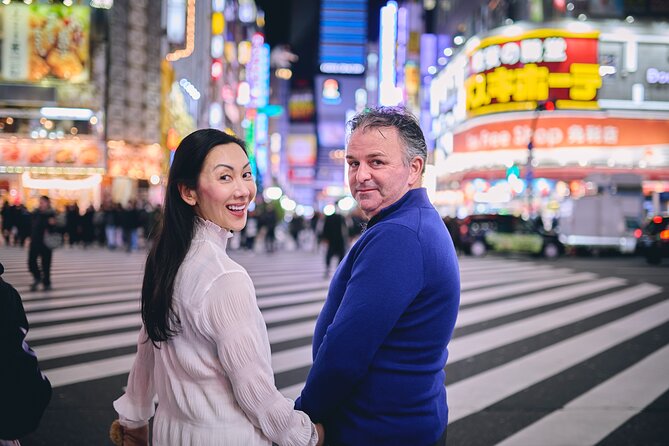
Miyashita Park receives about 20 minutes. This modern complex combines green space, a skate park, cafes, and shopping, creating a different visual mood from Center-gai.
The value here is contrast. Your photos are not limited to signs and crowded streets. The park gives you cleaner lines, open areas, and a modern urban setting. It can also be a more comfortable place for portraits, since the surroundings are less tightly packed than the main Shibuya streets.
Miyashita Park is useful for anyone who wants variety in the final photo set. You may get a mix of candid city scenes, posed portraits, modern design, and neon nightlife instead of 25 similar images from one crossing.
The schedule is compact, so this is not a long visit for shopping or relaxing. Treat it as a photographic stop, not free time to explore the entire complex.
The unnamed old-style alley beside Shibuya Station
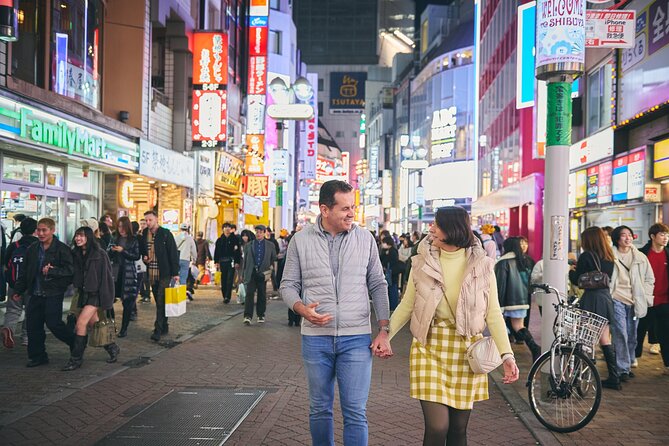
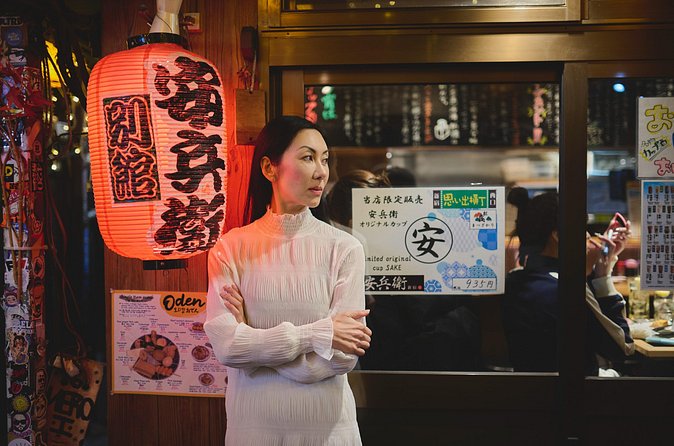
The route also includes a narrow alley beside Shibuya Station lined with tiny bars and izakayas. The supplied schedule does not give this stop a name, but its character is clear: old-fashioned drinking places, close walls, warm lights, and a glimpse of post-war Tokyo.
This is the kind of place that benefits from a local guide. Small lanes can be easy to miss when you are focused on major sights, and a guide can help you move through without blocking entrances or disturbing diners. The setting also calls for good manners. You are photographing a working nightlife area, not a staged film set.
For pictures, look for details rather than trying to capture everything at once. Doorways, lanterns, narrow passages, and signs can create strong images. You might find this section more atmospheric than the major landmarks, especially if you prefer ordinary city scenes to postcard views.
The 170 yen train ride to Shinjuku
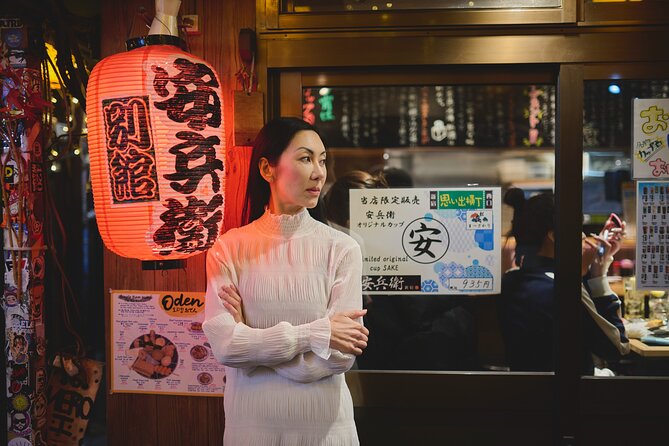
The route from Shibuya to Shinjuku includes a train ride costing 170 yen per person. That fare is not part of the $62.13 tour price, so keep coins or a transit card ready.
The train transfer is short in the overall two-hour schedule, but it matters because it connects two different parts of Tokyo without wasting the evening on a long road transfer. You move from Shibuya’s youth-oriented streets to Shinjuku’s older, more theatrical nightlife district.
Since the tour is tightly timed, follow Kenji’s lead at the station. This is not the moment to stop for shopping or wander down a different platform. The group needs to stay together to reach the next photo stops.
Omoide Yokocho and old Tokyo atmosphere
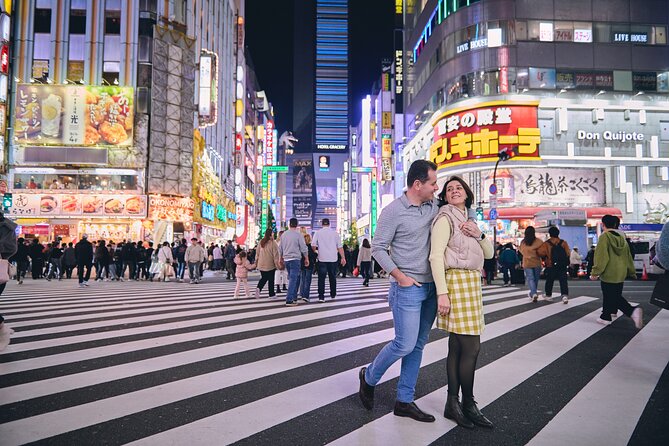
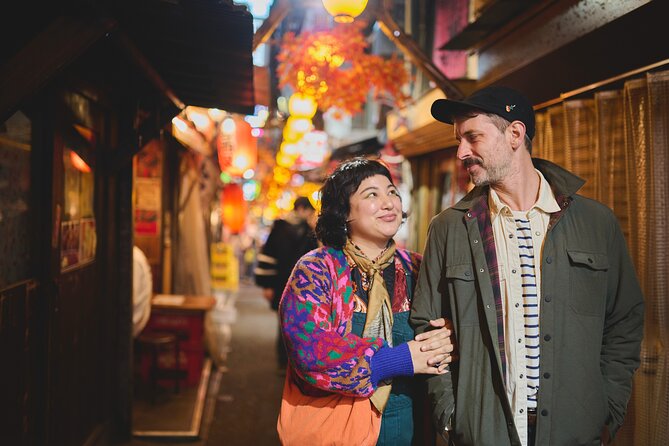
In Shinjuku, about 20 minutes are devoted to Omoide Yokocho, also called Memory Lane. The alley is known for smoky yakitori stalls and cramped bars, with a worn appearance that gives it a strong sense of age.
This is one of the most distinctive settings on the route. The narrow passage, food stalls, and small signs offer a sharp contrast to the large screens and open crossing in Shibuya. You can expect close-up street scenes and photographs with a more traditional nightlife feel.
The area is described as safe and atmospheric, but it is still an active dining spot. Be respectful when taking pictures near the stalls and bars. Some people are there to eat, not pose, so you should rely on Kenji to indicate where photography is suitable.
I would not choose this tour only for food. The schedule does not promise a meal, and the 20-minute stop is short. But if you want photographs that show a less polished side of central Tokyo, Omoide Yokocho is one of the strongest parts of the evening.
Godzilla Road and the entrance to Kabukicho
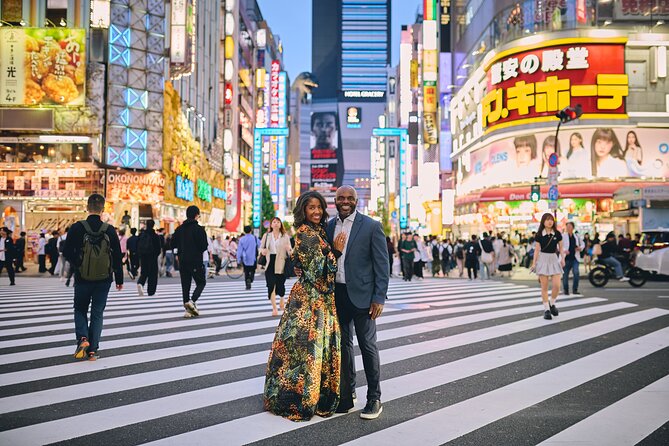
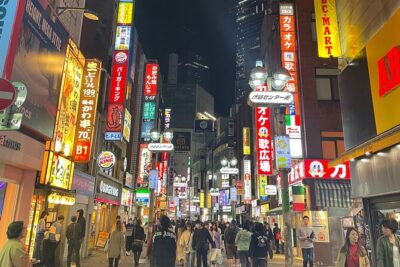
The final main stop is Godzilla Road, in or near Kabukicho, for about 20 minutes. Kabukicho is Shinjuku’s famous entertainment and red-light district, often called the Sleepless Town because of its late-night activity and bright signage.
The experience finishes at the entrance to Kabukicho rather than returning you to Shibuya. This is useful if you want to continue your own evening in Shinjuku, but less convenient if you need to get back to your hotel in another part of Tokyo. The end point is listed as Godzilla Road, at the entrance to the entertainment district.
This final section gives the photo set a strong finish. Shibuya offers movement and modern city energy. Kabukicho adds glowing signs, crowded streets, and a more theatrical nightlife atmosphere. You can also use the end point as a launch spot for independent exploration, though the tour itself ends there.
What the $62.13 price includes
At $62.13 per person, this is not simply a walking tour with a guide pointing out landmarks. The price covers Kenji’s guiding, photography help, bottled water, and 25 to 50 color-graded photographs for each person.
That photo delivery changes the value calculation. If you are comfortable taking your own pictures and do not care about portraits, a standard sightseeing walk may cost less. If you are alone, celebrating a special trip, or want polished images in Tokyo at night, the included photographs make the fee easier to justify.
The group limit of four is another useful part of the price. Kenji can spend more time helping with poses and framing when there are only a few people. The short reviews of this experience emphasize that he helps solo visitors relax, gives practical pose direction, and shares city history along the way.
The 170 yen train fare is modest, but remember to add it to your budget. Drinks beyond the included bottled water, food, and any personal purchases are also extra.
Who should book this experience
I would choose this for a solo visitor who wants photographs with Tokyo as the background. It also fits couples and small groups who prefer a photographer to handle some of the picture-taking instead of asking strangers on busy streets.
It suits people who like night photography, neon, city movement, old alleys, and entertainment districts. You do not need advanced photography skills. Kenji helps with poses and what to do, so the experience can work even if you usually feel awkward in front of a camera.
The tour is less suitable if you want a slow meal, extensive shopping time, or a long historical lecture. The route covers a lot in two hours, and each stop receives about 20 minutes. You should also be comfortable walking through crowded nightlife areas and managing a strict schedule.
Good weather is required. If poor weather cancels the experience, you are offered another date or a full refund. For a change of plans on your side, cancel at least 24 hours before the start time for a full refund.
Should you book the Shibuya and Shinjuku Photography Experience?
Book it if you want a compact Tokyo night walk with a real photographic result at the end. The strongest reasons are Kenji’s personal help with posing, the four-person maximum, and the 25 to 50 edited images included in the fee.
Skip it if you prefer to explore at your own pace, spend longer at restaurants, or avoid fixed timing. The no-late-arrival rule is firm, the train fare is extra, and the tour ends in Shinjuku rather than returning you to Shibuya.
For the right person, this is a practical way to see two major districts and return home with photographs that include you in the story, not just the scenery.
FAQ
How long does the photography experience last?
The experience lasts approximately two hours.
What time does the tour begin?
The tour begins at 8 pm.
Where does the experience start?
It starts at the Hachiko Statue at 2 Chome-1 Dogenzaka, Shibuya, Tokyo 150-0043, Japan.
Where does the experience end?
It ends at Godzilla Road at the entrance to Kabukicho in Shinjuku.
Is the train fare included?
No. The 170 yen train fare from Shibuya to Shinjuku is not included.
How many people can join the tour?
The maximum group size is four participants.
How many photos do I receive?
You receive 25 to 50 color-graded photos per person.
Is bottled water included?
Yes. Bottled water is included. If you need another beverage, Kenji can direct you to a suitable place.
What happens if the weather is poor?
The experience requires good weather. If it is canceled because of poor weather, you can choose another date or receive a full refund. You can also cancel at least 24 hours before the start time for a full refund.
More Tokyo photo shoots
- Best Go Kart Experience in Shibuya Crossing with Iconic Photos
★ 5.0 · 348 reviews - Tokyo Go-Karting Experience: Shibuya Crossing with Photos
★ 4.8 · 190 reviews - Tokyo Cyberpunk Street Photo Tour
★ 5.0 · 165 reviews - Tokyo by Night Photography Tour (Private Option Available)
★ 5.0 · 151 reviews
Newly reviewed around Tokyo
- Tokyo Asakusa:Calligraphy & Make T-shirt Activity★ 5.0 · 62 reviews
- Intercity Shuttle, Tokyo to Haneda /Narita /Yokohama /Makuhari★ 5.0 · 5 reviews
- 1 Hour Travel around Tokyo with a Professional Photographer★ 5.0 · 3 reviews
- Travel Tokyo with Your Own Personal Photographer★ 5.0 · 43 reviews
- Train in Samurai Swordsmanship and Defeat the Demon in Tokyo★ 5.0 · 5 reviews
- Shuttle Van 6hr Tokyo Tour to-and-from Tokyo, Yokohama and Narita★ 5.0 · 9 reviews
- Kickboxing & Body Training with EX-Pro Fighter★ 5.0 · 4 reviews
- Traditional Japanese Knife Sharpening Class★ 5.0 · 18 reviews
Shibuya Tours, compared.
Shibuya Meltdown Nightlife Tour: All-You-Can-Drink Bar Hopping
Read our review →
Shibuya Official Street Go-Kart in Shibuya Annex
Read our review →

Premium Go-Kart Tour with Tower & Shibuya Crossing
Read our review →Browse the lists this tour appears in