
Reviewed · TOKYO WALKING TOURS
Shibuya and Harajuku Highlights Walking Tour
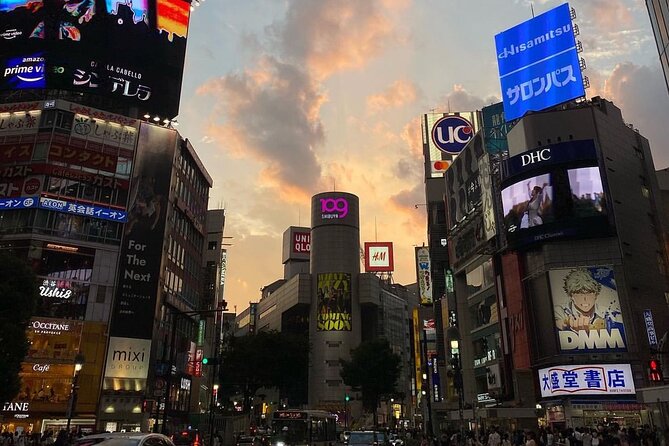
Tokyo packs two very different moods into this half-day walk. You begin among the trees of Meiji Jingu Shrine, pass through Harajuku’s youth-fashion center on Takeshita Street, and finish beneath the giant screens of Shibuya Crossing.
I like the efficient route and the small maximum of 10 people. I also like the included matcha break, since it gives the walk a welcome pause rather than turning the whole morning into a race between photo stops. The main drawback is the amount of walking, including about 20 minutes between Harajuku and Shibuya, so comfortable shoes are essential.
Key points to know before booking
- Two Tokyo districts in one morning: The route links Harajuku’s shrine, fashion, and park areas with Shibuya’s famous crossing and Hachiko statue.
- A small group of no more than 10: You should be able to hear the English-speaking guide without the feel of a large coach party.
- A matcha choice is included: Pick non-sweet matcha tea, a sweet matcha latte, or matcha ice cream during the Harajuku stop.
- The walk begins at 9:30 a.m.: Meet outside @cosme TOKYO at 1-chome-14-27 Jingumae.
- You finish at Shibuya Station: The final stops are Shibuya Crossing and Hachiko, with no return transport included.
- Plan for a moderate level of walking: This is not a suitable choice if you have difficulty walking properly.
Why this Harajuku to Shibuya route works
This tour makes sense if you want an introduction to two of Tokyo’s best-known districts without spending a full day on them. Harajuku and Shibuya sit close together, but they offer very different scenes. Harajuku brings a forested shrine, youth fashion, and a large city park. Shibuya gives you neon signs, shopping, public art, and the famous crossing.
The route is also easy to understand geographically. You start near Harajuku, walk through the surrounding sights, then head toward Shibuya on foot. That means you see the change from shrine grounds and open parkland to dense city streets rather than jumping between neighborhoods by taxi or train.
The tour lasts about three to four hours. That is enough time for an overview, but not enough for long shopping stops, extended shrine visits, or detailed exploration of every street. I would treat it as a guided orientation, then return later to the areas you like best.
The small group matters here. A guide can explain a shrine ritual or point out a detail at the crossing, but only if you can hear. With a stated maximum of 10 people, the format should be easier to follow than a large group moving through crowded streets.
More things to do in Shibuya:
- Official Street Go-Kart in Shibuya
★ 5.0 · 3,435 reviews - Tokyo: Street Kart Experience in Shibuya
★ 4.9 · 1,484 reviews - Shibuya Meltdown Nightlife Tour: All-You-Can-Drink Bar Hopping
★ 5.0 · 1,058 reviews
Starting at Meiji Jingu Shrine
The morning begins at 9:30 a.m. near @cosme TOKYO in Jingumae. From there, the group visits Meiji Jingu Shrine, with about 50 minutes set aside for the stop. Admission is free.
Meiji Jingu is dedicated to Emperor Meiji and Empress Shoken. Its setting is the key part of the visit. You move from the busy Harajuku area into a forested shrine precinct, creating a sharp contrast within a short distance.
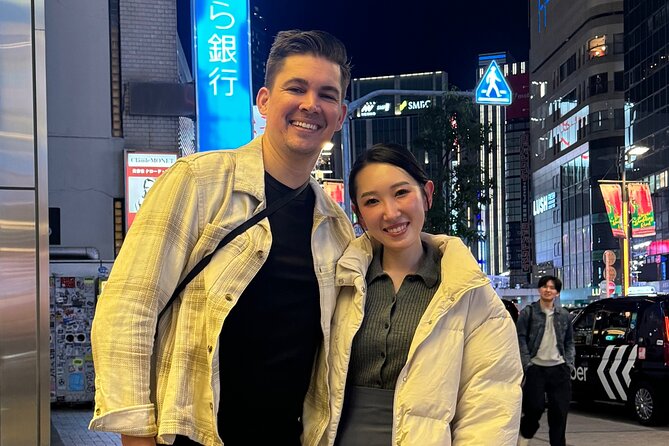
This is a good place for a guide to explain basic Shinto customs and the shrine’s role in Japanese life. You may see people making offerings or taking part in quiet personal rituals, though the exact activity on the day will vary. The value of having Kay, the English-speaking guide, is that you can ask what you are seeing instead of simply walking through a famous site and missing its meaning.
The 50-minute allotment gives you time to look around without letting the shrine absorb the entire morning. It is still a fairly brisk visit. If you want to study every gate, building, and surrounding path, you will need to return on your own.
Wear shoes that can handle uneven walking and a steady pace. The tour information calls for moderate physical fitness, and this first stop sets the tone for the rest of the outing.
Takeshita Street and Harajuku’s youth culture
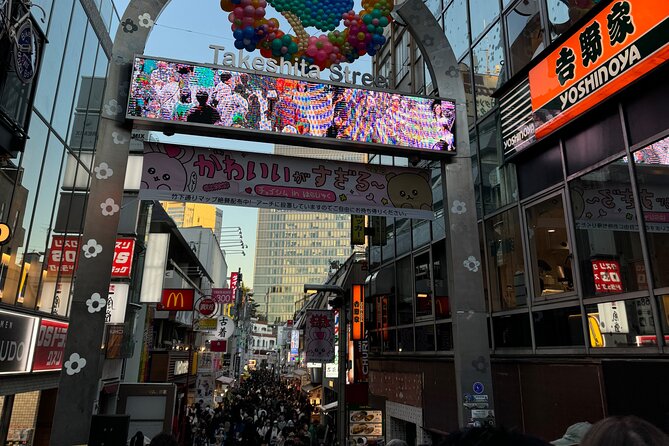
Next comes Takeshita Street, with about 50 minutes at this pedestrian shopping street. It is known for trendy shops, kawaii fashion, and youth culture. The mood shifts quickly from calm shrine grounds to a narrow commercial street filled with color, clothing, snacks, and people browsing.
This stop works best when you know what you want from it. You can look at the shop fronts, watch the flow of shoppers, and ask Kay about the styles and local culture connected with Harajuku. You are not given a long shopping session, so the tour is better for getting your bearings than for buying a complete wardrobe.
Takeshita Street can feel crowded, especially at busy times. Stay close enough to hear the guide and keep your belongings secure. If you dislike tight pedestrian areas or prefer quiet sightseeing, this may be the least relaxing part of the walk.
Still, it is an important counterpoint to Meiji Jingu. The tour is not presenting Tokyo as only temples and old customs. It shows a modern side shaped by fashion, self-expression, and changing youth tastes.
The matcha break near Harajuku Station
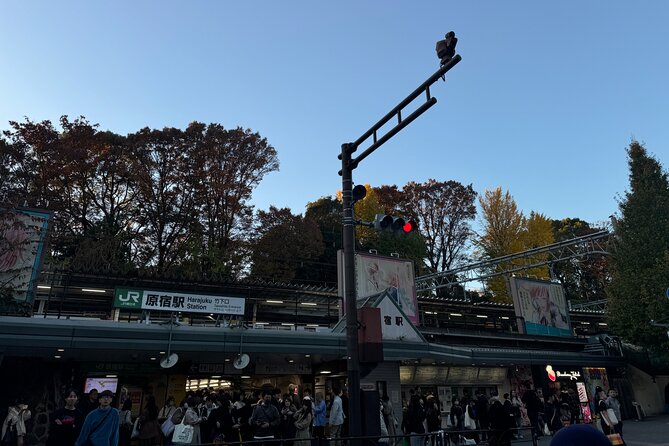
After Takeshita Street, the group pauses at an authentic matcha shop next to Harajuku Station. This stop lasts about 30 minutes, and the included refreshment is one of the tour’s practical pleasures.
You choose one of three options:
- Non-sweet matcha tea
- Sweet matcha latte
- Matcha ice cream
This is a useful choice because matcha tastes quite different depending on how it is served. The plain tea is the most direct option, while the latte is easier if you prefer a sweeter drink. Ice cream gives you a cool treat and a simple break from walking.
The stop also helps pace the tour. Without it, the route would be a continuous chain of shrine paths, shopping streets, and city sidewalks. Thirty minutes is enough to sit briefly and reset before the walk toward Shibuya.
Keep in mind that the included item is limited to the matcha drink or matcha ice cream. Breakfast and lunch are not included. If you need a substantial meal, plan around the tour rather than expecting this stop to replace one.
More things to do in Harajuku:
- Tokyo Go-Kart Tour Shibuya-Harajuku-Shinjuku (*IDP Required)
★ 5.0 · 217 reviews - Tokyo: Guided Go Kart Tour from Harajuku to Shibuya Crossing
★ 4.5 · 166 reviews - Shibuya & Harajuku: Hidden Gems & Highlights Private Tour
★ 4.7 · 139 reviews - Harajuku Kawaii Fashion and Pop-Culture Tour
★ 5.0 · 94 reviews
Walking past Yoyogi Park toward Shibuya
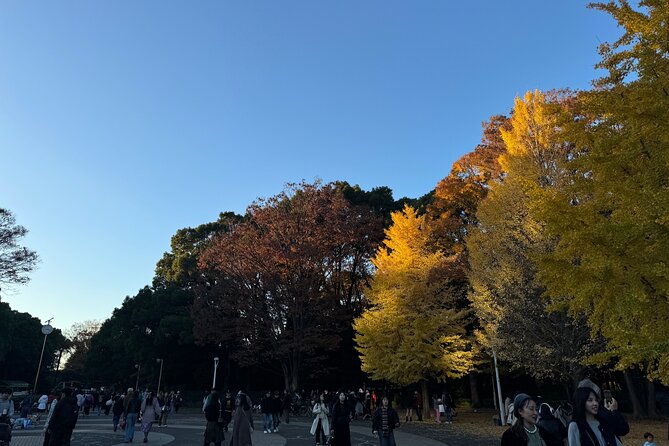
The route then passes by Yoyogi Park, with about 20 minutes allowed for this part. Yoyogi is one of Tokyo’s largest parks and is used for picnics, jogging, and other outdoor activities.
The wording matters here: this is a pass-by stop rather than a long park visit. You will not have a full afternoon to explore the paths or settle in for a picnic. Instead, the park provides an open, leafy section of the walk before the route reaches Shibuya’s denser streets.
This transition is one of the better features of the tour. You get to see how quickly Tokyo changes scale. A few minutes can separate a quiet green area from major retail buildings and busy station streets.
The walk from Harajuku to Shibuya takes about 20 minutes. That distance is manageable for most people with a moderate fitness level, but it is still part of a morning with several hours on your feet. Take water if you need it, and do not choose this outing in shoes that look good but hurt after an hour.
A quick look at Shibuya PARCO
On the way to the main crossing, the group passes Shibuya PARCO. This large shopping complex is known for fashion boutiques, restaurants, and entertainment facilities.
It is a short orientation point, not a shopping visit. You may get a sense of how Shibuya mixes retail, food, and entertainment in a single district, but there is no time listed for browsing inside. If the building interests you, note its location and return after the tour.
This kind of brief stop is useful for first-time visitors because it gives you another reference point near Shibuya’s central streets. It also prevents the tour from feeling like a direct march from Harajuku to the crossing.
Shibuya Crossing in the middle of the city’s action
The main finale is Shibuya Crossing, with about 30 minutes set aside for the stop. The crossing sits in front of Shibuya Station and is famous for the way pedestrians move across the intersection from several directions at once.
The surrounding screens and bright signs create the classic Shibuya scene. A guide can help you understand where you are and how the area fits together, while also giving you time to watch the crossing rather than simply pass through it.
Thirty minutes is a sensible amount of time for a first look. You can take photographs, observe the flow of people, and see the surrounding district without spending too long on one intersection. The area can be crowded and visually intense, so keep track of your group and listen for meeting instructions.
This is also where the small group can help. In a crowded public space, a group of 10 is easier to gather than a large party. You still need to stay alert, since the crossing and station area are active places.
Meeting Hachiko at the finish
The final stop is the Hachiko Statue, with about 10 minutes planned. Hachiko was an Akita dog associated with Shibuya Station who continued waiting for his deceased owner for nearly a decade. The statue honors that loyalty and has become one of the district’s best-known meeting points.
Ten minutes is enough for a quick look and a photograph. It is not a long historical talk or a separate museum visit. The stop works well as the endpoint because it leaves you at a familiar location beside Shibuya Station.
The tour finishes there, after Hachiko and Shibuya Crossing. There is no hotel drop-off or private transportation. That is not a serious problem in this part of Tokyo, since the end point is a major station, but you should know that you are responsible for continuing to your next destination.
What $78.04 means in practical terms
At $78.04 per person, this is not the cheapest way to walk around Harajuku and Shibuya. You can visit the shrine, park, crossing, and Hachiko statue without paying admission. The price is mainly for the English-speaking guide, the small-group format, the planned route, and the included matcha drink or ice cream.
The value improves if you want context and a clear route. A first visit to Tokyo can be confusing, especially when you are trying to connect Harajuku and Shibuya while also understanding what makes each district different. A guide saves you from spending time deciding where to go next.
The value is weaker if you are comfortable navigating Tokyo alone and mainly want photographs. Since the tour does not include lunch, private transport, hotel pickup, or shopping time, you are paying for guidance rather than a package of extras.
The published rating is 5 out of 5 from three reviews, and the strongest personal praise focuses on Kayo’s friendly, personable style. That matters because this is a walking tour built around conversation, not a ride with a recorded explanation. The guide’s manner can shape the whole morning.
Who should book this walk
I would recommend it to a first-time Tokyo visitor who wants a compact introduction to Harajuku and Shibuya. It is especially useful if you have only a few days and want to see the major names while learning how the areas connect.
It also suits you if you prefer a small group and direct access to an English-speaking guide. The maximum of 10 people should make questions easier than on a large sightseeing tour.
You should think twice if you want extensive shopping time, a slow shrine visit, or a full park outing. You should also skip it if you cannot walk comfortably for several hours. Service animals are allowed, and the route is near public transportation, but the walk itself remains the central activity.
Book early if your schedule is fixed. The experience is booked, on average, 62 days ahead, which suggests that popular dates may fill well before arrival. Free cancellation is available if you cancel at least 24 hours before the start time. Cancellations or changes made later are not accepted for a refund.
FAQ
What time does the tour start?
The tour starts at 9:30 a.m.
Where does the tour meet?
The meeting point is outside @cosme TOKYO at 1-chome-14-27 Jingumae, Shibuya, Tokyo 150-0001, Japan.
Where does the tour finish?
The tour finishes at Shibuya Station, after visiting Shibuya Crossing and the Hachiko Statue.
How long does the walking tour last?
The tour lasts approximately three to four hours.
Is matcha included?
Yes. You can choose non-sweet matcha tea, a sweet matcha latte, or matcha ice cream.
How many people can join the group?
The group has a maximum of 10 travelers.
Should you book the Shibuya and Harajuku Highlights Walking Tour?
Book it if you want an efficient morning with a friendly English-speaking guide, a small group, and a clear route through two major Tokyo districts. The combination of Meiji Jingu, Takeshita Street, Yoyogi Park, Shibuya Crossing, and Hachiko gives you a useful first look at several sides of the city.
Skip it if you prefer to wander alone, shop at your own pace, or avoid paying for sights that are mostly free. For many first-time visitors, though, the guide, structure, and included matcha break make the $78.04 price reasonable, especially when your Tokyo schedule is tight.
More Tokyo walking tours
- Tokyo Tsukiji Fish Market Food and Culture Walking Tour
★ 5.0 · 3,184 reviews - Tokyo: Imperial Palace and Shogun Historical Walking Tour
★ 5.0 · 2,251 reviews - Tokyo: Shinjuku Local Bar and Izakaya Guided Walking Tour
★ 4.9 · 1,794 reviews - Tokyo: Tsukiji Fish Market Food and Walking tour
★ 5.0 · 1,724 reviews
Newly reviewed around Tokyo
- Tokyo Asakusa:Calligraphy & Make T-shirt Activity★ 5.0 · 62 reviews
- Intercity Shuttle, Tokyo to Haneda /Narita /Yokohama /Makuhari★ 5.0 · 5 reviews
- 1 Hour Travel around Tokyo with a Professional Photographer★ 5.0 · 3 reviews
- Travel Tokyo with Your Own Personal Photographer★ 5.0 · 43 reviews
- Train in Samurai Swordsmanship and Defeat the Demon in Tokyo★ 5.0 · 5 reviews
- Shuttle Van 6hr Tokyo Tour to-and-from Tokyo, Yokohama and Narita★ 5.0 · 9 reviews
- Kickboxing & Body Training with EX-Pro Fighter★ 5.0 · 4 reviews
- Tokyo History: Sensoji Temple & Asakusa District Private Tour★ 5.0 · 28 reviews
Tokyo Walking Tours, compared.
Tokyo Tsukiji Fish Market Food and Culture Walking Tour
Read our review →
Imperial Palace and Shogun Historical Walking Tour
Read our review →
Shinjuku Local Bar and Izakaya Guided Walking Tour
Read our review →
Asakusa Walking Tour with Sensoji Temple Visit
Read our review →
Tokyo Castle & Imperial PalaceーShogun Walking Tour
Read our review →
Browse the lists this tour appears in