
Reviewed · TOKYO SUMO EXPERIENCES
Seat B Ticket Tokyo Sumo Wrestling Tournament in Ryogoku
The best part of this experience is the short orientation before you enter Ryogoku Kokugikan. Sumo can look puzzling at first, but a guide explains the rules, wrestler life, match customs, and the meaning of details such as the flags. That turns a colorful Japanese spectacle into a sport you can follow.
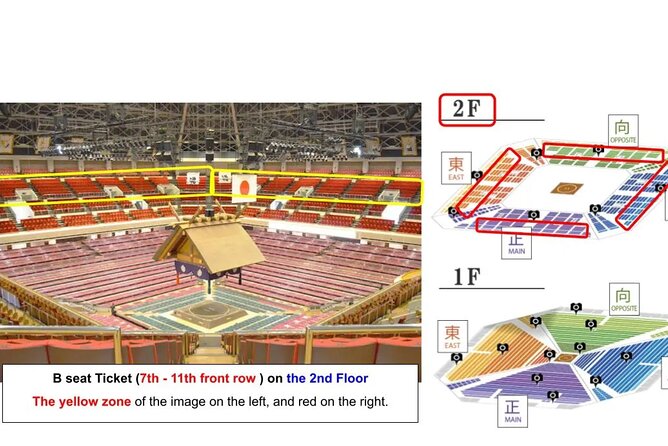
I like two things here: the small maximum group of five, which should make questions easy, and the B-ranked seat in rows 7 through 11 on the second floor. The walk through Ryogoku also gives the tournament a sense of place. The main drawback is timing: the guided portion ends around 3 p.m., while the strongest matches continue until about 6 p.m., so this is not a quick one-hour outing.
Key points at a glance
- B-ranked seat in rows 7 to 11: You watch from the second floor, with a ticket included in the price.
- A useful sumo primer: Learn match rules, customs, flags, and the daily life of sumo wrestlers before the action.
- Ryogoku’s sumo setting: Walk from Ryogoku Edo Noren through historic spots and Ekoin Temple.
- Small group format: The activity accepts no more than five people, giving the guide room to answer questions.
- Several possible guide personalities: Mark, Hina, Masao, Shogun, and Emmy are named in past tour feedback, with special praise for clear English and enthusiasm for sumo.
- A long tournament finish: The guided walk ends around 3 p.m., but the tournament runs to about 6 p.m., when the top matches take place.
Why Ryogoku makes the tournament easier to understand
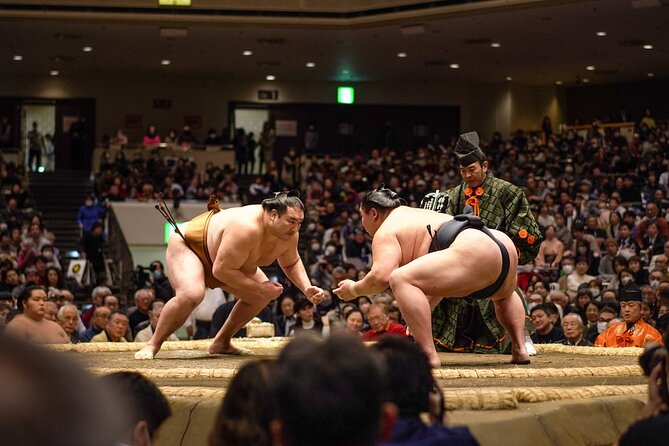
Ryogoku is not just a convenient place to watch sumo. It is the sport’s spiritual home in Tokyo, and the streets around the arena give you a useful introduction before you take your seat.
You meet at Ryogoku Edo Noren at 1:30 p.m. The meeting point is on the first floor of the building beside Ryogoku Station. From there, the guide sets the context for the afternoon instead of sending you straight into a large arena with no explanation.
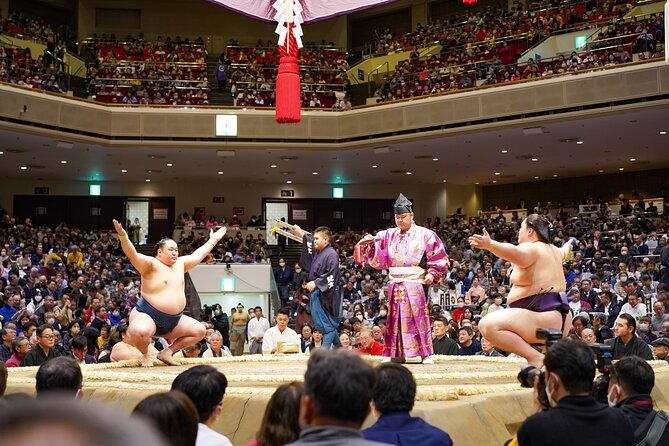
That preparation matters. Sumo matches are short, and the ritual around them can be as important as the physical contest. If you do not know what to watch, the ceremony may seem like a series of long pauses followed by a sudden shove. With a basic explanation of the rules and customs, you can follow the tension more clearly.
The tour is also a good fit for someone who likes culture but is unsure about sports. One person can enjoy the walk, the temple, and the local setting even if the wrestling itself does not become a personal favorite. That is a fair point to consider, since sumo is a specific sport with its own pace and traditions.
More Tokyo sumo experiences:
- Tokyo: Sumo Show and Dining Experience
★ 4.8 · 2,742 reviews - the SUMO show
★ 5.0 · 1,960 reviews - Tokyo Shinjuku Sumo Show & Experience with Photo
★ 5.0 · 1,750 reviews
The 20-minute start at Ryogoku Edo Noren
The first stop is Ryogoku Edo Noren, where you spend about 20 minutes with the guide. Admission to this stop is included, and the focus is on getting oriented to the district and the tournament.
This is a compact beginning rather than a full museum visit. You can expect the guide to explain how Ryogoku connects with sumo and to offer practical advice for watching the matches. That may include basic rules and pointers on what to notice once you are inside the arena.
The short length works well. You are not using your ticket time on a long lecture, but you get enough information to make the tournament more readable. The small group also helps here. With as many as five people, you can ask about a rule or custom without trying to catch a guide’s voice in a large crowd.
The meeting time deserves care. The operator requires the group to start on time, and you cannot join later or receive a refund if you miss it. Plan to arrive early at the station area rather than aiming to reach the meeting point at 1:30 p.m.
Fifteen minutes among Ryogoku’s sumo landmarks
Next comes about 15 minutes walking around Ryogoku’s sumo-related sites. The exact stops are not spelled out in detail, so you should think of this as a neighborhood orientation rather than a long sightseeing route.
That brevity is part of the design. The purpose is to connect the sport with its home district before the arena visit. You see the area where sumo culture has taken root, and the guide adds the local and historical background that you would miss by going directly to your seat.
I like this part because it gives the afternoon a stronger sense of place. A tournament ticket on its own can feel like a stand-alone event. Walking through Ryogoku first makes the arena feel connected to the district around it.
The tradeoff is that 15 minutes does not leave room for a broad tour of the neighborhood. If you want a slow look at every sumo-related sight, you will need to explore on your own before or after the experience. This activity keeps the walking portion focused so you can reach the matches.
Ekoin Temple and the older side of sumo culture
The visit to Ekoin Temple lasts about 20 minutes. It is described as an important temple in the area, and it adds a quieter stop before the noise and excitement of Kokugikan.
This is a useful contrast. Sumo is often presented as an athletic event, but it also carries religious and ceremonial meaning. A temple visit gives the guide space to explain the older cultural setting around the sport without trying to do so while people are entering the arena.
The temple stop may appeal most to you if you want more than a match. It gives the outing a cultural layer and helps explain why sumo is treated with such respect in Japan. At the same time, the visit is brief, so do not expect an extended temple tour or a long period for independent exploration.
The practical benefit is the pacing. You get a sequence of short stops, each with a different purpose: orientation, local sumo sites, a temple, then the arena. The route is not physically demanding according to the supplied information, and most people can take part, though Tokyo’s weather can make outdoor walking uncomfortable.
More Tokyo tickets and entries:
- Tokyo: teamLab Planets TOKYO Digital Art Museum Entry Ticket
★ 4.6 · 9,779 reviews - Tokyo: Hop-On Hop-Off Sightseeing Bus Ticket
★ 3.9 · 4,207 reviews - Tokyo: Japanese Dance Cabaret Theater Asakusa-Kaguwa Ticket
★ 4.8 · 2,270 reviews - Tokyo Skytree Admission Ticket with Tembo Deck and Galleria
★ 4.0 · 589 reviews
Entering Ryogoku Kokugikan for the tournament
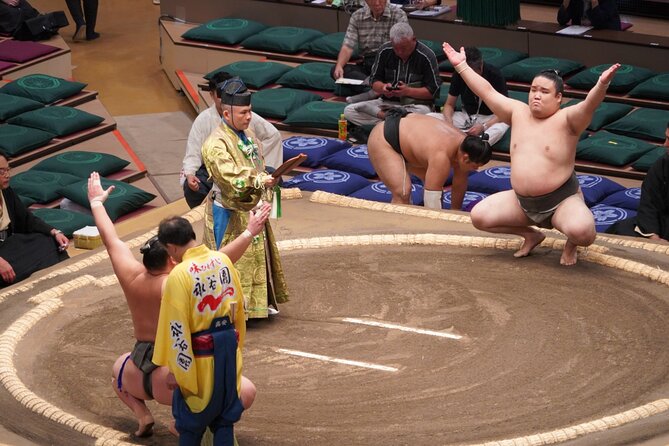
The final guided stop is Ryogoku Kokugikan, the principal arena for the matches. About 30 minutes is allocated for entering the hall and helping you get settled. Your ticket is a B-ranked seat on the second floor, in the 7th through 11th rows.
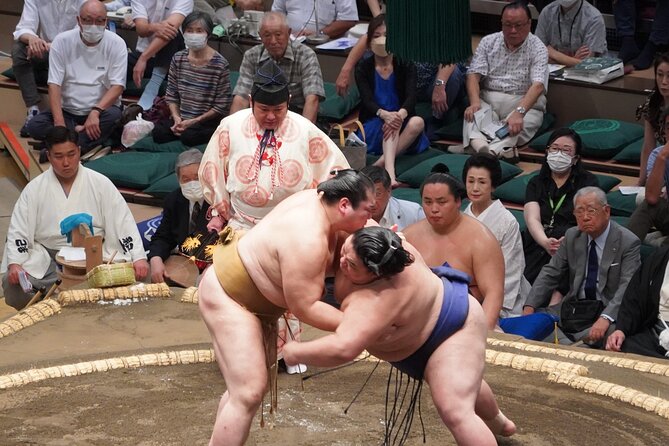
That seat category offers a useful middle ground. You are not at floor level, but you are not simply buying the cheapest possible view. The second-floor position gives you a broader look at the ring and the movement around it. The specific view will depend on your assigned seat, but the supplied details place you in a fairly forward section of the B-ranked area.
The guide does not necessarily remain with you for the whole tournament. The activity description makes clear that the guided portion finishes around 3 p.m., while the tournament continues until roughly 6 p.m. You should be prepared to watch independently after the introduction.
I consider that an important detail, not a flaw. The guide’s job is to make the event understandable, then you are free to enjoy the matches at your own pace. If you need constant commentary, this may not suit you. If you like having an explanation first and then watching on your own, it is a sensible arrangement.
The later part of the day is especially important. The strongest bouts take place later in the tournament schedule, so leaving at 3 p.m. would mean missing much of the most powerful action. Set aside the full afternoon and plan to remain at the arena until around 6 p.m.
What the guide adds to a first sumo match
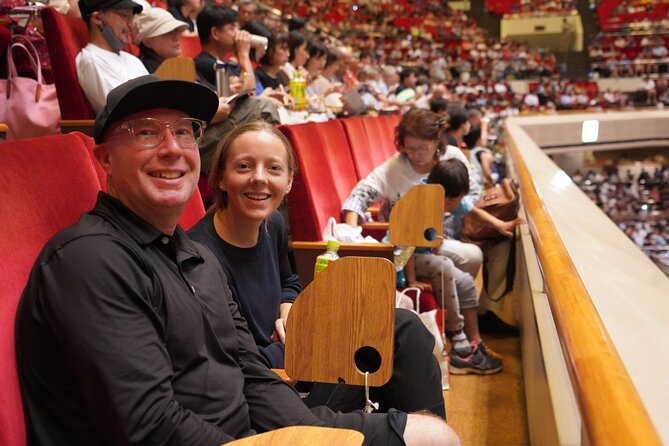
The guides named in past feedback include Mark, Hina, Masao, Shogun, and Emmy. Their individual styles may differ, but the common role is clear: explain the sport and give you a way to read what is happening.
Mark is described as an excellent English speaker who explains the origins of sumo in a warm, approachable way. Hina is noted for her passion for sumo and for explaining both the sport and the life of the wrestlers. Masao is also presented as a strong fan of the sport, while Shogun is credited with explaining the professional wrestlers and the meaning of the flags.
Those details point to the real value of the tour. You are not only being escorted to a seat. You are given the vocabulary and background to notice things that would otherwise pass by quickly.
Emmy’s style is described as engaging and conversational, with attention to questions from each person in the group. That matters in a five-person tour. You can ask why a match is paused, what a symbol means, or how the tournament structure works without feeling lost in a large group.
No guide can guarantee that sumo will become your favorite sport. One participant enjoyed the guide and the cultural explanation but decided that sumo itself was not for them. That is a fair outcome. The introduction makes the experience more accessible, but it cannot change your taste.
How to judge the $117.61 price
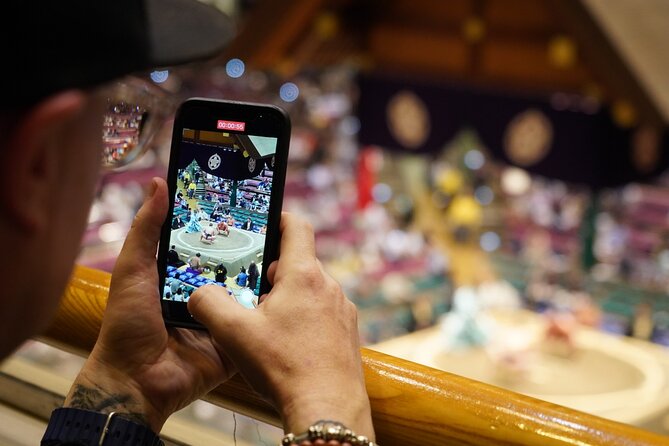
At $117.61 per person, this is not a cheap afternoon by Tokyo standards. The price includes the B-ranked second-floor tournament ticket, the guided walk, and tour photos. Food and drinks cost extra.
The ticket is the main part of the value. You are paying for entry to a major tournament as well as a small-group introduction to the area. Buying only a ticket might cost less, but you would give up the local guide, the sumo primer, the walk through Ryogoku, and the help understanding the event.
The value is strongest for a first-time visitor who wants the cultural frame around the match. It is less convincing for a devoted sumo follower who already knows the rules, the wrestlers, and the traditions. That person may prefer to arrange a seat directly and spend the savings on food or other sightseeing.
The included photos are a pleasant extra, but I would not choose the activity for that reason. The real benefit is the combination of access and explanation.
You should also budget time for food if you want it. Additional meals and drinks are not included, and the activity runs across the afternoon. Since the tournament continues until about 6 p.m., plan ahead rather than assuming the ticket price covers anything beyond admission and the tour.
Timing, weather, and meeting-point advice
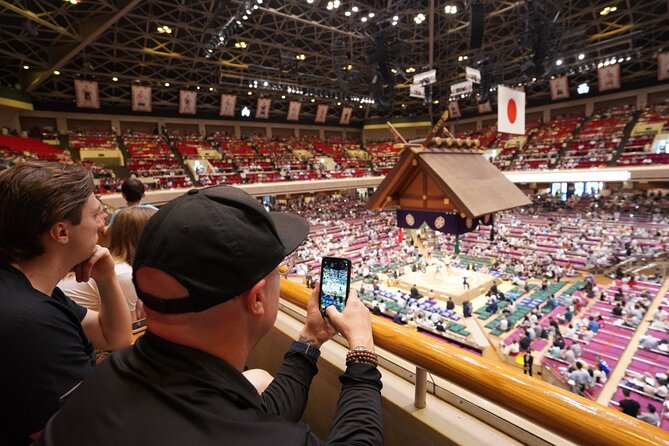
The activity begins at 1:30 p.m. at Ryogoku Edo Noren and reaches the arena after the neighborhood walk. The guided portion ends around 3 p.m., but your tournament ticket lets you continue watching until the event finishes at about 6 p.m.
That makes this a half-day commitment, even though the formal activity duration is listed as about 1 hour and 30 minutes. The stated duration covers the guided portion, not the full time you are likely to spend at Kokugikan.
Arrive early. Late arrivals cannot join the group, reschedule, or receive a refund. Your confirmation arrives at booking, and the ticket is mobile, so keep the ticket information easy to access on your phone.
Tokyo can be very hot or cold. The supplied guidance allows for summer highs near 40°C, or 110°F, and winter lows around -5°C, or 20°F. Dress for the season, particularly because part of the activity takes place outdoors around Ryogoku.
The route ends at Ryogoku Kokugikan, at 1-chome-3-28 Yokoami in Sumida City. That is convenient for the tournament itself, but the end of the guided walk is not the end of your afternoon. You remain responsible for your own plans after the guide finishes.
Who will enjoy this sumo experience most
I would choose this for a first-time sumo spectator who wants help making sense of the event. It also suits you if you enjoy walking through a historic district, visiting a temple, and learning how a sport fits into local culture.
The small group is a major plus for solo visitors, couples, and families who want to ask questions. English-language support is part of the appeal, especially since Mark is described as speaking excellent English and the guides are praised for clear explanations.
This may be less suitable if you want a quick activity. The strongest matches come later, so you should not rush off after the 90-minute walk. It may also disappoint you if you expect a floor-level seat or constant guide commentary throughout every bout.
The experience is accessible to most people according to the supplied information, but the tour includes outdoor walking and requires punctual arrival. Anyone sensitive to extreme heat or cold should prepare carefully.
Cancellation and booking basics
You can cancel for a full refund up to 24 hours before the local start time. Cancellations or changes made less than 24 hours before the start are not accepted for a refund.
The activity is often reserved about 27 days ahead, which suggests that planning early is sensible during a popular tournament. Confirmation is provided at booking, and the mobile ticket makes entry simpler once you reach the arena.
Should you book the B-ranked sumo ticket tour?
Book it if you want more than a seat. The strongest reason to choose this experience is the preparation: you walk through Ryogoku, visit Ekoin Temple, learn how sumo works, and then watch the matches with a clearer idea of what you are seeing.
The B-ranked second-floor seat gives you a reasonable way into the tournament without paying for the highest category, while the group size keeps the guide’s explanations personal. Guides such as Mark, Hina, Masao, Shogun, and Emmy are presented as friendly and enthusiastic, with particular skill in explaining sumo to newcomers.
Skip it if you already know the sport well, need a very short outing, or want a premium ringside view. Also skip it if you cannot commit to staying at Kokugikan until the later matches, since the tournament’s best action comes after the guided portion ends.
For most first-time visitors, I think the guide is worth the added cost. Sumo is easy to watch but harder to understand. This tour gives you just enough background to turn a strange and formal afternoon into a memorable part of your Tokyo visit.
FAQ
What does the ticket include?
The ticket includes a B-ranked second-floor seat in rows 7 through 11 at Ryogoku Kokugikan. The guided walk, tournament admission, and tour photos are also included.
Where does the experience begin?
The group meets at Ryogoku Edo Noren, on the first floor at 1-chome-3-20 Yokoami, Sumida City, Tokyo.
What time does the tour start?
The tour starts at 1:30 p.m. You should arrive early because late arrivals cannot join the group or receive a refund.
How long is the guided portion?
The guided experience lasts about 1 hour and 30 minutes. The tour ends around 3 p.m., but the tournament continues until about 6 p.m.
Does the guide stay for the entire tournament?
The supplied details indicate that the guided portion ends around 3 p.m. The tournament continues afterward, so you should be prepared to watch the later matches independently.
Are food and drinks included?
No. Additional food and drinks are not included in the price.
Can I cancel for a refund?
Yes. You can cancel up to 24 hours before the local start time for a full refund. Cancellations and changes made less than 24 hours before the start are not accepted.
Newly reviewed around Tokyo
- Tokyo Asakusa:Calligraphy & Make T-shirt Activity★ 5.0 · 62 reviews
- Intercity Shuttle, Tokyo to Haneda /Narita /Yokohama /Makuhari★ 5.0 · 5 reviews
- 1 Hour Travel around Tokyo with a Professional Photographer★ 5.0 · 3 reviews
- Travel Tokyo with Your Own Personal Photographer★ 5.0 · 43 reviews
- Train in Samurai Swordsmanship and Defeat the Demon in Tokyo★ 5.0 · 5 reviews
- Shuttle Van 6hr Tokyo Tour to-and-from Tokyo, Yokohama and Narita★ 5.0 · 9 reviews
- Kickboxing & Body Training with EX-Pro Fighter★ 5.0 · 4 reviews
- Traditional Japanese Knife Sharpening Class★ 5.0 · 18 reviews
Tokyo Sumo Experiences, compared.
Tokyo Shinjuku Sumo Show & Experience with Photo
Read our review →
Luxury Sumo Show Experience & Japanese cuisine & Drink
Read our review →
Tokyo Sumo Experience: Chanko & Mochi with a Former Pro
Read our review →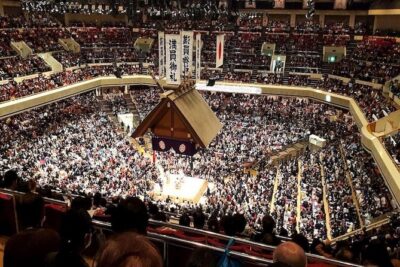
Ultimate Sumo Tournament: Tokyo, Osaka, Nagoya, Fukuoka
Read our review →Browse the lists this tour appears in