Reviewed · TICKETS
Tokyo: Hop-On Hop-Off Sightseeing Bus Ticket
Tokyo is huge, and this open-top bus gives you a useful first look without asking you to decode the subway on arrival. For $30, you can ride all three routes for one or two days, passing Tokyo SkyTree, Asakusa, Tokyo Tower, Tsukiji, Ginza, Shinjuku, and Shibuya from a high seat above the traffic.
I especially like the three-route coverage and the freedom to use the bus as a moving introduction, then return to the areas that catch your interest. The ride over the expressway can be a real highlight, and evening departures offer a fine look at Tokyo’s lights. The main drawback is the wait between buses. This is not a bus every few minutes, and missing one can mean a delay of 30 minutes to 90 minutes.
Key points to know before you board
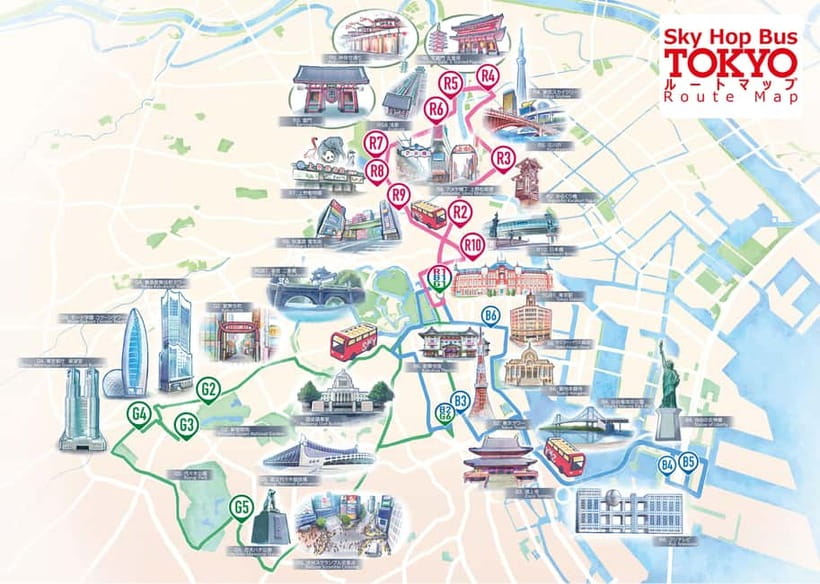
- Three routes cover different sides of central Tokyo: SkyTree and Asakusa, Tokyo Tower and Ginza, plus Shinjuku, Shibuya, and Harajuku.
- The open-top second deck has the views: The first floor is used for storage, so every passenger seat is upstairs.
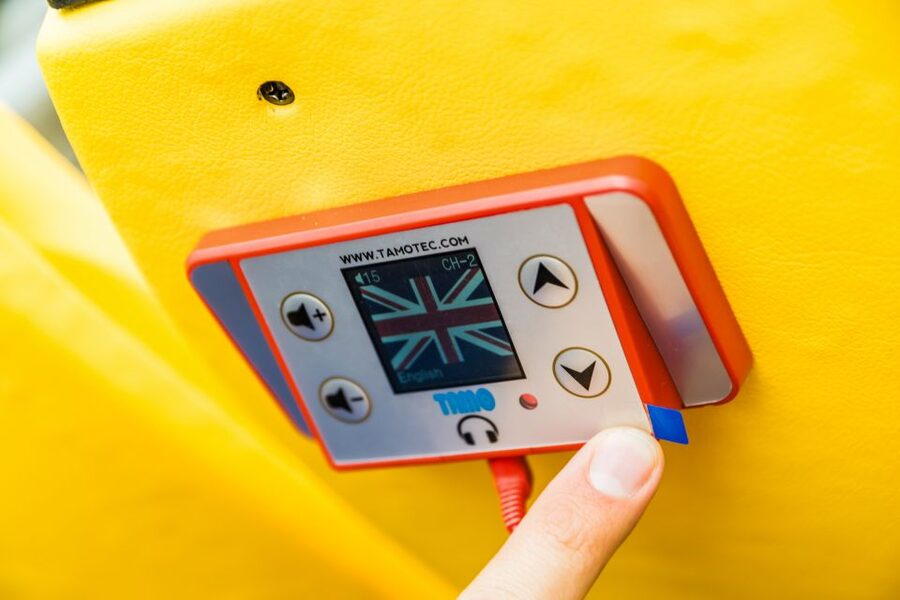
- Bring your own phone and earphones: The newer audio system supports 10 languages, though data charges may apply.
- Plan around the timetable: A full loop can take about two hours, and the next bus may not arrive quickly after you hop off.
- A two-day ticket reduces pressure: One day works for a broad overview, while two days gives you more time to stop and explore.
- Weather matters: There is no air-conditioning, umbrellas are not allowed, and severe weather can cancel service.
Why this bus works well as your first Tokyo outing
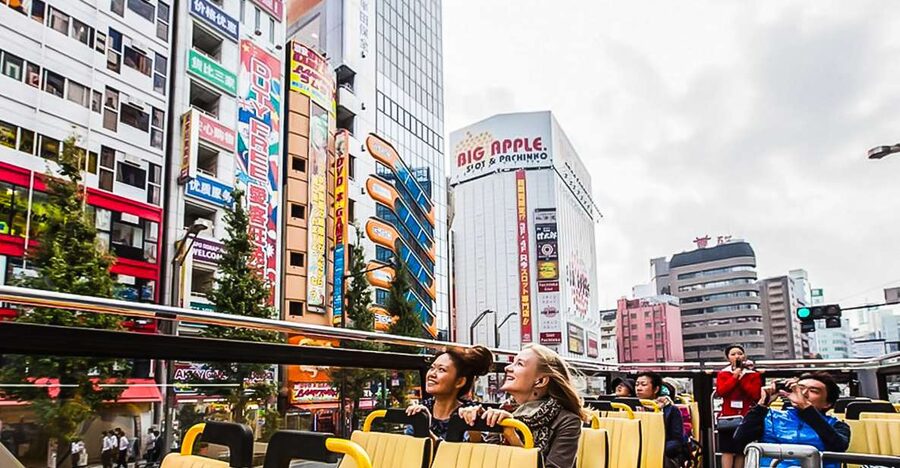
I like using a sightseeing bus early in a city visit because it answers the basic question: where do I actually want to spend my time? Tokyo can feel like several cities stitched together, and this ride helps you compare old Asakusa, polished Ginza, temple districts, high-rise Shinjuku, and youthful Shibuya before committing to a full day in any one place.
You also get a view that trains cannot provide. From the upper deck, you can watch Tokyo’s streets unfold, catch glimpses of towers and bridges, and get a better sense of how the districts connect. The ride is especially pleasant in good weather, and the evening city lights add a second reason to ride a route more than once.
The bus is best for seeing and orienting yourself, not for fast transport. Tokyo’s traffic can slow the schedule, and the service frequency is the biggest practical weakness. If you hop off at Tokyo Tower and miss the next bus, you may wait more than an hour. I would use the bus for sightseeing and orientation, then use the subway or JR trains when you need to reach a particular place quickly.
More Tokyo tickets and entries:
- Tokyo: teamLab Planets TOKYO Digital Art Museum Entry Ticket
★ 4.6 · 9,779 reviews - Tokyo: Japanese Dance Cabaret Theater Asakusa-Kaguwa Ticket
★ 4.8 · 2,270 reviews - Tokyo Skytree Admission Ticket with Tembo Deck and Galleria
★ 4.0 · 589 reviews
Route 1: SkyTree, Asakusa, Ueno, and Akihabara
The Tokyo SkyTree course begins at the Mitsubishi Building in Marunouchi and heads east toward Tokyo’s older neighborhoods. It passes Kodemmacho Station, the Ryogoku Edo-Tokyo Museum area, Tokyo SkyTree, Asakusa, Ueno, Akihabara, and Shin-Nihombashi before returning to Marunouchi.
Tokyo SkyTree is the obvious visual prize. The tower rises far above the city, and its broad surroundings give you a dramatic look at the scale of Tokyo. You can hop off here if you want to visit the tower and aquarium area, but allow enough time to return to the stop. The bus does not wait for sightseeing stops.
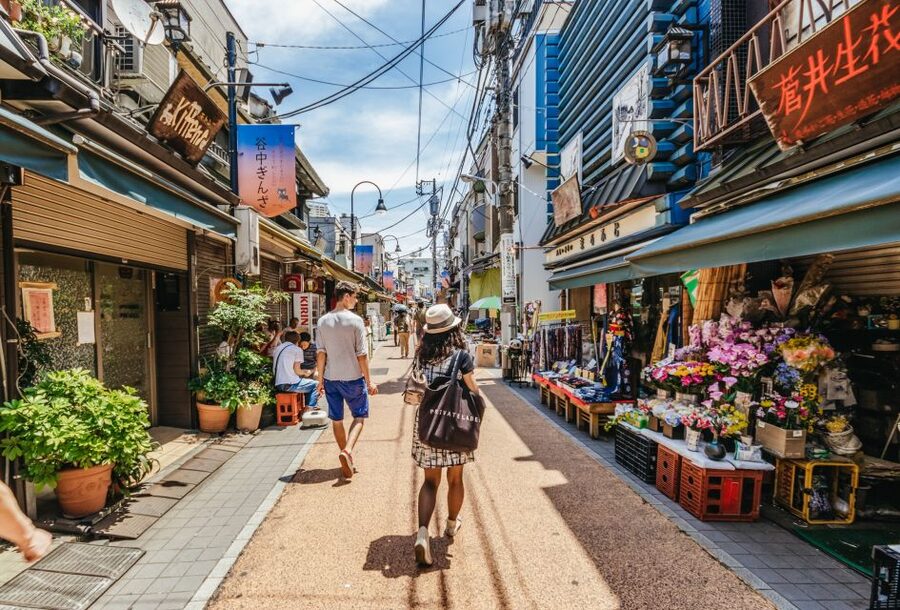
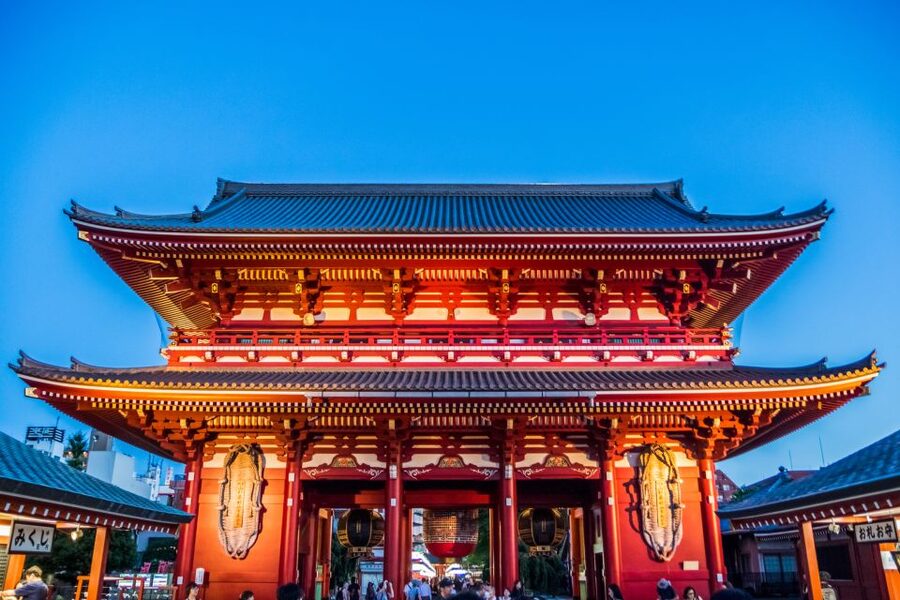
Next comes Asakusa, one of the most useful stops for first-time visitors. The district gives you a very different feel from the glass and steel of Marunouchi. You can explore the Senso-ji area, browse traditional shops, and walk toward the Sumida River. Asakusa Hanakawado and Asakusa Tawaramachi serve different parts of the district, so check the stop location before getting off.
The route then continues through Ueno, a major museum and park area, and Akihabara, Tokyo’s famous electronics and pop-culture district. You may not have enough time to explore each neighborhood on a single loop, but seeing them from the bus helps you decide where to return.
This course is particularly useful if you want a mix of old Tokyo, museums, electronics shops, and the city’s tallest landmark. The drawback is time. If you hop off at several points, the waiting period can make the route feel slow, especially when buses are full.
Route 2: Tokyo Tower, Zojo-ji, Tsukiji, and Ginza
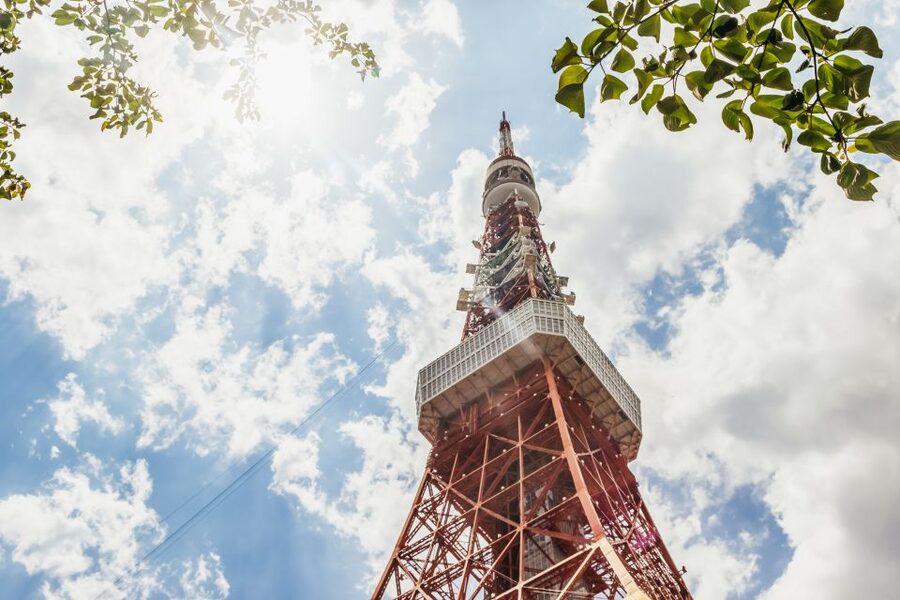
The Tokyo Tower, Tsukiji, and Ginza course starts at Marunouchi Mitsubishi Building and travels toward Tokyo Tower, Tokyo Prince Hotel and Zojo-ji Temple, Tokyo Teleport Station, Tsukiji, and Ginza.
Tokyo Tower is one of the city’s classic views, with its orange and white structure rising above the surrounding streets. The stop also puts you near Zojo-ji Temple, a large Buddhist temple with a striking view toward the tower. This pairing is one of the most rewarding short stops on the entire network because you get a traditional temple setting and an instantly recognizable modern landmark within the same walk.
Tsukiji offers a different kind of visit. The former inner wholesale market moved to Toyosu, but the outer market area remains a popular place for food shops and small restaurants. If you get off here, check the return timetable before you start eating or browsing. It is easy to lose track of time in the narrow market streets.
Ginza gives you Tokyo’s polished shopping district, with wide streets, department stores, galleries, and tall commercial buildings. It is a good place to compare with Shibuya or Shinjuku. Ginza feels more formal and measured, while Shibuya brings larger crowds and brighter youth culture.
This route can also provide one of the most enjoyable rides after dark. City lights come on around Tokyo Tower, Ginza, and the central business district, and the open upper deck gives you a clear view above many street-level obstructions. Carry a jacket outside the warmer months, since the bus is open-air and can feel windy on bridges and faster roads.
Route 3: Shinjuku, Shibuya, Harajuku, and Meiji Jingu
The Shinjuku Shibuya course heads west from Marunouchi. It serves Shinjuku-gyoemmae Station, Shinjuku Station South Exit near Hotel Century Southern Tower, Shinjuku Mitsui Building in Nishi-Shinjuku, Shibuya City Hall, Harajuku, and Meiji Jingu Shrine.
Shinjuku is Tokyo at its most vertical and energetic. The route shows you both the busy station area and Nishi-Shinjuku, where tall office buildings create a very different mood. Shinjuku Station is enormous, so getting off at the correct stop matters. The South Exit and Nishi-Shinjuku stops serve different parts of the district.
Shibuya City Hall places you near one of Tokyo’s best-known urban scenes. The district is famous for its crossing, shopping, restaurants, and giant video screens. The bus gives you an overview, but you will need to walk from the stop to reach the main sights.
Harajuku and Meiji Jingu offer another sharp change. Harajuku is associated with fashion and youth culture, while Meiji Jingu is a broad wooded shrine complex near the center of the city. This is one of the most useful parts of the route if you want to see how Tokyo can shift from dense commercial streets to a quiet religious setting within a short distance.
If you have only one day, you probably cannot explore Shinjuku, Shibuya, Harajuku, and Meiji Jingu in depth while also completing the other two routes. Treat this course as a survey, then return by train or subway to the district you prefer.
A completely different kind of day in Tokyo:
- Mt Fuji and Hakone 1-Day Bus Tour Return by Bullet Train
★ 5.0 · 26,383 reviews - 1-Day Tokyo Bus Tour
★ 5.0 · 14,250 reviews - Mt Fuji & Hakone Cruise, Drum Show Bullet Train 1 Day from Tokyo
★ 4.0 · 7,413 reviews - Tokyo: Shinjuku Food Tour (13 Dishes at 4 Local Eateries)
★ 5.0 · 6,603 reviews
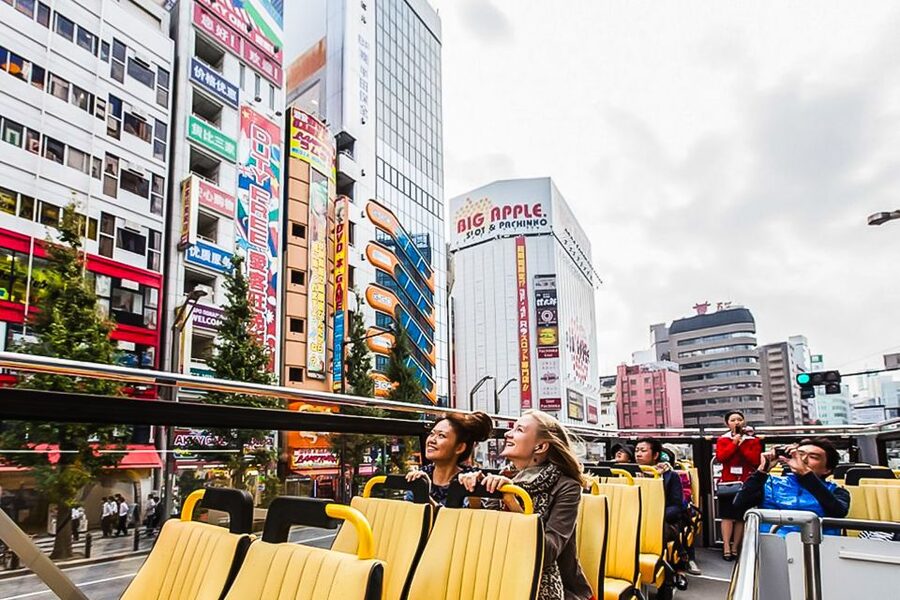
The open-top deck is the main attraction
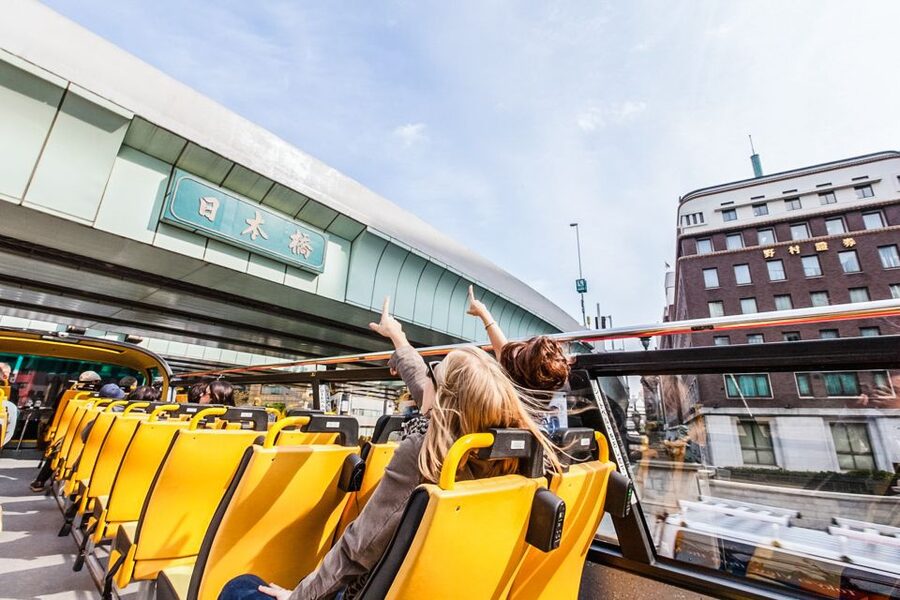
Every passenger seat is on the second floor. The first floor is used for storage, so there is no lower enclosed seating area where you can escape the weather. That setup gives you excellent views, but it also makes conditions part of the experience.
On a clear day, the upper deck is a pleasure. You can photograph towers, bridges, signs, and temples without a roof blocking your view. One ride over the expressway can feel surprisingly exciting, especially when the bus rises above ordinary street traffic and Tokyo opens up around you.
Rain is handled with raincoats or ponchos when needed, but umbrellas are prohibited on board. In summer, the lack of air-conditioning is serious. An August heatwave made the ride uncomfortable for some passengers, even though staff provided warnings and, at times, frozen towels. I would choose a morning or evening ride in hot weather and carry water.
Wind is another small issue. Bridges and faster roads can be breezy, so keep a firm grip on hats and loose items. In severe weather, including typhoons and thunderstorms, the service may not operate.
Audio commentary and the phone-based guide
The newer audio system lets you listen through your own smartphone or tablet. It supports Japanese, English, Korean, Chinese, French, German, Spanish, Thai, Vietnamese, and Indonesian. Bring your own earphones, and remember that mobile data charges are your responsibility.
This personal-device system is useful because it offers more languages than the older vehicle-mounted system. It also avoids a common problem with fixed seat audio, which may not work on every bus. I would set up the guide before boarding, rather than trying to download or connect while other passengers are getting on.
The commentary is designed to match the route and stops, giving you background on Tokyo’s districts, buildings, and culture. Some audio segments may cut off mid-sentence, and the quality can vary between the personal system and the equipment fitted to a particular bus. Still, it adds useful context to what might otherwise be a long city ride.
The driver speaks English and Japanese, while the audio guide handles the wider language choice. This is not a live guided walk, so do not expect a guide beside you explaining every street. The strength is simple, timed information that lets you look out at the city while listening.
How to plan one day or two
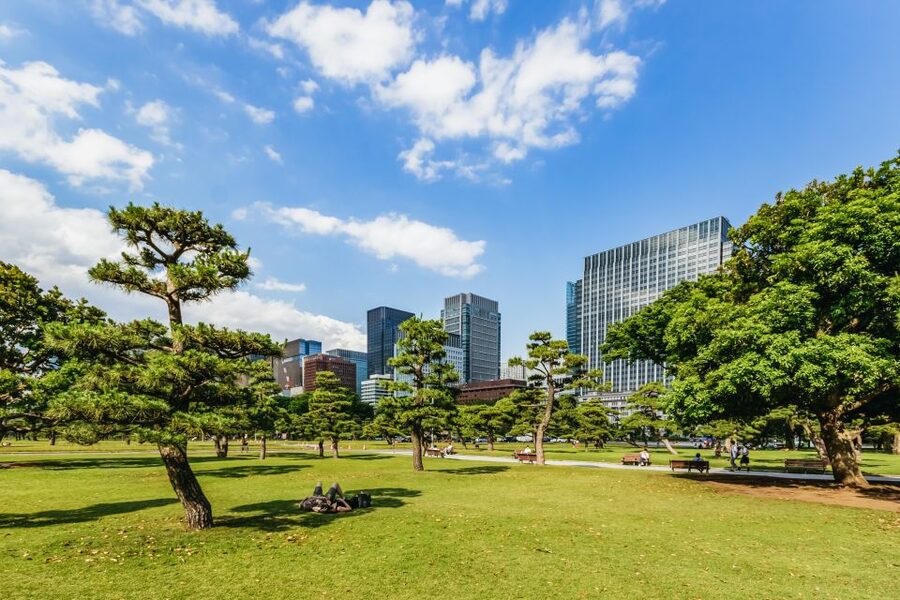
A one-day ticket is enough if your goal is to ride all three routes and get your bearings. Start early, check the first and last departures, and avoid hopping off at every stop. One practical plan is to ride a full route first, choose one major stop for a short visit, then use a second route in the afternoon.
A two-hour loop can consume most of an afternoon once you add boarding time and traffic delays. If you want to visit SkyTree, Tokyo Tower, Tsukiji, Shibuya, or Meiji Jingu properly, a single day becomes tight.
The two-day option is better for a relaxed visit. Use the first day to see all three routes and mark the areas you want to revisit. On the second day, choose one or two stops and give yourself time to walk, eat, shop, or visit a temple. This approach also protects you from one missed connection ruining your schedule.
Before hopping off, take a photo of the stop timetable and save the stop on your map. This small habit can prevent a long wait. The QR code on your voucher lets you board directly from any listed bus stop, so you do not have to return to the Mitsubishi Building each time.
Price, crowds, and the real value
At $30 per person, the ticket is not the cheapest way to move around Tokyo. A subway or JR ride will usually make more sense if you already know exactly where you want to go and are comfortable navigating the system.
The value comes from combining transport with a moving city tour. You can see three broad areas without changing trains, study the city from above street level, and use the commentary to understand what you are passing. For a first day in Tokyo, that can be worth the cost.
Do not expect the constant service found on some hop-on hop-off networks in other capitals. Buses can fill up, and the next one may be 30 to 45 minutes away, sometimes longer. If there are no free seats, you must wait for the next bus. This matters most on popular days, at major stops, and when you are trying to make a connection between routes.
Staff assistance is a strong point. The crew helps passengers board and leave safely, explains changes, and can be helpful in English. The buses are generally described as punctual and well organized, but traffic can still cause delays.
Who should book this Tokyo bus?
I would recommend it to first-time visitors, people with limited time, families who want a simple overview, and anyone who enjoys seeing a city from an open upper deck. It is also useful if Tokyo’s transport system feels intimidating on your first morning.
You should think twice if you are on a tight budget, need to reach destinations quickly, or dislike heat, wind, and waiting. The bus is a sightseeing service first, not a replacement for Tokyo’s fast rail network.
Should you book it?
Book this bus if you want a broad first look at Tokyo and can give it at least half a day. Choose two days if you want to get off often or visit major sights along the way. For the best experience, check the timetable, ride in comfortable weather, bring earphones, and save the return stop before you explore.
Skip it if your plan already centers on specific attractions and tight train connections. In that case, the subway will be faster and cheaper. But if you want to compare Asakusa with Shibuya, Tokyo Tower with SkyTree, and Ginza with Shinjuku without spending your first day underground, this ticket is a practical introduction to the city.
FAQ
How long is the Tokyo hop-on hop-off ticket valid?
You can choose a ticket lasting one or two days. Check the available start times when booking.
Which Tokyo routes are included?
The ticket includes the Tokyo SkyTree course, the Tokyo Tower, Tsukiji, and Ginza course, and the Shinjuku Shibuya course.
Can I board at stops other than the Mitsubishi Building?
Yes. You can board directly from any listed bus stop in Tokyo using the QR code sent with your voucher.
Is the audio guide available in English?
Yes. The personal-device audio guide supports English, Japanese, Korean, Chinese, French, German, Spanish, Thai, Vietnamese, and Indonesian. Bring your own device and earphones.
Does the bus operate in the rain?
Raincoats are distributed when needed, but umbrellas are not allowed on board. Severe weather, such as typhoons or thunderstorms, can stop the service.
Is the bus air-conditioned?
No. The bus is open-air and has no air-conditioning. All passenger seats are on the second floor, so prepare for heat, wind, or rain depending on the conditions.
Newly reviewed around Tokyo
- Tokyo Asakusa:Calligraphy & Make T-shirt Activity★ 5.0 · 62 reviews
- Intercity Shuttle, Tokyo to Haneda /Narita /Yokohama /Makuhari★ 5.0 · 5 reviews
- 1 Hour Travel around Tokyo with a Professional Photographer★ 5.0 · 3 reviews
- Travel Tokyo with Your Own Personal Photographer★ 5.0 · 43 reviews
- Train in Samurai Swordsmanship and Defeat the Demon in Tokyo★ 5.0 · 5 reviews
- Shuttle Van 6hr Tokyo Tour to-and-from Tokyo, Yokohama and Narita★ 5.0 · 9 reviews
- Kickboxing & Body Training with EX-Pro Fighter★ 5.0 · 4 reviews
- Traditional Japanese Knife Sharpening Class★ 5.0 · 18 reviews
Tickets, compared.
teamLab Planets TOKYO Digital Art Museum Entry Ticket
Read our review →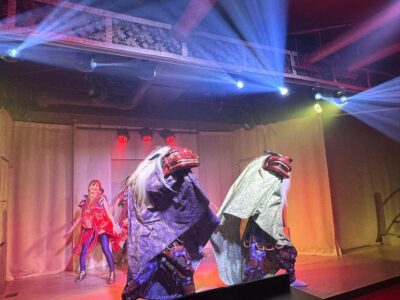
Japanese Dance Cabaret Theater Asakusa-Kaguwa Ticket
Read our review →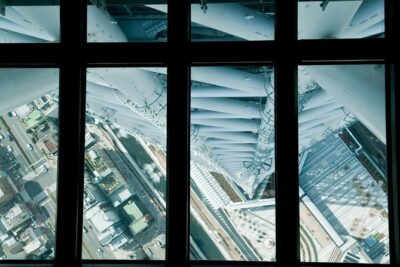
Tokyo Skytree Admission Ticket with Tembo Deck and Galleria
Read our review →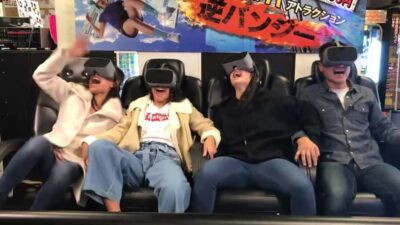
‘Red Tokyo Tower’ Digital Amusement Park Ticket
Read our review →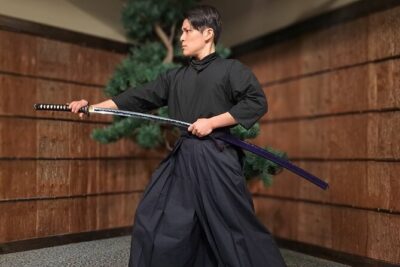
Tokyo Sword Experience – includes Museum Ticket/Ninja Experience
Read our review →
Edo Wonderland Edomura Cultural Theme Park Ticket
Read our review →