
Reviewed · TOKYO SAMURAI AND NINJA EXPERIENCES
Samurai Training in Tokyo: Swords, Bushido & Mental Discipline
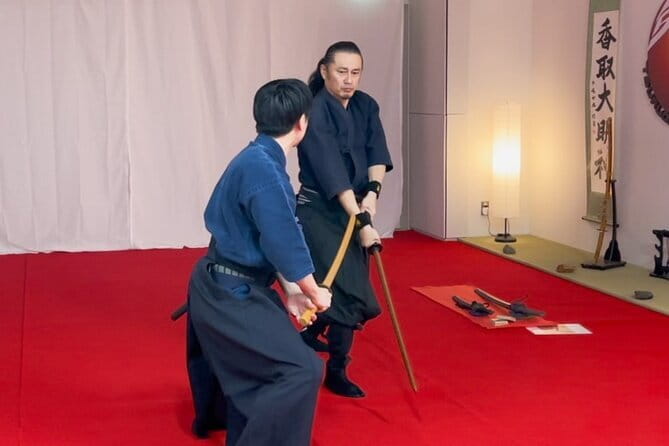
The most interesting part of this Tokyo activity is that it treats samurai training as more than swordplay. At a dojo in Kojimachi, once part of Edo Castle’s inner grounds, you’ll work on etiquette, breathing, posture, focus, and one authentic combat kata before trying one-on-one practice with an instructor.
I like the private format, since you can ask questions without holding back, and I like the quiet break with matcha and Japanese sweets. The instructors, including Sensei Oedo and Yukiji, are supported by an English translator, which helps when the lesson moves from physical movements to Bushido ideas.
The main consideration is time. Two hours gives you a memorable introduction, not mastery of Japanese swordsmanship. You’ll also need at least two participants, and anyone expecting fast, theatrical sword battles may find the emphasis on discipline more demanding than flashy.
Key points to know before you book
- Kojimachi setting: Train at a Tokyo dojo in an area once linked to Edo Castle’s inner grounds.
- A real lesson, not just a photo stop: Practice etiquette, meditation, walking, strength work, wooden sword drills, and one combat kata.
- Private attention: Your group has the instructor to itself, with time for questions and individual guidance.
- English support: The session is conducted in English, with translator help available during instruction.
- Traditional finishing touches: Wear samurai clothing, drink matcha, eat Japanese sweets, receive a personalized scroll certificate, and take a commemorative photo.
- Good value for hands-on culture: At $85.66 per person, the price covers a two-hour private lesson, uniform rental, instruction, refreshments, certificate, and photo.
Entering the Kojimachi dojo
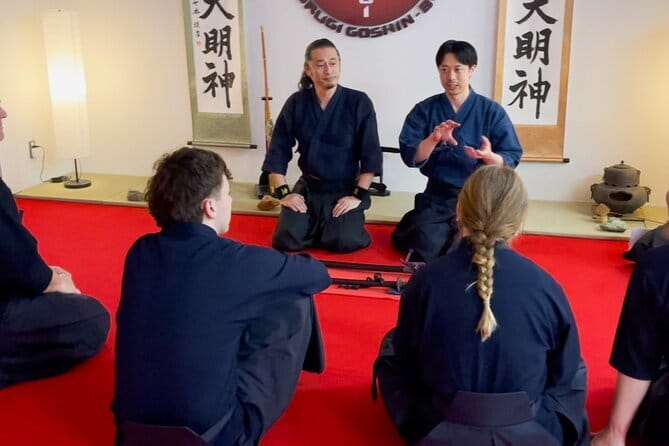
This experience begins at Samurai Sword Tokyo, at 4-chōme-2-1 Kōjimachi in Chiyoda City. The dojo is near public transportation, and the activity ends at the same place, so you do not need to solve a one-way transport problem afterward.
The setting matters. Kojimachi was once part of Edo Castle’s inner grounds, where samurai trained and served. You are not wandering through a museum display here. You are entering a practice space connected to the old center of warrior life in Tokyo, then using your body and attention rather than simply looking at objects behind glass.
The activity requires a minimum of two participants. That makes it a good choice for couples, friends, and families traveling together, but it is not a solo booking for one person. Since the experience is private, only your group takes part, which gives the lesson a more personal feel than a large demonstration.
Expect to spend about two hours at the dojo. The activity includes toilets in the building, but private transportation and an air-conditioned vehicle are not included. Plan to arrive by public transportation and wear something that allows comfortable movement beneath or alongside the rented uniform.
More Tokyo samurai and ninja experiences:
- Tokyo: Samurai Ninja Museum Guided tour and Experience
★ 4.6 · 1,010 reviews - Tokyo: Samurai Sword & Archery Class from Samurai Descendant
★ 5.0 · 603 reviews - Best Samurai Experience in Tokyo
★ 5.0 · 458 reviews
Starting with samurai etiquette and Bushido
The first lesson is not a sword swing. You begin with samurai etiquette and the spirit of Bushido, the code and philosophy associated with the samurai. That opening gives the rest of the class a useful frame.
You’ll learn that the training is tied to respect, discipline, and control. Those ideas show up in small actions: how you stand, how you move, how you handle the wooden sword, and how you pay attention when the instructor demonstrates a technique.
This part may be especially valuable if you have already visited castles, museums, or historical sites in Japan and want something more active. A history talk can explain samurai life. Here, the instructor asks you to practice some of the habits that support martial training.
The experience is beginner-friendly, so you do not need previous sword experience. Still, beginner-friendly does not mean casual. You’ll be expected to listen closely and repeat movements with care. The lesson favors precision over speed.
English is used throughout the experience, and translator support is available. That is useful because the physical motions are only one part of the class. Terms connected to respect, Bushido, and sword technique can lose their meaning if rushed through in translation.
Calming the mind with breathing and meditation
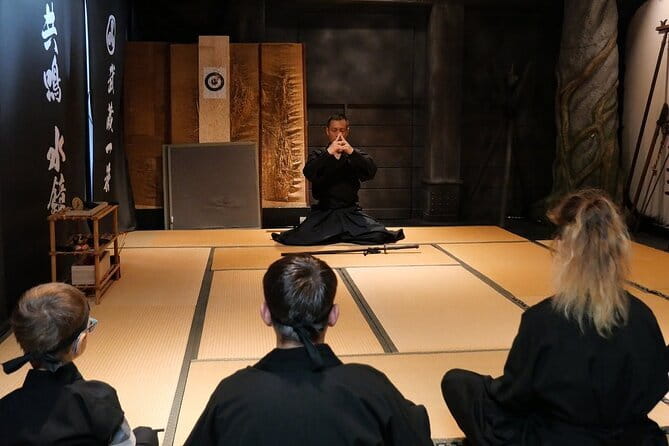
After the introduction, the class turns inward. You’ll practice breathing techniques and meditation intended to settle the mind before physical work begins.
I like this order. Starting with meditation makes the sword training feel less like a staged fight and more like a controlled discipline. It also gives you a chance to slow down before handling the wooden sword.
Do not expect a long silent retreat. This is a two-hour activity with several sections, so meditation is one piece of the lesson rather than the whole focus. Even so, it helps explain why Bushido training includes mental control along with physical skill.
You’ll also practice silent walking exercises. The goal is to test posture, balance, and concentration. The comparison with ninja-style movement may catch your attention, but the useful takeaway is simple: you must control your feet, body position, and awareness.
For some people, this will be the most surprising section. The activity is not built only around dramatic sword poses. It asks you to notice how you stand and move when no blade is involved.
Wooden sword drills and strength work
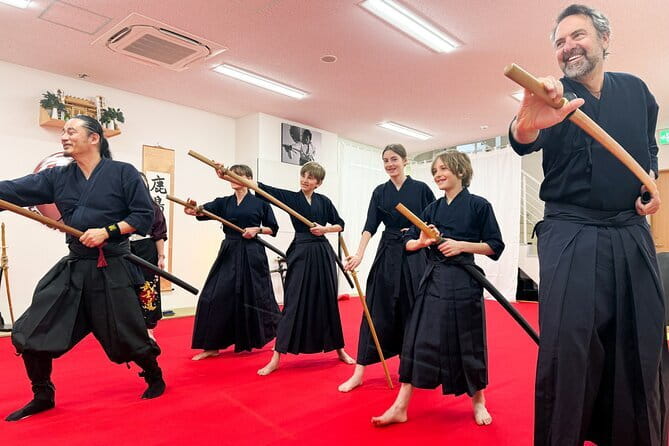
Once the mind and body are prepared, you’ll move into wooden sword practice. The instructor demonstrates the movements, then guides you through the basic actions.
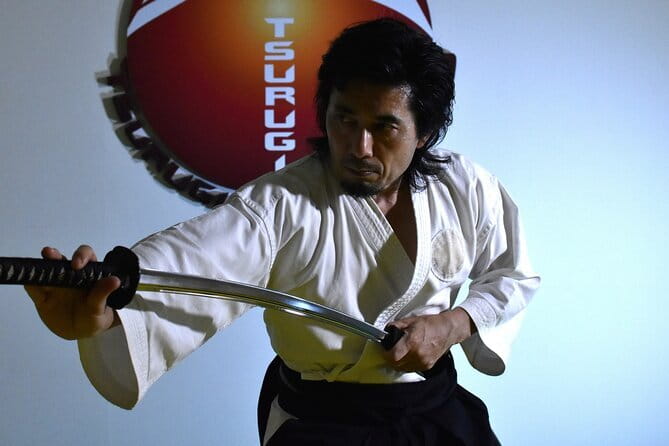
The included live sword demonstration is an important part of the experience. Seeing a skilled instructor perform a movement makes the timing and posture easier to understand. You then get to work with a wooden sword rather than a live blade, which keeps the lesson suitable for beginners.
The training also includes strength work with a heavy stick. This gives the session a physical edge, but the description does not promise a punishing workout. Think of it as martial practice designed to build control and strength, not a modern fitness class.
Your instructor can correct your form and answer questions as you go. That private access is one of the clearest advantages of booking this activity for your own group. If a movement feels awkward, you can ask for another explanation rather than trying to copy someone across a crowded room.
The sword drills are likely to suit children and adults who enjoy learning by doing. The experience is described as suitable for all ages in the included feedback, but you should still consider your own comfort with physical movement and standing practice.
A completely different kind of day in Tokyo:
- Mt Fuji and Hakone 1-Day Bus Tour Return by Bullet Train
★ 5.0 · 26,383 reviews - 1-Day Tokyo Bus Tour
★ 5.0 · 14,250 reviews - Tokyo: teamLab Planets TOKYO Digital Art Museum Entry Ticket
★ 4.6 · 9,779 reviews - Mt Fuji & Hakone Cruise, Drum Show Bullet Train 1 Day from Tokyo
★ 4.0 · 7,413 reviews
Learning one authentic combat kata
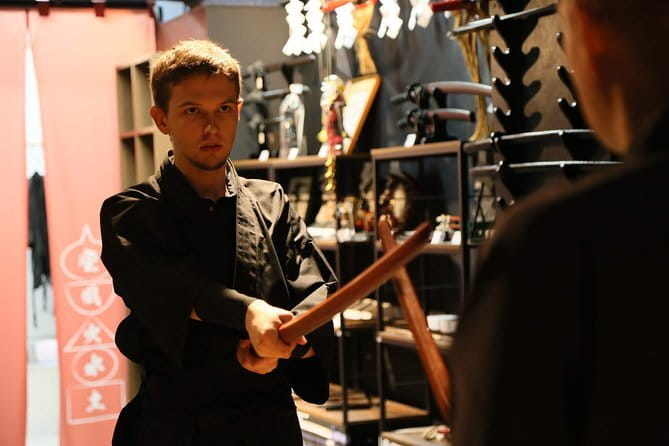
The central skill is one authentic samurai combat kata. A kata is a set sequence of movements practiced in a specific order. Learning one form in two hours is a sensible goal. You leave with something concrete to remember instead of a blur of disconnected sword poses.
The instructor first teaches the movements, then helps you put them together. Pay attention to the transitions. In martial arts, the spaces between actions matter as much as the actions themselves. Foot placement, posture, timing, and control all shape the finished form.
You will also have the chance to apply the skills in one-on-one sparring with an instructor. The activity uses wooden swords for practice, and the focus remains on learning the technique. This is not advertised as a competitive bout or a full-contact fight.
That distinction matters when you decide if the experience suits you. If you want a safe introduction to sword movements, the sparring section adds a memorable practical test. If you are seeking a high-speed stage show, you may find the lesson slower and more structured than expected.
The instructors’ warmth is another plus. Sensei Oedo and Yukiji are named as part of the teaching team, and translator support makes it easier to follow corrections and ask questions. You can ask as many questions as you like during this private experience, so use that access. Ask about the kata, the meaning of a gesture, or why a particular stance matters.
Matcha, sweets, and a quieter pause
The lesson includes a break with authentic matcha green tea and traditional Japanese sweets. This is more than a snack stop. It gives you a quiet pause between physical exercises and the final keepsake portion of the activity.
Matcha can be an acquired taste, especially if you are used to sweetened green tea. The traditional sweets provide a small contrast, and the break lets you absorb what you have just practiced.
I appreciate this change of pace. Two hours of instruction can feel dense, particularly when you are concentrating on unfamiliar footwork and etiquette. The tea break adds a cultural detail without sending you to another location.
It also keeps the experience from becoming a simple martial arts class. The combination of training, philosophy, tea, and traditional dress gives you several ways to connect with Japanese culture.
Traditional dress, a photo, and the scroll certificate
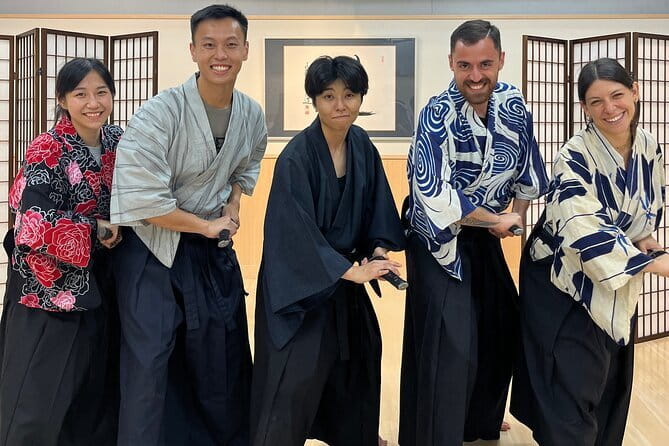
You’ll wear a rented samurai uniform during the session. The uniform helps create a sense of occasion, but it also makes the activity more memorable in photographs.
At the end, the instructor will take a commemorative photo with you in traditional dress. You do not need to arrange a photographer or ask another visitor to take the picture. This is a small benefit, but it is useful when your group wants one shared image from the experience.
You’ll also receive a personalized scroll-style certificate with your name and the techniques you learned. This is not a formal rank or claim to mastery. It is a souvenir showing the lesson’s content, and it gives you something more distinctive than a standard ticket or printed brochure.
The certificate may be particularly appealing to families. Children can leave with a clear reminder of what they practiced, while adults get a compact memento tied to the actual lesson.
What $85.66 gets you
At $85.66 per person, this is not the cheapest cultural activity in Tokyo. The value depends on whether you want participation rather than observation.
Your fee covers a private two-hour session, samurai uniform rental, a live sword demonstration, English instruction, translator assistance, sword and Bushido teaching, matcha, Japanese sweets, a personalized certificate, and a photo with a samurai. You are paying for direct instruction and a full set of small cultural details, not simply admission to a room.
The private format improves the value. You can ask questions freely, and the instructor can focus on your group. A cheaper large-group demonstration may show you sword techniques, but it is less likely to give you the same chance to practice a kata and receive personal corrections.
The activity is often booked about 37 days in advance. That suggests you should reserve early if the date matters, especially if you are coordinating two or more people. Confirmation is received at booking, and free cancellation is available up to 24 hours before the start time. Canceling or changing plans inside that window does not qualify for a refund.
Who will enjoy this most
I would recommend this experience to you if you want a hands-on cultural activity with a clear beginning, middle, and end. It suits people curious about samurai history, Japanese martial arts, Bushido, and traditional etiquette.
It is also a good fit for:
- Couples or friends who want a private Tokyo activity
- Families looking for something more active than sightseeing
- First-time martial arts participants
- Visitors who want an English-language lesson
- Anyone who values a photo and physical souvenir
- People interested in the mental side of martial arts, not only sword movements
You may want to choose something else if you dislike structured physical practice, have limited interest in Bushido, or expect a long sword performance. The class includes movement, standing, meditation, and repeated drills. It is accessible for beginners, but it still asks for attention and participation.
The experience is open to most people, according to the supplied activity information, but no detailed medical or mobility guidance is provided. If you have concerns, ask the provider before booking.
Should you book the Samurai Training in Tokyo experience?
Book it if you want to do more than look at Japan’s samurai past. The strongest parts are the private instruction, the mix of mental and physical training, the English support, and the chance to learn one complete combat kata rather than merely pose with a sword.
The $85.66 price is fair for a private two-hour lesson with clothing, refreshments, a certificate, and a photograph included. Just set your expectations correctly. You are receiving a focused introduction, not becoming a trained samurai in one afternoon.
For a small group with at least two participants, this is a thoughtful and memorable choice. You’ll leave with a better sense of why samurai training involved respect, patience, and self-control, along with a scroll certificate and a story far more interesting than another quick Tokyo photo stop.
FAQ
Where does the samurai training take place?
The experience takes place at Samurai Sword Tokyo, at 4-chōme-2-1 Kōjimachi, Chiyoda City, Tokyo 102-0083, Japan. The dojo is near public transportation.
How long does the experience last?
The activity lasts approximately two hours and ends back at the meeting point.
Is the experience private?
Yes. Only your group participates, and you can ask the instructor as many questions as you like.
Is the session conducted in English?
Yes. The experience is conducted in English, and translator support is available during the instruction.
What is included in the price?
The price includes samurai uniform rental, a live sword demonstration, English instruction on sword skills and Bushido, a personalized scroll certificate, matcha tea, Japanese sweets, and a commemorative photo.
Can one person book the experience?
A minimum of two participants is required. The activity is not listed as a solo experience.
Newly reviewed around Tokyo
- Tokyo Asakusa:Calligraphy & Make T-shirt Activity★ 5.0 · 62 reviews
- Intercity Shuttle, Tokyo to Haneda /Narita /Yokohama /Makuhari★ 5.0 · 5 reviews
- 1 Hour Travel around Tokyo with a Professional Photographer★ 5.0 · 3 reviews
- Travel Tokyo with Your Own Personal Photographer★ 5.0 · 43 reviews
- Train in Samurai Swordsmanship and Defeat the Demon in Tokyo★ 5.0 · 5 reviews
- Shuttle Van 6hr Tokyo Tour to-and-from Tokyo, Yokohama and Narita★ 5.0 · 9 reviews
- Kickboxing & Body Training with EX-Pro Fighter★ 5.0 · 4 reviews
- Traditional Japanese Knife Sharpening Class★ 5.0 · 18 reviews
Tokyo Samurai and Ninja Experiences, compared.
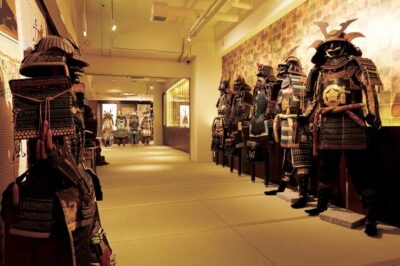
Samurai Ninja Museum Guided tour and Experience
Read our review →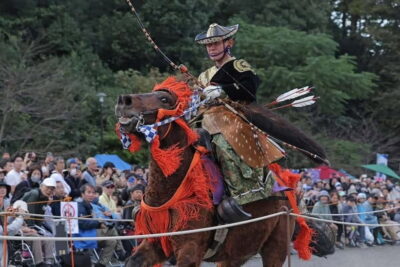
Samurai Sword & Archery Class from Samurai Descendant
Read our review →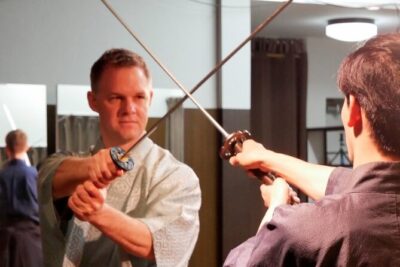
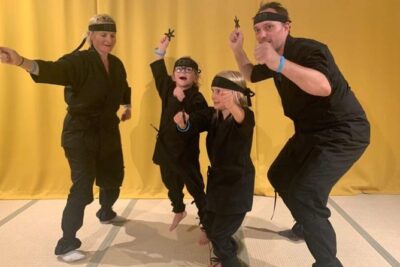
Ninja Experience (Family Friendly) at Samurai Ninja Museum TOKYO
Read our review →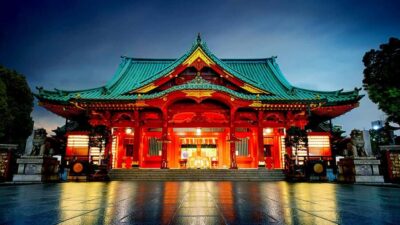
Samurai Entertainment Night Show in Kanda Shrine
Read our review →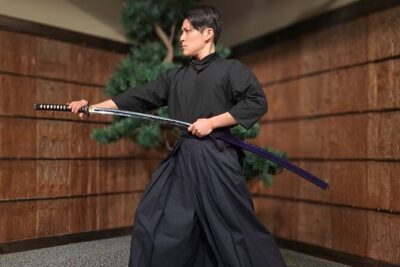
Tokyo Sword Experience – includes Museum Ticket/Ninja Experience
Read our review →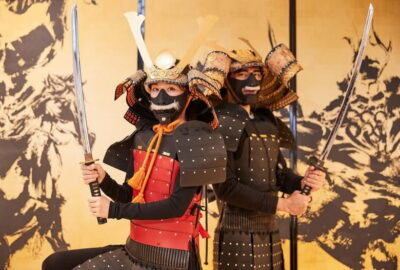
Samurai Ninja Museum Asakusa: Samurai Sword Lesson & Tour
Read our review →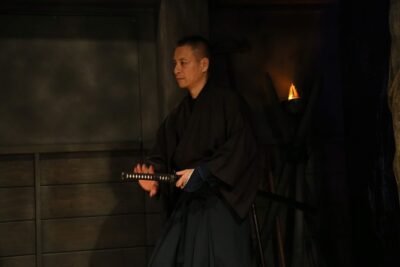
Ninja Samurai 2-hour hands-on lesson by Japanese master in Tokyo
Read our review →Browse the lists this tour appears in