
Reviewed · TOKYO SAMURAI AND NINJA EXPERIENCES
Samurai sword cutting experience
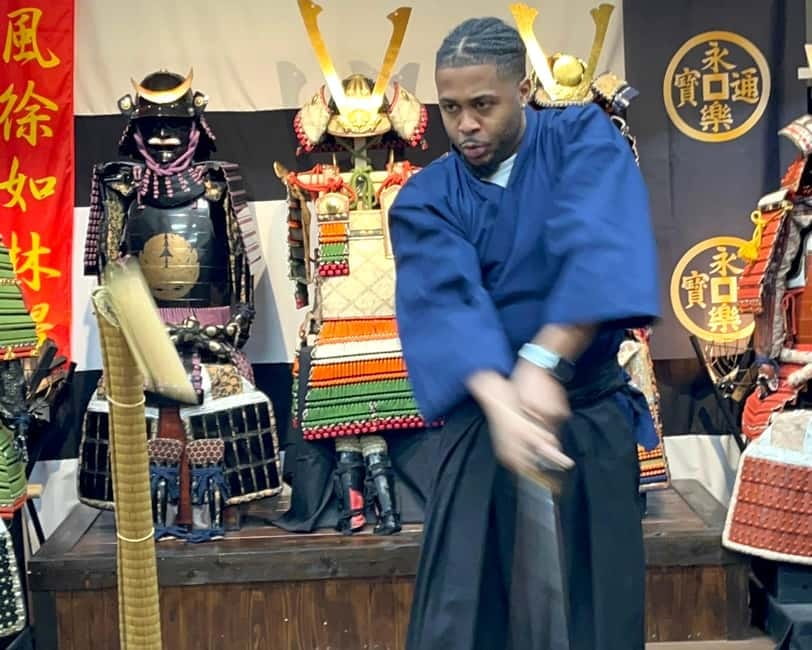
A real Japanese sword, a rolled tatami mat, and a teacher telling you exactly when to cut: that is the heart of this samurai sword cutting experience. You begin with iaido clothing, greetings, and meditation, then work toward two controlled cuts under close instruction.
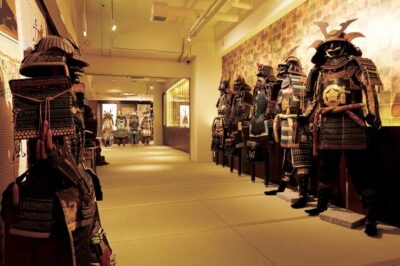
I like the careful progression from practice sword to real sword, and I like the chance to handle a blade more than 100 years old. The display of samurai armor adds weight to the setting without turning the session into a simple photo stop.
The main drawback is that this is a focused activity, not a long museum visit or a broad lesson in Japanese history. You also need to be comfortable standing, following physical instructions, and handling a sword, so it is not suitable for children under 14, pregnant women, wheelchair users, or people with visual impairments.
Key points to know before you book
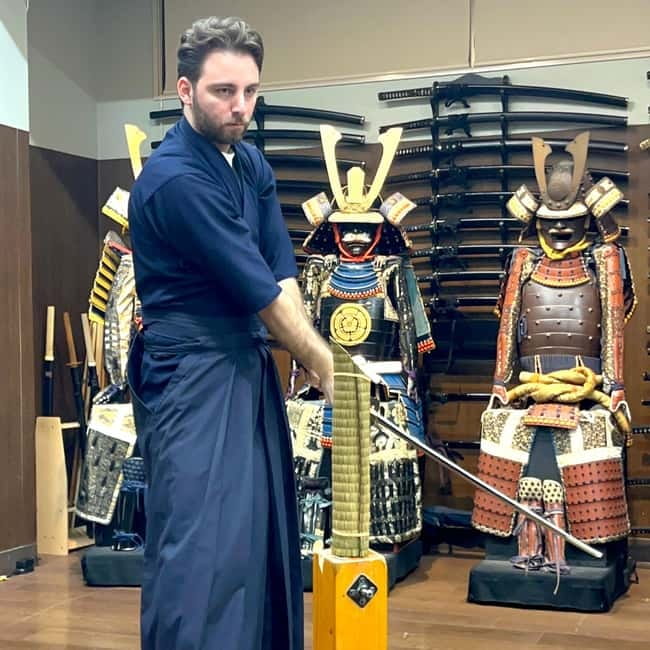
- You cut rolled tatami twice: The central activity is two supervised cuts, first at the instructor’s direction and then at the timing you choose.
- You start with an imitation sword: Practice comes before the real blade, giving you time to learn the basic swing.
- The sword may be more than 100 years old: The real Japanese swords used in the experience connect the activity to traditional craftsmanship.
- Iaido rituals matter: Greetings, meditation, and mental unification are part of the session, not decorative extras.
- A Battoushi Do teacher leads the session: You watch a demonstration before trying the cut yourself.
- English and Japanese are available: This makes the practical instruction easier to follow for international visitors.
From ordinary clothes to iaido practice wear
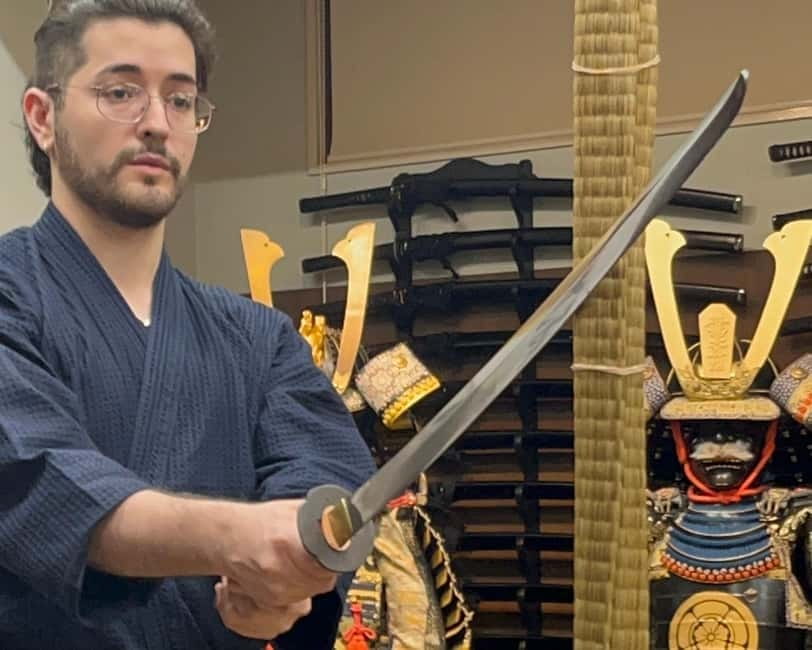
The session begins when you change into traditional iaido clothing. This simple step helps set the tone. You are not just picking up a sword in street clothes for a quick photograph. You are putting on the clothing used for a formal sword practice and entering a space with its own rules.
The clothing also has a practical purpose. It gives the activity a clear beginning and helps you feel the difference between watching a performance and taking part in a disciplined practice. I would allow a little patience here. The changeover is part of the experience, not time lost before the interesting part.
You should also expect the activity to be more formal than a casual cultural workshop. Greetings and mental preparation come before the cutting. If you want a fast, noisy action experience, this may feel slow at first. If you appreciate ritual and careful movement, the opening gives the rest of the session more meaning.
More Tokyo samurai and ninja experiences:
- Tokyo: Samurai Ninja Museum Guided tour and Experience
★ 4.6 · 1,010 reviews - Tokyo: Samurai Sword & Archery Class from Samurai Descendant
★ 5.0 · 603 reviews - Best Samurai Experience in Tokyo
★ 5.0 · 458 reviews
Why greetings and meditation come first
Iaido is presented here as an essential sword practice for samurai, and the session treats it as more than a way to swing a blade. Greetings and meditation help you focus before you handle any sword. The idea is simple: control your mind and body first, then control the weapon.
You will take part in a greeting and mental-unification process at the start. The same kind of closing greeting and mental preparation returns near the end. That repetition gives the activity a neat shape. You begin by preparing yourself, learn the movement, and finish by returning to a calm state.
I like this part because it keeps the experience from becoming a staged stunt. You are still there to cut tatami, but the ceremony reminds you that sword practice is tied to discipline and attention. At the same time, do not expect a long meditation class. The supplied details describe meditation and mental unity as parts of the session, but they do not give a duration.
Learning the sword before you use it
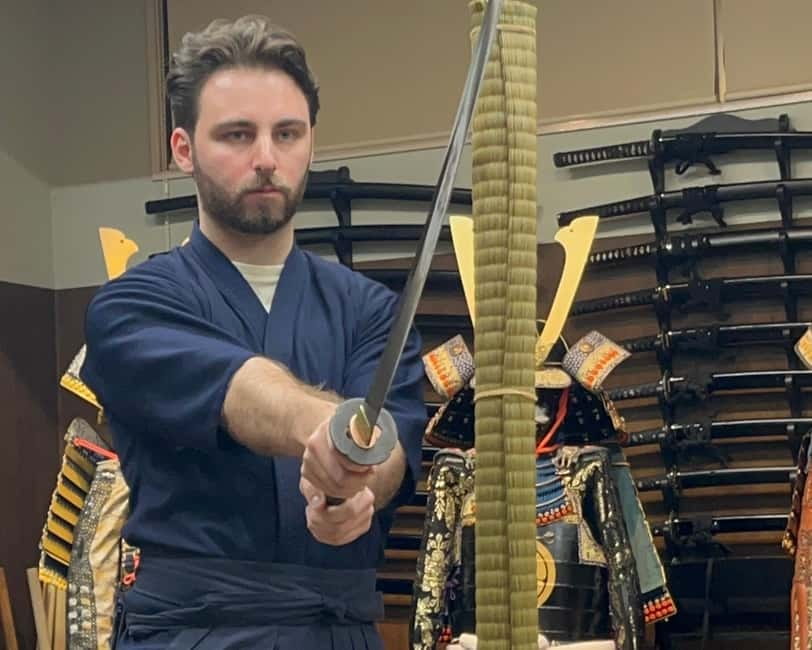
Before you cut anything, the instructor explains the Japanese sword. You will receive an explanation of the blade, then work through sword practice with an imitation sword and a practice sword.
This is an important safety and value point. The session does not hand you a real blade and send you toward a mat. You first learn how to swing and how to respond to instructions. The practice stage lets you concentrate on posture, timing, and the general motion without starting with the oldest or most significant object in the room.
The included practice equipment also makes the $93 price easier to judge. You are paying for instruction, clothing, practice swords, a real sword, an instructor demonstration, rolled tatami, and photo or video recording. The value depends on what you want from a cultural activity. If you only want one quick photograph, it may feel expensive. If you want guided preparation followed by a genuine cutting exercise, the price is more reasonable.
The information does not state the total length of the session or group size. That means I would not book it on the assumption that you can fit it into a tightly timed schedule without checking the available start time.
Watching the instructor cut first
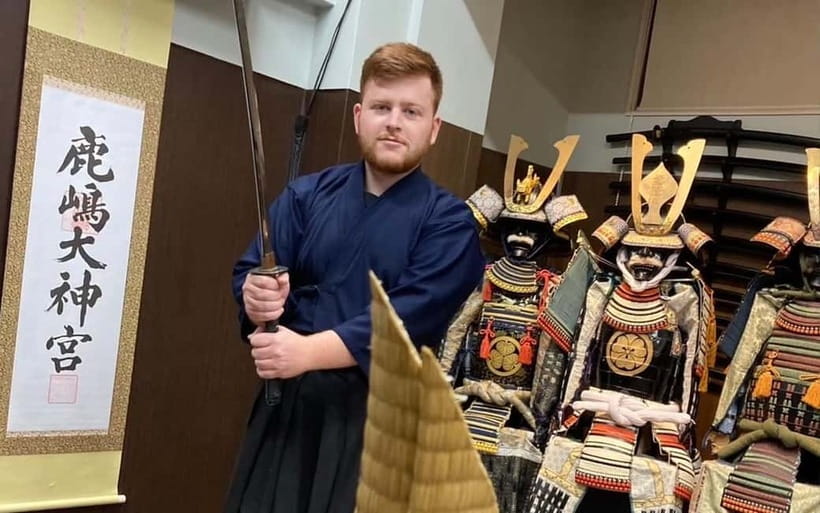
The teacher demonstrates the cutting technique before you try it. This is one of the best parts of the format. A sword cut can look simple from a distance, but the demonstration gives you a clear picture of the movement, the timing, and the way the blade meets the rolled tatami.
You will receive instruction from a real teacher of Battoushi Do. The title matters because the teacher is not simply acting out a samurai scene for photographs. The activity is built around a recognized sword practice, with the instructor showing you how the movement should look before you attempt it.
You should watch closely rather than treating the demonstration as a show to sit through. Notice the teacher’s timing and follow the instructions exactly. The activity is designed for beginners, but beginner-friendly does not mean careless. The teacher’s demonstration is your clearest guide to what you will be asked to do.
Instruction is available in English and Japanese. The provided details do not name the teacher, so do not book this expecting a particular instructor by name. What you can count on is a Battoushi Do teacher leading the session.
A completely different kind of day in Tokyo:
- Mt Fuji and Hakone 1-Day Bus Tour Return by Bullet Train
★ 5.0 · 26,383 reviews - 1-Day Tokyo Bus Tour
★ 5.0 · 14,250 reviews - Tokyo: teamLab Planets TOKYO Digital Art Museum Entry Ticket
★ 4.6 · 9,779 reviews - Mt Fuji & Hakone Cruise, Drum Show Bullet Train 1 Day from Tokyo
★ 4.0 · 7,413 reviews
The two tatami cuts
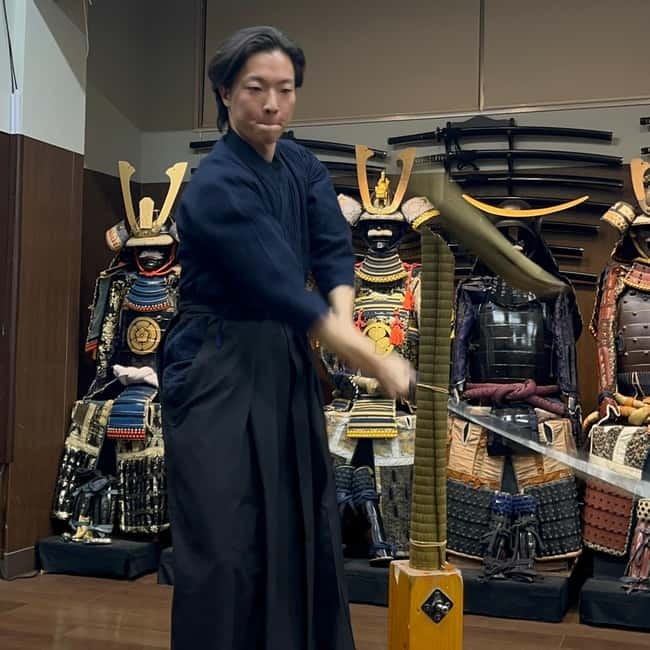
The main event is cutting rolled tatami twice. First, you follow the instructor’s directions and cut the mat under the teacher’s guidance. After that, you cut the tatami twice at the timing you choose.
The wording suggests a gradual increase in independence. You are not left alone at the start. The teacher tells you what to do, and then you get a chance to take ownership of the timing. That makes the second attempt especially useful. You can apply what you learned from the first cut instead of repeating the same motion without adjustment.
Rolled tatami gives you a visible result. A successful cut is easier to understand than an abstract lesson about sword posture. You can see what happened, assess your form, and use the moment as a natural finish to the practical training.
Still, keep your expectations sensible. This is two supervised cuts, not a full course in iaido. You will not leave as a trained samurai, and you should not expect a long series of advanced techniques. The experience gives you a concentrated taste of the practice, with enough instruction to make the cutting meaningful.
Old swords and samurai armor on display
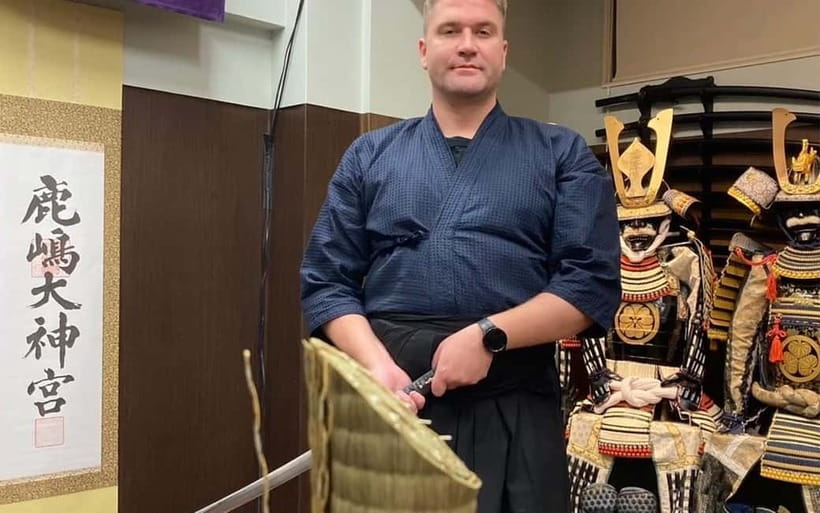
The chance to use real Japanese swords more than 100 years old is a major reason to consider this activity. A sword with that age is not just a prop. It gives the experience a physical link to Japanese sword tradition and makes the explanation before the practice more than a generic equipment briefing.
The listing also includes a lot of samurai armor on display. That setting helps you picture the world connected to the practice. You can look at the armor before or around the activity and understand that the sword is part of a larger martial culture.
The description does not provide a full museum catalog or explain exactly which armor pieces are present. I would treat the display as an important setting detail, not as a substitute for a dedicated armor museum. The focus remains your instruction and cutting practice.
For photography, the combination of iaido clothing, armor, and sword creates a stronger record of the day than a standard costume portrait. You can take pictures and videos of yourself cutting the tatami if you wish. Photography and video recording are included, which is useful if you want to remember the movement rather than only the final pose.
Photos, performance, and questions at the end
After your cutting practice, you can watch the teacher’s performance. This gives you another chance to see the technique at a higher level, now that you have tried it yourself. A movement that looked quick at the beginning may make more sense after you have struggled with your own timing.
The closing portion also includes a final greeting and mental unification, followed by a commemorative photo. You can ask the teacher questions if you wish. I would use that opportunity for practical questions about the sword, iaido practice, the cutting motion, or the armor on display.
The photo is a useful keepsake, but it should not be the only reason to book. The strongest part of the activity is the sequence: prepare, learn, watch, cut, reflect, and record the moment. The photograph works because it comes after that process.
What $93 gets you in Tokyo
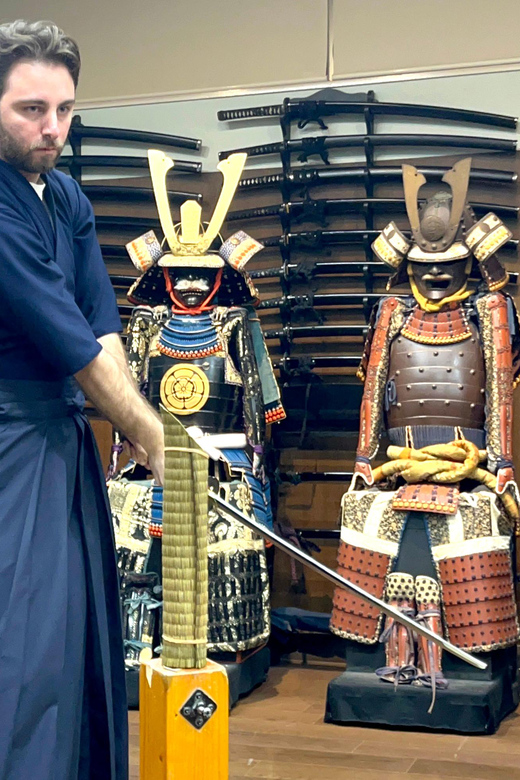
At $93 per person, this is a specialized cultural activity rather than a budget attraction. Your fee covers the instructor, sword explanation, sword practice, practice clothing, practice sword, imitation sword, instructor demonstration, rolled tatami mats, real sword use, and photography or video recording.
That is a solid list of included elements for a hands-on session. You are not paying only for access to a room and a display case. You receive equipment, instruction, a supervised cutting exercise, and a chance to use a real sword more than a century old.
The value is strongest if you have a clear interest in samurai culture, martial arts, Japanese swords, or unusual Tokyo activities. It is less convincing if you want a large-scale historical tour with extensive narration, many locations, or a long schedule of demonstrations.
The activity has a rating of 5 from three submitted ratings, and the written reactions describe it as very well explained, unique, and worth doing. Those points match the structure of the session: the explanation and the personal attempt are the core strengths. Since there are only three ratings, I would use the perfect score as a helpful signal, not as proof that every part will suit every person.
Practical fit, clothing, and physical demands
The activity takes place in Honshu, with the meeting point identified by searching Google Maps for Samurai Theater Tokyo. It ends back at the meeting point. Since the directions do not provide a street address here, search the exact name before leaving and allow time to find the entrance.
The available languages are English and Japanese. That is especially useful during the sword practice, where clear instructions matter. If you have questions about the finer points of the tradition, the details do not promise interpretation beyond those two languages.
You should also consider the physical requirements. The experience requires changing clothes, standing and practicing sword movements, and making supervised cuts. The stated exclusions are children under 14, pregnant women, wheelchair users, and people with visual impairments.
Those restrictions are not minor booking notes. They tell you that the activity requires safe physical participation and visual attention. If anyone in your party falls into one of those categories, choose another cultural activity rather than trying to make this one work.
The duration is not provided, so check the schedule before booking if you have a train, meal, or another timed reservation afterward. The meeting point and return point are the same, which keeps the plan simple once you arrive.
Who will enjoy this sword experience most?
I would recommend this for adults and teenagers aged 14 or older who want to take part rather than simply watch. It fits people who enjoy hands-on cultural activities, martial arts, historical objects, and short experiences with a strong sense of ceremony.
It is also a good choice for visitors who have already seen temples, shrines, and museums and want something more active. The sword explanation, clothing, meditation, demonstration, and cutting give you several layers in one visit.
Photographers and families with older teenagers may also like the visual side, since you can record the cutting and take a commemorative photo. Just remember that the activity has stated limits for children, pregnancy, wheelchair users, and people with visual impairments.
I would be more cautious about recommending it to someone looking for a full education in samurai history. The armor and old swords add context, but the main goal is participation in iaido practice. You get a focused lesson, not a broad survey of Japan’s warrior past.
Should you book the samurai sword cutting experience?
Book it if you want to handle a real Japanese sword, learn the basic movement from a Battoushi Do teacher, and make two supervised cuts into rolled tatami. The ritual opening, traditional clothing, old swords, armor, and final photograph make it more thoughtful than a quick sword-themed photo session.
Skip it if you dislike formal greetings, meditation, or physical instruction, or if you need a clearly stated duration before committing. Also skip it if one of the listed access restrictions applies to you.
For most suitable participants, $93 buys a memorable and well-structured activity with genuine hands-on time. Go in expecting a concentrated introduction to iaido, not mastery. Watch the demonstration, listen carefully, and let the ceremony be part of the experience rather than rushing toward the cut.
FAQ
Where does the samurai sword cutting experience take place?
It takes place in Honshu, Japan. The meeting point is found by searching Google Maps for Samurai Theater Tokyo.
Where does the activity end?
The activity ends back at the meeting point.
How much does the experience cost?
The listed price is $93 per person.
Which languages are available?
Instruction is available in English and Japanese.
What kind of sword will I use?
You will practice with an imitation sword and practice sword before using a real Japanese sword. The real swords may be more than 100 years old.
How many times will I cut the tatami?
You will follow the instructor’s instructions to cut the rolled tatami twice, then cut the tatami twice at the timing you choose.
Who cannot take part?
The experience is not suitable for children under 14, pregnant women, wheelchair users, or people with visual impairments.
Can I cancel for a full refund?
Yes. You can cancel up to 24 hours in advance for a full refund.
Newly reviewed around Tokyo
- Tokyo Asakusa:Calligraphy & Make T-shirt Activity★ 5.0 · 62 reviews
- Intercity Shuttle, Tokyo to Haneda /Narita /Yokohama /Makuhari★ 5.0 · 5 reviews
- 1 Hour Travel around Tokyo with a Professional Photographer★ 5.0 · 3 reviews
- Travel Tokyo with Your Own Personal Photographer★ 5.0 · 43 reviews
- Train in Samurai Swordsmanship and Defeat the Demon in Tokyo★ 5.0 · 5 reviews
- Shuttle Van 6hr Tokyo Tour to-and-from Tokyo, Yokohama and Narita★ 5.0 · 9 reviews
- Kickboxing & Body Training with EX-Pro Fighter★ 5.0 · 4 reviews
- Traditional Japanese Knife Sharpening Class★ 5.0 · 18 reviews
Tokyo Samurai and Ninja Experiences, compared.
Samurai Ninja Museum Guided tour and Experience
Read our review →
Samurai Sword & Archery Class from Samurai Descendant
Read our review →

Ninja Experience (Family Friendly) at Samurai Ninja Museum TOKYO
Read our review →
Samurai Entertainment Night Show in Kanda Shrine
Read our review →
Tokyo Sword Experience – includes Museum Ticket/Ninja Experience
Read our review →
Samurai Ninja Museum Asakusa: Samurai Sword Lesson & Tour
Read our review →
Ninja Samurai 2-hour hands-on lesson by Japanese master in Tokyo
Read our review →Browse the lists this tour appears in