
Reviewed · TOKYO WALKING TOURS
Private Harajuku Omotesando Architecture Walking Tour
Harajuku and Omotesando reveal Tokyo at its most surprising: one minute you are outside the calm grounds of Meiji Jingu, and the next you are studying bold glass, concrete, and steel buildings by major architects. I especially like the private format, which lets your guide adjust the walk to your interest, and the mix of famous storefronts and quiet backstreets most people pass without a second look.
The main thing to consider is the pace. This is a 3-hour-30-minute walking tour with a moderate fitness requirement, and much of it takes place outdoors. Some guests have also found a guide’s English difficult to follow, so it is sensible to mention your preferred level of architectural detail when booking.
Key points to know before booking
- Begin at Meiji Jingu and finish at Omotesando: The route crosses from Harajuku into Aoyama, ending near the Omotesando and Aoyama-dori intersection.
- See architecture by major names: The walk includes Yoyogi Gymnasium by Kenzo Tange and buildings associated with Tadao Ando, Jacques Herzog, Pierre de Meuron, and others.
- Your route can reflect your interests: Guides can focus more on modern design, local development, fashion, interiors, or neighborhood history.
- Expect a private experience: Only your own group takes part, with a licensed local guide.
- Take a short cafe break: Drinks are included during a cozy pause along the way.
- Plan for plenty of walking: Comfortable shoes and a moderate level of fitness matter more here than formal sightseeing gear.
Why Harajuku and Omotesando make such a good architecture walk
Many Tokyo architecture tours require long train rides between separate buildings. This one works because Harajuku and Omotesando pack an unusual number of design landmarks into a compact area.
The route begins near Meiji Jingu, a useful contrast to everything that follows. The shrine gives you a quiet, traditional starting point before the tour moves toward Omotesando’s fashion stores and modern buildings. You do not just look at architecture in isolation. You see how Tokyo places old religious spaces, small homes, luxury retail, public buildings, and dense city streets close together.
I like that the tour does not treat architecture as a parade of famous facades. The walk also goes through a backstreet neighborhood, where the scale changes and the area feels less polished. That shift helps explain Harajuku better than a simple stroll down Omotesando alone.
The tour is also customizable. If you care most about architects and design theory, your guide can give the walk that focus. If you are more interested in how Harajuku changed from the 1960s to the present, you can ask for more local development and social context. Several guides have backgrounds or strong interests in architecture, and some arrive with notebooks, tablets, photographs, floor plans, and images of the architects’ other work.
More things to do in Harajuku:
- Tokyo Go-Kart Tour Shibuya-Harajuku-Shinjuku (*IDP Required)
★ 5.0 · 217 reviews - Tokyo: Guided Go Kart Tour from Harajuku to Shibuya Crossing
★ 4.5 · 166 reviews - Shibuya & Harajuku: Hidden Gems & Highlights Private Tour
★ 4.7 · 139 reviews
Starting beside Meiji Jingu
The meeting point is in front of Meiji Jingu near Harajuku Station. That makes the start fairly easy to reach by public transportation, though you should check the exact station exit and meeting instructions before setting off.
Meiji Jingu is not presented as the main architecture lesson of the tour. Instead, it provides the opening scene and a sense of place. From here, the walk looks toward Yoyogi Gymnasium, Kenzo Tange’s famous Olympic-era structure.
The itinerary describes viewing the gymnasium from a distance rather than entering it. That is important if you are expecting an indoor visit. You will hear about its place in Tokyo’s Olympic story and study its striking form from outside, but the amount of time spent there can depend on your guide and the route you request.
This first section is especially useful if you are new to Tokyo. One early tour guest used the walk to get oriented to the city’s history, culture, and etiquette, while also asking the guide to adjust explanations to their level of interest. A private guide can make that kind of adjustment much easier than a fixed group tour.
Yoyogi Gymnasium and Tokyo’s Olympic story
Yoyogi Gymnasium gives the walk a strong historical anchor. The building is linked to Tokyo’s Olympic past, and the tour uses it to explain how the city presented itself through architecture.
You can expect an introduction to Kenzo Tange and the building’s importance, with the gymnasium viewed from the distance. Guides may use prepared photographs to add detail that is hard to see from the street. This is one of the places where an architecture-focused guide makes a real difference. Without context, you may notice only an unusual roofline. With context, you can start to read the structure as part of a larger period in Japanese design.
The Olympic theme also gives the tour a clear thread. You are not simply walking from shop to shop. You are seeing how Tokyo’s public image, sports facilities, retail streets, and design culture developed together.
Keep your expectations realistic. This is not an Olympic venue tour, and there is no stated admission to Yoyogi Gymnasium. The value is in the explanation and the view, not in entering the stadium.
Omotesando’s famous storefront architecture
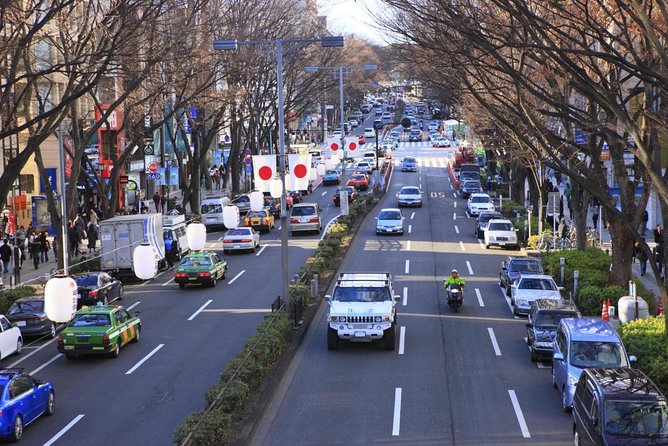
From the Harajuku side, the route moves along Omotesando, often compared with the Champs-Élysées or Tokyo’s Rodeo Drive. The road is known for luxury shopping, but the stores are also part of the architectural lesson.
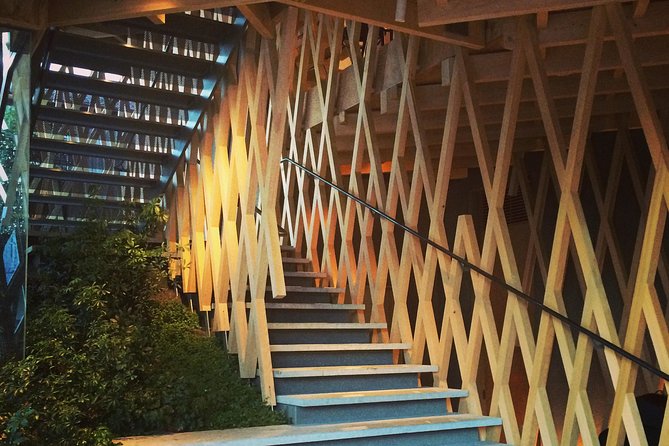
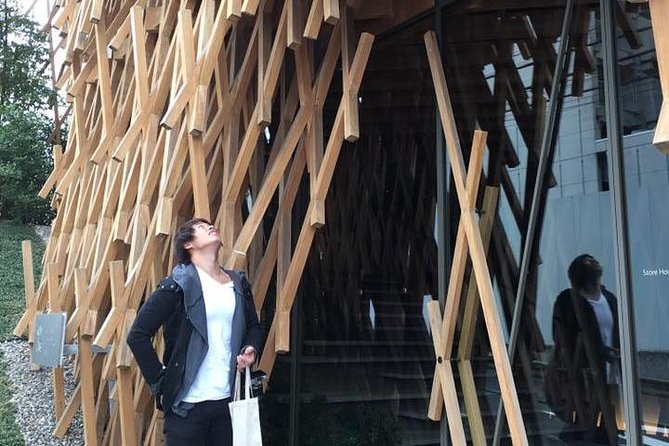
The planned stops include The Iceberg, Dior, Louis Vuitton, Tod’s, Sunny Hills, and Prada. You will examine how each building uses its exterior to shape a brand image. The tour is not simply a shopping walk, so you do not need to be interested in buying anything. The storefronts are the objects of study.
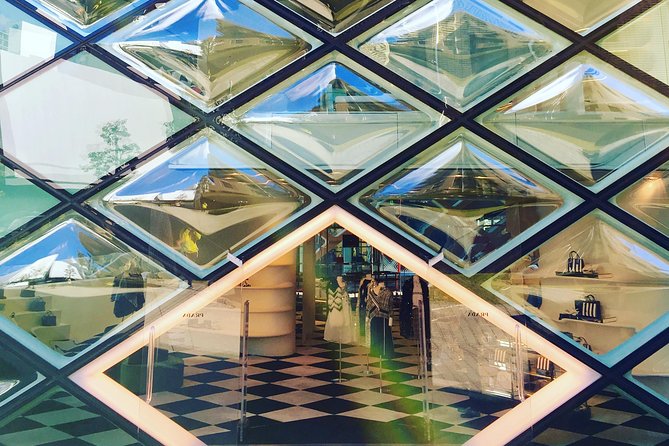
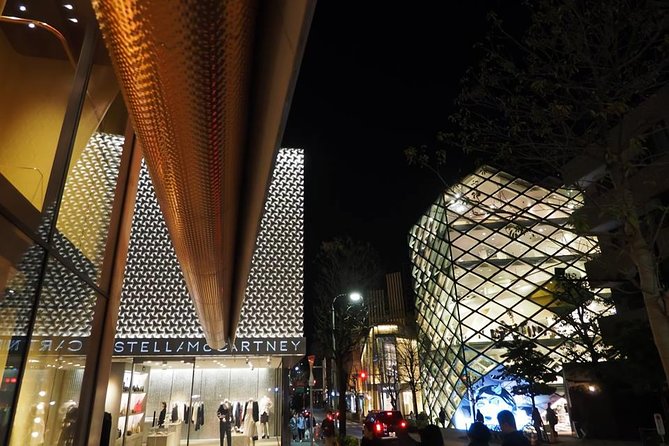
Prada is one of the strongest examples. The tour can show its convex and concave glass surfaces, designed by Jacques Herzog and Pierre de Meuron. The building changes as you move past it, and the glass makes the facade feel less like a flat wall and more like a shifting display.
Louis Vuitton and Dior offer another lesson in how luxury retail uses structure, materials, and scale. Tod’s brings a different visual approach, while Sunny Hills adds another stop for comparing materials and form. The exact amount of time at each building is customizable, so tell your guide which examples matter most to you.
One particularly useful feature is the chance to go inside some buildings. The experience is not limited to photographing the street facade. Depending on the route and opening conditions, your guide may point out interiors that you would not have noticed alone.
More Tokyo walking tours:
- Tokyo Tsukiji Fish Market Food and Culture Walking Tour
★ 5.0 · 3,184 reviews - Tokyo: Imperial Palace and Shogun Historical Walking Tour
★ 5.0 · 2,251 reviews - Tokyo: Shinjuku Local Bar and Izakaya Guided Walking Tour
★ 4.9 · 1,794 reviews - Tokyo: Tsukiji Fish Market Food and Walking tour
★ 5.0 · 1,724 reviews
The side streets and a short cafe pause
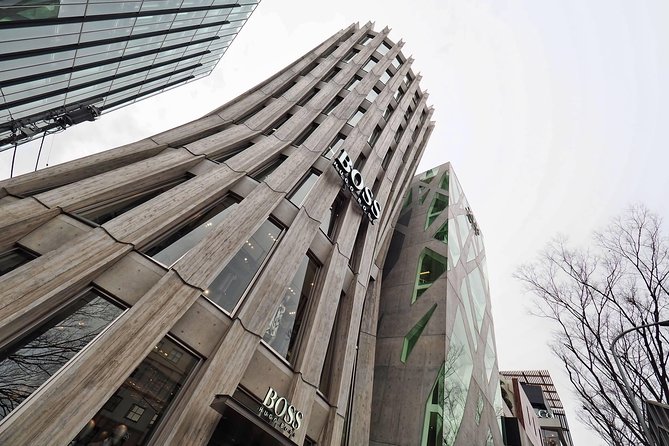
The backstreet section keeps the tour from becoming a polished architectural checklist. Harajuku and Aoyama are more varied than Omotesando’s main road suggests, and the side streets show a different scale of buildings and daily life.
You might see small businesses, homes, unusual structures, and less obvious design details. The supplied route does not promise specific backstreet buildings, which is actually part of the appeal of this section. Your guide can respond to your interests and take you toward places that fit the time and pace of the walk.
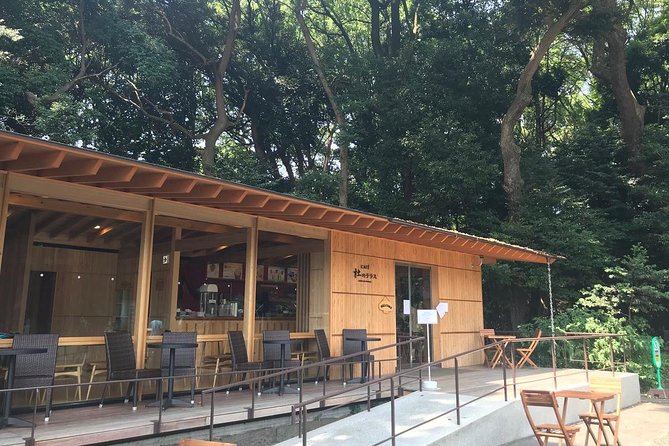
There is also a short pause with drinks at a cafe. The cafe is described as under the radar and located along a less-trodden backstreet, but a specific cafe name is not provided. Treat this as a break rather than a full meal stop.
I see this pause as more useful than it may sound. Three and a half hours of looking up at buildings, crossing streets, and keeping pace can become tiring. Sitting for a drink gives you time to ask questions and sort out what you have seen. It also makes the tour feel more like a conversation with a local guide than a nonstop lecture.
The guides and the level of explanation
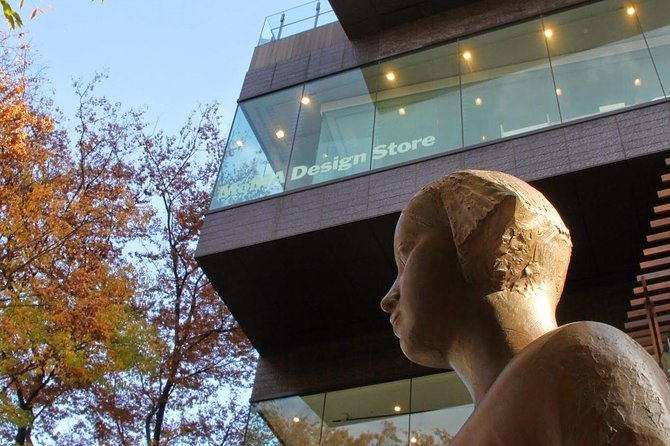
The experience is sold with a licensed local guide, and the guide assigned to you may be Yoshi, Yoko, Aki, Taka, Mari, Eriko, Junko, Yuki, or another member of the team.
Several guides are praised for arriving well prepared. Yoshi, for example, has used documented photographs of architects and their other projects. Taka, described as a retired architect, has shown photographs, background material, floor plans, and good positions for taking pictures. Aki is noted for adjusting the route and offering background on both buildings and designers.
Yoko has been described as strong on design and on explaining how architectural styles changed over time. Junko has adjusted explanations to the group’s level and helped with subway navigation after the tour. Mari and Eriko are also described as engaging and clear in their explanations.
That range matters because the quality of this experience depends heavily on the person leading it. Most feedback is very positive, but one guest had trouble understanding a guide’s English and felt some information was lost. I would treat that as a reason to communicate clearly before the walk. Tell the operator if you want technical architectural detail, plain-language explanations, or a balanced mix.
What the three-and-a-half-hour schedule feels like
The stated duration is approximately 3 hours and 30 minutes, while the itinerary lists about three hours for the main walking section. Allow some flexibility, since a private route may slow down at a building that interests you or shorten a stop that does not.
The route is not a hard hike, but it is a serious city walk. You will move between Meiji Jingu, the Yoyogi area, Omotesando, Aoyama, and side streets. Wear comfortable shoes, and consider the season. One guide adjusted a tour to include more indoor time during very hot weather, which shows the benefit of a private format, but outdoor walking remains central.
The end point is near the Omotesando and Aoyama-dori intersection, in front of Mizuho Bank. It does not return you to Meiji Jingu or your hotel. That is convenient if you plan to continue shopping or exploring Aoyama, but you should allow time to find your next train or activity.
What you get for $132.14
At $132.14 per person, this is not a budget walking tour. The price needs to be judged against the private format, the guide’s preparation, and the chance to shape the route around your interests.
For one person, the cost is harder to justify unless you have a serious interest in architecture or want a tailored introduction to Harajuku. For two or more people, the experience becomes more attractive, especially if the booking offers a group discount. You are paying for a private guide rather than a large fixed group, and that means more time for questions and fewer compromises about pace.
The included drinks are a pleasant extra, but they are not the reason to book. The real value is the guide’s interpretation of buildings that you could technically see for free. A self-guided walk can take you past Prada, Dior, and Louis Vuitton, but it will not necessarily explain the architects, compare floor plans, point out indoor details, or lead you through less obvious streets.
You are also booking well ahead in many cases, with the experience averaging 53 days in advance. That suggests you should not leave it until the last day of a short Tokyo visit if the timing matters.
Who should book this walk?
I would recommend it most strongly to architects, designers, students, photographers, and anyone who enjoys understanding why a building looks and works the way it does.
It also suits a family or couple with mixed interests because the route includes fashion, city development, local streets, Olympic history, and a cafe pause. You do not need professional training in architecture. The private guide can explain the buildings at a simpler level, and the route can include more neighborhood detail if technical discussion is not your priority.
This is less suitable if you want a slow shopping outing, a shrine-focused tour, or a vehicle-based sightseeing experience. It is also not ideal for anyone who struggles with several hours of walking. The guide can adjust the pace, but the basic character of the experience remains a walking tour.
The 99 percent recommendation rate and 4.9 rating from 67 ratings point to a very strong experience overall, with guide quality as the main variable. I would book it if architecture is one of your interests and you value personal attention. I would skip it if you only want to see the headline sights quickly, since you can walk Omotesando on your own for less.
Should you book the Harajuku architecture tour?
Book this private Harajuku and Omotesando architecture walk if you want to see Tokyo through its buildings rather than simply pass them on the way to a shop. The strongest reasons are the compact route, the mix of major architectural works and quieter streets, and the guide’s ability to bring photographs, floor plans, and design context to the walk.
Before booking, ask for the guide’s language comfort and describe your interests. Request more technical detail if you are an architect, or more history and neighborhood context if you are new to the subject. With that small bit of planning, this can be one of the most useful ways to get your bearings in Harajuku and Aoyama.
Free cancellation is available up to 24 hours before the start time. Changes or cancellations made less than 24 hours before the tour do not qualify for a refund.
FAQ
Where does the tour begin?
The tour begins in front of Meiji Jingu near Harajuku Station at 1 Yoyogikamizonocho, Shibuya, Tokyo 151-0052, Japan.
Where does the tour end?
It ends at the Omotesando and Aoyama-dori intersection, in front of Mizuho Bank, at 5-chōme-1-27 Minamiaoyama, Minato City, Tokyo 107-0062, Japan.
How long does the tour last?
The advertised duration is approximately 3 hours and 30 minutes. The main itinerary describes about three hours of walking.
Is the tour private?
Yes. Only your group takes part in the private activity.
Is a guide included?
Yes. A licensed local tour guide is included.
Are drinks included?
Yes. A short pause with drinks along the way is included.
Is hotel pickup included?
No. Hotel pickup and drop-off are not included.
How physically demanding is the walk?
You should have a moderate level of physical fitness. The route includes several hours of walking through Harajuku, Omotesando, Aoyama, and backstreets.
Can I cancel for a full refund?
Yes, if you cancel at least 24 hours before the experience start time. Cancellations made less than 24 hours beforehand are not refunded.
Newly reviewed around Tokyo
- Tokyo Asakusa:Calligraphy & Make T-shirt Activity★ 5.0 · 62 reviews
- Intercity Shuttle, Tokyo to Haneda /Narita /Yokohama /Makuhari★ 5.0 · 5 reviews
- 1 Hour Travel around Tokyo with a Professional Photographer★ 5.0 · 3 reviews
- Travel Tokyo with Your Own Personal Photographer★ 5.0 · 43 reviews
- Train in Samurai Swordsmanship and Defeat the Demon in Tokyo★ 5.0 · 5 reviews
- Shuttle Van 6hr Tokyo Tour to-and-from Tokyo, Yokohama and Narita★ 5.0 · 9 reviews
- Kickboxing & Body Training with EX-Pro Fighter★ 5.0 · 4 reviews
- Tokyo History: Sensoji Temple & Asakusa District Private Tour★ 5.0 · 28 reviews
Tokyo Walking Tours, compared.
Tokyo Tsukiji Fish Market Food and Culture Walking Tour
Read our review →
Imperial Palace and Shogun Historical Walking Tour
Read our review →
Shinjuku Local Bar and Izakaya Guided Walking Tour
Read our review →
Asakusa Walking Tour with Sensoji Temple Visit
Read our review →
Tokyo Castle & Imperial PalaceーShogun Walking Tour
Read our review →
Browse the lists this tour appears in